Relationship Between Baseline Serum Pseudocholinesterase Activity and Antidote Dosing in Patients with Organophosphorus Poisoning at a Tertiary Care Hospital.
- N Bhavana , Postgraduate, Department of Pharmacology, Shri Atal Bihari Vajpayee Medical College and Research Institute, Bengaluru, Karnataka, India.
- Nagesh H N , Associate Professor, Department of Pharmacology, Shri Atal Bihari Vajpayee Medical College and Research Institute, Bengaluru, Karnataka, India.
- S B Nishitha , Assistant Professor, Department of Pharmacology, Shri Atal Bihari Vajpayee Medical College and Research Institute, Bengaluru, Karnataka, India.
- Nalini G K , Professor and Head, Department of Pharmacology, Shri Atal Bihari Vajpayee Medical College and Research Institute, Bengaluru, Karnataka, India..
Article Information:
Abstract:
Background: Organophosphorus (OP) compound poisoning remains a leading cause of hospital admission and poisoning-related mortality in India. Serum pseudocholinesterase (PCE) is an accessible surrogate marker of cholinesterase inhibition, and its baseline value at admission may guide antidote dosing. Objective: To assess the relationship between baseline serum PCE activity at admission and the dosing pattern of atropine and pralidoxime (PAM), and to describe the clinical profile and outcomes of OP poisoning in a tertiary care hospital. Methods: A retrospective observational study was conducted at the Emergency Department of Bowring and Lady Curzon Hospital, attached to Shri Atal Bihari Vajpayee Medical College and Research Institute, Bengaluru, over a six-month period (December 2023 – May 2024). Records of 114 patients admitted with OP compound poisoning were retrieved. Demographic details, agent involved, baseline vital parameters, admission serum PCE, dose and duration of atropine and pralidoxime, and clinical outcomes were extracted. Patients were stratified into mild (>1500 IU/L), moderate (500–1500 IU/L) and severe (<500 IU/L) categories on the basis of admission PCE. Descriptive statistics, Pearson correlation, chi-square test and one-way ANOVA were used; p<0.05 was considered significant. Results: The mean age was 40.2 ± 12.8 years with a male preponderance (57.9%). Suicidal ingestion accounted for 86.8% of cases. Formulations containing cypermethrin (36.8%), chlorpyrifos (14.0%) and parathion (12.3%) were the most frequent agents. Baseline serum PCE was recorded in 87 patients (mean 1267.3 ± 767.0 IU/L). Of these, 12 (13.8%) had severe, 51 (58.6%) moderate and 24 (27.6%) mild reduction. Duration of atropine therapy was longest in the severe group (4.92 ± 1.68 days) versus moderate (4.08 ± 1.76 days) and mild (3.67 ± 1.58 days) groups (p = 0.12). A weak inverse correlation was observed between baseline PCE and duration of atropine therapy (r = –0.16, p = 0.14) and duration of hospitalization (r = –0.13, p = 0.22). Pralidoxime was used in only 7 (6.1%) patients. Respiratory failure occurred in 21.1% and intermediate syndrome in 6.1%; all 114 patients were discharged alive. Conclusion: Baseline serum PCE showed a trend toward inverse association with atropine requirement and hospital stay, without reaching statistical significance in this cohort. PCE estimation at admission remains a useful adjunct for stratification of severity, whereas its role as a single determinant of antidote dosing appears limited. Larger prospective studies with serial PCE monitoring are needed.
Keywords:
Article :
INTRODUCTION:
Acute pesticide self-poisoning is one of the most common methods of suicide worldwide, contributing to an estimated one in seven suicides globally and approximately 110,000–168,000 deaths every year, most of them occurring in the rural agrarian communities of low- and middle-income countries of South Asia. [1,2] Organophosphorus (OP) compounds account for the largest share of these fatal poisonings, and India carries a disproportionately high burden owing to widespread agricultural use and over-the-counter availability of highly hazardous pesticides. [1–4] The reported case-fatality of OP self-poisoning in South Asian series typically exceeds 15%, and even higher rates are seen in intensive care cohorts. [2,3,5]
OP compounds exert their toxicity by phosphorylating the serine hydroxyl group at the active site of the enzyme acetylcholinesterase (AChE), leading to accumulation of acetylcholine at cholinergic synapses. Overstimulation of muscarinic, nicotinic and central cholinergic receptors produces the classical cholinergic toxidrome — miosis, bronchorrhoea, bronchospasm, salivation, lacrimation, urination, defecation, vomiting, bradycardia and altered sensorium — that dominates the first 24 to 48 hours after exposure. [3,6–8] A subset of patients later develops the intermediate syndrome (24–96 h) or organophosphate-induced delayed polyneuropathy. [9–11]
Assay of red-cell AChE is the most specific biochemical index of OP toxicity, but its limited availability in most Indian hospitals has led to widespread use of the more readily measured plasma pseudocholinesterase (PCE, butyrylcholinesterase, BChE) as a surrogate marker. [12–14] Serial fall of PCE at presentation correlates with cholinesterase inhibition and has been used to grade severity, guide duration of intensive care, and predict outcomes. [13,15–17] However, other investigators have questioned its prognostic utility, noting that PCE activity depends on hepatic synthesis and shows wide inter-individual variation. [18,19]
The mainstay of treatment remains supportive care combined with atropine, an oxime such as pralidoxime (PAM), and, when required, benzodiazepines and mechanical ventilation. [3,20,21] Atropine competes with acetylcholine at muscarinic receptors and its dose is titrated against pulmonary secretions, heart rate and pupillary size. Pralidoxime is intended to reactivate phosphorylated AChE before the ageing process becomes irreversible, but its clinical efficacy remains controversial, particularly in Indian settings where evidence from randomised trials is conflicting. [22–25] Whether serum PCE at presentation can rationally guide the required dose and duration of antidote therapy is therefore a clinically relevant but unresolved question. Against this backdrop, the present study was designed to examine the relationship between baseline serum PCE and antidote requirements in patients with acute OP poisoning treated at a tertiary care hospital in Bengaluru, and to describe the clinical profile and outcomes of the cohort.
MATERIALS AND METHODS:
Study design and setting
This was a hospital-based, retrospective, record-based observational study conducted at the Emergency Department of Bowring and Lady Curzon Hospital, attached to Shri Atal Bihari Vajpayee Medical College and Research Institute (SABVMCRI), Bengaluru, an autonomous institute of the Government of Karnataka. The study period spanned six months, from December 2023 to May 2024. Institutional Ethical Committee approval was obtained (IEC No. SABVMCRI/IEC/PG-RP/2023-24/26) before commencement of the study. The methodological approach followed the STROBE recommendations for observational studies. [26]
Study population
All patients admitted to the emergency department with a diagnosis of OP compound poisoning during the study period were considered eligible. Case notes were retrieved from the Medical Records Department in a consecutive manner.
Inclusion criteria: all patients with a clinico-toxicological diagnosis of OP poisoning who received treatment during the study period.
Exclusion criteria: records with incomplete demographic, biochemical or therapeutic documentation that precluded meaningful analysis of the primary variables.
A total of 114 case records met the inclusion criteria and formed the study sample.
Data collection
A structured case record form was used to abstract information from hospital records under the following headings: (i) demographic profile — age, sex, address, occupation, alcohol co-ingestion, past medical history; (ii) exposure details — nature of the OP compound, intent (suicidal or accidental), route, whether gastric lavage was performed; (iii) clinical parameters at admission — pulse rate, blood pressure, respiratory rate, oxygen saturation, pupillary size, sensorium, systemic examination; (iv) laboratory parameters — arterial blood gas analysis, complete blood counts, serum electrolytes, renal and liver function tests and, most importantly, baseline serum PCE; (v) treatment details — dose of atropine, dose and duration of pralidoxime, adjunctive supportive therapy; and (vi) outcome variables — duration of hospitalization, occurrence of intermediate syndrome, respiratory failure and mortality.
Measurement of pseudocholinesterase
Serum PCE (butyrylcholinesterase) at admission was measured in the hospital biochemistry laboratory by the butyrylthiocholine kinetic photometric method on an automated analyzer, with a reference range of approximately 4650–10440 IU/L for the reporting laboratory. For analytical purposes, baseline PCE values were stratified using cut-offs adapted from the Namba classification and previous Indian series [13,15]: severe reduction (<500 IU/L), moderate reduction (500–1500 IU/L) and mild reduction (>1500 IU/L).
Definitions of outcomes
Respiratory failure was defined as the development of clinical respiratory distress requiring supplemental oxygen, non-invasive ventilation or endotracheal intubation. Intermediate syndrome was diagnosed on the basis of proximal muscle weakness, cranial nerve palsies and/or neck flexor weakness appearing 24–96 h after resolution of the cholinergic crisis, as originally described by Senanayake and Karalliedde. [9,27] Duration of atropine therapy was recorded as the number of days for which atropine (bolus or infusion) was continued. Duration of hospitalization was defined as the total number of days from admission to discharge.
Statistical analysis
Data were entered into a Microsoft Excel spreadsheet and analyzed using SPSS version 22.0. Continuous variables are summarized as mean ± standard deviation (SD) or median with range as appropriate, and categorical variables as frequencies and percentages. Between-group comparisons for categorical variables were performed using the Chi-square test or Fisher’s exact test. Comparison of continuous variables across the three PCE severity categories was performed using one-way analysis of variance (ANOVA). Pearson correlation was used to evaluate the association between baseline PCE and duration of atropine therapy as well as duration of hospitalization. A two-tailed p-value <0.05 was considered statistically significant.
RESULTS:
Demographic and clinical profile
A total of 114 patients with OP compound poisoning were included. The mean age of the cohort was 40.2 ± 12.8 years (range 16–65 years); more than half of the patients were in the productive age band of 21–40 years (n = 41, 36.0%) and 41–60 years (n = 58, 50.9%). Sixty-six patients (57.9%) were male and 48 (42.1%) were female. Suicidal intent accounted for the overwhelming majority of exposures (n = 99, 86.8%), while 15 patients (13.2%) presented with accidental poisoning. Alcohol co-ingestion was documented in 30 patients (26.3%). Comorbidities such as diabetes mellitus and hypertension were present in a small minority of cases. Gastric lavage was performed in 54 patients (52.9% of documented cases). The demographic profile is summarized in Table 1 and Figure 1.
Table 1. Baseline demographic and clinical characteristics of the study cohort (N = 114).
|
Variable |
n |
% |
|
Age (years), mean ± SD |
40.2 ± 12.8 |
— |
|
≤ 20 |
11 |
9.6 |
|
21 – 40 |
41 |
36.0 |
|
41 – 60 |
58 |
50.9 |
|
> 60 |
4 |
3.5 |
|
Sex |
|
|
|
Male |
66 |
57.9 |
|
Female |
48 |
42.1 |
|
Intent of poisoning |
|
|
|
Suicidal |
99 |
86.8 |
|
Accidental |
15 |
13.2 |
|
Alcohol co-ingestion |
30 |
26.3 |
|
Gastric lavage performed |
54 |
47.4 |
|
Baseline sensorium: altered |
45 |
39.5 |
|
Respiratory failure during course |
24 |
21.1 |
|
Intermediate syndrome |
7 |
6.1 |
|
Mortality |
0 |
0.0 |
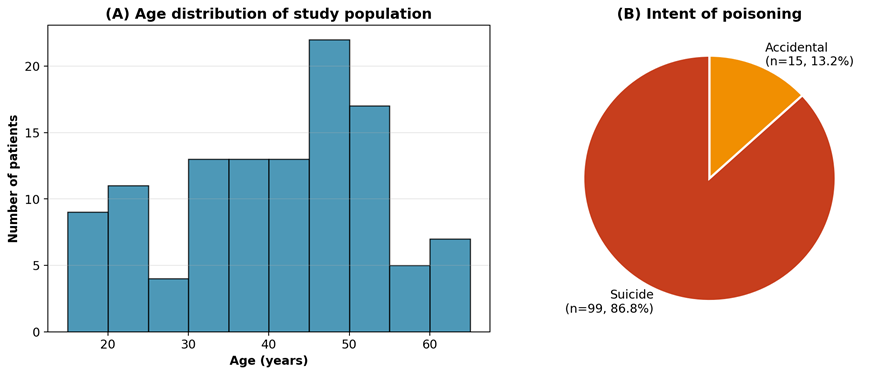
Figure 1. Age distribution (A) and intent of poisoning (B) among 114 patients with organophosphorus compound poisoning.
Compounds implicated
The distribution of the compounds implicated is shown in Figure 2. Formulations containing cypermethrin (as sole ingredient or 10% preparation) were the single largest group (42 cases, 36.8%), followed by chlorpyrifos (16 cases, 14.0%), parathion (14 cases, 12.3%), malathion (12 cases, 10.5%), diazinon (12 cases, 10.5%) and combination Chlorpyrifos 50% + Cypermethrin 5% (9 cases, 7.9%). Two patients each had exposure to ant-powder and unspecified OP compounds; a single case involved dimethoate 30%.
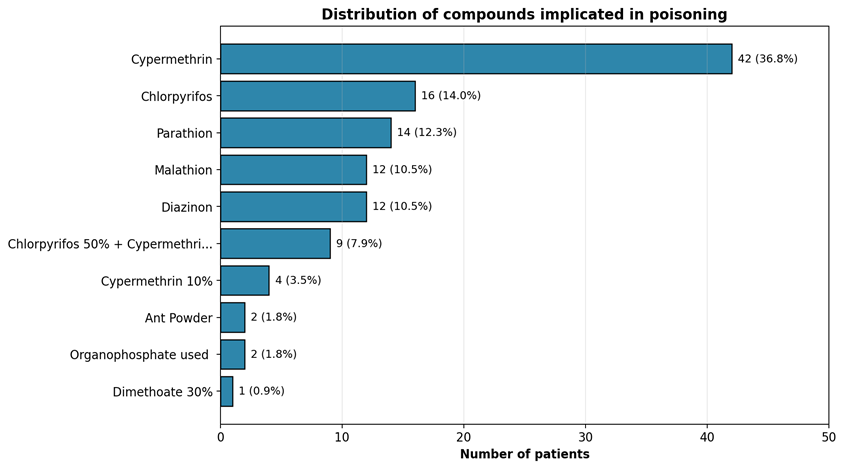
Figure 2. Distribution of pesticide formulations implicated in the study population. Products marketed as “cypermethrin” in the Indian market often contain admixed organophosphates, which explains their inclusion in this OP-poisoning series.
Baseline serum pseudocholinesterase
Baseline serum PCE was available for 87 of the 114 patients (76.3%). The mean PCE at admission was 1267.3 ± 767.0 IU/L (median 986.5 IU/L, range 235.7–3678.9 IU/L), values that lay well below the local laboratory reference range (~4650–10440 IU/L) in every measured case. When patients were stratified by admission PCE, 12 (13.8%) belonged to the severe category (<500 IU/L), 51 (58.6%) to the moderate category (500–1500 IU/L) and 24 (27.6%) to the mild category (>1500 IU/L) (Figure 3A).
Antidote therapy and its correlation with baseline PCE
Injection atropine was administered to all 114 patients. Eighty-nine patients (78.1%) received an initial bolus dose of 4 mg followed by titrated infusion, and 25 (21.9%) received a starting dose of 2 mg based on clinical severity. The mean duration of atropine therapy in the overall cohort was 4.02 ± 1.72 days (range 1–8 days). Pralidoxime was administered to only 7 patients (6.1%): 5 received 1 g twice daily and one each received 2 g twice daily and an unspecified regimen, mostly for 1–2 days. This markedly low use of PAM reflects institutional practice weighted toward atropine monotherapy, in keeping with prior Indian reports that have questioned incremental benefit of PAM. [22,23]
When atropine duration was analyzed across PCE severity categories, a graded pattern was evident: patients in the severe category required atropine for a mean of 4.92 ± 1.68 days, compared with 4.08 ± 1.76 days in the moderate group and 3.67 ± 1.58 days in the mild group (one-way ANOVA F = 2.15, p = 0.12). Pearson correlation between admission PCE and duration of atropine therapy showed a weak inverse relationship (r = –0.159, p = 0.14, n = 87) (Figure 3B). Data are summarized in Table 2.
Table 2. Antidote requirement and clinical outcomes stratified by baseline serum PCE (n = 87).
|
Variable |
Severe (<500 IU/L) n=12 |
Moderate (500–1500) n=51 |
Mild (>1500) n=24 |
p-value |
|
Mean PCE (IU/L) |
347.5 ± 82.1 |
959.1 ± 273.4 |
2374.6 ± 671.2 |
<0.001 |
|
Atropine duration (days) |
4.92 ± 1.68 |
4.08 ± 1.76 |
3.67 ± 1.58 |
0.12 |
|
Hospital stay (days) |
12.42 ± 9.69 |
9.57 ± 3.77 |
8.92 ± 3.02 |
0.11 |
|
Respiratory failure, n (%) |
2 (16.7) |
12 (23.5) |
7 (29.2) |
0.70 |
|
Intermediate syndrome, n (%) |
1 (8.3) |
2 (3.9) |
2 (8.3) |
0.65 |
|
PAM administered, n (%) |
3 (25.0) |
4 (7.8) |
0 (0.0) |
0.02 |
|
Mortality |
0 |
0 |
0 |
— |
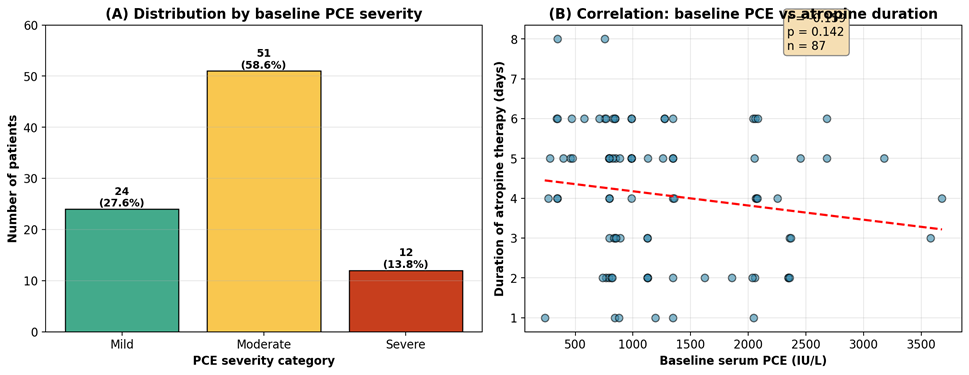
Figure 3. (A) Distribution of the 87 patients with a documented admission PCE across mild, moderate and severe categories. (B) Scatter plot of baseline PCE against duration of atropine therapy, showing a weak inverse trend (r = –0.16, p = 0.14).
Clinical outcomes
The mean duration of hospitalization for the whole cohort was 10.0 ± 5.2 days (range 5–40 days). Across PCE strata, hospital stay was longest in the severe group (12.4 ± 9.7 days), intermediate in the moderate group (9.6 ± 3.8 days) and shortest in the mild group (8.9 ± 3.0 days) (F = 2.23, p = 0.11) (Figure 4). Pearson correlation between admission PCE and duration of hospitalization was r = –0.134 (p = 0.22), again suggesting a graded but statistically non-significant relationship.
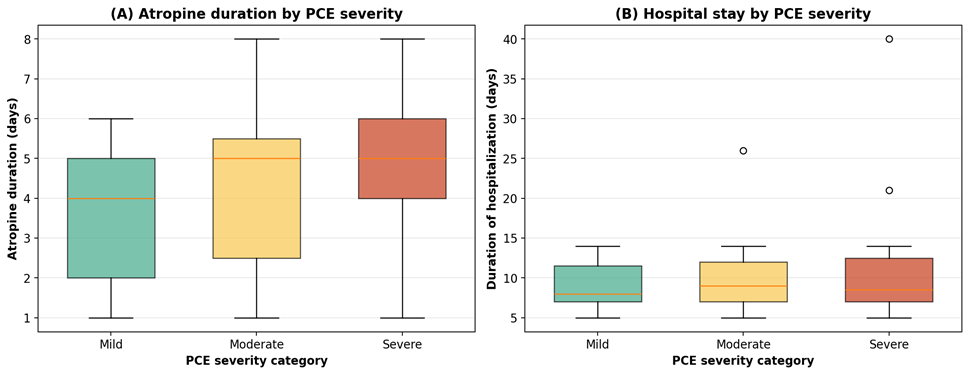
Figure 4. Box-plots showing (A) duration of atropine therapy and (B) duration of hospitalization across the three baseline PCE severity strata. The median values increase progressively from mild to severe categories.
Respiratory failure requiring supplemental oxygen and/or ventilatory support developed in 24 patients (21.1%), and clinical intermediate syndrome occurred in 7 (6.1%). Notably, respiratory failure was not confined to the severe PCE stratum, being observed across all three groups (Figure 5). None of the 114 patients died during the study period; all were discharged in a recovered state. Adverse drug reactions attributable to atropine, most commonly emesis, tachycardia and dryness of mouth, were noted in 44 records (38.6%), all managed conservatively without discontinuation of therapy.
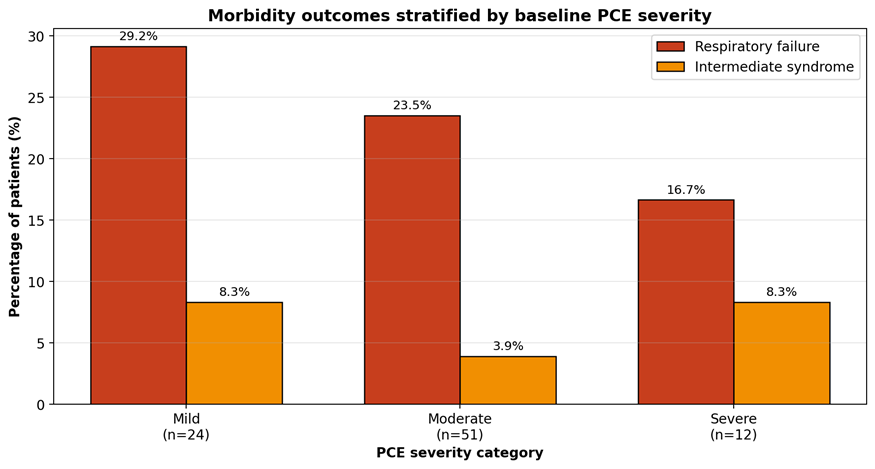
Figure 5. Proportion of patients developing respiratory failure and intermediate syndrome stratified by baseline PCE category
DISCUSSION:
The present retrospective analysis of 114 patients admitted with OP compound poisoning to a tertiary care hospital in Bengaluru describes a young, predominantly male population in whom suicidal ingestion accounted for nearly nine out of every ten exposures. The demographic profile mirrors that reported in other Indian series, in which OP self-poisoning peaks in the third and fourth decades of life and shows a male preponderance ranging from 55% to 65%. [4,5,15,28] This pattern reflects the ready domestic availability of highly hazardous pesticides in agrarian households, an important contextual factor emphasized by Eddleston and colleagues in their global reviews of OP self-poisoning. [1,3]
Baseline serum PCE was reduced in every measured patient in the present cohort, with a mean of 1267 IU/L against a local reference lower limit of 4650 IU/L. This finding is congruent with the seminal work of Namba, who demonstrated a progressive fall in cholinesterase activity paralleling the severity of the cholinergic toxidrome. [12] Chaudhary et al. reported a mean PCE of 3154 IU/L in 70 north Indian patients and used a cut-off of 700 IU/L to define severe poisoning; [13] a similar pattern of dose-dependent PCE reduction has been described by Prasad et al. and Aygun et al. [15,17] The magnitude of the reduction observed in our patients is comparable to these earlier series and reinforces the value of PCE assay as a bedside confirmatory test, particularly in patients whose history of exposure is uncertain or absent. [14,15]
Our analysis of the relationship between baseline PCE and antidote requirement demonstrated a graded, dose-response-like association: patients with severe reduction in PCE required atropine for the longest duration and had the longest hospital stay, whereas mildly affected patients required the shortest. Although these differences did not reach statistical significance in our cohort (p = 0.12 and p = 0.11 respectively), the direction of effect is consistent with the observations of Chaudhary et al. [13] and with the review by Peter et al., which suggested that patients with greater cholinesterase inhibition tend to require more prolonged pharmacological support. [7] Pearson correlation likewise revealed a weak inverse trend between baseline PCE and antidote duration (r = –0.16), which agrees with reports from Chen et al. and Manu et al., who found that lower cholinesterase values tend to predict higher atropine requirement and longer ventilation. [16,29] However, our results also echo those of Nouira and colleagues, who found that a single admission cholinesterase value correlates poorly with atropine dose in intensive care patients, and of Ahn et al., who cautioned that PCE lacks precise prognostic value when used in isolation. [18,19] Taken together, these observations support the pragmatic view that PCE is best interpreted alongside clinical severity scoring systems such as the Peradeniya OP Poisoning (POP) scale rather than as a stand-alone determinant of therapy. [27,30,31]
Only 7 of our 114 patients (6.1%) received pralidoxime, reflecting the ongoing controversy surrounding oxime therapy. Randomised trials from the Indian subcontinent, notably by Cherian et al. and by Banerjee and colleagues, have failed to demonstrate benefit from bolus PAM over atropine alone. [22,23] Conversely, the constant-infusion trial by Pawar et al. reported reductions in mortality and ventilator requirement with a high-dose regimen (2 g loading followed by 1 g/h for 48 h). [24] The 2008 review by Eddleston et al. and subsequent Cochrane analyses concluded that current evidence remains insufficient to define the optimum PAM dose or duration, and that lower-dose bolus regimens as used in most Indian hospitals may not achieve therapeutically relevant plasma concentrations. [3,25,32] Our departmental practice of atropine-dominant management with selective use of PAM is consistent with this literature.
Respiratory failure developed in 21.1% of our patients and intermediate syndrome in 6.1%. These frequencies are broadly consistent with Indian and Sri Lankan reports, where intermediate syndrome has been described in 10–40% of severely poisoned patients. [9,27,33] Notably, respiratory compromise in our cohort was not confined to the severe PCE stratum, mirroring earlier observations that respiratory failure in OP poisoning is multifactorial — driven by central respiratory depression, aspiration pneumonitis, bronchorrhoea, muscle weakness and sedative-induced hypoventilation — and cannot be reliably predicted from PCE alone. [34,35] The zero mortality observed in our study is at variance with pooled Indian mortality estimates of 4–15% [4,5,13] and probably reflects a combination of early presentation, use of protocolised atropinisation, and relatively less lethal formulations (many patients ingested pyrethroid-containing preparations marketed alongside OPs). This favourable outcome should not, however, obscure the fact that all 114 patients required active hospital management and that nearly a quarter developed serious respiratory morbidity.
The cypermethrin-predominant compound profile deserves comment. Cypermethrin is technically a pyrethroid, but Indian formulations frequently contain OP–pyrethroid mixtures (as exemplified by the “Chlorpyrifos 50% + Cypermethrin 5%” group in this cohort). [3,4] Patients admitted with a history of consuming a product labelled “cypermethrin” often present with cholinergic features, and PCE assay is invaluable in disentangling pure pyrethroid exposure from mixed OP toxicity. This diagnostic dependence on PCE further underscores the enzyme’s utility in the Indian pesticide milieu, where the exact composition of ingested products is often unknown. [15,28]
Several limitations of this study deserve mention. First, the retrospective, record-based design meant that PCE assays were unavailable in 27 patients (23.7%) — an unavoidable limitation of routine hospital data. Second, admission PCE was available as a single time point; serial PCE monitoring, as recommended by Chen et al., might have provided stronger prognostic signals. [16] Third, the cumulative dose of atropine could not be reliably reconstructed from the case sheets because the frequency notation (Stat, TDS, 1 mL/h) varied between clinicians; we therefore used duration as a proxy. Fourth, the small number of severe cases (n = 12) and the absence of mortality limited the statistical power to detect small differences across PCE strata. Finally, the single-centre design restricts generalisability. Notwithstanding these limitations, our findings offer contemporary Indian data on the demographic pattern, PCE distribution and antidote practice in OP poisoning, and they underline the need for larger prospective studies using validated severity scales, serial cholinesterase measurements and standardized cumulative atropine dosing.
CONCLUSION:
In this retrospective analysis of 114 patients admitted with acute organophosphorus poisoning to a tertiary care hospital in Bengaluru, baseline serum pseudocholinesterase activity was reduced in every measured case and showed a graded — though not statistically significant — inverse relationship with the duration of atropine therapy and hospital stay. Patients in the severe PCE category (<500 IU/L) tended to receive prolonged atropine and had a higher likelihood of pralidoxime co-administration. Pralidoxime use was infrequent overall, consistent with prevailing Indian practice and with equivocal trial evidence. The morbidity burden of OP poisoning remained substantial, with one in five patients developing respiratory failure, although no deaths occurred in this cohort. Baseline PCE remains a useful, inexpensive and readily available marker to confirm the diagnosis of OP poisoning and to gauge severity, but as a single admission value it should not be used in isolation to titrate antidote dosing. Its value lies in complementing bedside clinical severity scoring and serial biochemical monitoring in a systematic, protocolised approach to acute OP poisoning.
REFERENCES:
1. Mew EJ, Padmanathan P, Konradsen F, Eddleston M, Chang SS, Phillips MR, et al. The global burden of fatal self-poisoning with pesticides 2006–15: systematic review. J Affect Disord. 2017;219:93–104.
2. Gunnell D, Eddleston M, Phillips MR, Konradsen F. The global distribution of fatal pesticide self-poisoning: systematic review. BMC Public Health. 2007;7:357.
3. Eddleston M, Buckley NA, Eyer P, Dawson AH. Management of acute organophosphorus pesticide poisoning. Lancet. 2008;371(9612):597–607.
4. Srivastava A, Peshin SS, Kaleekal T, Gupta SK. An epidemiological study of poisoning cases reported to the National Poisons Information Centre, All India Institute of Medical Sciences, New Delhi. Hum Exp Toxicol. 2005;24(6):279–85.
5. Kumar SV, Venkateswarlu B, Sasikala M, Kumar GV. A retrospective analysis of acute organophosphorus poisoning cases admitted to the tertiary care teaching hospital in South India. Ann Afr Med. 2010;9(1):7–10.
6. Eddleston M. Novel clinical toxicology and pharmacology of organophosphorus insecticide self-poisoning. Annu Rev Pharmacol Toxicol. 2019;59:341–60.
7. Peter JV, Sudarsan TI, Moran JL. Clinical features of organophosphate poisoning: a review of different classification systems and approaches. Indian J Crit Care Med. 2014;18(11):735–45.
8. Roberts DM, Aaron CK. Management of acute organophosphorus pesticide poisoning. BMJ. 2007;334(7594):629–34.
9. Senanayake N, Karalliedde L. Neurotoxic effects of organophosphorus insecticides. An intermediate syndrome. N Engl J Med. 1987;316(13):761–3.
10. Jayawardane P, Dawson AH, Weerasinghe V, Karalliedde L, Buckley NA, Senanayake N. The spectrum of intermediate syndrome following acute organophosphate poisoning: a prospective cohort study. PLoS Med. 2008;5(7):e147.
11. Singh S, Sharma N. Neurological syndromes following organophosphate poisoning. Neurol India. 2000;48(4):308–13.
12. Namba T. Cholinesterase inhibition by organophosphorus compounds and its clinical effects. Bull World Health Organ. 1971;44(1–3):289–307.
13. Chaudhary SC, Singh K, Sawlani KK, Jain N, Vaish AK, Atam V, et al. Prognostic significance of estimation of pseudocholinesterase activity and role of pralidoxime therapy in organophosphorous poisoning. Toxicol Int. 2013;20(3):214–7.
14. Worek F, Thiermann H, Wille T. Organophosphorus compounds and oximes: a critical review. Arch Toxicol. 2020;94(7):2275–92.
15. Prasad DR, Jirli PS, Mahesh M, Mamatha S. Relevance of plasma cholinesterase to clinical findings in acute organophosphorous poisoning. Asia Pac J Med Toxicol. 2013;2(1):23–7.
16. Chen HY, Wang WW, Chaou CH, Lin CC. Prognostic value of serial serum cholinesterase activities in organophosphate poisoned patients. Am J Emerg Med. 2009;27(9):1034–9.
17. Aygun D, Doganay Z, Altintop L, Guven H, Onar M, Deniz T, et al. Serum acetylcholinesterase and prognosis of acute organophosphate poisoning. J Toxicol Clin Toxicol. 2002;40(7):903–10.
18. Nouira S, Abroug F, Elatrous S, Boujdaria R, Bouchoucha S. Prognostic value of serum cholinesterase in organophosphate poisoning. Chest. 1994;106(6):1811–4.
19. Eddleston M, Eyer P, Worek F, Sheriff MHR, Buckley NA. Predicting outcome using butyrylcholinesterase activity in organophosphorus pesticide self-poisoning. QJM. 2008;101(6):467–74.
20. Eddleston M, Dawson A, Karalliedde L, Dissanayake W, Hittarage A, Azher S, et al. Early management after self-poisoning with an organophosphorus or carbamate pesticide — a treatment protocol for junior doctors. Crit Care. 2004;8(6):R391–7.
21. Eddleston M, Buckley NA, Checketts H, Senarathna L, Mohamed F, Sheriff MHR, et al. Speed of initial atropinisation in significant organophosphorus pesticide poisoning — a systematic comparison of recommended regimens. J Toxicol Clin Toxicol. 2004;42(6):865–75.
22. Cherian AM, Peter JV, Samuel J, Jaydevan R, Peter S, Joel S, et al. Effectiveness of P2AM (pralidoxime chloride) in the treatment of organophosphorus poisoning: a randomised, double-blind, placebo-controlled clinical trial. J Assoc Physicians India. 1997;45(1):22–4.
23. Banerjee I, Tripathi SK, Roy AS. Efficacy of pralidoxime in organophosphorus poisoning: revisiting the controversy in Indian setting. J Postgrad Med. 2014;60(1):27–30.
24. Pawar KS, Bhoite RR, Pillay CP, Chavan SC, Malshikare DS, Garad SG. Continuous pralidoxime infusion versus repeated bolus injection to treat organophosphorus pesticide poisoning: a randomised controlled trial. Lancet. 2006;368(9553):2136–41.
25. Eddleston M, Szinicz L, Eyer P, Buckley N. Oximes in acute organophosphorus pesticide poisoning: a systematic review of clinical trials. QJM. 2002;95(5):275–83.
26. von Elm E, Altman DG, Egger M, Pocock SJ, Gøtzsche PC, Vandenbroucke JP, et al. The Strengthening the Reporting of Observational Studies in Epidemiology (STROBE) statement: guidelines for reporting observational studies. Lancet. 2007;370(9596):1453–7.
27. Senanayake N, de Silva HJ, Karalliedde L. A scale to assess severity in organophosphorus intoxication: POP scale. Hum Exp Toxicol. 1993;12(4):297–9.
28. Kanchan T, Menezes RG. Suicidal poisoning in Southern India: gender differences. J Forensic Leg Med. 2008;15(1):7–14.
29. Manu MS, Prashant V, Akila P, Suma MN, Basavanagowdappa H. A retrospective analysis of serial measurement of serum cholinesterase in acute poisoning with organophosphate compounds. Toxicol Int. 2012;19(3):255–9.
30. Malaviya NB, Parikh R, Pancholi K, Belim OB. Assessment of the Peradeniya Organophosphorus Poisoning Scale as a severity and prognostic marker in patients with acute organophosphorus poisoning presenting to an emergency medicine department. Cureus. 2023;15(6):e40277.
31. Sam KG, Kondabolu K, Pati D, Kamath A, Pradeep Kumar G, Rao PGM. Poisoning severity score, APACHE II and GCS: effective clinical indices for estimating severity and predicting outcome of acute organophosphorus and carbamate poisoning. J Forensic Leg Med. 2009;16(5):239–47.
32. Buckley NA, Eddleston M, Li Y, Bevan M, Robertson J. Oximes for acute organophosphate pesticide poisoning. Cochrane Database Syst Rev. 2011;(2):CD005085.
33. Karki P, Ansari JA, Bhandary S, Koirala S. Cardiac and electrocardiographical manifestations of acute organophosphate poisoning. Singapore Med J. 2004;45(8):385–9.
34. Eddleston M, Mohamed F, Davies JOJ, Eyer P, Worek F, Sheriff MHR, et al. Respiratory failure in acute organophosphorus pesticide self-poisoning. QJM. 2006;99(8):513–22.
35. Goel A, Joseph S, Dutta TK. Organophosphorus poisoning: predicting the need for ventilator support. J Assoc Physicians India. 1998;46(9):786–90.
36. Bardin PG, van Eeden SF, Moolman JA, Foden AP, Joubert JR. Organophosphate and carbamate poisoning. Arch Intern Med. 1994;154(13):1433–41.
37. Jesslin J, Adepu R, Churi S. Assessment of prevalence and mortality incidences due to poisoning in a South Indian tertiary care teaching hospital. Indian J Pharm Sci. 2010;72(5):587–91.
38. Thundiyil JG, Stober J, Besbelli N, Pronczuk J. Acute pesticide poisoning: a proposed classification tool. Bull World Health Organ. 2008;86(3):205–9.