Correlation of EQD2 with Acute Genitourinary and Gastrointestinal Toxicities Following Vaginal Cuff Brachytherapy in Endometrial Cancer: A CTCAE v5.0-Based Prospective Analysis.
- S B Nikhitha , Radiation Oncologist, India
- Vinay M Ural , Senior Consultant, Department of Radiation Oncology, Apollo Hospitals Bengaluru, Bengaluru, Karnataka, India
- S B Nishitha , Assistant Professor, Department of Pharmacology, Shri Atal Bihari Vajpayee Medical College and Research Institute, Bengaluru, Karnataka, India.
Article Information:
Abstract:
Background: Adjuvant vaginal cuff high-dose-rate (HDR) brachytherapy is a standard component of care for high-intermediate and high-risk endometrial cancer. Historically, 2D orthogonal-film planning inadequately assessed doses to the bladder, rectum and sigmoid colon. Computed tomography (CT) based 3D planning enables volumetric evaluation of these organs at risk (OAR) and permits equivalent-dose-in-2 Gy-fractions (EQD2) analysis. Data correlating cumulative EQD2 with acute toxicity in the Indian population remain limited. Methods: This prospective observational study enrolled 58 women with histologically confirmed endometrial carcinoma treated with adjuvant vaginal cuff HDR brachytherapy (VBT) at a tertiary cancer centre between February 2022 and July 2023. Patients received VBT alone (n=28) or external beam radiotherapy followed by VBT (EBRT+VBT, n=30). CT-based 3D planning was performed using single-channel vaginal cylinders and Ir-192 HDR source. Doses to 0.1 cc, 1 cc, 2 cc and 5 cc of bladder, rectum and sigmoid colon were recorded; cumulative EQD2 was calculated with an α/β of 3 Gy. Acute toxicity (proctitis, cystitis, vaginitis and diarrhoea) was graded per CTCAE v5.0 two weeks after treatment. Results: The majority of patients were >60 years (n=32, 55.2%), and FIGO stage IB and III predominated. In the EBRT+VBT arm, the frequency and severity of proctitis, cystitis and diarrhoea rose progressively with cumulative EQD2: at EQD2 32.4 Gy, 20% experienced grade ≥1 proctitis, 20% grade 1 cystitis and 26.7% grade ≥1 diarrhoea. In the VBT-alone arm, at EQD2 70 Gy, 14.3% developed grade 1 proctitis, 14.3% grade ≥1 cystitis and 21.4% grade 1 vaginitis. Mean D2cc for the rectum (3.59 ± 0.56 Gy in EBRT+VBT vs 3.66 ± 0.56 Gy in VBT) and bladder (2.89 ± 0.71 Gy vs 2.88 ± 0.64 Gy) remained within established constraints. No grade 3 or higher acute toxicities were observed. Conclusion: CT-based 3D planning for vaginal cuff HDR brachytherapy allowed accurate volumetric OAR dosimetry and delivered acceptable rates of predominantly grade 1 acute toxicity, with a clear dose–response relationship between cumulative EQD2 and the incidence of proctitis, cystitis and diarrhoea.
Keywords:
Article :
INTRODUCTION:
Endometrial carcinoma is the most common gynaecological malignancy in developed countries and the sixth most common cancer in women worldwide, with an estimated 417,000 new cases and 97,000 deaths reported in the GLOBOCAN 2020 update.¹ Although the age-standardised incidence in India is comparatively lower than in Western populations, it is rising steadily, and India recorded approximately 16,413 new cases and 6,385 deaths from corpus uteri cancer in 2020, representing a considerable regional burden.²,³ The majority of patients present with post-menopausal bleeding, allowing diagnosis at an early clinical stage and offering favourable prognosis after appropriate multimodality treatment.⁴
The mainstay of management for localised disease is total abdominal hysterectomy with bilateral salpingo-oophorectomy, with or without pelvic and para-aortic lymphadenectomy. Adjuvant radiotherapy is tailored to pathological risk factors including tumour grade, depth of myometrial invasion, lymphovascular space invasion (LVSI), cervical stromal involvement and, more recently, molecular subtype, as codified in the 2023 International Federation of Gynecology and Obstetrics (FIGO) staging system.⁵ For patients with high-intermediate risk features, the landmark PORTEC-2 randomised trial demonstrated that vaginal cuff brachytherapy (VBT) alone was non-inferior to pelvic external beam radiotherapy (EBRT) for vaginal control and afforded significantly better quality of life and fewer gastrointestinal (GI) and genitourinary (GU) toxicities.⁶,⁷ Subsequent long-term follow-up of PORTEC-2 confirmed durable local control with VBT as adjuvant therapy for high-intermediate risk disease.⁸ For high-risk endometrial cancer, external beam pelvic radiotherapy followed by a vaginal brachytherapy boost, with or without chemotherapy, remains standard.⁹,¹⁰
Historically, vaginal cuff brachytherapy has been planned using two-dimensional (2D) orthogonal radiographs, wherein doses to the bladder and rectum are estimated at ICRU reference points that do not represent true three-dimensional (3D) dose distributions.¹¹ Small-bowel and sigmoid colon doses are typically not accounted for, despite the fact that following hysterectomy these organs frequently prolapse into the pelvis and lie in close apposition to the vaginal vault, placing them at risk of significant radiation exposure.¹²,¹³ The advent of computed tomography (CT)-based 3D planning has enabled volumetric delineation of target and organs at risk (OAR) and reporting of dose to clinically meaningful volumes such as D0.1cc, D1cc, D2cc and D5cc, as recommended by the Groupe Européen de Curiethérapie–European Society for Radiotherapy and Oncology (GEC-ESTRO) working group.¹⁴,¹⁵ The American Brachytherapy Society (ABS) has similarly endorsed image-based planning in its consensus statements for adjuvant vaginal cuff brachytherapy.¹⁶,¹⁷
When patients receive both EBRT and VBT, biologically effective doses to OAR must be summed across the two components. Because HDR VBT delivers a high dose per fraction, the equivalent dose in 2-Gy fractions (EQD2), computed using the linear-quadratic model with an α/β of 3 Gy for late-responding normal tissues, is the accepted radiobiological surrogate for cumulative injury.¹⁸,¹⁹ Higher cumulative EQD2 to the bladder, rectum and sigmoid colon has been linked, in cervical cancer brachytherapy, to increased incidence of grade ≥2 late GI and GU morbidity, and QUANTEC has provided broad dose–volume tolerance benchmarks for these organs.²⁰,²¹ In post-hysterectomy vaginal cuff brachytherapy, however, prospective correlations between cumulative EQD2 and CTCAE-graded acute toxicity are relatively sparse, particularly from Indian centres.
Against this background, the present prospective observational study was undertaken to evaluate volumetric doses to the bladder, rectum and sigmoid colon using CT-based 3D planning for vaginal cuff HDR brachytherapy in endometrial cancer, and to correlate cumulative EQD2 with acute proctitis, cystitis, vaginitis and diarrhoea graded according to the Common Terminology Criteria for Adverse Events (CTCAE) version 5.0.²².
MATERIALS AND METHODS:
Study design and population
This prospective observational study was conducted in the Department of Radiation Oncology at a tertiary care cancer centre (Apollo Hospitals, Bannerghatta Road, Bengaluru, India) between February 2022 and July 2023 after approval from the institutional review board. Consecutive patients diagnosed with endometrial carcinoma who were planned for adjuvant vaginal cuff HDR brachytherapy, with or without prior EBRT, were screened. All enrolled patients had undergone modified radical hysterectomy with or without pelvic and para-aortic lymphadenectomy and had histopathological confirmation of endometrial malignancy requiring adjuvant radiotherapy on the basis of established risk factors as per the ESMO–ESGO–ESTRO consensus and PORTEC risk stratification.²³ Written informed consent was obtained from every participant.
Inclusion and exclusion criteria
Patients were eligible if they had undergone hysterectomy for endometrial carcinoma and were planned for adjuvant VBT alone or EBRT followed by VBT. Patients with vaginal recurrence at presentation, previously irradiated pelvic disease, distant metastases at diagnosis or pregnancy were excluded.
Sample size
Sample size was estimated based on the mean 3D maximum bladder dose reported by Russo et al.,¹¹ using the formula n = Z²1−α/2 × SD²/d². With α = 0.05, Z = 1.96, SD = 32.7 and an absolute precision of 10%, a minimum sample size of 58 patients was required. A total of 58 patients were prospectively recruited and analysed.
Applicator selection and CT simulation
Prior to planning, all patients underwent a gynaecological examination to assess vaginal length and select an appropriate cylinder diameter. A single-channel vaginal cylinder applicator with stackable segments (diameters 2.0–3.5 cm) was used; the widest cylinder that the patient could comfortably accommodate was inserted to optimise mucosal apposition and dose distribution.²⁴ With the applicator in treatment position, a planning CT was acquired from the L4 vertebra to the mid-thigh with a slice thickness of 2 mm.
Contouring and target definition
The bladder, rectum and sigmoid colon were contoured on every axial slice by a single radiation oncologist (primary investigator) following the Radiation Therapy Oncology Group (RTOG) pelvic normal-tissue delineation atlas.²⁵ Treatment length and clinical target volume (CTV) were contoured as recommended by the ABS.¹⁷ The CTV to prescribed depth (CTV depth) was defined as an isotropic 5 mm expansion from the applicator surface over the treatment length, while the CTV surface was defined as the volume encompassing the treatment length at the applicator surface.
Treatment planning and dose prescription
Datasets were transferred to the Varian Eclipse Brachytherapy treatment planning system for 3D optimisation. A single-channel applicator was reconstructed and dwell positions were loaded to cover the target length. Dose was prescribed to either the surface of the cylinder or 5 mm depth as per institutional practice. Dwell time optimisation was performed to deliver the prescribed dose to the CTV while minimising doses to OARs, without compromising target coverage. Fractionation schedules used for VBT alone were 6 Gy × 5 fractions, 5.5 Gy × 5 fractions or 4 Gy × 6 fractions; for EBRT + VBT boost, 6 Gy × 3, 5.5 Gy × 3 or 5 Gy × 3 fractions were prescribed. External beam radiotherapy, when indicated, delivered 45–50.4 Gy in 25–28 fractions using conformal or intensity-modulated techniques as per ABS and ESMO recommendations.⁹,¹⁶
OAR dose reporting and EQD2 calculation
For each OAR, the doses delivered to 0.1 cc, 1 cc, 2 cc and 5 cc (D0.1cc, D1cc, D2cc and D5cc) were extracted from the dose–volume histogram (DVH); the D2cc has been endorsed by GEC-ESTRO as clinically representative for late-responding normal tissues in gynaecological brachytherapy.¹⁴ The equivalent dose in 2 Gy fractions was calculated using the linear-quadratic formula EQD2 = D × (d + α/β) / (2 + α/β), with α/β = 3 Gy for bladder, rectum and sigmoid colon; where EBRT and VBT were combined, cumulative EQD2 was obtained by summation of individual contributions.¹⁸,¹⁹
Toxicity assessment
All patients were reviewed two weeks after completion of brachytherapy for acute treatment-related reactions. Proctitis, cystitis, vaginitis (vaginal inflammation) and diarrhoea were graded prospectively using CTCAE version 5.0.²²
Statistical analysis
Data were entered into a Microsoft Excel spreadsheet and analysed using IBM SPSS version 22.0 (IBM Corp., Armonk, NY, USA). Continuous variables were expressed as mean ± standard deviation (SD) and categorical variables as frequencies and proportions. The chi-square test and Fisher's exact test, as appropriate, were used to compare categorical variables. A two-tailed p-value < 0.05 was considered statistically significant.
RESULTS:
Baseline demographics and stage distribution
Between February 2022 and July 2023, 58 patients were enrolled and analysed: 28 patients received VBT alone and 30 received EBRT followed by VBT. The mean age of the entire cohort was 62.4 ± 8.9 years; 32 patients (55.2%) were older than 60 years, 20 (34.5%) were aged 50–60 years and 6 (10.3%) were younger than 50 years. In the VBT arm, FIGO stages IA–IB predominated, whereas in the EBRT + VBT arm advanced stage IB and stage III disease were more frequent, reflecting stage-driven treatment selection consistent with contemporary guidelines.⁹,²³ Histological grade 2 was the most common differentiation in both arms. Baseline distributions are summarised in Table 1.
Table 1. Baseline demographic, stage and histological characteristics of the study cohort (n=58).
|
Characteristic |
VBT (n=28) |
EBRT + VBT (n=30) |
Total (n=58) |
|
Age (years), n (%) |
|
|
|
|
<50 |
3 (10.7) |
3 (10.0) |
6 (10.3) |
|
50–60 |
9 (32.1) |
11 (36.7) |
20 (34.5) |
|
>60 |
16 (57.1) |
16 (53.3) |
32 (55.2) |
|
FIGO stage, n (%) |
|
|
|
|
I / IA |
17 (60.7) |
17 (56.7) |
34 (58.6) |
|
IB / IB2 |
10 (35.7) |
12 (40.0) |
22 (37.9) |
|
II / IIB |
1 (3.6) |
0 (0.0) |
1 (1.7) |
|
III (any) |
0 (0.0) |
1 (3.3) |
1 (1.7) |
|
Histological grade, n (%) |
|
|
|
|
Grade 1 |
11 (39.3) |
13 (43.3) |
24 (41.4) |
|
Grade 2 |
17 (60.7) |
17 (56.7) |
34 (58.6) |
Treatment characteristics
In the VBT arm, the most common regimen was 6 Gy × 5 fractions (n=18, 64.3%), followed by 5.5 Gy × 5 fractions (n=8, 28.6%) and 4 Gy × 6 fractions (n=2, 7.1%). In the EBRT + VBT arm, 6 Gy × 3 fractions (n=15, 50.0%), 5.5 Gy × 3 fractions (n=10, 33.3%) and 5 Gy × 3 fractions (n=5, 16.7%) were used as the brachytherapy boost after 45–50.4 Gy pelvic EBRT. Notably, women older than 60 years more often received the higher-dose 6 Gy per fraction schedule in both arms, whereas patients younger than 50 years more frequently received the lower per-fraction 4 Gy regimen.
Volumetric OAR dosimetry
Volumetric OAR doses per fraction were low and consistent between arms. In the EBRT + VBT arm, mean bladder D0.1cc, D1cc, D2cc and D5cc were 3.69 ± 0.86, 3.09 ± 0.77, 2.89 ± 0.71 and 2.47 ± 0.62 Gy respectively, and corresponding rectal values were 4.38 ± 0.55, 3.83 ± 0.60, 3.59 ± 0.56 and 3.18 ± 0.67 Gy. For the sigmoid colon (SC), mean D0.1cc, D1cc, D2cc and D5cc were 2.31 ± 0.95, 1.90 ± 0.74, 1.74 ± 0.65 and 1.52 ± 0.55 Gy. In the VBT-alone arm, mean bladder D2cc and rectal D2cc were 2.88 ± 0.64 Gy and 3.66 ± 0.56 Gy respectively, with sigmoid D2cc of 1.90 ± 0.66 Gy. All mean D2cc values remained well within widely accepted per-fraction tolerance benchmarks.²⁰,²¹ Detailed dosimetry is presented in Table 2.
Table 2. Per-fraction volumetric doses (mean ± SD, Gy) to bladder, rectum and sigmoid colon in the EBRT + VBT and VBT arms.
|
Organ / volume |
EBRT+VBT Mean ± SD |
EBRT+VBT Range |
VBT Mean ± SD |
VBT Range |
|
Bladder D0.1cc (Gy) |
3.69 ± 0.86 |
2.21–5.78 |
3.61 ± 0.71 |
2.60–5.08 |
|
Bladder D1cc (Gy) |
3.09 ± 0.77 |
1.83–4.70 |
3.07 ± 0.67 |
1.99–4.25 |
|
Bladder D2cc (Gy) |
2.89 ± 0.71 |
1.67–4.31 |
2.88 ± 0.64 |
1.95–3.94 |
|
Bladder D5cc (Gy) |
2.47 ± 0.62 |
1.37–3.70 |
2.47 ± 0.54 |
1.68–3.48 |
|
Rectum D0.1cc (Gy) |
4.38 ± 0.55 |
3.38–5.16 |
4.44 ± 0.49 |
3.40–5.10 |
|
Rectum D1cc (Gy) |
3.83 ± 0.60 |
2.58–4.68 |
3.90 ± 0.57 |
2.55–4.69 |
|
Rectum D2cc (Gy) |
3.59 ± 0.56 |
2.57–4.58 |
3.66 ± 0.56 |
2.57–4.59 |
|
Rectum D5cc (Gy) |
3.18 ± 0.67 |
2.35–4.92 |
3.30 ± 0.78 |
2.00–4.94 |
|
Sigmoid D0.1cc (Gy) |
2.31 ± 0.95 |
1.06–4.16 |
2.55 ± 0.96 |
1.42–4.17 |
|
Sigmoid D1cc (Gy) |
1.90 ± 0.74 |
1.04–3.32 |
2.10 ± 0.75 |
1.06–3.32 |
|
Sigmoid D2cc (Gy) |
1.74 ± 0.65 |
0.90–3.06 |
1.90 ± 0.66 |
0.95–3.08 |
|
Sigmoid D5cc (Gy) |
1.52 ± 0.55 |
0.80–2.62 |
1.66 ± 0.57 |
0.79–2.64 |
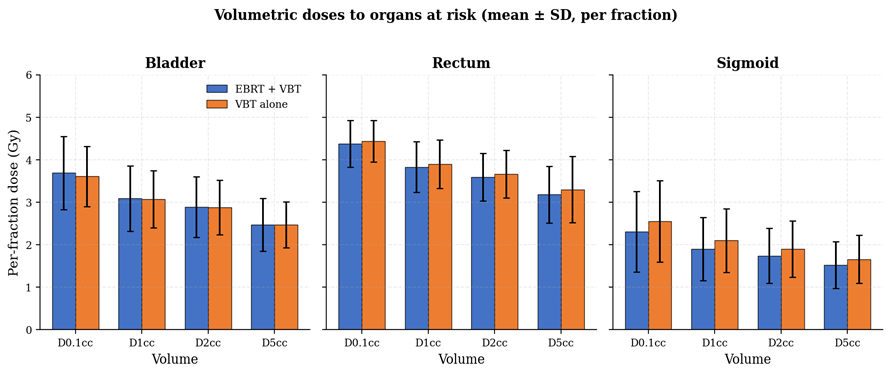
Figure 1. Volumetric doses to organs at risk during vaginal cuff HDR brachytherapy. Mean per-fraction doses (± SD) delivered to the D0.1cc, D1cc, D2cc and D5cc of bladder, rectum and sigmoid colon are shown for the EBRT + VBT (blue) and VBT-alone (orange) arms. Per-fraction rectal D2cc remained ≤ 3.66 Gy and bladder D2cc ≤ 2.89 Gy across both arms.
Correlation of EQD2 with acute toxicity
Cumulative EQD2 was computed for each patient by summing individual fraction contributions using α/β = 3 Gy. In the EBRT + VBT arm, cumulative EQD2 ranged from 24 Gy to 32.4 Gy across the different boost regimens, whereas in the VBT arm cumulative EQD2 ranged from 33.6 Gy (4 Gy × 6 fractions) to 70 Gy (6 Gy × 5 fractions).
A clear dose–response relationship was observed. In the EBRT + VBT arm (Table 3), at an EQD2 of 24 Gy only 3.3% of patients developed grade 1 proctitis and none experienced cystitis, vaginitis or diarrhoea. As cumulative EQD2 rose to 28 Gy, 16.7% developed grade 1 diarrhoea, 3.3% grade 2 diarrhoea, and 6.7% grade 1 cystitis. At the highest cumulative EQD2 of 32.4 Gy, 13.3% experienced grade 1 and 6.7% grade 2 proctitis, 20% grade 1 cystitis, 16.7% grade 1 and 10.0% grade 2 diarrhoea, and 3.3% grade 1 vaginitis.
Table 3. Frequency of acute CTCAE v5.0 grade 1 (G1) and grade 2 (G2) toxicity by cumulative EQD2 in the EBRT + VBT arm.
|
EQD2 (Gy) |
Proctitis G1/G2 |
Cystitis G1/G2 |
Vaginitis G1/G2 |
Diarrhoea G1/G2 |
|
24 (n=5) |
1 (3.3%) / 0 |
0 / 0 |
0 / 0 |
0 / 0 |
|
28 (n=8) |
0 / 0 |
2 (6.7%) / 0 |
0 / 0 |
5 (16.7%) / 1 (3.3%) |
|
28.05 (n=2) |
1 (3.3%) / 0 |
0 / 0 |
0 / 0 |
0 / 0 |
|
32.4 (n=15) |
4 (13.3%) / 2 (6.7%) |
6 (20.0%) / 0 |
1 (3.3%) / 0 |
5 (16.7%) / 3 (10.0%) |
|
Total (n=30) |
6 (20.0%) / 2 (6.7%) |
8 (26.7%) / 0 |
1 (3.3%) / 0 |
10 (33.3%) / 4 (13.3%) |
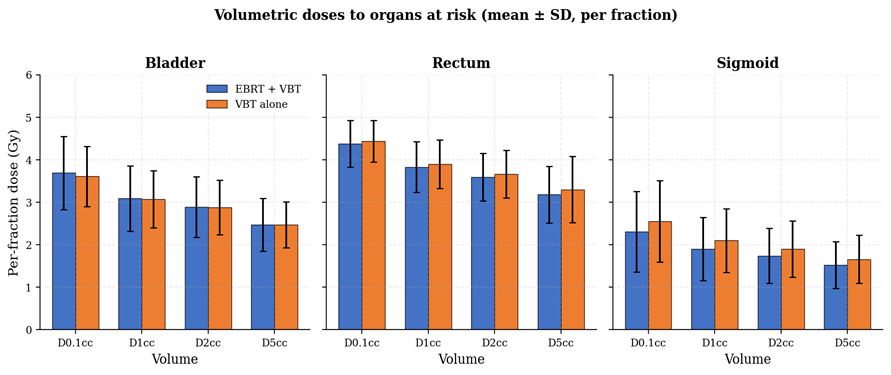
Figure 2. Dose–response relationship between cumulative EQD2 (Gy) and the incidence of any-grade acute proctitis, cystitis, vaginitis and diarrhoea in the EBRT + VBT arm (n = 30). The frequency of proctitis, cystitis and diarrhoea rose progressively with increasing EQD2, with the highest rates observed at 32.4 Gy.
In the VBT-alone arm (Table 4), 7.1% of patients treated to EQD2 33.6 Gy experienced grade 1 proctitis and grade 1 vaginitis, without cystitis or diarrhoea. At EQD2 46.75 Gy, 7.1% each developed grade 1 proctitis, diarrhoea and vaginitis. At the highest cumulative EQD2 of 70 Gy, 14.3% developed grade 1 proctitis, 10.7% grade 1 and 3.6% grade 2 cystitis, 21.4% grade 1 vaginitis and 3.6% grade 2 diarrhoea. No grade 3 or higher acute toxicities were observed in either arm.
Table 4. Frequency of acute CTCAE v5.0 grade 1 (G1) and grade 2 (G2) toxicity by cumulative EQD2 in the VBT-alone arm.
|
EQD2 (Gy) |
Proctitis G1/G2 |
Cystitis G1/G2 |
Vaginitis G1/G2 |
Diarrhoea G1/G2 |
|
33.6 (n=2) |
1 (3.6%) / 0 |
0 / 0 |
1 (3.6%) / 0 |
0 / 0 |
|
46.25 (n=2) |
0 / 0 |
0 / 0 |
0 / 0 |
0 / 1 (3.6%) |
|
46.75 (n=6) |
2 (7.1%) / 0 |
0 / 0 |
2 (7.1%) / 0 |
2 (7.1%) / 0 |
|
70 (n=18) |
4 (14.3%) / 0 |
3 (10.7%) / 1 (3.6%) |
6 (21.4%) / 0 |
0 / 1 (3.6%) |
|
Total (n=28) |
7 (25.0%) / 0 |
3 (10.7%) / 1 (3.6%) |
9 (32.1%) / 0 |
2 (7.1%) / 2 (7.1%) |
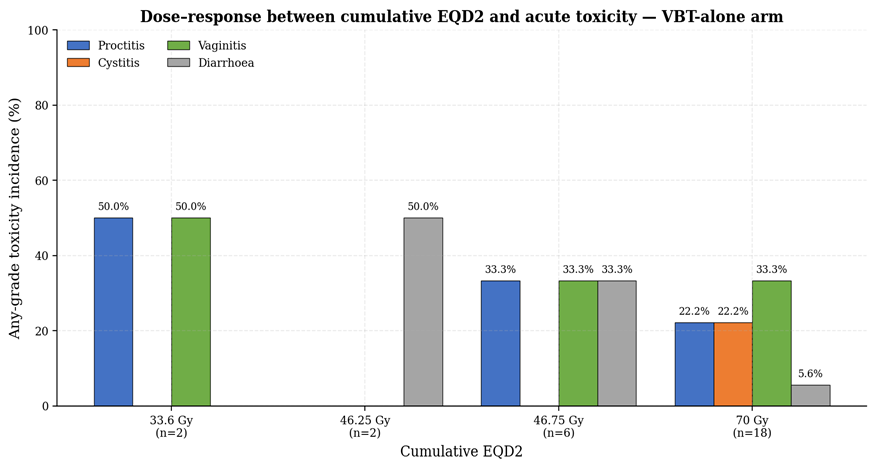
Figure 3. Dose–response relationship between cumulative EQD2 (Gy) and the incidence of any-grade acute proctitis, cystitis, vaginitis and diarrhoea in the VBT-alone arm (n = 28). Grade 1 vaginitis (21.4%) and proctitis (14.3%) predominated at the highest cumulative EQD2 (70 Gy).
Age, dose per fraction and toxicity
Older patients (>60 years) most frequently received the higher 6 Gy per fraction schedule and consequently accumulated higher EQD2. Nevertheless, the toxicity profile among elderly women remained predominantly grade 1, indicating that CT-based dose optimisation kept per-fraction OAR exposure within tolerance despite biologically higher cumulative doses. Younger patients (<50 years) treated with 4 Gy × 6 or 5 Gy × 3 fractions showed the lowest incidence of any grade toxicity.
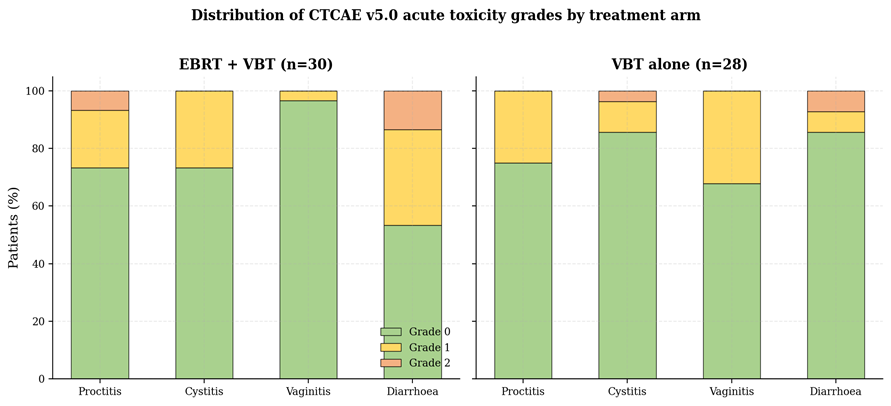
Figure 4. Distribution of CTCAE v5.0 acute toxicity grades stratified by treatment arm. The stacked bars display the proportion of patients experiencing grade 0 (green), grade 1 (yellow) and grade 2 (orange) proctitis, cystitis, vaginitis and diarrhoea in the EBRT + VBT (left) and VBT-alone (right) arms. No grade 3 or higher events were recorded.
DISCUSSION:
This prospective, single-institution study demonstrates that CT-based 3D planning for adjuvant vaginal cuff HDR brachytherapy achieves clinically acceptable volumetric doses to the bladder, rectum and sigmoid colon and is associated with predominantly low-grade (CTCAE grade 1) acute toxicities. Importantly, a clear dose–response relationship between cumulative EQD2 and the frequency and severity of proctitis, cystitis and diarrhoea was observed across both treatment arms, supporting the use of EQD2 as a clinically meaningful biological metric during treatment planning.²⁶
The predominance of patients older than 60 years in our cohort mirrors global epidemiological data showing that endometrial carcinoma is chiefly a disease of post-menopausal women.¹,²,²⁷ The stage distribution—early-stage IA/IB disease predominating in the VBT arm and more advanced disease (IB deep myoinvasion and stage III) in the EBRT + VBT arm—is consistent with contemporary risk-stratified adjuvant management, wherein high-intermediate risk patients receive VBT alone (as validated by PORTEC-2) and high-risk patients receive EBRT with a brachytherapy boost, potentially with chemotherapy as in PORTEC-3 and GOG-249.⁶,⁹,¹⁰,²⁸ Our observation that older women were more likely to receive the higher 6 Gy per-fraction schedule likely reflects clinical preference for a shorter, less resource-intensive regimen when EBRT is not indicated—a trend also reported by Sabater and colleagues in a European cohort.²⁴
The volumetric OAR doses reported here compare favourably with published series using CT-based planning. Russo et al. showed that 2D orthogonal-film-based plans systematically underestimated bladder dose and overestimated rectal dose relative to 3D plans, and that patient-specific 3D optimisation could identify individuals with dose to critical organs that would otherwise be missed.¹¹ Kim and Beriwal similarly reported that CT-based 3D planning for vaginal cuff brachytherapy reduced rectal dose without compromising CTV coverage, and identified subsets of patients whose 2D plans exceeded the prescribed rectal dose.²⁹ Our mean rectal D2cc per fraction (~3.6 Gy) and bladder D2cc (~2.9 Gy) are within the range reported in these series and remain well below the per-fraction thresholds implied by GEC-ESTRO and QUANTEC late-toxicity benchmarks for combined EBRT and brachytherapy in gynaecological cancers.²⁰,²¹
The dose–response relationship documented in Tables 3 and 4 corroborates radiobiological principles: increasing cumulative EQD2 to a normal tissue predictably raises the probability of injury, as originally formulated by the linear-quadratic model and validated in prospective cohorts of cervical brachytherapy.¹⁸,¹⁹,³⁰ In the EBRT + VBT arm, patients receiving 32.4 Gy cumulative EQD2 experienced the highest rates of grade 1–2 proctitis (20%), cystitis (20%) and diarrhoea (26.7%). In the VBT arm, cumulative EQD2 of 70 Gy—biologically higher than 32.4 Gy but delivered to a smaller volume and without pelvic scatter—resulted in comparable grade 1 vaginitis (21.4%) and proctitis (14.3%) but no severe reactions. This is consistent with the pattern reported by Delishaj et al., who found that acute vaginal toxicity after endovaginal HDR brachytherapy was almost invariably grade 1–2 and largely reversible.³¹
Our findings echo the well-established quality-of-life advantage of VBT alone over pelvic EBRT for high-intermediate risk disease. In PORTEC-2, Nout and colleagues showed that patients randomised to VBT had significantly fewer GI symptoms and better bowel-related quality of life than those receiving pelvic EBRT, with equivalent vaginal control.⁷ The ten-year update reaffirmed non-inferior vaginal control and durable quality-of-life benefit with VBT.⁸ The relative rarity of grade ≥2 toxicities in our EBRT + VBT arm is likely a consequence of both careful CT-based OAR optimisation during brachytherapy and the use of modern conformal or intensity-modulated EBRT, both of which have been shown to reduce late GI and GU morbidity relative to older 2D techniques.³²
For the sigmoid colon—an organ frequently ignored in conventional 2D-based vaginal cuff brachytherapy—our study is instructive. Post-hysterectomy migration of the small bowel and sigmoid into the pelvis places these structures immediately adjacent to the vaginal vault, and only volumetric planning permits their identification and dose accounting.¹²,¹³ Our mean sigmoid D2cc of 1.74 ± 0.65 Gy per fraction (EBRT + VBT arm) and 1.90 ± 0.66 Gy per fraction (VBT arm) remained modest, and no severe bowel toxicities were recorded. Gill et al. previously demonstrated that image-based conformal brachytherapy in medically inoperable endometrial carcinoma allowed similarly acceptable sigmoid dosimetry.³³
The consistency of our observations with QUANTEC and GEC-ESTRO dose–volume benchmarks supports contemporary practice: as long as per-fraction D2cc for bladder, rectum and sigmoid remain below institutional constraints, and cumulative EQD2 is monitored during combined EBRT and brachytherapy, the risk of grade ≥3 acute toxicity is very low.²⁰,²¹ These data also reinforce ABS and GEC-ESTRO recommendations to report volumetric OAR doses systematically in all vaginal cuff HDR plans and, wherever feasible, to prefer image-based planning over point-based 2D methods.¹⁴,¹⁶,¹⁷
Several limitations warrant emphasis. First, this is a single-centre prospective study of modest size, and the findings require validation in multicentre cohorts across different applicator systems and prescription depths. Second, follow-up was designed to capture acute toxicity at two weeks after brachytherapy; late toxicity, which is the principal determinant of long-term quality of life, and vaginal control outcomes could not be assessed in this study. Third, patient-reported outcome measures such as EORTC QLQ-EN24 were not systematically collected. Finally, molecular subtype—now incorporated into the 2023 FIGO staging system—was not available for most patients and could not be integrated into our stratification.⁵,³⁴ Future prospective studies should ideally combine CT-based (or MRI-based) volumetric planning with molecular risk assessment and prospective patient-reported outcomes to define patient-specific thresholds of cumulative EQD2 at which acute and late toxicity risk becomes clinically significant.³⁵,³⁶.
CONCLUSION:
In this prospective analysis of 58 women undergoing adjuvant vaginal cuff HDR brachytherapy for endometrial carcinoma, CT-based 3D planning enabled precise volumetric dosimetry to the bladder, rectum and sigmoid colon and produced predominantly grade 1 acute CTCAE v5.0 toxicity. A clear dose–response relationship between cumulative EQD2 and acute proctitis, cystitis, vaginitis and diarrhoea was documented in both the VBT-alone and EBRT + VBT arms, with no grade 3 or higher acute events observed. Our results support the routine use of image-based 3D planning and EQD2-guided evaluation for vaginal cuff HDR brachytherapy in endometrial cancer, particularly in resource-limited settings where transition from 2D to 3D planning is still underway. Larger multi-institutional studies with long-term follow-up and integration of molecular risk stratification are needed to define individualised EQD2 tolerance thresholds and to refine adjuvant treatment decisions.
REFERENCES:
1. Sung H, Ferlay J, Siegel RL, Laversanne M, Soerjomataram I, Jemal A, et al. Global cancer statistics 2020: GLOBOCAN estimates of incidence and mortality worldwide for 36 cancers in 185 countries. CA Cancer J Clin. 2021;71(3):209–49.
2. Mathur P, Sathishkumar K, Chaturvedi M, Das P, Sudarshan KL, Santhappan S, et al. Cancer statistics, 2020: report from national cancer registry programme, India. JCO Glob Oncol. 2020;6:1063–75.
3. Kaur S, Rawal S, Bansal R, Manohar R. Epidemiological characteristics of endometrial cancer patients treated at a tertiary health center in the National Capital Territory of India. J Cancer Res Ther. 2023;19(2):387–92.
4. Amant F, Moerman P, Neven P, Timmerman D, Van Limbergen E, Vergote I. Endometrial cancer. Lancet. 2005;366(9484):491–505.
5. Berek JS, Matias-Guiu X, Creutzberg C, Fotopoulou C, Gaffney D, Kehoe S, et al. FIGO staging of endometrial cancer: 2023. Int J Gynaecol Obstet. 2023;162(2):383–94.
6. Nout RA, Smit VT, Putter H, Jürgenliemk-Schulz IM, Jobsen JJ, Lutgens LC, et al. Vaginal brachytherapy versus pelvic external beam radiotherapy for patients with endometrial carcinoma of high-intermediate risk (PORTEC-2): an open-label, non-inferiority, randomised trial. Lancet. 2010;375(9717):816–23.
7. Nout RA, Putter H, Jürgenliemk-Schulz IM, Jobsen JJ, Lutgens LC, van der Steen-Banasik EM, et al. Quality of life after pelvic radiotherapy or vaginal brachytherapy for endometrial cancer: first results of the randomized PORTEC-2 trial. J Clin Oncol. 2009;27(21):3547–56.
8. Wortman BG, Creutzberg CL, Putter H, Jürgenliemk-Schulz IM, Jobsen JJ, Lutgens LC, et al. Ten-year results of the PORTEC-2 trial for high-intermediate risk endometrial carcinoma: improving patient selection for adjuvant therapy. Br J Cancer. 2018;119(9):1067–74.
9. de Boer SM, Powell ME, Mileshkin L, Katsaros D, Bessette P, Haie-Meder C, et al. Adjuvant chemoradiotherapy versus radiotherapy alone for women with high-risk endometrial cancer (PORTEC-3): final results of an international, open-label, multicentre, randomised, phase 3 trial. Lancet Oncol. 2018;19(3):295–309.
10. Randall ME, Filiaci V, McMeekin DS, von Gruenigen V, Huang H, Yashar CM, et al. Phase III trial: adjuvant pelvic radiation therapy versus vaginal brachytherapy plus paclitaxel/carboplatin in high-intermediate and high-risk early stage endometrial cancer. J Clin Oncol. 2019;37(21):1810–8.
11. Russo JK, Armeson KE, Richardson S. Comparison of 2D and 3D imaging and treatment planning for postoperative vaginal apex high-dose rate brachytherapy for endometrial cancer. Int J Radiat Oncol Biol Phys. 2012;83(1):e75–80.
12. Schoeppel SL, Lavigne ML, Martel MK, McShan DL, Fraass BA, Roberts JA. Three-dimensional treatment planning of intracavitary gynaecologic implants: analysis of ten cases and implications for dose specification. Int J Radiat Oncol Biol Phys. 1994;28(1):277–83.
13. Chapman CH, Prisciandaro JI, Maturen KE, Cao Y, Balter JM, McLean K, et al. MRI-based evaluation of the vaginal cuff in brachytherapy planning: are we missing the target? Int J Radiat Oncol Biol Phys. 2016;95(2):743–50.
14. Pötter R, Haie-Meder C, Van Limbergen E, Barillot I, De Brabandere M, Dimopoulos J, et al. Recommendations from gynaecological (GYN) GEC ESTRO working group (II): concepts and terms in 3D image-based treatment planning in cervix cancer brachytherapy — 3D dose volume parameters and aspects of 3D image-based anatomy, radiation physics, radiobiology. Radiother Oncol. 2006;78(1):67–77.
15. Hellebust TP, Kirisits C, Berger D, Pérez-Calatayud J, De Brabandere M, De Leeuw A, et al. Recommendations from Gynaecological (GYN) GEC-ESTRO Working Group: considerations and pitfalls in commissioning and applicator reconstruction in 3D image-based treatment planning of cervix cancer brachytherapy. Radiother Oncol. 2010;96(2):153–60.
16. Nag S, Erickson B, Parikh S, Gupta N, Varia M, Glasgow G. The American Brachytherapy Society recommendations for high-dose-rate brachytherapy for carcinoma of the endometrium. Int J Radiat Oncol Biol Phys. 2000;48(3):779–90.
17. Small W Jr, Beriwal S, Demanes DJ, Dusenbery KE, Eifel P, Erickson B, et al. American Brachytherapy Society consensus guidelines for adjuvant vaginal cuff brachytherapy after hysterectomy. Brachytherapy. 2012;11(1):58–67.
18. Rivard MJ, Coursey BM, DeWerd LA, Hanson WF, Huq MS, Ibbott GS, et al. Update of AAPM Task Group No. 43 Report: a revised AAPM protocol for brachytherapy dose calculations. Med Phys. 2004;31(3):633–74.
19. Fowler JF. The linear-quadratic formula and progress in fractionated radiotherapy. Br J Radiol. 1989;62(740):679–94.
20. Marks LB, Yorke ED, Jackson A, Ten Haken RK, Constine LS, Eisbruch A, et al. Use of normal tissue complication probability models in the clinic. Int J Radiat Oncol Biol Phys. 2010;76(3 Suppl):S10–9.
21. Bentzen SM, Constine LS, Deasy JO, Eisbruch A, Jackson A, Marks LB, et al. Quantitative Analyses of Normal Tissue Effects in the Clinic (QUANTEC): an introduction to the scientific issues. Int J Radiat Oncol Biol Phys. 2010;76(3 Suppl):S3–9.
22. US Department of Health and Human Services. Common Terminology Criteria for Adverse Events (CTCAE) Version 5.0. Bethesda: National Cancer Institute; 2017.
23. Colombo N, Creutzberg C, Amant F, Bosse T, González-Martín A, Ledermann J, et al. ESMO–ESGO–ESTRO consensus conference on endometrial cancer: diagnosis, treatment and follow-up. Ann Oncol. 2016;27(1):16–41.
24. Sabater S, Andres I, Lopez-Honrubia V, Berenguer R, Sevillano M, Jimenez-Jimenez E, et al. Vaginal cuff brachytherapy in endometrial cancer — a technically easy treatment? Cancer Manag Res. 2017;9:351–62.
25. Small W Jr, Mell LK, Anderson P, Creutzberg C, De Los Santos J, Gaffney D, et al. Consensus guidelines for the delineation of the clinical target volume for intensity-modulated pelvic radiotherapy in postoperative treatment of endometrial and cervical cancer. Int J Radiat Oncol Biol Phys. 2008;71(2):428–34.
26. Georg P, Pötter R, Georg D, Lang S, Dimopoulos JC, Sturdza AE, et al. Dose–effect relationship for late side effects of the rectum and urinary bladder in magnetic resonance image-guided adjuvant cervix cancer brachytherapy. Int J Radiat Oncol Biol Phys. 2012;82(2):653–7.
27. Alektiar KM, Venkatraman E, Chi DS, Barakat RR. Intravaginal brachytherapy alone for intermediate-risk endometrial cancer. Int J Radiat Oncol Biol Phys. 2005;62(1):111–7.
28. Sorbe B, Horvath G, Andersson H, Boman K, Lundgren C, Pettersson B. External pelvic and vaginal irradiation versus vaginal irradiation alone as postoperative therapy in medium-risk endometrial carcinoma: a prospective randomized study. Int J Radiat Oncol Biol Phys. 2012;82(3):1249–55.
29. Kim H, Rajagopalan MS, Beriwal S, Huq MS. Comparison of dose-volume parameters between 2D standard plans and 3D CT-based individualized plans for vaginal cuff brachytherapy following hysterectomy. Brachytherapy. 2014;13(4):325–31.
30. Bentzen SM, Joiner MC. The linear-quadratic approach in clinical practice. In: Joiner MC, van der Kogel A, editors. Basic Clinical Radiobiology. 5th ed. Boca Raton: CRC Press; 2018. p. 112–24.
31. Delishaj D, Barcellini A, D’Amico R, Ursino S, Pasqualetti F, Fumagalli IC, et al. Vaginal toxicity after high-dose-rate endovaginal brachytherapy: 20 years of results. J Contemp Brachytherapy. 2018;10(6):559–66.
32. Klopp A, Smith BD, Alektiar K, Cabrera A, Damato AL, Erickson B, et al. The role of postoperative radiation therapy for endometrial cancer: executive summary of an American Society for Radiation Oncology evidence-based guideline. Pract Radiat Oncol. 2014;4(3):137–44.
33. Gill BS, Kim H, Houser C, Olsen A, Kelley J, Edwards RP, et al. Image-based three-dimensional conformal brachytherapy for medically inoperable endometrial carcinoma. Brachytherapy. 2014;13(6):542–7.
34. León-Castillo A, de Boer SM, Powell ME, Mileshkin LR, Mackay HJ, Leary A, et al. Molecular classification of the PORTEC-3 trial for high-risk endometrial cancer: impact on prognosis and benefit from adjuvant therapy. J Clin Oncol. 2020;38(29):3388–97.
35. Harkenrider MM, Block AM, Alektiar KM, Gaffney DK, Jones E, Klopp A, et al. American Brachytherapy Task Group Report: adjuvant vaginal brachytherapy for early-stage endometrial cancer — a comprehensive review. Brachytherapy. 2017;16(1):95–108.
36. Anderson JM, Stea B, Hallum AV, Rogoff E, Childers J. High-dose-rate postoperative vaginal cuff irradiation alone for stage IB and IC endometrial cancer. Int J Radiat Oncol Biol Phys. 2000;46(2):417–21.