TO STUDY THE PROGNOSTIC VALUE OF PLASMA N-TERMINAL PRO-B-TYPE NATRIURETIC PEPTIDE (NT-PROBNP) AND C-REACTIVE PROTEIN (CRP) IN SUBJECTS WITH SEPSIS AND SEPTIC SHOCK.
- Rishab Shah , Senior Resident, Department of Endocrinology, Sanjay Gandhi Postgraduate Institute of Medical Sciences, Lucknow.
- Ashokavardhana S , Assistant Professor, Department of General Medicine, Bangalore Medical College and Research Institute.
- Yashwanth N S , Senior Resident, Department of General Medicine, Sri Siddhartha Medical College, Tumkur, Karnataka.
- Harshavardhan L , Professor, Department of General Medicine, Mysore Medical College and Research Institute, Mysore, Karnataka.
Article Information:
Abstract:
Background: Sepsis and septic shock are life-threatening conditions associated with high morbidity and mortality despite advances in intensive care management. Early identification of patients at increased risk of adverse outcomes is essential for timely intervention and improved survival. Biomarkers such as N-terminal pro-B-type natriuretic peptide (NT-proBNP) and C-reactive protein (CRP) have emerged as potential prognostic indicators because they reflect myocardial stress and systemic inflammation, respectively. However, evidence regarding their prognostic utility in the Indian population remains limited. Aim and Objective: To measure the plasma levels of NT-proBNP and CRP in subjects with sepsis and septic shock and to evaluate their prognostic significance in predicting outcomes in subjects with sepsis and septic shock. Materials and Methods: This prospective observational study included 140 adult patients with sepsis and septic shock admitted to a tertiary care hospital over one year. Plasma NT-proBNP and CRP levels were measured at admission, and APACHE II and qSOFA scores were calculated. Patients were followed until discharge or death. Receiver operating characteristic (ROC) curve analysis was performed to evaluate the prognostic performance of NT-proBNP, CRP, APACHE II, and qSOFA for predicting mortality. Results: The mean age of the study population was 49.97 ± 16.06 years, with 62.1% being males. Septic shock was present in 47.9% of patients, and the in-hospital mortality rate was 47.9%. The mean NT-proBNP and CRP levels were 10609.40 ± 7730.48 pg/mL and 58.36 ± 29.81 mg/L, respectively. ROC analysis demonstrated excellent prognostic performance for NT-proBNP (AUC = 0.997, cut-off = 6404.5 pg/mL, sensitivity = 98.5%, specificity = 89.0%) and CRP (AUC = 0.998, cut-off = 53.6 mg/L, sensitivity = 98.5%, specificity = 95.9%). APACHE II also showed excellent predictive accuracy (AUC = 0.984), whereas qSOFA demonstrated moderate predictive ability (AUC = 0.710). Conclusion: Plasma NT-proBNP and CRP are highly effective prognostic biomarkers for predicting mortality in patients with sepsis and septic shock. Their excellent predictive accuracy suggests that they can serve as valuable adjuncts to established clinical scoring systems for early risk stratification and clinical decision-making in critically ill patients.
Keywords:
Article :
Introduction:
Sepsis is defined as a life-threatening organ dysfunction caused by a dysregulated host response to infection, while septic shock represents a severe subset of sepsis characterized by profound circulatory, cellular, and metabolic abnormalities associated with a substantially increased risk of death. The global burden of sepsis continues to be enormous, accounting for millions of cases and deaths annually, with a disproportionately higher impact in low- and middle-income countries (1,2). In India, sepsis continues to pose a major healthcare challenge due to delayed presentation, high prevalence of infectious diseases, and limited availability of advanced critical care facilities. Early recognition of patients at high risk for deterioration is therefore essential to improve clinical outcomes and optimize resource utilization (3).
Accurate prognostication in sepsis remains difficult because of the heterogeneous nature of the disease and the variability in host immune responses. Clinical scoring systems such as the Acute Physiology and Chronic Health Evaluation II (APACHE II) score and the quick Sequential Organ Failure Assessment (qSOFA) score are commonly used to assess disease severity and predict mortality (4,5). Although these scoring systems are useful, they require comprehensive clinical assessment and may not always provide adequate prognostic accuracy during the early stages of illness. Consequently, there has been increasing interest in identifying reliable biochemical biomarkers that can facilitate early risk stratification, predict disease progression, and guide clinical decision-making in patients with sepsis and septic shock (6).
N-terminal pro-B-type natriuretic peptide (NT-proBNP), an inactive cleavage product of brain natriuretic peptide, is released predominantly by ventricular cardiomyocytes in response to myocardial wall stress and ventricular dysfunction. Although traditionally used as a biomarker for heart failure, several studies have demonstrated markedly elevated NT-proBNP levels in patients with sepsis even in the absence of underlying cardiac disease (7,8). The systemic inflammatory response, myocardial depression, cytokine-mediated myocardial injury, and hemodynamic alterations associated with sepsis contribute to increased NT-proBNP secretion. Elevated NT-proBNP concentrations have therefore emerged as a potential indicator of disease severity and adverse clinical outcomes in septic patients (9,10).
C-reactive protein (CRP) is another well-established biomarker of systemic inflammation synthesized by the liver in response to inflammatory cytokines. As an acute-phase reactant, CRP rises rapidly during bacterial infections and inflammatory states and has been widely used in clinical practice for diagnosing and monitoring infectious diseases (11,12). Owing to its relatively short half-life and rapid response to changes in inflammatory activity, serial CRP estimation may provide valuable information regarding disease progression and response to treatment in patients with sepsis. Persistently elevated CRP levels have also been associated with increased disease severity and poorer clinical outcomes (13). Several previous studies have evaluated the prognostic significance of NT-proBNP and CRP individually in patients with severe sepsis and septic shock, suggesting that elevated concentrations of these biomarkers are associated with increased mortality (14). However, evidence regarding their combined prognostic utility, particularly in the Indian population, remains limited (15). The present prospective study was therefore undertaken to evaluate the prognostic value of plasma NT-proBNP and CRP levels in subjects with sepsis and septic shock admitted to a tertiary care hospital. By assessing their ability to predict mortality and adverse outcomes, this study aims to determine whether these readily available biomarkers can complement existing clinical scoring systems and contribute to improved risk stratification and management of patients with sepsis and septic shock.
AIM AND OBJECTIVES
· To measure the plasma levels of NT-proBNP and CRP in subjects with sepsis and septic shock and to evaluate their prognostic significance in predicting outcomes in subjects with sepsis and septic shock
Materials and Methods:
This prospective observational study was conducted in the Department of General Medicine at Krishnarajendra (K.R.) Hospital, Mysore Medical College and Research Institute (MMCRI), Mysuru, over a period of one year from October 2022 to September 2023. A total of 140 adult patients (aged >18 years) diagnosed with sepsis or septic shock according to the Third International Consensus Definitions for Sepsis and Septic Shock (Sepsis-3) were enrolled using simple random sampling after obtaining written informed consent. Patients with pre-existing heart disease or chronic renal disease were excluded from the study to minimize confounding factors affecting NT-proBNP levels. Ethical approval for the study was obtained from the Institutional Ethics Committee before commencement of the study. After enrolment, all participants underwent detailed clinical evaluation, including demographic data, history, physical examination, and assessment of disease severity using the Acute Physiology and Chronic Health Evaluation II (APACHE II) score and the quick Sequential Organ Failure Assessment (qSOFA) score. Blood samples collected on the day of admission were analyzed for complete blood count, renal and liver function tests, serum electrolytes, plasma N-terminal pro-B-type natriuretic peptide (NT-proBNP), and C-reactive protein (CRP). NT-proBNP was estimated using the electrochemiluminescence immunoassay (ECLIA) method, while CRP was measured using the immunoturbidimetric assay on the Cobas PRO integrated autoanalyzer (Roche). Additional investigations, including electrocardiography and echocardiography, were performed whenever clinically indicated. Patients were followed until hospital discharge or death, and mortality was considered the primary outcome measure.
Data were entered into Microsoft Excel and analyzed using IBM SPSS Statistics version 21. Continuous variables were expressed as mean ± standard deviation, while categorical variables were presented as frequencies and percentages. Receiver operating characteristic (ROC) curve analysis was performed to determine the prognostic performance of APACHE II score, qSOFA score, NT-proBNP, and CRP in predicting mortality, and optimal cut-off values with corresponding sensitivity and specificity were calculated. A p-value of <0.05 was considered statistically significant.
Results:
Table 1: Baseline Demographic, Clinical and Biomarker Characteristics of Study Subjects with Sepsis and Septic Shock (N = 140)
|
Variable |
Value |
|
Age (years), mean ± SD |
49.97 ± 16.06 |
|
Male, n (%) |
87 (62.1) |
|
Female, n (%) |
53 (37.9) |
|
Pulse rate (beats/min), mean ± SD |
113.98 ± 7.38 |
|
Systolic BP (mmHg), mean ± SD |
87.61 ± 6.13 |
|
Diastolic BP (mmHg), mean ± SD |
66.47 ± 8.76 |
|
APACHE II score, mean ± SD |
18.57 ± 5.87 |
|
qSOFA score, mean ± SD |
2.21 ± 0.41 |
|
NT-proBNP (pg/mL), mean ± SD |
10609.40 ± 7730.48 |
|
CRP (mg/L), mean ± SD |
58.36 ± 29.81 |
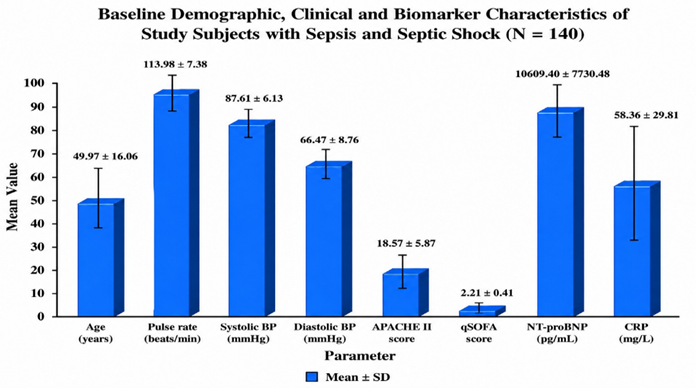
Graph 1: Baseline Demographic, Clinical and Biomarker Characteristics of Study Subjects with Sepsis and Septic Shock (N = 140)
In the present study, the mean age of the study subjects was 49.97 ± 16.06 years. Among the 140 study subjects, 87 (62.1%) were males and 53 (37.9%) were females. The mean pulse rate was 113.98 ± 7.38 beats/min. The mean systolic blood pressure was 87.61 ± 6.13 mmHg, while the mean diastolic blood pressure was 66.47 ± 8.76 mmHg. The mean APACHE II score was 18.57 ± 5.87, and the mean qSOFA score was 2.21 ± 0.41. The mean plasma NT-proBNP level was 10609.40 ± 7730.48 pg/mL, and the mean CRP level was 58.36 ± 29.81 mg/L.
Table 2: Distribution of Study Subjects According to Septic Shock Status and Clinical Outcome (N = 140)
|
Variable |
n |
% |
|
Septic shock |
||
|
No |
73 |
52.1 |
|
Yes |
67 |
47.9 |
|
Outcome |
||
|
Survived |
73 |
52.1 |
|
Died |
67 |
47.9 |
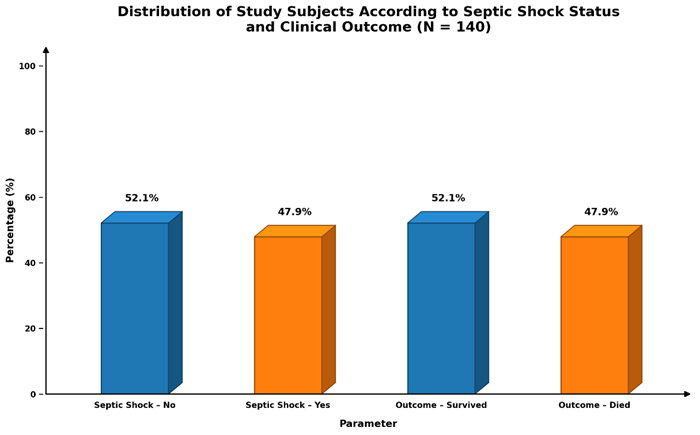
Graph 2: Distribution of Study Subjects According to Septic Shock Status and Clinical Outcome (N = 140)
In the present study, 73 (52.1%) study subjects did not have septic shock, while 67 (47.9%) study subjects had septic shock. With regard to clinical outcome, 73 (52.1%) study subjects survived, whereas 67 (47.9%) study subjects died.
Table 3. Diagnostic Accuracy of APACHE II, qSOFA, NT-proBNP and CRP for Predicting Clinical Outcome among Study Subjects
|
Parameter |
AUC |
95% CI |
p value |
Cut-off |
Sensitivity (%) |
Specificity (%) |
|
APACHE II |
0.984 |
0.970–0.998 |
<0.001 |
19.5 |
83.6 |
98.6 |
|
qSOFA |
0.710 |
0.621–0.798 |
0.001 |
2.5 |
43.3 |
100.0 |
|
NT-proBNP |
0.997 |
0.993–1.000 |
0.001 |
6404.5 pg/mL |
98.5 |
89.0 |
|
CRP |
0.998 |
0.995–1.000 |
0.001 |
53.6 mg/L |
98.5 |
95.9 |
ROC curve analysis demonstrated that all four parameters significantly predicted mortality. CRP (AUC = 0.998) and NT-proBNP (AUC = 0.997) exhibited near-perfect prognostic accuracy and outperformed APACHE II (AUC = 0.984) and qSOFA (AUC = 0.710). These findings indicate that NT-proBNP and CRP are highly reliable biomarkers for predicting mortality in patients with sepsis and septic shock.
Discussion:
The present prospective study evaluated the prognostic significance of plasma N-terminal pro-B-type natriuretic peptide (NT-proBNP) and C-reactive protein (CRP) in patients with sepsis and septic shock. Among the 140 enrolled patients, the mean age was 49.97 ± 16.06 years, with a male predominance (62.1%). Nearly half of the study population developed septic shock (47.9%), and the overall in-hospital mortality was 47.9%, highlighting the substantial disease burden associated with sepsis. These findings are consistent with the global epidemiological observations described by Polat et al. (2017), who emphasized the persistently high mortality associated with sepsis despite advances in intensive care management (2). Similarly, Juneja et al. (2024) highlighted the challenges in managing sepsis in resource-limited settings and emphasized the importance of early identification of high-risk patients to improve clinical outcomes (3).
In the present study, the mean APACHE II score was 18.57 ± 5.87 and the mean qSOFA score was 2.21 ± 0.41, reflecting moderate to severe illness among the enrolled patients. Receiver operating characteristic (ROC) analysis demonstrated excellent prognostic performance of APACHE II (AUC = 0.984), whereas qSOFA showed only moderate predictive ability (AUC = 0.710). These observations are in agreement with Hosseini and Ramazani (2016), who reported that APACHE II provides superior prognostic accuracy compared with simpler bedside scoring systems for critically ill patients (5). Likewise, Desai and Gross (2019) concluded that comprehensive severity scoring systems remain valuable tools for mortality prediction in intensive care, although they should ideally be complemented by objective biochemical markers (6). Furthermore, Zhang et al. (2021) demonstrated that combining clinical variables with prognostic models improves mortality prediction in patients with sepsis (4).
The principal finding of the present study was the excellent prognostic performance of plasma NT-proBNP. The mean NT-proBNP concentration was 10609.40 ± 7730.48 pg/mL, and ROC analysis yielded an AUC of 0.997 with an optimal cut-off value of 6404.5 pg/mL, demonstrating 98.5% sensitivity and 89.0% specificity for predicting mortality. These findings support the growing evidence that NT-proBNP is a reliable biomarker of disease severity in sepsis. Weber and Hamm (2006) described NT-proBNP as an established marker of myocardial stress that has broad clinical utility beyond heart failure (7). More recently, Guarino et al. (2025) reviewed the role of cardiac biomarkers in septic cardiomyopathy and emphasized that NT-proBNP reflects both myocardial dysfunction and systemic inflammatory injury during sepsis (9). Similarly, Nedel and Portela (2025) reported that elevated NT-proBNP levels were significantly associated with adverse clinical outcomes during the early septic response, while Shi et al. (2026) demonstrated a strong association between increased NT-proBNP concentrations and both short- and long-term mortality among critically ill patients with sepsis (10,14). In addition, Custodero et al. (2019) observed that elevated NT-proBNP levels during the acute phase of sepsis were associated with poorer long-term functional outcomes among survivors (15).
The present study also demonstrated excellent prognostic utility of CRP. The mean CRP level was 58.36 ± 29.81 mg/L, and ROC analysis revealed an AUC of 0.998 with an optimal cut-off value of 53.6 mg/L, providing 98.5% sensitivity and 95.9% specificity for mortality prediction. These findings corroborate the biological importance of CRP as an acute-phase inflammatory marker. Sproston and Ashworth (2018) explained the central role of CRP in inflammatory and infectious processes, while Singh et al. (2025) highlighted its continued clinical relevance as an indicator of systemic inflammation (11,12). Comparable findings were reported by Anush et al. (2019), who demonstrated that elevated CRP levels were significantly associated with adverse outcomes in patients with sepsis (13).
Overall, the findings of the present study demonstrate that NT-proBNP and CRP exhibited the highest prognostic accuracy, while APACHE II also showed excellent predictive performance and qSOFA demonstrated moderate predictive ability. These biomarkers are objective, readily available, and may complement established clinical scoring systems such as APACHE II to facilitate early risk stratification and optimize the management of critically ill patients.
Conclusion:
The present study demonstrated that plasma NT-proBNP and C-reactive protein are valuable prognostic biomarkers in patients with sepsis and septic shock. Both biomarkers showed excellent predictive performance for mortality, with NT-proBNP and CRP exhibiting near-perfect diagnostic accuracy on receiver operating characteristic analysis. Although APACHE II also demonstrated excellent prognostic ability, NT-proBNP and CRP provided superior predictive accuracy, while qSOFA showed only moderate performance. The identified cut-off values for NT-proBNP and CRP were associated with high sensitivity and specificity, indicating their usefulness in identifying patients at increased risk of adverse outcomes. These biomarkers are readily available, objective, and can complement established clinical scoring systems for early risk stratification. Incorporating NT-proBNP and CRP into the routine assessment of patients with sepsis and septic shock may facilitate timely identification of high-risk individuals, enabling appropriate monitoring and therapeutic interventions. Further multicentre studies with larger sample sizes are warranted to validate these findings and establish their broader clinical applicability.
References:
1. Liang SY, Kumar A. Empiric antimicrobial therapy in severe sepsis and septic shock: optimizing pathogen clearance. Curr Infect Dis Rep. 2015 Jul;17(7):493. doi:10.1007/s11908-015-0493-6.
2. Polat G, Ugan RA, Cadirci E, Halici Z. Sepsis and septic shock: current treatment strategies and new approaches. Eurasian J Med. 2017 Feb;49(1):53-58. doi:10.5152/eurasianjmed.2017.17062.
3. Juneja D, Nasa P, Chanchalani G, Cherian A, Jagiasi BG, Javeri Y, et al. The Indian Society of Critical Care Medicine position statement on the management of sepsis in resource-limited settings. Indian J Crit Care Med. 2024 Aug;28(Suppl 2):S4-S40. doi:10.5005/jp-journals-10071-24682.
4. Zhang K, Zhang S, Cui W, Hong Y, Zhang G, Zhang Z. Development and validation of a sepsis mortality risk score for Sepsis-3 patients in intensive care unit. Front Med (Lausanne). 2021;7:609769. doi:10.3389/fmed.2020.609769.
5. Hosseini M, Ramazani J. Evaluation of Acute Physiology and Chronic Health Evaluation II and Sequential Organ Failure Assessment scoring systems for prognostication of outcomes among intensive care unit patients. Saudi J Anaesth. 2016 Apr-Jun;10(2):168-173. doi:10.4103/1658-354X.168817.
6. Desai N, Gross J. Scoring systems in the critically ill: uses, cautions, and future directions. BJA Educ. 2019 Jul;19(7):212-218. doi:10.1016/j.bjae.2019.03.002.
7. Weber M, Hamm C. Role of B-type natriuretic peptide (BNP) and NT-proBNP in clinical routine. Heart. 2006 Jun;92(6):843-849. doi:10.1136/hrt.2005.071233.
8. Novack ML, Zevitz ME. Natriuretic peptide B type test. In: StatPearls. Treasure Island (FL): StatPearls Publishing; 2025.
9. Guarino M, Luppi F, Maroncelli G, Baldin P, Costanzini A, Maritati M, et al. From cardiac injury to omics signatures: a narrative review on biomarkers in septic cardiomyopathy. Clin Exp Med. 2025;25(1):298. doi:10.1007/s10238-025-01842-5.
10. Nedel W, Portela LV. Association between troponin and NT-proBNP levels, cytokines, and clinical outcomes in early sepsis response: a cohort study. Braz J Anesthesiol. 2025;76(1):844712. doi:10.1016/j.bjane.2025.844712.
11. Singh B, Goyal A, Patel BC. C-reactive protein: clinical relevance and interpretation. In: StatPearls. Treasure Island (FL): StatPearls Publishing; 2025.
12. Sproston NR, Ashworth JJ. Role of C-reactive protein at sites of inflammation and infection. Front Immunol. 2018;9:754. doi:10.3389/fimmu.2018.00754.
13. Anush MM, Ashok VK, Sarma RIN, Pillai SK. Role of C-reactive protein as an indicator for determining the outcome of sepsis. Indian J Crit Care Med. 2019 Jan;23(1):11-14. doi:10.5005/jp-journals-10071-23105.
14. Shi A, Lu H, Zhao J, Ai M, Yu J, Hu T, et al. Association between N-terminal pro B-type natriuretic peptide and short- and long-term all-cause mortality in critically ill patients with sepsis: a retrospective study based on the Medical Information Mart for Intensive Care IV database. Sci Prog. 2026;109(1):00368504261425535. doi:10.1177/00368504261425535.
15. Custodero C, Wu Q, Ghita GL, Anton SD, Brakenridge SC, Brumback BA, et al. Prognostic value of NT-proBNP levels in the acute phase of sepsis on lower long-term physical function and muscle strength in sepsis survivors. Crit Care. 2019 Jun 24;23(1):230. doi:10.1186/s13054-019-2505-7.