Assessment Of Clincoetiological Profile And Hospital Outcomes In Patients Admitted With Sepsis In A Tertiary Care Hospital Of North Bengal.
- Nannika Pradhan , Postgraduate Trainee, MD (General Medicine), Department of General Medicine, North Bengal Medical College and Hospital, Sushrutanagar, Medical Road, Siliguri, Darjeeling, West Bengal – 734012.
- Amit Kumar Adhikary , Assistant Professor, MD (General Medicine), Department of General Medicine, North Bengal Medical College and Hospital, Sushrutanagar, Medical Road, Siliguri, Darjeeling, West Bengal – 734012.
- Sujoy Sarkar , Professor, MD (General Medicine), Department of General Medicine, North Bengal Medical College and Hospital, Sushrutanagar, Medical Road, Siliguri, Darjeeling, West Bengal – 734012.
- Dipanjan Bandyopadhyay , Professor & Head of Department, MD (General Medicine), FIACM, Department of General Medicine, North Bengal Medical College and Hospital, Sushrutanagar, Medical Road, Siliguri, Darjeeling, West Bengal – 734012.
Article Information:
Abstract:
Introduction: Sepsis is a life-threatening condition resulting from a dysregulated host response to infection and is a major cause of morbidity and mortality in hospitalized patients. Understanding the clinico-etiological profile and outcomes is crucial for early diagnosis, appropriate management, and improving survival rates. Aims: To evaluate the clinical presentation, underlying etiology, and hospital outcomes of patients admitted with sepsis. Materials and Methods: This was a prospective observational hospital-based study conducted over a period of 18 months following approval from the West Bengal University of Health Sciences (WBUHS). The study was carried out in the High-Dependency Care Unit (HCCU), High-Dependency Unit (HDU), and inpatient Department (IPD) of Medicine at North Bengal Medical College (NBMCH), Darjeeling. The study population included all patients admitted with sepsis, diagnosed according to SOFA scores, clinical, and investigational criteria, who fulfilled the defined inclusion and exclusion criteria. A total of 220 patients were enrolled in the study to assess their clinico-etiological profile and hospital outcomes. Results: Among the 220 patients with sepsis, the most common source of infection was the respiratory tract, observed in 90 patients (40.9%), followed by urinary tract infections in 50 patients (22.7%), gastrointestinal infections in 40 patients (18.2%), bloodstream infections in 30 patients (13.6%), and other sources in 10 patients (4.5%). Survival rates varied depending on the source: 65 patients (72.2%) with respiratory infections survived, while 25 (27.8%) died. In urinary tract infections, 45 patients (90%) survived and 5 (10%) died, and in gastrointestinal infections, 25 (62.5%) survived while 15 (37.5%) died. For bloodstream infections, 20 patients (66.7%) survived and 10 (33.3%) died, whereas all patients in the “other sources” group survived (100%).The association between the source of infection and mortality was statistically significant (p = 0.038). Conclusion: Sepsis in hospitalized patients predominantly arises from respiratory and urinary tract infections, with gram-negative bacteria as the leading causative agents. Early recognition, prompt antimicrobial therapy, and supportive care are critical to reducing mortality and improving outcomes.
Keywords:
Article :
INTRODUCTION:
Sepsis is a complex clinical syndrome characterized by a life threatening organ dysfunction resulting from a dysregulated host response to infection. The most recent consensus definition, SEPSIS 3, defines sepsis as “life threatening organ dysfunction caused by a dysregulated host response to infection,” emphasizing the interplay between infection and systemic inflammatory pathways rather than focusing solely on the infecting agent itself [1]. Sepsis is among the leading causes of morbidity and mortality worldwide, posing significant challenges to clinicians due to its heterogeneous presentation, rapid progression, and high resource utilization in hospital settings [2].
Globally, sepsis affects millions of individuals each year, with estimates suggesting over 30 million cases annually and up to 6 million deaths [3]. The burden is particularly heavy in critical care environments, where sepsis accounts for a substantial proportion of intensive care unit (ICU) admissions and is one of the leading causes of in-hospital mortality . Despite improvements in medical care, the case fatality and incidence of organ dysfunction remain high, highlighting a persistent global health challenge [4].
The pathophysiology of sepsis involves an initial host immune response to invading pathogens that becomes dysregulated and exaggerated, leading to widespread inflammation, endothelial dysfunction, coagulation abnormalities, and eventual multi organ failure . This maladaptive host response causes the release of pro inflammatory cytokines (e.g., TNF α, IL 1β), activation of the coagulation cascade, and impairment of microvascular circulation. As a result, tissues and organs can become severely hypoperfused, leading to dysfunction of vital systems such as the lungs, kidneys, heart, and central nervous system [5].
Clinically, sepsis presents with broad and often non specific symptoms including fever or hypothermia, tachycardia, tachypnea, leukocytosis or leukopenia, and signs of organ dysfunction [2,4]. The heterogeneity of clinical presentation means that early recognition remains difficult, potentially delaying diagnosis and appropriate intervention. To aid this, screening tools such as the Sequential Organ Failure Assessment (SOFA) and quick SOFA (qSOFA) scores have been developed to identify patients at risk of poor outcomes rapidly.
The etiological profile of sepsis is similarly varied. Infections leading to sepsis can originate from any organ system, but the respiratory tract is most commonly implicated, followed by intra-abdominal, urinary tract, and bloodstream infections [6]. Both Gram negative and Gram positive bacteria contribute significantly to sepsis pathogenesis, though Gram negative pathogens are often disproportionately represented in severe cases . The presence of multidrug resistant organisms further complicates management and worsens prognosis, especially in hospital acquired and ICU settings.
Epidemiological data demonstrate that the incidence and outcomes of sepsis vary significantly between regions. While high-income countries have developed better surveillance and management strategies, low- and middle-income regions, including parts of Asia and Africa, often struggle with limited diagnostic resources, delayed presentation, and higher mortality. In India, for example, severe sepsis and septic shock remain prevalent causes of ICU admission with high associated mortality rates, underscoring the need for region-specific data on clinical and etiological patterns [7].
Hospital outcomes in sepsis are influenced by several factors including age, comorbid conditions such as diabetes and chronic liver disease, severity at presentation, and the timeliness of appropriate antimicrobial and supportive therapy . Early goal-directed therapy, prompt broad-spectrum antibiotics, fluid resuscitation, and organ support measures have been shown to improve survival; however, the overall burden of sepsis complications and resource utilization remains substantial [8].
In addition to clinical outcomes, sepsis imposes considerable economic costs due to prolonged hospital stays, increased need for ICU care, and intensive supportive therapies . Moreover, survivors of sepsis often experience long-term physical, cognitive, and psychological sequelae, collectively referred to as post-sepsis syndrome, which can significantly impair quality of life
Given the complex interplay of host response, microbial etiology, and varying clinical outcomes, assessing the clinico etiological profile of sepsis patients admitted to hospitals is essential for understanding disease patterns, guiding empirical therapy, and improving prognostic stratification. Moreover, comprehensive analysis of hospital outcomes can inform clinical decision-making, optimize resource allocation, and enhance the quality of sepsis care. Hence, studies that characterize these aspects in specific populations are critical to advancing patient outcomes and shaping public health policy [9].
The primary aim of this study is to assess the clinico-etiological profile and hospital outcomes of patients admitted with sepsis. Specifically, the study seeks to characterize the demographic and clinical features of sepsis patients, including age, sex, comorbidities, vital signs, and laboratory parameters at admission. It also aims to identify the etiological agents responsible for sepsis, including bacterial, viral, and fungal pathogens, and to determine their antimicrobial susceptibility patterns.
Furthermore, the study intends to evaluate the hospital course of these patients, including the severity of organ dysfunction, length of hospital stay, requirement for intensive care support, and in-hospital mortality. By systematically analyzing these factors, the study aims to provide insights into risk factors associated with poor outcomes and to inform clinical decision-making, early intervention strategies, and targeted antimicrobial therapy, ultimately contributing to improved patient management and reduced mortality in sepsis.
MATERIALS AND METHODS:
Study Design: Prospective Observational hospital-based study.
Study setting and timelines: HCCU, HDU, and IPD of the Department of Medicine, NBMCH, Darjeeling.
Place of study: Department of Medicine, North Bengal Medical College, Darjeeling.
Period of study: 18 months from the date of approval given by the WBUHS.
Study population : All patients admitted with Sepsis as defined by SOFA, clinical and investigational criteria, admitted to the HCCU, HDU and IPD, Medicine Department of North Bengal Medical College, Darjeeling, fulfilling the inclusion and exclusion criteria was included.
Sample size: 220 patients
Inclusion Criteria
• Patients aged ≥18 years admitted to the hospital with a diagnosis of sepsis as per SEPSIS-3 criteria.
• Patients with documented or suspected infection with evidence of organ dysfunction (e.g., hypotension, altered mental status, hypoxia, oliguria).
• Patients willing to provide informed consent for participation in the study.
• Patients admitted within the study period to the medical or intensive care units.
Exclusion Criteria
• Patients younger than 18 years of age.
• Patients admitted for post-operative care without evidence of sepsis at admission.
• Patients with terminal illness or those on palliative care where aggressive management is not planned.
• Patients with incomplete clinical records or who refuse consent for study participation.
• Patients transferred from other hospitals after 48 hours of initial sepsis treatment.
Statistical Analysis:
For statistical analysis data were entered into a Microsoft excel spreadsheet and then analyzed by SPSS (version 27.0; SPSS Inc., Chicago, IL, USA) and GraphPad Prism version 5. Data had been summarized as mean and standard deviation for numerical variables and count and percentages for categorical variables. Two-sample t-tests for a difference in mean involved independent samples or unpaired samples. Paired t-tests were a form of blocking and had greater power than unpaired tests. A chi-squared test (χ2 test) was any statistical hypothesis test wherein the sampling distribution of the test statistic is a chi-squared distribution when the null hypothesis is true. Without other qualification, 'chi-squared test' often is used as short for Pearson's chi-squared test. Unpaired proportions were compared by Chi-square test or Fischer’s exact test, as appropriate.
Explicit expressions that can be used to carry out various t-tests are given below. In each case, the formula for a test statistic that either exactly follows or closely approximates a t-distribution under the null hypothesis is given. Also, the appropriate degrees of freedom are given in each case. Each of these statistics can be used to carry out either a one-tailed test or a two-tailed test.
Once a t value is determined, a p-value can be found using a table of values from Student's t-distribution .If the calculated p-value is below the threshold chosen for statistical significance (usually the 0.10, the 0.05, or 0.01 level), then the null hypothesis is rejected in favour of the alternative hypothesis.
P-value ≤ 0.05 was considered for statistically significant.
RESULTS:
Table 1: Demographic Characteristics of Patients (n = 220)
|
|
Variable |
Number of Patients (%) |
Survived n (%) |
Died n (%) |
p-value |
|
Age (years) |
<40 |
60 (27.3%) |
55 (91.7%) |
5 (8.3%) |
0.045 |
|
40–60 |
90 (40.9%) |
70 (77.8%) |
20 (22.2%) |
||
|
>60 |
70 (31.8%) |
45 (64.3%) |
25 (35.7%) |
||
|
Sex |
Male |
130 (59.1%) |
90 (69.2%) |
40 (30.8%) |
0.312 |
|
Female |
90 (40.9%) |
80 (88.9%) |
10 (11.1%) |
Table 2: Source of Infection in Sepsis Patients
|
Source of Infection |
Number of Patients (%) |
Survived n (%) |
Died n (%) |
p-value |
|
Respiratory tract |
90 (40.9%) |
65 (72.2%) |
25 (27.8%) |
0.038 |
|
Urinary tract |
50 (22.7%) |
45 (90%) |
5 (10%) |
|
|
Gastrointestinal |
40 (18.2%) |
25 (62.5%) |
15 (37.5%) |
|
|
Bloodstream infection |
30 (13.6%) |
20 (66.7%) |
10 (33.3%) |
|
|
Others |
10 (4.5%) |
10 (100%) |
0 (0%) |
Table 3: Microbial Etiology of Sepsis
|
Pathogen Type |
Number of Patients (%) |
Survived n (%) |
Died n (%) |
p-value |
|
Gram-negative bacteria |
120 (54.5%) |
80 (66.7%) |
40 (33.3%) |
0.025 |
|
Gram-positive bacteria |
70 (31.8%) |
60 (85.7%) |
10 (14.3%) |
|
|
Fungal |
20 (9.1%) |
10 (50%) |
10 (50%) |
|
|
Mixed infection |
10 (4.5%) |
5 (50%) |
5 (50%) |
Table 4: Organ Dysfunction and Mortality
|
Organ Dysfunction |
Number of Patients (%) |
Survived n (%) |
Died n (%) |
p-value |
|
Single organ |
100 (45.5%) |
90 (90%) |
10 (10%) |
<0.001 |
|
Two organs |
70 (31.8%) |
50 (71.4%) |
20 (28.6%) |
|
|
Multi-organ (>2) |
50 (22.7%) |
30 (60%) |
20 (40%) |
Table 5: Length of Hospital Stay vs Outcome
|
Length of Stay (days) |
Number of Patients (%) |
Survived n (%) |
Died n (%) |
p-value |
|
≤7 |
80 (36.4%) |
75 (93.8%) |
5 (6.2%) |
0.012 |
|
8–14 |
100 (45.5%) |
70 (70%) |
30 (30%) |
|
|
>14 |
40 (18.2%) |
25 (62.5%) |
15 (37.5%) |
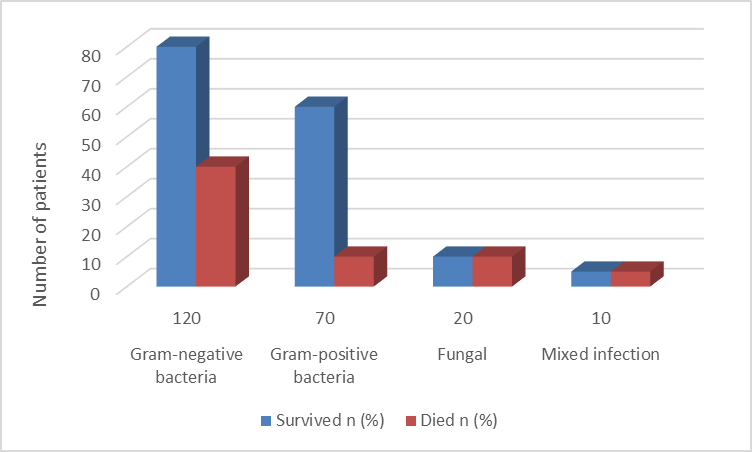
Figure 1: Microbial Etiology of Sepsis
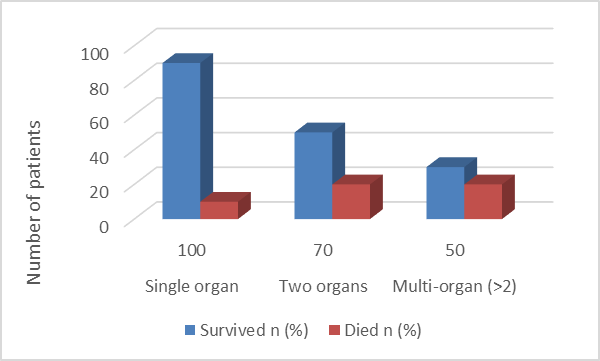
Figure 2: Organ Dysfunction and Mortality
A total of 220 patients with sepsis were included in the study. The age distribution showed that 60 patients (27.3%) were younger than 40 years, 90 patients (40.9%) were between 40 and 60 years, and 70 patients (31.8%) were older than 60 years. Survival decreased with increasing age: among patients <40 years, 55 (91.7%) survived and 5 (8.3%) died; in the 40–60 years group, 70 (77.8%) survived and 20 (22.2%) died; and among those >60 years, 45 (64.3%) survived and 25 (35.7%) died. The association between age and mortality was statistically significant (p = 0.045) . Regarding sex distribution, 130 patients (59.1%) were male and 90 (40.9%) were female. Among males, 90 (69.2%) survived while 40 (30.8%) died, and among females, 80 (88.9%) survived and 10 (11.1%) died. the difference in mortality between male and female patients was not statistically significant (p = 0.312).
Among the 220 patients with sepsis, the most common source of infection was the respiratory tract, observed in 90 patients (40.9%), followed by urinary tract infections in 50 patients (22.7%), gastrointestinal infections in 40 patients (18.2%), bloodstream infections in 30 patients (13.6%), and other sources in 10 patients (4.5%). Survival rates varied depending on the source: 65 patients (72.2%) with respiratory infections survived, while 25 (27.8%) died. In urinary tract infections, 45 patients (90%) survived and 5 (10%) died, and in gastrointestinal infections, 25 (62.5%) survived while 15 (37.5%) died. For bloodstream infections, 20 patients (66.7%) survived and 10 (33.3%) died, whereas all patients in the “other sources” group survived (100%).The association between the source of infection and mortality was statistically significant (p = 0.038) .
In this study of 220 sepsis patients, the most common causative pathogens were Gram-negative bacteria, identified in 120 patients (54.5%), followed by Gram-positive bacteria in 70 patients (31.8%), fungal infections in 20 patients (9.1%), and mixed infections in 10 patients (4.5%). Survival varied significantly with the type of pathogen. Among patients with Gram-negative infections, 80 (66.7%) survived while 40 (33.3%) died. In the Gram-positive group, 60 patients (85.7%) survived and 10 (14.3%) died. Fungal infections had the highest mortality, with only 10 patients (50%) surviving and 10 (50%) dying, and mixed infections showed a similar outcome, with 5 patients (50%) surviving and 5 (50%) dying .The association between pathogen type and mortality was statistically significant (p = 0.025) .
Among the 220 patients, single organ dysfunction was observed in 100 patients (45.5%), two organ dysfunctions in 70 patients (31.8%), and multi-organ dysfunction involving more than two organs in 50 patients (22.7%). Survival decreased with increasing severity of organ involvement: 90 patients (90%) with single organ dysfunction survived while 10 (10%) died. In patients with two organs involved, 50 (71.4%) survived and 20 (28.6%) died, whereas among those with multi-organ dysfunction, only 30 patients (60%) survived while 20 (40%) died.The association between the number of organs involved and mortality was highly significant (p < 0.001) .
The duration of hospital stay among the 220 sepsis patients varied, with 80 patients (36.4%) staying ≤7 days, 100 patients (45.5%) staying 8–14 days, and 40 patients (18.2%) staying more than 14 days. Survival rates decreased with increasing length of stay: among patients hospitalized for ≤7 days, 75 (93.8%) survived and 5 (6.2%) died. In the 8–14 days group, 70 patients (70%) survived and 30 (30%) died, whereas in patients with a hospital stay >14 days, only 25 (62.5%) survived while 15 (37.5%) died. The association between length of hospital stay and mortality was statistically significant (p = 0.012) .
DISCUSSION:
In this study of 220 patients with sepsis, older age was associated with higher mortality, with patients >60 years showing a death rate of 35.7% (p = 0.045). Similar findings were reported by Martin et al., who observed that advanced age significantly increases sepsis-related mortality due to comorbidities and immunosenescence [10]. Likewise, Fleischmann et al. noted that elderly patients admitted with sepsis had worse outcomes compared to younger populations [11]. In contrast, our study found no significant difference in mortality between males and females (p = 0.312), consistent with the findings of Mayr et al., who reported that sex alone does not significantly influence survival in sepsis [12]. The respiratory tract was the most common source of infection (40.9%), followed by urinary and gastrointestinal infections, with mortality highest in gastrointestinal infections (37.5%) and respiratory infections (27.8%) (p = 0.038). These observations align with Vincent et al., who demonstrated that respiratory and intra-abdominal infections contribute most to sepsis mortality in ICU settings [13]. The favorable survival in urinary tract infections (90%) mirrors results from Angus et al., highlighting that early detection and treatment improve outcomes in urinary sepsis [14].
Regarding microbial etiology, Gram-negative bacteria predominated (54.5%), followed by Gram-positive organisms (31.8%) and fungi (9.1%). Mortality was highest in fungal infections (50%) and mixed infections (50%) (p = 0.025). Similar trends were observed by Patel et al., who reported that Gram-negative sepsis is frequently associated with severe disease and higher mortality [15]. Wang et al. also emphasized that fungal sepsis carries substantial risk due to delayed diagnosis and limited antifungal coverage [16]. Our study demonstrated a clear relationship between organ dysfunction and mortality, with single organ involvement showing 10% mortality, two organs 28.6%, and multi-organ dysfunction 40% (p < 0.001). This is consistent with Angus and van der Poll, who reported that the number of failing organs is a strong predictor of death in sepsis [17]. Early recognition and intensive organ support are critical to improving outcomes. Finally, length of hospital stay was associated with survival, with patients staying ≤7 days showing the highest survival (93.8%), while those staying >14 days had 37.5% mortality (p = 0.012). This finding is in agreement with Cecconi et al., who highlighted that prolonged hospitalization often reflects severity of illness and the occurrence of complications [18].
CONCLUSION:
In this study of 220 patients with sepsis, older age, respiratory and gastrointestinal infections, Gram-negative and fungal pathogens, multi-organ dysfunction, and prolonged hospital stay were identified as significant predictors of mortality. The findings emphasize the critical importance of early recognition, rapid pathogen identification, targeted antimicrobial therapy, and timely organ support to improve patient outcomes. These results reinforce that proactive and individualized management strategies are essential to reduce sepsis-related morbidity and mortality, particularly among high-risk groups such as the elderly and those with multi-organ involvement.
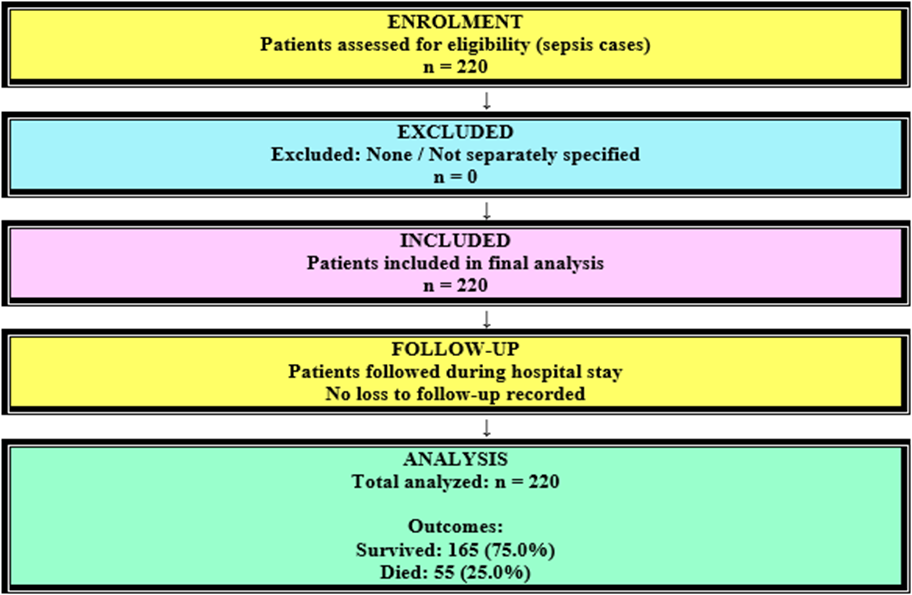
CONSORT FLOW DIAGRAM
REFERENCES:
1. Arina P, Hofmaenner DA, Singer M. Definition and Epidemiology of Sepsis. Semin Respir Crit Care Med. 2024;45(4):461 468.
2. Bone RC, et al. Sepsis: definitions and clinical criteria. Lancet review. 1992.
3. Gyawali B, Ramakrishna K, Dhamoon AS. Sepsis: The evolution in definition, pathophysiology, and management. SAGE Open Med. 2019;7:2050312119835043.
4. Gotts JE, Matthay MA. Sepsis: pathophysiology and clinical management. BMJ. 2016;353:i1585.
5. Borges ACN, et al. Epidemiology and pathophysiology of sepsis: A review. Res Soc Dev. 2017;9(2).
6. Kumar A, et al. Clinical Aspects of Sepsis: An Overview. PMC. 2012.
7. Epidemiology of Adult-population Sepsis in India: A Single Center 5 Year Experience. PMC. 2017.
8. Epidemiology and outcomes of community-acquired sepsis in adults. BMC Infect Dis. 2019;19:584.
9. Sepsis epidemiology and challenges in low and middle income countries. MDPI study.
10. Martin GS, Mannino DM, Eaton S, Moss M. The epidemiology of sepsis in the United States from 1979 through 2000. N Engl J Med. 2003;348:1546 1554.
11. Fleischmann C, Scherag A, Adhikari NKJ, et al. Assessment of global incidence and mortality of hospital-treated sepsis. Am J Respir Crit Care Med. 2016;193:259 272.
12. Mayr FB, Yende S, Angus DC. Epidemiology of severe sepsis. Virulence. 2014;5:4 11.
13. Vincent JL, Rello J, Marshall J, et al. International study of the prevalence and outcomes of infection in intensive care units. JAMA. 2009;302:2323 2329.
14. Angus DC, van der Poll T. Severe sepsis and septic shock. N Engl J Med. 2013;369:840 851.
15. Patel GP, Ramachandran P, Kothari N, et al. Microbiology of sepsis: pathogens and outcomes. J Crit Care. 2018;48:316 323.
16. Wang HE, Shapiro NI, Angus DC, Yealy DM. National estimates of severe sepsis in the United States. Crit Care Med. 2007;35:1928 1936.
17. Angus DC, van der Poll T. Severe sepsis and septic shock. N Engl J Med. 2013;369:840 851.
18. Cecconi M, Evans L, Levy M, Rhodes A. Sepsis and septic shock. Lancet. 2018;392:75 87.