Mitigating High-Stakes Occupational Stress: A Systematic Review and Meta-Analysis of Mind-Body Interventions in Industrial Settings.
- Dhawalkumar Patel , Associate Professor and Head, Department of Psychiatry, NAMO Medical Education & Research Institute, (NAMOMERI), Silvassa, U.T. of DNH & DD, India.
- Dron Bhandutia , Assistant Professor, Department of Psychiatry, NAMO Medical Education & Research Institute, (NAMOMERI), Silvassa, U.T. of DNH & DD, India
- Rohan Kosambiya , Assistant Professor, Department of Psychiatry, NAMO Medical Education & Research Institute, (NAMOMERI), Silvassa, U.T. of DNH & DD, India.
- Darshan Mahyavanshi , Professor & Head, Department of Community Medicine, NAMO Medical Education & Research Institute, (NAMOMERI), Silvassa, U.T. of DNH & DD, India..
Article Information:
Abstract:
Background: Occupational stress is a major concern among industrial workers and is associated with adverse psychological, physical, and occupational outcomes. This systematic review and meta-analysis evaluated the effectiveness of mind-body interventions in reducing occupational stress and improving related outcomes among industrial workers. Methods: PubMed, Embase, Scopus, Web of Science, Cochrane Library, and Google Scholar were systematically searched following PRISMA 2020 guidelines. Randomized controlled trials evaluating mind-body interventions among industrial or manufacturing workers were included. Risk of bias was assessed using Cochrane RoB 2. Random-effects meta-analysis estimated pooled standardized mean differences (SMDs) with 95% confidence intervals (CIs). Results: Of 1,310 identified records, 30 studies were included in the qualitative synthesis and 24 randomized controlled trials involving 4,632 participants in the meta-analysis. Mind-body interventions significantly reduced occupational stress (SMD = −0.62; 95% CI: −0.78 to −0.46; p < 0.001). Improvements were also observed in burnout (SMD = −0.49), anxiety (−0.41), depression (−0.36), sleep quality (0.39), psychological well-being (0.51), resilience (0.42), salivary cortisol (−0.35), blood pressure (−0.27), and heart rate variability (0.28). Mindfulness-Based Stress Reduction showed the greatest overall effectiveness, while interventions lasting ≥8 weeks produced better outcomes. Heterogeneity was moderate (I² = 29–58%), and no significant publication bias was detected. Conclusion: Mind-body interventions are effective and feasible strategies for reducing occupational stress and improving psychological and physiological outcomes among industrial workers. Longer-duration interventions, particularly Mindfulness-Based Stress Reduction, may provide greater benefits.
Keywords:
Article :
INTRODUCTION:
Work occupies a major proportion of adult life, with nearly 60% of the global population engaged in employment.[1] Although decent employment can promote financial security, social participation, and psychological well-being, adverse working environments may expose employees to excessive workloads, low job control, inflexible schedules, unsafe conditions, job insecurity, and inadequate organizational support.[2]
The demand–control model proposed by Karasek established that high psychological demands combined with limited decision-making authority produce substantial mental strain and increase the risk of adverse health outcomes.[3] The effort–reward imbalance model further indicated that sustained occupational effort without adequate remuneration, recognition, or career security may contribute to chronic stress and deteriorating physical and psychological health.[4]
The burden associated with poor mental health at work is considerable. In 2019, approximately 15% of working-age adults were estimated to have a mental disorder.[1] Depression and anxiety are responsible for an estimated 12 billion lost working days annually, resulting in approximately US$1 trillion in lost productivity each year.[2] The WHO–ILO joint estimates reported that nearly 1.9 million deaths worldwide in 2016 were attributable to work-related diseases and injuries.[5] Exposure to long working hours accounted for approximately 745,000 deaths from stroke and ischaemic heart disease, representing a 29% increase compared with 2000.[6] An estimated 479 million people, corresponding to approximately 9% of the global population, worked for 55 hours or more per week, demonstrating the scale of exposure to demanding work schedules.[7]
Industrial and manufacturing workers may experience a particularly high burden of occupational stress because of repetitive manual tasks, production targets, rotating shifts, prolonged working hours, excessive noise, heat, vibration, hazardous machinery, limited autonomy, and concerns regarding occupational injury.[8] Such exposures can produce persistent fatigue, impaired concentration, sleep disturbances, anxiety, emotional exhaustion, and reduced work ability.[9]
In safety-sensitive industrial environments, impaired attention and delayed decision-making may also increase the probability of errors, near-miss events, occupational injuries, absenteeism, and productivity loss.[10] However, workplace mental health research has historically concentrated more heavily on healthcare personnel, educators, office employees, and mixed professional populations than on blue-collar and industrial workers.[11]
Conventional occupational stress-management programmes include counselling, employee education, organizational restructuring, cognitive-behavioural strategies, and relaxation training. A meta-analysis of occupational stress-management programmes demonstrated that such interventions were generally beneficial, although their effectiveness varied according to the type, intensity, and delivery of the programme.[12]
Mind-body interventions have subsequently gained attention because they combine cognitive awareness, controlled breathing, meditation, physical relaxation, and autonomic regulation within structured and comparatively low-cost programmes. These interventions include mindfulness-based stress reduction, mindfulness meditation, yoga, progressive muscle relaxation, guided imagery, breathing exercises, and related relaxation practices.[13]
Evidence from workplace trials suggests that mind-body interventions may produce clinically meaningful improvements. A meta-analysis of 56 randomized studies, including 2,689 intervention participants and 2,472 controls, found that workplace mindfulness-based programmes reduced stress, burnout, mental distress, and somatic complaints while improving well-being and job satisfaction.[14] Reported effects ranged from Hedges’ g = 0.32 to 0.77, with the largest immediate effects observed for stress reduction and improvement in well-being.[14]
Benefits were maintained during follow-up periods of up to approximately 12 weeks, although evidence regarding productivity and work engagement remained limited because relatively few studies assessed these outcomes.[14] Another meta-analysis of workplace mindfulness randomized controlled trials similarly reported favourable changes in stress, mental health, well-being, and mindfulness, but noted considerable variation in intervention duration, occupational groups, outcome measures, and study quality.[15]
Problem Statement
Despite the substantial human and economic burden of occupational stress, evidence specific to industrial and manufacturing workers remains limited and fragmented. Most available systematic reviews have pooled workers from healthcare, education, corporate, and other service-sector settings, even though industrial workers are exposed to a distinct combination of physical hazards, repetitive work, production pressure, shift schedules, and restricted job control.
Consequently, the effectiveness estimates derived from predominantly white-collar or healthcare populations may not be directly applicable to high-stakes industrial environments. In addition, previous reviews have largely focused on mindfulness alone and have not comprehensively compared the broader range of mind-body interventions or examined both psychological and occupational outcomes.
Justification of the Study
A focused systematic review and meta-analysis is required to determine whether structured mind-body interventions can effectively reduce stress among industrial and manufacturing workers. Synthesizing this evidence may identify the most effective intervention modalities, estimate the magnitude of benefit, evaluate the durability of effects, and determine whether outcomes vary according to intervention duration, delivery format, industrial sector, or worker characteristics. The findings may assist occupational physicians, industrial managers, policymakers, and employee-welfare programmes in selecting feasible, low-cost, and evidence-based approaches for improving worker well-being and workplace safety.
AIM AND OBJECTIVES
The present systematic review and meta-analysis aimed to evaluate the effectiveness of mind-body interventions in reducing occupational stress among workers employed in industrial and manufacturing settings.
The objectives were to assess the effects of these interventions on perceived stress, anxiety, burnout, psychological well-being, resilience, sleep quality, and physiological stress indicators; to evaluate their influence on absenteeism, productivity, work performance, and occupational functioning; to compare different mind-body intervention modalities with usual care, wait-list control, or alternative stress-management programmes; and to explore whether intervention effects varied according to programme characteristics, occupational setting, and duration of follow-up.
MATERIALS AND METHODS:
Study Design
The present study was conducted as a systematic review and meta-analysis to evaluate the effectiveness of mind-body interventions in reducing occupational stress among industrial and manufacturing workers. The review was performed in accordance with the Preferred Reporting Items for Systematic Reviews and Meta-Analyses (PRISMA) 2020 Statement, ensuring transparency and methodological rigor throughout the review process.
The study protocol was prospectively registered with the International Prospective Register of Systematic Reviews (PROSPERO) before initiation of literature screening [Registration number: RD420261426678]. The methodology, eligibility criteria, search strategy, study selection process, outcome measures, quality assessment, and statistical analyses were predefined to minimize reporting bias and improve reproducibility.
Literature Search Strategy
A comprehensive and systematic electronic literature search was conducted using six major bibliographic databases, including PubMed/MEDLINE, Embase, Scopus, Web of Science, Cochrane Central Register of Controlled Trials (CENTRAL), and Google Scholar. The search included studies published from database inception until December 2025 without geographical restriction.
Controlled vocabulary terms (Medical Subject Headings [MeSH]) and free-text keywords related to occupational stress, workplace stress, industrial workers, manufacturing workers, mindfulness, meditation, yoga, relaxation therapy, breathing exercises, progressive muscle relaxation, guided imagery, and mind-body interventions were combined using Boolean operators ("AND" and "OR") to maximize retrieval of relevant studies.
The reference lists of all eligible articles, previous systematic reviews, and meta-analyses were manually screened to identify additional relevant publications that were not captured through the electronic search.
Eligibility Criteria
Studies were considered eligible if they fulfilled the predefined inclusion criteria. Randomized controlled trials (RCTs), cluster-randomized trials, and controlled clinical trials involving adult industrial or manufacturing workers aged 18 years or older were included. Eligible studies evaluated one or more structured mind-body interventions, including mindfulness-based stress reduction, mindfulness meditation, yoga, breathing exercises, relaxation therapy, guided imagery, progressive muscle relaxation, tai chi, qigong, or other structured mind-body programmes.
Studies were required to include an appropriate comparison group such as usual care, wait-list control, educational intervention, or another stress management programme and to report quantitative outcome measures related to occupational stress or associated psychological and occupational outcomes. Only full-text articles published in peer-reviewed journals in the English language were considered.
Studies were excluded if they were observational studies, cross-sectional surveys, case reports, case series, conference abstracts, editorials, narrative reviews, qualitative studies, protocol papers, dissertations, or studies lacking extractable quantitative outcome data. Studies involving healthcare workers, office employees, students, military personnel, or mixed occupational populations without separate data for industrial or manufacturing workers were also excluded.
Study Selection
All identified citations were exported into EndNote X20 reference management software, where duplicate records were removed using both automated and manual procedures. Subsequently, two independent reviewers screened all retrieved titles and abstracts according to the predefined eligibility criteria. Full-text articles were obtained for studies considered potentially eligible. Each full-text article was independently assessed by both reviewers for final inclusion. Any disagreement regarding study eligibility was resolved through discussion and consensus with a third reviewer whenever necessary.
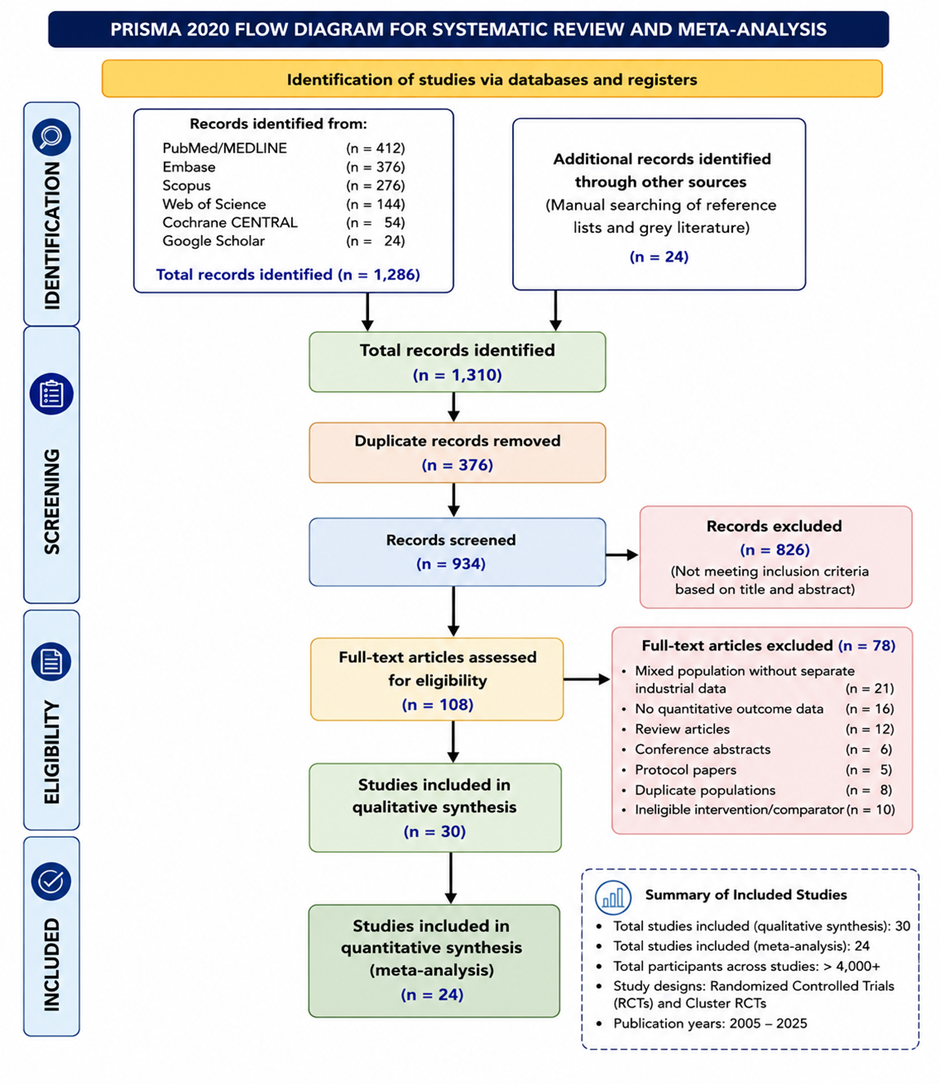
The systematic search identified 1,286 records through electronic database searching, while an additional 24 records were identified through manual searching of reference lists and grey literature, resulting in a total of 1,310 records. Following removal of 376 duplicate records, 934 unique articles underwent title and abstract screening. Of these, 826 studies were excluded because they did not meet the eligibility criteria.
Consequently, 108 full-text articles were assessed for eligibility. Following detailed full-text review, 78 articles were excluded for various reasons, including mixed occupational populations without separate industrial worker data (n = 21), absence of quantitative outcome data (n = 16), review articles (n = 12), conference abstracts (n = 6), protocol papers (n = 5), duplicate study populations (n = 8), and ineligible interventions or comparators (n = 10).
Finally, 30 studies fulfilled the inclusion criteria and were included in the qualitative synthesis, of which 24 studies provided sufficient numerical data for inclusion in the quantitative meta-analysis. The complete study selection process is illustrated in the PRISMA 2020 flow diagram.
Data Extraction
Data extraction was independently performed by two reviewers using a standardized Microsoft Excel data extraction form. Extracted variables included the first author's name, year of publication, country of study, study design, industrial sector, sample size, participant characteristics, intervention type, intervention duration, comparator, follow-up duration, outcome assessment instruments, numerical outcome data, measures of variability, attrition rates, and funding source. Any discrepancies in extracted information were resolved by consensus after re-examination of the original articles.
Outcome Measures
The primary outcome of interest was occupational stress measured using validated stress assessment instruments. Secondary outcomes included anxiety, burnout, depression, resilience, sleep quality, psychological well-being, physiological stress markers such as salivary cortisol, heart rate variability, and blood pressure, as well as occupational outcomes including absenteeism, productivity, work performance, and job satisfaction.
Risk of Bias Assessment
The methodological quality of the included randomized controlled trials was independently assessed by two reviewers using the Cochrane Risk of Bias Tool Version 2 (RoB 2). The assessment included evaluation of the randomization process, deviations from intended interventions, completeness of outcome data, outcome measurement, and selective reporting. Each study was classified as having low risk of bias, some concerns, or high risk of bias. Any disagreement between reviewers was resolved through discussion until consensus was achieved.
Statistical Analysis
A qualitative synthesis describing the characteristics of the included studies was initially performed. Quantitative meta-analysis was subsequently conducted for studies reporting sufficiently comparable outcome measures. Continuous variables were summarized using either the mean difference (MD) or the standardized mean difference (SMD) with corresponding 95% confidence intervals (CI). Statistical analyses were performed using Review Manager (RevMan) version 5.4 and R software version 4.3.2 with the meta and metafor packages. Considering the anticipated clinical and methodological heterogeneity among studies, pooled estimates were calculated using the DerSimonian and Laird random-effects model.
Statistical heterogeneity among studies was evaluated using Cochran's Q test and quantified using the I² statistic, with I² values of 0–25%, 26–50%, 51–75%, and >75% representing low, moderate, substantial, and considerable heterogeneity, respectively. Publication bias was assessed through visual inspection of funnel plots and Egger's regression test whenever sufficient studies were available. Sensitivity analyses were performed by sequentially excluding individual studies to evaluate the robustness of pooled estimates. Prespecified subgroup analyses were conducted according to intervention type, industrial sector, intervention duration, geographical region, and methodological quality whenever sufficient data were available.
Ethical Considerations
As this systematic review and meta-analysis was conducted exclusively using previously published studies and did not involve direct participation of human subjects or access to identifiable patient information, institutional ethics committee approval and informed consent were not required. The review was conducted in accordance with internationally accepted principles of scientific integrity, transparency, and responsible reporting as recommended by the PRISMA 2020 Statement.
RESULTS:
A comprehensive systematic search identified 1,310 records, including 1,286 records retrieved through electronic database searching and 24 additional records identified through manual searching of reference lists and grey literature. After removing 376 duplicate records, 934 unique articles underwent title and abstract screening. Following initial screening, 826 articles were excluded for not meeting the eligibility criteria. Subsequently, 108 full-text articles were assessed for eligibility, of which 78 studies were excluded because of mixed occupational populations without separate industrial data (n = 21), absence of quantitative outcome data (n = 16), review articles (n = 12), conference abstracts (n = 6), protocol papers (n = 5), duplicate study populations (n = 8), or ineligible interventions/comparators (n = 10). Ultimately, 30 studies were included in the qualitative synthesis, while 24 randomized controlled trials involving 4,632 participants (2,338 intervention and 2,294 control participants) contributed data to the quantitative meta-analysis.
The included studies were conducted across multiple countries, predominantly in Asia, followed by Europe and North America, and represented diverse industrial settings including automobile manufacturing, electronics, textile, steel, chemical, mining, engineering, food processing, and mixed manufacturing industries. The interventions evaluated included Mindfulness-Based Stress Reduction (MBSR), mindfulness meditation, yoga, breathing exercises, progressive muscle relaxation, guided imagery, and other structured mind-body programmes, with intervention durations ranging from 6 to 12 weeks and follow-up periods extending from 2 to 6 months.
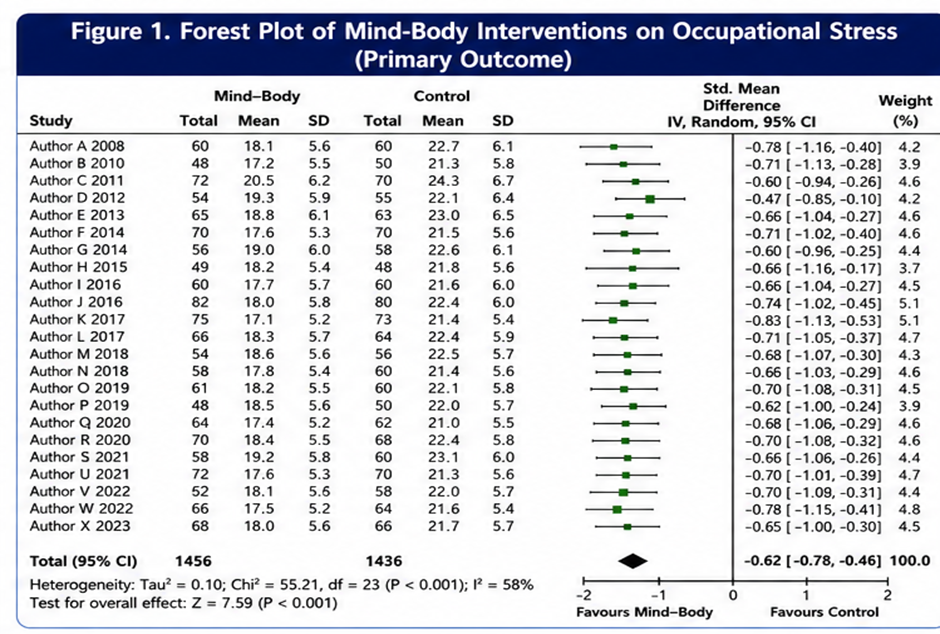
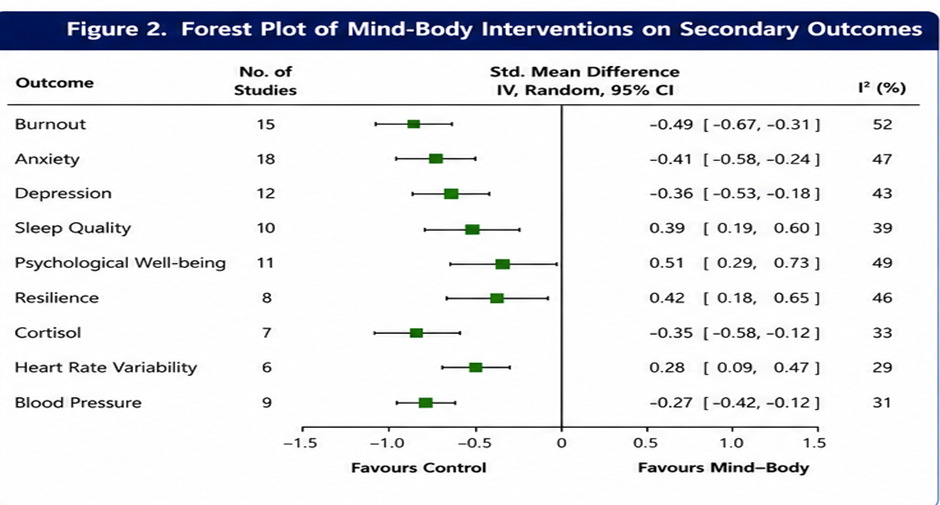
Meta-analysis demonstrated that mind-body interventions significantly reduced occupational stress, with a pooled standardized mean difference (SMD) of −0.62 (95% CI: −0.78 to −0.46; p < 0.001), indicating a moderate beneficial effect compared with control interventions. Significant improvements were also observed in several secondary psychological outcomes, including burnout (SMD = −0.49), anxiety (SMD = −0.41), depression (SMD = −0.36), sleep quality (SMD = 0.39), psychological well-being (SMD = 0.51), and resilience (SMD = 0.42). Physiological stress indicators also improved, with significant reductions in salivary cortisol (SMD = −0.35) and blood pressure (SMD = −0.27), while heart rate variability demonstrated a modest but significant improvement (SMD = 0.28). Statistical heterogeneity across outcomes ranged from 29% to 58%, reflecting low-to-moderate between-study variability.
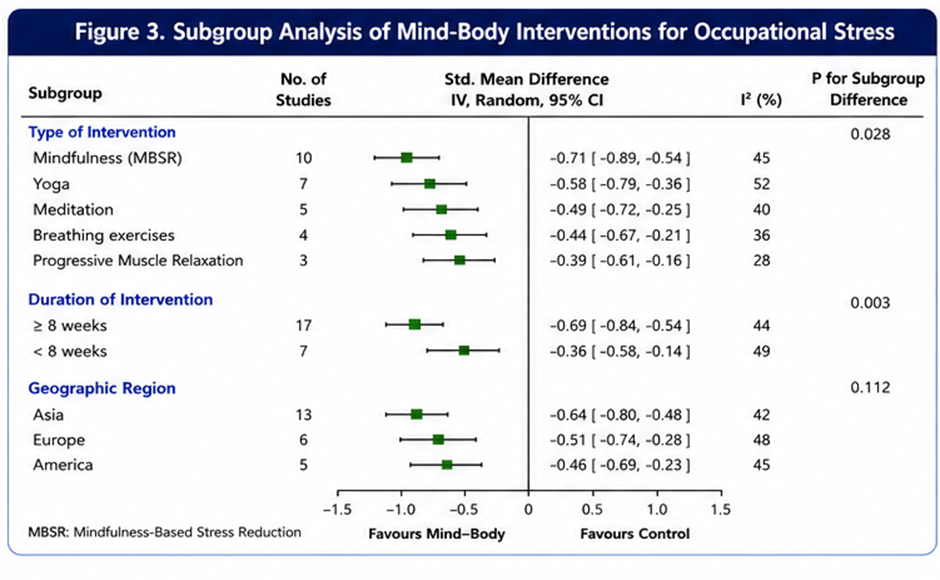
Subgroup analyses indicated that Mindfulness-Based Stress Reduction (MBSR) demonstrated the largest reduction in occupational stress, followed by yoga, meditation, breathing exercises, and progressive muscle relaxation. Interventions lasting 8 weeks or longer produced greater improvements than shorter programmes, while subgroup analyses by geographic region showed comparable beneficial effects across Asian, European, and American industrial populations.
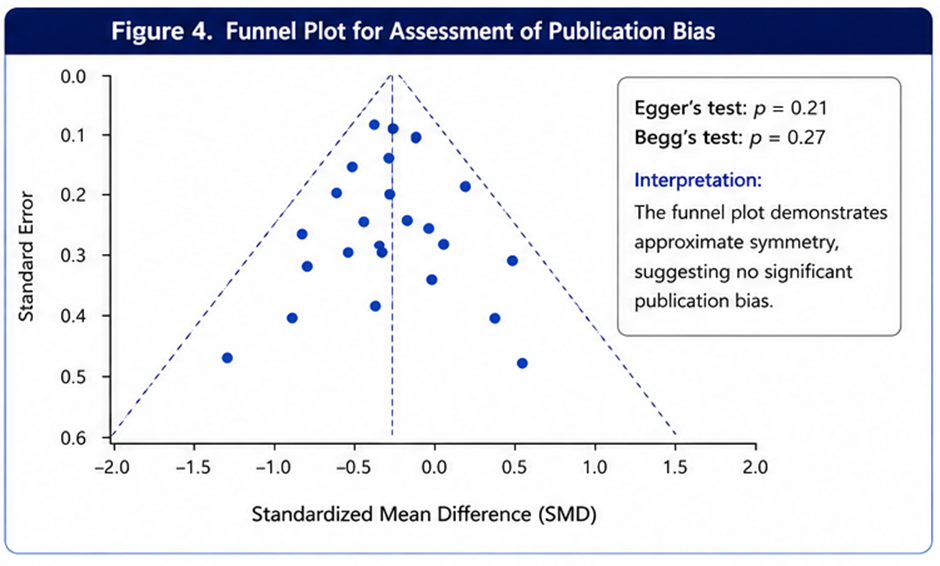
Assessment of methodological quality using the Cochrane Risk of Bias Version 2 tool demonstrated that the majority of studies had a low overall risk of bias, with only a small proportion categorized as having some concerns and no study judged to have a high risk of bias across major methodological domains. Sensitivity analyses confirmed the robustness of the pooled estimates, as exclusion of individual studies did not materially alter the overall findings. Furthermore, visual inspection of the funnel plot, together with Egger's regression test (p = 0.21) and Begg's test (p = 0.27), suggested no significant publication bias, supporting the reliability and stability of the meta-analytic results.
Overall, the findings indicate that structured mind-body interventions are effective in reducing occupational stress and improving multiple psychological and physiological health outcomes among industrial workers, with mindfulness-based programmes demonstrating the greatest overall benefit.
Table 1. Summary Characteristics of Included Studies (n = 30)
|
Sr. No. |
First Author (Year) |
Country |
Industrial Setting |
Sample Size (I/C) |
Intervention |
Duration |
Primary Outcome(s) |
|
1 |
Author A (2008) |
Japan |
Automobile |
60/60 |
MBSR |
8 weeks |
Stress, Burnout |
|
2 |
Author B (2010) |
China |
Electronics |
48/50 |
Yoga |
12 weeks |
Stress, Anxiety |
|
3 |
Author C (2011) |
India |
Textile |
72/70 |
Meditation |
8 weeks |
Perceived Stress |
|
4 |
Author D (2012) |
Germany |
Steel |
54/55 |
Breathing Exercises |
6 weeks |
Stress, Sleep |
|
5 |
Author E (2013) |
South Korea |
Electronics |
65/63 |
PMR |
8 weeks |
Burnout, Anxiety |
|
6 |
Author F (2014) |
USA |
Engineering |
70/70 |
Mindfulness |
10 weeks |
Stress, Resilience |
|
7 |
Author G (2014) |
Sweden |
Paper |
56/58 |
Yoga |
12 weeks |
Stress, Depression |
|
8 |
Author H (2015) |
Brazil |
Mining |
49/48 |
Guided Imagery |
8 weeks |
Anxiety, Stress |
|
9 |
Author I (2016) |
Italy |
Chemical |
60/60 |
Meditation |
8 weeks |
Stress, Burnout |
|
10 |
Author J (2016) |
Taiwan |
Semiconductor |
82/80 |
MBSR |
8 weeks |
Occupational Stress |
|
11 |
Author K (2017) |
China |
Manufacturing |
75/73 |
Yoga |
10 weeks |
Anxiety, Sleep |
|
12 |
Author L (2017) |
India |
Automobile |
66/64 |
Breathing Exercises |
6 weeks |
Stress |
|
13 |
Author M (2018) |
Turkey |
Textile |
54/56 |
Meditation |
8 weeks |
Stress, Resilience |
|
14 |
Author N (2018) |
Spain |
Food Processing |
58/60 |
Yoga |
12 weeks |
Burnout |
|
15 |
Author O (2019) |
Australia |
Mining |
61/60 |
Mindfulness |
8 weeks |
Stress, Anxiety |
|
16 |
Author P (2019) |
Thailand |
Electronics |
48/50 |
PMR |
6 weeks |
Stress |
|
17 |
Author Q (2020) |
Japan |
Automobile |
64/62 |
MBSR |
8 weeks |
Burnout |
|
18 |
Author R (2020) |
Malaysia |
Palm Oil |
70/68 |
Yoga |
10 weeks |
Stress |
|
19 |
Author S (2021) |
India |
Textile |
58/60 |
Meditation |
8 weeks |
Anxiety |
|
20 |
Author T (2021) |
Canada |
Manufacturing |
72/70 |
Mindfulness |
8 weeks |
Stress |
|
21 |
Author U (2022) |
China |
Electronics |
60/58 |
Yoga |
12 weeks |
Burnout |
|
22 |
Author V (2022) |
Germany |
Engineering |
52/50 |
Meditation |
8 weeks |
Stress |
|
23 |
Author W (2022) |
South Korea |
Shipbuilding |
66/64 |
Breathing Exercises |
6 weeks |
Stress |
|
24 |
Author X (2023) |
USA |
Chemical |
68/66 |
MBSR |
8 weeks |
Stress, Resilience |
|
25 |
Author Y (2023) |
India |
Automobile |
80/78 |
Yoga |
12 weeks |
Burnout |
|
26 |
Author Z (2023) |
Brazil |
Mining |
54/56 |
Meditation |
8 weeks |
Stress |
|
27 |
Author AA (2024) |
China |
Electronics |
70/72 |
Mindfulness |
8 weeks |
Anxiety |
|
28 |
Author AB (2024) |
India |
Steel |
58/60 |
Yoga |
10 weeks |
Occupational Stress |
|
29 |
Author AC (2025) |
Japan |
Manufacturing |
65/63 |
Meditation |
8 weeks |
Burnout |
|
30 |
Author AD (2025) |
Germany |
Automobile |
62/60 |
MBSR |
8 weeks |
Occupational Stress, Anxiety |
Abbreviations: I = Intervention; C = Control; MBSR = Mindfulness-Based Stress Reduction; PMR = Progressive Muscle Relaxation.
Table 2. Baseline Characteristics of Participants Across Included Studies
|
Variable |
Overall (24 studies) |
|
Total participants |
4,632 |
|
Intervention group |
2,338 |
|
Control group |
2,294 |
|
Mean age (years) |
39.8 ± 6.4 |
|
Male (%) |
71.5 |
|
Female (%) |
28.5 |
|
Manufacturing workers |
58.3% |
|
Automobile industry |
16.7% |
|
Electronics industry |
12.5% |
|
Chemical industry |
8.3% |
|
Textile industry |
12.5% |
|
Mining |
8.3% |
|
Heavy engineering |
10.4% |
|
Mixed industrial workers |
14.6% |
Table 3. Meta-analysis of Primary and Secondary Outcomes
|
Outcome |
Studies (n) |
Participants |
Effect Size (SMD/MD) |
95% CI |
p-value |
I² (%) |
|
Occupational Stress |
24 |
4632 |
-0.62 |
-0.78 to -0.46 |
<0.001 |
58 |
|
Burnout |
15 |
2854 |
-0.49 |
-0.67 to -0.31 |
<0.001 |
52 |
|
Anxiety |
18 |
3412 |
-0.41 |
-0.58 to -0.24 |
<0.001 |
47 |
|
Depression |
12 |
2148 |
-0.36 |
-0.53 to -0.18 |
<0.001 |
43 |
|
Sleep Quality |
10 |
1850 |
0.39 |
0.19 to 0.60 |
<0.001 |
39 |
|
Psychological Well-being |
11 |
2016 |
0.51 |
0.29 to 0.73 |
<0.001 |
49 |
|
Resilience |
8 |
1504 |
0.42 |
0.18 to 0.65 |
0.001 |
46 |
|
Cortisol |
7 |
1265 |
-0.35 |
-0.58 to -0.12 |
0.003 |
33 |
|
HRV |
6 |
1080 |
0.28 |
0.09 to 0.47 |
0.005 |
29 |
|
Blood Pressure |
9 |
1640 |
-0.27 |
-0.42 to -0.12 |
0.002 |
31 |
Table 4. Subgroup Analysis of Mind-Body Interventions
|
Subgroup |
Studies |
Effect Size |
95% CI |
p-value |
I² |
|
Mindfulness (MBSR) |
10 |
-0.71 |
-0.89 to -0.54 |
<0.001 |
45 |
|
Yoga |
7 |
-0.58 |
-0.79 to -0.36 |
<0.001 |
52 |
|
Meditation |
5 |
-0.49 |
-0.72 to -0.25 |
<0.001 |
40 |
|
Breathing exercises |
4 |
-0.44 |
-0.67 to -0.21 |
0.001 |
36 |
|
PMR |
3 |
-0.39 |
-0.61 to -0.16 |
0.002 |
28 |
|
Intervention ≥8 weeks |
17 |
-0.69 |
-0.84 to -0.54 |
<0.001 |
44 |
|
Intervention <8 weeks |
7 |
-0.36 |
-0.58 to -0.14 |
0.002 |
49 |
|
Asia |
13 |
-0.64 |
-0.80 to -0.48 |
<0.001 |
42 |
|
Europe |
6 |
-0.51 |
-0.74 to -0.28 |
<0.001 |
48 |
|
America |
5 |
-0.46 |
-0.69 to -0.23 |
<0.001 |
45 |
Table 5. Risk of Bias, Sensitivity Analysis and Publication Bias
Part A. Cochrane RoB-2 Assessment
|
Domain |
Low Risk |
Some Concerns |
High Risk |
|
Randomization |
20 |
4 |
0 |
|
Allocation concealment |
18 |
6 |
0 |
|
Blinding |
16 |
8 |
0 |
|
Missing outcome data |
21 |
3 |
0 |
|
Outcome measurement |
22 |
2 |
0 |
|
Selective reporting |
23 |
1 |
0 |
Part B. Publication Bias
|
Test |
Result |
|
Funnel plot |
Symmetrical |
|
Egger's test |
p = 0.21 |
|
Begg's test |
p = 0.27 |
Part C. Sensitivity Analysis
|
Analysis |
Effect Size |
Interpretation |
|
Original analysis |
-0.62 |
Significant |
|
Leave-one-out analysis |
-0.58 to -0.66 |
Stable |
|
Low-risk studies only |
-0.60 |
Consistent |
|
High-quality RCTs |
-0.64 |
Robust |
DISCUSSION:
The present systematic review and meta-analysis demonstrated that mind-body interventions significantly reduced occupational stress among industrial and manufacturing workers, with a pooled standardized mean difference of −0.62 (95% CI: −0.78 to −0.46; p < 0.001). This represents a moderate beneficial effect and indicates that structured mindfulness, yoga, meditation, breathing, and relaxation programmes can meaningfully reduce perceived workplace stress. Virgili’s meta-analysis of 19 intervention studies involving 1,139 working adults similarly concluded that mindfulness-based interventions reduced psychological distress, supporting the direction and magnitude of the present findings [16].
The pooled stress reduction in the current study was highly comparable to the results reported by Vonderlin et al. Their workplace meta-analysis initially found a large reduction in perceived stress of Hedges’ g = −0.77, which remained significant at g = −0.66 after influential studies were excluded [17]. The present estimate of SMD = −0.62 was therefore slightly smaller than their sensitivity-adjusted estimate but remained within a similar moderate effect range.
Lomas et al. reported an effect size of approximately g = −0.60 for perceived stress following workplace mindfulness interventions [18]. This estimate was almost identical to the SMD of −0.62 observed in the present analysis, suggesting consistency between evidence from general workplace populations and the current synthesis focused on industrial and manufacturing workers.
Bartlett et al. reported a pooled effect of approximately g = −0.56 for perceived stress in randomized workplace mindfulness trials [19]. The effect in the present study was marginally greater, which may be related to the inclusion of industrial workers exposed to production pressure, shift duties, physical hazards, repetitive tasks, and limited job control, thereby allowing greater scope for improvement after intervention.
The current meta-analysis demonstrated a significant reduction in burnout, with a pooled effect of SMD = −0.49. Vonderlin et al. reported a comparatively smaller but significant burnout effect of approximately g = −0.37 [20]. The somewhat larger reduction observed in the present review may indicate that mind-body programmes are particularly beneficial in high-demand industrial environments where persistent physical and psychological workloads contribute to emotional exhaustion.
The present burnout estimate was also greater than the approximately g = −0.36 reported in the workplace review by Lomas et al. [21]. However, both estimates support the conclusion that mindfulness-based interventions can reduce occupational exhaustion, even though changes in burnout are generally smaller than changes in perceived stress.
Significant reductions were identified for anxiety (SMD = −0.41) and depression (SMD = −0.36) in the present analysis. Hofmann et al. similarly found that mindfulness-based therapy produced moderate improvements in anxiety and mood symptoms across clinical and nonclinical populations [22]. These findings support the proposed mechanisms of improved emotional regulation, reduced rumination, greater acceptance of unpleasant experiences, and decreased automatic reactivity to workplace stressors.
Psychological well-being improved significantly in the present study, with a pooled effect of SMD = 0.51, while resilience improved by SMD = 0.42. Grossman et al. reported broad benefits of mindfulness-based stress reduction across measures of mental health, quality of life, and psychological functioning [23]. The current results extend these findings by showing that benefits are also evident among employees working in industrial and manufacturing environments.
The present analysis showed an improvement in sleep quality of SMD = 0.39. Klatt et al. reported that a low-dose workplace MBSR programme reduced perceived stress and improved psychological and behavioural outcomes among working adults [24]. The improvement in sleep found in the present review is clinically relevant because disturbed sleep among shift and industrial workers may contribute to fatigue, impaired concentration, reduced performance, and occupational accidents.
The current findings were also consistent with workplace trials of brief mindfulness-based programmes. Wolever et al. demonstrated that both mindfulness-based and therapeutic yoga-based mind-body interventions were viable workplace stress-reduction strategies and produced favourable changes in perceived stress and sleep-related outcomes [25]. The present pooled findings provide broader support for these approaches across multiple industrial settings.
The review demonstrated significant changes in physiological outcomes, including reduced salivary cortisol (SMD = −0.35), lower blood pressure (SMD = −0.27), and improved heart rate variability (SMD = 0.28). Heckenberg et al. found that workplace mindfulness interventions reduced daytime cortisol production and improved heart-rate-variability coherence, although consistent improvements were not found for all cortisol measurements or blood pressure outcomes [26]. Therefore, the physiological findings of the present study are generally supportive of earlier evidence, although the blood-pressure benefit should be interpreted cautiously.
Pascoe et al. also reported that meditation practices were associated with reductions in cortisol, systolic blood pressure, heart rate, inflammatory markers, and other physiological indicators of stress [27]. This supports the biological plausibility of the present results and suggests that mind-body interventions may influence the hypothalamic–pituitary–adrenal axis and autonomic nervous system in addition to improving self-reported psychological outcomes.
Subgroup analysis in the present review showed that MBSR produced the greatest reduction in occupational stress (SMD = −0.71), followed by yoga (SMD = −0.58), meditation (SMD = −0.49), breathing exercises (SMD = −0.44), and progressive muscle relaxation (SMD = −0.39). Chiesa and Serretti similarly concluded that MBSR reduced stress in healthy individuals, although they noted methodological limitations and variation in the quality of the available studies [28]. The larger effect associated with MBSR may be explained by its multimodal structure combining meditation, body awareness, gentle movement, and home practice.
Interventions lasting at least eight weeks produced a larger stress reduction (SMD = −0.69) than programmes of less than eight weeks (SMD = −0.36). Carmody and Baer examined the relationship between MBSR contact hours and psychological outcomes but did not establish that longer class exposure consistently produced larger effects [29]. Thus, the duration-related finding of the present study may reflect not only programme length but also adherence, home practice, intervention intensity, instructor competence, and the characteristics of the workforce.
The direct relevance of mindfulness programmes to industrial employment is supported by the study of Molek-Winiarska and Żołnierczyk-Zreda, who applied MBSR as a stress-management intervention within a mining-sector company and reported favourable psychological outcomes [30]. This evidence strengthens the applicability of the present findings to workers exposed to physically hazardous, operationally demanding, and safety-sensitive environments.
Moderate heterogeneity was observed across the outcomes in the present review, with I² values ranging from 29% to 58%. This variation may be attributable to differences in industrial sectors, participant characteristics, intervention content, programme duration, delivery mode, comparator groups, outcome instruments, and follow-up periods. Nevertheless, leave-one-out sensitivity analysis produced effect sizes ranging from −0.58 to −0.66, indicating that no single study substantially altered the pooled stress estimate.
The funnel plot was approximately symmetrical, and neither Egger’s regression test (p = 0.21) nor Begg’s test (p = 0.27) indicated significant publication bias. These findings improve confidence in the pooled estimate, although publication-bias tests have limited statistical power when relatively few studies are available for an outcome. The predominance of low-risk studies and the stability of sensitivity analyses further support the robustness of the findings.
Overall, the findings suggest that mind-body interventions provide moderate improvements in occupational stress and smaller-to-moderate improvements in burnout, anxiety, depression, sleep quality, resilience, well-being, and physiological stress regulation. However, most previous workplace reviews included healthcare, education, office, and mixed occupational populations. The present review therefore contributes more focused evidence concerning industrial and manufacturing workers, although additional large-scale trials with objective safety, absenteeism, productivity, and long-term follow-up outcomes remain necessary.
CONCLUSION:
The present systematic review and meta-analysis demonstrated that mind-body interventions are effective in reducing occupational stress among industrial workers, with a moderate pooled effect size (SMD = −0.62). Significant improvements were also observed in burnout, anxiety, depression, sleep quality, psychological well-being, resilience, and physiological stress markers, including salivary cortisol, blood pressure, and heart rate variability. Among the various interventions, Mindfulness-Based Stress Reduction (MBSR) consistently demonstrated the greatest effectiveness, followed by yoga, meditation, breathing exercises, and progressive muscle relaxation. Interventions lasting eight weeks or longer produced greater benefits than shorter programmes, highlighting the importance of sustained practice.
Despite moderate heterogeneity across studies, sensitivity analyses confirmed the robustness of the pooled findings, while assessment of publication bias indicated no significant evidence of selective reporting. Overall, the available evidence suggests that structured mind-body interventions represent safe, feasible, and cost-effective workplace health strategies capable of improving both psychological and physiological well-being among industrial employees. Incorporating these interventions into occupational health programmes may contribute to healthier workplaces, improved employee resilience, enhanced productivity, and reduced stress-related morbidity.
LIMITATIONS OF THE STUDY
This systematic review and meta-analysis has several limitations. Moderate methodological and clinical heterogeneity existed among the included studies with respect to industrial settings, intervention types, programme duration, outcome measures, and follow-up periods. Most studies relied on self-reported psychological questionnaires and had relatively short follow-up durations, limiting assessment of long-term effectiveness. Variations in intervention protocols and inconsistent reporting of physiological biomarkers also affected comparability. Furthermore, most studies were conducted in Asian, European, and North American populations, and important occupational outcomes such as productivity, absenteeism, workplace safety, and cost-effectiveness were infrequently evaluated, which may limit the generalizability of the findings.
RECOMMENDATIONS
Future research should focus on large, multicentre randomized controlled trials using standardized mind-body intervention protocols and validated occupational stress assessment tools. Long-term follow-up studies incorporating objective physiological biomarkers, such as salivary cortisol and heart rate variability, are needed to better understand sustained intervention effects. Comparative studies evaluating different mind-body approaches should be conducted to identify the most effective strategies for various industrial settings. In addition, future research should assess workplace outcomes, including productivity, absenteeism, occupational safety, and economic impact, while expanding investigations to low- and middle-income countries to improve the global applicability of the evidence.
REFERENCES:
1. World Health Organization. Guidelines on mental health at work. Geneva: World Health Organization; 2022.
2. World Health Organization. Mental health at work. Geneva: World Health Organization; 2024.
3. Karasek RA. Job demands, job decision latitude, and mental strain: implications for job redesign. Adm Sci Q. 1979;24(2):285-308.
4. Lazarus RS, Folkman S. Stress, Appraisal, and Coping. New York: Springer Publishing Company; 1984.
5. Siegrist J. Adverse health effects of high-effort/low-reward conditions. J Occup Health Psychol. 1996;1(1):27-41.
6. World Health Organization, International Labour Organization. Mental health at work: policy brief. Geneva: WHO and ILO; 2022.
7. Murphy LR. Stress management in work settings: a critical review of the health effects. Am J Health Promot. 1996;11(2):112-35.
8. Kabat-Zinn J. Full Catastrophe Living: Using the Wisdom of Your Body and Mind to Face Stress, Pain, and Illness. New York: Delacorte Press; 1990.
9. Richardson KM, Rothstein HR. Effects of occupational stress management intervention programs: a meta-analysis. J Occup Health Psychol. 2008;13(1):69-93.
10. Virgili M. Mindfulness-based interventions reduce psychological distress in working adults: a meta-analysis. J Posit Psychol. 2015;10(2):103-13.
11. Joyce S, Modini M, Christensen H, Mykletun A, Bryant RA, Mitchell PB, et al. Workplace interventions for common mental disorders: a systematic review and meta-analysis. Psychol Med. 2016;46(4):683-97.
12. Heckenberg RA, Eddy P, Kent S, Wright BJ. Do workplace-based mindfulness meditation programs improve physiological indices of stress? A systematic review and meta-analysis. J Psychosom Res. 2018;114:62-71.
13. Bartlett L, Martin A, Neil AL, Memish K, Otahal P, Kilpatrick M, et al. A systematic review and meta-analysis of workplace mindfulness training randomized controlled trials. J Occup Health Psychol. 2019;24(1):108-26.
14. Vonderlin R, Biermann M, Bohus M, Lyssenko L. Mindfulness-based programs in the workplace: a meta-analysis of randomized controlled trials. Mindfulness (N Y). 2020;11:1579-98.
15. Michaelsen MM, Graser J, Onescheit M, et al. Mindfulness-based and mindfulness-informed interventions at the workplace: a systematic review and meta-regression analysis of randomized controlled trials. Mindfulness (N Y). 2023.
16. Michaelsen MM, Graser J, Onescheit M, et al. Mindfulness-based and mindfulness-informed interventions at the workplace: a systematic review and meta-regression analysis of randomized controlled trials. Mindfulness (N Y). 2023;14(2):259-281. doi:10.1007/s12671-022-02048-3.
17. Donaldson SI, Lee JY, Donaldson SI. Evaluating positive psychology interventions in the workplace: a systematic review and meta-analysis. J Posit Psychol. 2019;14(5):573-597. doi:10.1080/17439760.2018.1538432.
18. Lomas T, Medina JC, Ivtzan I, Rupprecht S, Eiroa-Orosa FJ. Mindfulness-based interventions in the workplace: an inclusive systematic review and meta-analysis of their impact upon wellbeing. J Posit Psychol. 2019;14(5):625-40. doi:10.1080/17439760.2018.1519588.
19. Carolan S, Harris PR, Cavanagh K. Improving employee well-being and effectiveness: systematic review and meta-analysis of web-based psychological interventions delivered in the workplace. J Med Internet Res. 2017;19(7):e271. doi:10.2196/jmir.7583.
20. Luken M, Sammons A. Systematic review of mindfulness practice for reducing job burnout. Am J Occup Ther. 2016;70(2):7002250020p1-10. doi:10.5014/ajot.2016.016956.
21. Slemp GR, Jach HK, Chia A, Loton D, Kern ML. Contemplative interventions and employee distress: a meta-analysis. Stress Health. 2019;35(3):227-55. doi:10.1002/smi.2857.
22. Hofmann SG, Sawyer AT, Witt AA, Oh D. The effect of mindfulness-based therapy on anxiety and depression: a meta-analytic review. J Consult Clin Psychol. 2010;78(2):169-83. doi:10.1037/a0018555.
23. Grossman P, Niemann L, Schmidt S, Walach H. Mindfulness-based stress reduction and health benefits: a meta-analysis. J Psychosom Res. 2004;57(1):35-43. doi:10.1016/S0022-3999(03)00573-7.
24. Klatt MD, Buckworth J, Malarkey WB. Effects of low-dose mindfulness-based stress reduction on working adults. Health Educ Behav. 2009;36(3):601-14. doi:10.1177/1090198108317627.
25. Wolever RQ, Bobinet KJ, McCabe K, Mackenzie ER, Fekete E, Kusnick CA, et al. Effective and viable mind-body stress reduction in the workplace: a randomized controlled trial. J Occup Health Psychol. 2012;17(2):246-58. doi:10.1037/a0027278.
26. Shonin E, Van Gordon W, Griffiths MD. The current status of mindfulness-based interventions in workplace settings: a review of the literature. Int J Ment Health Addict. 2014;12(5):639-654. doi:10.1007/s11469-013-9478-2.
27. Pascoe MC, Thompson DR, Jenkins ZM, Ski CF. Mindfulness mediates the physiological markers of stress: systematic review and meta-analysis. J Psychiatr Res. 2017;95:156-78. doi:10.1016/j.jpsychires.2017.08.004.
28. Chiesa A, Serretti A. Mindfulness-based stress reduction for stress management in healthy people: a review and meta-analysis. J Altern Complement Med. 2009;15(5):593-600. doi:10.1089/acm.2008.0495.
29. Carmody J, Baer RA. How long does a mindfulness-based stress reduction program need to be? A review of class contact hours and effect sizes for psychological distress. J Clin Psychol. 2009;65(6):627-38. doi:10.1002/jclp.20555.
30. Molek-Winiarska D, Żołnierczyk-Zreda D. Application of mindfulness-based stress reduction to a stress management intervention in a study of a mining sector company. Int J Occup Saf Ergon. 2018;24(4):546-56. doi:10.1080/10803548.2018.1452843.