The Pericapsular Nerve group block vs. Supra-Inguinal Fascia Iliaca Block for Hip Fracture Surgery: A Comparative Analysis of Pre-Spinal positioning and Post-Operative Analgesia in Geriatric Patients.
- Malladihalli Kiran Ashok Kumar , Assistant Professor Department of Anesthesia Alva’s Institute of Medical Science and Research Center
- Manjunath B , Department of Anesthesia Assistant Professor Kempegowda Institute of Medical Sciences
- Shilpa Shivananda. , Department of Anesthesia Senior Resident Institute of Gastroenterology Sciences & Organ Transplant.
Article Information:
Abstract:
Background: Effective perioperative analgesia is crucial in geriatric patients undergoing hip fracture surgery. This study compared the analgesic efficacy of the Pericapsular Nerve Group (PENG) block and the Supra-Inguinal Fascia Iliaca Block (SI-FICB) for pre-spinal positioning and postoperative pain management. Methods: In this prospective, randomized comparative study, 90 geriatric patients with unilateral hip fractures were allocated to receive either ultrasound-guided PENG block (n=45) or SI-FICB (n=45) before spinal anaesthesia. Pain during positioning (VAS) was the primary outcome. Secondary outcomes included positioning quality, postoperative pain scores, rescue analgesia, patient satisfaction, motor strength, and adverse events. Results: Baseline characteristics were comparable between the groups. The PENG group demonstrated significantly lower pain scores during positioning (2.4 ± 0.9 vs. 3.6 ± 1.0; p<0.001) and better positioning quality (2.8 ± 0.4 vs. 2.2 ± 0.5; p<0.001). Postoperative pain scores at 4, 6, and 12 hours were significantly lower in the PENG group. Time to first rescue analgesia was longer (10.4 ± 2.3 vs. 7.8 ± 2.1 hours; p<0.001), while rescue analgesic consumption was significantly lower (56 ± 22 vs. 91 ± 28 mg; p<0.001). Quadriceps motor strength and patient satisfaction were significantly better in the PENG group. The incidence of adverse events was comparable between the groups. Conclusion: The PENG block provided superior analgesia during positioning for spinal anaesthesia, prolonged postoperative pain relief, reduced opioid consumption, and better preservation of motor function compared with SI-FICB. It may be considered a preferred regional analgesic technique for geriatric patients undergoing hip fracture surgery.
Keywords:
Article :
INTRODUCTION:
Hip fracture is one of the most common orthopaedic emergencies in the geriatric population and is associated with significant morbidity, mortality, functional decline, and healthcare costs. With increasing life expectancy and the growing prevalence of osteoporosis, the incidence of hip fractures is expected to rise substantially worldwide[1]. Despite advances in surgical techniques and perioperative care, mortality remains high, with approximately 8–10% within one year after injury. Early surgical fixation is the standard of care; however, optimal perioperative pain management remains essential for improving patient outcomes by facilitating positioning for spinal anaesthesia, reducing physiological stress, enabling early mobilization, and minimizing postoperative complications [2].
Pain during movement and positioning for neuraxial anaesthesia is often severe in patients with hip fractures. Inadequate analgesia can lead to patient discomfort, haemodynamic instability, technical difficulty during spinal anaesthesia, and increased reliance on systemic opioids[2]. Consequently, ultrasound-guided peripheral nerve blocks have become an integral component of multimodal analgesia because they provide effective pain relief while reducing opioid consumption and promoting enhanced recovery [3]. The supra-inguinal fascia iliaca block (SI-FICB) is a widely used regional technique that provides consistent spread of local anaesthetic beneath the fascia iliaca to block the femoral, lateral femoral cutaneous, and obturator nerves. Compared with the conventional infra-inguinal approach, SI-FICB offers broader sensory blockade of the hip joint, improves analgesia, and facilitates positioning for spinal anaesthesia. However, its extensive neural blockade may also result in quadriceps weakness, potentially delaying postoperative ambulation [4,5].
The Pericapsular Nerve Group (PENG) block, introduced by Girón-Arango et al. in 2018, is a targeted ultrasound-guided block designed to anesthetize the articular branches of the femoral, accessory obturator, and obturator nerves supplying the anterior hip capsule. By selectively blocking sensory innervation while preserving motor function, the PENG block has emerged as a promising motor-sparing technique that may provide effective analgesia without impairing early mobilization [6]. Recent randomized controlled trials have compared the PENG block with fascia iliaca-based techniques in hip fracture surgery. While several studies have demonstrated superior analgesia during positioning for spinal anaesthesia, reduced opioid consumption, and better preservation of quadriceps strength with the PENG block, others have reported comparable outcomes between the two techniques [7–9]. Furthermore, recent systematic reviews and meta-analyses have concluded that although both techniques provide effective analgesia, the PENG block may provide superior analgesia during positioning for spinal anaesthesia, longer duration of postoperative analgesia, and improved preservation of motor function [10].
Therefore, the present study was undertaken to compare the efficacy of the Pericapsular Nerve Group (PENG) block and the Supra-Inguinal Fascia Iliaca Block (SI-FICB) in facilitating pre-spinal positioning and providing postoperative analgesia in geriatric patients undergoing hip fracture surgery.
MATERIALS AND METHODS:
This prospective, comparative study was conducted in the Department of Anaesthesiology at a tertiary care teaching hospital.
Study population
Geriatric patients (≥65 years) with radiologically confirmed unilateral hip fractures scheduled for surgery under spinal anaesthesia were enrolled. Patients with ASA physical status II–III were included.
Inclusion criteria
• Age ≥65 years
• Unilateral hip fracture requiring surgery
• ASA II–III
• Planned spinal anaesthesia
Exclusion criteria
• Refusal to participate
• Allergy to local anaesthetics
• Coagulopathy or infection at the injection site
• Pre-existing neurological deficits of the lower limb
• Cognitive impairment preventing pain assessment
• Multiple trauma or pathological fractures
• Chronic opioid use
Randomization
Patients were randomly allocated into two equal groups using a computer-generated randomization sequence:
• Group P: Pericapsular Nerve Group (PENG) block
• Group S: Supra-Inguinal Fascia Iliaca Block (SI-FICB)
Block technique
All blocks were performed preoperatively under ultrasound guidance using strict aseptic precautions by experienced anaesthesiologists.PENG block was performed by depositing 20 ml 0.2% inj Ropivacaine between the psoas tendon and Superior pubic ramus. SI-FICB was performed by depositing 20ml of 0.2% inj Ropivacaine beneath the fascia iliaca above the Inguinal ligament.Spinal Anesthesia was performed using 27g whitacre needle at L3-4 space and 12.5mg of 0.5% inj Bupivacaine heavy was injected in subarachnoid space .
Primary outcome
• Pain during positioning for spinal anaesthesia assessed using the Visual Analogue Scale (VAS).
Secondary outcomes
• Ease of positioning for spinal anaesthesia
• Time required for spinal anaesthesia
• Postoperative VAS pain scores at predetermined intervals
• Time to first rescue analgesic
• Total rescue analgesic consumption during the first 24 hours
• Patient satisfaction
• Block-related complications and adverse events
Statistical analysis
Data were analysed using IBM SPSS Statistics version 26. Continuous variables were expressed as mean ± standard deviation (SD) and categorical variables as frequency and percentage. Continuous variables were compared using the Student's t-test or Mann–Whitney U test, while categorical variables were analysed using the Chi-square test or Fisher's exact test, as appropriate. A p-value <0.05 was considered statistically significant.
RESULTS:
A total of 90 geriatric patients with hip fractures were enrolled and randomized equally to receive either the Pericapsular Nerve Group (PENG) block (Group P, n=45) or the Supra-Inguinal Fascia Iliaca Compartment Block (SI-FICB) (Group S, n=45). All randomized patients completed the study and were included in the final analysis.The baseline demographic and clinical characteristics of the study participants were comparable between the two groups with respect to age, sex distribution, body mass index (BMI), ASA physical status, fracture type, and duration of surgery, with no statistically significant differences observed (all p>0.05) (Table 1).
Table 1. Baseline Demographic and Clinical Characteristics
|
Variable |
Group P (n=45) |
Group S (n=45) |
p-value |
Statistical test |
|
Age (years), Mean ± SD |
73.8 ± 6.4 |
74.2 ± 6.8 |
0.764 |
Independent Student's t-test |
|
Male, n (%) |
22 (48.9) |
24 (53.3) |
0.675 |
Chi-square test |
|
Female, n (%) |
23 (51.1) |
21 (46.7) |
||
|
BMI (kg/m²), Mean ± SD |
24.8 ± 3.5 |
25.1 ± 3.8 |
0.701 |
Independent Student's t-test |
|
ASA II, n (%) |
29 (64.4) |
27 (60.0) |
0.668 |
Chi-square test |
|
ASA III, n (%) |
16 (35.6) |
18 (40.0) |
||
|
Neck of Femur Fracture |
24 (53.3) |
23 (51.1) |
0.832 |
Chi-square test |
|
Intertrochanteric Fracture |
21 (46.7) |
22 (48.9) |
||
|
Duration of Surgery (min), Mean ± SD |
82.4 ± 12.8 |
84.1 ± 13.2 |
0.538 |
Independent Student's t-test |
Baseline Visual Analogue Scale (VAS) pain scores before administration of the nerve block were similar between the two groups (8.3 ± 0.8 vs. 8.2 ± 0.9; p=0.652). Following the block, patients in the PENG group experienced significantly less pain during positioning for spinal anaesthesia than those in the SI-FICB group (2.4 ± 0.9 vs. 3.6 ± 1.0; p<0.001). The mean positioning time was significantly shorter in the PENG group (71 ± 15 vs. 88 ± 18 seconds; p<0.001), and positioning quality scores were significantly higher (2.8 ± 0.4 vs. 2.2 ± 0.5; p<0.001). Although successful spinal anaesthesia on the first attempt was achieved more frequently in the PENG group (93.3% vs. 80.0%), the difference was not statistically significant (p=0.071) (Table 2, Figure 1).
Table 2. Pain During Positioning for Spinal Anaesthesia
|
Parameter |
Group P |
Group S |
p-value |
Statistical test |
|
Baseline VAS Score |
8.3 ± 0.8 |
8.2 ± 0.9 |
0.652 |
Independent Student's t-test |
|
VAS During Positioning |
2.4 ± 0.9 |
3.6 ± 1.0 |
<0.001 |
Independent Student's t-test |
|
Positioning Time (sec) |
71 ± 15 |
88 ± 18 |
<0.001 |
Independent Student's t-test |
|
Positioning Quality Score |
2.8 ± 0.4 |
2.2 ± 0.5 |
<0.001 |
Mann–Whitney U test |
|
Successful First Attempt, n (%) |
42 (93.3) |
36 (80.0) |
0.071 |
Fisher's Exact test |
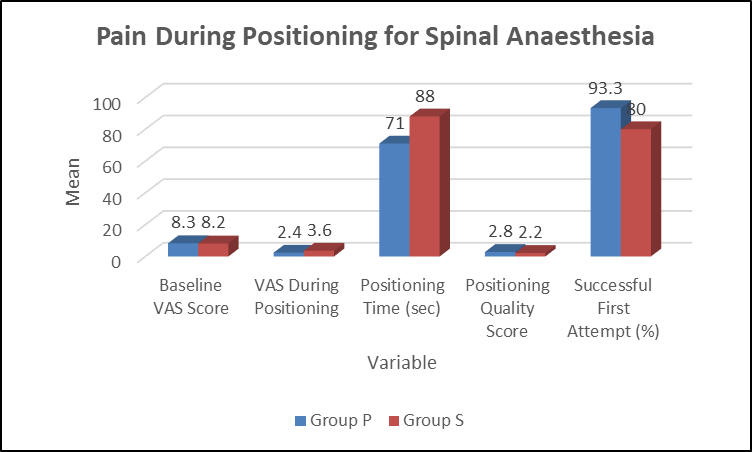
Figure 1. Pain During Positioning for Spinal Anaesthesia
Postoperative pain assessment demonstrated comparable VAS scores between the two groups at 2 hours and 24 hours after surgery (p=0.068 and p=0.118, respectively). However, significantly lower pain scores were observed in the PENG group at 4 hours (2.4 ± 0.8 vs. 2.8 ± 0.9; p=0.031), 6 hours (2.8 ± 0.9 vs. 3.5 ± 1.0; p=0.001), and 12 hours (3.2 ± 0.8 vs. 4.1 ± 1.1; p<0.001). Repeated-measures ANOVA demonstrated a significant overall difference in postoperative pain trends between the groups (p<0.001) (Table 3, Figure 2).
Table 3. Postoperative Pain Scores (VAS)
|
Time |
Group P |
Group S |
p-value |
Statistical test |
|
2 hours |
2.1 ± 0.7 |
2.4 ± 0.8 |
0.068 |
Independent Student's t-test |
|
4 hours |
2.4 ± 0.8 |
2.8 ± 0.9 |
0.031 |
|
|
6 hours |
2.8 ± 0.9 |
3.5 ± 1.0 |
0.001 |
|
|
12 hours |
3.2 ± 0.8 |
4.1 ± 1.1 |
<0.001 |
|
|
24 hours |
2.7 ± 0.9 |
3.0 ± 0.9 |
0.118 |
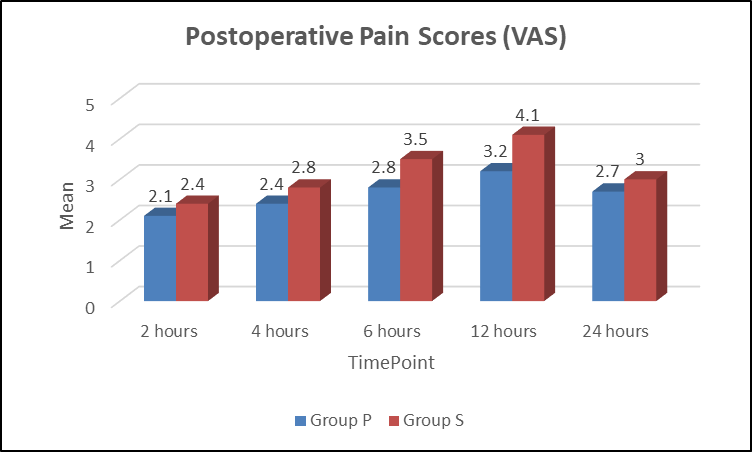
Figure 2. Postoperative Pain Scores (VAS)
Patients who received the PENG block experienced a significantly longer time to first rescue analgesia than those in the SI-FICB group (10.4 ± 2.3 vs. 7.8 ± 2.1 hours; p<0.001). The PENG group also required significantly fewer rescue analgesic doses during the first 24 postoperative hours (1.2 ± 0.5 vs. 1.8 ± 0.6; p<0.001) and had significantly lower total tramadol consumption (56 ± 22 vs. 91 ± 28 mg; p<0.001). Patient satisfaction scores were significantly higher following the PENG block (9.1 ± 0.7 vs. 8.2 ± 0.9; p<0.001), and preservation of quadriceps motor strength was significantly better (91.1% vs. 71.1%; p=0.015) (Table 4, Figure 3).
Table 4. Analgesic Outcomes
|
Parameter |
Group P |
Group S |
p-value |
Statistical test |
|
Time to First Rescue Analgesia (h) |
10.4 ± 2.3 |
7.8 ± 2.1 |
<0.001 |
Independent Student's t-test |
|
Rescue Analgesic Doses |
1.2 ± 0.5 |
1.8 ± 0.6 |
<0.001 |
Mann–Whitney U test |
|
Total Tramadol Consumption (mg) |
56 ± 22 |
91 ± 28 |
<0.001 |
Independent Student's t-test |
|
Patient Satisfaction Score |
9.1 ± 0.7 |
8.2 ± 0.9 |
<0.001 |
Mann–Whitney U test |
|
Quadriceps Motor Strength Preserved, n (%) |
41 (91.1) |
32 (71.1) |
0.015 |
Chi-square test |
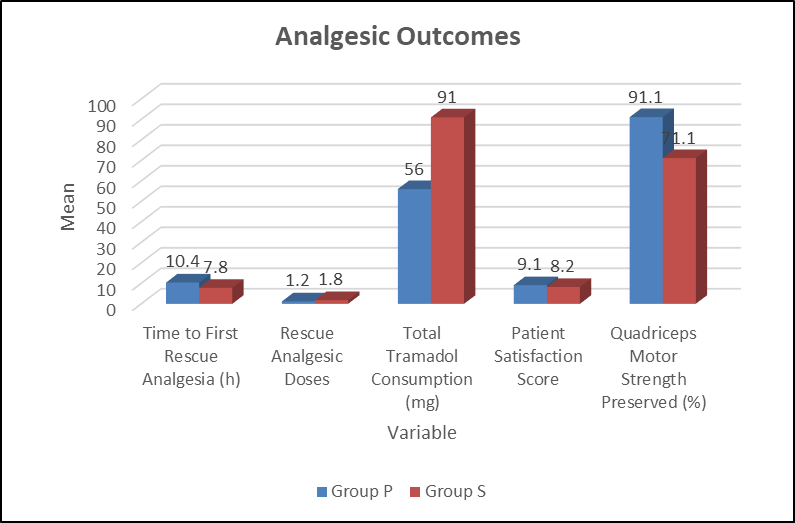
Figure 3. Analgesic Outcomes
Perioperative haemodynamic assessment showed that mean heart rate was significantly lower in the PENG group than in the SI-FICB group (79.8 ± 8.2 vs. 84.6 ± 8.9 beats/min; p=0.011). Mean arterial pressure was also significantly lower in the PENG group (84.1 ± 7.5 vs. 87.5 ± 8.0 mmHg; p=0.045), whereas peripheral oxygen saturation remained comparable between the two groups throughout the observation period (p=0.296) (Table 5).
Table 5. Haemodynamic Parameters
|
Parameter |
Group P |
Group S |
p-value |
Statistical test |
|
Heart Rate (bpm) |
79.8 ± 8.2 |
84.6 ± 8.9 |
0.011 |
Independent Student's t-test |
|
Mean Arterial Pressure (mmHg) |
84.1 ± 7.5 |
87.5 ± 8.0 |
0.045 |
|
|
SpO₂ (%) |
98.7 ± 0.8 |
98.5 ± 0.9 |
0.296 |
The incidence of block-related complications was low in both groups. No statistically significant differences were observed in the frequency of hypotension, bradycardia, postoperative nausea and vomiting, block failure, or postoperative delirium (all p>0.05). Importantly, no patient in either group developed local anaesthetic systemic toxicity or any other major block-related complication, indicating that both regional anaesthetic techniques were safe and well tolerated (Table 6).
Table 6. Adverse Events
|
Variable |
Group P, n (%) |
Group S, n (%) |
p-value |
Statistical test |
|
Hypotension |
3 (6.7) |
5 (11.1) |
0.458 |
Fisher's Exact test |
|
Bradycardia |
2 (4.4) |
3 (6.7) |
0.642 |
|
|
Nausea/Vomiting |
4 (8.9) |
7 (15.6) |
0.334 |
|
|
Local Anaesthetic Toxicity |
0 |
0 |
1.000 |
|
|
Block Failure |
1 (2.2) |
2 (4.4) |
0.557 |
|
|
Postoperative Delirium |
2 (4.4) |
4 (8.9) |
0.398 |
DISCUSSION:
The present study demonstrated that both groups were comparable with respect to age, gender, BMI, ASA physical status, fracture type, and duration of surgery (all p>0.05), indicating successful randomization and minimizing baseline confounding. Similar baseline comparability was reported by Jadon et al. [11] and Hua et al. [12], where demographic and clinical variables did not differ significantly between the PENG and fascia iliaca block groups, allowing a valid comparison of analgesic outcomes.Our study found that patients receiving the PENG block experienced significantly lower pain during positioning than those receiving SI-FICB (VAS 2.4 ± 0.9 vs. 3.6 ± 1.0; p<0.001). The positioning quality score was also significantly better (2.8 ± 0.4 vs. 2.2 ± 0.5; p<0.001). These findings are consistent with Jadon et al. [11], who reported significantly lower VAS scores during positioning in the PENG group (VAS 2.6 ± 1.1) compared with the SI-FICB group (VAS 4.0 ± 1.4), along with superior positioning quality and improved patient comfort. Similarly, Hua et al. [12] demonstrated significantly better preoperative analgesia with the PENG block, facilitating easier positioning before spinal anaesthesia.
The superior performance of the PENG block may be attributed to its selective blockade of the articular sensory branches supplying the anterior hip capsule.In the present study, postoperative VAS scores were significantly lower in the PENG group at 4, 6, and 12 hours after surgery (p<0.05), whereas pain scores at 2 and 24 hours were comparable between the groups. Comparable observations were reported by Hua et al. [12], who found significantly lower postoperative pain scores during the early postoperative period following PENG block. Likewise, Zheng et al. [13] demonstrated that patients receiving a preoperative PENG block experienced significantly lower pain scores during the first 24 postoperative hours compared with controls. These findings support the role of the PENG block in providing superior early postoperative analgesia.Patients in the PENG group required significantly less rescue analgesia and had lower tramadol consumption during the first 24 postoperative hours (56 ± 22 mg vs. 91 ± 28 mg; p<0.001).
In addition, the time to first rescue analgesia was significantly prolonged (10.4 ± 2.3 vs. 7.8 ± 2.1 hours; p<0.001). These findings agree with Hua et al. [12], who observed reduced postoperative opioid requirements in patients receiving the PENG block. Similarly, Zheng et al. [13] reported significantly lower cumulative opioid consumption following preoperative PENG block. Although Desmet et al. [14] demonstrated that SI-FICB also reduced postoperative morphine consumption after total hip arthroplasty, the opioid-sparing effect observed in our study was greater with the PENG block, likely because of its more targeted sensory blockade.Quadriceps motor strength was significantly better preserved in the PENG group (91.1% vs. 71.1%; p=0.015), suggesting that the PENG block provides effective analgesia without significant motor impairment. These findings are consistent with the anatomical concept proposed by Girón-Arango et al. [6] and supported by Kuchálik et al. [15], who reported that the PENG block largely preserves quadriceps strength because it primarily targets the sensory articular branches of the hip joint.
Preservation of motor function is particularly advantageous in geriatric patients, as it may facilitate early rehabilitation and reduce the risk of falls.The present study demonstrated significantly higher patient satisfaction scores in the PENG group (9.1 ± 0.7 vs. 8.2 ± 0.9; p<0.001). Improved satisfaction may be attributed to superior analgesia during positioning, prolonged postoperative pain relief, and reduced opioid requirements. Similar improvements in patient comfort and satisfaction have been reported by Jadon et al. [11] and Hua et al. [12], further supporting the clinical advantages of the PENG block.
The incidence of hypotension, bradycardia, nausea, vomiting, block failure, and postoperative delirium was low and comparable between both groups, with no major block-related complications or local anaesthetic systemic toxicity observed. These findings are consistent with those reported by Jadon et al., Hua et al. [12], and Zheng et al. [13], all of whom concluded that both PENG block and SI-FICB are safe ultrasound-guided regional anaesthetic techniques with low complication rates.
CONCLUSION:
The present study demonstrated that the Pericapsular Nerve Group (PENG) block provided superior analgesia during positioning for spinal anaesthesia, prolonged postoperative pain relief, reduced rescue analgesic requirements, and better preservation of quadriceps motor function compared with the Supra-Inguinal Fascia Iliaca Block (SI-FICB). Both techniques were safe and effective, with comparable complication rates. The PENG block may therefore be considered a preferable regional analgesic technique for geriatric patients undergoing hip fracture surgery.
Limitation
The study was conducted at a single tertiary care centre with a relatively small sample size, which may limit the generalizability of the findings. Additionally, long-term functional recovery and rehabilitation outcomes beyond the first 24 postoperative hours were not evaluated.
REFERENCES:
1. Opperer M, Danninger T, Stundner O, Memtsoudis SG. Perioperative outcomes and type of anesthesia in hip surgical patients: an evidence-based review. World J Orthop. 2014;5(3):336-343.
2. Guay J, Parker MJ, Griffiths R, Kopp S. Peripheral nerve blocks for hip fractures. Cochrane Database Syst Rev. 2017;(5):CD001159.
3. Short AJ, Barnett JJG, Gofeld M, Baig E, Lam K, Agur AMR, et al. Anatomic study of innervation of the anterior hip capsule: implication for image-guided intervention. Reg Anesth Pain Med. 2018;43(2):186-192.
4. Marhofer P, Nasel C, Sitzwohl C, Kapral S. Magnetic resonance imaging of the distribution of local anesthetic during the three-in-one block. Anesth Analg. 2000;90(1):119-124.
5. Swenson JD, Davis JJ, Stream JO, Crim JR, Burks RT, Greis PE. Local anesthetic injection deep to the fascia iliaca at the level of the inguinal ligament: the pattern of distribution and effects on the obturator nerve. J Clin Anesth. 2015;27(8):652-657.
6. Girón-Arango L, Peng PWH, Chin KJ, Brull R, Perlas A. Pericapsular nerve group (PENG) block for hip fracture. Reg Anesth Pain Med. 2018;43(8):859-863.
7. Jadon A, Mohsin K, Sahoo RK, Chakraborty S, Sinha N, Bakshi A. Comparison of supra-inguinal fascia iliaca versus pericapsular nerve block for ease of positioning during spinal anaesthesia: a randomised double-blinded trial. Indian J Anaesth. 2021;65(8):572-578.
8. Zheng J, Pan D, Zheng B, Ruan X. Preoperative pericapsular nerve group (PENG) block for total hip arthroplasty: a randomized, placebo-controlled trial. Reg Anesth Pain Med. 2022;47(3):155-160.
9. Keskes M, Mtibaa MA, Abid A, Sahnoun N, Ketata S, Derbel R, et al. Pericapsular nerve group block versus fascia iliaca block for perioperative analgesia in hip fracture surgery: a prospective randomized trial. Pan Afr Med J. 2023;46:93.
10. Andrade PP, Lombardi RA, Marques IR, Braga ACDNAE, Isaias BRS, Heiser NE. Pericapsular nerve group (PENG) block versus fascia iliaca compartment block for hip surgery: a systematic review and meta-analysis of randomized controlled trials. Braz J Anesthesiol. 2023;73(6):794-809.
11. Jadon A, Mohsin K, Sahoo RK, Chakraborty S, Sinha N, Bakshi A. Comparison of supra-inguinal fascia iliaca versus pericapsular nerve block for ease of positioning during spinal anaesthesia: a randomized double-blinded trial. Indian J Anaesth. 2021;65(8):572-578.
12. Hua H, Xu Y, Jiang M, Dai X. Evaluation of pericapsular nerve group (PENG) block for analgesic effect in elderly patients with femoral neck fracture undergoing hip arthroplasty. J Healthc Eng. 2022;2022.
13. Zheng J, Pan D, Zheng B, Ruan X. Preoperative pericapsular nerve group (PENG) block for total hip arthroplasty: a randomized, placebo-controlled trial. Reg Anesth Pain Med. 2022;47(3):155-160.
14. Desmet M, Vermeylen K, Van Herreweghe I, Carlier L, Soetens F, Lambrecht S, et al. A longitudinal supra-inguinal fascia iliaca compartment block reduces morphine consumption after total hip arthroplasty. Reg Anesth Pain Med. 2017;42(3):327-333.
15. Kuchálik J, Magnuson A, Lundin A, Gupta A. Local infiltration analgesia or femoral nerve block for postoperative pain management in patients undergoing total hip arthroplasty: a randomized double-blind study. Scand J Pain. 2017;16:223-230.