Comparative study of cardiovascular response to handgrip exercise in normal weight overweight and obese subjects.
- Namita Pal , Assistant Professor, Department of Physiology, Rani Durgavati Medical College Banda.
- Prabhat Kumar Pal , Assistant Professor, Department of Ophthalmology, T.S. Misra Medical College, Lucknow.
- Prashant Bhatnagar , Associate Professor, Department of Physiology, Rajkiya Medical College Jalaun, Orai.
Article Information:
Abstract:
Background: Background: Obesity is a major non-communicable disease and an important risk factor for cardiovascular morbidity. It is associated with autonomic nervous system (ANS) dysfunction, which may contribute to adverse cardiovascular outcomes. The present study was conducted to evaluate cardiovascular and autonomic function among normal weight, overweight, and obese individuals. Materials and Methods: This cross-sectional study was conducted in the Department of Physiology, Dr. S.N. Medical College, Jodhpur, and Rajasthan. A total of 152 healthy male and female participants aged 18–45 years were enrolled and classified into normal weight (n=70), overweight (n=40), and obese (n=38) groups according to the World Health Organization body mass index (BMI) classification. Anthropometric parameters, resting heart rate (RHR), resting systolic and diastolic blood pressure (R-SBP and R-DBP), pulse pressure (PP), mean arterial pressure (MAP), and autonomic function using the Hand Grip Test (HGT) were assessed. Data were analyzed using one-way ANOVA followed by Tukey-Kramer post-hoc test, with p<0.05 considered statistically significant. Results: Resting heart rate was significantly increased in obese subjects (p<0.001). Resting systolic and diastolic blood pressures were also significantly higher in the obese group (p<0.05 and p<0.001, respectively). Pulse pressure and mean arterial pressure did not differ significantly among the groups. During the Hand Grip Test, obese subjects showed a significantly lower change in systolic and diastolic blood pressure compared with normal weight and overweight subjects (p<0.01 and p<0.05, respectively), indicating impaired sympathetic autonomic response. Conclusion: Obesity is associated with significant cardiovascular and autonomic dysfunction, characterized by elevated resting heart rate and blood pressure, along with reduced sympathetic reactivity during isometric exercise. Early identification of autonomic impairment and implementation of lifestyle interventions may help reduce future cardiovascular complications in obese individuals.
Keywords:
Article :
INTRODUCTION:
Non-communicable diseases (NCDs) have become a major global health problem due to rapid lifestyle changes, including physical inactivity, unhealthy diets, and increased tobacco use. Sedentary lifestyles significantly increase the risk of cardiovascular disease, diabetes, obesity, hypertension, certain cancers, osteoporosis, depression, and anxiety, contributing to higher morbidity and mortality worldwide. Global burden of NCDs continues to rise, and by 2030, they are projected to account for approximately 76% of all deaths worldwide.2,3 Sedentary lifestyles, unhealthy diets, and reduced physical activity have contributed to increasing prevalence of obesity in both developed and developing countries. Obesity is a significant risk factor for cardiovascular disease, type 2 diabetes, hypertension, dyslipidemia, and other non-communicable diseases, making early prevention and management essential.5
Definition of Obesity
Obesity is a chronic disease characterized by excessive accumulation of body fat that impairs health. It results from an imbalance between energy intake and energy expenditure and is influenced by genetic, hormonal, metabolic, behavioral, and environmental factors.4
The prevalence of overweight and obesity has increased worldwide among children, adolescents, and adults in both developed and developing countries. Obesity has become a major public health concern, with a significant proportion of obese individuals living in developing countries, including India, overweight and obesity are major risk factors for chronic diseases such as cardiovascular disease, respiratory disorders, type 2 diabetes mellitus, hypertension, and certain cancers.6 They contribute to increased morbidity, reduced life expectancy, and a substantial economic burden on healthcare systems. However, obesity can be prevented and controlled through healthy dietary habits, regular physical activity, and appropriate lifestyle modifications.
Obesity is defined as excessive accumulation of body fat and is commonly assessed using Body Mass Index (BMI), calculated as weight in kilograms divided by height in meters squared. BMI is a widely used measure of adiposity and is associated with increased risk of metabolic and cardiovascular complications.7
Obesity also affects autonomic nervous system (ANS) function, which regulates energy metabolism, cardiovascular activity, and body homeostasis. Altered ANS activity, including increased sympathetic activity and reduced parasympathetic modulation, has been observed in obese individuals. These autonomic disturbances may contribute to weight gain and increase the risk of cardiovascular complications. Understanding ANS dysfunction in obesity is important for early detection and prevention of related health problems.
MATERIALS AND METHODS:
This is a cross-sectional study conducted in Department of Physiology, Dr S N Medical College, Jodhpur, Rajasthan. The study group comprised of 152 healthy male and female volunteers in the age group of 18 to 45 years.
Inclusion Criteria:
• Subjects were divided into 3 different groups according to body weight as per WHO classification of Body Mass Index (BMI).
• Normal weight group with BMI 18.5-24.9 kg/m2
• Overweight group with BMI 25-29.9 kg/m2
• Obese group with BMI >30 kg/m2
All the subject were selected randomly in jodhpur area.
• Subjects willing to participate and providing written informed consent.
• Subjects without any known acute or chronic systemic illness affecting cardiovascular, respiratory, or autonomic function.
• Subjects able to perform sympathetic autonomic function tests i.e. Hand Grip Test.
Exclusion Criteria:
• Subjects not consenting for the test.
• Those who have physical deformities.
• • Subjects with any systemic illness like cardio respiratory diseases, Hypertension (HTN), Diabetes mellitus (DM), Endocrinal disorders and psychological disorders, obstructive pulmonary disease, bronchiectasis and interstitial lung diseases that might affect the pulmonary function.
• Subjects on medication likely affecting autonomic nervous system (ANS) like Vasodilators, Barbiturates etc.
• • Individuals with present or past (in the last three months) upper respiratory tract or lower respiratory tract infections, smoking, alcohol, drug abuse
• Subjects with any clinical disease like Neurological disorders likely affecting ANS.
Methodology
All subjects were explained about the procedure to be undertaken and informed written consent was obtained. These subjects were given a questionnaire and personal data form, which they were required to fill up with certain details like their dietary habits, extent of physical activity and family history. They were asked to avoid food, tea, coffee, nicotine at least two hours prior to testing. The whole procedure was explained in detail to each subject in order to alley any fear or apprehension.
The following tests were carried out for the assessment of respiratory and autonomic functions. Recordings were taken at ambient room temperature.
1) Anthropometric measurements: Anthropometric parameters taken were- age, height, weight and Body Mass Index (BMI).
Weight was recorded in kgs using a calibrated weighing machine scale with a capacity of 120 kg and having sensitivity of 100 gm.
Height was measured in centimeters (cm) bare foot against a wall with the help of a measuring tape to the nearest 0.2 cm. Measurement was done with heels close to the wall and feet close together so that weight was equally distributed
Height was measured using a standard stadiometer with the subject standing in an erect posture without shoes.
BMI was calculated by using following formulas.
BMI = Weight (kg)/ Height (m2)
2) Cardiovascular Parameters
following cardiovascular parameters were recorded in all subjects. Heart rate, systolic blood pressure, diastolic blood pressure, pulse pressure and mean arterial pressure.
Subject was made to lie comfortably for five minutes and continue ECG was recorded by means of ‘8 channel’ window based computerized polygraph "MEDICAID-PHYSIOLAB". The resting heart rate was calculated by counting number of R waves in one minute period of ECG in lead II.
After five minutes of supine rest recording of systolic and diastolic blood pressure were done as per standard procedure with the help of mercury sphygmomanometer. Only standard adult cuffs were available and no formal oversight process was in place. Subsequently, appropriate BP cuffs were selected to ensure that the bladder length encircled 50% to 80% of the mid-arm circumference.
(3) Handgrip Dynamometer Test (HGT):
Evaluation of circulatory alterations during sustained isometric muscles contractions is a useful method to assess cardiac function. HGT was performed to see the effect of sympathetic stimulation on cardiovascular functions during the isometric exercise. The subject was asked to exert 30% of maximal voluntary contraction for a period of at least three minutes by gripping the handgrip dynamometer. Blood pressure was measured with a sphygmomanometer on the non-exercising arm at rest and at sixty second intervals during the maneuver. The systolic and diastolic blood pressure during the isometric exercise was calculated and a maximal value achieved during exercise was noted down.
The value of more than 15 mm Hg rise in diastolic BP was taken as normal response, 11-15 mm Hg as borderline and 10 mm Hg or less as abnormal indicating sympathetic insufficiency. (Ghai CL,2007)
Statistical analysis
Data was analyzed by using (GraphPad InStat3) or (SPSS18). Mean and standard deviation were calculated for each parameter. Comparison of mean values by using One-Way ANOVA followed by post-hoc test (Tukey-Kramer Multiple Comparisons Test) was done for comparison among and between normal weight, overweight and obese.
RESULTS:
Table- 1 Comparison of Resting Heart Rate (RHR) of normal weight, overweight and obese subjects (Mean ± SD)
|
parameters
|
Normal weight n=70 |
Overweight n=40 |
Obese n=38 |
p-value |
|
RHR (bpm) |
72.443 ± 8.442 |
74.591 ± 11.778 |
80.421 ± 12.180 |
<0.001 |
One way ANOVA; *P-value <0.05 considered significant
Resting heart rate (RHR) showed a significant difference among normal weight, overweight, and obese subjects. Obese subjects had significantly higher RHR compared to normal weight and overweight groups (p<0.001). This indicates increased cardiovascular strain and altered autonomic regulation with increasing body weight.
Table-1(A) Inter-group comparison of RHR in normal weight, overweight and obese subjects
|
|
NW vs OW |
NW vs OB |
OW vs OB |
|
RHR (bpm) |
NS |
<0.001* |
<0.05* |
*P-value <0.05 considered significant; NS- Not Significant; NW- Normal Weight; OW-Overweight; OB- Obese
Table shows inter-group comparison of RHR. There was no significant change in RHR in Normal Weight to Overweight subjects. There was significant increase in RHR from normal weight to obese and overweight to obese group.
Table- 2 Resting Systolic and Diastolic Blood pressure (R-SBP & R-DBP) of Normal weight, overweight and obese subjects (Mean ± SD)
|
parameters
|
Normal weight n=70 |
Overweight n=40 |
Obese n=38 |
p-value |
|
R-SBP (mmHg) |
116.03 ± 13.338 |
117.50 ± 10.034 |
123.84 ± 11.441 |
<0.05* |
|
R-DBP (mmHg) |
69.4285 ± 8.425 |
73.8181 ± 8.205 |
77.3157± 7.895 |
<0.001* |
One way ANOVA; *P-value <0.05 considered significant
Resting systolic blood pressure (R-SBP) and resting diastolic blood pressure (R-DBP) showed a significant increase among overweight and obese subjects compared to normal weight subjects. R-SBP was significantly higher in obese subjects (p<0.05), while R-DBP showed a highly significant difference among the groups (p<0.001). These findings suggest increased cardiovascular risk with increasing body weight.
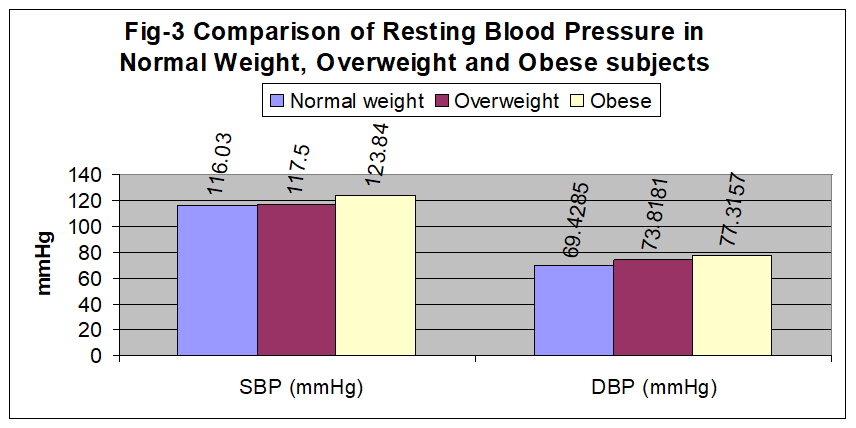
Fig: 1 Graphical represents Resting Systolic and Diastolic Blood pressure (R-SBP & R-DBP) of Normal weight, overweight and obese subjects
Table: 3 Inter-group comparison of R-SBP and R-DBP in normal weight, overweight and obese subjects
|
|
NW vs OW |
NW vs OB |
OW vs OB |
|
R-SBP |
NS |
<0.01* |
<0.05* |
|
R-DBP |
<0.05* |
<0.001* |
NS |
*P-value <0.05 considered significant; NS- Not Significant- Normal Weight; OW-Overweight; OB- Obese.
Table shows Inter-group comparison of R-SBP and R-DBP among all BMI groups. There was a statistically significant increase in R-SBP and R-DBP from normal weight to obese group.
Table: 4 Maximum change in SBP (HGT-∆SBP) and DBP (HGT-∆DBP) in response to Hand Grip Test in Normal Weight, overweight and obese subjects (Mean ± SD)
|
parameters
|
Normal weight n=70 |
Overweight n=40 |
Obese n=38 |
p-value |
|
HGT-∆SBP |
29.029 ± 11.490 |
27.273 ± 12.269 |
19.895 ± 7.877 |
<0.01 |
|
HGT-∆DBP |
22.057 ± 10.697 |
20.864 ± 9.999 |
14.211 ± 5.047 |
<0.05 |
One way ANOVA; *P-value <0.05 considered significant
The maximum changes in systolic and diastolic blood pressure during the Hand Grip Test (HGT-∆SBP and HGT-∆DBP) showed significant differences among the groups. Obese subjects demonstrated a lower blood pressure response compared to normal weight and overweight subjects (p<0.01 for HGT-∆SBP and p<0.05 for HGT-∆DBP), indicating altered cardiovascular autonomic response in obesity.
Table-4(A) Inter-group comparison of maximum change in SBP (HGT-∆SBP) and DBP (HGT-∆DBP) in response to Hand Grip Test in Normal Weight, overweight and obese subjects.
|
|
NW vs OW |
NW vs OB |
OW vs OB |
|
HGT-∆SBP |
NS |
<0.001 |
<0.01 |
|
HGT-∆DBP |
NS |
<0.001 |
<0.01 |
P-value <0.05 considered significant; NS- Not Significant; NW- Normal Weight; OW-Overweight; OB- Obese
Table shows inter-group comparison of the maximal change in SBP and DBP in response to isometric Exercise (Hand Grip Test). The obese group had shown significant less increase in SBP and DBP as compare to normal weight and overweight groups, but an insignificant less increase was found in overweight group as compare to normal weight group.
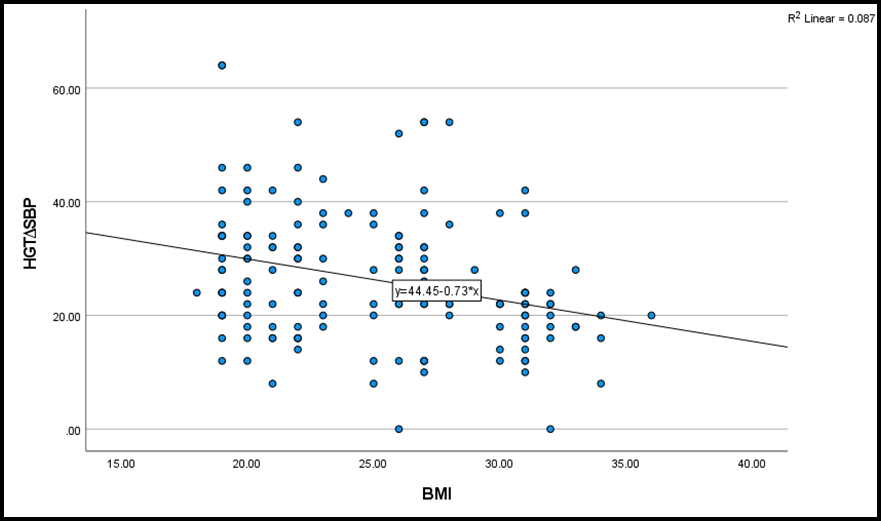
Fig: 2 Graphical Represents Correlation of BMI with HGT∆SBP.
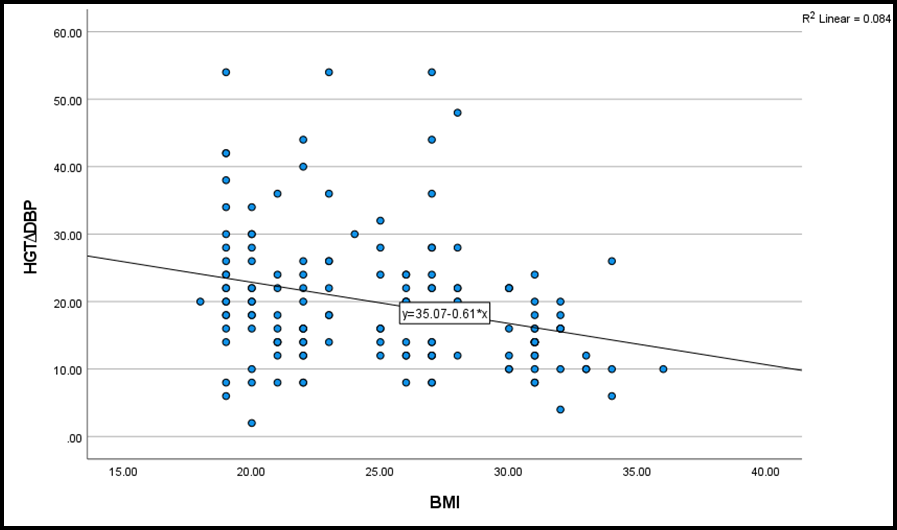
Fig: 3 Graphical Represents Correlation of BMI with HGT∆DBP.
DISCUSSION:
The present study demonstrated that obesity is associated with significant alterations in cardiovascular and sympathetic autonomic function. Resting heart rate was significantly higher in obese subjects than in normal weight and overweight subjects, indicating increased sympathetic activity and reduced parasympathetic tone. Similar findings were reported by Grewal et al.5 and Vanderlei et al.8 Resting systolic and diastolic blood pressures were also significantly higher in obese subjects, suggesting an increased cardiovascular risk with increasing body mass index.
These findings are consistent with those reported by Yusuf et al.7 and Curtis et al.11 Pulse pressure and mean arterial pressure did not differ significantly among the study groups, indicating that these parameters may remain relatively unaffected in otherwise healthy obese individuals, which is in agreement with Grewal et al.5 The Hand Grip Test showed a significantly lower increase in systolic and diastolic blood pressure in obese subjects, indicating impaired sympathetic reactivity and autonomic dysfunction. Similar observations have been reported by Vinik et al.9, Carnethon et al. 10, and Johnson et al.12 Overall, the present findings suggest that increasing body mass index is associated with decreased sympathetic reactivity and higher sympathetic tone in resting condition, emphasizing the importance of early detection and lifestyle modification to reduce future cardiovascular risk.
CONCLUSION:
The present study concludes that obesity is associated with significant alterations in cardiovascular and autonomic nervous system function. Obese individuals exhibited significantly higher resting heart rate, systolic blood pressure, and diastolic blood pressure, along with a reduced blood pressure response to the Hand Grip Test, indicating impaired sympathetic autonomic function which is less reactive to sympathetic stress. However, pulse pressure and mean arterial pressure did not differ significantly among the study groups. These findings suggest that increasing body mass index is associated with autonomic dysfunction and an increased risk of future cardiovascular complications. Early identification of these changes and timely lifestyle interventions, including weight reduction and regular physical activity, may help prevent obesity-related cardiovascular morbidity.
Conflict of Interest: The authors declare that there is no conflict of interest regarding the publication of this study.
REFERENCES:
1. Myth about physical activity (online).URL:http://www.who.int/ world health day 2002.
2. Noncommunicable diseases(online).URL:http://www.int/mediacentre/factsheets/fs355/en/
3. Preventing Chronic Disease: A Vital Investment. World Health Organisation Global Report.2005
4. Ref-Backgrounder (europian food information council) http://www.eufic.org/article/en/diet-related-diseases/obesity/expid/basics-obesity-overweight/
5. Grewal S, Gupta V. Effect of obesity on autonomic nervous system; Int J Cur Bio Med Sci. 2011; 1(2): 15 – 18.
6. Miriam E. Tucker. Obesity Epidemic Is Global, New Study Confirms. Lancet. Published online May 28, 2014.(online). URL: http://www.medscape.com/viewarticle/825858.
7. Yusuf S, Hawken S, Ounpuu S, et al; INTERHEART Study Investigators. Obesity and the risk of myocardial infarction in 27,000 participants from 52 countries: A case-control study. Lancet 2005;366:1640-9.
8. Vanderlei LCM, Pastre CM, Freitas IF, Godoy MFD. Analysis of cardiac autonomic modulation in obese and eutrophic childrenCLINICS 2010;65(8):789-792.
9. Vinik AI, Maser RE. Autonomic imbalance :prophet of doom or scope for hope? Diabet Med 2011;28:643-51.
10. Carnethon MR,Craft LL. Autonomic regulation of the association between exercise and diabetes. Exercise Soprts Sci Rev 2008;36:12-8
11. Curtis BM, O’Keefe JH. Autonomic tone as a cardiovascular risk factor: the danger of fight or flight. Mayo Clin Proc 2002;77:45-54.
12. Johnson TA, Gray AL. Parasympathetic control of heart.1. An interventricular septal ganglion is the major source of the vagal intracardiac innervations of the ventricles. J Appl Physiol 2004;96:2265-72.