A Comparative Study of Dexmedetomidine Infusion versus Propofol Infusion for Controlled Hypotension in Patients Undergoing Functional Endoscopic Sinus Surgery under General Anaesthesia.
- Bagathi Santhosh Kumar , Consultant, Critical Care Medicine, Apollo Hospitals, Financial District, Hyderabad.
- Ambati Santosha Lakshmi , Assistant Professor, Department of Anesthesia, Gitam Institute of Medical Sciences & Research, Visakhapatnam.
- Sunil Sorout , Associate Consultant – Critical Care Medicine, Marengo Asia Hospital, Faridabad.
Article Information:
Abstract:
Background: Controlled (induced) hypotension is widely used during Functional Endoscopic Sinus Surgery (FESS) to reduce intraoperative bleeding and improve surgical field visibility.1 Dexmedetomidine and propofol are both used as hypotensive agents, but comparative evidence on their haemodynamic profile and effect on field quality remains limited.2. Aim: To compare the efficacy of dexmedetomidine infusion and propofol infusion for controlled hypotension, and their effect on intraoperative haemodynamics and operative field visibility, in patients undergoing FESS under general anaesthesia. Methods: This prospective, randomised, single-blinded comparative study was conducted on 60 ASA grade I-II patients aged 18-60 years, randomised into Group D (dexmedetomidine, n=30) and Group P (propofol, n=30). Group D received a loading dose of 1 µg/kg dexmedetomidine over 10 minutes followed by an infusion of 0.5 µg/kg/h; Group P received a loading dose of 1 mg/kg propofol followed by an infusion of 50 µg/kg/min. Heart rate, systolic, diastolic and mean arterial pressures, and SpO2 were recorded at fixed intervals, and operative field quality was assessed using the Average Category Scale (ACS) at 10, 20 and 30 minutes. Results: The two groups were comparable for age, weight and duration of surgery (p>0.05). Heart rate, systolic blood pressure and mean arterial pressure were comparable between groups during the infusion period, but rose significantly earlier and to a greater degree in Group P after 15 minutes and following stoppage of the study drug (p<0.001). ACS scores were significantly lower (better field quality) in Group D at 10, 20 and 30 minutes (p<0.05). SpO2 remained stable and comparable in both groups throughout. Conclusion: Both dexmedetomidine and propofol infusions provide effective and safe controlled hypotension for FESS. Dexmedetomidine offered better heart-rate control and superior operative field visibility compared with propofol.
Keywords:
Article :
INTRODUCTION:
Functional Endoscopic Sinus Surgery (FESS) is performed within a narrow, vascular surgical field, and even minor intraoperative bleeding can obscure anatomical landmarks, prolong operative time and increase the risk of complications.1 Controlled or induced hypotension - a deliberate, titrated reduction in arterial pressure - is therefore commonly employed to minimise blood loss and improve visualisation of the surgical field.2 A variety of pharmacological approaches, including β-blockers, vasodilators, calcium channel blockers and anaesthetic agents such as propofol and inhalational agents, have been used to achieve this goal, each carrying a distinct haemodynamic and safety profile.3
Dexmedetomidine, a highly selective centrally acting α2-adrenergic agonist, produces sedation, analgesia and sympatholysis, and has been increasingly used to achieve controlled hypotension with relative haemodynamic stability.4 Propofol, a widely used intravenous induction and maintenance agent, lowers arterial pressure chiefly by reducing venous return and cardiac output, and is also frequently used as a hypotensive agent in ENT and maxillofacial surgery.5 Although both drugs have individually been shown to improve surgical field conditions compared with normotensive anaesthesia, direct comparative data on their haemodynamic behaviour and effect on operative field quality specifically in FESS remain relatively limited.6 This study was therefore undertaken to compare dexmedetomidine and propofol infusions for controlled hypotension during FESS under general anaesthesia.
AIM
To compare the efficacy and safety of dexmedetomidine infusion versus propofol infusion for controlled hypotension in patients undergoing Functional Endoscopic Sinus Surgery under general anaesthesia.
OBJECTIVES
1. To compare intraoperative haemodynamic variables - systolic blood pressure, diastolic blood pressure, mean arterial pressure and heart rate - between the dexmedetomidine and propofol groups.
2. To compare the quality of the operative field (surgical field visibility) between the two groups using the Average Category Scale.
MATERIALS AND METHODS:
Study design and setting: This was a prospective, randomised, single-blinded comparative study conducted in the Department of Anaesthesiology of a tertiary care teaching hospital, after obtaining approval from the Institutional Ethics Committee and written informed consent from all participants.
Sample size and randomisation: Sixty patients of ASA physical status I and II, aged 18-60 years and posted for FESS, were enrolled and allocated by computer-generated random numbers into two equal groups of 30 each - Group D (dexmedetomidine) and Group P (propofol). Patients with known allergy to the study drugs, coagulopathy or drugs affecting coagulation, haemodynamic instability, or cardiovascular/cerebrovascular insufficiency were excluded.
Anaesthetic protocol: All patients were premedicated with intravenous glycopyrrolate and midazolam, induced with thiopentone sodium and fentanyl, and intubated after succinylcholine. Anaesthesia was maintained with nitrous oxide, oxygen and vecuronium. Group D received dexmedetomidine as a loading dose of 1 µg/kg over 10 minutes before induction, followed by a maintenance infusion of 0.5 µg/kg/h. Group P received propofol as a loading dose of 1 mg/kg over 1 minute, followed by a maintenance infusion of 50 µg/kg/min. A 15° reverse Trendelenburg position was used in both groups to aid venous drainage.
Outcome measures: Heart rate, systolic blood pressure, diastolic blood pressure, mean arterial pressure and SpO2 were recorded at baseline, after induction, and at fixed intraoperative intervals up to and after stoppage of the study infusion. Operative field quality was independently assessed by the operating surgeon using the six-point Average Category Scale (0 = no bleeding to 5 = severe bleeding requiring constant suction) at 10, 20 and 30 minutes.
Statistical analysis: Continuous variables were expressed as mean ± standard deviation and compared using an independent-samples t-test; categorical variables were compared using the chi-square test. A p-value <0.05 was considered statistically significant.
RESULTS:
The two study groups were comparable with respect to age, weight and duration of surgery, with no statistically significant difference between them (Table 1).
|
Parameter |
Group D (n=30) |
Group P (n=30) |
p-value |
|
Age (years), mean ± SD |
30.40 ± 5.98 |
29.57 ± 5.21 |
0.567 |
|
Weight (kg), mean ± SD |
59.10 ± 8.01 |
57.93 ± 8.93 |
0.596 |
|
Duration of surgery (min), mean ± SD |
45.97 ± 5.41 |
45.40 ± 4.77 |
0.668 |
Heart rate was comparable between the groups up to the early intraoperative period. From around 15 minutes onward, and particularly after stoppage of the infusion, heart rate rose to a significantly greater extent in Group P than in Group D (Table 2, Figure 1).
|
Time point |
Group D (mean ± SD) |
Group P (mean ± SD) |
p-value |
Sig. |
|
Baseline |
79.20 ± 6.03 |
81.53 ± 5.96 |
0.137 |
NS |
|
2 min |
67.33 ± 3.26 |
69.83 ± 3.88 |
0.009 |
S |
|
10 min |
66.77 ± 3.12 |
70.17 ± 3.66 |
<0.001 |
S |
|
20 min |
64.20 ± 4.51 |
84.57 ± 4.60 |
<0.001 |
S |
|
30 min |
65.93 ± 4.94 |
83.47 ± 4.19 |
<0.001 |
S |
|
60 min |
73.80 ± 6.04 |
98.33 ± 6.30 |
<0.001 |
S |
|
After stoppage |
94.27 ± 6.44 |
106.83 ± 8.75 |
<0.001 |
S |
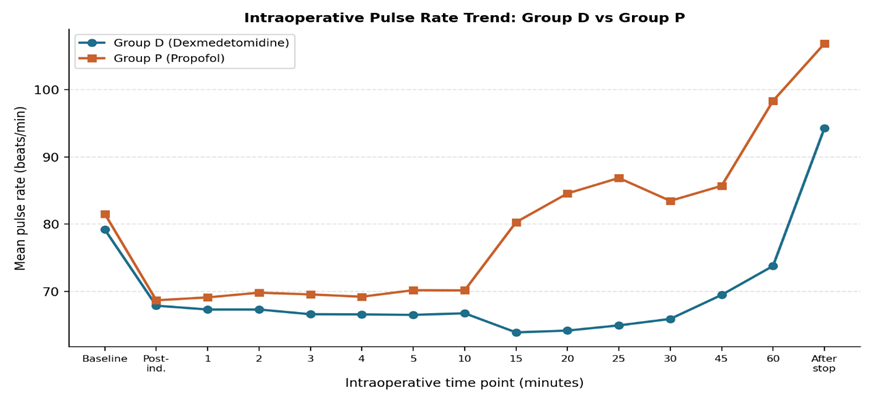
Figure 1: Trend of mean intraoperative pulse rate in Group D versus Group P
Systolic, diastolic and mean arterial pressures were comparable between the two groups throughout the maintenance phase. Following stoppage of the study drug, systolic blood pressure and mean arterial pressure rose significantly more in Group P than in Group D, while the rise in diastolic pressure did not reach statistical significance. SpO2 remained stable above 99% in both groups at all time points, with no significant intergroup difference (Table 3).
|
Parameter (after stoppage of infusion) |
Group D |
Group P |
p-value |
Sig. |
|
SBP (mmHg) |
94.93 ± 5.81 |
106.83 ± 8.75 |
0.001 |
S |
|
MAP (mmHg) |
70.53 ± 3.00 |
77.07 ± 5.53 |
0.001 |
S |
|
DBP (mmHg) |
58.60 ± 5.35 |
62.37 ± 10.31 |
0.081 |
NS |
|
SpO2 (%), throughout surgery |
~99.9 (all points) |
~99.9 (all points) |
>0.16 |
NS |
Operative field quality, assessed by the Average Category Scale, was significantly better (lower score) in Group D than in Group P at 10, 20 and 30 minutes (Table 4), corresponding to less bleeding and a clearer surgical field with dexmedetomidine.
|
Time point |
Group D, mean ± SD |
Group P, mean ± SD |
p-value |
|
10 min |
1.47 ± 0.51 |
2.03 ± 0.49 |
0.001 |
|
20 min |
1.40 ± 0.50 |
2.00 ± 0.46 |
0.001 |
|
30 min |
1.70 ± 0.47 |
2.03 ± 0.50 |
0.009 |
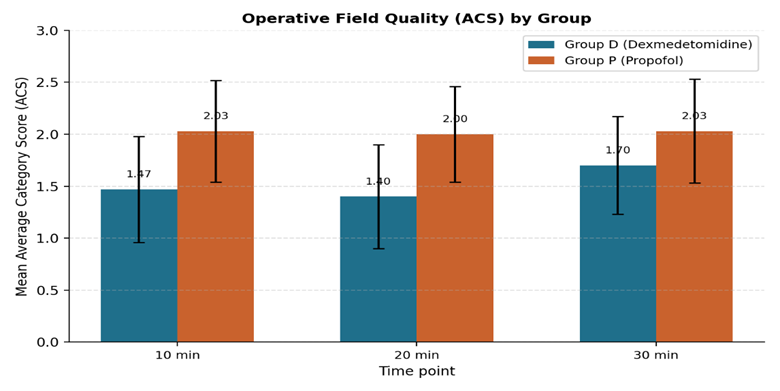
Figure 2: Mean Average Category Score (operative field quality) in Group D versus Group P at 10, 20 and 30 minutes
DISCUSSION:
Induced hypotension has been used since the mid-twentieth century to improve surgical field conditions and limit blood loss during procedures performed in restricted, vascular fields, and its principles remain central to modern anaesthetic practice for FESS.7 In the present study, both dexmedetomidine and propofol infusions achieved the intended reduction in mean arterial pressure to the target range with comparable demographic and surgical profiles between groups, consistent with earlier reports comparing hypotensive agents in ENT and maxillofacial surgery.8
Heart rate control was superior with dexmedetomidine, which is consistent with its known sympatholytic action mediated through central α2-receptor stimulation, in contrast to propofol, which lacks a comparable heart-rate-lowering effect once its direct vasodilatory action wanes.9 Similar trends of better heart-rate stability with dexmedetomidine compared with other hypotensive or anaesthetic agents have been reported in studies on laryngoscopy, laparoscopic surgery and tympanoplasty.1011.
Chattopadhyay et al. compared dexmedetomidine and propofol for maintenance of anaesthesia and reported that dexmedetomidine produced haemodynamic control comparable to, or better than, propofol.12 This is broadly in agreement with the present findings, where dexmedetomidine provided more stable heart rate and pressures after cessation of the infusion. Other authors comparing propofol with inhalational agents for endoscopic sinus surgery have similarly highlighted the advantage of intravenous hypotensive techniques in reducing intraoperative bleeding.13
The better ACS scores observed with dexmedetomidine in this study mirror findings from reviews of hypotensive techniques in maxillofacial and orthognathic surgery, which consistently link tighter haemodynamic control, particularly of heart rate, with improved surgical field visibility.14 Complications of controlled hypotension, including the risk of inadequate organ perfusion, have been previously described, underscoring the importance of individualising the target blood pressure rather than applying a fixed reduction across all patients.15
Bembridge et al. found no adverse effect on psychomotor recovery with propofol-based hypotension targeting a mean arterial pressure of 50-55 mmHg, supporting the overall safety of pharmacologically induced hypotension when appropriately titrated.16 Similar safety observations have been made for hypotensive techniques used during orthognathic surgery.17 Taken together with the systematic review evidence on the risks and benefits of deliberate hypotension, the present results support dexmedetomidine as a favourable option where stable heart rate and field clarity are priorities, while propofol remains a reliable alternative, particularly where rapid titration and recovery are desired.18 These observations are also consistent with data from studies evaluating induced hypotension against haemodilution-based blood conservation strategies, which similarly emphasise the value of a controlled, titrated haemodynamic reduction over the surgical period.19 Standard anaesthesia references continue to describe both agents as suitable options for controlled hypotension, with the final choice guided by patient comorbidity, surgical duration and desired recovery profile.20.
CONCLUSION:
Both dexmedetomidine and propofol infusions are effective and reasonably safe techniques for achieving controlled hypotension during Functional Endoscopic Sinus Surgery under general anaesthesia, with stable oxygen saturation and comparable arterial pressure control during the maintenance phase. Dexmedetomidine, however, provided superior heart-rate control and was associated with a clearer, better-quality operative field than propofol, suggesting it may be the preferable agent when optimal surgical field visibility is a priority.
LIMITATIONS
1. The sample size was relatively modest (30 patients per group), which may limit generalisability and the power to detect differences in less common adverse events.
2. The study was single-blinded rather than double-blinded, which could introduce observer bias, particularly in the surgeon-assessed Average Category Scale.
3. The study was conducted at a single centre, and findings may not be fully generalisable to other patient populations or surgical settings.
4. Long-term outcomes, postoperative cognitive effects and cost-effectiveness of the two agents were not assessed.
REFERENCES:
1. Upadhyay SP, Samant U, Tellicherry SS, Mallik S, Saikia PP, Mallick PN. Controlled hypotension in modern anaesthesia: a review and update. Int J Biol Pharm Res. 2015;6(7):532-42.
2. Pavlin JD, Colley PS, Weymuller EA Jr, Van Norman G, Gunn HC, Koerschgen ME. Propofol versus isoflurane for endoscopic sinus surgery. Am J Otolaryngol. 1999;20(2):96-101.
3. Shams T, El Bahnasawe NS, AbuSamra M, El Masry R. Induced hypotension for functional endoscopic sinus surgery: a comparative study of dexmedetomidine versus esmolol. Saudi J Anaesth. 2013;7(2):175-80.
4. Precious DS, Splinter W, Bosco D. Induced hypotensive anesthesia for adolescent orthognathic surgery patients. J Oral Maxillofac Surg. 1996;54(6):680-4.
5. Praveen K, Narayanan V, Muthusekhar MR, Baig MF. Hypotensive anaesthesia and blood loss in orthognathic surgery: a clinical study. Br J Oral Maxillofac Surg. 2001;39(2):138-40.
6. Srivastava U, Dupargude AB, Kumar D, Joshi K, Gupta A. Controlled hypotension for functional endoscopic sinus surgery: comparison of esmolol and nitroglycerine. Indian J Otolaryngol Head Neck Surg. 2013;65(Suppl 2):S440-4.
7. Erbesler ZA, Bakan N, Karaoren GY, Erkmen MA. A comparison of the effects of esmolol and dexmedetomidine on the clinical course and cost for controlled hypotensive anaesthesia. Turk J Anaesthesiol Reanim. 2013;41(5):156-61.
8. Rather MA, Bashir F, Ahad S. Comparative study of dexmedetomidine and esmolol for controlled hypotension in functional endoscopic sinus surgery. IOSR J Dent Med Sci. 2015;14(10):126-31.
9. Srivastava VK, Agrawal S, Gautam SKS, Ahmed M, Sharma S, Kumar R. Comparative evaluation of esmolol and dexmedetomidine for attenuation of the sympathomimetic response to laryngoscopy and intubation in neurosurgical patients. J Anaesthesiol Clin Pharmacol. 2015;31(2):186-90.
10. Srivastava VK, Nagle V, Agrawal S, Kumar D, Verma A, Kedia S. Comparative evaluation of dexmedetomidine and esmolol on hemodynamic responses during laparoscopic cholecystectomy. J Clin Diagn Res. 2015;9(3):UC01-5.
11. Kol IO, Kaygusuz K, Yildirim A, Dogan M, Gursoy S, Yucel E, et al. Controlled hypotension with desflurane combined with esmolol or dexmedetomidine during tympanoplasty in adults: a double-blind, randomized, controlled trial. Curr Ther Res Clin Exp. 2009;70(3):197-208.
12. Chattopadhyay U, Mallik S, Ghosh S, Bhattacharya S, Bisai S, Biswas H. Comparison between propofol and dexmedetomidine on depth of anesthesia: a prospective randomized trial. J Anaesthesiol Clin Pharmacol. 2014;30(4):550-4.
13. Marzban S, Haddadi S, Mahmoudi Nia H, Heidarzadeh A, Nemati S, Nabi BN. Comparison of surgical conditions during propofol or isoflurane anesthesia for endoscopic sinus surgery. Anesth Pain Med. 2013;3(2):234-8.
14. Shaban B, Sharifian Attar A, Eshghpour M. Concepts, application and efficacy of hypotensive anesthesia in maxillofacial and orthognathic surgeries: review of literature. IOSR J Dent Med Sci. 2016;15(5):92-6.
15. Lindop MJ. Complications and morbidity of controlled hypotension. Br J Anaesth. 1975;47(7):799-803.
16. Bembridge JL, Moss E, Grummitt RM, Noble J. Comparison of propofol with isoflurane for hypotensive anaesthesia for middle ear surgery. Br J Anaesth. 1993;71(6):895-7.
17. Rodrigo C. Anesthetic considerations for orthognathic surgery with evaluation of difficult intubation and technique for hypotensive anesthesia. Anesth Prog. 2000;47(4):151-6.
18. Choi WS, Samman N. Risks and benefits of deliberate hypotension in anaesthesia: a systematic review. Int J Oral Maxillofac Surg. 2008;37(8):687-703.
19. Ervens J, Marks C, Hechler M, Plath T, Hansen D, Hoffmeister B. Effect of induced hypotensive anaesthesia vs isovolaemic haemodilution on blood loss and transfusion requirements in orthognathic surgery: a prospective, single-blinded, randomized, controlled clinical study. Int J Oral Maxillofac Surg. 2010;39(12):1168-74.
20. Miller RD, editor. Miller's Anesthesia. 8th ed. Philadelphia: Elsevier Saunders; 2015.