A Comparative Study of Intraperitoneal Ropivacaine versus Bupivacaine for Postoperative Analgesia in Laparoscopic Cholecystectomy.
- Sunil Sorout , Associate Consultant – Critical Care Medicine, Marengo Asia Hospital, Faridabad
- Gaurav Bathla , Senior Consultant, Critical Care Medicine, Sarvidya Hospital, Faridabad
- Bagathi Santhosh Kumar , Consultant, Critical Care Medicine, Apollo Hospitals, Financial District, Hyderabad.
Article Information:
Abstract:
Background: Although laparoscopic cholecystectomy is far less painful than the open operation, patients still experience appreciable discomfort in the first postoperative hours, arising chiefly from visceral irritation and residual carbon-dioxide within the peritoneum. Instilling a local anaesthetic directly into the peritoneal cavity is a simple way of blunting this early visceral component. We compared two long-acting amide agents, ropivacaine and bupivacaine, given by this route. Methods: In a single-centre, prospective, randomised, double-blind trial, sixty ASA I–II adults undergoing elective laparoscopic cholecystectomy under general anaesthesia were allocated equally to receive 40 mL of either 0.25% bupivacaine (Group A) or 0.2% ropivacaine (Group B). The solution was sprayed over the sub-diaphragmatic and gall-bladder bed and infiltrated at the port sites at the end of surgery. Pain (Numeric Pain Score and Verbal Rating Scale), time to first rescue analgesia, haemodynamics and adverse events were recorded up to 24 hours. Results: The two groups were demographically comparable. Ropivacaine produced consistently lower pain scores, the difference reaching significance between the third and eighth postoperative hours for the Numeric Pain Score and at the sixth and eighth hours for the Verbal Rating Scale. The first analgesic was needed later with ropivacaine (5.94 ± 0.87 h) than with bupivacaine (4.70 ± 0.74 h; p < 0.001), and the mean time to rescue analgesia was likewise prolonged (5.07 ± 0.94 vs 3.80 ± 1.09 h; p < 0.001). Port-site pain was far more frequent with bupivacaine (60% vs 13.3%; p < 0.001). No patient in either arm reported shoulder-tip pain. Haemodynamic variables stayed comparable; bradycardia was slightly more common with ropivacaine but was never clinically important. Conclusion: Intraperitoneal instillation of local anaesthetic is a cheap, easy and safe adjunct to multimodal analgesia after laparoscopic cholecystectomy. At the concentrations studied, ropivacaine gave modestly better and longer-lasting pain relief together with greater cardiovascular stability, making it a reasonable alternative to bupivacaine.
Keywords:
Article :
INTRODUCTION:
With day-care and short-stay surgery now commonplace, keeping patients comfortable in the immediate postoperative period has become a priority shared by surgeons and anaesthesiologists alike. Laparoscopic cholecystectomy has replaced the open procedure as the standard treatment for symptomatic gallstones, offering smaller incisions, less blood loss and quicker recovery. Even so, it does not abolish pain, and poorly controlled discomfort can delay mobilisation, impair breathing and prolong hospital stay.1
Pain after this operation is not uniform. It has a visceral component from stretching and inflammation of the peritoneum, a parietal component from the small port wounds, and referred shoulder pain caused by diaphragmatic irritation from carbon dioxide left in the abdomen. The visceral element dominates during the first postoperative hour and behaves quite differently from ordinary somatic pain, being conveyed largely through the enteric nervous system.2,3
Many strategies exist for relief, ranging from opioids and non-steroidal drugs to nerve blocks and wound infiltration, but each carries its own drawbacks. Placing a local anaesthetic inside the peritoneal cavity offers an attractive, low-risk option: it targets the visceral afferents directly, dampens the local release of inflammatory mediators, and, through some systemic absorption, may add a further analgesic effect.4,5 Evidence suggests that the benefit is mediated chiefly by a local peritoneal action rather than by absorption alone.6
Bupivacaine has long been favoured for this purpose because it is long-acting and generally well tolerated, providing several hours of relief without the gastric or dependence problems of other analgesics.7 Ropivacaine, the pure S-enantiomer chemically related to bupivacaine, offers a comparable duration of action with a more favourable cardiac and neurological safety profile. Because head-to-head data on the two agents given intraperitoneally remain limited, the present study was designed to compare their analgesic efficacy after laparoscopic cholecystectomy.
AIM
To evaluate and compare the effect of intraperitoneal ropivacaine and bupivacaine on postoperative analgesia in patients undergoing laparoscopic cholecystectomy under general anaesthesia.
OBJECTIVES
Primary objectives
To assess the effect of each drug on the severity and duration of postoperative pain and to compare the two groups.
To record the time to first analgesic requirement and the total rescue-analgesia requirement over 24 hours in each group.
Secondary objective
To compare the incidence of emetic symptoms, hypotension, bradycardia, shoulder pain and port-site pain between the groups.
METHODOLOGY:
Study design and setting: This single-centre, prospective, randomised, double-blind clinical study was carried out in the Department of Anaesthesiology and Critical Care over a one-year period after clearance from the Institutional Ethical Committee. Written informed consent was obtained from every participant.
Participants: Sixty adults of either sex, aged 20–70 years and of ASA physical status I or II scheduled for elective laparoscopic cholecystectomy, were enrolled. Patients of ASA III or higher, those on regular analgesics, and those with significant cardiac, respiratory, hepatic or psychiatric disease, coagulopathy, obesity, obstructive sleep apnoea, known local-anaesthetic sensitivity, or a history of substance abuse were excluded, as were emergency cases.
Sample size and randomisation: A sample of thirty per group was estimated to provide 90% power at a type-I error of 0.01. Allocation to the two arms was by a computer-generated randomisation table:
Group A (n = 30): 40 mL of 0.25% bupivacaine (toxic dose of 2 mg•kg⁻¹ not exceeded).
Group B (n = 30): 40 mL of 0.2% ropivacaine (toxic dose of 2 mg•kg⁻¹ not exceeded).
Blinding: The study drug was prepared in identical coded syringes by an anaesthesiologist not otherwise involved in the case; the surgeon instilling it, the resident collecting data and the patient were all unaware of the allocation.
Anaesthetic and surgical technique: After standard monitoring and preloading with Ringer's lactate, all patients received intravenous ondansetron and fentanyl, followed by induction with propofol and vecuronium and tracheal intubation. Anaesthesia was maintained with an oxygen–nitrous-oxide mixture and isoflurane, with intermittent vecuronium. Intra-abdominal pressure was held at 12 mmHg and the pneumoperitoneum was carefully evacuated at the end of surgery. In the Trendelenburg position, 30 mL of the allotted solution was sprayed over the upper surface of the liver and the gall-bladder fossa in the right sub-diaphragmatic space and 10 mL was infiltrated at the incision and port sites.8
Assessment: Pain was rated on the Numeric Pain Score (0–10) and a six-point Verbal Rating Scale immediately after extubation, hourly to four hours, and again at 6, 8, 12 and 24 hours. Rescue diclofenac (75 mg IV) was given when the Numeric Pain Score exceeded the preset threshold, and ondansetron was repeated for nausea. Heart rate, blood pressure, oxygen saturation, nausea, vomiting, shoulder pain, port-site pain, hypotension and bradycardia were recorded at the same intervals, together with the time to first analgesic requirement.
Statistical analysis: Data were analysed with SPSS version 17. Continuous variables are expressed as mean ± SD and compared with Student's t test; categorical variables are given as numbers and percentages and compared with the chi-square or Fisher's exact test. A p value below 0.05 was taken as significant.
RESULTS:
The two groups were well matched for age, weight, sex distribution and ASA grade, with no statistically significant differences (Table 1).
Table 1. Demographic profile of the two groups
|
Variable |
Group A (n=30) |
Group B (n=30) |
p value |
|
Age (years) |
46.53 ± 13.80 |
44.40 ± 13.28 |
0.544 |
|
Weight (kg) |
62.53 ± 4.60 |
60.67 ± 6.48 |
0.204 |
|
Sex (M:F) |
2:28 |
5:25 |
0.424 |
|
ASA (I:II) |
30:0 |
30:0 |
— |
Pain scores. The Numeric Pain Score was lower in the ropivacaine group at every time point and the difference was statistically significant from the third to the eighth postoperative hour (Table 2, Figure 1). The Verbal Rating Scale followed the same pattern, reaching significance at the sixth and eighth hours (Figure 2).
Table 2. Numeric Pain Score at successive time points (mean ± SD)
|
Time (h) |
Group A |
Group B |
p value |
|
Immediate |
2.20 ± 0.76 |
1.73 ± 1.29 |
0.094 |
|
1 |
2.10 ± 0.71 |
1.80 ± 1.27 |
0.264 |
|
2 |
2.60 ± 0.93 |
2.37 ± 1.00 |
0.354 |
|
3 |
3.40 ± 1.22 |
2.67 ± 1.09 |
0.017* |
|
4 |
4.40 ± 1.04 |
3.30 ± 1.09 |
<0.001** |
|
6 |
4.60 ± 0.68 |
3.90 ± 1.32 |
0.012* |
|
8 |
3.80 ± 0.41 |
3.47 ± 0.63 |
0.018* |
|
12 |
3.80 ± 0.61 |
3.73 ± 0.79 |
0.715 |
|
24 |
3.80 ± 0.61 |
3.47 ± 0.94 |
0.108 |
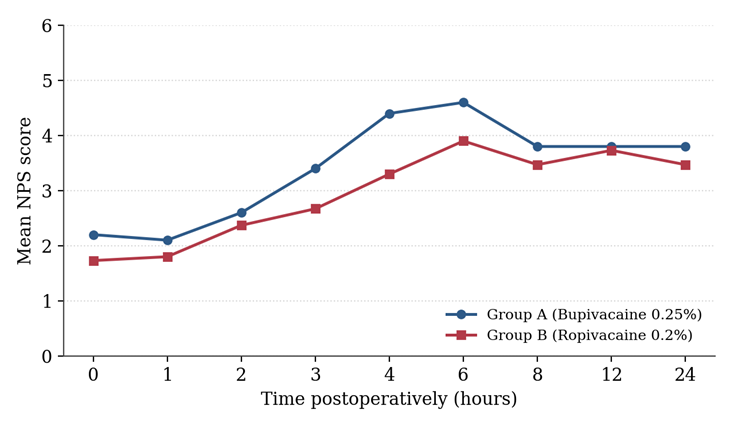
Figure 1. Comparison of mean Numeric Pain Score between the two groups.
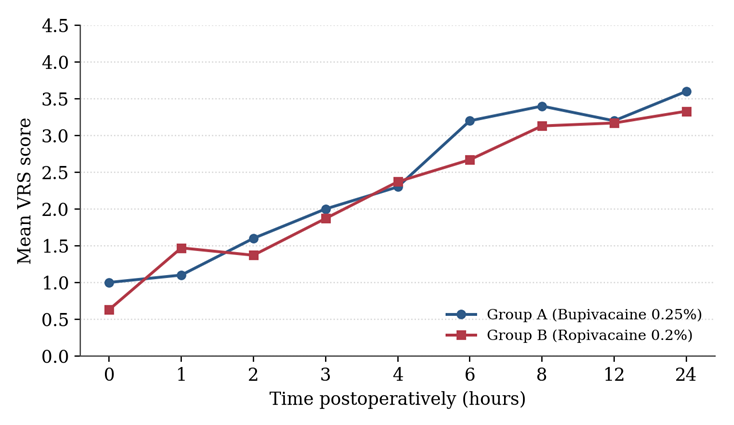
Figure 2. Comparison of mean Verbal Rating Scale between the two groups.
Analgesic requirement. Ropivacaine delayed the first call for analgesia and lengthened the mean interval to rescue medication, both differences being highly significant (Table 3, Figure 3). Most bupivacaine patients required rescue analgesia within the first four hours, whereas most ropivacaine patients did not need it until the fourth to sixth hour.
Table 3. Analgesic requirement (mean ± SD)
|
Variable |
Group A |
Group B |
p value |
|
Time to first analgesic (h) |
4.70 ± 0.74 |
5.94 ± 0.87 |
<0.001** |
|
Mean time to rescue analgesia (h) |
3.80 ± 1.09 |
5.07 ± 0.94 |
<0.001** |
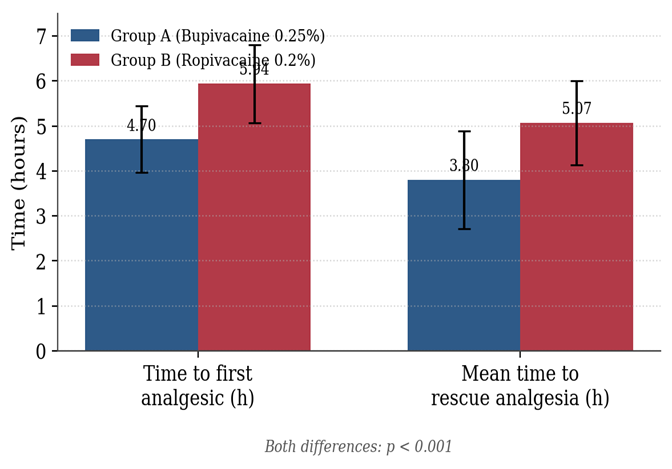
Figure 3. Time to first analgesic and mean time to rescue analgesia.
Haemodynamics. Heart rate ran a little lower in the ropivacaine group, but the systolic and diastolic pressures were comparable throughout and no clinically important instability occurred (Figure 4).
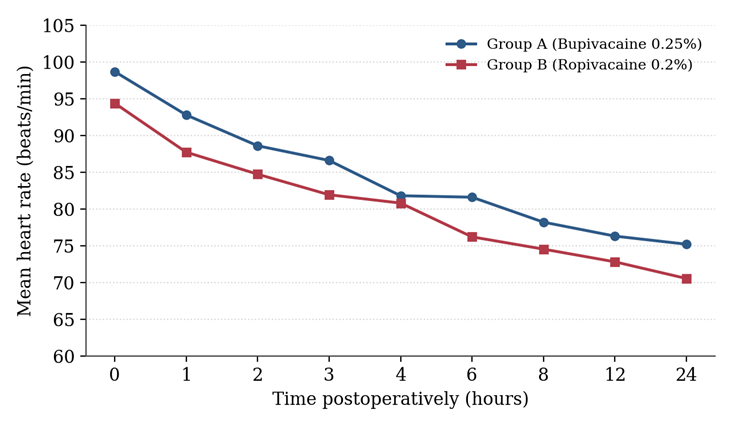
Figure 4. Mean heart rate over the study period.
Adverse events. Port-site pain was markedly more common after bupivacaine, and this was the only adverse outcome to differ significantly. No patient in either group complained of shoulder-tip pain. Bradycardia occurred a little more often with ropivacaine, while hypotension, nausea and vomiting were similar and none reached statistical significance (Table 4).
Table 4. Incidence of adverse events, n (%)
|
Event |
Group A |
Group B |
p value |
|
Port-site pain |
18 (60.0) |
4 (13.3) |
<0.001** |
|
Shoulder-tip pain |
0 (0.0) |
0 (0.0) |
— |
|
Bradycardia |
3 (10.0) |
6 (20.0) |
0.010* |
|
Hypotension |
3 (10.0) |
3 (10.0) |
1.000 |
|
Nausea |
24 (80.0) |
22 (73.3) |
0.145 |
|
Vomiting |
3 (10.0) |
6 (20.0) |
0.472 |
*p < 0.05 significant; **p < 0.001 highly significant. Group A = bupivacaine 0.25%; Group B = ropivacaine 0.2%.
DISCUSSION:
Cholecystectomy is among the commonest procedures in gastrointestinal surgery, and its laparoscopic form has become the reference technique. Pain nonetheless persists, driven mainly by the visceral response to peritoneal stretching and inflammation and by diaphragmatic irritation from retained carbon dioxide. Delivering a local anaesthetic straight into the peritoneal cavity interrupts these afferent signals at their origin and curbs local inflammatory mediators, which is the rationale behind the present comparison.9
Our two groups were demographically similar, so the observed differences can reasonably be attributed to the drugs themselves. We chose lower concentrations than several earlier reports, using 40 mL of 0.25% bupivacaine and 40 mL of 0.2% ropivacaine, and still obtained useful relief for up to eight hours. Instilling the solution in the Trendelenburg position with the trocars still in place probably improved its spread over the coeliac plexus and phrenic nerve endings, an important pathway for postoperative pain.
Throughout the study ropivacaine gave lower pain scores, significantly so between the third and eighth hours. This mirrors the findings of Sharan and colleagues, who reported lower scores with ropivacaine that were significant at the fourth, sixth and eighth hours, and of Meena and colleagues, who found ropivacaine superior over a longer window.10,11 Babu and colleagues, using the same concentrations as ours, saw only a small and non-significant difference, which they attributed to patient-related variation.12 Older placebo-controlled work by Pasqualucci and by Scheinin had already shown that intraperitoneal bupivacaine reduces both pain and analgesic consumption compared with saline.13,14,15
The clearest separation between the drugs lay in the timing of analgesia. Patients given ropivacaine waited noticeably longer before their first analgesic and before rescue medication, and fewer of them needed it, all differences reaching high significance. Kucuk and colleagues similarly found that intraperitoneal ropivacaine reduced early morphine consumption more effectively than bupivacaine, and Goldstein and colleagues confirmed the analgesic advantage of both agents over saline in a comparable setting.16,13
Haemodynamically the groups behaved alike. Heart rate tended to be lower with ropivacaine, plausibly reflecting denser and more sustained analgesia; the slightly higher rate of bradycardia never required treatment and so was of no clinical consequence. Blood pressure remained stable in both arms, consistent with earlier observations that neither agent raises blood pressure when used by this route.
Minor adverse events were infrequent and, apart from port-site pain, evenly distributed. The greater frequency of port-site pain after bupivacaine is difficult to explain from concentration alone and warrants confirmation in larger series. Notably, no patient reported shoulder-tip pain, probably because the sub-diaphragmatic spread of the anaesthetic blocked the inflamed diaphragmatic peritoneum; the short follow-up may also have contributed. The main limitations of this work are its single-centre design, modest sample and the fixed drug concentrations, all of which temper how widely the results can be generalised.
CONCLUSION:
Intraperitoneal instillation of a local anaesthetic is a simple, inexpensive and safe way to improve early comfort after laparoscopic cholecystectomy and fits naturally into a multimodal analgesic plan. Within the doses studied, ropivacaine offered slightly better and longer-lasting pain relief with greater cardiovascular stability, and can therefore be regarded as a sound alternative to bupivacaine for this purpose.
REFERENCES:
1. Bisgaard T, Kehlet H, Rosenberg J. Pain and convalescence after laparoscopic cholecystectomy. Eur J Surg. 2001;167(2):84–96.
2. Cervero F, Laird JM. Visceral pain. Lancet. 1999;353(9170):2145–8.
3. Alexander JI. Pain after laparoscopy. Br J Anaesth. 1997;79(3):369–78.
4. Alexander P, Boddy BM, Mehta S. The effect of intraperitoneal local anaesthesia in laparoscopic cholecystectomy. Anesth Analg. 2006;103(3):682–8.
5. Purkayastha S, Alkhamesi NA, Darzi AW. Intraperitoneal local anaesthesia during laparoscopic cholecystectomy: the role of meta-analytical subgroups and delivery of the local anaesthetic. Anesth Analg. 2007;104(4):994.
6. Hernández-Palazón J, Tortosa JA, Nuño de la Rosa V, Giménez-Viudes J, Ramírez G, Robles R. Intraperitoneal application of bupivacaine plus morphine for pain relief after laparoscopic cholecystectomy. Eur J Anaesthesiol. 2003;20(11):891–6.
7. Gupta M, Naithani U, Singariya G, Gupta S. Comparison of 0.25% ropivacaine for intraperitoneal instillation versus rectus sheath block for postoperative pain relief following laparoscopic cholecystectomy. J Clin Diagn Res. 2016;10(8):UC10–3.
8. Kim TH, Kang H, Park JS, Chang IT, Park SG. Intraperitoneal ropivacaine instillation for postoperative pain relief after laparoscopic cholecystectomy. J Korean Surg Soc. 2010;79(2):130–6.
9. Agrawal S, Pai S. Evaluation of postoperative pain relief with intraperitoneal bupivacaine instillation in laparoscopic cholecystectomy – a randomized control study. Int Surg J. 2017;4(4):1195–200.
10. Meena RK, Meena K, Loha S, Prakash S. A comparative study of intraperitoneal ropivacaine and bupivacaine for postoperative analgesia in laparoscopic cholecystectomy: a randomized controlled trial. Anaesth Pain Intensive Care. 2016;20(3):295–302.
11. Sharan R, Singh M, Kataria AP, Jyoti K, Jarewal V, Kadian R. Intraperitoneal instillation of bupivacaine and ropivacaine for postoperative analgesia in laparoscopic cholecystectomy. Anesth Essays Res. 2018;12(2):377–81.
12. Babu R, Jain P, Sherif L. Intraperitoneal instillation: ropivacaine versus bupivacaine for postoperative pain relief in laparoscopic cholecystectomy. Int J Health Sci Res. 2013;3(12):42–7.
13. Kucuk C, Kadiogullari N, Canoler O, Savli S. A placebo-controlled comparison of bupivacaine and ropivacaine instillation for preventing postoperative pain after laparoscopic cholecystectomy. Surg Today. 2007;37(5):396–400.
14. Pasqualucci A, De Angelis V, Contardo R, Colo F, Terrosu G, Donini A, et al. Preemptive analgesia: intraperitoneal local anaesthetic in laparoscopic cholecystectomy. Anesthesiology. 1996;85(1):11–20.
15. Scheinin B, Kellokumpu I, Lindgren L, Haglund C, Rosenberg PH. Effect of intraperitoneal bupivacaine on pain after laparoscopic cholecystectomy. Acta Anaesthesiol Scand. 1995;39(2):195–8.
16. Goldstein A, Grimault P, Henique A, Keller M, Fortin A, Daraï E. Preventing postoperative pain by local anaesthetic instillation after laparoscopic gynaecologic surgery: a placebo-controlled comparison of bupivacaine and ropivacaine. Anesth Analg. 2000;91(2):403–7.