Prevalence And Symptom Burden Of Premenstrual Syndrome Among Adolescent Schoolgirls In North India: A Cross-Sectional Study.
- Harpreet Kaur , PG student 3rd year, Department of Psychiatry, Institute of Mental Health & Hospital, Agra.
- Dinesh Singh Rathore , Director & Professor, Department of Psychiatry, Institute of Mental Health & Hospital, Agra.
- Nitika Singh , Assistant Professor, Department of Psychiatry, Institute of Mental Health & Hospital, Agra.
- Anil Kumar Sisodia , Head of Department & Professor, Department of Psychiatry, Institute of Mental Health & Hospital, Agra.
Article Information:
Abstract:
Background: Premenstrual syndrome (PMS) is a common but under-recognised cluster of physical, psychological, and behavioural symptoms affecting adolescent girls, with reported global prevalence ranging from 12% to 98% depending on population and diagnostic criteria. School-based prevalence data from India using validated severity-grading tools remain limited. Objective: To estimate the prevalence of PMS and describe its symptom burden and severity grading among adolescent schoolgirls in North India. Methods: A cross-sectional study was conducted among 150 adolescent girls (aged 10–19 years) across 15 schools within a 10-km radius of a tertiary mental health institute in Agra, India, using consecutive sampling. PMS was diagnosed using American College of Obstetricians and Gynecologists (ACOG) criteria, and symptom burden and severity were assessed using the validated 40-item Premenstrual Syndrome Scale (PMSS). Descriptive statistics i.e., frequencies, percentages and means ± standard deviation were used to summarise sociodemographic characteristics and PMS symptom/severity distributions. The association between categorical sociodemographic variables (age group, residence, sociodemographic status) was examined using chi-square. Results: The mean age of participants was 15.09 ± 1.50 years; 77.3% resided in urban areas and 62% belonged to the lower-middle socioeconomic class. Moderate PMS symptoms predominated (58.0%, n=87), followed by severe symptoms (32.0%, n=48) and mild symptoms (10.0%, n=15) — indicating that 90% (95%CI: 84.2-94.2) of participants experienced moderate-to-severe symptom burden. Behavioural symptoms such as being oversensitive (39.3% “always”) and obsessional thoughts (32.7% “always”) were the most prominent, alongside high rates of psychological symptoms including mood swings, irritability, and tension. Conclusion: PMS represents a substantial and under-addressed health burden among adolescent schoolgirls in North India, with the large majority experiencing moderate-to-severe symptoms. School-based screening and early recognition programmes are warranted.
Keywords:
Article :
INTRODUCTION:
Premenstrual syndrome (PMS) refers to a group of somatic, affective, and behavioural symptoms occurring in the luteal phase (post-ovulatory hormonal withdrawal) of the menstrual cycle, which resolve within several days after menses begins. These symptoms are severe enough in many women to impact daily functioning, interpersonal relationships, and academic productivity. (1,2).
PMS is common, but estimates of its prevalence vary widely across populations and diagnostic approaches. A pooled global estimate places prevalence at approximately 47.8% among students (3), while systematic reviews report a much wider range — from 12% in France to 98% in Iran — reflecting heterogeneity in diagnostic criteria, study populations, and assessment methods (4,5). Prevalence appears particularly high among adolescent and student populations: reported rates include 73–77% among adolescent girls and medical students in Nepal (6), 72.1% among college students in Turkey (7), and 64.9% among female medical students in Saudi Arabia (8,9). Lower rates have been reported in high-school populations in Thailand (29.8%) (10).
Indian data, though comparatively sparse, point to a similar or greater burden. A 2021 systematic review and meta-analysis estimated a pooled PMS prevalence of 43% among Indian females of reproductive age, rising to 49.6% among adolescents, with considerable regional variation — from 15.3% in Kerala to 64.4% in Delhi (11). More recent cross-sectional data from rural North India found a prevalence as high as 65.7% among adolescent girls (12). Despite this, most Indian studies to date have focused on college or medical-student cohorts; school-based, community-level data using validated symptom-severity grading among younger adolescent girls remain limited.
This study aimed to determine the prevalence of PMS and characterise its symptom burden and severity distribution among adolescent schoolgirls in North India, given the significant and potentially underappreciated burden of PMS in this age group and the lack of detailed, severity-graded prevalence data from Indian school populations.
MATERIALS AND METHODS:
Study Design and Setting
This was a cross-sectional observational study conducted over a two-year period following institutional ethical approval. Fifteen government and private schools within 10 km of the Institute of Mental Health and Hospital, Agra, India were randomly selected from an available list provided by district education office to minimize cluster bias.
Participants and Sampling
Participants included adolescent girls aged 10 to 19 years who experienced regular menstrual cycles of a duration ranging from 21-35 days, had a body mass index (BMI) between 18-25 kg/m², were not taking oral contraceptives or other exogenous hormones at the time of testing, and provided informed consent (with parental consent and participant assent for those under age 18 years). The BMI restriction was applied to minimise confounding from obesity-related metabolic or inflammatory influences on menstrual cyclicity, which were not the focus of this analysis. Exclusion criteria included thyroid, autoimmune, adrenal disorders; gynaecological disorders such as endometriosis and pelvic inflammatory disease); use of hormonal medications currently or in the past two months; psychiatric comorbidity (assessed using the Mini-International Neuropsychiatric Interview [MINI]).
Schools were randomly selected, and within each school, consecutive sampling was used to enrol the participants who met the inclusion criteria and provided consent.
Sample Size
Sample size was calculated using the single-proportion formula (n = Z²p(1−p)/d²), assuming a 95% confidence level, an expected PMS prevalence of 65% based on prior student-based studies from comparable regions (6–8), and 8% absolute precision, yielding a minimum requirement of 137 participants; this was rounded up to 150 to allow for non-response.
Instruments
A semi-structured sociodemographic and clinical data sheet captured age, residence, religion, and socioeconomic status (among other variables). PMS diagnosis was confirmed using American College of Obstetricians and Gynaecologists (ACOG) criteria - requiring at least one affective and one somatic symptom in the five days preceding menses across three consecutive cycles, with resolution within four days of menstrual onset (2,13).
Symptom burden and severity grading were assessed using the 40-item Premenstrual Syndrome Scale (PMSS), a validated 5-point Likert instrument spanning physiological, psychological, and behavioural subscales (never=1 to always=5; total score range 40–200, with higher scores indicating greater severity, categorised as mild, moderate, or severe based on percentage of maximum score) (14).
The PMSS demonstrated good internal consistency in pilot testing (Cronbach’s alpha >0.7). This questionnaire battery was administered as part of a broader parent study that also captured perceived stress and dietary/lifestyle variables; those associations are reported in companion analyses from the same cohort.
Ethical Considerations
The study was approved by the Institutional Ethics Committee (IEC) of Mental Health and Hospital, Agra (No. IEC/IMHH/N1/V108 dated 15/04/2024. Written informed consent (with parental consent and participant assent) was obtained from all participants and confidentiality was maintained throughout.
Statistical Analysis
Data were entered in Microsoft Excel 2021 and analysed using trial SPSS v26 (IBM Corporation). Descriptive statistics i.e., frequencies, percentages and means ± standard deviation were used to summarise sociodemographic characteristics and PMS symptom/severity distributions.
The association between categorical sociodemographic variables (age group, residence, sociodemographic status) was examined using chi-square. Statistical significance was set at p <0.05. Wilson 95% confidence interval were calculated for the primary prevalence estimates.
RESULTS:
.50 years), with the largest proportions aged 15 (24.7%) and 16 (25.3%) years. The majority resided in urban areas (77.3%) and belonged to the lower-middle socioeconomic class (62.0%), followed by the upper-middle class (28.0%); 89.3% of participants were Hindu and 10.7% Muslim (Table 1).
Table 1: Sociodemographic Profile of the Participants (N = 150)
|
Characteristic |
Frequency (n) |
Percentage (%) |
|
Socio-economic status |
|
|
|
Lower |
1 |
0.7 |
|
Upper lower |
11 |
7.3 |
|
Lower middle |
93 |
62 |
|
Upper middle |
42 |
28 |
|
Upper class |
3 |
2 |
|
Religion |
|
|
|
Hindu |
134 |
89.3 |
|
Muslim |
16 |
10.7 |
|
Residence |
|
|
|
Urban |
116 |
77.3 |
|
Rural |
34 |
22.7 |
|
Age (years) |
|
|
|
12 |
6 |
4 |
|
13 |
17 |
11.3 |
|
14 |
29 |
19.3 |
|
15 |
37 |
24.7 |
|
16 |
38 |
25.3 |
|
17 |
12 |
8 |
|
18 |
11 |
7.3 |
The most common symptom burden was moderate PMS symptoms (87 participants [58.0%]), followed by severe symptoms (48 participants [32.0%], which indicates a substantial clinical impact in nearly one-third of cases), and least common were mild symptoms (15 participants [10.0%]), resulting in 90% of participants having moderate-to-severe PMS symptom burden (Table 2).
Table 2: Distribution of Premenstrual Syndrome (PMS) Severity Among Participants (N = 150)
|
PMS Severity |
Frequency (n) |
Percentage (%) |
|
Mild symptoms |
15 |
10.0 |
|
Moderate symptoms |
87 |
58.0 |
|
Severe symptoms |
48 |
32.0 |
|
Total |
150 |
100.0 |
Physiological symptoms varied considerably in frequency: fatigue was especially common (31.3% “always”, 35.3% “sometimes”), as were food cravings for sugar or salt (38.0% “always”), pelvic discomfort or pain (28.7% “always”), abdominal cramps (24.0%), and generalised aches or pains (18.7%); breast tenderness (4.0% “always”) and weight gain were comparatively infrequent. (Figure 1)
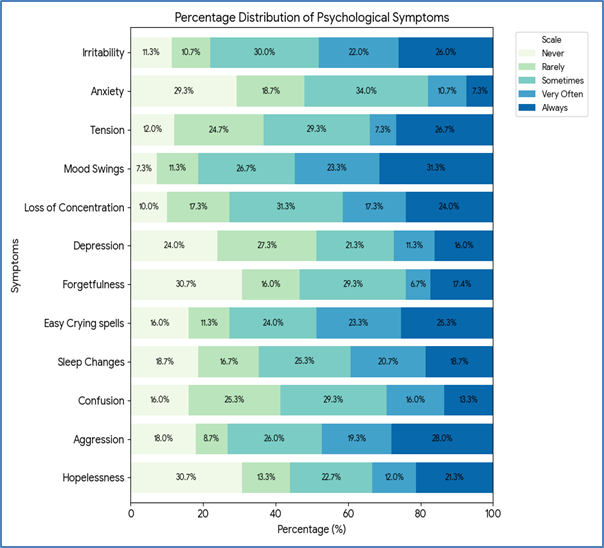
Figure 1: Frequency and Percentage Distribution of PMS Symptoms Across Physiological, Psychological, and Behavioural Domains.
Psychological symptoms showed high prevalence across multiple domains: mood swings were reported “always” by 31.3% of participants, irritability by 26.0%, tension by 26.7%, and aggression by 28.0%; loss of concentration (24.0%) and easy crying spells (25.3%) were also common, whereas anxiety (7.3%) and depression (16.0%) were comparatively less severe. (Figure 2)
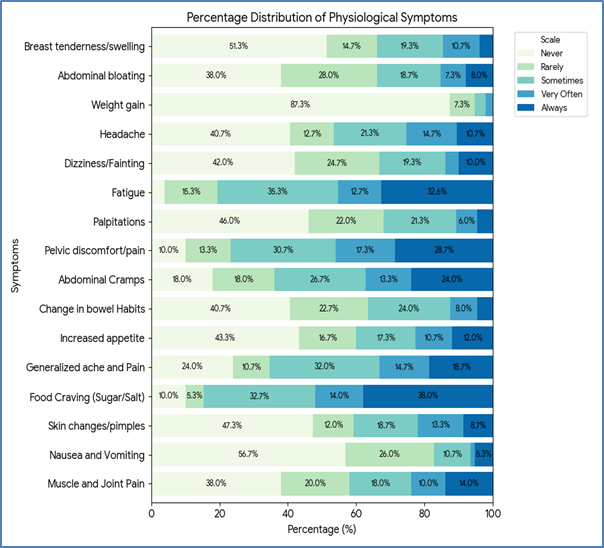
Figure 2: Frequency and Percentage Distribution of PMS Symptoms Across Psychological, and Behavioural Domains.
Behavioural symptoms further highlighted the syndrome’s functional impact: being oversensitive was the most frequent complaint (39.3% “always”), followed by obsessional thoughts (32.7% “always”); impaired work performance occurred “always” in 14.7% and “sometimes” in 37.3%, while clumsiness (43.3% “sometimes”) and poor judgement (37.3% “sometimes”) were notable intermittently, and compulsive behaviour was comparatively less common (18.0% “always”). (Figure 3).
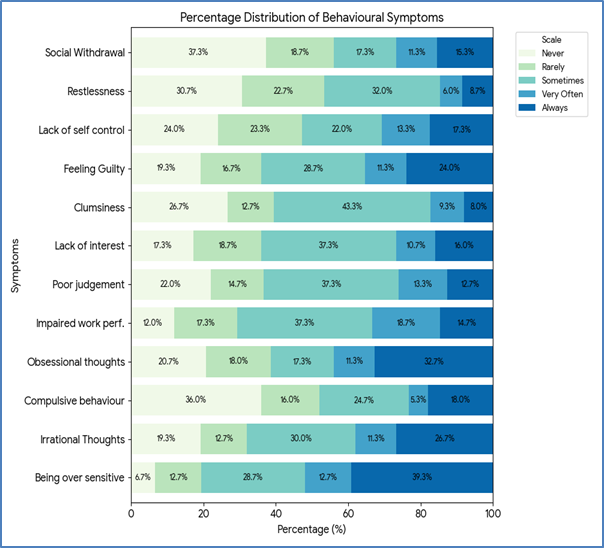
Figure 3: Frequency and Percentage Distribution of PMS Symptoms Across Behavioural Domains
DISCUSSION:
In this cross-sectional study of 150 adolescent schoolgirls, we found that PMS symptom burden was substantial, with 90% of participants experiencing moderate-to-severe symptoms and nearly one-third (32%) falling into the severe category. These finding underscore PMS not merely as a minor cyclical inconvenience but as a significant health challenge with the potential to impair academic performance, interpersonal relationships, and overall quality of life in this vulnerable group.
The high overall symptom burden observed here — with moderate-to-severe symptoms in 90% of participants — is concordant with Shehadeh and Hamdan-Mansour (2018), who reported a PMS prevalence of 92.3% among university students in Jordan (19), and with Poudel et al. (2023), who found a 77% prevalence among Nepalese adolescents (6). The high rates of oversensitivity and irritability observed in the present cohort similarly align with Bhandari et al. (2023), who identified irritability as the most common affective symptom (98.8%) among medical students (6). The convergence of these findings across south Asian cohort suggests that the synergistic effect of adolescent neuroendocrine maturation, compounded by the psychosocial stressors of the academic environment, may amplify somatic and emotional reactivity to the luteal-phase hormonal shifts.
Conversely, our findings diverge substantially from Potter et al. (2009), who reported a much lower prevalence of moderate-to-severe PMS (12.2%) in a French population-based survey of adult women (5). This discrepancy is most plausibly methodological and demographic: the French study used strict population-based sampling of older women (18–44 years) and excluded those with comorbidities, whereas the present study — like those of Shehadeh and Poudel — relied on self-report in a younger, school-based population that may be more susceptible to symptom over-reporting under academic pressure. As Direkvand-Moghadam et al. (2014) noted in a meta-analysis, PMS prevalence estimates vary widely (12–98%) depending on diagnostic tools and population characteristics (4), situating the present study’s high prevalence within the upper end of the range typically observed in adolescent and student cohorts.
A noteworthy finding of symptoms profile of the present study was the prominence of behavioural and psychological symptoms over classical physiological complaints. Oversensitivity was the most frequently reported symptoms (39.3% “always”) followed closely by obsessional thoughts (32.7%) and mood swings (31.3%). In contrast, breast tenderness (4%) and weight gain were comparatively infrequent. This pattern suggests that the perceived burden of PMS in adolescent schoolgirls may be driven less by somatic discomfort and more by cognitive-affective disturbances that may directly interfere with concentration in classroom, peer interaction and self-esteem. Given that 14.7% of participants reported impaired work performance “always” and 37.3% “sometimes”, the academic and social ramifications of untreated PMS warrant serious consideration in school health policy.
Regarding sociodemographic correlates, current study did not observe a significant relationship between sociodemographic status and PMS severity, a finding that contrast some studies reporting higher burden among lower-income groups (18). However, it aligns with others suggesting that perceived stress - rather than objective economic status- may be a more proximal determinant of symptom severity (7). The relative homogeneity of present study cohort (predominantly urban, lower middle class) may have limited the variability needed to detect such associations, and future studies with more diverse socioeconomic representation are needed to clarify this relationship.
Strengths and limitations
This study has several strengths: use of validated widely accepted instruments (ACOG diagnostic criteria [American College of Obstetricians and Gynecologists] and 40-item PMSS that had good internal consistency in pilot testing Cronbach's alpha >0.7), sample size determined a priori with formal single-proportion calculation, consecutive sampling over 15 schools to guard against cluster bias inherent from single-school recruitment. The adolescent school-going girls were of interest because this population is less represented than the college and medical-student cohorts that predominate in Indian literature, as well as an age group for which early identification may have more preventive value.
However, several limitations must be carefully considered when interpreting the findings. First, the cross-sectional, single-region design restricted to schools within 10 km radius from one institute limits generalizability to other geographic regions or adolescents not attending school. Second, PMS diagnosis was based on retrospective self-report against ACOG criteria as opposed to prospective, cycle-by-cycle symptom charting which is the diagnostic gold standard and may be subject to recall bias. Third, participants of BMI outside the 18-25 kg/m2 were excluded, while intending to reduce confounding from metabolic and inflammatory influences, it restricts generalisability to underweight and overweight adolescents who may represent a significant proportion of population and may experience distinct symptom profile, Fourth, there was no comparison group included, and lastly, given that the sample had a relatively homogenous sociodemographic profile it might not have identified associations present in more diverse populations.
Clinical and public health implications
The finding of this study, that 32% of adolescent girls experience severe PMS symptoms has direct implications for school health services in India. Currently, menstrual disorders are often normalised or dismissed in school settings, leading to under-recognition and under-treatment. This study recommends the integration of structured, school-based screening programmes utilising brief, validated tools (such as a shortened version of the PMSS) to identify girls at risk of clinically significant PMS. Such programmes should be coupled with educational interventions to reduce stigma and promote help-seeking behaviour. For those with moderate-to-severe symptoms, non-pharmacological interventions — including lifestyle modifications (regular exercise, dietary adjustments, and stress management techniques) — should be offered as first-line support, with specialist referral reserved for those with severe functional impairment or suspected premenstrual dysphoric disorder (PMDD). Additionally, training teachers and school nurses to recognise PMS symptoms and provide appropriate accommodations — such as flexibility in examination scheduling or access to rest during symptomatic days — could substantially reduce the academic and social burden of this condition.
CONCLUSION:
Premenstrual syndrome represents a substantial and under-addressed health burden among adolescent schoolgirls in North India, with moderate symptoms in 58% and severe symptoms in a further 32% of participants — collectively affecting nine in ten girls in this cohort. Symptoms spanned physiological, psychological, and behavioural domains, with oversensitivity, mood swings, and irritability particularly prominent. These findings underscore the need for structured, school-based screening and early recognition programmes to identify and support adolescent girls experiencing clinically significant PMS, and highlight PMS as a public health priority that merits greater attention within adolescent health services in India.
Conflict of Interest: None.
REFERENCES:
1. World Health Organization. WHO statement on menstrual health and rights [Internet]. Geneva: World Health Organization; 2022 [cited 2025 Dec 24]. Available from: https://www.who.int/news/item/22-06-2022-who-statement-on-menstrual-health-and-rights
2. American College of Obstetricians and Gynecologists. Premenstrual syndrome (PMS) [Internet]. ACOG. Available from: https://www.acog.org/womens-health/faqs/premenstrual-syndrome
3. Gudipally PR, Sharma GK. Premenstrual syndrome. In: StatPearls [Internet]. Treasure Island (FL): StatPearls Publishing; 2025. Available from: http://www.ncbi.nlm.nih.gov/books/NBK560698/
4. Moghadam AD, Sayehmiri K, Delpisheh A, Sattar K. Epidemiology of premenstrual syndrome (PMS)—a systematic review and meta-analysis study. J Clin Diagn Res. 2014. doi:10.7860/jcdr/2014/8024.4021.
5. Potter JM, Bouyer J, Trussell J, Moreau C. Premenstrual syndrome prevalence and fluctuation over time: results from a French population-based survey. J Womens Health. 2009. doi:10.1089/jwh.2008.0932.
6. Bhandari S, Dwa YP, Maharjan M, Maskey S, Thakur M, Sharma SK. Premenstrual syndrome among medical students of a medical college: a descriptive cross-sectional study. JNMA J Nepal Med Assoc. 2023. doi:10.31729/jnma.8136.
7. Açıkgöz A, Dayı A, Binbay T. Prevalence of premenstrual syndrome and its relationship to depressive symptoms in first-year university students. Saudi Med J. 2017. doi:10.15537/smj.2017.11.20526.
8. Al-Shahrani AM, Miskeen E, Shroff FM, Elnour S, Algahtani R, Youssry I, et al. Premenstrual syndrome and its impact on the quality of life of female medical students at Bisha University, Saudi Arabia. J Multidiscip Healthc. 2021. doi:10.2147/jmdh.s327893.
9. Balaha MH, Amr MA, Saleh Al Moghannum M, Saab Al Muhaidab N. The phenomenology of premenstrual syndrome in female medical students: a cross sectional study. Pan Afr Med J. 2010;5:4. doi:10.4314/pamj.v5i1.56194.
10. Buddhabunyakan N, Kaewrudee S, Chongsomchai C, Soontrapa S, Somboonporn W, Sothornwit J. Premenstrual syndrome (PMS) among high school students. Int J Womens Health. 2017. doi:10.2147/ijwh.s140679.
11. Dutta A, Sharma A. Prevalence of premenstrual syndrome and premenstrual dysphoric disorder in India: a systematic review and meta-analysis. Health Promot Perspect. 2021;11(2):161–70. doi:10.34172/hpp.2021.20.
12. Chauhan A, Juneja K, Tyagi N, Agarwal V. Impact of premenstrual syndrome (PMS) on quality of life among adolescent girls of rural area of Gautam Buddh Nagar: a cross sectional study. Indian J Community Health. 2024;36(5):697–702. doi:10.47203/ijch.2024.v36i05.011.
13. Casey MB, Metz MT, Quinlan MD. ACOG practice bulletin. Int J Gynaecol Obstet. 2003. doi:10.1016/s0029-7844(02)02196-8.
14. Özmermer T, Koruk F. Premenstrual syndrome frequency, premenstrual syndrome coping strategies and factors affecting premenstrual syndrome in university students in Turkey. Life Int J Health Life Sci. 2019;4:138–55. doi:10.20319/lijhls.2019.43.138155.
15. Dehnavi Z, Rad M, Sabzevary M. Factors associated with premenstrual syndrome in female high school students. J Educ Health Promot. 2018. doi:10.4103/jehp.jehp_126_17.
16. Shah KH. Menstrual disorders from puberty to early adult age: a cross-sectional survey. J Clin Diagn Res. 2017. doi:10.7860/jcdr/2017/29656.10772.
17. Akbulut Ö, Jafari L, Arı DA, Kızılkan MP, Derman O, Akgül S. Prevalence of premenstrual syndrome in adolescent girls. Turk J Pediatr. 2024;66(3):340–5. doi:10.24953/turkjpediatr.2024.4669.
18. Costanian C, Akiki Z, Safaa D, Shafika A. Factors associated with premenstrual syndrome and its different symptom domains among university students in Lebanon. 2018. doi:10.23937/2474-1353/1510068.
19. Shehadeh JH, Hamdan-Mansour AM. Prevalence and association of premenstrual syndrome and premenstrual dysphoric disorder with academic performance among female university students. Perspect Psychiatr Care. 2018. doi:10.1111/ppc.12219.