Comparison of Intravenous Dexmedetomidine and Intravenous Pethidine in Reducing Shivering among Patients Undergoing Spinal Anaesthesia in a Tertiary Care Centre.
- Chithra K. , Junior Resident, Department of Anaesthesiology, Government Medical College, Thiruvananthapuram, Kerala, India.
- Jamuna Rani J. , Associate Professor, Department of Anaesthesiology, Government Medical College, Thiruvananthapuram, Kerala, India.
- Arun Kumar A. , Assistant Professor, Department of Anaesthesiology, Government Medical College, Thiruvananthapuram, Kerala, India.
Article Information:
Abstract:
Background: Post-spinal anaesthesia shivering is a common perioperative complication that causes patient discomfort and increases metabolic and cardiopulmonary demands. Pethidine is traditionally used for treatment of shivering, while dexmedetomidine has emerged as an alternative with potential efficacy and safety advantages. This study compared intravenous dexmedetomidine with intravenous pethidine for the treatment of shivering following spinal anaesthesia. Methods: A prospective observational study was conducted in the Department of Anaesthesiology, Government Medical College, Thiruvananthapuram, over six months following ethical approval. A total of 256 ASA I–II patients aged 18–60 years who developed shivering after spinal anaesthesia were included. Patients received either intravenous dexmedetomidine 0.25 µg/kg (n=128) or pethidine 0.5 mg/kg (n=128), according to the attending anaesthesiologist’s choice. Shivering severity, time to cessation, recurrence, haemodynamic parameters and adverse effects were assessed. Data were analysed using SPSS version 27, with p<0.05 considered statistically significant. Results: Shivering was successfully controlled in all patients in both groups. The mean time to cessation was significantly shorter with dexmedetomidine than pethidine (3.03±0.33 vs. 4.50±0.27 minutes; p<0.001). Recurrence of shivering was significantly lower with dexmedetomidine (4.69%) compared with pethidine (15.63%; p=0.004). Nausea/vomiting was significantly less frequent with dexmedetomidine (0.78% vs. 18.75%; p<0.001). Sedation occurred in 14.84% of dexmedetomidine-treated patients compared with 39% receiving pethidine (p<0.0001). Bradycardia and hypotension occurred in 3.91% and 2.34% of dexmedetomidine patients, respectively, while no respiratory depression occurred in either group. Conclusion: Intravenous dexmedetomidine 0.25 µg/kg was more effective than pethidine 0.5 mg/kg for controlling post-spinal anaesthesia shivering, with faster cessation, lower recurrence and fewer opioid-related adverse effects.
Keywords:
Article :
INTRODUCTION:
Spinal anaesthesia is one of the most widely used neuraxial techniques, providing reliable surgical anaesthesia, preservation of airway reflexes, and a favourable safety profile for sub-umbilical procedures.[1] However, it is associated with several perioperative complications, of which shivering is one of the most common and clinically significant. Perioperative shivering is characterized by spontaneous, rhythmic and involuntary skeletal muscle contractions and occurs in approximately 40–65% of patients following spinal anaesthesia.[2,3] It is primarily related to impaired thermoregulatory function and redistribution of core body heat, with contributing factors including a cold operating environment and administration of unwarmed intravenous fluids.
Uncontrolled shivering can substantially increase oxygen consumption and carbon dioxide production, resulting in increased metabolic and cardiopulmonary demands and potentially causing hypoxaemia, lactic acidosis and hypercarbia, particularly in patients with limited cardiopulmonary reserve.[4] It may also interfere with intraoperative monitoring, increase wound discomfort, and raise intraocular and intracranial pressures, thereby adversely affecting perioperative patient comfort and safety.[5]
Shivering is predominantly a thermoregulatory response to hypothermia mediated through hypothalamic pathways and spinal motor neurons.[6] Although several pharmacological agents have been used for its prevention and treatment, including opioids, α₂-adrenoceptor agonists, NMDA antagonists and serotonin antagonists, no universally accepted gold-standard treatment exists because of varying efficacy and adverse-effect profiles.[7,8]
Pethidine, a synthetic phenylpiperidine opioid with μ- and κ-opioid receptor activity, has traditionally been considered a reference drug for post-anaesthetic shivering.[9] However, its use may be associated with nausea, vomiting, sedation and respiratory depression.[10] Dexmedetomidine, a highly selective α₂-adrenoceptor agonist, has emerged as a promising alternative. Through its effects on the locus coeruleus and hypothalamic thermoregulatory pathways, it suppresses shivering while producing sedation and analgesia without significant respiratory depression.[11]
AIMS AND OBJECTIVES
The present study aims to compare the efficacy of intravenous dexmedetomidine (0.25 µg/kg) and pethidine (0.5 mg/kg) in reducing shivering among patients undergoing spinal anaesthesia in a tertiary care centre. The study also aims to compare the time taken for cessation of shivering, haemodynamic changes including heart rate and mean arterial pressure, and adverse effects such as sedation, nausea, bradycardia, hypotension, and respiratory depression between the two groups.
MATERIALS AND METHODS:
Study Design
The present prospective observational study was conducted in the Department of Anaesthesiology, Government Medical College, Thiruvananthapuram. The study was carried out over a period of 6 months after obtaining clearance from the Institutional Ethics Committee.
Inclusion and Exclusion Criteria
The study included ASA physical status I–II patients aged 18–60 years undergoing elective infra-umbilical, lower-limb orthopaedic, or plastic surgery under spinal anaesthesia, with a planned duration of less than 2 hours. Patients receiving beta-blockers were included if their resting heart rate was >60 beats/minute. Patients allergic to any of the study drugs, hypothyroidism, a history of substance or alcohol abuse, or diabetes mellitus with autonomic neuropathy were excluded from the study.
Sample Size Calculation
The sample size for the study was calculated based on the study done by Lim Fern and Karis Misiran. Compared the effectiveness of IV dexmedetomidine to IV pethidine and IV tramadol in the treatment of post neuraxial shivering. Southern African Journal of Anaesthsia and Analgesia 2015;21(1):21-26(23).[12]
Hypothesis Testing for Comparison of Two Sample Means Formula:
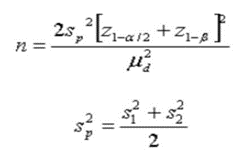
In the present Study:
Standard deviation group A = 2.3
Standard deviation group B=3.8
Mean difference =1.1
Alpha Error (%) =5
Power (%) =80
Sp2= 2.32 +3.82 = 9.86
2
n = 2 x 9.86 x (1.96+0.84 )2
1.12
= 128
Required sample size per group = 128
S12 = Standard deviation of time of cessation of shivering in the first group (patients receiving pethidine- Group P)
S22 = Standard deviation of time of cessation of shivering in the second group (patients receiving dexmedetomidine- Group D)
µd2 = mean difference in time of cessation between the sample
α = significance level
1 - β = power
Data Collection Procedure
After obtaining Institutional Research Committee and Human Ethics Committee approval, written informed consent was obtained from all participants. A predesigned proforma was used to record demographic and baseline clinical data, including age, sex, weight, ASA status and axillary temperature. Standard monitoring with ECG, NIBP and pulse oximetry was established, and baseline heart rate, blood pressure, MAP, SpO₂ and temperature were recorded. All patients received spinal anaesthesia as per institutional protocol. Patients who developed shivering were observed without influencing the attending anaesthesiologist’s choice of treatment and were allocated according to the drug received into the pethidine group (0.5 mg/kg IV; n=128) or dexmedetomidine group (0.25 µg/kg IV; n=128). Shivering was graded using the Crossley and Mahajan scale, and the time to cessation, recurrence of shivering, haemodynamic parameters, temperature, respiratory rate, SpO₂ and adverse effects were recorded at baseline, during shivering and at 5, 10, 15 and 30 minutes after drug administration. Sedation was assessed using the Ramsay Sedation Score, with a score >3 considered indicative of sedation.
Statistical Analysis
The collected data was entered into a Microsoft Excel worksheet and analysed using SPSS version 27. Qualitative variables were expressed as frequencies and percentages, while quantitative variables were presented as mean ± standard deviation. The chi-square test was used to compare categorical variables, and the independent samples t-test was used to compare continuous variables between the two groups. A p-value <0.05 was considered statistically significant.
RESULTS:
Table 1. Comparison of Demographic Characteristics between the Two Study Groups
|
Variable |
Pethidine (n=128) |
Dexmedetomidine (n=128) |
P value |
|
Age (years), mean ± SD |
37.95 ± 9.43 |
45.54 ± 10.18 |
<0.001 |
|
Male, n (%) |
78 (60.94) |
56 (43.75) |
0.006 |
|
Female, n (%) |
50 (39.06) |
72 (56.25) |
|
|
Weight (kg), mean ± SD |
66.09 ± 6.88 |
63.99 ± 7.25 |
0.019 |
Table 1 illustrates the demographic characteristics of patients in the two study groups. The mean age was significantly higher in the dexmedetomidine group than in the pethidine group (45.54 ± 10.18 vs. 37.95 ± 9.43 years; p<0.001). There was also a statistically significant difference in gender distribution, with a higher proportion of males in the pethidine group and females in the dexmedetomidine group (p=0.006). The mean body weight was also significantly different between the groups (p=0.019). These baseline differences are consistent with the observational nature of the study.
Table 2. Comparison of Clinical and Perioperative Characteristics between the Two Study Groups
|
Variable |
Pethidine (n=128) |
Dexmedetomidine (n=128) |
P value |
|
ASA physical status, n (%) |
0.900 |
||
|
ASA I |
66 (51.56) |
65 (50.78) |
|
|
ASA II |
62 (48.44) |
63 (49.22) |
|
|
Duration of surgery, n (%) |
0.749 |
||
|
<1 hour |
25 (19.53) |
23 (17.97) |
|
|
1–2 hours |
103 (80.47) |
105 (82.03) |
|
|
Temperature at onset of shivering (°C), mean ± SD |
36.57 ± 0.07 |
36.60 ± 0.09 |
0.004 |
Table 2 observes the clinical and perioperative characteristics of the study participants. The distribution of ASA physical status and duration of surgery was comparable between the two groups, with no statistically significant difference. The mean temperature at the onset of shivering was 36.57 ± 0.07°C in the pethidine group and 36.60 ± 0.09°C in the dexmedetomidine group. The table reports a p-value of 0.004 for temperature at onset.
Table 3. Comparison of Shivering Severity and Efficacy of Treatment between the Two Study Groups
|
Outcome |
Pethidine (n=128) |
Dexmedetomidine (n=128) |
P value |
|
Shivering grade, n (%) |
0.356 |
||
|
Grade 2 |
39 (30.47) |
46 (35.94) |
|
|
Grade 3 |
79 (61.72) |
68 (53.13) |
|
|
Grade 4 |
10 (7.81) |
14 (10.94) |
|
|
Shivering controlled, n (%) |
128 (100) |
128 (100) |
— |
|
Time to cessation (min), mean ± SD |
4.50 ± 0.27 |
3.03 ± 0.33 |
<0.001 |
|
Recurrence of shivering, n (%) |
20 (15.63) |
6 (4.69) |
0.004 |
Table 3 illustrates the severity of shivering and the therapeutic efficacy of pethidine and dexmedetomidine. The distribution of shivering grades was comparable between the groups (p=0.356), and shivering was successfully controlled in all patients. However, the mean time to cessation was significantly shorter with dexmedetomidine than with pethidine (3.03 ± 0.33 vs. 4.50 ± 0.27 minutes; p<0.001). Recurrence of shivering was also significantly lower in the dexmedetomidine group (4.69% vs. 15.63%; p=0.004).
Table 4. Comparison of Systolic Blood Pressure and Heart Rate between the Two Study Groups
|
Haemodynamic parameter |
Pethidine (n=128) Mean ± SD |
Dexmedetomidine (n=128) Mean ± SD |
P value |
|
Systolic BP – pre-shivering |
123.24 ± 5.40 |
125.66 ± 5.60 |
<0.001 |
|
Systolic BP – during shivering |
134.03 ± 5.35 |
135.40 ± 3.26 |
0.014 |
|
Systolic BP – post-drug administration |
123.97 ± 5.00 |
123.42 ± 6.94 |
0.470 |
|
Heart rate – pre-shivering |
75.39 ± 3.39 |
75.34 ± 4.15 |
0.908 |
|
Heart rate – during shivering |
94.73 ± 5.91 |
95.55 ± 5.84 |
0.260 |
|
Heart rate – post-drug administration |
75.89 ± 5.34 |
74.77 ± 5.71 |
0.105 |
Table 4 compares the haemodynamic parameters before, during and after treatment. Systolic blood pressure differed significantly between the groups before and during shivering; however, following drug administration, the difference was not statistically significant (p=0.470). Heart rate remained comparable between the two groups at all three observation periods, with no statistically significant differences.
Table 5. Comparison of Nausea and Vomiting Following Drug Administration
|
Nausea/Vomiting |
Pethidine (n=128) |
Dexmedetomidine (n=128) |
Chi-square |
P value |
|
Yes |
24 (18.75%) |
1 (0.78%) |
23.450 |
<0.001 |
|
No |
104 (81.25%) |
127 (99.22%) |
Table 5 illustrates the occurrence of nausea and vomiting following administration of the study drugs. Nausea or vomiting was significantly more frequent among patients receiving pethidine compared with those receiving dexmedetomidine (18.75% vs. 0.78%; p<0.001).
Table 6. Comparison of Sedation Following Drug Administration
|
Sedation |
Pethidine (n=128) |
Dexmedetomidine (n=128) |
Chi-square |
P value |
|
Yes |
50 (39.00%) |
19 (14.84%) |
17.86 |
<0.0001 |
|
No |
78 (61.00%) |
109 (85.16%) |
Table 6 observes the occurrence of sedation following administration of pethidine and dexmedetomidine. Sedation was observed significantly more frequently in the pethidine group than in the dexmedetomidine group (39.0% vs. 14.84%; p<0.0001).
Table 7. Comparison of Other Adverse Effects Following Drug Administration
|
Adverse Effect |
Pethidine (n=128) |
Dexmedetomidine (n=128) |
|
|
Bradycardia |
Yes |
0 (0%) |
5 (3.91%) |
|
No |
128 (100%) |
123 (96.09%) |
|
|
Hypotension |
Yes |
0 (0%) |
3 (2.34%) |
|
No |
128 (100%) |
125 (97.66%) |
|
|
Respiratory depression |
Yes |
0 (0%) |
0 (0%) |
|
No |
128 (100%) |
128 (100%) |
|
|
Confusion |
Yes |
0 (0%) |
0 (0%) |
|
No |
128 (100%) |
128 (100%) |
|
Table 7 illustrates the other adverse effects observed following drug administration. Bradycardia occurred in 3.91% and hypotension in 2.34% of patients receiving dexmedetomidine, whereas neither event was observed in the pethidine group. No respiratory depression or confusion was observed in either group. The reported cardiovascular adverse effects with dexmedetomidine were infrequent and did not require significant intervention.
DISCUSSION:
Post-spinal anaesthesia shivering is a common perioperative complication, with a reported incidence of 40–60%.[13] Apart from causing considerable patient discomfort, shivering increases oxygen consumption, carbon dioxide production, metabolic demand, intracranial and intraocular pressure, and cardiac workload. Therefore, effective and rapid treatment is particularly important in patients with limited cardiopulmonary reserve. The present observational study compared intravenous dexmedetomidine (0.25 μg/kg) with intravenous pethidine (0.5 mg/kg) for the treatment of shivering following spinal anaesthesia in 256 patients, with 128 patients in each group. The principal finding was that dexmedetomidine provided significantly faster cessation of shivering, with lower recurrence and substantially fewer episodes of nausea and vomiting than pethidine. There were significant differences in age, sex, and body weight between the two groups. The mean age was higher in the dexmedetomidine group than in the pethidine group (45.54 ± 10.18 vs. 37.95 ± 9.43 years, p<0.001). These baseline differences are likely related to the observational design, as treatment allocation was based on the attending anaesthesiologist’s clinical judgment rather than randomization. However, ASA physical status, duration of surgery, severity of shivering, and temperature at the onset of shivering were comparable between groups, indicating broadly similar clinical severity of shivering before treatment.
Efficacy of Shivering Control
Dexmedetomidine demonstrated significantly faster control of shivering than pethidine. The mean time required for cessation of shivering was 3.03 ± 0.33 minutes with dexmedetomidine compared with 4.50 ± 0.27 minutes with pethidine (p<0.001), representing approximately 1.5 minutes faster control with dexmedetomidine. This greater efficacy may be attributed to the central α2-adrenergic activity of dexmedetomidine, which acts through hypothalamic and locus coeruleus pathways to reduce the shivering threshold and sympathetic activity. It may also inhibit spinal neuronal transmission and motor neuronal activity involved in shivering. Pethidine, although effective, primarily acts through opioid-mediated thermoregulatory mechanisms and may therefore provide less rapid suppression of shivering.
The present findings are consistent with previous studies. Raghu et al. reported significantly faster control of shivering with dexmedetomidine compared with pethidine, with fewer adverse effects.[14] Baker et al. also demonstrated superior intraoperative shivering control with dexmedetomidine compared with meperidine.[15] Similarly, Lim Fern et al. found dexmedetomidine to be more effective than both pethidine and tramadol in treating post-neuraxial shivering.[16] Dixit et al. reported that dexmedetomidine was non-inferior to pethidine and was associated with minimal haemodynamic disturbances.[16] In the present study, dexmedetomidine demonstrated superiority in terms of speed of shivering cessation, although the observational design and baseline differences should be considered when interpreting this finding.
Recurrence of Shivering
Dexmedetomidine was also associated with a significantly lower recurrence of shivering. Recurrence occurred in 4.69% of patients receiving dexmedetomidine compared with 15.63% in the pethidine group (p=0.004). The sustained α2-adrenergic activity of dexmedetomidine may contribute to prolonged suppression of sympathetic activity and maintenance of a lower shivering threshold. Reduced recurrence is clinically relevant because repeated shivering causes additional discomfort and may necessitate further pharmacological intervention.
Haemodynamic Effects
Heart rate remained comparable between the groups before, during, and after treatment, with no statistically significant differences. Although baseline blood pressure differed significantly between groups, post-treatment blood pressure was comparable. These findings suggest that low-dose dexmedetomidine (0.25 μg/kg) can be used for post-spinal shivering without clinically important haemodynamic instability in most patients. This is relevant because bradycardia and hypotension are recognized concerns with dexmedetomidine.
Adverse Effects
Nausea and vomiting were significantly more frequent with pethidine, occurring in 18.75% of patients compared with only 0.78% in the dexmedetomidine group (p<0.001). This marked difference is consistent with the known opioid-related adverse effects of pethidine and represents an important clinical advantage of dexmedetomidine. Sedation occurred in 14.84% of patients receiving dexmedetomidine and was not observed in the pethidine group. The sedation associated with dexmedetomidine is generally characterized by easy arousability and minimal respiratory depression and may therefore provide additional patient comfort when appropriately monitored. Bradycardia occurred in 3.91% and hypotension in 2.34% of patients receiving dexmedetomidine. These events were infrequent and manageable. Similar findings were reported by Lim Fern et al., who observed increased bradycardia and hypotension with dexmedetomidine.[12] Thus, although appropriate haemodynamic monitoring remains necessary, these adverse effects did not appear to outweigh the benefits of dexmedetomidine in the present study.
Clinical Implications
The findings suggest that dexmedetomidine at a dose of 0.25 μg/kg provides more rapid and sustained control of post-spinal shivering than pethidine at 0.5 mg/kg. In addition to faster cessation and lower recurrence, dexmedetomidine was associated with a markedly lower incidence of nausea and vomiting. Its sedative effect may also improve patient comfort, while haemodynamic adverse effects were relatively uncommon at the dose used. Therefore, dexmedetomidine may be considered a useful alternative to pethidine for the management of post-spinal shivering, particularly when opioid-related adverse effects are undesirable.
Limitations
This study had certain limitations. Its observational, non-randomized design and anaesthesiologist-dependent drug selection may have introduced selection bias. Baseline differences in age, sex, and weight between the groups may also have influenced the findings. Core temperature was not measured, with axillary temperature used instead, and blinding was not feasible. Sedation was not objectively assessed using standardized scales such as Ramsay or RASS, and long-term postoperative outcomes were not evaluated. These factors should be considered when interpreting the study results.
CONCLUSION:
In this prospective observational study, intravenous dexmedetomidine (0.25 μg/kg) was more effective than pethidine (0.5 mg/kg) in treating post-spinal anaesthesia shivering. Dexmedetomidine provided faster control, reduced recurrence of shivering, and was associated with less nausea and vomiting, with only mild and clinically manageable sedation, bradycardia, and hypotension. Thus, dexmedetomidine appears to be an effective and well-tolerated option for the management of post-spinal anaesthesia shivering.
REFERENCES:
1. Afonso J, Reis F. Dexmedetomidine: current role in anesthesia and intensive care. Revista Brasileira de Anestesiologia 2012;62:125-33.
2. Amsalu H, Zemedkun A, Regasa T, et al. Evidence-based guideline on prevention and management of shivering after spinal anesthesia in resource-limited settings. International Journal of General Medicine 2022;15:6985.
3. Subramani Y, Nagappa M, Kumar K, et al. Effect of intrathecal lipophilic opioids on the incidence of shivering in women undergoing cesarean delivery after spinal anesthesia: a systematic review and bayesian network meta-analysis of randomized controlled trials. BMC Anesthesiology 2020;20(1):214.
4. Lema GF, Gebremedhn EG, Gebregzi AH, et al. Efficacy of intravenous tramadol and low-dose ketamine in the prevention of post-spinal anesthesia shivering following cesarean section: a double-blinded, randomized control trial. International Journal of Women's Health 2017;9:681-8.
5. Entezariasl M, Isazadehfar K. Dexamethasone for prevention of postoperative shivering: a randomized double-blind comparison with pethidine. International Journal of Preventive Medicine 2013;4(7):818.
6. Lopez MB. Postanaesthetic shivering – from pathophysiology to prevention. Romanian J Anaesth Intensive Care 2018;25(1):73-81.
7. Shabani Y, Moshiri E, Modir H, et al. Effects of ketamine, granisetron and dexmedetomidine on postoperative shivering and hemodynamic changes after general anesthesia: a double-blind randomized clinical trial. Medical Gas Research 2024;14(1):19-25.
8. Hameed M, Ali NA, Ahsan K, et al. Pharmacological interventions for the treatment and control of shivering in adult patients undergoing elective surgery under regional anaesthesia: a systematic review and meta-analysis. Turk J Anaesthesiol Reanim 2022;50(4):246.
9. Eydi M, Golzari SE, Aghamohammadi D, et al. Postoperative management of shivering: a comparison of pethidine vs. ketamine. Anesthesiol Pain Med 2014;4(2):e15499.
10. Bhukal I, Solanki SL, Kumar S, et al. Pre-induction low dose pethidine does not decrease incidence of postoperative shivering in laparoscopic gynecological surgeries. J Anaesthesiol Clin Pharmacol 2011;27(3):349-53.
11. Scott-Warren VL, Sebastian JJ. Dexmedetomidine: its use in intensive care medicine and anaesthesia. BJA Education 2016;16(7):242-6.
12. Fern L, Misiran K. Comparison of dexmedetomidine, pethidine and tramadol in the treatment of post-neuraxial anaesthesia shivering. Southern African Journal of Anaesthesia and Analgesia 2015;21(1):21-6.
13. McCullough JN, Zhang N, Reich DL, et al. Cerebral metabolic suppression during hypothermic circulatory arrest in humans. Ann Thorac Surg 1999;67(6):1895-9.
14. Raghu T, Patil B, Khyadi S, et al. A prospective, randomized clinical trial for comparison of pethidine and dexmedetomidine for the control of intraoperative shivering under spinal anaesthesia. Indian Journal of Clinical Anaesthesia 2023;6(3):332-6.
15. Baker S, Ki Z, Willis S. The role of dexmedetomidine and pethidine in controlling intraoperative shivering during spinal anaesthesia. Adv Clin Med Res 2020;1(1):1-4.
16. Verghese T, Dixit N, John L, et al. Effect of intravenous dexmedetomidine on duration of spinal anaesthesia with hyperbaric bupivacaine-a comparative study. Indian J Clin Anaesth 2019;6(1):97-101.