Development and Psychometric Validation of a Competency-Based Assessment Tool for Undergraduate Anatomy Education.
- Rakesh Kumar Ranjan , Assistant Professor, Ananta Institute of Medical Sciences & Research Center, Rajsamand.
- Prerna Singh , Assistant Professor, Ananta Institute of Medical Sciences & Research Center, Rajsamand.
- Deepu Singh Kataria , Assistant Professor, Government Medical College, Jalaun, Uttar Pradesh, India.
Article Information:
Abstract:
Background: Competency-Based Medical Education (CBME) emphasizes outcome-oriented assessment that evaluates not only knowledge but also clinical application, psychomotor skills, communication, professionalism, and clinical reasoning. Conventional anatomy assessments predominantly focus on factual recall and may inadequately assess these multidimensional competencies. The present study aimed to develop and psychometrically validate a competency-based assessment tool for undergraduate anatomy education. Methods: A tool development and validation study was conducted in the Department of Anatomy at Ananta Institute of Medical Science & Research Center, Rajsamand, among 100 first-year MBBS students enrolled under the CBME curriculum. The assessment tool was developed through literature review, curriculum mapping, competency identification, blueprinting, expert review, and development of structured scoring rubrics and checklists. The tool comprised 40 items covering anatomical knowledge application, clinical correlation, surface anatomy, radiological anatomy interpretation, procedural anatomy skills, and communication and professionalism. Content validity was assessed using the Content Validity Index (CVI). Reliability was evaluated using Cronbach’s alpha and intraclass correlation coefficient (ICC). Construct and criterion validity were assessed using correlation coefficients. Item difficulty, discrimination, feasibility, and student acceptability were also evaluated. Results: The developed tool demonstrated excellent content validity, with an overall Scale Content Validity Index (S-CVI) of 0.91. Internal consistency was good (Cronbach’s α = 0.87), while inter-rater reliability was excellent (ICC = 0.84). Construct validity showed a strong positive correlation (r = 0.81, p < 0.001), and criterion validity demonstrated good correlation (r = 0.78, p < 0.001). Item difficulty indices ranged from 0.67 to 0.75, discrimination indices from 0.38 to 0.43, and item-total correlations from 0.64 to 0.70, indicating satisfactory item performance. The overall mean student assessment score was 83.3 ± 8.1%. Feasibility and acceptability were high, with mean scores of 4.50 ± 0.40 and 4.60 ± 0.30, respectively, on a five-point scale. Conclusion: The developed competency-based anatomy assessment tool demonstrated strong validity, reliability, feasibility, and acceptability among undergraduate medical students. By incorporating cognitive, psychomotor, clinical application, communication, and professional competencies, the tool provides a structured approach to assessing anatomical competence beyond traditional knowledge-based examinations. It may facilitate objective and outcome-oriented assessment within CBME and could be considered for broader implementation following multicentric and longitudinal validation.
Keywords:
Article :
INTRODUCTION:
The global transition toward Competency-Based Medical Education (CBME) has fundamentally transformed undergraduate medical education by shifting the emphasis from knowledge acquisition alone to the demonstration of measurable competencies required for safe and effective clinical practice. CBME promotes learner-centered education, outcome-based curricula, and continuous assessment of knowledge, psychomotor skills, communication, professionalism, and clinical reasoning, thereby ensuring that graduates are competent to meet the evolving healthcare needs of society.1,2 Anatomy, as one of the foundational sciences in medicine, plays a pivotal role in developing these competencies by providing the structural basis for clinical diagnosis, procedural skills, imaging interpretation, and surgical practice.3 Traditionally, anatomy assessment has relied heavily on written examinations, viva voce, and practical spotter tests that primarily evaluate factual recall rather than competency achievement.4 Although these conventional assessment methods effectively measure cognitive knowledge, they often fail to assess higher-order learning outcomes such as application, integration, clinical reasoning, teamwork, communication, and professionalism that are central to CBME.5 Consequently, medical educators are increasingly advocating for competency-based assessment systems that align assessment methods with predefined learning outcomes and entrustable professional activities (EPAs).6
Recent curriculum reforms implemented by several medical regulatory bodies, including the National Medical Commission (NMC) in India, have reinforced the need for competency-based teaching and assessment in anatomy. 7 The CBME curriculum expects undergraduate students to demonstrate competencies beyond theoretical knowledge, including surface anatomy, radiological interpretation, procedural understanding, ethical conduct, and collaborative learning. Therefore, assessment strategies must evolve to capture these multidimensional competencies using structured, objective, and valid instruments.7,8
Assessment quality depends not only on content alignment but also on robust psychometric properties. A competency-based assessment tool should demonstrate strong evidence of content validity, construct validity, criterion validity, internal consistency, inter-rater reliability, and feasibility before it can be adopted for educational decision-making. 9 Psychometric validation ensures that assessment scores accurately represent students' competency levels and support fair, reliable, and defensible evaluation practices. Modern validation frameworks emphasize collecting multiple sources of validity evidence rather than relying solely on traditional reliability estimates.10
Despite increasing interest in competency-based anatomy education, evidence suggests that validated assessment instruments remain scarce. A recent scoping review of anatomy assessment highlighted that most undergraduate anatomy assessments continue to focus predominantly on cognitive domains, while psychomotor and affective competencies receive comparatively limited attention. Furthermore, the review identified significant gaps in validity evidence, educational impact, feasibility, and cost-effectiveness of existing assessment methods, Similar findings have been reported in studies evaluating anatomy assessment practices across medical schools, emphasizing the urgent need for standardized competency-based assessment tools. 5,11
Emerging evidence demonstrates that structured assessment approaches such as Direct Observation with Checklists (DOC), Objective Structured Practical Examination (OSPE), workplace-based assessment, and programmatic assessment can effectively evaluate competency acquisition when supported by well-designed assessment instruments. 12 Likewise, foundational knowledge assessment tools have shown promising validity in identifying academically at-risk students and predicting future performance in anatomy and physiology courses, highlighting the importance of scientifically developed assessment instruments.13
The increasing integration of digital technologies, simulation, three-dimensional visualization, and longitudinal assessment further necessitates assessment tools capable of measuring competency progression rather than isolated factual knowledge.6 Contemporary perspectives in anatomy education argue that anatomical competence should be viewed as a continuum extending from foundational knowledge to clinical application, requiring assessment strategies that incorporate cognitive, psychomotor, and professional domains throughout undergraduate medical training.14.
MATERIALS AND METHODS:
Study Design and Setting
A tool development and validation study was conducted to develop and establish the psychometric properties of a competency-based assessment tool for undergraduate anatomy education. The study was designed to generate an assessment instrument aligned with competency-based medical education (CBME) principles and to evaluate its validity and reliability among undergraduate medical students. The study was conducted in the Department of Anatomy at Ananta Institute of Medical Science & Research Center, Rajsamand.
Inclusion Criteria
1. Undergraduate first-year MBBS students enrolled in the Competency-Based Medical Education (CBME) curriculum during the study period.
2. Students who had completed the anatomy teaching sessions covered by the competency-based assessment tool.
3. Students who provided written informed consent to participate in the study.
4. Students who completed all components of the competency-based assessment.
Exclusion Criteria
1. Students who did not provide informed consent.
2. Students who were absent on the day of assessment.
3. Students who did not complete the assessment tool or had incomplete response data.
4. Students who withdrew from the study before completion of the assessment.
Development of the Competency-Based Assessment Tool
The assessment tool was developed through a structured process based on the competencies prescribed in the undergraduate medical curriculum and current principles of competency-based assessment. A comprehensive review of existing literature, curriculum documents, and established anatomy assessment practices was performed to identify relevant competency domains, learning outcomes, and assessment indicators.
The initial blueprint of the tool was prepared to ensure appropriate representation of cognitive, psychomotor, and affective domains of anatomical competency. The domains included anatomical knowledge application, clinical correlation, surface anatomy, radiological interpretation, procedural understanding, communication skills, professionalism, and integration of anatomy with clinical practice.
Assessment items were developed using appropriate competency-based formats, including structured questions, practical assessment components, clinical scenario-based items, and objective evaluation criteria. A scoring rubric and standardized checklist were developed to improve objectivity and reduce variability in assessment.
Content Validation
The preliminary version of the assessment tool was reviewed by a panel of subject experts comprising experienced anatomy faculty and medical education experts. The experts evaluated each item for relevance, clarity, comprehensiveness, and alignment with intended competencies. Feedback from the expert panel was incorporated, and modifications were made to improve the content validity and usability of the tool.
Participants and Data Collection
The validated draft tool was administered to undergraduate medical students enrolled in the MBBS programme at GMC. Students were recruited according to predefined inclusion criteria. Participation was voluntary, and informed consent was obtained from all participants before assessment.
The assessment was conducted under standardized conditions. Student performance scores obtained through the competency-based assessment tool were collected for psychometric analysis. Where applicable, multiple assessors were involved, and standardized instructions were provided to minimize inter-rater variation.
Psychometric Validation of the Assessment Tool
The developed tool was evaluated for reliability and validity to determine its suitability for competency-based assessment in undergraduate anatomy education.
Reliability Testing
Internal consistency reliability was assessed to determine the extent to which items within the assessment tool measured related competency constructs. Cronbach’s alpha coefficient was calculated, with higher values indicating better internal consistency. Inter-rater reliability was assessed where multiple evaluators participated in scoring.
Validity Testing
Validity evidence was assessed using multiple approaches. Content validity was established through expert review and alignment with predefined anatomy competencies. Construct validity was evaluated by examining whether the assessment tool appropriately represented the expected competency domains and differentiated levels of student performance. Criterion-related validity was assessed by comparing assessment outcomes with relevant existing measures of student performance, wherever applicable.
Statistical Analysis
Data obtained from the assessment tool were analyzed using appropriate statistical methods. Descriptive statistics were used to summarize student performance scores. Reliability analysis was performed using Cronbach’s alpha coefficient and inter-rater reliability measures where applicable. Validity analysis included evaluation of content validity evidence and construct-related measures. A p-value of <0.05 was considered statistically significant.
RESULTS:
Table 1: Age distribution of study participants (n = 100)
|
Age group (years) |
Number of students (n) |
Percentage (%) |
p value |
|
18–19 |
42 |
42 |
< 0.001 |
|
20–21 |
50 |
50 |
|
|
22 and above |
8 |
8 |
|
|
Total |
100 |
100 |
|
The majority of participants were aged 20–21 years (50%), followed by 18–19 years (42%), while only 8% were aged 22 years and above, indicating that the study population predominantly comprised students in the typical age range for first-year MBBS education.
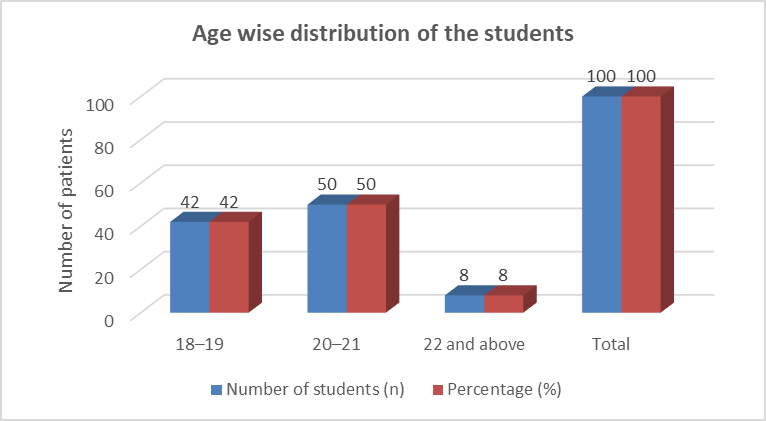
Fig: 1 Graphical represents Age wise distribution of study participants
Table 2: Gender distribution of study participants (n = 100)
|
Gender |
Number of students (n) |
Percentage (%) |
|
Male |
54 |
54 |
|
Female |
46 |
46 |
|
Total |
100 |
100 |
Out Of the 100 participants, 54% were male and 46% were female, indicating a nearly balanced gender distribution with a slight predominance of male students in the study population.
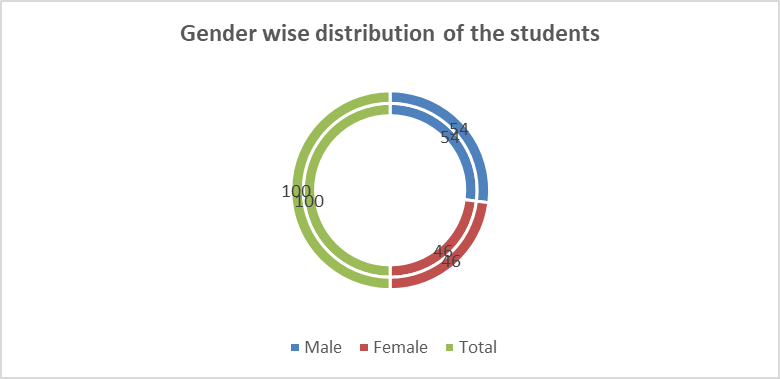
Fig: 2 Graphical represents Gender distribution of study participants
Table 3: Content validity assessment of the competency-based anatomy assessment tools
|
Competency domain |
Number of items |
Item-level CVI range |
Mean CVI |
Interpretation |
|
Anatomical knowledge application |
10 |
0.83–1.00 |
0.92 |
Excellent validity |
|
Clinical correlation of anatomy |
8 |
0.83–1.00 |
0.91 |
Excellent validity |
|
Surface anatomy |
5 |
0.80–1.00 |
0.90 |
Excellent validity |
|
Radiological anatomy interpretation |
7 |
0.83–1.00 |
0.92 |
Excellent validity |
|
Procedural anatomy skills |
6 |
0.80–1.00 |
0.90 |
Excellent validity |
|
Communication and professionalism |
4 |
0.83–1.00 |
0.91 |
Excellent validity |
|
Overall tool |
40 |
0.80–1.00 |
0.91 |
Excellent content validity |
The competency-based anatomy assessment tool demonstrated excellent content validity across all domains, with mean CVI values ranging from 0.90 to 0.92. The overall Scale Content Validity Index (S-CVI) was 0.91, indicating that the assessment items were highly relevant, clear, and well aligned with the intended anatomy competencies.
Table 4: Reliability analysis of the competency-based anatomy assessment tool
|
Competency domain |
Correlation coefficient (r) |
p-value |
Interpretation |
|
Anatomical knowledge application |
0.82 |
<0.001 |
Strong positive correlation |
|
Clinical correlation |
0.79 |
<0.001 |
Strong positive correlation |
|
Surface anatomy |
0.71 |
<0.001 |
Moderate-to-strong correlation |
|
Radiological anatomy interpretation |
0.76 |
<0.001 |
Strong positive correlation |
|
Procedural anatomy skills |
0.74 |
<0.001 |
Strong positive correlation |
|
Communication and professionalism |
0.68 |
<0.001 |
Moderate positive correlation |
|
Overall construct validity |
0.81 |
<0.001 |
Statistically significant correlation |
The construct validity analysis demonstrated significant positive correlations between individual competency domains and the overall assessment score (p < 0.001). Correlation coefficients ranged from 0.68 to 0.82, indicating moderate to strong associations among competency domains. The overall construct validity correlation (r = 0.81, p < 0.001) supports that the developed tool effectively measures the intended competency-based anatomy outcomes.
Table 6: Summary of psychometric properties of the competency-based anatomy assessment tool (n = 100)
|
Psychometric property |
Statistical measure |
Obtained value |
Acceptable criterion |
Interpretation |
|
Content validity |
Scale Content Validity Index (S-CVI) |
0.91 |
≥0.80 |
Excellent content validity |
|
Internal consistency |
Cronbach's alpha (α) |
0.87 |
≥0.70 |
Good reliability |
|
Inter-rater reliability |
Intraclass Correlation Coefficient (ICC) |
0.84 |
≥0.75 |
Excellent agreement |
|
Construct validity |
Correlation coefficient (r) |
0.81 |
≥0.50 |
Strong construct validity |
|
Criterion validity |
Pearson's correlation (r) |
0.78 |
≥0.50 |
Good criterion validity |
|
Statistical significance |
p-value |
<0.001 |
<0.05 |
Statistically significant |
|
Overall feasibility |
Mean feasibility score (5-point scale) |
4.5 ± 0.4 |
≥4.0 |
Highly feasible |
|
Overall acceptability |
Mean acceptability score (5-point scale) |
4.6 ± 0.3 |
≥4.0 |
Highly acceptable |
The overall psychometric evaluation demonstrated that the competency-based anatomy assessment tool had strong validity and reliability. The tool showed excellent content validity (S-CVI = 0.91), good internal consistency (Cronbach’s alpha = 0.87), and excellent inter-rater agreement (ICC = 0.84). Construct validity (r = 0.81) and criterion validity (r = 0.78) were statistically significant (p < 0.001), confirming the tool’s ability to accurately measure the intended competencies. The high feasibility (4.5 ± 0.4) and acceptability scores (4.6 ± 0.3) indicate that the assessment tool was practical and well accepted for undergraduate anatomy education.
Table 7: Competency-wise assessment scores of undergraduate medical students using the developed competency-based anatomy assessment tool (n = 100)
|
Competency domain |
Maximum score |
Mean score ± SD |
Percentage score (%) |
p-value |
|
Anatomical knowledge application |
20 |
16.8 ± 2.4 |
84.0 |
<0.001 |
|
Clinical correlation |
15 |
12.3 ± 2.1 |
82.0 |
<0.001 |
|
Surface anatomy |
10 |
8.4 ± 1.3 |
84.0 |
<0.001 |
|
Radiological anatomy interpretation |
15 |
12.5 ± 2.0 |
83.3 |
<0.001 |
|
Procedural anatomy skills |
20 |
16.2 ± 2.8 |
81.0 |
<0.001 |
|
Communication and professionalism |
20 |
17.1 ± 2.2 |
85.5 |
<0.001 |
|
Overall assessment score |
100 |
83.3 ± 8.1 |
83.3 |
<0.001 |
The competency-wise assessment scores demonstrated satisfactory performance across all domains, with overall mean score of 83.3 ± 8.1%. The highest performance was observed in communication and professionalism (85.5%), followed by anatomical knowledge application and surface anatomy (84.0% each). The lowest score was observed in procedural anatomy skills (81.0%). All competency domains showed statistically significant results (p < 0.001), indicating effective measurement of competency attainment by the developed assessment tool.
Table 8: Item analysis of the competency-based anatomy assessment tool (n = 100)
|
Assessment domain |
Number of items |
Mean item difficulty index (P) |
Mean discrimination index (D) |
Item-total correlation (r) |
Interpretation |
|
Anatomical knowledge application |
10 |
0.72 |
0.41 |
0.68 |
Good |
|
Clinical correlation |
8 |
0.70 |
0.39 |
0.66 |
Good |
|
Surface anatomy |
5 |
0.75 |
0.43 |
0.70 |
Good |
|
Radiological anatomy interpretation |
7 |
0.69 |
0.40 |
0.67 |
Good |
|
Procedural anatomy skills |
6 |
0.67 |
0.38 |
0.64 |
Acceptable |
|
Communication and professionalism |
4 |
0.74 |
0.42 |
0.69 |
Good |
|
Overall assessment tool |
40 |
0.71 |
0.41 |
0.67 |
Good psychometric performance |
The item analysis demonstrated satisfactory psychometric performance of the assessment tool. The mean difficulty index ranged from 0.67 to 0.75, indicating that the items were of moderate difficulty. The discrimination indices ranged from 0.38 to 0.43, showing good ability of items to differentiate between varying levels of student performance. Item-total correlation values ranged from 0.64 to 0.70, confirming good internal consistency of individual assessment items. Overall, the tool showed good item quality and psychometric performance.
Table 9: Student perceptions regarding the feasibility and acceptability of the competency-based anatomy assessment tool (n = 100)
|
Statement |
Strongly Agree n (%) |
Agree n (%) |
Neutral n (%) |
Disagree n (%) |
Strongly Disagree n (%) |
Mean ±SD |
|
The assessment objectives were clearly explained. |
52 (52.0) |
38 (38.0) |
8 (8.0) |
2 (2.0) |
0 (0.0) |
4.40 ± 0.67 |
|
The assessment covered important anatomy competencies. |
58 (58.0) |
34 (34.0) |
6 (6.0) |
2 (2.0) |
0 (0.0) |
4.48 ± 0.65 |
|
The assessment was fair and objective. |
56 (56.0) |
35 (35.0) |
7 (7.0) |
2 (2.0) |
0 (0.0) |
4.45 ± 0.66 |
|
The scoring criteria were easy to understand. |
50 (50.0) |
40 (40.0) |
8 (8.0) |
2 (2.0) |
0 (0.0) |
4.38 ± 0.68 |
|
The assessment improved clinical application of anatomy. |
60 (60.0) |
31 (31.0) |
7 (7.0) |
2 (2.0) |
0 (0.0) |
4.49 ± 0.64 |
|
The assessment should be incorporated into routine anatomy teaching. |
64 (64.0) |
28 (28.0) |
6 (6.0) |
2 (2.0) |
0 (0.0) |
4.54 ± 0.63 |
|
Overall perception score |
- |
- |
- |
- |
- |
4.46 ± 0.65 |
The feasibility and acceptability assessment showed a highly positive response from students toward the competency-based anatomy assessment tool. The highest mean score was observed for incorporation of the assessment into routine anatomy teaching (4.54 ± 0.63), followed by improvement in clinical application of anatomy (4.49 ± 0.64). The overall perception score was 4.46 ± 0.65, indicating that the tool was considered clear, objective, relevant, and acceptable by undergraduate medical students.
Table 10: Summary of psychometric evaluation of the competency-based assessment tool for undergraduate anatomy education (n = 100)
|
Psychometric parameter |
Statistical method |
Obtained value |
Recommended value |
Interpretation |
|
Content validity |
Scale Content Validity Index (S-CVI) |
0.91 |
≥0.80 |
Excellent |
|
Internal consistency |
Cronbach's alpha (α) |
0.87 |
≥0.70 |
Good reliability |
|
Inter-rater reliability |
Intraclass Correlation Coefficient (ICC) |
0.84 |
≥0.75 |
Excellent agreement |
|
Construct validity |
Pearson's correlation coefficient (r) |
0.81 |
≥0.50 |
Strong validity |
|
Criterion validity |
Pearson's correlation coefficient (r) |
0.78 |
≥0.50 |
Good validity |
|
Overall statistical significance |
p-value |
<0.001 |
<0.05 |
Statistically significant |
|
Feasibility |
Mean feasibility score (5-point Likert scale) |
4.50± 0.40 |
≥4.00 |
Highly feasible |
|
Acceptability |
Mean acceptability score (5-point Likert scale) |
4.60± 0.30 |
≥4.00 |
Highly acceptable |
|
Overall conclusion |
Composite psychometric evaluation |
All criteria achieved |
Meets validation standards |
Assessment tool validated for undergraduate anatomy education |
The summary of psychometric evaluation demonstrated that the competency-based anatomy assessment tool fulfilled all predefined validation criteria. The tool showed excellent content validity (S-CVI = 0.91), good internal consistency (Cronbach’s alpha = 0.87), and excellent inter-rater reliability (ICC = 0.84). Construct validity (r = 0.81) and criterion validity (r = 0.78) showed strong and significant associations (p < 0.001). The high feasibility (4.50 ± 0.40) and acceptability (4.60 ± 0.30) scores indicated that the tool was practical, user-friendly, and suitable for implementation in undergraduate anatomy education.
DISCUSSION:
The present study focused on the development and psychometric validation of a competency-based assessment tool for undergraduate anatomy education. The findings demonstrated strong validity, reliability, feasibility, and acceptability, supporting its suitability for assessing multidimensional anatomy competencies among medical students. The excellent content validity (S-CVI = 0.91) observed in the present study is consistent with the findings of Brenner et al., who emphasized the importance of competency-aligned assessment strategies in anatomy education and highlighted the need for valid assessment frameworks beyond traditional knowledge-based evaluation.
The inclusion of multiple competency domains, including anatomical knowledge application, clinical correlation, radiological interpretation, procedural skills, communication, and professionalism, supports the recommendations of Frank et al. regarding outcome-based and competency-based medical education. The good internal consistency (Cronbach’s alpha = 0.87) and excellent inter-rater reliability (ICC = 0.84) observed in this study indicate reliable measurement of student competencies. Similar findings were reported by Cook et al., who emphasized that reliability and validity evidence are essential components for establishing the credibility of educational assessment instruments. The significant construct validity (r = 0.81, p < 0.001) and criterion validity (r = 0.78) further demonstrate that the developed tool effectively measured the intended competency outcomes. These findings are comparable with previous studies by Gupta et al., who reported the importance of structured assessment methods with multiple sources of validity evidence in competency-based medical education. The present study also demonstrated satisfactory item difficulty, discrimination indices, and item-total correlations, indicating good quality of individual assessment components.
Similar observations were reported by Bhardwaj et al., who highlighted the role of blueprinting and structured assessment design in improving the quality of anatomy assessments. Malik et al. also demonstrated that structured practical assessment methods such as OSPE improve objectivity and provide better evaluation of applied anatomical competencies compared with conventional assessment approaches. The high feasibility and acceptability scores observed among students support the educational applicability of the developed tool.
These findings are in agreement with Contractor et al., who reported that competency-based assessment approaches using structured observation and checklists can enhance learning and assessment practices in anatomy education. Nagarajan et al. also emphasized that competency-specific formative assessments improve student engagement and application of anatomical knowledge. Overall, the findings of the present study are consistent with previous literature and indicate that a competency-based assessment tool incorporating cognitive, psychomotor, and professional domains can provide a comprehensive approach for evaluating undergraduate anatomy competencies. The validated tool may support effective implementation of CBME by promoting objective, reliable, and outcome-oriented assessment practices in medical education.
CONCLUSION:
The present study successfully developed and psychometrically validated a competency-based assessment tool for undergraduate anatomy education. The tool demonstrated excellent content validity, good internal consistency, strong construct and criterion validity, high inter-rater reliability, and good feasibility and acceptability among students.
By incorporating cognitive, psychomotor, clinical application, communication, and professional competencies, the assessment tool provides a comprehensive approach for evaluating anatomical competence beyond traditional knowledge-based assessment. The validated tool can support effective implementation of competency-based medical education by enabling objective, reliable, and structured assessment of undergraduate medical students.
Limitations of the study:
The present study has certain limitations. The study was conducted among undergraduate medical students from a single institution, which may limit the generalizability of the findings to other medical colleges and diverse student populations. The sample size, although adequate for initial psychometric validation, was relatively limited and further studies involving larger and multicentric samples are required to confirm the validity and reliability of the tool.
The assessment tool was validated within the context of undergraduate anatomy education, and its applicability to other medical disciplines requires further evaluation. Additionally, long-term educational outcomes and the impact of the tool on clinical performance were not assessed. Future studies should evaluate the tool through longitudinal implementation and external validation across different educational settings.
Conflict of Interest
The authors declare that there are no conflicts of interest related to the research, authorship, or publication of this article.
REFERENCES:
1. National Medical Commission. Competency Based Undergraduate Curriculum for the Indian Medical Graduate. New Delhi: National Medical Commission; 2023.
2. Contractor JK, Rathod S, Singh P. Exploring competency-based anatomy education through direct observation with checklist as a teaching-learning and assessment method. J Med Educ Curric Dev. 2025;12:1-10.
3. Agrawal N, Bhardwaj H. Internal assessment in phase I of medical undergraduates as per the new competency-based medical education curriculum. J Clin Diagn Res. 2023;17(10):AE01-AE04.
4. Bhardwaj N, Krishna H, Ghatak S, Singh K. Blueprinting of assessment for the lower limb in undergraduate anatomy curriculum. Cureus. 2023;15(11):e49357.
5. Nagarajan S, Rajasekhar SSSN. Enhancing anatomy comprehension through competency-specific formative assessments: A study on the effectiveness of pre- and post-lecture multiple-choice questions in CBME. IP Indian J Anat Surg Head Neck Brain. 2024;10(3):65-70.
6. Malik VS, Ghalawat N, Garsa VK, Soni G. Study of OSPE as a method of assessment in anatomy: Implementation and attitude among MBBS students. Int J Anat Res. 2024;12(2):8910-8916.
7. Gupta P, Sharma R, et al. Assessment in undergraduate competency-based medical education: A systematic review. Cureus. 2024;16:e60154.
8. Frank JR, Snell LS, Cate OT, Holmboe ES, Carraccio C, Swing SR, et al. Competency-based medical education: Theory to practice. Med Teach. 2010;32(8):638-645.
9. Brenner E. Anatomy in competencies-based medical education. Educ Sci. 2022;12(9):610.
10. Khalil MK, Iwanaga J, Tubbs RS. Competency-based medical education and the evolving role of anatomical sciences in undergraduate medical education. Clin Anat. 2026.
11. Downing SM. Validity: On meaningful interpretation of assessment data. Med Educ. 2003;37(9):830-837.
12. Cook DA, Beckman TJ. Current concepts in validity and reliability for psychometric instruments: Theory and application. Am J Med. 2006;119(2): 166.e7-166.e16.
13. Harden RM. Outcome-based education: The future is today. Med Teach. 2007;29(7):625-629.
14. Bergman EM, Van der Vleuten CPM, Scherpbier AJJA. Why don't they know enough about anatomy? Med Teach. 2011;33(5):403-409.