Laparoscopic Cholecystectomy in Children for Cholelithiasis: Feasibility and safety.
- Pradip Kumar Deuri , MBBS, MS(General Surgery), MCh(Paediatric Surgery), FIAGES, EFIAGES, FAGIE-ERCP, FALS-ROBOTICS Associate Professor, Dept. of Paediatric Surgery, Assam Medical College Hospital, Dibrugarh-786002, Assam, India.
- Sedengulie Nagi , MBBS, MS (General Surgery), MCh(Paediatric Surgery), FAMS, FIAGES, EFIAGES. Senior Consultant, Dept. of Surgery, Naga Hospital Authority, Kohima, Nagaland, India.
Article Information:
Abstract:
Background: Laparoscopic cholecystectomy has become the standard treatment for gallbladder disease in adults, but its role in children continue to evaluate. Objectives: To evaluate the feasibility and safety of laparoscopic cholecystectomy in paediatric patients. Methods: A retrospective observational study was conducted from January 2014 to December 2024 including 30 paediatric patients who underwent laparoscopic cholecystectomy in our institution. Demographic data, indications, operative details, and outcomes were analized Results: Among 30 patients, 10 (33.34 %) were male and 20 (66.67 %) were female. The mean age was 7.5 years and Age range from 3 - 12 years. All the patients were ultrasonography diagnosed cholelithiasis. Among 20 (66.67 %) children had symptoms of biliary tract disease and 10 (33.34 %) child had incidentally detected cholelithiasis by ultrasonography. 4 (13.34 %) children had definitive etiological risk factors for cholelithiasis and 26 (86.67 %) children were idiopathic. The procedure was successfully completed, laparoscopically in 29 (96.67 %) patients. There was 1 (3.34 %) patient conversion to open procedure. The mean operative duration was 70 minutes (range 50 - 100). Postoperative complications occurred in 2 (6.67 %) patients. The average duration of hospital stay was 5 days (range 3 – 8). No mortality was observed. Conclusion: Laparoscopic cholecystectomy is a safe and feasible in children with favourable outcome and low complication rates.
Keywords:
Article :
INTRODUCTION:
Gallstone disease was traditionally regarded as an uncommon condition in childhood, largely confined to children with an underlying haemolytic disorder. Over the past two decades, however, population-based series have documented a marked rise in the incidence of paediatric cholelithiasis and cholecystectomy .1,2 In parallel with this rise, the aetiological profile has shifted: the proportion of cases attributable to hereditary spherocytosis and other
haemolytic conditions have fallen, while idiopathic and obesity-related cholelithiasis now account for the majority of newly diagnosed cases.3-5
Open cholecystectomy was historically the standard operation for children with symptomatic gallstones. Laparoscopic cholecystectomy, an established first-line treatment for calculous gallbladder disease in adults, was extended to the paediatric population in the early 1990s and has largely replaced the open approach because it offers reduced postoperative pain, a shorter hospital stay and an improved cosmetic outcome.6
Its adoption in children has required technical modifications to accommodate the smaller peritoneal cavity, lower pneumoperitoneum pressures and port placement individualised to body size.
Large systematic reviews and meta-analyses have confirmed that laparoscopic cholecystectomy in children carries a low rate of conversion to open surgery and a low incidence of major complications such as bile duct injury, comparable to outcomes reported in adults.7,8
Data from the Indian subcontinent on paediatric laparoscopic cholecystectomy remain comparatively limited, with most published series originating from single tertiary referral centres.9
Ultrasonography remains the investigation of choice for diagnosing cholelithiasis in children because of its high sensitivity, low cost and lack of ionising radiation. Presentation ranges from typical biliary colic to incidental detection during imaging performed for an unrelated indication, reflecting the heterogeneous clinical spectrum of the disease in this age group.
Aims and Objectives:
Against this background of a rising incidence and an evolving aetiological pattern, this study was undertaken to evaluate the feasibility and safety of laparoscopic cholecystectomy in children with cholelithiasis in our institution over an eleven-year period.
MATERIALS AND METHODS:
Study Design:
This was a retrospective observational study conducted from January 2014 to December 2024 in our institution.
Study Population:
A total of 30 paediatric patients who underwent laparoscopic cholecystectomy were included in study.
Inclusion Criteria:
Paediatric patients below 12 years of age, who were diagnosed cholelithiasis by Ultrasonography requiring surgical intervention were included in the study. All patients underwent laparoscopic cholecystectomy.
Exclusion Criteria:
Patients requiring primary open cholecystectomy and incomplete medical records were exclude from the study.
Surgical technique:
Laparoscopic cholecystectomy was done under general anaesthesia. A standard four port cholecystectomy technique was employed. Umbilical 5 mm camera port was inserted using open technique in all the cases. Subsequently two working ports were placed, one 10 mm in the epigastrium and another 5 mm working port in right midclavicular line in the right hypochondrium. Another 5 mm port was inserted in the right anterior axillary line in the lumbar region for grasping the fundus of the gall bladder for retraction
[Figure: I].
Dissection of gall bladder was carried out posterior aspect and anterior aspect of one third of gall bladder. Dissection continue to find cystic duct and cystic artery to show the critical views of safety [Figure: II].
All ports were inserted under vision. The position of the ports placement was adjusted according to the size of the children.
The gall bladder specimen was retrieved through 10 mm epigastric port
[Figure: III].
Consent:
Inform written consent was taken from the patient’s parent after explaining for the regarding the nature of surgery, the outcome and possible complications.
Data Collection and statistical analysis:
Patients data were retrieved from hospital records including age and sex, indication for surgery, operative details, operation time, intraoperative findings, complications, conversion to open surgery and durations of hospital stay
Descriptive statistical analysis was used to summarize data as percentage and frequency.
Outcome Measures:
The primary outcomes were recorded as a feasibility (completion of laparoscopic cholecystectomy) and safety (complications and mortality).
RESULTS:
Demographic profile and outcomes are depicted in Table I. The study population included 30 children. All 30 patients underwent laparoscopy cholecystectomy for cholelithiasis. 10 (33.34 %) were male and 20 (66.67 %) were female patients. The mean age was 7.5 years (range: 3 – 12) [Table: I]. One children were less than 5 years, 29 children were aged between 5 and 12 years. 20 (66.67%) children had typical symptoms of biliary tract disease (right upper quadrant or epigastric pain, nausea, vomiting or food intolerance) and 10 (33.34%) children had incidentally detected cholelithiasis by ultrasonography.
4 (13.34%) children had definitive etiological risk factors for cholelithiasis and 26 (86.67%) children were idiopathic.
None of our patients were detected to have hemolytic disorders such as hereditary spherocytosis, sickle cell disease, or thalassemia after complete workup.Complete hemogram, peripheral blood smear, and liver function tests were within normal limits in all the patients.
All the children were underwent abdominal ultrasonography and were detected to have single or multiple gallstones. The procedure was successfully completed in 29 (96.67%) patients and 1 (3.34%) patient was conversion to open procedure due to bleeding from cystic artery.
Intra-operative findings, intra-operative complications and post-operative complications were described in [Table: II]. Mean operative duration was 70 min (range 50 – 100). Operative findings include omental adhesions around the gall bladder in 4 (13.34%). Tube drain were placed in 30 (100%) patients and removed within 24 hours.
Post-operative complications occurred in 2 (6.67%) patients. This were superficial port wound infections at skin level and resolved by regular dressing with mupirocin ointment [Figure: IV]. The average duration of hospital stay was 5 days (range 3 – 8).
No mortality was observed.
Legends to Figure and Table:
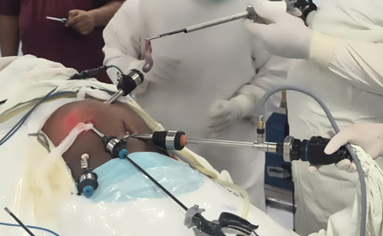
Figure: I showing standard four port cholecystectomy
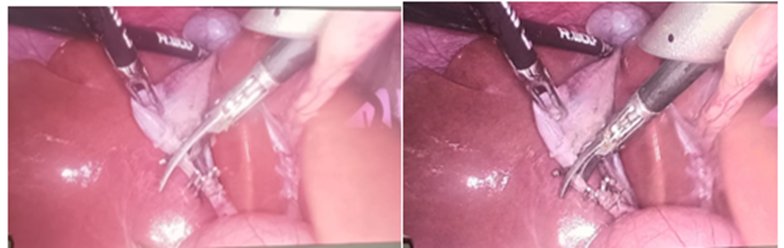
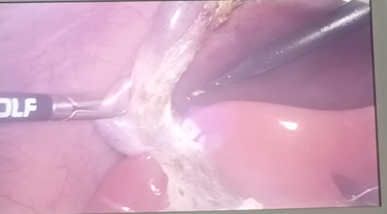
Figure: II Showing critical view of safety and gall bladder dissection from fossa
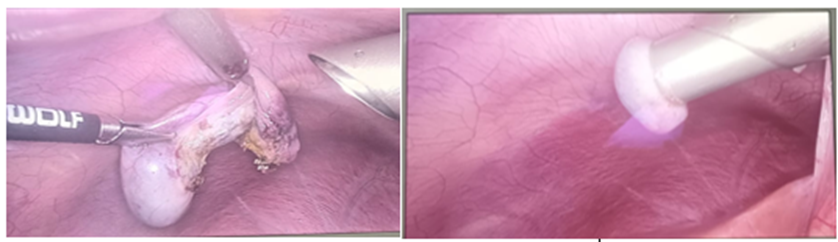
Figure: III Showing removal of gall bladder through 10 mm port with 10 mm reducer port.
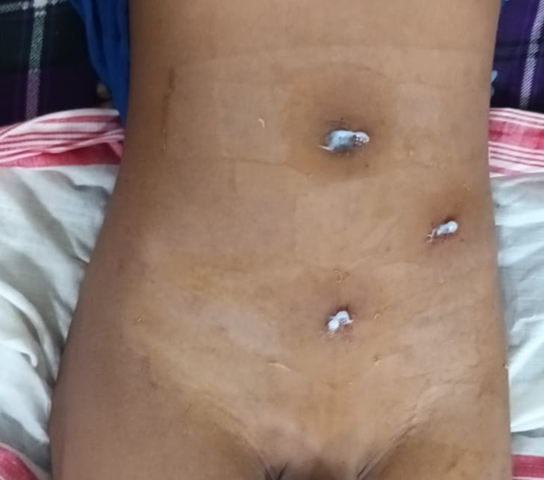
Figure: IV Showing superficial wound infection at skin level by regular dressing with mupirocin ointment.
Table I: Demographic profile and outcomes (n=30)
|
Characteristic |
Value (Frequency and percentage) |
|
Mean Age (Years) |
7.5 |
|
Male Patients, n (%) |
10 (33.343%) |
|
Female Patients n (%) |
20 (66.67) |
|
Mean Operative Times (mins) |
70 (range 50 -100) |
|
Conversion to Open, n (%) |
1 (3.34%) |
|
Average Hospital Stay (days) |
5 (3 – 8) |
Table II: Intra-operative findings, intra-operative complications and post-operative complications in the study population (n=30)
|
Parameters |
Findings |
N (%) |
|
Intra-operative findings |
Omental adhesions around gall bladder |
4 (13.34%) |
|
Intra-operative complications |
Bleeding from cystic artery (converted to open procedure) |
1 (3.34%) |
|
Post-operative complications |
Superficial port-site wound infections |
2 (6.67%) |
DISCUSSION:
This retrospective study of 30 children undergoing laparoscopic cholecystectomy for cholelithiasis over an eleven-year period found the procedure to be feasible in 96.67% of cases, with a low postoperative complication rate of 6.67% and no mortality. These findings support laparoscopic cholecystectomy as a safe and effective operation for cholelithiasis in the paediatric age group. The female preponderance observed in this series (66.67%) is consistent with the pattern reported in paediatric cholelithiasis series, in which the female-to-male ratio approaches that seen in adults.2
A striking finding was the high proportion of idiopathic cases (86.67%), with only four children (13.34%) having a definable aetiological risk factor. This mirrors the aetiological shift described in Western cohorts, where the historically dominant contribution of haemolytic disorders has been overtaken by idiopathic and obesity-related cholelithiasis.3,5.Gowda et al, in a series of 18 Indian children undergoing laparoscopic cholecystectomy for cholelithiasis, similarly reported that 75.2% of cases were idiopathic, a proportion closely comparable to that in the present study.9
Symptomatic presentation with typical biliary colic was seen in two-thirds of the children in this series, while the remainder were detected incidentally on ultrasonography performed for an unrelated complaint, an observation consistent with reports that a substantial minority of paediatric gallstones are asymptomatic at diagnosis. The conversion rate to open surgery in this series (3.34%, one of 30 patients, owing to bleeding from the cystic artery) falls within the range reported in the largest available meta - analysis of paediatric laparoscopic cholecystectomy, which found an overall conversion rate of 2% across more than 76,000 procedures.7
Similarly, the postoperative complication rate of 6.67% in the present series, comprising two superficial port-site wound infections that resolved with local wound care, compares favourably with the pooled complication rate of 3.4% reported in the same meta-analysis and with the low bile duct injury rates reported at both paediatric and adult surgical centres.7,8
No bile duct injury occurred in this series. The mean operative duration of 70 minutes and mean hospital stay of 5 days in this study are broadly comparable to figures reported in other paediatric series.7,9
Several factors may account for the favourable outcomes observed. All procedures were performed using a standardised four-port technique with port placement adjusted to the size of the child, and a tube drain was placed in every case and removed within 24 hours, which may have contributed to the early recognition and limited severity of the wound infections that did occur. The absence of major complications such as bile duct injury or bile leak in this cohort, despite the technical challenges of operating within the smaller paediatric peritoneal cavity, is consistent with the observation that laparoscopic cholecystectomy can be performed safely in children when meticulous attention is paid to anatomical orientation before dividing the cystic structures.
This study has several limitations. It is a retrospective, analysis of a relatively small cohort, which limits the precision of the complication and conversion rate estimates and precludes multivariable analysis of risk factors for adverse outcomes. Long-term follow-up data, including gallstone recurrence and the natural history of children with incidentally detected asymptomatic stones who were not operated upon, were not available.
Formal aetiological work-up, including genetic and metabolic testing, was not performed in the idiopathic group, so some undetected predisposing factors cannot be excluded. Despite these limitations, the consistency of the findings with larger published series lends confidence to the conclusion that laparoscopic cholecystectomy is a feasible and safe procedure for cholelithiasis in the paediatric age group.
CONCLUSION:
Laparoscopic cholecystectomy is safe and feasible in children with cholelithiasis, with a high rate of successful completion, a low rate of conversion to open surgery and a low incidence of complications. It offers the recognised advantages of minimal access surgery, including a shorter hospital stay and improved cosmetic outcome, while avoiding the disadvantages of traditional open surgery. Given the increasingly idiopathic aetiological pattern observed in this and other series, a high index of clinical suspicion and liberal use of ultrasonography are warranted in children presenting with biliary symptoms, even in the absence of a recognised predisposing risk factor.
REFERENCES:
1. Khoo AK, Cartwright R, Berry S, Davenport M. Cholecystectomy in English children: evidence of an epidemic (1997-2012). J Pediatr Surg. 2014;49(2):284-288.
2. Walker SK, Maki AC, Cannon RM, Foley DS, Wilson KM, Galganski LA, et al. Etiology and incidence of pediatric gallbladder disease. Surgery. 2013;154(4):927-931.
3. Frybova B, Drabek J, Lochmannova J, Douda L, Hlava S, Zemkova D, et al.
4. Cholelithiasis and choledocholithiasis in children; risk factors for development. PLoS One. 2018;13(5):e0196475.
5. Kaechele V, Wabitsch M, Thiere D, Kessler AL, Haenle MM, Mayer H, et al. Prevalence of gallbladder stone disease in obese children and adolescents: influence of the degree of obesity, sex and pubertal development. J Pediatr Gastroenterol Nutr. 2006;42(1):66-77.
6. Mehta S, Lopez ME, Chumpitazi BP, Mazziotti MV, Brandt ML, Fishman DS. Clinical characteristics and risk factors for symptomatic pediatric gallbladder disease. Pediatrics. 2012;129(1):e82-e88.
7. Kim PC, Wesson D, Superina R, Filler R. Laparoscopic cholecystectomy for
8. cholelithiasis during infancy and childhood: cost analysis and review of current
9. indications. J Pediatr Surg. 1995;30(7):971-973.
10. Mattson A, Sinha A, Njere I, Borkar N, Sinha CK. Laparoscopic cholecystectomy in children: a systematic review and meta-analysis. Surgeon. 2023;21(3):e133-e141.
11. Sinha A, Mattson A, Njere I, Sinha CK. Comparison of laparoscopic cholecystectomy inchildren at paediatric centres and adult centres: a systematic review and meta-analysis. Ann R Coll Surg Engl. 2025;107(2):98-105.
12. Gowda DJ, Agarwal P, Bagdi R, Subramanian B, Kumar M, Ramasundaram M, et al. Laparoscopic cholecystectomy for cholelithiasis in children. J Indian Assoc Pediatr Surg. 2009;14(4):204-206.