Diagnostic Accuracy of Serum C - reactive protein In Predicting Severity of Acute Pancreatitis: A Prospective Observational Study.
- Paromita Sarkar , Senior Resident, MS General Surgery, Department of General Surgery, Prafulla Chandra Sen Government Medical College and Hospital, Arambagh, Hooghly.
- Shah Nawaz Ali , Assistant Professor, MS General Surgery, Department of General Surgery, North Bengal Medical College and Hospital, Sushrutanagar, Darjeeling.
- Asis Kumar Saha , Professor, MS General Surgery, Department of General Surgery, North Bengal Medical College and Hospital, Sushrutanagar, Darjeeling.
- Shibsankar Ray Choudhury , Professor, MS General Surgery, Department of General Surgery, North Bengal Medical College and Hospital, Sushrutanagar, Darjeeling.
Article Information:
Abstract:
Introduction: Early identification of severe acute pancreatitis (SAP) is crucial for timely intervention and reduction of morbidity and mortality. Although contrast-enhanced computed tomography (CECT) remains the gold standard for severity assessment, it is costly, not universally available, and often delayed. C-reactive protein (CRP), an acute-phase reactant, has emerged as a simple and assessable biomarker for severity prediction. Aims and objectives: To evaluate the diagnostic accuracy of serum CRP in predicting the severity of acute pancreatitis prior to advanced imaging modalities. Materials and Methods: The study was conducted at North Bengal Medical College and Hospital, Darjeeling, West Bengal, after IEC approval (IEC/NBMC/M-07/051/2023) and informed consent from participants. The study was conducted over 18 months, from June 2023 to January 2025, 98 patients with acute pancreatitis attending the General Surgery OPD and emergency were evaluated. Clinical history, examination findings, and serum CRP levels were recorded. CRP values were correlated with disease severity assessed using the Glasgow score, Revised Atlanta Classification, and radiological findings. Data were statistically analyzed. Results: Severe acute pancreatitis was observed in 15.3% of patients. The mean CRP levels were significantly higher in severe cases. Elevated CRP correlated strongly with complications and mortality (p<0.05). Conclusion: This study demonstrates that CRP is a reliable and cost-effective biomarker for assessing the severity of acute pancreatitis before undergoing higher imaging modalities. The findings establish a significant association between elevated CRP levels and increased disease severity, as classified by both the Glasgow and Revised Atlanta scoring systems.
Keywords:
Article :
INTRODUCTION:
Acute pancreatitis (AP) is a sudden inflammatory disorder of the pancreas that may progress to pancreatic destruction, including pancreatic necrosis, systemic inflammatory response, and multiorgan dysfunction in severe cases. Early identification of disease severity is essential for appropriate management and prevention of complications. Blood-based inflammatory markers such as C-reactive protein (CRP) are widely used to assess the severity and prognosis of acute pancreatitis due to their association with systemic inflammation and tissue injury [1,2]. Traditionally, clinical assessment, including patient history, physical examination, and severity scoring systems, has been considered the initial approach for evaluating AP severity. Several scoring systems, including the Ranson criteria, Glasgow score, Acute Physiology and Chronic Health Evaluation II (APACHE II), and Bedside Index of Severity in Acute Pancreatitis (BISAP), have been developed to predict disease outcomes.
However, these scoring systems are often complex, require multiple clinical and laboratory parameters, and may take considerable time to calculate, limiting their applicability in emergency clinical settings [3,4]. Radiological imaging, particularly contrast-enhanced computed tomography (CECT), plays an important role in assessing pancreatic necrosis and local complications. However, imaging modalities may not always be feasible during the early phase of disease due to timing limitations, availability issues, contrast-related risks, and increased healthcare costs. Therefore, there is a need for rapid, reliable, and easily accessible biomarkers that can accurately predict the severity of AP at an early stage [5].
Among various inflammatory biomarkers, C-reactive protein (CRP) has emerged as one of the most extensively studied and clinically useful markers for predicting AP severity. CRP is an acute-phase protein synthesized by the liver in response to inflammatory cytokines, particularly interleukin-6. It begins to rise within several hours after an inflammatory stimulus and reaches peak levels approximately 48–72 hours after the onset of symptoms, making it valuable for early assessment of inflammatory burden in AP [6]. Several studies have demonstrated the prognostic value of CRP in acute pancreatitis. A CRP concentration exceeding 150 mg/L within the first 48–72 hours has been suggested as a reliable cutoff for identifying severe acute pancreatitis.
Patients with markedly elevated CRP levels are more likely to develop pancreatic necrosis, organ failure, infectious complications, and prolonged hospitalization, whereas lower CRP levels are generally associated with a milder disease course and reduced systemic involvement [7,8]. Compared with complex scoring systems and advanced imaging modalities, CRP offers advantages of simplicity, affordability, rapid availability, and applicability in resource-limited healthcare settings. Its widespread availability allows clinicians to evaluate inflammatory severity and support early risk stratification of patients with acute pancreatitis without requiring sophisticated infrastructure [9].
In this context, the present study was conducted to evaluate the diagnostic accuracy of serum C-reactive protein in predicting the severity of acute pancreatitis before the use of advanced imaging modalities, by comparing CRP levels with established severity assessment methods, including the Glasgow score, Revised Atlanta Classification, and radiological findings [10]. To evaluate the diagnostic accuracy of serum CRP in predicting the severity of acute pancreatitis prior to advanced imaging modalities.
MATERIALS AND METHODS:
Study design: The present study was an observational prospective study.
Study Settings: The study was conducted in the outpatient and inpatient departments of the Department of General Surgery of North Bengal Medical College and Hospital, Darjeeling, West Bengal.
Study Duration: The study was conducted over 18 months, from June 2023 to January 2025.
Study Population: The study population consisted of all patients of either sex presenting to the study institution during the study period with clinically diagnosed acute pancreatitis.
Sample Size: Total 100 Adult patients diagnosed with acute pancreatitis.
Inclusion Criteria:
• Age >18 years
• Diagnosed case of acute pancreatitis on basis of Atlanta 2013 guidelines
• Those who provided written informed consent for the study
Exclusion Criteria:
• Co-infections like Hepatitis B, C, and HIV infection
• Presence of any wound or septic foci
• Acute pancreatitis due to any intervention like surgery or ERCP
• Traumatic pancreatitis
Sample size and sampling methodology: A complete enumeration sampling methodology was utilized in the present study. All patients presenting to the study institution with acute pancreatitis and fulfilling the inclusion criteria were approached for participation. Those who provided written informed consent were recruited into the study. In total, 98 patients were recruited into the study.
Study procedure: Patients fulfilling the inclusion criteria and providing informed consent were enrolled at admission to the emergency department, general ward, or ICU. The study objectives and significance were explained using the Patient Information Performa, followed by collection of demographic details and medical history. A detailed clinical examination was performed, and blood samples were collected for serum CRP estimation along with CBC, electrolytes, renal and liver function tests, amylase, lipase, coagulation profile, and blood culture. Contrast-enhanced CT abdomen was performed to assess disease severity and complications. Collected clinical, laboratory, and radiological data were statistically analyzed to evaluate the diagnostic accuracy of CRP in predicting severe acute pancreatitis and its correlation with the Revised.
Atlanta Classification.
Acute pancreatitis is classified into three severity categories according to the Atlanta classification:
Mild Acute Pancreatitis (MAP)
• No organ failure.
• No local or systemic complications were observed.
• It usually resolves within a few days with supportive care.
• Mortality: Very low.
Moderately Severe Acute Pancreatitis (MSAP)
• Transient organ failure (lasting <48 h).
• Local complications (e.g., peripancreatic fluid collections and necrosis).
• Exacerbation of pre-existing co morbid conditions
• It may require a longer hospital stay but usually has a favorable prognosis.
Severe Acute Pancreatitis (SAP)
• Persistent organ failure (lasting >48 h).
• Single or multiple organ failure (e.g., respiratory, cardiovascular, or renal).
• There is a high risk of mortality (up to 30–50% in cases of multiple organ failure).
Statistical Analysis: All the data were entered into Microsoft Excel data sheets and analyzed using IBM SPSS version 25. Data are expressed as mean ± SD or percentage. Appropriate statistical tests (chi-square test for categorical variables and Student’s t-test for continuous variables) were performed to assess differences between the groups, and a p-value of < 0.05 was considered statistically significant.
Ethical considerations: Appropriate permissions were obtained from the Institutional Ethics Committee (IEC/NBMC/M-07/051/2023) dated 26th May 2023 for conducting the study. The study was conducted after receiving written informed consent from all patients. Anonymity and confidentiality of the information furnished by the patients were ensured.
RESULTS:
Table 1: Association between CRP and acute pancreatitis severity as per Glasgow score
|
Glasgow severity |
CRP |
p-value |
|
|
Mean |
SD |
0.024 |
|
|
<3 |
93.9 |
23.9 |
|
|
≥3 |
124.5 |
18.9 |
|
Table 2: Association between CRP and acute pancreatitis severity as per Revised Atlanta score
|
Atlanta severity |
CRP |
p-value |
|
|
Mean |
SD |
||
|
Mild |
100.5 |
8.6 |
<0.001 |
|
Moderate |
135.5 |
4.8 |
|
|
Severe |
156.4 |
4.4 |
|
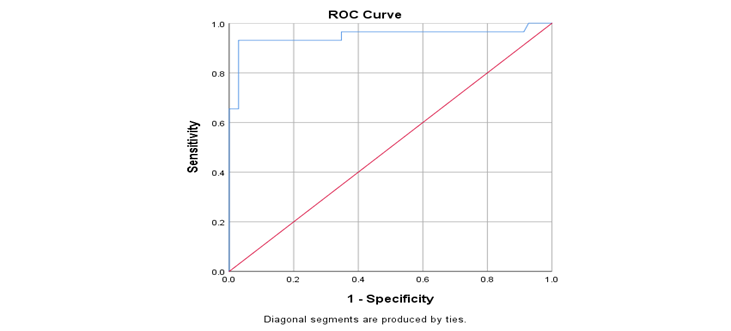
Figure 1: ROC curve showing CRP cutoff to diagnose moderate to severe pancreatitis as per Revised Atlanta score (n=98)
Receiver Operating Characteristic curve analysis showed that at a cut-off of 120 and above, CRP predicted moderate and severe acute pancreatitis with a sensitivity of 93.1% and a specificity of 96.1% (AUC 0.948, p-value <0.001).
Age and sex distribution
Among the 98 study participants, the majority were aged 40–49 years (55.1%), with a male predominance (55.1%).
Etiology and presenting complaints
Biliary etiology (44%) was the most common cause followed by alcohol-induced pancreatitis (40.8%) with epigastric pain the most common symptom reported (100%). Other frequently observed symptoms included nausea/vomiting (74.2%), abdominal distension (42.3%) and fever (27.8%).
Laboratory examination findings
The mean CRP level was 114.1 mg/L (SD=22.9), indicating elevated inflammatory activity in acute pancreatitis cases.
Distribution according to Glasgow and Revised Atlanta severity score
According to the Glasgow scoring system, 82.7% of participants had a mild to moderate disease course, and 17.3% had severe acute pancreatitis.
Using Revised Atlanta classification, 70.4% had mild, 14.3% had moderate and 15.3% had severe acute pancreatitis.
Distribution of study participants according to their complication and mortality prevalence as per their Atlanta score severity
Among the 98 study participants, 10.2% (n=10) developed ascites, 8.2% (n=8) had fluid collections, and 2% (n=2) exhibited pancreatic necrosis. The prevalence of complications varied significantly across severity groups (p = 0.006). Mild pancreatitis cases had minimal complications, with only 5.8% developing ascites and 7.2% developing fluid collections. In moderate cases, ascites (21.4%) and fluid collections (7.1%) were more common, but no necrosis was observed. In severe pancreatitis cases, 20% had ascites, 13.3% developed fluid collections, and 13.3% had pancreatic necrosis, highlighting the higher risk of complications in severe cases.
Mortality rates varied significantly according to Atlanta severity classification (p < 0.001). Among patients with mild pancreatitis, no deaths recorded, while in the moderate group, deaths recorded 1.4% (n=1). However, severe pancreatitis had the highest mortality rate, with 33.3% (n=5) succumbing to the illness. Overall, 6.1% (n=6) of the study population died, reinforcing the importance of early severity stratification and intensive management in severe cases.
Association between CRP and acute pancreatitis severity as per Glasgow score
The mean CRP level was significantly higher in patients with severe acute pancreatitis. Patients with a Glasgow score of ≥3 had a mean CRP of 124.5 mg/L (SD: 18.9), compared to 93.9 mg/L (SD: 23.9) in those with a Glasgow score of <3 (p = 0.024).
Association between CRP and acute pancreatitis severity as per Revised Atlanta score
A statistically significant association (p < 0.001) was observed between CRP levels and the severity of acute pancreatitis as per the Atlanta classification. The mean CRP level was 100.5 mg/L (SD: 8.6) in mild cases, 135.5 mg/L (SD: 4.8) in moderate cases, and 156.4 mg/L (SD: 4.4) in severe cases.
DISCUSSION:
The present study aimed to evaluate the diagnostic accuracy of C-reactive protein (CRP) in assessing the severity of acute pancreatitis (AP) before undergoing higher imaging modalities. The findings demonstrated a significant association between elevated CRP levels and increased severity of AP, as categorized by the Glasgow and Revised Atlanta classifications. Given its availability, affordability, and rapid estimation, serum CRP can serve as an effective early marker for severity assessment, especially in resource-limited settings. These findings are in agreement with the review by Mederos et al., who highlighted the clinical utility of CRP as an easily accessible biomarker for early risk stratification in AP [11].
The present study demonstrated a statistically significant association between CRP levels and AP severity as categorized by the Revised Atlanta Classification (p < 0.001). The mean CRP level increased progressively across severity categories, with 100.5 mg/L (SD: 8.6) in mild AP, 135.5 mg/L (SD: 4.8) in moderate AP, and 156.4 mg/L (SD: 4.4) in severe AP cases. Similar observations were reported by Mizuno S et al., whose systematic review and meta-analysis concluded that elevated CRP levels are significantly associated with severe acute pancreatitis and adverse clinical outcomes [12].
The progressive increase in CRP levels with disease severity observed in this study further supports the role of systemic inflammation in AP progression. Boxhoorn et al. emphasized that persistent systemic inflammatory response syndrome (SIRS) plays a central role in the development of organ failure and severe pancreatitis, with CRP serving as a reliable marker of inflammatory burden [13]. Receiver Operating Characteristic (ROC) curve analysis in the present study demonstrated that a CRP cutoff value of 120 mg/L predicted moderate to severe acute pancreatitis with a sensitivity of 93.1% and specificity of 96.1% (AUC = 0.948, p < 0.001).
These findings indicate excellent diagnostic accuracy and are supported by Afghani E et al., who recommended CRP as one of the most useful laboratory markers for early severity assessment in routine clinical practice [14]. The AUC value of 0.948 observed in the present study indicates excellent discrimination between mild and severe AP. Similarly, Zhou H et al. reported that CRP demonstrated good predictive performance (AUC 0.840), and its diagnostic accuracy further improved when combined with procalcitonin (PCT) and neutrophil-to-lymphocyte ratio (NLR), achieving an AUC of 0.972 [15].
Considering its high sensitivity and specificity, CRP may serve as a cost-effective alternative to complex scoring systems and advanced imaging modalities during the initial evaluation of AP. Rafaqat S et al. demonstrated that combining CRP with contrast-enhanced computed tomography (CECT) significantly improves severity assessment and assists clinicians in planning timely interventions [16]. The prevalence of complications in this study increased significantly across the severity categories, reinforcing the importance of early risk stratification. Mild AP cases had relatively few complications, whereas moderate and severe cases experienced substantially higher rates of pancreatic necrosis, organ dysfunction, and prolonged hospitalization. Similar findings were reported by Argente-Pla M et al., who emphasized that increasing disease severity is strongly associated with adverse clinical outcomes and healthcare burden [17].
Additionally, the mortality rate in this study was significantly higher among severe AP cases (33.3%). Komolafe O et al. demonstrated that CRP concentrations exceeding 150 mg/L were associated with increased mortality and severe clinical outcomes in acute pancreatitis [18]. Likewise, Sternby et al. reported that CRP levels above 150 mg/L at 48 hours were strongly associated with pancreatic necrosis and persistent organ failure, both of which are key determinants of severe AP according to the Revised Atlanta Classification [19]. Furthermore, Mounzer et al. concluded that although several clinical scoring systems are available, CRP remains a valuable, inexpensive, and readily available biomarker that complements established severity assessment tools in predicting persistent organ failure and adverse outcomes [20].
CONCLUSION:
This study demonstrates that CRP is a reliable and cost-effective biomarker for assessing the severity of acute pancreatitis before undergoing higher imaging modalities. The findings establish a significant association between elevated CRP levels and increased disease severity, as classified by both the Glasgow and Revised Atlanta scoring systems. A CRP threshold of ≥120 mg/L demonstrated high sensitivity and specificity for predicting moderate to severe AP, suggesting its utility in early risk stratification.
Compared to traditional severity scoring systems, CRP provides a readily available, inexpensive, and practical alternative for guiding clinical decision-making, particularly in resource-limited settings. However, given its delayed peak and lack of disease specificity, CRP should be used in conjunction with clinical assessment and other severity markers to improve diagnostic accuracy. Despite its limitations, this study supports integrating CRP into standard AP management protocols to facilitate early identification of high-risk patients and optimize therapeutic strategies. Future research should focus on validating these findings in larger cohorts and exploring the potential of combining CRP with other inflammatory biomarkers for enhanced predictive performance. Overall, CRP remains a valuable tool in the early evaluation of AP severity, contributing to improved patient care and resource allocation in clinical practice.
REFERENCES:
1. Banks PA, Bollen TL, Dervenis C, Gooszen HG, Johnson CD, Sarr MG, Tsiotos GG, Vege SS. Classification of acute pancreatitis—2012: revision of the Atlanta classification and definitions by international consensus. Gut. 2013 Jan 1;62(1):102-11.
2. Muniraj T, Gajendran M, Thiruvengadam S, Raghuram K, Rao S, Devaraj P. Acute pancreatitis. Disease-a-Month. 2012 Mar 1;58(3):98-144.
3. Mounzer R, Langmead CJ, Wu BU, Evans AC, Bishehsari F, Muddana V, Singh VK, Slivka A, Whitcomb DC, Yadav D, Banks PA. Comparison of existing clinical scoring systems to predict persistent organ failure in patients with acute pancreatitis. Gastroenterology. 2012 Jun 1;142(7):1476-82.
4. Papachristou GI, Muddana V, Yadav D, O'connell M, Sanders MK, Slivka A, Whitcomb DC. Comparison of BISAP, Ranson's, APACHE-II, and CTSI scores in predicting organ failure, complications, and mortality in acute pancreatitis. Official journal of the American College of Gastroenterology| ACG. 2010 Feb 1;105(2):435-41.
5. Bollen TL, Singh VK, Maurer R, Repas K, Van Es HW, Banks PA, Mortele KJ. Comparative evaluation of the modified CT severity index and CT severity index in assessing severity of acute pancreatitis. American Journal of Roentgenology. 2011 Aug;197(2):386-92.
6. Wilson C, Heads A, Shenkin A, Imrie CW. C-reactive protein, antiproteases and complement factors as objective markers of severity in acute pancreatitis. Journal of British Surgery. 1989 Feb;76(2):177-81.
7. Puolakkainen PA, Valtonen VI, Paananen A, Schröder T. C-reactive protein (CRP) and serum phospholipase A2 in the assessment of the severity of acute pancreatitis. Gut. 1987 Jun 1;28(6):764-71.
8. Mayer J, Rau B, Gansauge F, Beger HG. Inflammatory mediators in human acute pancreatitis: clinical and pathophysiological implications. Gut. 2000 Oct 1;47(4):546-52.
9. Ćeranić DB, Zorman M, Skok P. Interleukins and inflammatory markers are useful in predicting the severity of acute pancreatitis. Bosnian journal of basic medical sciences. 2020 Feb;20(1):99.
10. Tenner S, Baillie J, DeWitt J, Vege SS. American College of Gastroenterology guideline: management of acute pancreatitis. Official journal of the American College of Gastroenterology| ACG. 2013 Sep 1;108(9):1400-15.
11. Mederos MA, Reber HA, Girgis MD. Acute pancreatitis: a review. Jama. 2021 Jan 26;325(4):382-90.
12. Mizuno S, Isayama H, Nakai Y, Ishigaki K, Saito K, Sato T, Takeda T, Hakuta R, Saito T, Takahara N, Kogure H. Diagnostic yield of the plasma free amino acid index for pancreatic cancer in patients with diabetes mellitus. Pancreatology. 2019 Jul 1;19(5):695-8.
13. Boxhoorn L, Voermans RP, van Santvoort HC, Besselink MG. Acute pancreatitis-Authors' reply. Lancet (London, England). 2021 Jan 23;397(10271):280.
14. Afghani E, Pandol SJ, Shimosegawa T, Sutton R, Wu BU, Vege SS, Gorelick F, Hirota M, Windsor J, Lo SK, Freeman ML. Acute pancreatitis—progress and challenges: a report on an international symposium. Pancreas. 2015 Nov 1;44(8):1195-210.
15. Zhou H, Li W, Yang S, Yang H, Cai Y. Prediction of acute pancreatitis severity using NLR, procalcitonin, and CT severity score: A retrospective study. Medicine. 2025 Jul 4;104(27):e43055.
16. Rafaqat S, Sattar A, Anjum F, Gilani M, Rafaqat S. The role of predictive and prognostic values of inflammatory markers in acute pancreatitis: a narrative review. Journal of Pancreatology. 2024 Mar 1;7(1):72-85.
17. Argente-Pla M, Merino-Torres JF. Acute Pancreatitis: Nutritional. Acute and Chronic Pancreatitis. 2025 Sep 17:269.
18. Komolafe O, Pereira SP, Davidson BR, Gurusamy KS, Cochrane Upper GI and Pancreatic Diseases Group. Serum C‐reactive protein, procalcitonin, and lactate dehydrogenase for the diagnosis of pancreatic necrosis. Cochrane Database of Systematic Reviews. 1996 Sep 1;2017(4).
19. Sternby H, Bolado F, Canaval-Zuleta HJ, Marra-López C, Hernando-Alonso AI, del-Val-Antoñana A, García-Rayado G, Rivera-Irigoin R, Grau-García FJ, Oms L, Millastre-Bocos J. Determinants of severity in acute pancreatitis: a nation-wide multicenter prospective cohort study. Annals of surgery. 2019 Aug 1;270(2):348-55.
20. Mounzer R, Langmead CJ, Wu BU, Evans AC, Bishehsari F, Muddana V, Singh VK, Slivka A, Whitcomb DC, Yadav D, Banks PA. Comparison of existing clinical scoring systems to predict persistent organ failure in patients with acute pancreatitis. Gastroenterology. 2012 Jun 1;142(7):1476-82.