Association of Serum Vitamin D Levels with Spirometric Parameters and Disease Severity in Patients with Chronic Obstructive Pulmonary Disease: A Hospital-Based Cross-Sectional Study.
- Vineet Singh , Post Graduate Resident (Final Year), Department of Respiratory Medicine, Gandhi Medical College, Bhopal, Madhya Pradesh.
- Parag Sharma , Associate Professor, Department of Respiratory Medicine, Gandhi Medical College, Bhopal, Madhya Pradesh.
- Sourabh Jain , Assistant Professor, Department of Respiratory Medicine, Gandhi Medical College, Bhopal, Madhya Pradesh.
- Lokendra Dave , Professor, Department of Respiratory Medicine, Gandhi Medical College, Bhopal, Madhya Pradesh.
- Vikas K Mishra , Associate professor Department of Respiratory Medicine, Gandhi Medical College, Bhopal, Madhya Pradesh.
- Nishant srivastava , Professor, Department of Respiratory Medicine, Gandhi Medical College, Bhopal, Madhya Pradesh.
Article Information:
Abstract:
Background: Chronic obstructive pulmonary disease (COPD) is characterized by persistent airflow limitation and chronic airway inflammation. Vitamin D deficiency has been implicated in impaired lung function and increased disease severity. Objective: To evaluate the association of serum vitamin D levels with spirometric parameters and disease severity among patients with chronic obstructive pulmonary disease. Materials and Methods: A hospital-based observational cross-sectional study was conducted in the Department of Respiratory Medicine, Gandhi Medical College, Bhopal, over 18 months. A total of 110 patients with COPD were enrolled. Clinical assessment included spirometry, GOLD staging, inflammatory biomarkers, and serum vitamin D estimation. Statistical analysis was performed using Epi Info version 7.0, with p<0.05 considered statistically significant. Results: The mean serum vitamin D level was 21.38±7.39 ng/mL. Among patients who underwent spirometry, 39.8% had mild airflow obstruction based on the FEV₁/FVC ratio, while 52% demonstrated moderate airflow limitation according to FEV₁ percent predicted. GOLD stage II was the most common disease stage (52%). Lower serum vitamin D levels were observed in patients with greater disease severity and acute exacerbations. Conclusion: Reduced serum vitamin D levels were associated with impaired pulmonary function and greater disease severity in COPD, suggesting that vitamin D may serve as a useful adjunctive biomarker in disease assessment.
Keywords:
Article :
INTRODUCTION:
Chronic obstructive pulmonary disease (COPD) is a progressive respiratory disorder characterized by persistent airflow limitation, chronic airway inflammation, and recurrent exacerbations. It remains a major cause of morbidity and mortality worldwide, with a substantial healthcare burden due to frequent hospitalizations and progressive decline in lung function. Early identification of factors associated with disease severity is important for improving clinical outcomes and optimizing patient management. [1,2]
Vitamin D plays an important role beyond bone metabolism by regulating innate and adaptive immune responses, reducing inflammation, and maintaining respiratory epithelial integrity. Deficiency of vitamin D has been associated with impaired pulmonary function, increased susceptibility to respiratory infections, and worsening clinical outcomes in patients with COPD. Several recent studies have suggested that low serum vitamin D levels may be associated with increased airflow limitation and higher disease severity, although the reported findings remain inconsistent. [3,4]
Spirometry is the gold standard for assessing airflow limitation, while the Global Initiative for Chronic Obstructive Lung Disease (GOLD) classification is widely used to determine disease severity and guide treatment decisions. Evaluating the relationship between serum vitamin D levels, spirometric parameters, and GOLD stage may improve understanding of disease progression and assist in identifying patients at greater risk of adverse outcomes. Therefore, the present study was undertaken to evaluate the association of serum vitamin D levels with spirometric parameters and disease severity among patients with chronic obstructive pulmonary disease. [5].
MATERIALS AND METHODS:
This hospital-based observational cross-sectional study was conducted in the Department of Respiratory Medicine, Gandhi Medical College, Bhopal, Madhya Pradesh, over a period of 18 months. A total of 110 consecutive adult patients diagnosed with chronic obstructive pulmonary disease (COPD) were enrolled after fulfilling the predefined eligibility criteria. The diagnosis of COPD was established based on clinical features and spirometric findings in accordance with the Global Initiative for Chronic Obstructive Lung Disease (GOLD) recommendations. Demographic characteristics, clinical history, smoking status, symptom severity, laboratory investigations, spirometric parameters, radiological findings, and serum vitamin D levels were recorded using a structured proforma.
Inclusion Criteria
• Adult patients aged >18 years.
• Patients of either sex diagnosed with COPD.
• FEV₁/FVC ratio <70% on spirometry.
• History of persistent cough, sputum production, dyspnoea, and exposure to COPD risk factors.
• Patients at increased risk of acute exacerbation requiring oxygen therapy, systemic corticosteroids, emergency department visit, or hospitalization during the preceding year.
Exclusion Criteria
• Pregnant women.
• Breathlessness due to cardiac, renal, or endocrine disorders.
• Patients receiving vitamin D supplementation or antioxidant therapy.
• Patients with bronchial asthma, pulmonary tuberculosis, bronchiectasis, interstitial lung disease, lung malignancy, or diabetes mellitus.
Study Procedure
A detailed clinical history, smoking status, symptom assessment, and physical examination were recorded for all participants. Spirometry, chest radiography, and laboratory investigations, including serum vitamin D, CRP, and LDH estimation, were performed. Disease severity was classified according to the Global Initiative for Chronic Obstructive Lung Disease (GOLD) criteria.
Statistical Analysis
Data were analyzed using Epi Info version 7.0. Continuous variables were expressed as mean ± standard deviation, and categorical variables as frequency and percentage. Appropriate statistical tests were applied, and a p-value <0.05 was considered statistically significant.
RESULTS:
A total of 110 patients with chronic obstructive pulmonary disease (COPD) were included in the study. The demographic profile, spirometric parameters, inflammatory biomarkers, and serum vitamin D levels were analyzed to determine their association with disease severity.
Table 1: Demographic Characteristics of the Study Population
|
Variable |
Frequency (n=110) |
Percentage (%) |
|
|
Age Group (years) |
40-60 |
49 |
45% |
|
61-80 |
41 |
37% |
|
|
81-100 |
20 |
18% |
|
|
Gender |
Male |
96 |
87% |
|
Female |
14 |
13% |
|
The majority of participants were aged 40–60 years (45%), followed by 61–80 years (37%). A marked male predominance was observed, with 96 (87%) male and 14 (13%) female participants, indicating that COPD was considerably more common among males in the study population.
Table 2: Inflammatory and Biochemical Markers of the Study Population
|
Variable |
Mean ± SD |
Minimum |
Maximum |
|
LDH (U/L) |
260.32 ± 53.68 |
151 |
348 |
|
CRP (mg/L) |
9.88 ± 4.59 |
0.7 |
22.7 |
|
Vitamin D (ng/mL) |
21.38 ± 7.39 |
10.1 |
39.9 |
The mean LDH and CRP levels indicated elevated inflammatory activity, while the mean serum vitamin D level suggested an overall low vitamin D status among the study participants.
Table 3: Distribution of FEV₁/FVC Categories among Study Participants (Spirometry Performed Only)
|
Category |
Number |
Percentage (%) |
|
≥70% (Normal/Preserved) |
25 |
28.4% |
|
60–69% (Mild Obstruction) |
35 |
39.8% |
|
<60% (Moderate–Severe Obstruction) |
28 |
31.8% |
Among the 88 participants who underwent spirometry, 39.8% had mild airflow obstruction (FEV₁/FVC 60–69%), while 31.8% had moderate-to-severe obstruction (FEV₁/FVC <60%). Normal or preserved spirometric findings were observed in 28.4% of participants. Spirometry could not be performed in 22 patients because of acute exacerbation.
Table 4: Distribution of FEV₁ Percent Predicted among Study Participants
|
Category |
Number |
Percentage (%) |
|
≥80% (Mild) |
31 |
28% |
|
50–79% (Moderate) |
57 |
52% |
|
Not performed |
22 |
20% |
Based on FEV₁ percent predicted, 52% of participants had moderate airflow limitation, whereas 28% had mild airflow limitation. Spirometry was not performed in 20% of patients because of severe exacerbation.
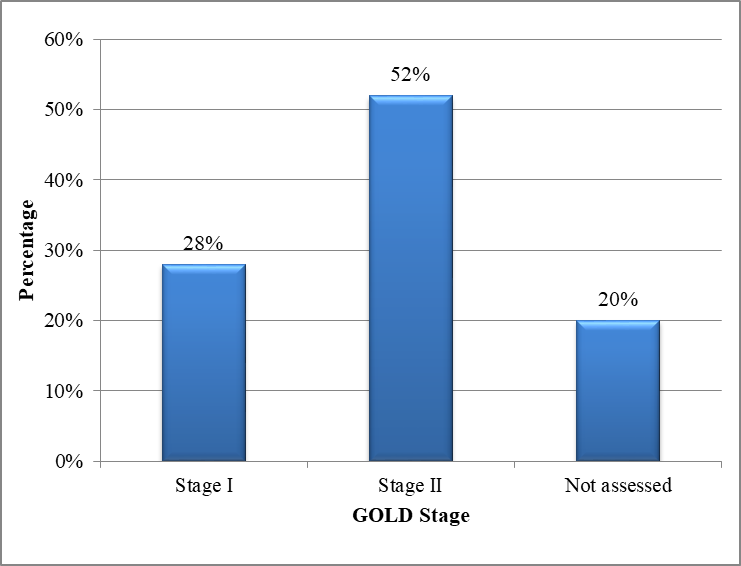
Figure 1: Distribution of GOLD stages among Patients with Chronic Obstructive Pulmonary Disease
GOLD stage II was the most common disease stage, accounting for 52% of participants, followed by Stage I (28%). Disease staging could not be performed in 20% of patients because spirometry was not feasible during acute exacerbation.
Table 5: Comparison of Serum Vitamin D Levels between Stable COPD and COPD with Exacerbation
|
Group |
n |
Serum Vitamin D (ng/mL), Mean ± SD |
p-value |
|
Stable COPD |
32 |
22.10 ± 7.90 |
0.021 |
|
COPD with Exacerbation |
78 |
17.20 ± 6.80 2.35 |
Patients with COPD presenting with acute exacerbation had significantly lower mean serum vitamin D levels than those with stable COPD (17.20 ± 6.80 vs. 22.10 ± 7.90 ng/mL; p=0.021), indicating a significant association between vitamin D deficiency and COPD exacerbation.
DISCUSSION:
The present hospital-based cross-sectional study evaluated the association between serum vitamin D levels, spirometric parameters, and disease severity among patients with chronic obstructive pulmonary disease (COPD). Vitamin D deficiency was common in the study population, with lower serum vitamin D levels observed in patients with greater disease severity and acute exacerbations. These findings are consistent with previous studies reporting that vitamin D deficiency is frequently associated with COPD progression and adverse clinical outcomes. [6]
The mean serum vitamin D level in the present study was 21.38 ± 7.39 ng/mL, indicating a high prevalence of vitamin D insufficiency. Patients with GOLD stage II had significantly lower vitamin D levels than those with Stage I, suggesting an association between reduced vitamin D status and increasing disease severity. Similar observations have been reported by Mishra et al., who demonstrated lower vitamin D concentrations among patients with advanced COPD. [7]
Spirometric assessment showed that most patients had mild-to-moderate airflow limitation, with 39.8% exhibiting mild obstruction based on the FEV₁/FVC ratio and 52% demonstrating moderate airflow limitation according to FEV₁ percent predicted. These findings suggest that reduced vitamin D levels may be associated with impaired pulmonary function. Previous studies have also investigated the relationship between vitamin D status and lung function in patients with COPD, although the benefits of vitamin D supplementation on spirometric outcomes remain inconsistent. [8]
Patients with acute exacerbations had significantly lower serum vitamin D levels than those with stable COPD, indicating a possible role of vitamin D in susceptibility to exacerbations. Similar findings have been reported by Martineau et al. and Dastan et al., who observed an association between vitamin D deficiency and an increased risk of COPD exacerbations. [9,10]
Although serum vitamin D levels showed significant associations with GOLD stage and acute exacerbations, no significant relationship was observed with overall symptom burden or past exacerbation frequency. These findings suggest that vitamin D alone may not be a reliable independent predictor of disease activity and should be interpreted alongside clinical assessment and spirometric evaluation. Further large-scale prospective studies are warranted to validate these findings and clarify the role of vitamin D in the progression and management of COPD.
CONCLUSION:
The present study demonstrated that vitamin D deficiency is common among patients with chronic obstructive pulmonary disease and is associated with greater disease severity. Lower serum vitamin D levels were observed in patients with GOLD Stage II disease and in those presenting with acute exacerbations. However, serum vitamin D levels were not significantly associated with overall symptom burden or past exacerbation frequency. These findings suggest that serum vitamin D may serve as an adjunctive biomarker for assessing disease severity but should not be considered a standalone predictor of disease activity. Further large-scale prospective studies are required to clarify the clinical significance of vitamin D in the progression and management of COPD.
REFERENCES:
1. Agusti A, Böhm M, Celli B, Criner GJ, Garcia-Alvarez A, Martinez F, et al. GOLD COPD DOCUMENT 2023: a brief update for practicing cardiologists. Clin Res Cardiol. 2024 Feb;113(2):195-204. doi: 10.1007/s00392-023-02217-0.
2. Mathioudakis AG, Janssens W, Sivapalan P, Singanayagam A, Dransfield MT, Jensen JS, et al. Acute exacerbations of chronic obstructive pulmonary disease: in search of diagnostic biomarkers and treatable traits. Thorax. 2020 Jun;75(6):520-527. doi: 10.1136/thoraxjnl-2019-214484.
3. Holick MF. The vitamin D deficiency pandemic: Approaches for diagnosis, treatment and prevention. Rev Endocr Metab Disord. 2017 Jun;18(2):153-165. doi: 10.1007/s11154-017-9424-1.
4. Jolliffe DA, Camargo CA Jr, Sluyter JD, Aglipay M, Aloia JF, Ganmaa D, et al. Vitamin D supplementation to prevent acute respiratory infections: a systematic review and meta-analysis of aggregate data from randomised controlled trials. Lancet Diabetes Endocrinol. 2021 May;9(5):276-292. doi: 10.1016/S2213-8587(21)00051-6.
5. Zhu M, Wang T, Wang C, Ji Y. The association between vitamin D and COPD risk, severity, and exacerbation: an updated systematic review and meta-analysis. Int J Chron Obstruct Pulmon Dis. 2016 Oct 19;11:2597-2607. doi: 10.2147/COPD.S101382.
6. Baneen U, Naseem S. Correlation of severity of chronic obstructive pulmonary disease with serum vitamin-D level. J Family Med Prim Care. 2019 Jul;8(7):2268-2277. doi: 10.4103/jfmpc.jfmpc_404_19.
7. Mishra NK, Mishra JK, Srivastava GN, Shah D, Rehman M, Latheef NA, et al. Should vitamin D be routinely checked for all chronic obstructive pulmonary disease patients? Lung India. 2019 Nov-Dec;36(6):492-498. doi: 10.4103/lungindia.lungindia_141_19.
8. Chen FY, Xiao M, Ling B, Liu L, Chen L. Vitamin D does not improve lung function decline in COPD: a meta-analysis. Eur Rev Med Pharmacol Sci. 2019 Oct;23(19):8637-8644. doi: 10.26355/eurrev_201910_19181.
9. Martineau AR, James WY, Hooper RL, Barnes NC, Jolliffe DA, Greiller CL, et al. Vitamin D3 supplementation in patients with chronic obstructive pulmonary disease (ViDiCO): a multicentre, double-blind, randomised controlled trial. Lancet Respir Med. 2015 Feb;3(2):120-130. doi: 10.1016/S2213-2600(14)70255-3.
10. Dastan F, Salamzadeh J, Pourrashid MH, Edalatifard M, Eslaminejad A. Effects of High-Dose Vitamin D Replacement on the Serum Levels of Systemic Inflammatory Biomarkers in Patients with Acute Exacerbation of Chronic Obstructive Pulmonary Disease. COPD. 2019 Aug;16(3-4):278-283. doi: 10.1080/15412555.2019.1666812.