Comparative Assessment Of Sugammadex In Adult And Geriatric Patients Undergoing Surgery Under General Anaesthesia In Terms Of Recovery From Neuromuscular Blockade By Train Of Four.
- Sevi Jain , Junior Resident-3rd Year, Department of Anaesthesiology, Sri Aurobindo Medical College & Postgraduate Institute, Indore, Madhya Pradesh, India
- Hemant Vanjare , Associate Professor, Department of Anaesthesiology, Sri Aurobindo Medical College & Postgraduate Institute, Indore, Madhya Pradesh, India
- Anuruddha Singh , Associate Professor, Department of Anaesthesiology, Sri Aurobindo Medical College & Postgraduate Institute, Indore, Madhya Pradesh, India
- Bipin Arya , Professor, Department of Anaesthesiology, Sri Aurobindo Medical College & Postgraduate Institute, Indore, Madhya Pradesh, India
- Sarita Gohiya , Professor & HOD, Department of Anaesthesiology, Sri Aurobindo Medical College & Postgraduate Institute, Indore, Madhya Pradesh, India.
Article Information:
Abstract:
Background: Ageing is associated with altered pharmacokinetics and pharmacodynamics of neuromuscular blocking agents and may prolong recovery. Sugammadex provides direct encapsulation-based reversal of rocuronium-induced neuromuscular blockade. This study compared recovery to a train-of-four (TOF) ratio of 0.9 in adult and geriatric patients. Methods: This single-centre analytical cross-sectional comparative study was conducted from June 2024 to November 2025. One hundred fifty-eight patients undergoing surgery under general anaesthesia were included, with 79 adults aged 18–64 years and 79 geriatric patients aged ≥65 years. Patients received rocuronium 0.6 mg/kg for tracheal intubation, with 0.15 mg/kg maintenance doses as required. Sugammadex 2 mg/kg was administered when the TOF ratio reached 25%. Quantitative TOF monitoring was performed using acceleromyography, and recovery time to TOF ≥0.9 was the primary outcome. Haemodynamic variables were also recorded around extubation. Results: Mean age was 45.51 ± 13.73 years in adults and 72.47 ± 4.72 years in geriatric patients. Mean time to TOF ≥0.9 was 144.06 ± 9.86 s in adults versus 173.06 ± 7.69 s in geriatric patients, with a mean difference of 29.0 s (95% CI 26.24–31.76; p < 0.001). Recovery time increased progressively across age categories: 133.92 ± 7.28 s (18–40 years), 148.49 ± 7.21 s (41–64 years), 171.65 ± 7.29 s (65–74 years), and 175.37 ± 7.88 s (≥75 years); Kruskal–Wallis H = 127.11, p < 0.001. Age correlated positively with recovery time in the full cohort (Spearman ρ = 0.880, p < 0.001). No residual paralysis or serious adverse events were reported. Conclusions: Sugammadex provided effective reversal of rocuronium-induced neuromuscular blockade in both age groups. Recovery was significantly slower with advancing age, supporting continued quantitative TOF monitoring until TOF ≥0.9 is confirmed, particularly in geriatric patients.
Keywords:
Article :
INTRODUCTION:
Safe and complete reversal of neuromuscular blockade is an important component of modern general anaesthesia. Residual neuromuscular blockade can impair upper-airway function, swallowing and ventilatory reserve and may contribute to postoperative respiratory complications. Quantitative neuromuscular monitoring and confirmation of a TOF ratio of at least 0.9 are therefore central to safe extubation [1,2].
Sugammadex, a modified gamma-cyclodextrin, reverses rocuronium- and vecuronium-induced blockade by encapsulating free aminosteroidal neuromuscular blocking agent molecules and reducing their concentration at the neuromuscular junction [3–5]. Unlike acetylcholinesterase inhibition with neostigmine, this mechanism does not depend on increasing acetylcholine concentrations and allows rapid reversal across clinically relevant depths of blockade [3,6].
Ageing may alter the onset, duration and clearance of neuromuscular blocking agents because of changes in renal and hepatic function, cardiac output and body composition. Older adults are consequently at increased risk of delayed or residual neuromuscular recovery [1,7]. Previous studies have shown that sugammadex remains effective in elderly patients but that recovery may be slower than in younger adults [8,9].
The present study was undertaken to compare recovery from rocuronium-induced neuromuscular blockade after a standard dose of sugammadex in adult and geriatric patients using quantitative TOF monitoring, and to explore the relationship between age and recovery time.
MATERIALS AND METHODS:
Study design and setting. This was a single-centre analytical cross-sectional comparative study conducted in the Department of Anaesthesiology, Sri Aurobindo Medical College & Postgraduate Institute, Indore, Madhya Pradesh, India, over 18 months from June 2024 to November 2025. The study protocol received approval from the Institutional Ethics Committee. Written informed consent was obtained from all participants.
Participants and sample size. The study included 158 patients, 79 in each age group. Sample size was calculated for comparison of two independent means at a two-sided α of 0.05 and 90% power, yielding 79 participants per group. Adults were aged 18–64 years and geriatric patients were aged ≥65 years. Eligible participants had ASA physical status I–III, were undergoing surgery under general anaesthesia, were of either sex and had Mallampati grade I–II.
Patients younger than 18 years, those with neuromuscular disease, renal impairment, severe cardiovascular or respiratory disease, known hypersensitivity to anaesthetic drugs or sugammadex, pregnancy or lactation, and those refusing consent were excluded.
Anaesthetic and neuromuscular management. All patients underwent intraoperative quantitative TOF monitoring using a Mindray WATO EX-65 system with acceleromyography. Surface electrodes were applied over the ulnar nerve at the wrist and the response was recorded at the thumb. Before TOF calibration, midazolam 0.05 mg/kg and fentanyl 1 µg/kg were administered intravenously. Rocuronium 0.6 mg/kg was used for tracheal intubation, with 0.15 mg/kg maintenance doses administered as required. Sugammadex 2 mg/kg was administered when the TOF ratio reached 25%. Extubation was performed after a TOF ratio of 0.9 was achieved. Heart rate, blood pressure and SpO₂ were monitored perioperatively.
Outcomes. The primary outcome was time from sugammadex administration to achievement of a TOF ratio ≥0.9. Secondary observations included haemodynamic parameters at pre-induction, before extubation, immediately after extubation, 1 minute after extubation and 5 minutes after extubation, and comparison of recovery across four age categories (18–40, 41–64, 65–74 and ≥75 years).
Statistical analysis. Data were analysed using SPSS version 22.0. Continuous variables were summarized as mean ± standard deviation, median, interquartile range and range; categorical variables were expressed as frequencies and percentages. Between-group comparisons used the independent-samples t test and Chi-square test as appropriate. Normality was assessed by the Shapiro–Wilk test; the Mann–Whitney U test was used for non-normally distributed continuous data.
Recovery across four age categories was evaluated using he Kruskal–Wallis H test with post-hoc Mann–Whitney U testing. Paired t tests were used for within-group haemodynamic comparisons, and Spearman rank correlation assessed the association between age and TOF recovery time. A 95% confidence interval was calculated for the mean difference. A p value <0.05 was considered statistically significant.
RESULTS:
Participant characteristics. The adult and geriatric groups each comprised 79 patients. Mean age was 45.51 ± 13.73 years in the adult group and 72.47 ± 4.72 years in the geriatric group. Sex distribution was comparable between groups: 44 males (55.7%) and 35 females (44.3%) among adults versus 42 males (53.2%) and 37 females (46.8%) among geriatric patients (χ² = 0.026, p = 0.873). Within the adult group, 24 patients (30.4%) were aged 18–40 years and 55 (69.6%) were aged 41–64 years. In the geriatric group, 49 patients (62.0%) were aged 65–74 years and 30 (38.0%) were aged ≥75 years.
Primary outcome. Mean time to achieve TOF ≥0.9 was 144.06 ± 9.86 seconds in adults compared with 173.06 ± 7.69 seconds in geriatric patients. The mean between-group difference was 29.0 seconds (95% CI 26.24–31.76 seconds; p < 0.001). Median recovery times were 146 seconds (IQR 136–152) and 172 seconds (IQR 168–178), respectively. The observed range was 122–160 seconds in adults and 159–192 seconds in geriatric patients. The between-group difference was also significant on Mann–Whitney U testing (U =1.50, p < 0.001). Age-subgroup analysis. Recovery time increased across successive age categories. Mean recovery was 133.92 ± 7.28 seconds for 18–40 years, 148.49 ± 7.21 seconds for 41–64 years, 171.65 ± 7.29 seconds for 65–74 years and 175.37 ± 7.88 seconds for ≥75 years.
The overall difference was significant (Kruskal–Wallis H = 127.11, p < 0.001). Post-hoc comparison showed significant differences between 18–40 and 41–64 years (U = 122.50, p < 0.001) and between 65–74 and ≥75 years (U = 535.00, p = 0.043). Age–recovery correlation. Age demonstrated a very strong positive correlation with TOF recovery time in the entire cohort (ρ = 0.880, p < 0.001). Correlation remained significant within adults (ρ = 0.691, p < 0.001) and geriatric patients (ρ = 0.347, p = 0.002).
Haemodynamic findings.
Before induction, SBP, DBP, HR and SpO₂ were similar between groups, while baseline MAP was higher in geriatric patients (96.45 ± 5.52 vs 94.33 ± 5.74 mmHg, p = 0.019). Both groups demonstrated a transient pressor response around extubation.
The increase in SBP and DBP persisted to 1 minute in the geriatric group, whereas the adult response was more transient. MAP was consistently higher in geriatric patients across monitoring time points. HR remained comparable between groups.
A small decline in SpO₂ immediately after extubation was observed in geriatric patients (98.94 ± 0.92% to 98.62 ± 0.91%, p = 0.040), although oxygen saturation remained above 98.6% throughout the observation period. No residual paralysis or serious adverse events were reported in the thesis study population.
TABLES
Table 1. Baseline characteristics of the study population
|
Variable |
Adult (n=79) |
Geriatric (n=79) |
p value |
|
Age, years; mean ± SD |
45.51 ± 13.73 |
72.47 ± 4.72 |
<0.001 |
|
Male, n (%) |
44 (55.7%) |
42 (53.2%) |
0.873 |
|
Female, n (%) |
35 (44.3%) |
37 (46.8%) |
0.873 |
|
Age 18–40 years, n (%) |
24 (30.4%) |
— |
— |
|
Age 41–64 years, n (%) |
55 (69.6%) |
— |
— |
|
Age 65–74 years, n (%) |
— |
49 (62.0%) |
— |
|
Age ≥75 years, n (%) |
— |
30 (38.0%) |
— |
Table 2. Time to TOF ratio ≥0.9 after sugammadex administration
|
Age group |
n |
Mean ± SD (s) |
Median (IQR), s |
p value |
|
18–40 years |
24 |
133.92 ± 7.28 |
136 (128–138) |
<0.001* |
|
41–64 years |
55 |
148.49 ± 7.21 |
148 (146–154.5) |
|
|
65–74 years |
49 |
171.65 ± 7.29 |
170 (166–175) |
|
|
≥75 years |
30 |
175.37 ± 7.88 |
175 (168.5–179.8) |
|
|
Adult overall |
79 |
144.06 ± 9.86 |
146 (136–152) |
<0.001† |
|
Geriatric overall |
79 |
173.06 ± 7.69 |
172 (168–178) |
|
* Kruskal–Wallis H = 127.11 for four age categories. † Adult vs geriatric mean difference = 29.0 s (95% CI 26.24–31.76), p < 0.001.
Table 3. Association between age and TOF recovery time
|
Population |
Spearman ρ |
p value |
|
Entire cohort (n=158) |
0.880 |
<0.001 |
|
Adult group (n=79) |
0.691 |
<0.001 |
|
Geriatric group (n=79) |
0.347 |
0.002 |
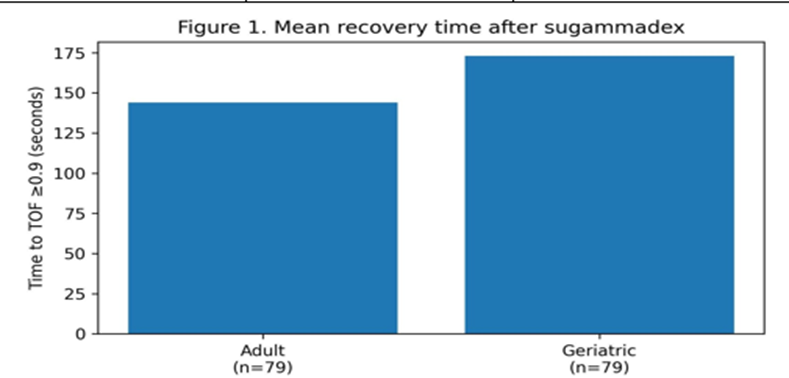
Figure 1. Mean time to achieve TOF ≥0.9 after sugammadex administration in adult and geriatric patients.
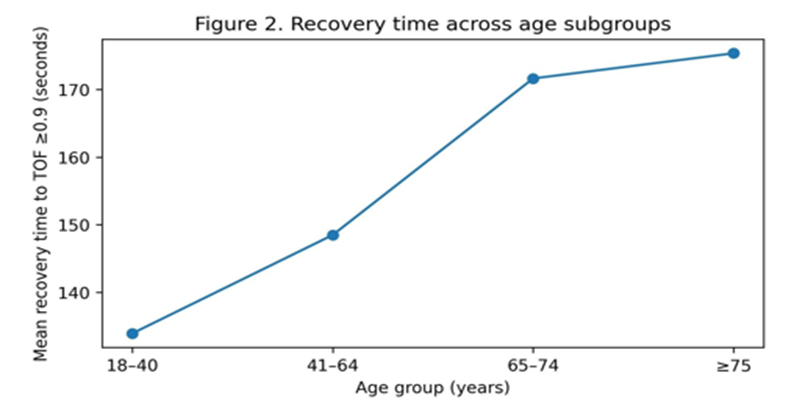
Figure 2. Mean recovery time to TOF ≥0.9 across four age categories.
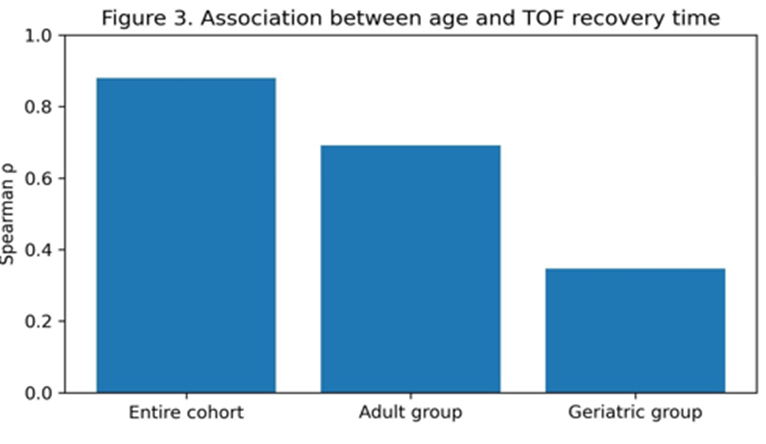
Figure 3. Spearman correlation between age and TOF recovery time in the study population.
DISCUSSION:
The principal finding of this study was that sugammadex achieved TOF recovery to ≥0.9 in both adults and geriatric patients, but recovery was significantly slower with advancing age. The mean recovery time was approximately 2.4 minutes in adults and 2.9 minutes in geriatric patients, with a 29-second between-group difference. Importantly, the recovery distributions showed minimal overlap, and the age–recovery relationship was strong across the full cohort. These findings are consistent with previous age-comparative work. McDonagh et al. reported mean times of approximately 2.3 minutes in adults and 2.9 minutes in elderly patients after 2 mg/kg sugammadex for moderate rocuronium blockade [8]. Suzuki et al. found a more pronounced age-associated delay during reversal of profound blockade with 4 mg/kg sugammadex, with mean recovery times of 1.3 minutes in younger patients and 3.6 minutes in older patients [9]. Differences in depth of blockade, dose and study populations may explain the variation in absolute recovery times, while the direction of the age effect is consistent.
The progressive increase in recovery time from the youngest subgroup to patients aged ≥75 years is clinically relevant. The correlation analysis supports age as a continuous determinant of recovery rather than an effect confined to a single geriatric threshold. This observation is particularly important in elderly patients, in whom pharmacokinetic and pharmacodynamic changes can prolong the effects of neuromuscular blocking agents [1,7]. The study also documented a transient haemodynamic response around extubation. Geriatric patients had higher MAP values throughout the observation period and a more prolonged post-extubation blood-pressure response. The small post-extubation SpO₂ reduction in the geriatric group was statistically significant but remained within a clinically acceptable range in this cohort. These findings support close cardiorespiratory surveillance during emergence, especially when physiological reserve is reduced [10, 11]. The clinical implication is not that sugammadex is ineffective in older adults; rather, clinicians should anticipate a modestly longer time to complete reversal and should avoid relying on age-based assumptions alone. Quantitative TOF monitoring until a ratio ≥0.9 is objectively confirmed remains essential. The study did not include a neostigmine comparator, so the present results address age-related differences in sugammadex mediated recovery rather than comparative superiority of sugammadex over alternative reversal strategies.
CONCLUSION:
In this single-centre comparative study, sugammadex effectively reversed rocuronium-induced neuromuscular blockade in both adult and geriatric patients. However, time to achieve a TOF ratio ≥0.9 was significantly longer in geriatric patients and increased progressively with age. Quantitative neuromuscular monitoring should therefore be maintained until objective evidence of adequate recovery is obtained, with particular vigilance in elderly patients.
REFERENCES:
1. Togioka BM, Schenning KJ. Optimizing reversal of neuromuscular block in older adults: sugammadex or neostigmine. Drugs Aging. 2022;39(10):749–761.
2. Murphy GS, Brull SJ. Residual neuromuscular block: lessons unlearned. Part I: definitions, incidence, and adverse physiologic effects of residual neuromuscular block. Anesth Analg. 2010;111(1):120–128.
3. Cameron KS, Clark JK, Cooper A, et al. Modified gamma-cyclodextrins and their rocuronium complexes. Org Lett. 2002;4(20):3403–3406.
4. Naguib M. Sugammadex: another milestone in clinical neuromuscular pharmacology. Anesth Analg. 2007;104(3):575–581.
5. Suy K, Morias K, Cammu G, et al. Effective reversal of moderate rocuronium- or vecuronium-induced neuromuscular block with sugammadex, a selective relaxant binding agent. Anesthesiology. 2007;106(2):283–288.
6. Pühringer FK, Gordon M, Demeyer I, et al. Sugammadex rapidly reverses moderate rocuronium- or vecuronium-induced neuromuscular block during sevoflurane anaesthesia: a dose-response relationship. Br J Anaesth. 2010;105(5):610–619.
7. Murphy GS, Szokol JW, Avram MJ, et al. Residual neuromuscular block in the elderly: incidence and clinical implications. Anesthesiology. 2015;123(6):1322–1336.
8. McDonagh DL, Benedict PE, Kovac AL, et al. Efficacy, safety, and pharmacokinetics of sugammadex for the reversal of rocuronium-induced neuromuscular blockade in elderly patients. Anesthesiology. 2011;114(2):318–329.
9. Suzuki T, Kitajima O, Ueda K, et al. Reversibility of rocuronium-induced profound neuromuscular block with sugammadex in younger and older patients. Br J Anaesth. 2011;106(6):823–826.
10. Naguib M, Brull SJ, Kopman AF, et al. Consensus statement on perioperative use of neuromuscular monitoring. Anesth Analg. 2018;127(1):71–80.
11. American Society of Anesthesiologists Task Force on Neuromuscular Blockade. 2023 American Society of Anesthesiologists practice guidelines for monitoring and antagonism of neuromuscular blockade. Anesthesiology. 2023;138(1):13–41.