Laparoscopic Appendectomy in Children for Complicated Acute Appendicitis.
- Pradip Kumar Deuri , MBBS, MS (General Surgery), MCh(Paediatric Surgery), FIAGES, EFIAGES, FAGIE-ERCP, FALS-ROBOTICS, Associate Professor, Dept. of Paediatric Surgery, Assam Medical College Hospital, Dibrugarh-786002, Assam, India.
- Sedengulie Nagi , MBBS, MS (General Surgery),MCh(Paediatric Surgery), FAMS, FIAGES, EFIAGES. Senior Consultant, Dept. of Surgery, Naga Hospital Authority, Kohima, Nagaland, India.
Article Information:
Abstract:
Background: Complicated acute appendicitis in children is associated with increased morbidity due to gangrene, perforation, abscess formation, and peritonitis. Laparoscopic appendectomy has emerged as a preferred surgical approach in many centers, but its role in complicated cases is still debated. Aims and Objective: To evaluate the safety, feasibility, and outcomes of laparoscopic appendectomy in children with complicated acute appendicitis. Methods: This is a retrospective observational study included 20 pediatric patients who underwent laparoscopic appendectomy for complicated acute appendicitis between January 2022 and December 2024 in our institution. Demographic data, operative details, complications, and outcomes were analyzed. Results: Among 20 patients, 15 were male (75%) and 5 were female (25%). The mean age was 10.2 years. Average operative time 70 minutes. No cases required conversion to open surgery. The mean duration of intravenous antibiotics was 5 days. The mean time for drain removal was 3 days. The mean time for oral feeding was 3 days. The mean hospital stay was 6 days. Post-operative wound infection occurred in 2 patients (10%). All patients recovered uneventfully with no mortality. No long-term complications were noted. Conclusion: Laparoscopic appendectomy is safe and effective surgical option for complicated acute appendicitis in children, offering acceptable complication rates, shorter recovery, and the advantages of minimally invasive surgery.
Keywords:
Article :
INTRODUCTION:
Acute appendicitis is the most common abdominal surgical emergency in children. While uncomplicated appendicitis can be managed with timely surgery, complicated appendicitis – characterized by gangrenous, perforation, abscess formation, or peritonitis – poses significant challenges.
Traditionally, open appendectomy has been the standard approach, but the laparoscopic technique has gained wide acceptance due to better visualization, less trauma, meticulous peritoneal lavage, reduced pain and faster recovery, since Semm K in 1983 performed the first laparoscopic appendicectomy.1 Garg CP, Vaidya BB, Chengalath MM have reported that laparoscopically complicated appendicitis can be better managed.2 Despite its advantages, the role of laparoscopic appendectomy in complicated acute appendectomy is controversial,3,4,5 particularly in children, because of concerns about longer operative time and risk of intra-abdominal abscess formation. 6
Recent studies have reported that laparoscopic appendectomy for complicated appendicitis safe and feasible with low incidence of infectious complications. 7
Aims and objective:
This study was conducted to evaluate the safety, efficacy and outcome of laparoscopic appendectomy for complicated acute appendicitis in a pediatric population.
MATERIALS AND METHODS:
This retrospective observational study was conducted from January 2022 to December 2024 in our institution. Total 20 patients presented with acute appendicitis with suspected clinically complicated acute appendicitis with proved on ultrasonography were treated laparoscopically.
Inclusion criteria:
All the patients age 5 – 15 years, clinically suspected complicated appendicitis (gangrenous, perforation, abscess, or peritonitis) and proved on ultrasonography were included in our study.
Exclusion criteria:
All the patients presented with simple appendicitis and treated conservatively or with open surgery were excluded from our study.
Consent:
Inform written signed consent was taken from the patient’s parent after explaining for them regarding the nature of surgery, the outcome and possible complications
Data collections:
The patient’s demographics, operative details, operative time, conversion rate, length of hospital stay, and outcomes were recorded from hospital record.
Statistical analysis:
Descriptive statistical analysis was used to summarize data as frequency and percentage
Operation details:
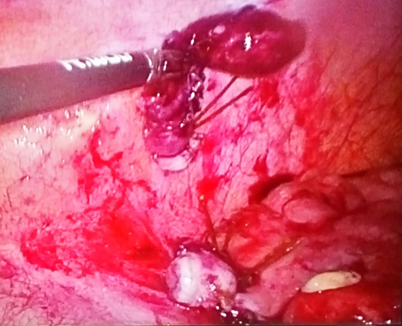
Laparoscopic Appendectomy was performed under general anesthesia. Pneumoperitoneum induced by open Hassan technique with insufflation of CO2. Insufflation pressure kept below 12 mm Hg. The bladder catheterized with Foley’s catheter. A standard 3 trocars technique was used with two 5 mm trocars and one 10 mm trocar for retrieval of specimen [Figure: I]. All trocar was placed under vision. The abdomen was explored and the appendix identified [Figure- II]. The appendix was freed, mesoappendix was dissected using an electrocautery and stump was controlled using pre- tied suture loop [Figure- III]. Appendix was retrieved within 10 mm reducer through 10 mm trocar to avoid contamination (Figure-IV). Peritoneal lavage with warm normal saline was performed until the drainage fluid became clear and hemostasis secured [Figure-V]. Debride the fibrin peel from the peritoneum. Two Ryle’s tube drains were placed, one in pelvis and another in right lower quadrant after completion of appendectomy. The drain exits through suprapubic and left lateral ports. The insufflation gas was released progressively. After removal of trocars, the fascia and the skin edges were approximated with 4-0 absorbable suture for 5 mm ports, but the peritoneum, fascia and skin edges were approximated with 3-0 absorbable sutures for 10 mm port. Post-operatively intravenous fluids (Ringer lactate and Dextrose normal saline), intravenous analgesics and triple intravenous antibiotics (3rd generation cephalosporin’s, amikacin and metronidazole) were given to all patients during their hospital stay. All the patients kept nil per orally for 72 hours and then oral intake was started. Drains were removed on 3rd day. All patients were discharged on 6 days.
The patients were following up in the out-patient department at 2 weeks and at 1 month interval for 3 months.
RESULTS:
A total 20 children diagnosed with acute appendicitis underwent laparoscopic appendectomy for complicated appendicitis. All the patient’s diagnosis of acute appendicitis was based on clinical and ultrasonography findings. All the patients with positive ultrasonography findings were underwent laparoscopic appendectomy. Fifteen ((75%) male and five (25%) female patients underwent laparoscopic appendectomy. Patients age ranged from 5 to 15 years (mean, 10.2). The average operative time for laparoscopic appendectomy was 70 minutes (range, 56-95).
The average hospital stay after laparoscopic appendectomy was 6 days (range, 5-10). The post-operative outcome of all patients with complicated appendicitis was uneventful. The Patients demographic and clinical characteristics were shown in Table: I.
Two patients developed wound infection amongst the 20 laparoscopic appendectomy patients for complicated appendicitis. All wound infections were superficial at skin level without wound dehiscence. All wound infections were managed conservatively with regular dressings [Figure: IV].
There were no intra-abdominal abscess formation and no conversion rate to open surgery without mortality. Post-operative outcomes were shown in Table: II.
Legends to Table and Figure:
Table: I: Showing the Demographic and Clinical Characteristics:
|
Variable |
Details |
|
Total patients |
20 |
|
Male: Female |
15 (75%): 5 (25%) |
|
Age (Years) |
Mean 10 (Range 5–15) |
|
Mean Operative Time (Min) |
70 (Range 56–95) |
|
Mean Hospital Stay |
6 (5–10) |
Table: II: Showing the Post-Operative Outcome:
|
Complications |
Number of patients (%) |
|
Wound Infection |
2 (10%) |
|
Intra-abdominal Abscess |
0 |
|
Conversion to Open Surgery |
0 |
|
Mortality |
0 |
Figures:
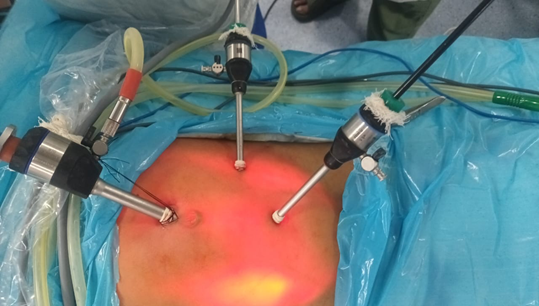
Figure: I: Show standard 3 trocar placements
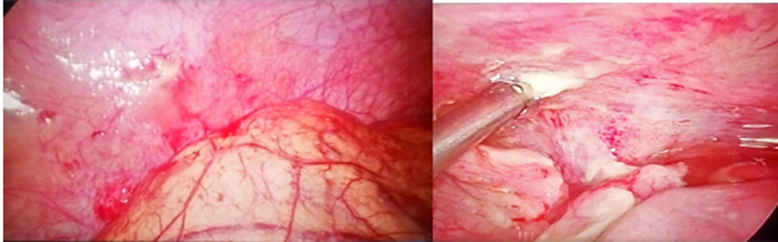
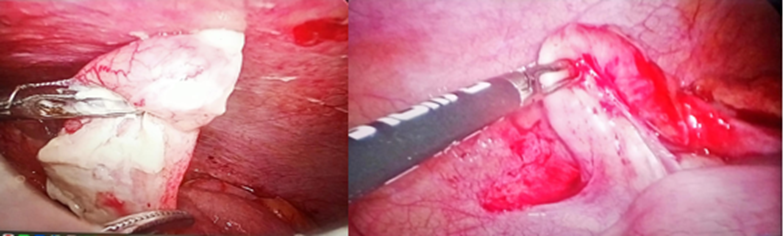
Figure: II: Showing the abdominal exploration, appendicular perforation with mass and fibrinous peels along with identification of appendix,
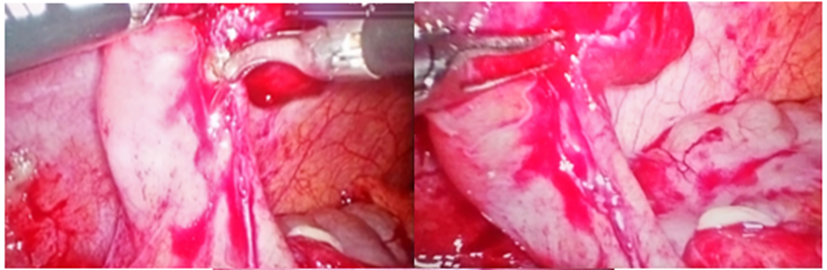
. Figure: III: Showing The appendix was freed, mesoappendix was dissected using an electrocautery and stump was controlled using pre- tied suture loop
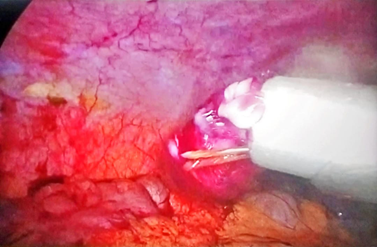
Figure: IV: Showing Appendix retrieved within 10 mm reducer through 10 mm trocar to avoid contamination
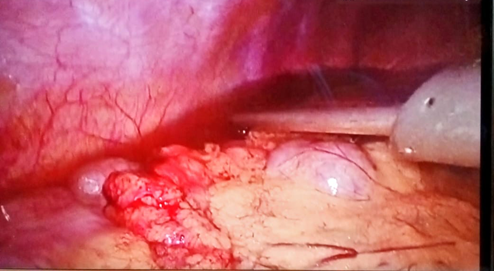
Figure: V: Showing the Peritoneal lavage with warm normal saline was performed until the drainage fluid became clear and hemostasis secured.
DISCUSSION:
This study demonstrates that laparoscopic appendectomy is a feasible and safe option for children with complicated appendicitis. The absence of conversion and low rate of post-operative complications support its effectiveness in complex cases.
Although high risk associated with complicated appendicitis has been considered as a relative contra-indication for laparoscopic appendectomy.8,9 Our study has also approaches for laparoscopic appendectomy for complicated appendicitis. Other study has been reported significant advantages in laparoscopic appendectomy, such as decreased post-operative pain, rapid recovery and shorter hospital stay.10,11 In our study has shown similar results. Decreased wound infection has been the major advantage in laparoscopic appendectomy.12 In our study had less post-operative wound infection (10%). This may be due to appendix removed within the reducer without contact with the trocar wounds, thorough lavage of whole abdominal cavity and aspiration of the infected fluid.
In some study reported lower incidence of intra-abdominal abscess formations.12,13 Laparoscopy can visualization of whole abdominal cavity, pelvis, thoroughly irrigated, debrided and drained. 14 Laparoscopy can also have identified associated pathology. As laparoscopic surgery is less traumatic, patients can return to their regular activity as early as possible.15 In our study, we found no intra-abdominal abscess. This may be due to pre-operative resuscitation, pre-operative, peri-operative intravenous antibiotics, proper peritoneal lavage, aspiration of infected fluid and drain placement.
Laparoscopic operative time can be shorter as reported by Yau, et al, 16 but can be longer, which may be due to tying appendix base and peritoneal lavage has been reported.17 In our study we have 70-minutes operative time, which is comparable with other study. In our study, no conversion to open surgery and with no mortality.
LIMITATIONS:
It is a retrospective, analysis of relatively small sample size (20 patients), and short follow-up duration (3 months). Further multicenter prospective studies with larger cohorts are needed to confirm these findings.
CONCLUSION:
Laparoscopic appendectomy is a safe and effective procedure for complicated appendicitis in children. With proper surgical expertise, it provides favorable outcomes, minimal complications, and the advantages of minimally invasive surgery.
REFERENCES:
1. Semm K. Endoscopic appendectomy. Endoscopy. 1983; 15(2):59-64.
2. Garg CP, Vaidya BB, Chengalath MM. Efficacy of laparoscopy in complicated appendicitis. Int J surg 2009,7:250-2.
3. So, JB, Chiong EC, Chiong E, Cheah WK, Lomanto D, Goh P, et al. Laparoscopic appendectomy for perforated appendicitis. World J surg 2002; 26:1485-8.
4. Senapathi PS, Bhattacharya D, Ammori BJ. Early laparoscopic appendectomy for appendicular mass, Surg Endosc 2002;16:1783-5.
5. Mancini CJ, Mancini ML, Nelson HS. Efficacy of laparoscopic appendectomy in appendicitis with peritonitis. Am Surg 2005; 71:1-5.
6. Frizelle FA, Hanna GB. Pelvic abscess following laparoscopic appendectomy. Surg Endosc 1996; 10:947-8.
7. Kassem R, Shreef K, Khalifa M. Effect and clinical outcomes of laparoscopic appendectomy in young children with complicated appendicitis: A case series. Egypt J Surg 2017; 36:152-5.
8. Sauerland S, Lefering R, Neugebauer EA. Laparoscopic versus open surgery for suspected appendicitis. Cochrane Database Syst Rev 2004;18:CD001546.
9. Pokala N, Sadhasivam S, Kiran RP, Parithivel V. Complicated appendicitis – is the laparoscopic approach appropriate? A comparative study with open approach; Outcome in a community hospital setting. Am Surg 2007; 73:737-41.
10. Esposito C, Borzi P, Valla JS, Mekki M, Nouri A, Bacmeur F, et al. laparoscopic versus open appendectomy in children: A retrospective comparative study of 2,332 cases. World J Surg 2007;31:750-5.
11. Menezes M, Das L, Alagtal M, Haroun J, Puri P. laparoscopic appendectomy is recommended for the treatment of complicated appendicitis in children. Pediatr Surg Int 2008;24:303-5.
12. Tete JJ. Laparoscopic appendicectomy. Br J Surg 1996; 83:1169-70.
13. Krukowski ZH, Irwin ST, Denholm S, Mathewson NA. Preventing wound infection after appendectomy. A review. Br J Surg 1998; 75:1023-33.
14. Reid RI, Dobbs BR, Frizelle FA. Risk factors for post-appendectomy intra-abdominal abscess. Aust N Z J Surg 1999; 69:373-4.
15. Cueto J, D’Allemagne B, Vazquez-Frias JA, Gomez S, Delgado F, Trullenque F, et al. Morbidity of laparoscopic surgery for complicated appendicitis: An international study. Surg Endosc 2006; 20:717-20.
16. EL Ghoneimi A, Valla JS, Limonne B, et al. Laparoscopic appendectomy in children: report of 1379 cases. J Pediatr Surg.1994; 29:786-789.
17. Yau KK, Siu WT, Tang CN, Yang GP, Li MK. Laparoscopic versus open appendectomy for complicated appendicitis. J Am Coll Surg2007; 205:60-5.