The Incidence And Outcomes Of Ventilator Associated Pneumonia In Mechanically Ventilated Patients In Comparison To Non-Ventilator Associated Pneumonia- A Cohort Study At Tertiary Care Center.
- Vijaykumar Ramappa Kapse , Professor and Head, Department of Pulmonary Medicine Dr. Shankarrao Chavan Government Medical College, Vishnupuri, Nanded. Dist. Nanded, Maharashtra 431606.
- Sanjiv Vithalrao Zangde , Associate Professor, Department of Pulmonary Medicine Dr. Shankarrao Chavan Government Medical College, Vishnupuri, Nanded. Dist. Nanded, Maharashtra 431606.
- Dhammdeep Shivram Kadam , Assistant professor, Department of Pulmonary medicine Dr. Shankarrao Chavan Government Medical College, Vishnupuri, Nanded. Dist. Nanded, Maharashtra 431606.
- Najmabegum Hussen Shaikh , Junior Resident, Department of Pulmonary Medicine Dr. Shankarrao Chavan Government Medical College, Vishnupuri, Nanded. Dist. Nanded, Maharashtra 431606.
- Ghule Shubham Ramesh , Junior Resident, Department of Pulmonary Medicine Dr. Shankarrao Chavan Government Medical College, Vishnupuri, Nanded. Dist. Nanded, Maharashtra 431606.
Article Information:
Abstract:
Background: Ventilator-associated pneumonia (VAP) represents one of the most devastating healthcare-associated infections in critically ill patients. Despite advances in infection prevention, VAP continues to impose substantial morbidity, mortality, and economic burden worldwide. Comparative data evaluating VAP against non-ventilator-associated pneumonia (NVAP) remain limited, particularly from resource-constrained tertiary care settings. Objective: This study aimed to determine the incidence of VAP among mechanically ventilated patients, identify associated risk factors, and compare clinical outcomes with patients who did not develop VAP. Methods: A prospective observational cohort study was conducted over 24 months in the intensive care unit of a tertiary care hospital. A total of 120 adult patients receiving mechanical ventilation for >48 hours were enrolled, comprising 60 VAP cases and 60 non-VAP controls matched for age and admission diagnosis. VAP was diagnosed using standardized clinical, radiological, and microbiological criteria. Data on demographics, comorbidities, ventilation parameters, microbial profiles, and outcomes were collected and analyzed. Results: The incidence of VAP was 82 per 1,000 ventilator-days. The majority of patients were aged 51–70 years with male predominance (58.3%). Prolonged mechanical ventilation (≥7 days) was documented in 66.7% of VAP cases, while re-intubation and sedation >3 days were identified in 68.9% and 66.7% of at-risk patients, respectively. Gram-negative bacilli predominated, with Klebsiella species (26.7%), Acinetobacter species (23.3%), and Pseudomonas species (21.7%) being most frequently isolated. Multidrug-resistant organisms were recovered from 56.7% of VAP patients versus 10.0% of non-VAP patients (p<0.001). VAP was associated with significantly prolonged hospitalization (90% staying >10 days vs. 43.3% of non-VAP; p<0.001) and markedly elevated in-hospital mortality (78.3% vs. 28.3%; p<0.001). Complications including acute respiratory distress syndrome (50.0% vs. 6.7%), sepsis (36.7% vs. 15.0%), and septic shock (10.0% vs. 3.3%) were substantially more frequent in the VAP cohort. Conclusion: VAP remains a highly prevalent and lethal complication in mechanically ventilated patients, characterized by resistant Gram-negative pathogens, extended hospitalization, and mortality exceeding three-fold that of non-VAP patients. Rigorous adherence to ventilator care bundles, antimicrobial stewardship, and early weaning protocols are imperative to mitigate this burden.
Keywords:
Article :
INTRODUCTION:
Healthcare-associated pneumonia constitutes a leading cause of infection-related mortality among hospitalized patients, with ventilator-associated pneumonia (VAP) representing its most severe manifestation in the critical care setting [1]. Defined as pulmonary infection developing ≥48 hours following endotracheal intubation and initiation of mechanical ventilation, VAP affects an estimated 9–27% of mechanically ventilated patients globally, with incidence rates varying considerably across institutions and geographic regions [2,3].
The pathogenesis of VAP is multifactorial, involving impairment of innate airway defenses, colonization of the oropharynx by pathogenic microorganisms, microaspiration of contaminated secretions around the endotracheal tube cuff, and biofilm formation on artificial airway surfaces [4,5]. These mechanisms, compounded by the underlying critical illness of affected patients, create a permissive environment for lower respiratory tract infection that is notoriously difficult to treat.
The clinical consequences of VAP extend far beyond the pulmonary system. Patients who develop VAP experience prolonged duration of mechanical ventilation, extended intensive care unit (ICU) and hospital stays, increased exposure to broad-spectrum antimicrobial agents, and substantially elevated mortality risk [6,7]. The economic implications are equally profound, particularly in publicly funded healthcare systems where resource allocation is already constrained [8].
While VAP has garnered substantial research attention, non-ventilator-associated pneumonia (NVAP)—defined as hospital-acquired pneumonia occurring in patients not receiving mechanical ventilation—has remained comparatively under-investigated despite its considerable contribution to nosocomial infection burden [9]. Direct comparative analyses between VAP and NVAP are scarce, particularly from tertiary care centers in developing nations where patient volumes are high, infection control infrastructure may be suboptimal, and antimicrobial resistance poses an escalating challenge [10].
The present investigation was designed to address this evidence gap by evaluating the incidence, risk factor profile, microbiological characteristics, and clinical outcomes of VAP in a cohort of mechanically ventilated patients, with direct comparison to a contemporaneous group of ventilated patients who did not develop pneumonia. The findings are intended to inform targeted preventive strategies and optimize clinical management in similar healthcare settings.
MATERIALS AND METHODS:
Study Design and Setting
This prospective observational cohort study was conducted in the multidisciplinary intensive care unit of a high-volume tertiary care teaching hospital over a 24-month period. The ICU operates as a closed unit with dedicated critical care specialists and maintains standardized protocols for mechanical ventilation, sedation, and infection prevention.
Participants
Consecutive adult patients (aged ≥18 years) admitted to the ICU who received invasive mechanical ventilation for >48 hours were screened for eligibility. Patients were allocated to the VAP group if they met diagnostic criteria for pneumonia during their ICU stay, or to the non-VAP (control) group if they completed their ventilatory course without developing pneumonia.
Exclusion criteria comprised: (i) chronic pulmonary diseases potentially confounding pneumonia diagnosis (e.g., interstitial lung disease, bronchiectasis); (ii) receipt of >48 hours of systemic antibiotic therapy prior to study enrollment; and (iii) immunocompromised states including active chemotherapy, transplantation, or HIV infection with CD4 count <200 cells/µL.
Definitions
VAP was diagnosed when all of the following criteria were present: (a) new or progressive pulmonary infiltrates on chest radiography; (b) fever (temperature >38°C) or hypothermia (<36°C); (c) leukocytosis (white blood cell count >12,000/µL) or leukopenia (<4,000/µL); and (d) purulent tracheal secretions. Microbiological confirmation was obtained through quantitative culture of bronchoalveolar lavage fluid (≥10⁴ colony-forming units/mL) or endotracheal aspirate (≥10⁵ CFU/mL) [11].
Early-onset VAP was defined as occurring within 4 days of intubation, while late-onset VAP developed ≥5 days after initiation of mechanical ventilation [12]. Multidrug resistance was defined as non-susceptibility to at least one agent in three or more antimicrobial categories [13].
Data Collection
Demographic variables, comorbid conditions, indication for mechanical ventilation, duration of ventilation, re-intubation events, sedation practices, and microbiological results were extracted from electronic health records and bedside charts. Clinical outcomes including ICU length of stay, total hospitalization duration, complications, and vital status at discharge were recorded.
Statistical Analysis
Categorical variables were expressed as frequencies and percentages, with between-group comparisons performed using the Chi-square test or Fisher's exact test as appropriate. Continuous variables were summarized as means with standard deviations or medians with interquartile ranges depending on distribution normality, and compared using independent t-tests or Mann-Whitney U tests. The incidence of VAP was calculated as the number of cases per 1,000 ventilator-days. Statistical significance was set at two-tailed p<0.05. Analyses were conducted using SPSS version (IBM Corp., Armonk, NY).
Ethical Considerations
The study protocol received approval from the Institutional Ethics Committee. Written informed consent was obtained from patients or their legally authorized representatives prior to enrollment. All data were de-identified and maintained with strict confidentiality.
RESULTS:
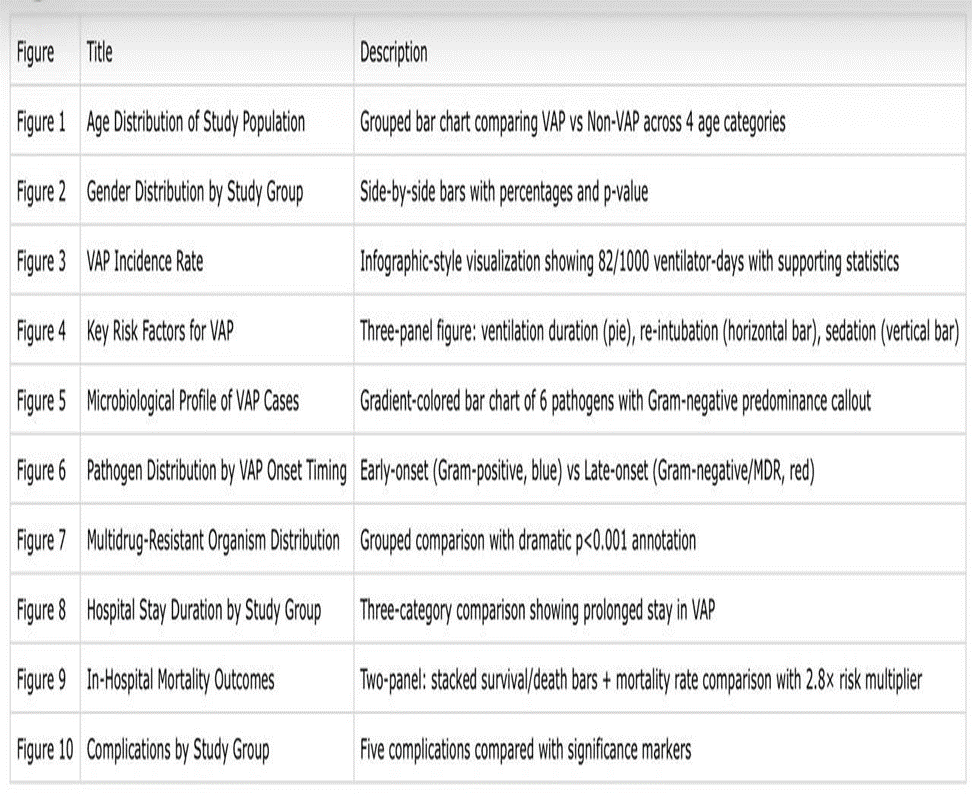
Baseline Characteristics
A total of 120 patients were enrolled, with 60 in the VAP cohort and 60 in the non-VAP cohort. The mean age of participants was 55.4 ± 14.2 years, with the 51–70 years age bracket representing the largest proportion in both groups (VAP: 41.7%; non-VAP: 36.7%) (Figure 1). Males constituted 58.3% of the overall study population, with comparable gender distribution between groups (VAP: 60.0% male; non-VAP: 56.7% male; p=0.71).
Table 1. Baseline Demographic and Clinical Characteristics
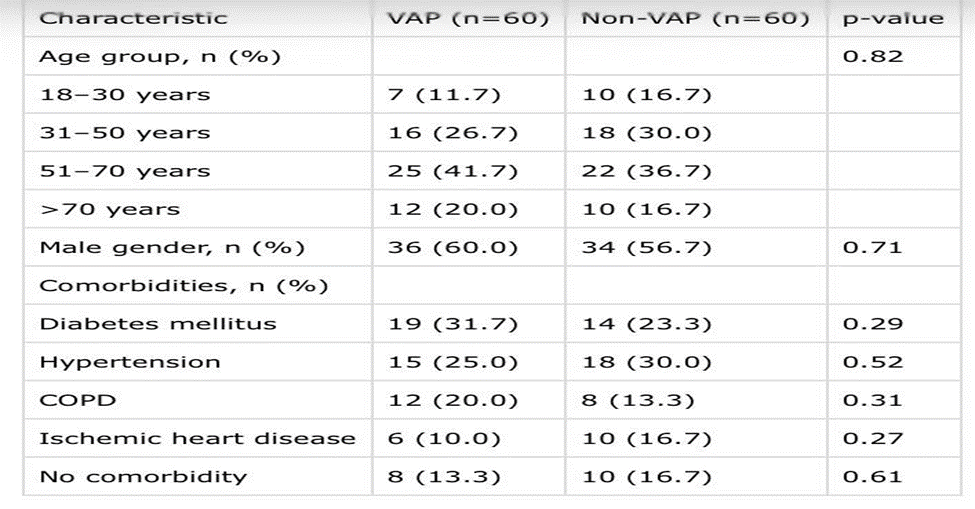
Comorbid conditions were prevalent across both cohorts, with diabetes mellitus being the most common (27.5% overall), followed by hypertension (27.5%) and chronic obstructive pulmonary disease (16.7%). No significant differences in comorbidity profiles were observed between VAP and non-VAP patients (all p>0.05).
Incidence of VAP
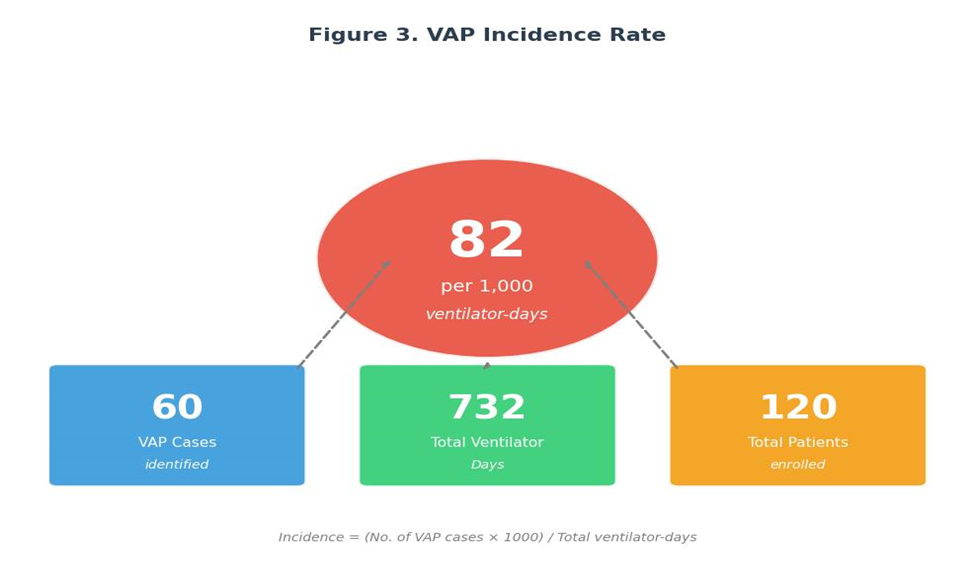
The cumulative duration of mechanical ventilation across all enrolled patients totaled 732 ventilator-days. With 60 VAP events documented, the incidence density was calculated at 82 cases per 1,000 ventilator-days (Figure 3).
Risk Factor Analysis
Table 2. Ventilation-Related Risk Factors
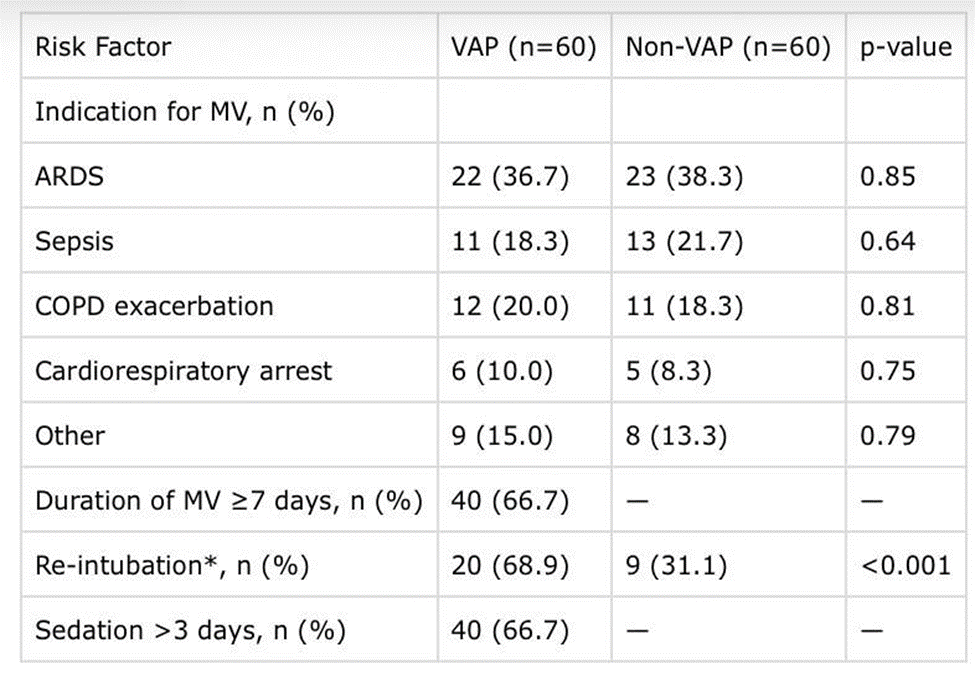
*Among 29 patients who required re-intubation
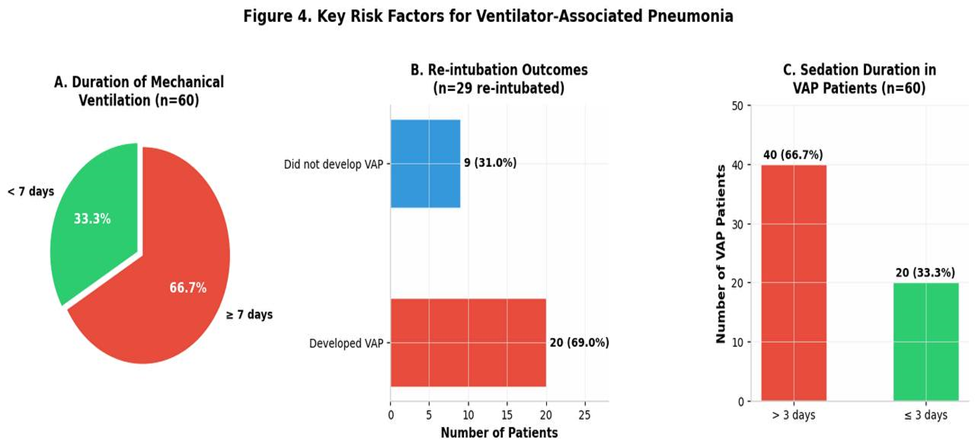
The primary indication for mechanical ventilation was similar between groups, with acute respiratory distress syndrome (ARDS) being the most frequent (37.5% overall). Among VAP patients, two-thirds (66.7%) received mechanical ventilation for ≥7 days. Of the 29 patients who underwent re-intubation, 20 (68.9%) subsequently developed VAP, representing a substantially higher proportion than those who did not develop VAP (31.1%; p<0.001). Prolonged sedation exceeding 3 days was documented in 66.7% of VAP cases (Figure 4).
Microbiological Profile
Table 3. Distribution of Causative Pathogens in VAP Cases
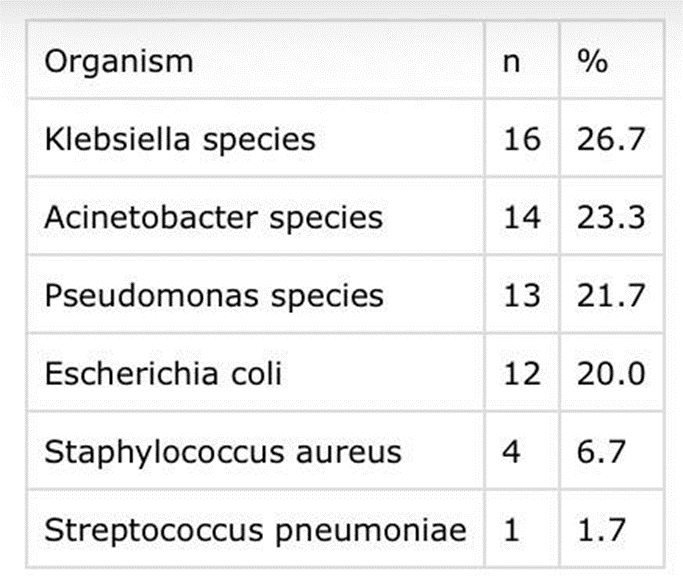
Gram-negative bacilli accounted for 91.7% of all isolates (Figure 5). Klebsiella species was the predominant pathogen, identified in more than one-quarter of cases. Early-onset VAP (n=5) was exclusively associated with Gram-positive organisms (S. aureus, n=4; S. pneumoniae, n=1), whereas late-onset VAP (n=55) was caused entirely by Gram-negative pathogens, with Klebsiella, Acinetobacter, and Pseudomonas predominating (Figure 6).
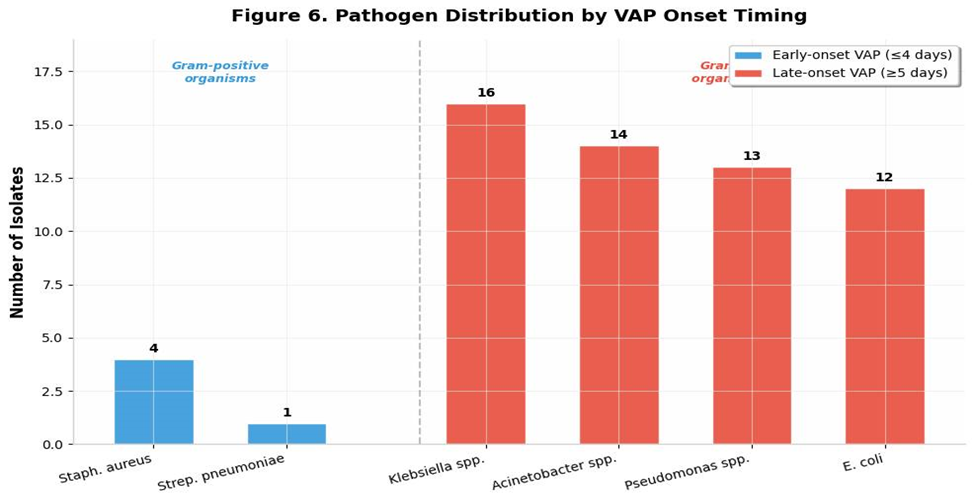
Table 4. Multidrug-Resistant Organism Distribution.
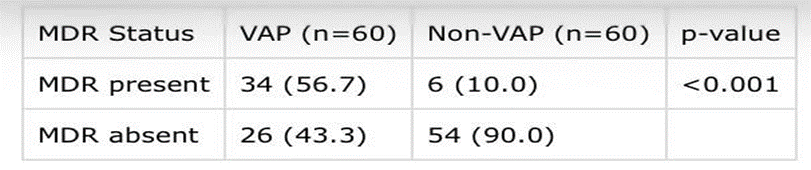
Multidrug-resistant organisms were isolated from more than half of VAP patients (56.7%), compared with only 10.0% of non-VAP patients (p<0.001) (Table 4), underscoring the formidable antimicrobial resistance challenge in this setting.
Clinical Outcomes
Table 5. Hospital Stay and Mortality Outcomes
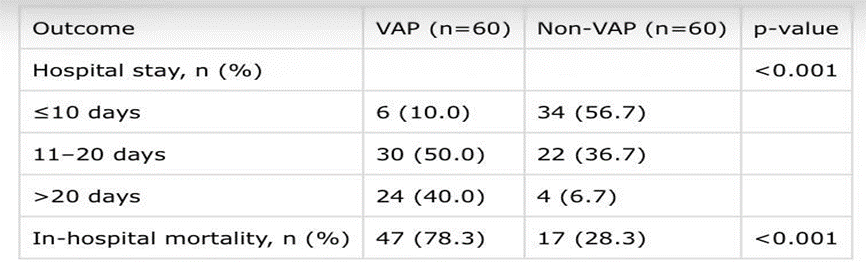
VAP was associated with dramatically prolonged hospitalization: 90.0% of VAP patients remained hospitalized beyond 10 days, compared with 43.3% of non-VAP patients (p<0.001). In-hospital mortality was nearly three-fold higher in the VAP cohort (78.3% vs. 28.3%; p<0.001).
Table 6. Complications
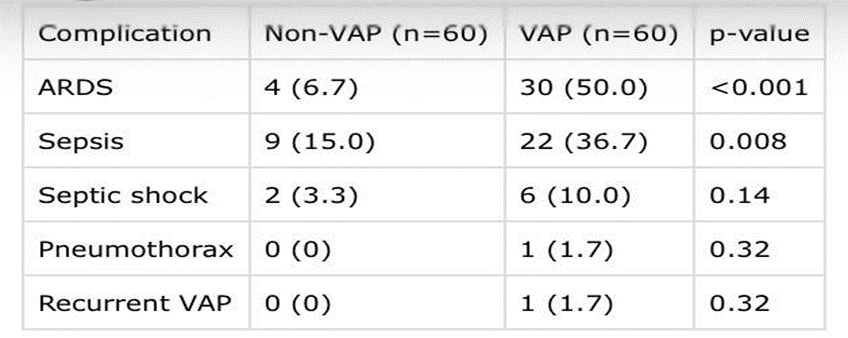
Among complications, ARDS was the most frequent and significantly more prevalent in VAP patients (50.0% vs. 6.7%; p<0.001), followed by sepsis (36.7% vs. 15.0%; p=0.008).
DISCUSSION:
This prospective cohort investigation reveals that ventilator-associated pneumonia continues to impose a devastating burden in a tertiary care ICU setting, with an incidence of 82 per 1,000 ventilator-days—substantially exceeding rates reported from well-resourced institutions [14,15]. The elevated incidence observed likely reflects the interplay of prolonged ventilation duration, high-acuity patient populations, and the challenges of maintaining optimal infection prevention standards in a busy public-sector critical care environment.
The demographic profile of our cohort, with peak incidence in the sixth and seventh decades of life and modest male predominance, aligns with established patterns of critical illness distribution [16] (Figures 1–2). Notably, traditional comorbidities such as diabetes and hypertension did not discriminate between VAP and non-VAP groups in our analysis, suggesting that while these conditions may predispose to critical illness requiring ventilation, they may not independently modulate pneumonia risk once mechanical support is initiated. This observation redirects attention toward modifiable, ventilation-specific risk factors as the primary targets for intervention.
Our identification of prolonged mechanical ventilation, re-intubation, and extended sedation as key risk factors corroborates extensive prior literature [17,18] (Figure 4). The finding that 66.7% of VAP cases occurred in patients ventilated for ≥7 days emphasizes the cumulative nature of VAP risk and reinforces the imperative for daily sedation interruption, spontaneous awakening and breathing trials, and aggressive early weaning protocols [19]. The particularly strong association with re-intubation (68.9% of re-intubated patients developing VAP) highlights the critical importance of securing the airway at initial intubation and judicious use of non-invasive ventilation to avoid re-intubation where feasible [20].
The microbiological landscape of VAP in our cohort was dominated by resistant Gram-negative bacilli, with Klebsiella, Acinetobacter, and Pseudomonas collectively responsible for over 70% of infections (Figure 5). This pattern is consistent with reports from other developing-country ICUs and reflects the selective pressure of widespread antibiotic use, suboptimal environmental hygiene, and patient-to-patient transmission in overcrowded units [21,22]. The complete segregation of early-onset VAP to Gram-positive pathogens and late-onset VAP to resistant Gram-negative organisms supports the classical paradigm and has direct implications for empirical antimicrobial selection [23] (Figure 6).
Perhaps most alarming was the isolation of multidrug-resistant organisms from 56.7% of VAP patients—a rate that, while lower than some reports from comparable settings [24], nonetheless represents a formidable therapeutic challenge (Figure 7). The stark contrast with the 10.0% MDR rate in non-VAP patients underscores that mechanical ventilation itself, through biofilm formation, repeated airway manipulation, and exposure to broad-spectrum antibiotics, creates a unique ecological niche that selects for resistant flora.
The clinical consequences of VAP in our cohort were severe and unequivocal. Hospitalization was prolonged by weeks rather than days, with 40% of VAP patients requiring >20 days of admission compared with only 6.7% of controls (Figure 8). The mortality rate of 78.3%—while higher than some published series [25]—likely reflects the severity of underlying illness in our patient population, the high prevalence of resistant pathogens, and potential delays in initiating effective therapy (Figure 9). The complication profile, with ARDS affecting half of VAP patients and sepsis over one-third, illustrates the systemic inflammatory cascade triggered by uncontrolled pulmonary infection in critically ill hosts (Figure 10).
Several limitations warrant acknowledgment. The single-center design restricts generalizability to other healthcare settings with different patient populations and infection control practices.
The sample size, while adequate for detecting large outcome differences, may have been underpowered for subtle risk factor associations. The absence of formal severity scoring (APACHE II, SOFA) at enrollment precluded adjustment for baseline illness severity in outcome comparisons. Additionally, molecular diagnostic methods were not employed, potentially underestimating the true pathogen diversity.
CONCLUSION:
Ventilator-associated pneumonia remains a highly prevalent, antimicrobial-resistant, and lethal complication of mechanical ventilation in tertiary care settings. This study demonstrates an incidence of 82 per 1,000 ventilator-days, with resistant Gram-negative organisms predominating and mortality approaching 80%. The findings underscore the urgent need for stringent implementation of ventilator care bundles, antimicrobial stewardship programs, and early liberation from mechanical ventilation to attenuate this substantial burden of preventable harm.
Recommendations
Based on these findings, we propose the following actionable strategies for ICUs with similar patient profiles:
1. Ventilator bundle compliance: Mandatory adherence to head-of-bed elevation (30–45°), daily oral chlorhexidine care, subglottic suctioning, and strict hand hygiene protocols.
2. Early weaning protocols: Structured daily assessment of sedation depth, spontaneous breathing trial eligibility, and extubation readiness to minimize ventilation duration.
3. Re-intubation avoidance: Optimization of initial airway management and consideration of prophylactic non-invasive ventilation post-extubation in high-risk patients.
4. Antimicrobial stewardship: Culture-directed de-escalation of empirical therapy, restricted use of broad-spectrum agents, and regular unit-specific antibiogram updates.
5. Surveillance: Continuous monitoring of VAP incidence, pathogen distribution, and resistance patterns to guide empirical therapy and detect outbreaks.
REFERENCES:
1. Rongrungrueng Y, Plongla R, et al. Incidence of hospital-acquired pneumonia and ventilator-associated pneumonia in tertiary-care hospitals: a multicenter retrospective cohort study. Infect Drug Resist. 2025.
2. Belay CM, Zewale TA, Amlak BT, et al. Incidence and predictors of ventilator-associated pneumonia. Infect Drug Resist. 2022.
3. Papazian L, Klompas M, Luyt CE. Ventilator-associated pneumonia in adults. Intensive Care Med. 2020.
4. Torres A, Niederman MS, Chastre J, et al. International guidelines for hospital-acquired pneumonia and ventilator-associated pneumonia. Eur Respir J. 2017.
5. Kalil AC, Metersky ML, Klompas M, et al. Management of adults with hospital-acquired and ventilator-associated pneumonia: 2016 clinical practice guidelines. Clin Infect Dis. 2016.
6. Thimmaiah G, Pandey N, Prinja S, et al. Economic burden of ventilator-associated pneumonia. Lung India. 2022.
7. Jiménez-Trujillo I, Jiménez-García R, de Miguel-Díez J, et al. Outcomes of ventilator-associated pneumonia. Eur J Intern Med. 2021.
8. Amodio E, Schreiber PW, Faes Hesse M, et al. Outcomes of non-ventilator hospital-acquired pneumonia. Infect Dis. 2022.
9. Giuliano KK, Baker D, Quinn B, et al. Epidemiology of nonventilator hospital-acquired pneumonia. Am J Infect Control. 2018.
10. Chaudhury A, Rani AS, Kalawat U, et al. Antibiotic resistance in ventilator-associated pneumonia. Indian J Med Microbiol. 2021.
11. American Thoracic Society; Infectious Diseases Society of America. Guidelines for the management of adults with hospital-acquired, ventilator-associated, and healthcare-associated pneumonia. Am J Respir Crit Care Med. 2005.
12. Restrepo MI, Peterson J, Fernandez JF, et al. Comparison of the clinical characteristics and outcomes of early- versus late-onset ventilator-associated pneumonia. Respir Care. 2020.
13. Magiorakos AP, Srinivasan A, Carey RB, et al. Multidrug-resistant, extensively drug-resistant and pandrug-resistant bacteria: an international expert proposal for interim standard definitions. Clin Microbiol Infect. 2012.
14. Norfidiyati Salmuna MP, Kamaruddin Ibrahim M, et al. Clinical characteristics of ventilator and non-ventilator pneumonia in ICU. Med J Malaysia. 2021.
15. Meawed TE, Ahmed SM, Mowafy SM, et al. Ventilator-associated pneumonia in COVID-19 patients. J Infect Public Health. 2021.
16. Umang Patel, Rahul Agrawal, Reshma Patel. Pneumonia in ventilated and non-ventilated patients admitted to ICU. J Clin Diagn Res. 2020.
17. Khan R, Al-Dorzi HM, Al-Attas K, et al. Ventilator-associated pneumonia prevention strategies. Am J Infect Control. 2020.
18. Mohamed Elsheikh, Akira Kuriyama, Yoshihito Goto, et al. Incidence and predictors of VAP using a competing risk analysis. J Intensive Care. 2022.
19. Barr J, Fraser GL, Puntillo K, et al. Clinical practice guidelines for the management of pain, agitation, and delirium in adult patients in the intensive care unit. Crit Care Med. 2013.
20. Ferrer M, Valencia M, Nicolas JM, et al. Early noninvasive ventilation averts extubation failure in patients at risk. Am J Respir Crit Care Med. 2006.
21. Mantri T, Burad J, Hashmi SA, et al. Distribution of multidrug-resistant bacteria in ventilator-associated pneumonia and its impact on outcomes. J Intensive Care Med. 2022.
22. Chi SY, Kim TO, Park CW, et al. Bacterial pathogens in ventilator-associated pneumonia. Tuberc Respir Dis. 2021.
23. Farag AM, Tawfick MM, Abozeed MY, et al. Microbiological profile of ventilator-associated pneumonia. J Infect Dev Ctries. 2020.
24. Reddy Sanskar, Maniram Kumhar, Ravindra Kumar Tiwari, et al. Evaluation of predictors, complications and outcome of VAP. J Clin Med. 2025.
25. Noor Ilyati Ismail, et al. Mortality and risk factors of ventilator-associated pneumonia. Southeast Asian J Trop Med Public Health. 2020.