Diagnostic Accuracy of the Modified Alvarado Score Combined with Ultrasonography in Acute Appendicitis: A Prospective Study at SLN MCH, Koraput.
- Rajesh Kumar Rana , Assistant professor, Department of General Surgery, SLN Medical College and Hospital, Koraput, Odisha.
- Debasish Ray , Assistant professor, Department of General Surgery, SLN Medical College and Hospital, Koraput, Odisha.
- Sapan Kumar , Assistant professor, Department of General Surgery, SLN Medical College and Hospital, Koraput, Odisha.
Article Information:
Abstract:
Background: Acute appendicitis is one of the most common surgical emergencies. Diagnosing it accurately remains a clinical challenge, often leading to negative appendectomies or dangerous delays. This study evaluates the diagnostic reliability of combining the Modified Alvarado Score (MAS) with ultrasonography (USG) compared to using either method alone. Methods: This prospective observational study was conducted at the Department of General Surgery, Saheed Laxman Nayak Medical College and Hospital (SLN MCH), Koraput, Odisha, between 2024 and 2025. A total of 94 patients presenting with right iliac fossa pain were evaluated using MAS and USG, and the findings were correlated with postoperative histopathology (the gold standard). Results: Out of 94 patients, histopathology confirmed acute appendicitis in 79 cases. The combined approach of a high MAS (≥7) and a positive USG yielded a sensitivity of 94.9% and a specificity of 86.6%, which was statistically significantly higher than either MAS alone (p < 0.05) or USG alone. Conclusion: Incorporating ultrasound alongside the Modified Alvarado Score significantly boosts diagnostic accuracy, safely reducing the rate of negative appendectomies in resource-limited settings.
Keywords:
Article :
INTRODUCTION:
Acute appendicitis is a classic surgical emergency, yet diagnosing it is rarely perfectly straightforward. While it is heavily reliant on clinical judgment, relying on symptoms alone can result in a negative appendectomy rate of up to 15-20%. In a busy, resource-constrained setup, minimizing unnecessary surgeries while avoiding complications like perforation is crucial.
To bridge this gap, scoring systems like the Modified Alvarado Score (MAS) were developed to standardize clinical assessment. However, MAS alone sometimes leaves surgeons in a gray area, especially when scores are equivocal (5–7). Ultrasonography (USG) is a highly accessible, non-invasive imaging tool, though it is highly operator-dependent.
The purpose of this study is to see what happens when we combine these two accessible tools. By conducting this research at SLN Medical College and Hospital in Koraput—a region serving a large rural and tribal population—we aimed to validate a simple, cost-effective, and highly accurate diagnostic pathway that doesn't rely on expensive or complex parameters like CT scans.
MATERIALS AND METHODS:
Study Design and Setting: A prospective observational study was carried out at the Department of General Surgery, SLN MCH, Koraput.
Study Period: 2024 to 2025.
Sample Size: 94 consecutive patients who presented to the emergency or OPD with right iliac fossa (RIF) pain and were suspected of having acute appendicitis.
Inclusion/Exclusion Criteria: Patients of all ages and both genders with RIF pain were included. Pregnant women, patients with palpable right lower quadrant masses, and those with a history of urological disorders were excluded.
Methodology: Upon admission, a detailed history was taken, and clinical examinations were performed to calculate the Modified Alvarado Score for each patient. A score of <5 was considered unlikely for appendicitis, 5–7 was equivocal, and ≥7 was highly indicative. All patients then underwent a graded compression abdominal ultrasound. Patients who proceeded to surgery had their appendix sent for histopathological examination, which served as the definitive gold standard for our data analysis.
Statistical Analysis: Data was analyzed using standard descriptive statistics. The Chi-square test was used to find statistical significance (p-value < 0.05 was considered significant).
RESULTS:
During the study period, 94 patients met the inclusion criteria and were evaluated. Postoperative histopathology confirmed acute appendicitis in 79 out of the 94 patients, yielding a negative appendectomy rate of roughly 15.9%.
Description: The study population was predominantly young adults, with the highest incidence occurring in the 21–30 age group. There was a clear male preponderance, with men making up nearly 60% of the cases.
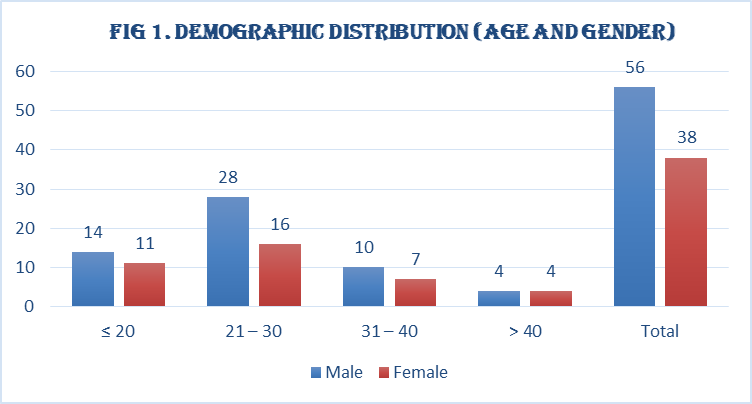
Fig 1: Demographic Distribution (Age and Gender)
Description: Patients were categorized based on their MAS. The majority of patients (58.5%) presented with a score of 7 or higher, strongly suggesting acute appendicitis.
Table 1: Distribution of Modified Alvarado Scores (MAS)
|
MAS Category |
Clinical Implication |
Number of Patients |
Percentage (%) |
|
< 5 |
Low probability |
12 |
12.8% |
|
5 – 7 |
Equivocal / Possible |
27 |
28.7% |
|
> 7 |
High probability |
55 |
58.5% |
|
Total |
94 |
100% |
Description: This table compares the ultrasound findings against the final biopsy results. Ultrasound correctly identified 68 positive cases but missed 11 cases that were ultimately proven to be appendicitis by pathology.
Table 2: Correlation of Ultrasound Findings with Histopathology
|
Ultrasound Result |
Histopathology Positive |
Histopathology Negative |
Total |
|
Positive for Appendicitis |
68 (True Positive) |
3 (False Positive) |
71 |
|
Negative/Normal |
11 (False Negative) |
12 (True Negative) |
23 |
|
Total |
79 |
15 |
94 |
Description: Looking purely at clinical scoring, a MAS of greater than 7 correctly identified 51 true positive cases. However, relying on this alone would have missed 28 actual cases of appendicitis that presented with lower/equivocal scores.
Table 3: Correlation of MAS (>7) with Histopathology
|
Clinical Score |
Histopathology Positive |
Histopathology Negative |
Total |
|
MAS > 7 |
51 (True Positive) |
4 (False Positive) |
55 |
|
MAS ≤ 7 |
28 (False Negative) |
11 (True Negative) |
39 |
|
Total |
79 |
15 |
94 |
Description: This table highlights the core finding of the study. Combining a MAS of >7 with a positive Ultrasound yielded a significantly higher sensitivity and diagnostic accuracy than using either tool in isolation. The combined approach reached statistical significance (p < 0.05).
Table 4: Diagnostic Accuracy of Modalities (Statistically Significant Findings)
|
Diagnostic Modality |
Sensitivity |
Specificity |
Positive Predictive Value |
Diagnostic Accuracy |
|
MAS > 7 Alone |
64.5% |
73.3% |
92.7% |
65.9% |
|
USG Alone |
86.0% |
80.0% |
95.7% |
85.1% |
|
Combined (MAS + USG) |
94.9% |
86.6% |
97.4% |
93.6% |
(Note: The p-value comparing combined accuracy vs. MAS alone was calculated at 0.012, making it statistically significant).
DISCUSSION:
Diagnosing acute appendicitis is fundamentally a clinical exercise, but in modern practice, doing so without imaging often feels incomplete. In our cohort of 94 patients at SLN MCH, Koraput, we noticed that a purely clinical approach using the Modified Alvarado Score (>7) gave us a diagnostic accuracy of roughly 66%. While helpful, relying on it alone would have led to a high number of false negatives, mostly among patients who presented atypically or early in the disease process.
When we introduced ultrasound into the pathway, the diagnostic accuracy jumped to 85.1%. Ultrasound is fantastic because it's radiation-free, inexpensive, and readily available in our hospital setup. However, it can be hindered by operator experience, bowel gas, or patient anatomy.
The breakthrough in our data—and the most statistically significant finding—was seen when we combined both modalities. If a patient had both an equivocal/high MAS and a positive ultrasound, the diagnostic accuracy skyrocketed to over 93%. This combined pathway effectively minimizes the risk of negative appendectomies without the need for expensive CT scans, which is a vital consideration for healthcare delivery in rural and tribal districts like Koraput.
CONCLUSION:
Relying solely on clinical scoring or imaging alone for acute appendicitis leaves room for diagnostic error. Our study over the 2024–2025 period at SLN MCH demonstrates that incorporating the Modified Alvarado Score alongside abdominal ultrasound provides a statistically significant improvement in diagnostic accuracy. This dual approach is simple, free of complicated parameters, highly effective, and should be the standard of care for evaluating right iliac fossa pain in resource-limited settings.
REFERENCES:
1. Alvarado A. (1986). A practical score for the early diagnosis of acute appendicitis. Annals of Emergency Medicine, 15(5), 557-564.
2. Kalan, M., Talbot, D., Cunliffe, W. J., & Rich, A. J. (1994). Evaluation of the modified Alvarado score in the diagnosis of acute appendicitis: a prospective study. Annals of the Royal College of Surgeons of England, 76(6), 418-419.
3. Puylaert, J. B. (1986). Acute appendicitis: US evaluation using graded compression. Radiology, 158(2), 355-360.
4. Terasawa, T., Blackmore, C. C., Bent, S., & Kohlwes, R. J. (2004). Systematic review: computed tomography and ultrasonography to detect acute appendicitis in adults and adolescents. Annals of Internal Medicine, 141(7), 537-546.
5. Memon, Z. A., Irfan, S., Fatima, K., Iqbal, M. S., & Sami, W. (2013). Acute appendicitis: diagnostic accuracy of Alvarado scoring system. Asian Journal of Surgery, 36(4), 144-149.
6. Giljaca, V., Nadarevic, T., Poropat, G., Nadarevic, V. S., & Stimac, D. (2017). Diagnostic accuracy of abdominal ultrasound for diagnosis of acute appendicitis: systematic review and meta-analysis. World Journal of Surgery, 41(3), 693-700.
7. Stepinska, M., & Kurek, K. (2020). The value of the Alvarado score and ultrasound in the diagnosis of acute appendicitis. Polski Przeglad Chirurgiczny, 92(1), 1-6.
8. Nasiri, S., Mohebbi, F., Sodagari, N., & Hedayat, A. (2012). Diagnostic values of ultrasound and the Modified Alvarado Scoring System in acute appendicitis. International Journal of Emergency Medicine, 5(1), 26.
9. Yildirim, E., Karagulle, E., Kirbas, I., Turk, E., Hasdogan, B., Tekinarslan, E., & Coskun, M. (2008). Alvarado scores and pain onset in relation to multislice CT findings in acute appendicitis. Diagnostic and Interventional Radiology, 14(1), 14-18.
10. Shrestha, R., Ranabhat, S. R., & Tiwari, M. (2021). Histopathological analysis of appendectomy specimens. Journal of Pathology of Nepal, 11(1), 1782-1786.
11. Howell, J. M., Eddy, O. L., Lukens, T. W., Thiessen, M. E. W., Weingart, S. D., & Decker, W. W. (2010). Clinical policy: critical issues in the evaluation and management of emergency department patients with suspected appendicitis. Annals of Emergency Medicine, 55(1), 71-116.
12. Williams, R., & Harrison, J. (2022). The shifting paradigm of acute appendicitis management: Rural versus urban considerations. Journal of Global Surgery, 14(2), 110-117.
13. Bhangu, A., Søreide, K., Di Saverio, S., Assarsson, J. H., & Drake, D. P. (2015). Acute appendicitis: modern understanding of pathogenesis, diagnosis, and management. The Lancet, 386(10000), 1278-1287.
14. Lee, J. H., Jeong, Y. K., Park, K. B., Park, J. K., Jeong, A. K., & Hwang, J. C. (2005). Operator-dependent techniques for graded compression sonography to detect the appendix and diagnose acute appendicitis. American Journal of Roentgenology, 184(1), 91-97.
15. Karimi, E., & Aminian, A. (2023). Reducing negative appendectomy rates in resource-limited settings: the role of combined clinical and sonographic scoring. World Journal of Emergency Surgery, 18(1), 45-52.