An Observational Study To Compare The Effect Of Addition Of Fentanyl And Clonidine To Local Anaesthetic Solution In Peribulbar Block.
- Anuja Bharti , Junior Resident, Department of Anesthesiology, Gandhi Medical College, Bhopal, Madhya Pradesh, India
- Shaifali Khandelwal , Junior Resident, Department of Anesthesiology, Gandhi Medical College, Bhopal, Madhya Pradesh, India
- Satya Prakash , Junior Resident, Department of General Medicine, IGIMS, Patna, India
- Tripti Vatsalya , Associate Professor, Department of Anesthesiology, Gandhi Medical College, Bhopal, Madhya Pradesh, India
- S.N. Agarwal , Professor, Department of Anesthesiology, Gandhi Medical College, Bhopal, Madhya Pradesh, India
- Shikha Mehrotra , Professor & HOD, Department of Anesthesiology, Gandhi Medical College, Bhopal, Madhya Pradesh, India
- Vivek Som , Associate Professor, Department of Opthalmology, Gandhi Medical College, Bhopal, Madhya Pradesh, India.
Article Information:
Abstract:
Background: To compare the effect of addition of fentanyl and clonidine to local anaesthetic solution in peribulbar block. Methods: 80 patients of either sex of age group 20-65 yrs. belonging to ASA grade I, II and III undergoing ophthalmic surgeries were taken and divided into 2 groups of 40 each. All patients received 3ml lignocaine 2% +2ml bupivacaine 0.5% + 1ml hyaluronidase along with 25 mcg fentanyl to group F & 25 mcg clonidine to group C. Onset and duration of sensory and motor block, duration of analgesia, hemodynamic parameters, VAS score, perioperative complications were observed. Results: The mean time of onset of sensory & motor blockade were little earlier in group C (2.39±0.68 min & 4.34±0.79 min) than group F (2.46±0.73 min & 4.78±1.14min) but difference was statistically insignificant (P>0.05), mean duration of sensory and motor blockade were significantly longer in group C (82.30±2.17 min & 256.88±5.54min) compared to group F (72.83±1.72min & 235.85±4.85min). The mean duration of analgesia was significantly longer in group C (267.15±4.64min) as compared to group F (247.10±4.19 min). Conclusion: Addition of fentanyl or clonidine as adjuvant to local anaesthetic in peribulbar block provides longer duration of sensory & motor block along with prolonged analgesia in group C compared to group F.
Keywords:
Article :
INTRODUCTION:
Regional anesthesia has gained wide range of popularity over general anesthesia because of increased risk of morbidity and mortality under general anesthesia1 as, majority of patients undergoing ophthalmic surgeries are elderly & might have multiple chronic diseases.
Regional anaesthesia has less hemodynamic instability, less respiratory depression, better postoperative analgesia and nausea & vomiting, hence safer and more effective than general anaesthesia.
Preferred regional anaesthesia in ophthalmic surgeries are peribulbar block and retrobulbar block2, 3 but peribulbar block is the preferred choice of anaesthesia over retrobulbar block because peribulbar block is a rapid, simple and safe technique but requires larger volume of local anaesthetics to produce desired akinesia and also has less complications as compared to retrobulbar block like retrobulbar haemorrhage, perforation of globe, optic nerve injury etc.
Limited duration of these blocks and age related comorbidities with increased risk of cardiac disease, CVA, chronic illness were found to be the main problem4 intraoperatively. Also, if only local anaesthetic is given for peribulbar block, it may lead to delayed onset & globe akinesia5 and additional top up doses are usually needed to continue the operation. Therefore several drugs such as opioids, clonidine, dexmedetomidine, ketamine, midazolam, magnesium sulphate, corticosteroids, sodium bicarbonate, adrenaline and neuromuscular blocking agents were added as adjuvants to local anaesthetics & their effects have been studied. Although, these agents are also not devoid of side-effects like allergic reaction, bradycardia, sedation, dryness of mouth, systemic neuromuscular blockade, etc. Until date, not a single adjuvant is ideal for peribulbar block6.
Regional anaesthetic techniques with adjuvants are commonly used to improve block characteristics and analgesic effect into the postoperative period7, 8. Hence, the present study was carried out to determine effect of adding adjuvants to local anaesthetic solution in peribulbar blocks for superior analgesia. In our study we compared the efficacy of peribulbar block after addition of fentanyl and clonidine to local anaesthetics regarding the time of onset and duration of sensory blockade, motor blockade and duration of analgesia. Our secondary aim was to observe for sedation and side effects with Fentanyl and clonidine as adjuvants. We used Fentanyl and Clonidine as adjuvants because these drugs are commonly used now a days with no any serious side effects.
MATERIALS AND METHODS:
After approval by institutional ethics committee,80 patients of either sex of age group 20-65 yrs. belonging to ASA grade I, II and III undergoing ophthalmic surgeries were assigned to one of the 2 groups to participate in a prospective study conducted in department of Anaesthesiology, Gandhi Medical College and associated Hamidia Hospital, Bhopal. Written informed consents were obtained and patient related confidentiality was maintained.
Inclusion criteria- Either sex, Age – 20-65 yrs., ASA grades I, IIand III , Prior informed consent scheduled for ophthalmic surgeries via peribulbar block
Exclusion criteria- Patient refusal, coagulation abnormalities / bleeding diathesis, ASA grades IV and more., Patients having a history of significant neurological, psychiatric, or neuromuscular disorders., Local puncture site skin infections., Any heart block., Any systemic illness., History of allergic reactions to local anaesthetics & study drug.
DRUGS & SAMPLE SIZE: 80 patients were enrolled and divided into 2 groups as per discretion of anaesthesiologist, each group included 40 patients scheduled to undergo ophthalmic surgeries. Group F- Received3ml lignocaine 2% +2ml bupivacaine 0.5% + 1ml hyaluronidase + 25mcg Fentanyl, Group C- Received 3ml lignocaine 2% +2ml bupivacaine 0.5% + 1ml hyaluronidase + 25mcg clonidine
In all the patients detailed pre anaesthetic assessment was done with a complete history and physical examination. All routine investigations like CBC, urine RE/ME, blood urea, serum creatinine, blood sugar, coagulation profile, serology (viral markers), ECG chest X-ray (PA view) and relevant specific investigations done. Informed consent taken from all patients and procedure explained with preoperative counseling and reassurance. All patients were kept NBM (nil by mouth) for 6 hrs before surgery. In the operation theatre intravenous line was secured and standard monitoring was instituted such as pulse oximeter, electrocardiograph and a noninvasive blood pressure. The baseline values of hemodynamic parameters i.e. HR, SBP, DBP, MAP, SpO2 following a stabilization period of 3-5 minutes noted. SpO2, NIBP and ECG monitored throughout the procedure, intraoperatively. For peribulbar block, study solution was prepared and performed.
TECHNIQUE OF PERIBULBAR BLOCK
In the operation theatre patient was placed in supine position and patient was asked to maintain the eye in primary gaze directly ahead. A 22G, 2.5 cm needle was inserted in inferotemporal region through the skin at the junction of lateral 1/3rd and medial 2/3rd of lower orbital margin after sterile painting with povidone iodine (10%) and draping. The needle directed along the floor of the orbit upto mid orbit (in lateral extra conal space) when needle was under the globe, never direct upward and inward to avoid optic nerve injury. Study solutions were given after confirming negative aspiration according to choice of anaesthesiologist.
Group F(n=40) - Received 3ml lignocaine 2% +2ml bupivacaine 0.5% + 1ml hyaluronidase + 25mcg fentanyl
Group C(n=40) - Received 3ml lignocaine 2% +2ml bupivacaine 0.5% + 1ml hyaluronidase + 25mcg clonidine
After the injection intermittent orbital compression was given for the spread of drug. HR, SBP, DBP, MAP, SpO2 recorded at 2,4,6,8,10,20,30, 60 and 120 minutes after the block. After performing peribulbar block following parameters were noted:- 1) Onset of sensory blockade 2) Onset of motor blockade 3) Duration of sensory blockade 4) Duration of motor blockade 5) Duration of effective analgesia-Assessed as per visual analogue scale (VAS). 6) Sedation- Assessed by Ramsay sedation score (RSS). 7) Occurrence of any side effects like nausea, vomiting, pruritus, respiratory depression, Bradycardia and hypotension. HR less than 60 and Systolic BP <20% of baseline was regarded as bradycardia and hypotension respectively and treated accordingly with IV atropine and fluid resuscitation and vasopressor.
Assessment of effect of block
SENSORY BLOCK
Assessed by loss of sensation of the cornea with cotton. Assessment done at 2,4,6,8 &10 minutes after injection. Onset of sensory block was taken from the time of injection to loss of corneal sensation. Duration of sensory block was taken from time elapsed from the end of injection to regression of sensory block.
MOTOR BLOCK
Onset & Duration of motor block assessment included globe akinesia. Ocular globe motility was assessed in four quadrants using a 3-point scoring system:
0 - Akinesia (ocular movement <1 mm),
1- Reduced movement (ocular movement >1 mm but < 4mm),
2 - Normal movement (ocular movement >4mm).
This scoring system gives a maximal aggregate score of 8 for the four muscles. A score of ≤ 2, reduced movements in all directions, was taken to indicate successful block. Once successful block had been achieved, no further assessments were made.
ASSESSMENT OF PAIN
· Patients were shifted to recovery room after completion of surgery.
· Vital signs were noted every 30 minutes in the first hour after surgery and thereafter, every hour for the next 2 hours.
· Duration of pain relief was assessed using VAS score at every 15 minutes interval. VAS score >3 suggestive of pain.
· ‘0’ representing no pain and ‘10’ representing the worst pain.
· Duration of effective analgesia is defined as the time interval between peribulbar block and the time to reach VAS Score ≥3.
· Patients were shifted from recovery room after final assessment.
RAMSAY SEDATION SCORE
|
Score 1 |
Patient is anxious, agitated or restless or both |
|
Score 2 |
Patient is cooperative, oriented and tranquil |
|
Score 3 |
Patient responds to commands only |
|
Score 4 |
Patients exhibit brisk response to light, glabellar tap or loud auditory stimulus |
|
Score 5 |
Patient exhibits sluggish response to light, glabellar tap or loud auditory stimulus |
|
Score 6 |
Patient exhibits no response |
RESULTS:
Table 1 shows demographic characteristics of two groups. There was no statistically significant difference between group F and group C w.r.t. age, sex, duration of surgery and sedation score.
Table 2 shows characteristics of block. The Mean time required for onset of sensory was (2.46±0.73 min) in group F and (2.39±0.68 min) in group C and for onset of motor was (4.78±1.14min) in group F and (4.34±0.79 min) in group C . Though onset of sensory and motor blockade were little earlier in group C but difference was statistically insignificant (P>0.05).
Mean duration of sensory blockade in group F was (72.83±1.72min) and in group C was (82.30±2.17 min) and mean duration of motor blockade in group F was (235.85±4.85min) and in group C was (256.88±5.54min).The difference was statistically highly significant (P value <0.0001) with prolonged duration in patients receiving clonidine as adjuvant.
There was prolongation in duration of analgesia in group C (267.15±4.64min) as compared to group F (247.10±4.19 min) as difference was statistically highly significant. Graph 1,2,3,4 shows heart rate, SBP, DBP, MAP changes during surgery respectively & there was no statistical significance (P>0.05) found when baseline SBP, DBP, MAP were compared with SBP, DBP, MAP of various time intervals in both groups. But in group C, there was fall in MAP along with SBP&DBP in some patients which was managed by IV fluids.
Graph 5 shows SpO2 changes during surgery & there was no statistically significant difference (P>0.05) in SpO2 at various time interval in group C & group F.
Table 1: Demographic characteristics (mean ± standard deviation)
|
Characteristics |
Group F |
Group C |
P value |
Significance |
|
Age |
51.6±11.69 |
48.85±12.38 |
0.3104 |
Insignificant |
|
Sex(M/F) |
29/11 |
21/19 |
0.0650 |
Insignificant |
|
Duration of surgery(min) |
19.85±3.68 |
21.22±4.44 |
0.1356 |
Insignificant |
|
Sedation score |
1±0 |
1±0 |
NA |
Insignificant |
Table 2: Characteristics of the block (mean ± standard deviation)
|
Characteristics |
Group F |
Group C |
P value |
Significance |
|
Onset of sensory blockade(min) |
2.46±0.73 |
2.39±0.68 |
0.636 |
Insignificant
|
|
Onset of motor blockade(min) |
4.78±1.14 |
4.34±0.79 |
0.050 |
Insignificant
|
|
Duration of sensory blockade(min) |
72.83±1.72 |
82.30±2.17 |
<0.0001 |
Significant
|
|
Duration of motor blockade(min) |
235.85±4.85 |
256.88±5.54 |
<0.0001 |
Significant
|
|
Duration of analgesia(min) |
247.10±4.19 |
267.15±4.64 |
<0.0001 |
Significant |
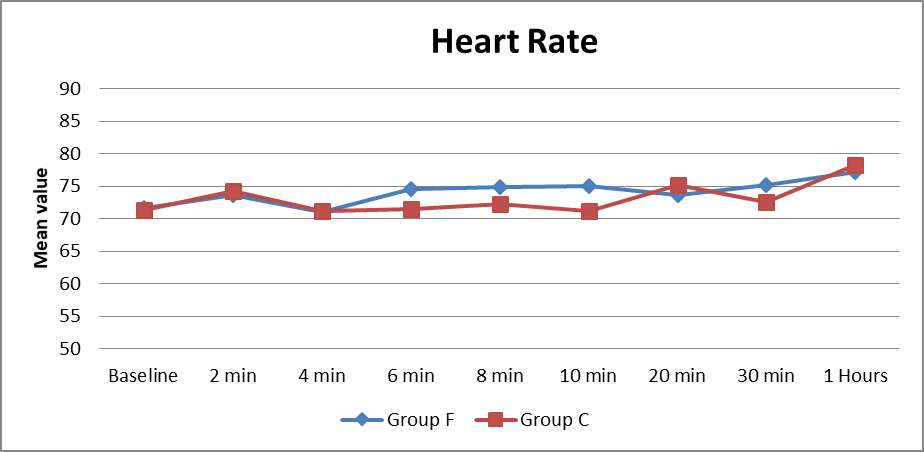
Graph 1: showing comparison of heart rate (HR) at different time intervals between two groups.
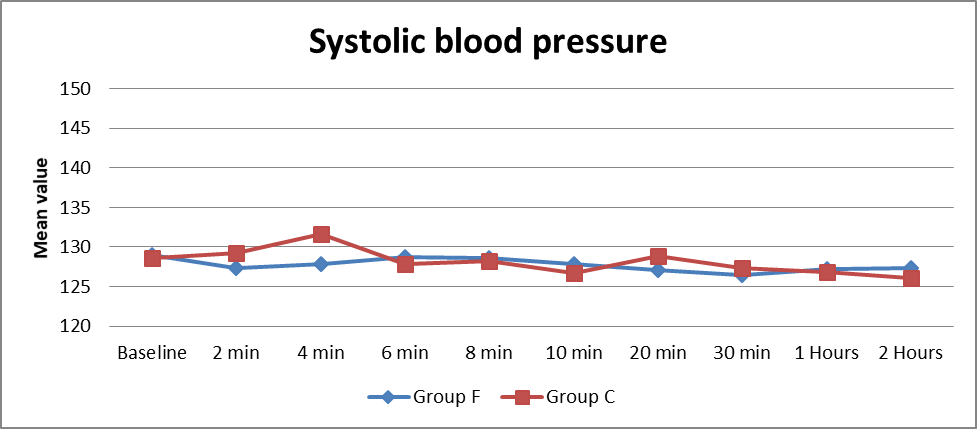
Graph 2: showing comparison of systolic blood pressure (SBP) in mm of Hg at various time intervals between two groups.
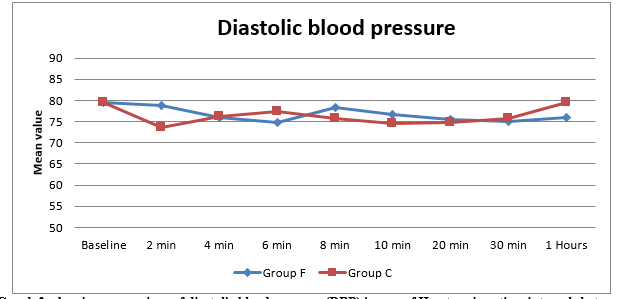
Graph 3: showing comparison of diastolic blood pressure (DBP) in mm of Hg at various time intervals between two groups.
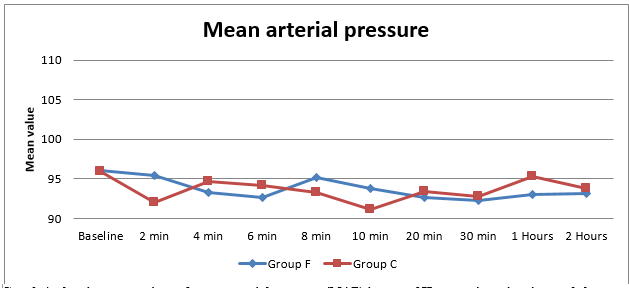
Graph 4: showing comparison of mean arterial pressure (MAP) in mm of Hg at various time intervals between two groups.
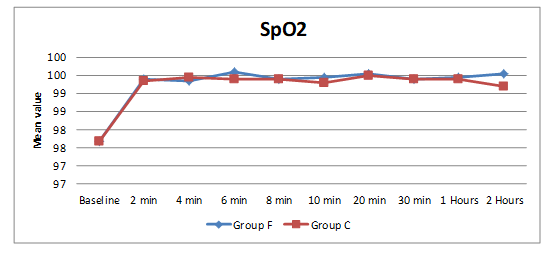
Graph 5: showing comparison of SpO2 % at various time intervals between two groups.
DISCUSSION:
Regional blocks like peribulbar block and retrobulbar blocks are preferred for ophthalmic surgeries over general anaesthesia. Addition of drugs as adjuvants to the local anaesthetics in regional anaesthesia is widely accepted now a day because of prolongation of their duration of action and superior analgesia. Therefore several drugs such as opioids, clonidine, dexmedetomidine, ketamine, midazolam, magnesium sulphate, corticosteroids, sodium bicarbonate, adrenaline and neostigmine were added as adjuvants to local anaesthetics. We studied Fentanyl and Clonidine as adjuvants to local anaesthetics in peribulbar block for ophthalmic surgeries.
Fentanyl is a synthetic lipophilic mu receptor agonist opioid which exerts a direct action on peripheral opioids receptor on dorsal horn of spinal cord in the primary afferent tissues and also provides centrally mediated opioid receptor analgesia after uptake into systemic circulation.
Studies on animals showed a synergistic interaction between opioids & local anaesthetic agents. Local anaesthetics act through blockade of selective sodium channel and fentanyl acts on opioids receptor & increases potassium conductance. Hence, its combination provides superior anaesthesia by inhibiting multiple areas of neuronal excitability.
Clonidine increases the effect of local anaesthetics and prolongs their duration of action through peripheral and central action. Peripherally alpha 2 agonists produce analgesia by reducing the release of noradrenaline and causing inhibitory effect on nerve fiber action potential resulting in analgesia. Centrally alpha 2 agonists activate alpha 2 adrenoreceptor and inhibit substance P release in the nociceptive pathway at the level of dorsal root neuron resulting in sedation and analgesia.
Madan et al.9 conducted a dose response study of clonidine with local anesthetics for peribulbar block using 0.5 mcg/kg, 1mcg/kg & 1.5mcg/kg of clonidine and observed prolonged duration of anaesthesia with1mcg/kg of clonidine but since they observed siginficant changes in MAP and HR with 1& 1.5 mcg/kg so, we preferred 0.5mcg/kg dose of clonidine as adjuvant.
Singelyn FJ et al.10 also suggested the minimum dose of clonidine to significantly prolong the duration of analgesia is 0.5mcg/kg without considerable side effects.
Poonam Nehra et al.11 used 25mcg of Fentanyl and 25 mcg of Clonidine as an adjuvants in peribulbar block and observed effective analgesia with hemodynamic stability.
Mohamed M. Abu Elyazedet al.12 and Maha M.I. Youssef et al.4 also used lower dose of Fentanyl (20 mcg).
Hence in present study 25 mcg Fentanyl and 25 mcg Clonidine was added to local anaesthetics with an idea that these adjuvants can prolong postoperative analgesia without systemic side effects.
Demographic characteristics:-
In our study both groups were comparable with respect to their demographic characteristic (age & sex) as shown in table 1. The difference among groups was statistically insignificant (P>0.05). Majority of patient in both groups were male i.e. 72.5% in group F and 52.5% in group C. Patient with ASA I, II, III were included in present study.
Sedation score:- In our study, statistically no significant difference was found in sedation (P>0.05) at various time intervals between group C and group F, as Ramsay sedation score was similar in group C & group F. This may be due to lower doses of fentanyl and clonidine used in our study.
Characteristics of block:-
Onset of sensory (globe anaesthesia): Onset of sensory was accelerated in group C (2.39± 0.68 mins.) with respect to group F (2.46±0.73mins.) however that difference was minimal and insignificant (P=0.636).
In consistent with our results, the study carried by Poonam Nehra et al.11 who added fentanyl and clonidine to local anaesthetics for peribulbar anaesthesia also observed that adding clonidine shortens the onset time. Maha M.I. Youssef et al.4 found that on addition of clonidine & fentanyl as adjuvant to bupivacaine in peribulbar block there was accelerated onset of sensory in clonidine group than fentanyl but that was minimal & not significant. Bajwa et al.13 found that addition of clonidine not only decreases the total volume of LA to be used for the blockade but also augments early onset of sensory.
In contrast Rashmi Madan, MD, Neerja Bharti et al.9found no significant effect of clonidine regarding onset times of lid akinesia, globe anaesthesia & globe akinesia. Hala et al.14found insignificant difference regarding onset of sensory on addition of clonidine to local anaesthetics for peribulbar block
Duration of sensory (globe anaesthesia): In our study there was significant difference (P<0.0001) regarding duration of sensory blockade in group C (82.30 ±2.17 min) than group F (72.83 ±1.72 min) as it was prolonged in patients receiving clonidine as adjuvant.
Our results are consistent with findings of Poonam Nehra et al.11who also suggested that adding clonidine shortens the onset time and prolongs the duration of sensory and motor block and produces sedation. Maha M.I. Youssef et al.4 studied addition of clonidine & fentanyl as adjuvant to bupivacaine in peribulbar block and observed significantly prolonged duration of sensory blockade with clonidine than fentanyl group. These results are also supported by the studies of Gupta RP, Gurunath VS15, Bharti et al.16, N R Connelly et al.17, Bajwa et al.13
Fahmy NG et al.18 did not observe the prolonged duration of block with fentanyl alone but prolongation was observed when fentanyl and clonidine both were added to local anaesthetics.
Our study showed that a peribulbar block with clonidine as adjuvants to local anaesthetics significantly prolongs the duration of globe anaesthesia as compared to fentanyl, which may be because of presence of alpha 2 adrenergic receptors at the nerve endings and hence producing analgesia by preventing the release of norepinephrine.
Onset of motor (globe akinesia): In our study onset of motor blockade, was accelerated in group C (4.34±0.79 mins.) with respect to group F (4.78±1.14mins.) however that difference was nonsignificant. Results obtained in our study are comparable to study carried out by Maha M.I. Youssef et al.4 they found significantly faster onset of globe akinesia in clonidine group as compared to group F (P<0.01) Poonam Nehra et al.11 found mean time of onset was faster in group F & group C compared to control group.
In Contrast to our study Rashmi Madan, MD, Neerja Bharti et al.9 found insignificant effect of clonidine for onset of motor blockade. Fahmy NG et al.18found no difference with respect to onset of motor blockade, resulting in statistical insignificance. Hala et al.14 also found insignificant difference regarding onset of motor blockade, on addition of clonidine to local anaesthetics for peribulbar block.
Duration of motor (globe akinesia): There was statistically significant difference (p<0.0001) regarding duration of motor blockade in group C (256.88± 5.54min) as compared to group F (235.85± 4.85 min).
Results obtained in our study are comparable to study carried out by Maha M.I. Youssef et al.4 they found significantly (P<0.01) prolonged duration of motor blockade in clonidine group (269.7±7.06 min.) as compared to Fentanyl group (244.7±13.83 min.). Poonam Nehra et al.11found mean time of duration of motor blockade was longer in group F (207.71±13.54 min.)& group C (213.52±14.52 min.) as compared to control group.
Duration of Analgesia: In our study, on comparison between two groups, a statistical significant difference (P<0.0001) was found regarding duration of analgesia and it was significantly prolonged in group C (267.15±4.64mins.) compared to group F (247.10±4.14 min.). Patients with VAS Score >3 needed rescue analgesia.
Prolongation of analgesia by the addition of fentanyl and clonidine as adjuvants were also observed by Poonam Nehra et al.11, Maha M.I. Youssef et al.4 , Bajwa et al.13andRashmi Madan, MD, Neerja Bharti et al.9found prolonged duration of analgesia with a statistically significant difference in patients receiving 1mcg/kg and 1.5 mcg/kg clonidine as compared with the control group ,however this dose was associated with fluctuations in hemodynamics and in our study 25mcg clonidine caused prolongation as compared to Fentanyl while maintaining hemodynamic stability. Also study by Fahmy NG etal.18 suggested prolongation of duration of block for up to 2 hour with clonidine as adjuvant to local anaesthetics.
Hemodynamic parameters:-
1) Pulse rate: Graph 1 shows pulse rate monitoring in two groups. Baseline pulse rate in both groups were comparable i.e. P>0.05 and the difference from baseline at different time interval was statistically insignificant in both the groups. Similar results were observed by Poonam Nehra et.al.11
2) Blood pressure: Monitoring of SBP, DBP and MAP depicted in graph 2, 3, 4 respectively. Mean BP was comparable at all time period of observation as compared to baseline. There was statistically no significant difference between the groups except for 3 patients in clonidine group who had single episode of hypotension. These results are in accordance with finding of Poonam Nehra et al.11, Bharti et al.16 who also observed insignificant hemodynamic and respiratory variations. This could be possibly due to lower dose of fentanyl and clonidine used in our study. Also singelyn et al.10 had suggested use of 0.5 mcg/kg clonidine as effective for prolongation without hemodynamic instability.
3) SpO2: Graph 5 shows preoperative value of SpO2 (%) in both groups were comparable and the difference was insignificant (P>0.05) in between two groups.
Perioperative complications: In our study nausea/vomiting occurred in one patient of group F compared to 3in group C. 3 patients had episode of hypotension who received clonidine as adjuvant and responded to fluid bolus. Also, 3 patients in clonidine group had bradycardia which may be due to lower baseline heart rate. No other major complications observed in either group.
CONCLUSION:
In our study it was concluded that addition of Clonidine (25mcg) as an adjuvant to local anaesthetic solution in peribulbar block during ophthalmic surgeries provided prolonged duration of sensory, motor and analgesia without causing serious side effects when compared to Fentanyl.
REFERENCES:
1. Barker, J. P., G. C. Vafidis, and G. M. Hall. “Postoperative Morbidity Following Cataract Surgery: A Comparison of Local and General Anaesthesia.” Anaesthesia 51, no. 5 (May 1996): 435– 37. https://doi.org/10.1111/j.1365-2044.1996.tb07786.x.
2. Demediuk OM, Ranjit SD, Papwort DP, et al. A comparison of retrobulbar and periocular anesthesia for vitreoretinal surgical procedures. Arch Ophthalmol 1995;113:908 –13.
3. Donlon JV Jr .Anaesthesia for Opthalamic Surgery In: Barash P(Ed) :ASA Refresher course lectures vol 16 Philadelphia, JB Lippincott 1988, pg 81.
4. Youssef, Maha MI, Karim Girgis, and Sherif Mohamed Soaida. "Clonidine versus fentanyl as adjuvants to bupivacaine in peribulbar anesthesia." Egyptian Journal of Anaesthesia 30.3 (2014): 267-272.
5. Khalil, N., and H. M. Marouf. "Dexmedetomidine vs. Fentanyl as Adjuvant to Local Anaesthetic Mixture in Peribulbar Block for Retinal Surgery: A Randomized Prospective Study." J Anesth Clin Res 8.755 (2017): 2.
6. Sinha, R, A Sharma, Br Ray, R Chandiran, C Chandralekha, and R Sinha. “Effect of Addition of Magnesium to Local Anesthetics for Peribulbar Block: A Prospective Randomized Double-Blind Study.” Saudi Journal of Anaesthesia 10, no. 1 (2016): 64. https://doi.org/10.4103/1658-354X.169478.
7. Prabhakar, Amit, et al. "Adjuvants in clinical regional anesthesia practice: A comprehensive review." Best Practice & Research Clinical Anaesthesiology 33.4 (2019): 415-423.
8. Adams, Lee. "Adjuvants to local anaesthesia in ophthalmic surgery." British journal of ophthalmology 95.10 (2011): 1345- 1349.
9. Madan, Rashmi, et al. "A dose response study of clonidine with local anesthetic mixture for peribulbar block: a comparison of three doses." Anesthesia & Analgesia 93.6 (2001): 1593-1597.
10. Singelyn, Francois J., Jean-Marie Gouverneur, and Annie Robert. "A minimum dose of clonidine added to mepivacaine prolongs the duration of anesthesia and analgesia after axillary brachial plexus block." Anesthesia & Analgesia 83.5 (1996): 1046-1050.
11. Nehra, Poonam, et al. "Effect of addition of fentanyl and clonidine to local anesthetic solution in peribulbar block." Journal of pharmacology & pharmacotherapeutics 8.1 (2017): 3.
12. Elyazed, Mohamed M. Abu, and Shaimaa F. Mostafa. "Fentanyl versus magnesium sulphate as adjuvant to peribulbar anesthesia in cataract surgery." Egyptian Journal of Anaesthesia 33.2 (2017): 159-163.
13. Khan, Balbir, et al. "Comparative evaluation of ropivacaine and lignocaine with ropivacaine, lignocaine and clonidine combination during peribulbar anaesthesia for phacoemulsification cataract surgery." Indian journal of anaesthesia 56.1 (2012): 21.
14. Eldeen, H. M., et al. "Use of clonidine in peribulbar block in patients undergoing cataract surgery." Aust J Basic Appl Sci 5 (2011): 247-50.
15. Gupta, R. P., and V. S. Gurunath. "Studied Effect of Adding Clonidine to Anaesthetic Mixture on Efficacy and Duration of Peribulbar Block. He Concluded that Adding Clonidine to Local Anaesthetic Mixture Prolongs the Duration of Sensory Blockage." AIOC 2010 Proceeding Cataract Session 4 (2010): 133-4.
16. Bharti, N., et al. "Effect of addition of clonidine to local anaesthetic mixture for peribulbar block." Anaesthesia and intensive care 30.4 (2002): 438-441.
17. Connelly, Neil Roy, et al. "Use of clonidine as a component of the peribulbar block in patients undergoing cataract surgery." Regional anesthesia and pain medicine 24.5 (1999): 426-429.
18. Fahmy, N. G., A. M. Fahmy, and K. Y. Kamal. "Clonidine versus fentanyl as adjuvants to bupivacaine in peribulbar anesthesia." Ain Sham J Anaesthesiol 4 (2011): 41-7.