Clinical Outcomes Following Subtotal Cholecystectomy in Difficult Gallbladder Surgery: A Prospective Observational Study.
- Suneetha Komanduri , Assistant Professor, Department of General Surgery, Kamineni Academy of Medical Sciences and Research Centre, Hyderabad.
- Divya Devi Bhongir , Assistant Professor, Department of General Surgery, Kamineni Academy of Medical Sciences and Research Centre, Hyderabad.
- Praveen Kola , Senior Resident, Department of General Surgery, Kamineni Academy of Medical Sciences and Research Centre, Hyderabad.
Article Information:
Abstract:
Introduction: Laparoscopic cholecystectomy is the gold standard for symptomatic gallstone disease. However, severe inflammation, dense fibrosis, contracted gallbladder, Mirizzi syndrome, and distorted anatomy of Calot's triangle may preclude safe identification of biliary structures, increasing the risk of bile duct injury (BDI). In such situations, subtotal cholecystectomy (STC) has emerged as an effective bailout procedure that prioritizes patient safety by avoiding hazardous dissection. Although STC substantially reduces the risk of major BDI, concerns remain regarding postoperative bile leak, retained calculi, recurrent biliary symptoms, and the need for subsequent endoscopic intervention. Aim of the study was to evaluate the short-term clinical outcomes following subtotal cholecystectomy performed for difficult gallbladder disease. Materials and Methods: A prospective observational study was conducted in the Department of General Surgery at a tertiary care teaching hospital over an 18-month period. Consecutive patients undergoing subtotal cholecystectomy because of difficult gallbladder anatomy were included. The minimum sample size was calculated to be 57 patients using a postoperative bile leak incidence of 18% reported in previous literature; after accounting for a 10% attrition rate, the target sample size was increased to 70 patients. Data collected included demographic profile, operative findings, operative duration, blood loss, postoperative complications, bile leak, need for ERCP, duration of hospital stay, and 30-day outcomes. Results: A total of 64 patients were included. The mean age was 49.6 ± 14.2 years, with females constituting 65.6% of the study population. Acute cholecystitis was the most common indication (59.4%), followed by chronic cholecystitis (26.6%), Mirizzi syndrome (9.4%), and empyema (4.6%). The mean operative time was 116 ± 24 minutes, while the average intraoperative mam was 120 ± 38 mL. Postoperative bile leak occurred in 5 patients (7.8%), with four resolving conservatively and one requiring ERCP with biliary stenting. Surgical site infection occurred in 3 patients (4.7%), and two patients (3.1%) required readmission. No major bile duct injuries or mortality were observed. The mean hospital stay was 4.9 ± 1.8 days. Conclusion: Subtotal cholecystectomy is a safe and effective bailout procedure for difficult gallbladder surgery. It significantly minimizes the risk of major bile duct injury while maintaining acceptable postoperative morbidity. Careful patient selection, adherence to safe cholecystectomy principles, and timely management of postoperative bile leaks contribute to favorable clinical outcomes.
Keywords:
Article :
INTRODUCTION:
Gallstone disease is one of the most common gastrointestinal disorders worldwide and represents a major indication for abdominal surgery. Laparoscopic cholecystectomy (LC), since its introduction in the late 1980s, has become the gold standard treatment for symptomatic cholelithiasis owing to its advantages of reduced postoperative pain, shorter hospital stay, faster recovery, and improved cosmetic outcomes compared with open cholecystectomy. Despite these advantages, laparoscopic cholecystectomy continues to present considerable technical challenges in patients with severe inflammation, dense adhesions, or distorted biliary anatomy, predisposing to increased operative difficulty and higher complication rates.¹˒²
The term difficult gallbladder encompasses operative situations in which safe identification of the cystic duct and cystic artery is hindered by acute inflammation, chronic fibrosis, empyema, gangrenous cholecystitis, Mirizzi syndrome, contracted gallbladder, or dense adhesions involving Calot's triangle. Difficult laparoscopic cholecystectomy has been reported in approximately 15–20% of patients and is associated with prolonged operative time, increased blood loss, higher conversion rates, and an increased risk of vascular and biliary injuries.³ Consequently, several intraoperative bailout strategies have been proposed to improve patient safety while avoiding catastrophic bile duct injury.
Bile duct injury (BDI) remains the most feared complication of laparoscopic cholecystectomy because of its association with repeated interventions, prolonged hospitalization, impaired quality of life, and increased healthcare costs. The majority of these injuries occur because of misinterpretation of biliary anatomy rather than technical error. To minimize this risk, Strasberg and Brunt introduced the concept of the Critical View of Safety (CVS), which requires complete clearance of the hepatocystic triangle, separation of the lower one-third of the gallbladder from the liver bed, and identification of only two structures entering the gallbladder before clipping or division. Whenever the Critical View of Safety cannot be safely achieved, surgeons are advised to abandon further hazardous dissection and adopt an appropriate bailout procedure.⁴˒⁵
Subtotal cholecystectomy (STC) has emerged as one of the most effective bailout procedures for difficult gallbladder surgery. Instead of pursuing unsafe dissection around the hepatocystic triangle, the surgeon intentionally leaves a portion of the gallbladder in situ while removing the diseased gallbladder and its contents, thereby significantly reducing the risk of major bile duct injury. Current international recommendations, including the Tokyo Guidelines 2018 and the World Society of Emergency Surgery (WSES) Guidelines, advocate subtotal cholecystectomy whenever safe completion of total cholecystectomy is not feasible.⁶˒⁷
Strasberg subsequently classified subtotal cholecystectomy into fenestrating and reconstituting techniques. In the fenestrating technique, the gallbladder remnant is left open after removal of all calculi and mucosal ablation, whereas in the reconstituting technique the gallbladder remnant is closed, recreating a small pouch. Although fenestrating subtotal cholecystectomy has been associated with a higher incidence of postoperative bile leakage, reconstituting subtotal cholecystectomy may be associated with a greater risk of recurrent gallstone formation in the residual gallbladder.⁸
A landmark systematic review and meta-analysis by Elshaer et al. demonstrated subtotal cholecystectomy to be a safe alternative in difficult gallbladders, reporting an extremely low incidence of major bile duct injury while maintaining acceptable postoperative morbidity. Postoperative bile leak remained the commonest complication, although most cases were successfully managed conservatively or with endoscopic biliary drainage.¹⁰ More recently, systematic reviews by Nzenwa et al. and Henneman et al. have further confirmed the safety and efficacy of subtotal cholecystectomy while highlighting differences in postoperative outcomes between fenestrating and reconstituting techniques.¹³˒¹⁴
Despite growing acceptance of subtotal cholecystectomy, prospective studies evaluating its short-term clinical outcomes remain limited, particularly in the Indian population. Furthermore, heterogeneity in operative technique, patient selection, and postoperative management has resulted in variations in reported outcomes across different studies. Prospective evaluation of subtotal cholecystectomy is therefore essential to better define its safety profile and guide evidence-based surgical practice.
The present study was undertaken to prospectively evaluate the short-term clinical outcomes following laparoscopic subtotal cholecystectomy performed as a bailout procedure for difficult gallbladder surgery, with particular emphasis on postoperative morbidity, bile leak, need for endoscopic intervention, duration of hospital stay, and overall procedural safety.
MATERIALS AND METHODS:
This prospective observational study was conducted in the Department of General Surgery, Kamineni Academy of Medical Sciences and Research Centre, Hyderabad, Telangana, India, over an 18-month period from January 2025 to June 2026. The study was designed and reported in accordance with the Strengthening the Reporting of Observational Studies in Epidemiology (STROBE) recommendations. Adult patients (≥18 years) undergoing laparoscopic subtotal cholecystectomy as a bailout procedure for difficult gallbladder disease were enrolled consecutively after obtaining approval from the Institutional Ethics Committee and written informed consent.
The sample size was calculated using the formula for estimation of a single population proportion based on the postoperative bile leak incidence of 18% reported by **Elshaer et al.**¹⁰. Assuming a 95% confidence level, an absolute precision of 10%, and a 10% attrition rate, the minimum required sample size was 64 patients. To improve statistical power and compensate for possible exclusions, 70 consecutive patients were included in the study.
Patients undergoing subtotal cholecystectomy because of acute or chronic cholecystitis with frozen Calot's triangle, dense adhesions, Mirizzi syndrome, empyema, gangrenous gallbladder, or distorted biliary anatomy were included. Patients with suspected or confirmed gallbladder malignancy, those undergoing standard total cholecystectomy or planned open cholecystectomy, patients with incomplete perioperative data, and those unwilling to participate were excluded.
All patients underwent detailed clinical evaluation including history, physical examination, complete blood count, liver function tests, renal function tests, coagulation profile, abdominal ultrasonography, and additional imaging such as magnetic resonance cholangiopancreatography (MRCP) or contrast-enhanced computed tomography (CECT) whenever clinically indicated. The severity of acute cholecystitis was graded according to the Tokyo Guidelines 2018⁶, while intraoperative difficulty was assessed using the Nassar Operative Difficulty Grading Scale¹¹.
Laparoscopic cholecystectomy was initiated using the standard four-port technique. The Critical View of Safety, as described by Strasberg and Brunt, was attempted in every patient before clipping and division of the cystic duct and artery.⁴ Whenever safe achievement of the Critical View of Safety was not possible because of severe inflammation, fibrosis, dense adhesions, or distorted anatomy, subtotal cholecystectomy was performed as the bailout procedure. Depending upon intraoperative findings and surgeon preference, either fenestrating or reconstituting subtotal cholecystectomy was undertaken as described by Strasberg et al.⁸ Visible gallstones were removed, the remnant gallbladder mucosa was cauterized whenever feasible, and a closed suction drain was placed selectively in patients with difficult dissection or suspected bile leakage.
Patient demographics, presenting symptoms, comorbidities, operative findings, operative time, estimated blood loss, type of subtotal cholecystectomy, drain placement, conversion to open surgery, postoperative bile leak, surgical site infection, intra-abdominal collection, need for ERCP or reoperation, duration of hospital stay, 30-day readmission, and mortality were prospectively recorded. Postoperative complications were graded according to the Clavien–Dindo classification.¹² Patients were followed prospectively at one week, one month, and three months after surgery to assess postoperative morbidity, recurrent biliary symptoms, and the need for additional intervention.
Statistical analysis:
Data were entered into Microsoft Excel and analyzed using IBM SPSS Statistics version 27.0 (IBM Corp., Armonk, NY, USA). Continuous variables were expressed as mean ± standard deviation or median with interquartile range, whereas categorical variables were presented as frequencies and percentages. Continuous variables were compared using the Student's t-test or Mann–Whitney U test, while categorical variables were analyzed using the Chi-square test or Fisher's exact test as appropriate. A p-value of <0.05 was considered statistically significant.
RESULTS:
Comparison between Fenestrating and Reconstituting Subtotal Cholecystectomy
Table 1. Baseline Demographic Characteristics
|
Variable |
Value |
|
Number of patients |
70 |
|
Mean age (years) |
49.6 ± 14.2 |
|
Female |
46 (65.7%) |
|
Male |
24 (34.3%) |
|
Mean BMI (kg/m²) |
26.8 ± 3.7 |
|
Diabetes mellitus |
17 (24.3%) |
|
Hypertension |
21 (30.0%) |
A total of 70 patients underwent laparoscopic subtotal cholecystectomy during the study period and were included in the final analysis. The mean age of the study population was 49.6 ± 14.2 years (range, 22–78 years). Females predominated (46 patients, 65.7%), reflecting the higher prevalence of gallstone disease among women. The mean body mass index was 26.8 ± 3.7 kg/m², while diabetes mellitus and hypertension were present in 24.3% and 30.0% of patients, respectively.
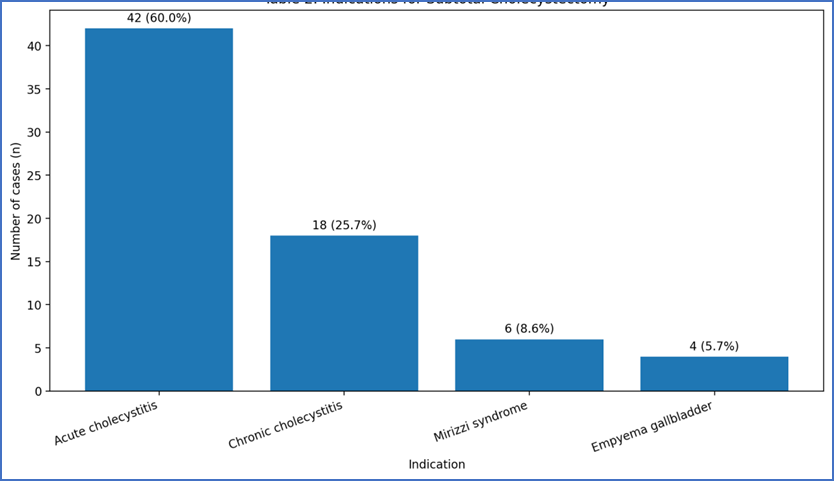
Figure 1. Indications for Subtotal Cholecystectomy
Acute cholecystitis was the commonest indication for surgery (42 patients, 60.0%), followed by chronic cholecystitis (18 patients, 25.7%), Mirizzi syndrome (6 patients, 8.6%), and empyema gallbladder (4 patients, 5.7%). According to the Tokyo Guidelines 2018, most patients with acute cholecystitis were classified as Grade II disease.
Table 2. Intraoperative Outcomes
|
Variable |
Value |
|
Mean operative time |
118 ± 26 min |
|
Mean blood loss |
115 ± 40 mL |
|
Fenestrating STC |
40 (57.1%) |
|
Reconstituting STC |
30 (42.9%) |
|
Conversion to open |
2 (2.9%) |
|
Drain placement |
61 (87.1%) |
Fenestrating subtotal cholecystectomy was performed in 40 patients (57.1%), whereas 30 patients (42.9%) underwent the reconstituting technique. The mean operative duration was 118 ± 26 minutes, and the mean estimated intraoperative blood loss was 115 ± 40 mL. Conversion to open surgery was required in 2 patients (2.9%) because of extensive adhesions and uncontrolled bleeding. A closed suction drain was placed in 61 patients (87.1%).
Table 3. Postoperative Outcomes
|
Outcome |
n (%) |
|
Bile leak Bile Leak Managed Conservatively ERCP with stenting |
6 (8.6) |
|
5 (7.1) 1 (1.4) |
|
|
Surgical site infection |
3 (4.3) |
|
Intra-abdominal collection |
2 (2.9) |
|
Readmission |
2 (2.9) |
|
Major bile duct injury |
0 |
|
Mortality |
0 |
Postoperative bile leak was observed in 6 patients (8.6%). Five patients (83.3%) responded to conservative management with continued drainage, while one patient required ERCP with biliary stenting, resulting in complete resolution of the leak. Surgical site infection occurred in 3 patients (4.3%), all of whom responded to antibiotics and local wound care. Two patients (2.9%) developed postoperative intra-abdominal collections requiring ultrasound-guided percutaneous drainage. No retained common bile duct stones or recurrent biliary symptoms were observed during the follow-up period.
Table 4. Comparison of Fenestrating and Reconstituting Subtotal Cholecystectomy
|
Variable |
Fenestrating (n=40) |
Reconstituting (n=30) |
p value |
|
Mean operative time (min) |
121 ± 24 |
114 ± 22 |
0.18 |
|
Mean blood loss (mL) |
120 ± 38 |
109 ± 35 |
0.27 |
|
Bile leak |
5 (12.5%) |
1 (3.3%) |
0.19 |
|
Mean hospital stay (days) |
5.1 ± 1.5 |
4.5 ± 1.3 |
0.11 |
|
Overall complications |
7 (17.5%) |
3 (10.0%) |
0.37 |
The fenestrating group showed slightly higher mean operative time (121 ± 24 vs. 114 ± 22 minutes), blood loss (120 ± 38 vs. 109 ± 35 mL), and hospital stay (5.1 ± 1.5 vs. 4.5 ± 1.3 days) compared with the reconstituting group. Bile leak (12.5% vs. 3.3%) and overall complications (17.5% vs. 10.0%) were also more frequent in the fenestrating group.
DISCUSSION:
The present prospective observational study evaluated the short-term outcomes of laparoscopic subtotal cholecystectomy performed as a bailout procedure in patients with difficult gallbladder disease. Our findings demonstrate that subtotal cholecystectomy is a safe and effective alternative when the Critical View of Safety cannot be achieved, with an acceptable complication profile and complete avoidance of major bile duct injury.
The demographic characteristics observed in our study are consistent with the established epidemiology of gallstone disease. Females constituted nearly two-thirds of the study population, and the mean age was 49.6 years, findings comparable with previous reports by Elshaer et al.¹⁰ and Henneman et al.¹⁴ Acute cholecystitis was the most common indication for subtotal cholecystectomy, emphasizing that severe inflammation remains the principal reason for abandoning standard dissection and adopting a bailout strategy.
Major bile duct injury remains the most devastating complication of laparoscopic cholecystectomy. Notably, no bile duct injuries occurred in our series, reinforcing the role of subtotal cholecystectomy as a safe alternative to hazardous dissection. These findings closely mirror those of Elshaer et al.¹⁰, who reported a bile duct injury rate of only 0.08% in their systematic review, and support the recommendations of the Tokyo Guidelines 2018 and WSES guidelines advocating subtotal cholecystectomy when safe dissection is not possible.⁶˒⁷
Postoperative bile leak remains the principal drawback of subtotal cholecystectomy. In the present study, the bile leak rate was 8.6%, which is lower than the approximately 18% reported by Elshaer et al.¹⁰ and comparable to more recent studies. Most bile leaks were successfully managed conservatively, with only one patient requiring ERCP and biliary stenting. The relatively low bile leak rate observed in our series may be attributed to meticulous closure of the gallbladder remnant whenever feasible, selective drain placement, and careful patient selection.
When the two techniques of subtotal cholecystectomy were compared, the fenestrating technique demonstrated a higher incidence of postoperative bile leak than the reconstituting technique (12.5% vs. 3.3%), although this difference did not achieve statistical significance. Similar observations have been reported in the systematic review by Nzenwa et al.¹³, which concluded that reconstituting subtotal cholecystectomy is associated with a lower incidence of postoperative bile leakage but may carry a greater long-term risk of recurrent biliary symptoms.
The overall postoperative morbidity in the present study was low. Surgical site infection occurred in only 4.3% of patients, while postoperative intra-abdominal collection developed in 2.9%. The mean hospital stay of 4.8 days was comparable with previously published series evaluating subtotal cholecystectomy in difficult gallbladders.¹⁴ These findings suggest that subtotal cholecystectomy can be performed safely with acceptable perioperative outcomes in experienced hepatobiliary units.
The principal strengths of the present study include its prospective design, standardized operative approach, complete short-term follow-up, and use of validated assessment tools including the Tokyo Guidelines 2018, the Nassar Operative Difficulty Scale, and the Clavien–Dindo classification. Nevertheless, certain limitations should be acknowledged. The study was conducted at a single tertiary care institution with a relatively modest sample size and short follow-up period. Furthermore, the absence of a comparison group undergoing total cholecystectomy precluded direct comparison of perioperative outcomes. Larger multicenter studies with longer follow-up are warranted to evaluate long-term biliary complications and further compare fenestrating and reconstituting subtotal cholecystectomy.
CONCLUSION:
Laparoscopic subtotal cholecystectomy is a safe and effective bailout procedure for difficult gallbladder surgery when the Critical View of Safety cannot be achieved. It significantly reduces the risk of major bile duct injury while maintaining acceptable postoperative morbidity. Although postoperative bile leak remains the most frequent complication, the majority of cases can be managed successfully with conservative treatment or endoscopic intervention. Timely decision-making, meticulous surgical technique, and adherence to safe cholecystectomy principles are essential for optimizing patient outcomes. Based on the findings of the present study, subtotal cholecystectomy should be considered the bailout procedure of choice in difficult gallbladder surgery. Further multicenter prospective studies with longer follow-up are recommended to establish long-term outcomes and refine patient selection for the fenestrating and reconstituting techniques.
REFERENCES:
1. Reynolds W Jr. The first laparoscopic cholecystectomy. JSLS. 2001;5(1):89–94.
2. Keus F, de Jong JA, Gooszen HG, van Laarhoven CJ. Laparoscopic versus open cholecystectomy for patients with symptomatic cholecystolithiasis. Cochrane Database Syst Rev. 2006;(4):CD006231.
3. Gupta V, Jain G. Safe laparoscopic cholecystectomy: Adoption of universal culture of safety in cholecystectomy. World J Gastrointest Surg. 2019;11(2):62–84.
4. Strasberg SM, Brunt LM. Rationale and use of the Critical View of Safety in laparoscopic cholecystectomy. J Am Coll Surg. 2010;211(1):132–138.
5. Strasberg SM. A teaching program for the “culture of safety in cholecystectomy” and avoidance of bile duct injury. J Am Coll Surg. 2013;217(4):751–756.
6. Wakabayashi G, Iwashita Y, Hibi T, Takada T, Strasberg SM, Asbun HJ, et al. Tokyo Guidelines 2018: Surgical management of acute cholecystitis. J Hepatobiliary Pancreat Sci. 2018;25(1):89–113.
7. Pisano M, Allievi N, Gurusamy K, et al. 2020 World Society of Emergency Surgery updated guidelines for the diagnosis and treatment of acute calculus cholecystitis. World J Emerg Surg. 2020;15:61.
8. Strasberg SM, Pucci MJ, Brunt LM, Deziel DJ. Subtotal cholecystectomy—fenestrating versus reconstituting subtypes and the prevention of bile duct injury: Definition of the optimal procedure in difficult operative conditions. J Am Coll Surg. 2016;222(1):89–96.
9. Boerma D, Rauws EA, Keulemans YC, et al. Impaired quality of life 5 years after bile duct injury during laparoscopic cholecystectomy: A prospective analysis. Ann Surg. 2001;234(6):750–757.
10. Elshaer M, Gravante G, Thomas K, Sorge R, Al-Hamali S, Ebdewi H. Subtotal cholecystectomy for difficult gallbladders: Systematic review and meta-analysis. JAMA Surg. 2015;150(2):159–168.
11. Nassar AHM, Hodson J, Ng HJ, Vohra RS, Katbeh T, Zino S, Griffiths EA. Predicting the difficult laparoscopic cholecystectomy: Development and validation of the Nassar operative difficulty grading scale. SurgEndosc. 2018;32(1):1549–1555.
12. Dindo D, Demartines N, Clavien PA. Classification of surgical complications: A new proposal with evaluation in a cohort of 6336 patients and results of a survey. Ann Surg. 2004;240(2):205–213.
13. Nzenwa IC, Mesri M, Pucher PH, et al. Fenestrating versus reconstituting subtotal cholecystectomy: A systematic review and meta-analysis. HPB (Oxford). 2021;23(10):1527–1537.
14. Henneman D, da Costa DW, Vrouenraets BC, van Wagensveld BA, Lagarde SM. Laparoscopic subtotal cholecystectomy for difficult gallbladders: A systematic review. SurgEndosc. 2013;27(2):351–358.