The Effectiveness Of Tranexamic Acid In Regulation Of Bleeding During Tonsillectomy Surgery.
- Sourav Naskar , Assistant Professor, MBBS (cal), MS (ENT), Department of Otorhinolaryngology, Institute of Midnapore Medical College, Vidyasagar Road, West Midnapore. Midnapore – 721101
- Amit Bikram Maiti , Associate professor, MBBS (Cal), MS (ENT), Department of otorhinolaryngology, Institute of Institute of post graduate medical education and research SSKM Hospital, Kolkata.
- Rabi Hembrom , professor & Head, MBBS, MS, Department of Otorhinolaryngology, Institute of Midnapore Medical College, Vidyasagar Road, West Midnapore. Midnapore – 721101.
- Subisesh Saha , consultant ENT surgeon, MBBS, MS, Department of ENT, private practice.
- Bhaskar Kohar , Senior Resident, MBBS, MS (ENT), Department of Otorhinolaryngology, Institute of Midnapore Medical College, Vidyasagar Road, West Midnapore. Midnapore – 721101
- Ashis Kumar Ghosh ,
Article Information:
Abstract:
Introduction: Tonsillectomy is one of the most commonly performed otolaryngological procedures, and intraoperative bleeding remains a significant concern that may affect surgical field visibility and patient safety. Tranexamic acid, an antifibrinolytic agent, promotes clot stability by inhibiting fibrinolysis and may help reduce surgical blood loss. Aims: To assess the efficacy of preoperative Tranexamic acid to control bleeding during tonsillectomy operation. Materials and methods: Total no of 78 patients underwent tonsillectomy (by cold steel method) from the month of March 24, 2024 to February 25,2025. 78 patients are randomized into two groups, Group A study group, where IV tranexamic acid were given as a dose of 10 mg /kg body weight 1 hour before tonsillectomy. Group B control group, where tonsillectomy was performed without tranexamic acid. Per-operative bleeding was assessed by cotton soakage and compared. Amount of blood measured using soaked cotton weight. Result: The mean intraoperative blood loss was significantly lower in the tranexamic acid group compared with the control group. Patients receiving tranexamic acid demonstrated better haemostatic control with reduced surgical bleeding. The difference in blood loss between the two groups was statistically significant (p < 0.00001). Study group showing statistically significant less bleeding than control group. Conclusion: Single IV dose of tranexamic acid showed marked reduction of intra-op haemorrhage during procedure.
Keywords:
Article :
INTRODUCTION:
Tonsillectomy is an effective surgical procedure, when indicated. It’s an age-old surgery which is still practiced to day. Control of hemorrhage is the most important part of tonsillectomy surgery. Even today most dreaded complication of tonsillectomy is hemorrhage which is a life-threatening complication. Post tonsillectomy hemorrhage causes risk of airway obstruction, hypovolemic shock, & ultimately lead to death.
Tranexamic acid (Trans 4. aminomethyl cyto hexanecarboxillic acid), is a synthetic derivative of amino acid lysine, that exerts its fibrinolytic action by binding with lysine binding area of plasminogen molecule.
Thus, interaction with plasminogen and heavy chain of plasmin with lysine residues of the surface of fibrin. Suppression of fibrinolysis with tranexamic acid is manifested by reduction of blood level of D-dimer. So, drug having no effect on coagulation Parameters. Thereby used for reduction of primary hemorrhage during tonsillectomy [1].
MATERIALS AND METHODS:
Study design: A prospective randomized control trial
Place of study: Department. of ENT Midnapore Medical College & Hospital, west Bengal
Period of study: March 2024 to February 2025
Study Population: Midnapore west has population of 169264 according to last census [2] Incidence of bacterial tonsillitis is not completely known, research indicates that 15-30% of sore throats in children and 5-10% sore throats in adults are bacterial tonsillitis. [3] The incidence peak of acute tonsillitis is observed in children of school age, but it may generally occur at any age. It can only be assumed that (pharyngo-) tonsillitis caused by group A β-hemolytic streptococci (GABHS) or Streptococcus pyogenes is responsible for about 5 % of acute medical consultations. [4] 5% of our total population is – 8,463.
Previous study shows around 13.6% patients undergoing tonsillectomy among all bacterial tonsillitis patients. Among all tonsillitis patients according to previous study 11.7 percent underwent tonsillectomy with all paradise criteria. Considering confidence level 95%, Margin of error 5, Population proportion 11.7, population size 8463. According to calculations and previous references our sample size will be 156, considering 1 yr time period it’s a huge number of patients. So, in this study period 50% among them i.e. 78 patients to be included in our study, and we are selecting 78 as our sample size, also as per official OT census of Department of ENT, MMCH.
Sample size: Among 78 patients, 39 patients to be operated with tranexamic acid, and 39 patients to be operated without tranexamic acid.
Inclusion Criteria:
• Age group: All patients with subacute and chronic tonsillitis age group of 5-40 yrs
• Subacute & chronic tonsillitis age group of 5-40 yrs.
• Paradise criteria---All patients of chronic tonsillitis satisfying “PARADISE CRITERIA” for tonsillectomy were included in our study.
Exclusion criteria:
• Pt having enlarged adenoids, along with tonsillar enlargement.
• Pt with known allergic to tranexamic acid. (Before surgery skin test. of tranexamic acid to be done).
• Pt having cardiac problems, DVT. Receiving anticoagulant therapy.
• Pt having altered color vision.
Statistical Analysis: For statistical analysis, data were initially entered into a Microsoft Excel spreadsheet and then analyzed using SPSS (version 27.0; SPSS Inc., Chicago, IL, USA) and GraphPad Prism (version 5). Numerical variables were summarized using means and standard deviations, while Data were entered into Excel and analyzed using SPSS and GraphPad Prism. Numerical variables were summarized using means and standard deviations, while categorical variables were described with counts and percentages.
Two-sample t-tests were used to compare independent groups, while paired t-tests accounted for correlations in paired data. Chi-square tests (including Fisher’s exact test for small sample sizes) were used for categorical data comparisons. P-values ≤ 0.05 were considered statistically significant.
RESULTS:
Table 1: Comparison of Mean Intraoperative Blood Loss Between the Experimental (Tranexamic Acid) and Control Groups During Tonsillectomy
|
Group |
Mean Blood Loss (ml) |
SD |
|
Experimental |
75.67 |
14.26 |
|
Control |
137.18 |
31.49 |
Table 2: Baseline Demographic and Preoperative Characteristics of the Experimental and Control Groups
|
Variable |
Experimental Group (n=39) |
Control Group (n=39) |
|
Number of Patients |
39 |
39 |
|
Mean Age (Years) |
22.1 |
20.87 |
|
Mean Pre-op Haemoglobin (g/dL) |
11.47 |
11.37 |
Table 3: Two-Way ANOVA Showing the Effects of Treatment Group and Gender on Intraoperative Blood Loss During Tonsillectomy
|
Factor |
F-value |
p-value |
Interpretation |
|
Treatment Group |
125.56 |
< 0.00001 |
Highly significant effect of tranexamic acid |
|
Gender (Sex) |
2.08 |
0.154 |
Not statistically significant |
|
Interaction (Sex × Group) |
0.17 |
0.682 |
No significant interaction |
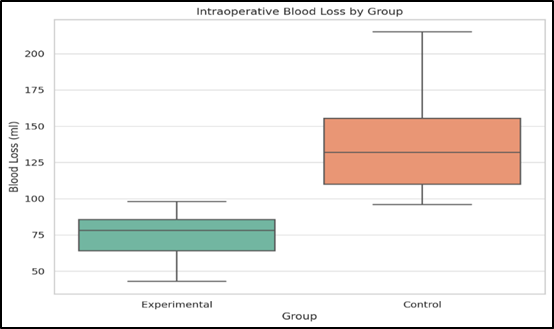
Figure 1: Boxplot comparing intraoperative blood loss between the experimental group (administered tranexamic acid) and the control group. The experimental group showed significantly reduced blood loss (p < 0.00001, Mann–Whitney U test). Boxes indicate the interquartile range, horizontal lines represent medians, and dots represent individual data points.
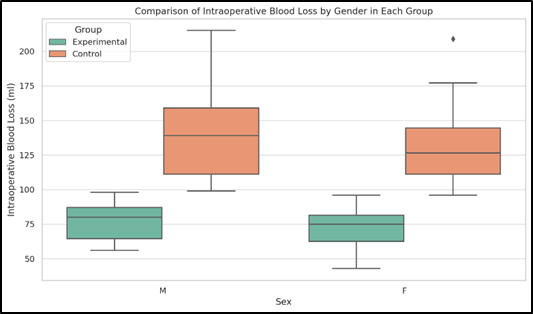
Figure 2: Histogram with density curves showing the distribution of intraoperative blood loss in experimental and control groups. The tranexamic acid group shows a narrow distribution with lower blood loss values compared to the control group, reflecting a significant reduction in intraoperative bleeding (p < 0.00001).
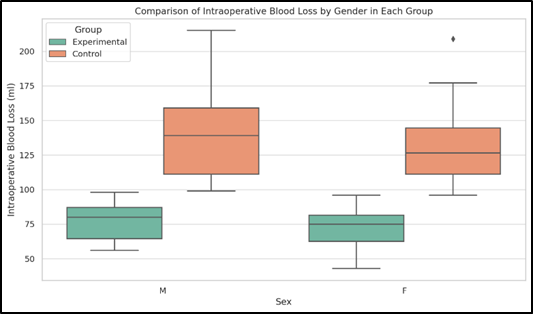
Figure 3: Tranexamic acid effectively reduces intraoperative bleeding in both genders, minimizing the sex-based variability observed in the control group.
A total of 78 patients were enrolled in the study and randomly assigned into two equal groups of 39 each. The experimental group received tranexamic acid prior to cold steel tonsillectomy, while the control group underwent the procedure without it.
Baseline Characteristics
Both groups were well matched in terms of age and baseline haemoglobin levels. The mean age in the experimental group was 21.74 ± 6.97 years, compared to 22.28 ± 7.19 years in the control group. Mean preoperative haemoglobin levels were also comparable, measuring 10.91 ± 0.67 g/dL and 10.89 ± 0.60 g/dL, respectively. These findings suggest a balanced baseline across the two study arms (Table 1).
Intraoperative Blood Loss
A significant difference in intraoperative blood loss was observed between the two groups. Patients who received tranexamic acid had a mean blood loss of 75.69 ± 13.85 ml, whereas the control group experienced a substantially higher mean blood loss of 119.23 ± 16.12 ml. This difference was statistically significant (p < 0.00001, Mann–Whitney U test), underscoring the efficacy of tranexamic acid in reducing surgical bleeding (Table 2, Figure 1).
A histogram illustrating the distribution of blood loss further highlighted this finding. The tranexamic acid group showed a tight clustering of lower blood loss values, while the control group had a wider spread with a rightward shift, indicating greater and more variable bleeding (Figure 2).
Influence of Age on Blood Loss
When analysing the relationship between patient age and intraoperative bleeding, a trend emerged in the control group: older patients tended to bleed more. However, this correlation was absent in the experimental group, suggesting that tranexamic acid provided consistent bleeding control across all age groups.
Gender-Based Comparison
Blood loss was also compared across genders in both groups. While male patients in the control group exhibited slightly higher bleeding volumes than females, this difference was not statistically significant. Notably, in the tranexamic group, both male and female patients showed similarly reduced blood loss.
A two-way ANOVA confirmed that the treatment group was the only significant factor influencing intraoperative blood loss (F = 125.56, p < 0.00001). Neither gender alone (p = 0.154) nor the interaction between gender and treatment (p = 0.683) had a meaningful effect.
Postoperative Bleeding and Complications
None of the patients in either group experienced postoperative bleeding or complications. There was no significant difference between the two groups for these secondary outcomes (p = 1.000).
DISCUSSION:
The present study assessed the effectiveness of tranexamic acid in reducing intraoperative blood loss during tonsillectomy and demonstrated a significant haemostatic benefit among patients receiving tranexamic acid. The baseline demographic and clinical characteristics, including age and preoperative haemoglobin levels, were comparable between the experimental and control groups, indicating that both groups were well matched before intervention. Similar baseline comparability was reported by George et al. [6], who demonstrated that intravenous tranexamic acid administration during tonsillectomy did not result in significant differences in preoperative characteristics between study groups, supporting the validity of comparative analysis.
In the current study, patients receiving tranexamic acid had significantly lower intraoperative blood loss compared with the control group (75.69 ± 13.85 ml vs. 119.23 ± 16.12 ml; p < 0.00001). This finding confirms the effectiveness of tranexamic acid in reducing bleeding during tonsillectomy. The reduction in blood loss observed in the present study is consistent with previous clinical evidence demonstrating improved haemostatic control and reduced surgical bleeding following tranexamic acid administration.
The haemostatic effect of tranexamic acid can be explained by its pharmacological mechanism. It acts as a synthetic lysine analogue that competitively inhibits the binding of plasminogen to fibrin, preventing conversion of plasminogen into plasmin and thereby reducing fibrin degradation. This promotes stabilization of the fibrin clot at the surgical site and enhances bleeding control. Dunn and Goa [7] described tranexamic acid as an effective antifibrinolytic agent with established benefits in reducing surgical blood loss and maintaining safety when used appropriately. Tengborn et al. [8] further highlighted its continued clinical importance due to its efficacy, safety profile, and wide applicability across different surgical fields.
The present study demonstrated that blood loss values were more consistent in the tranexamic acid group, with a narrower distribution compared with the control group. The higher variability and increased bleeding volume observed among controls suggest less predictable haemostatic responses in the absence of antifibrinolytic therapy. A systematic evaluation by Ker et al. [9] demonstrated that tranexamic acid significantly reduces surgical blood loss and decreases transfusion requirements across various surgical procedures. Similarly, evidence from Henry et al. [10] confirmed that antifibrinolytic therapy reduces perioperative blood loss and minimizes the requirement for allogeneic blood transfusion.
Analysis of the relationship between age and intraoperative blood loss showed that older patients in the control group demonstrated a tendency toward increased bleeding, whereas this association was not evident among patients receiving tranexamic acid. This suggests that tranexamic acid provides consistent haemostatic protection irrespective of age-related variations in coagulation and tissue vascularity. The broad effectiveness of tranexamic acid across different patient characteristics has also been demonstrated in clinical settings by Ramirez et al. [11].
Gender-based analysis in the present study showed slightly higher blood loss among male patients in the control group compared with females; however, this difference was not statistically significant. Patients treated with tranexamic acid showed comparable reductions in blood loss irrespective of gender. Two-way ANOVA demonstrated that treatment group was the only significant determinant of intraoperative blood loss (F = 125.56, p < 0.00001), whereas gender and treatment–gender interaction were not significant. This indicates that the haemostatic effect of tranexamic acid is independent of sex-related differences. Fabes and Stanworth [12] reported similar findings regarding the effectiveness of intravenous haemostatic adjuncts in controlling bleeding without major variation due to patient-related factors.
The absence of significant interaction between gender and treatment effect indicates that tranexamic acid provides uniform haemostatic efficacy among both male and female patients. Although anatomical and physiological differences may influence surgical bleeding patterns, tranexamic acid enhances fibrin clot stability and may reduce variability in bleeding outcomes. The role of tranexamic acid in preventing and managing tonsillectomy-related haemorrhage was evaluated by Vallamkondu et al. [13], who suggested potential benefits in improving haemostatic outcomes during tonsil surgery.
Regarding postoperative outcomes, none of the patients in either group experienced postoperative bleeding or complications. Although statistical comparison was not significant due to the absence of postoperative events (p = 1.000), these findings indicate that tranexamic acid did not increase postoperative complications. Previous evidence supports its favourable safety profile, with no significant increase in thromboembolic or adverse events when administered at appropriate doses.
Recent clinical evidence has further strengthened the role of tranexamic acid in tonsillectomy. Abtahi et al. [14] demonstrated that local tranexamic acid injection significantly reduced intraoperative and postoperative bleeding following tonsillectomy in a randomized controlled trial. Similarly, Dutta et al. [15] reported effective reduction of intraoperative blood loss and improved surgical haemostasis with tranexamic acid use during tonsillectomy.
CONCLUSION:
The comparative study demonstrates that preoperative administration of tranexamic acid (TXA) significantly reduces intraoperative bleeding during tonsillectomy compared with procedures performed without TXA. Patients receiving tranexamic acid showed better surgical field visibility, reduced blood loss, and consequently lower operative difficulty. These findings suggest that TXA is an effective adjunct in tonsillectomy, improving surgical safety and efficiency without adding notable complications.
REFERENCES:
1. Prashanth KB, Abhilash S. A comparative study to verify the efficacy of preoperative intravenous tranexamic acid in control of tonsillectomy bleeding. An International Journal of Otorhinolaryngology Clinics. 2016 Aug 1;8(1):22-5.
2. Medinipur Town Population Census 2011 – 2024
3. C. Michael Gibson, M.S., M.D. [1] Associate Editor(s)-in-Chief: Luke Rusowicz-Orazem, B.S. Tonsillitis epidemiology and demographics
4. Windfuhr JP, Toepfner N, Steffen G, Waldfahrer F, Berner R. Clinical practice guideline: tonsillitis I. Diagnostics and nonsurgical management. European Archives of Oto-Rhino-Laryngology. 2016 Apr;273(4):973-87.
5. Castelli G, Vogt E. Result of an antifibrinolytic treatment using tranexamic acid for the reduction of blood-loss during and after tonsillectomy. Schweizerische medizinische Wochenschrift. 1977 Jun 1;107(22):780-4.
6. George A, Kumar R, Kumar S, Shetty S. A randomized control trial to verify the efficacy of pre-operative intra venous tranexamic acid in the control of tonsillectomy bleeding. Indian Journal of Otolaryngology and Head & Neck Surgery. 2011 Jan;63(1):20-6.
7. Dunn CJ, Goa KL. Tranexamic acid: a review of its use in surgery and other indications. Drugs. 1999 Jun;57(6):1005-32.
8. Tengborn L, Blombäck M, Berntorp E. Tranexamic acid–an old drug still going strong and making a revival. Thrombosis research. 2015 Feb 1;135(2):231-42.
9. Ker K, Edwards P, Perel P, Shakur H, Roberts I. Effect of tranexamic acid on surgical bleeding: systematic review and cumulative meta-analysis. Bmj. 2012 May 20;344.
10. Henry DA, Carless PA, Moxey AJ, O'Connell D, Stokes BJ, Fergusson DA, Ker K. Anti‐fibrinolytic use for minimising perioperative allogeneic blood transfusion. Cochrane database of systematic reviews. 2011(1).
11. Ramirez RJ, Spinella PC, Bochicchio GV. Tranexamic acid update in trauma. Critical Care Clinics. 2017 Jan 1;33(1):85-99.
12. Fabes J, Stanworth S. Intravenous Haemostatic Adjuncts. InDamage Control Resuscitation: Identification and Treatment of Life-Threatening Hemorrhage 2019 Aug 13 (pp. 223-243). Cham: Springer International Publishing.
13. Vallamkondu V, Ah‐See K, Rocke J, Bannister M, Cochrane ENT Group. Tranexamic acid for the prevention and treatment of tonsillectomy‐related haemorrhage in adults. Cochrane Database of Systematic Reviews. 1996 Sep 1;2013(9).
14. Abtahi M, Kargoshai AA, Shetabi H, Manafi A, Manafi N, Badrouj A. The effect of tranexamic acid local injection on bleeding during and after tonsillectomy: a double-blind randomized placebo-controlled trial. World Journal of Plastic Surgery. 2023;12(3):31.
15. Dutta H, Rayamajhi P, Ibrahim N. Does tranexamic acid have role in controlling intraoperative blood loss in tonsillectomy. Int J Otorhinolaryngol Head Neck Surg. 2020;6(7):1253.