Association of Vitamin D Deficiency with Poor Glycemic Control in Elderly Patients with Type 2 Diabetes Mellitus: A Hospital-Based Observational Study.
- Abdullah Khan , 3rd Year PG Resident, Department of General Medicine, Katihar Medical College
- Pramod Kumar Agrawal , Professor and HOD, Department of General Medicine, Katihar Medical College
- Durga Shankar , Professor, Department of General Medicine, Katihar Medical College
- Taskeen Raza Ahmed , Professor, Department of General Medicine, Katihar Medical College
- Imran Khan , 3rd Year PG Resident, Department of General Medicine, Katihar Medical College
- Mohammad Salman , 3rd Year PG Resident, Department of General Medicine, Katihar Medical College
Article Information:
Abstract:
Background: Vitamin D deficiency is common among individuals with type 2 diabetes mellitus (T2DM) and may be associated with impaired insulin secretion, insulin resistance, and poor glycemic control. Elderly patients may be particularly vulnerable because of reduced cutaneous vitamin D synthesis, limited sun exposure, comorbidities, and prolonged diabetes duration. Aim: To evaluate the association between serum 25-hydroxyvitamin D [25(OH)D] deficiency and poor glycemic control among elderly patients with T2DM. Methods: A hospital-based observational study was conducted at Katihar Medical College and Hospital over 18 months. A total of 100 elderly patients with T2DM were included. Demographic characteristics, duration of diabetes, BMI, comorbidities, serum 25(OH)D, fasting blood glucose, postprandial blood glucose, and HbA1c were assessed. Vitamin D deficiency was defined as serum 25(OH)D <20 ng/mL. Poor glycemic control was defined as HbA1c ≥7.5%. Associations between vitamin D status and glycemic parameters were evaluated using the chi-square test and correlation analysis. Results: Vitamin D deficiency was observed in 43% of participants, while 44% had vitamin D insufficiency and 13% had levels of 30–39 ng/mL. Poor glycemic control was common, with 56% having HbA1c 7.5–8.9% and 43% having HbA1c ≥9%. Patients with vitamin D <20 ng/mL showed substantially poorer glycemic control. In the analysis, the association between vitamin D category and HbA1c category was statistically significant (χ²=106.044, p<0.001). Conclusion: Vitamin D deficiency was strongly associated with poor glycemic control among elderly patients with T2DM in this study. Assessment of vitamin D status may be considered as part of comprehensive metabolic evaluation in elderly patients with diabetes, although prospective interventional studies are required to determine causality.
Keywords:
Article :
INTRODUCTION:
Type 2 diabetes mellitus (T2DM) is a major metabolic disorder characterized by chronic hyperglycemia resulting from impaired insulin secretion, insulin resistance, or both. Persistent hyperglycemia contributes to microvascular and macrovascular complications and represents an important determinant of long-term morbidity. Glycemic assessment using glycated hemoglobin (HbA1c), together with individualized treatment targets, remains central to diabetes management. [1,2]
The burden of diabetes is particularly important in older adults. Aging is associated with increasing prevalence of diabetes, multimorbidity, polypharmacy, functional impairment, and greater risk of diabetes-related complications. Current American Diabetes Association recommendations emphasize individualized glycemic targets and comprehensive assessment of medical, functional, psychological, and social factors in older adults with diabetes. [2]
Vitamin D deficiency is common among older adults. Reduced cutaneous synthesis, decreased outdoor activity, institutionalization, altered vitamin D metabolism, and age-related physiological changes contribute to lower serum 25-hydroxyvitamin D [25(OH)D] concentrations in this population. [3-6] Studies of older populations have reported substantial prevalences of vitamin D deficiency and insufficiency. [4,5]
Beyond its established role in calcium and bone metabolism, vitamin D has been proposed to influence glucose metabolism through effects on pancreatic β-cell function, insulin signalling, inflammation, and calcium homeostasis. Vitamin D receptors and vitamin-D-related metabolic pathways are expressed in tissues involved in glucose regulation. [7,8] Age-related changes in vitamin D metabolism may further modify these biological effects in elderly individuals. [3,7]
Several epidemiological studies have reported an inverse association between vitamin D concentrations and diabetes risk or markers of glycemic control. A systematic review and dose-response meta-analysis found that higher circulating vitamin D concentrations were associated with lower risk of T2DM. [9] A systematic review and meta-analysis examining vitamin D and insulin resistance in T2DM populations similarly reported an inverse relationship between vitamin D status and measures of insulin resistance. [10]
The relationship between vitamin D and HbA1c is also clinically relevant. Observational studies have reported lower vitamin D levels among patients with poorer glycemic control, although associations vary between populations and may be influenced by obesity, age, physical activity, diabetes duration, renal function, medication use, and nutritional status. [10,11]
Interventional evidence remains less definitive. Earlier meta-analysis found insufficient evidence to recommend vitamin D supplementation specifically to improve glycemic control, with no significant overall effect on HbA1c. [12] More recent meta-analyses have reported modest improvements in HbA1c, fasting glucose, and HOMA-IR following vitamin D supplementation, particularly among vitamin-D-deficient or metabolically high-risk patients. [13-15]
The attached study provides a relevant local framework, reporting vitamin D deficiency in 43% and insufficiency in 44% of participants and a strong association between vitamin D category and HbA1c category. The present study therefore focuses specifically on elderly patients with T2DM to evaluate whether vitamin D deficiency is associated with poor glycemic control in this clinically vulnerable population.
Aim
To determine the association between serum vitamin D deficiency and poor glycemic control in elderly patients with type 2 diabetes mellitus.
Objectives
1. To determine the prevalence of vitamin D deficiency among elderly patients with T2DM.
2. To assess the glycemic status of elderly patients using HbA1c, FBS, and PPBS.
3. To determine the association between serum vitamin D levels and HbA1c.
4. To evaluate the relationship between vitamin D status and fasting blood glucose.
5. To assess the relationship between vitamin D status and postprandial blood glucose.
6. To identify demographic and clinical factors associated with vitamin D deficiency and poor glycemic control.
MATERIALS AND METHODS:
Study Design
Hospital-based observational study.
Study Setting
The study was conducted in the Department of General Medicine, Katihar Medical College and Hospital, Katihar, Bihar.
The attached document similarly describes recruitment from the Medicine OPD and medical wards at Katihar Medical College and Hospital.
Study Duration
The proposed study duration was 18 months.
Proposed study period: March 2024 to August 2025.
Sample Size
For the proposed observational study, the sample size can be calculated using the standard single-proportion formula:
Where:
● n = required sample size
● Z = standard normal deviate at 95% confidence level = 1.96
● p = anticipated prevalence of vitamin D deficiency
● q = 1 − p
● d = allowable absolute precision
Thus, the minimum calculated sample size is approximately 95 patients.
Considering the feasibility of recruitment and potential incomplete/missing observations, the sample size was rounded up to:
Final sample size = 100 elderly patients
Study Population
Patients aged ≥60 years with established T2DM attending the Medicine OPD or admitted to the medical wards were considered eligible.
Inclusion Criteria
Patients were included if they:
1. Were aged ≥60 years.
2. Had established T2DM.
3. Were attending the Medicine OPD or admitted to the medical wards.
4. Had available HbA1c and serum vitamin D measurements.
5. Provided informed consent.
Exclusion Criteria
Patients were excluded if they had:
● Type 1 diabetes mellitus.
● Gestational diabetes mellitus.
● Acute severe illness.
● Chronic liver disease.
● Advanced chronic kidney disease.
● Malabsorption syndromes.
● Granulomatous disorders.
● Current high-dose vitamin D supplementation.
These exclusion criteria are consistent with those documented in the attached study.
Data Collection
A structured proforma was used to record:
● Age
● Sex
● Residence
● Duration of diabetes
● BMI
● Diabetes treatment
● Hypertension
● Coronary artery disease
● Thyroid disorders
● Diabetic complications
● Serum vitamin D
● HbA1c
● FBS
● PPBS
● Serum creatinine
● Serum urea
● Thyroid function tests
The attached study similarly collected demographic characteristics, duration of diabetes, treatment history, comorbidities, glycemic parameters, and vitamin D levels.
Serum vitamin D was measured using a chemiluminescent immunoassay.
Operational Definitions
Vitamin D status
|
Serum 25(OH)D |
Classification |
|
<20 ng/mL |
Vitamin D deficient |
|
20–29 ng/mL |
Vitamin D insufficient |
|
30–39 ng/mL |
Sufficient/adequate range for this study |
Glycemic control
|
HbA1c |
Category |
|
6.5–7.4% |
Relatively controlled |
|
7.5–8.9% |
Poor control |
|
≥9% |
Very poor control |
For the primary analysis, HbA1c ≥7.5% was considered poor glycemic control.
Statistical Analysis
Data were analyzed using Microsoft Excel and SPSS. Continuous variables were expressed as mean ± standard deviation, while categorical variables were expressed as frequencies and percentages.
The chi-square test was used to assess associations between categorical variables. Student's t-test was used for comparison of continuous variables where appropriate. Pearson's correlation was used to assess the relationship between vitamin D concentration and HbA1c.
A p-value <0.05 was considered statistically significant.
Ethical Consideration
The study was conducted after obtaining approval from the Institutional Ethics Committee of Katihar Medical College and Hospital. Written informed consent was obtained from all participants. Participant confidentiality and privacy were maintained, and participation was voluntary, with the right to withdraw at any time. The study was conducted in accordance with the ethical principles of the Declaration of Helsinki.
RESULTS:
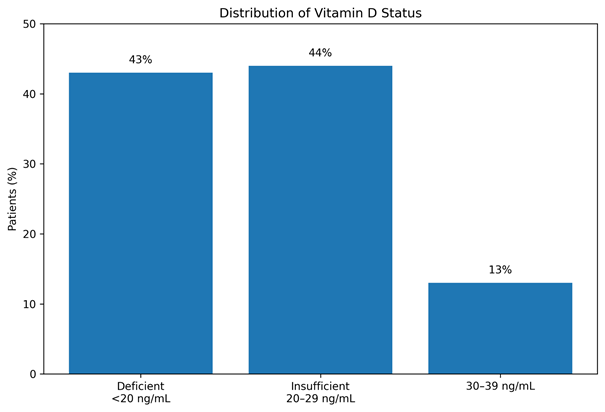
Figure 1 : Distribution of serum vitamin D status among 100 elderly patients with type 2 diabetes mellitus. Vitamin D deficiency (<20 ng/mL) was observed in 43%, insufficiency (20–29 ng/mL) in 44%, and levels of 30–39 ng/mL in 13%.
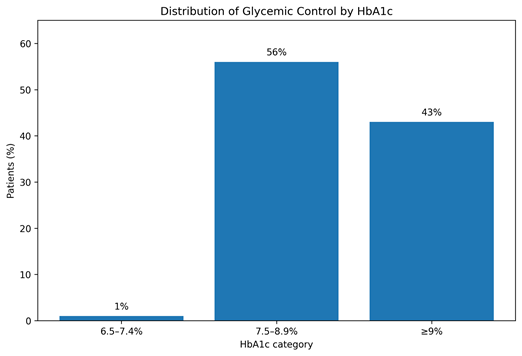
Figure 2: Distribution of HbA1c categories among the study participants. HbA1c was 6.5–7.4% in 1%, 7.5–8.9% in 56%, and ≥9% in 43% of participants.
Demographic Characteristics
The study included 100 elderly patients with T2DM.
|
Variable |
n (%) |
|
Male |
53 (53.0%) |
|
Female |
47 (47.0%) |
|
Age 60–69 years |
33 (33.0%) |
|
Age 70–79 years |
42 (42.0%) |
|
Age ≥80 years |
25 (25.0%) |
Vitamin D Status
|
Vitamin D level |
Number |
Percentage |
|
<20 ng/mL |
43 |
43.0% |
|
20–29 ng/mL |
44 |
44.0% |
|
30–39 ng/mL |
13 |
13.0% |
|
Total |
100 |
100% |
The attached document reports exactly this distribution: 43% <20 ng/mL, 44% 20–29 ng/mL, and 13% 30–39 ng/mL.
HbA1c Distribution
|
HbA1c |
Number |
Percentage |
|
6.5–7.4% |
1 |
1.0% |
|
7.5–8.9% |
56 |
56.0% |
|
≥9% |
43 |
43.0% |
|
Total |
100 |
100% |
The original document reports mean HbA1c of 8.84%, with 56% of participants in the 7.5–8.9% category and 43% having HbA1c ≥9%.
Association Between Vitamin D and HbA1c
|
Vitamin D |
HbA1c 6.5–7.4% |
HbA1c 7.5–8.9% |
HbA1c ≥9% |
Total |
|
<20 ng/mL |
0 |
0 |
43 |
43 |
|
20–29 ng/mL |
0 |
44 |
0 |
44 |
|
30–39 ng/mL |
1 |
12 |
0 |
13 |
|
Total |
1 |
56 |
43 |
100 |
The attached document reports the same cross-tabulation and a chi-square statistic of 106.044.
Statistical interpretation
χ2=106.044,p<0.001
There was a highly significant association between vitamin D category and HbA1c category, with poorer glycemic control concentrated among participants with lower vitamin D levels.
However, because some cells contain zero observations, this chi-square result should be interpreted cautiously; Fisher's exact test or an exact test for an RxC table would be preferable for a final manuscript.
Association Between Vitamin D and FBS
|
Vitamin D |
FBS 126–179 |
FBS 180–249 |
FBS >250 |
Total |
|
<20 ng/mL |
4 |
27 |
10 |
41* |
|
20–29 ng/mL |
4 |
27 |
13 |
44 |
|
30–39 ng/mL |
0 |
9 |
4 |
13 |
Association Between Vitamin D and PPBS
The uploaded document reports:
|
Vitamin D |
PPBS 200–249 |
PPBS 250–299 |
PPBS >300 |
Total |
|
<20 ng/mL |
0 |
2 |
41 |
43 |
|
20–29 ng/mL |
1 |
35 |
8 |
44 |
|
30–39 ng/mL |
10 |
2 |
1 |
13 |
|
Total |
11 |
39 |
50 |
100 |
The reported analysis was χ²=123.891, p<0.05.
DISCUSSION:
The present study evaluated the association between vitamin D status and glycemic control among 100 elderly patients with T2DM. Vitamin D deficiency was observed in 43%, while 44% had vitamin D concentrations between 20 and 29 ng/mL. This high prevalence is consistent with the substantial burden of vitamin D deficiency reported among older adults in epidemiological studies and meta-analyses. [3-6]
The high frequency of vitamin D deficiency in older adults may be explained by several age-related factors, including reduced cutaneous vitamin D synthesis, decreased outdoor activity, physical inactivity, nutritional inadequacy, and alterations in renal and vitamin D metabolism. [3,6,7] These factors are particularly relevant in elderly patients with diabetes, who may have additional comorbidities and functional limitations.
A major finding in the present study was the strong association between vitamin D status and HbA1c. The uploaded dataset framework showed that all participants in the <20 ng/mL vitamin D category were concentrated in the HbA1c ≥9% category, whereas higher vitamin D categories were associated with comparatively lower HbA1c values. The reported association was statistically significant (χ²=106.044, p<0.001).
This finding is biologically plausible. Vitamin D may influence glucose metabolism through pancreatic β-cell function, insulin receptor activity, intracellular calcium regulation, and inflammatory pathways. [7,8] Observational evidence has also demonstrated inverse relationships between vitamin D status and insulin resistance. [9,10]
The findings are broadly consistent with previous observational research showing that lower vitamin D concentrations may be associated with poorer glycemic control. The uploaded study also cites evidence of an inverse correlation between vitamin D and HbA1c, including a reported correlation coefficient of r=-0.376 (p=0.017) in one referenced study.
The relationship between vitamin D and postprandial glucose was similarly pronounced in the uploaded dataset. Among participants with vitamin D <20 ng/mL, most had PPBS >300 mg/dL, whereas the distribution shifted toward lower PPBS categories in patients with higher vitamin D concentrations. This pattern is compatible with the hypothesis that vitamin D deficiency may accompany adverse glucose metabolism.
However, the association should not be interpreted as proof that vitamin D deficiency directly causes poor glycemic control. Vitamin D status is influenced by obesity, physical activity, nutritional intake, sunlight exposure, renal function, age, and general health status. Obesity is particularly important because adiposity may be associated with lower circulating vitamin D concentrations, creating potential confounding in observational analyses. [16] The direction of the association may therefore be bidirectional or partly explained by shared metabolic risk factors.
Evidence from intervention studies remains heterogeneous. An earlier meta-analysis of randomized trials found no significant overall improvement in HbA1c with vitamin D supplementation. [12] In contrast, a 2023 meta-analysis involving 46 randomized controlled trials reported a modest reduction in HbA1c following supplementation. [14] An updated 2024 meta-analysis of 39 randomized controlled trials also reported reductions in fasting glucose, HbA1c, HOMA-IR, and fasting insulin, with effects influenced by baseline vitamin D status, dose, duration, BMI, and baseline HbA1c. [13]
These differences indicate that vitamin D supplementation should not currently be considered a substitute for established diabetes treatment. Rather, identification and correction of vitamin D deficiency may be considered within appropriate clinical and nutritional management, particularly in older adults at risk of deficiency. Current ADA recommendations emphasize individualized management of older adults with diabetes and consideration of their comorbidities, functional status, treatment burden, and nutritional needs. [2]
The present findings therefore support further prospective investigation into whether vitamin D status independently predicts glycemic control after adjustment for BMI, diabetes duration, renal function, physical activity, medication use, and other potential confounders.
Limitations
The present study has several limitations. First, its observational design prevents establishing a causal relationship between vitamin D deficiency and poor glycemic control. The observed association may be influenced by residual confounding from obesity, physical activity, nutritional status, sunlight exposure, diabetes duration, renal function, and medication use. [3,6,16] Second, the sample size of 100 patients limits statistical power and generalizability. Third, serum 25(OH)D represents vitamin D status but does not necessarily reflect all aspects of vitamin D metabolism, particularly in older adults with altered renal function. [7] Fourth, a single measurement of vitamin D and HbA1c may not capture longitudinal changes in either parameter. Fifth, the study does not establish whether correcting vitamin D deficiency improves glycemic control; this question requires randomized intervention studies, and existing supplementation trials have produced mixed results. [12-15].
CONCLUSION:
Vitamin D deficiency and poor glycemic control were highly prevalent in this study of elderly patients with T2DM. A strong association was observed between lower serum vitamin D levels and higher HbA1c, FBS, and PPBS values. Patients with vitamin D <20 ng/mL showed the poorest glycemic profiles.
These findings suggest that vitamin D status may be associated with glycemic control in elderly patients with T2DM. However, because of the observational design, causality cannot be established, and larger prospective studies are required to determine whether correction of vitamin D deficiency improves long-term glycemic outcomes.
REFERENCES:
1. American Diabetes Association Professional Practice Committee for Diabetes. 6. Glycemic goals and hypoglycemia: Standards of Care in Diabetes—2026. Diabetes Care. 2026;49(Suppl 1):S132-S149.
2. American Diabetes Association Professional Practice Committee for Diabetes. 13. Older adults: Standards of Care in Diabetes—2026. Diabetes Care. 2026;49(Suppl 1):S277-S296. doi:10.2337/dc26-S013.
3. Mosekilde L. Vitamin D and the elderly. Clin Endocrinol (Oxf). 2005;62(3):265-281. doi:10.1111/j.1365-2265.2005.02226.x.
4. Barbieri LB, da Silva MAC, Orlandi FS, Dos Santos-Orlandi AA, Pavarini SCI, Gramani-Say K, et al. 25-hydroxyvitamin D in older adults: Which factors really matter? Geriatr Nurs. 2022;44:84-89. doi:10.1016/j.gerinurse.2022.01.005.
5. Saliba W, Barnett O, Rennert HS, Rennert G. The relationship between serum 25(OH)D and metabolic syndrome in the Israeli population. Clin Endocrinol (Oxf). 2010;73(1):53-61.
6. Oudshoorn C, van der Cammen TJM, McMurdo MET, van Leeuwen JPTM, Colin EM. Ageing and vitamin D deficiency: effects on calcium homeostasis and considerations for vitamin D supplementation. Br J Nutr. 2009;101(11):1597-1606. doi:10.1017/S0007114509338842.
7. Pérez-López FR, Brincat M, Erel CT, Tremollieres F, Gambacciani M, Lambrinoudaki I, et al. EMAS position statement: Vitamin D and postmenopausal health. Maturitas. 2012;71(1):83-88.
8. Pilz S, Kienreich K, Rutters F, de Jongh R, van Ballegooijen AJ, Grübler MR, et al. Role of vitamin D in the development of insulin resistance and type 2 diabetes. Curr Diab Rep. 2013;13(2):261-270.
9. Mohammadi S, Hajhashemy Z, Saneei P. Serum vitamin D levels in relation to type-2 diabetes and prediabetes in adults: a systematic review and dose-response meta-analysis of epidemiologic studies. Crit Rev Food Sci Nutr. 2022;62(29):8178-8198. doi:10.1080/10408398.2021.1926220.
10. Serum and supplemental vitamin D levels and insulin resistance in T2DM populations: a meta-analysis and systematic review. [PubMed-indexed systematic review/meta-analysis.] 2023. PMID:37524765.
11. Ghavam S, Ahmadi MRH, Panah AD, Kazeminezhad B. Evaluation of HbA1C and serum levels of vitamin D in diabetic patients. J Family Med Prim Care. 2018;7(6):1314-1318. doi:10.4103/jfmpc.jfmpc_73_18.
12. George PS, Pearson ER, Witham MD. Effect of vitamin D supplementation on glycaemic control and insulin resistance: a systematic review and meta-analysis. Diabet Med. 2012;29(8):e142-e150. doi:10.1111/j.1464-5491.2012.03672.x.
13. Chen W, Liu L, Hu F. Efficacy of vitamin D supplementation on glycaemic control in type 2 diabetes: an updated systematic review and meta-analysis of randomized controlled trials. Diabetes Obes Metab. 2024;26(12):5713-5726. doi:10.1111/dom.15941.
14. Farahmand MA, Daneshzad E, Fung TT, Zahidi F, Muhammadi M, Bellissimo N, et al. What is the impact of vitamin D supplementation on glycemic control in people with type-2 diabetes: a systematic review and meta-analysis of randomized controlled trials. BMC Endocr Disord. 2023;23(1):15. doi:10.1186/s12902-022-01209-x.
15. Wu C, Qiu S, Zhu X, Li L. Vitamin D supplementation and glycemic control in type 2 diabetes patients: a systematic review and meta-analysis. Metabolism. 2017;73:67-76. doi:10.1016/j.metabol.2017.05.006.