Comparison of Reproductive and Embryological Outcomes of Dual Trigger (hCG + GnRH Agonist) versus hCG-Only Trigger in GnRH Antagonist IVF/ICSI Cycles: A Randomized Controlled Study.
- Neelam Kumari , M.Ch. Resident, Department of Reproductive Medicine & Surgery, National Institute of Medical Sciences & Research, Jaipur.
- Sapna Basandani , Professor, Department of Reproductive Medicine & Surgery, National Institute of Medical Sciences & Research, Jaipur.
- Alka Gahlot , Professor & HOD Department of Reproductive Medicine & Surgery, National Institute of Medical Sciences & Research, Jaipur.
Article Information:
Abstract:
Background: Assisted reproductive technology (ART) has become helpful in improving mature oocytes numbers, embryo quality and maximizing pregnancy and live births. Induction of full maturation of oocyte is performed with the help of a luteinizing hormone surge, which has been substituted by human chorionic gonadotropin (hCG). A new concept of ‘‘dual trigger’’ combines hCG with a GnRH agonist for maturation of oocytes. Aim: To evaluate reproductive outcomes of ‘dual trigger (hCG and GnRH Agonist)’ versus ‘hCG-only trigger’ in an antagonist cycle. Methods: A randomized controlled study of 92 normal-responder infertile women undergoing IVF/ICSI under a GnRH antagonist protocol, allocated to a dual trigger (leuprolide 1 mg + hCG 10,000 IU; n = 46) or hCG-only trigger (10,000 IU; n = 46). Results: Baseline and stimulation characteristics were comparable. The dual trigger group had significantly more mature (MII) oocytes (8.0 ± 3.3 vs. 6.0 ± 2.8, p = 0.003), 2PN embryos (7.4 ± 3.1 vs. 5.3 ± 2.6, p = 0.001), Grade I embryos (4.4 ± 2.1 vs. 2.0 ± 1.7, p < 0.001) and frozen embryos (2.9 ± 2.3 vs. 1.0 ± 1.5, p < 0.001). Clinical pregnancy rate did not differ significantly (22.8% vs. 20.3%, p = 0.77). Conclusion: The ‘dual trigger’ (hCG + GnRH agonist) protocol demonstrated superior embryological performance while maintaining equivalent stimulation profiles and safety outcomes.
Keywords:
Article :
INTRODUCTION:
Assisted reproductive technology (ART) has become helpful in improving mature oocytes numbers, embryo quality and maximizing pregnancy and live births and helpful in reducing various reproductive risks. IVF involves various steps but maturation of oocyte is critical which is path of further steps like ovulation and competence of oocyte [1,2]. Gonadotropin surge includes FSH and LH surge, which favours ovulation and full maturation of oocyte along with restart of meiosis [6,7]. The ovulation trigger is used prior 35–37 hours before retrieval of oocyte in controlled manner stimulation of ovary in IVF.
Induction of full maturation of oocyte and restarting of reductional division is performed with the help of luteinizing hormone surge, which has been substituted by human chorionic gonadotropin (hCG) in past few years. hCG is helpful in long lasting luteotropic stimulation; but in patients who show exaggerated response for stimulation enhance chances of OHSS. Among various methods for maturation of oocyte in antagonist regimens of GnRH, its agonist is closer biologically and physiologically and acts by increasing the level of FSH and LH like normal middle cycle as compared to hCG. It also reduces the time period of luteotropic stimulation [13].
Various past studies showed that GnRH agonist or hCG treatment, if used separately, has various complications for respondents regarding outcomes or results of pregnancy, so there is a new concept of ‘‘dual trigger’’ started in which both are used as combined treatment for maturation of oocytes. Studies have shown that ‘‘dual trigger’’ is far better than single human chorionic gonadotropin administered in terms of successful pregnancy rate, fertility rate improvement and enhance live births of babies [26,24,27,28]. Building on these prior findings, the present study had proposed as randomized controlled research in normal responder women, comparing ‘dual trigger (GnRH agonist + hCG)’ and ‘hCG only’ protocols that is given 35–37 hours prior to retrieval of oocytes, to examine their respective effects on reproductive and embryological outcomes.
AIM AND OBJECTIVES
The aim of this study was to evaluate and compare the reproductive and embryological outcomes of a ‘dual trigger (hCG + GnRH agonist)’ versus an ‘hCG-only trigger’ in GnRH antagonist IVF cycles — assessing oocyte yield, metaphase II (MII) oocytes, 2PN embryos, cleavage and high-quality embryo counts (primary outcomes), along with cycle cancellation rate, frozen embryo count, and clinical pregnancy rate (secondary outcomes).
MATERIALS AND METHODS:
This randomized controlled study was conducted in the Department of Reproductive Medicine & Surgery, NIMS & R, and Evaa IVF Centre, Jaipur, over 18 months (July 2024 to December 2025), after ethics committee approval and informed consent. The sample size of 92 (46 per group) was based on a previous study [31]. Randomization used a computer-generated sequence with allocation concealment via sealed opaque envelopes. Infertile women aged 21–38 years with tubal factor or unexplained infertility and normal ovarian reserve were included; those with a thin endometrium, prior uterine surgery, PCOS, poor ovarian reserve (POSEIDON 3 & 4), or medical comorbidities were excluded.
All patients underwent a GnRH antagonist protocol: gonadotropin from day 2, with a GnRH antagonist (0.25 mg) added from day 6 until the trigger day. When at least three follicles >18 mm were seen on transvaginal sonography, patients were randomized to the trigger. Group A received the ‘dual trigger’ (leuprolide 1 mg + 10,000 IU hCG) and Group B received hCG 10,000 IU alone. Oocyte retrieval with ICSI was performed 36 h later, followed by luteal phase support. Oocytes were denuded and only mature oocytes with a visible first polar body were microinjected; embryos were cultured at 37°C in 5% CO2 and transferred between days 3 and 5 under ultrasound guidance. Pregnancy was confirmed by serum hCG >30 IU/ml at 14 days, and clinical pregnancy was defined as a viable intrauterine gestation on the 6-week scan.
RESULTS:
General Basic Characteristics of Patients
The average age of patients in the ‘dual trigger’ group was 31.6 ± 4.4 years, while in the hCG Only group it was 30.2 ± 3.7 years. The difference between the two groups was not statistically significant (p = 0.23). Age distribution showed that the majority of patients in both groups were between 27–32 years (43.5% in ‘dual trigger’ vs. 47.8% in hCG Only).
Table 1: Age of patients
|
Parameter |
Category |
‘dual trigger’ (hCG + GnRH Agonist) (n = 46) |
hCG Only Trigger (n = 46) |
p-value |
|
Age (years) |
21–26 |
10 (21.7%) |
12 (26.1%) |
0.23 |
|
27–32 |
20 (43.5%) |
22 (47.8%) |
||
|
33–38 |
16 (34.8%) |
12 (26.1%) |
||
|
Mean ± SD |
31.6 ± 4.4 |
30.2 ± 3.7 |
The baseline demographic and hormonal characteristics were comparable between the ‘dual trigger’ and hCG Only groups, with no statistically significant differences observed across the age parameter of the patients. The mean age indicates that most participants were within the reproductive age range.
The mean BMI was 24.0 ± 3.5 kg/m² in the ‘dual trigger’ group and 25.1 ± 3.1 kg/m² in the hCG Only group, indicating that both groups had participants predominantly in the overweight category, with no significant difference between groups (p = 0.19).
Table 2: Body Mass Index (BMI) of patients
|
Parameter |
Category |
‘Dual trigger’ (hCG + GnRH Agonist) (n = 46) |
hCG Only Trigger (n = 46) |
p-value |
|
BMI (kg/m²) |
< 23 (Normal) |
17 (37.0%) |
13 (28.3%) |
0.19 |
|
23–27 (Overweight) |
21 (45.7%) |
23 (50.0%) |
||
|
≥ 27 (Obese) |
8 (17.4%) |
10 (21.7%) |
||
|
Mean ± SD |
24.0 ± 3.5 |
25.1 ± 3.1 |
The baseline demographic and hormonal characteristics were comparable between the ‘dual trigger’ and hCG Only groups, with no statistically significant differences observed across the Body Mass Index parameter of the patients.
The mean duration of infertility was 4.8 ± 2.4 years in the ‘dual trigger’ group and 5.5 ± 2.6 years in the hCG Only group (p = 0.21). Most patients had infertility for 4–6 years (43.5% and 39.1%, respectively).
Table 3: Duration of Infertility of patients
|
Parameter |
Category |
‘dual trigger’ (hCG + GnRH Agonist) (n = 46) |
hCG Only Trigger (n = 46) |
p-value |
|
Duration of Infertility (years) |
≤ 3 |
11 (23.9%) |
9 (19.6%) |
0.21 |
|
4–6 |
20 (43.5%) |
18 (39.1%) |
||
|
≥ 7 |
15 (32.6%) |
19 (41.3%) |
||
|
Mean ± SD |
4.8 ± 2.4 |
5.5 ± 2.6 |
This comparability indicates that both groups had a similar reproductive history, minimizing any bias related to the chronicity of infertility that could affect ovarian responsiveness or treatment outcomes.
The mean baseline FSH was 5.9 ± 1.8 IU/L in the ‘dual trigger’ group and 5.4 ± 2.0 IU/L in the hCG Only group (p = 0.28). Similarly, the mean baseline LH was 4.5 ± 2.0 IU/L and 4.0 ± 1.7 IU/L in the ‘dual trigger’ and hCG Only groups, respectively (p = 0.33).
Table 4: Baseline FSH Level among patients
|
Parameter |
Category |
‘dual trigger’ (hCG + GnRH Agonist) (n = 46) |
hCG Only Trigger (n = 46) |
p-value |
|
Baseline FSH (IU/L) |
< 5 |
18 (39.1%) |
17 (37.0%) |
0.28 |
|
5–8 |
23 (50.0%) |
25 (54.3%) |
||
|
> 8 |
5 (10.9%) |
4 (8.7%) |
||
|
Mean ± SD |
5.9 ± 1.8 |
5.4 ± 2.0 |
Equivalent baseline FSH levels suggest similar intrinsic ovarian reserve and pituitary function across groups. This parity ensures that observed differences in ovarian stimulation or oocyte yield, if any, are not due to pre-existing variations in gonadotropin secretion or ovarian sensitivity.
Table 5: Baseline LH Level among patients
|
Parameter |
Category |
‘dual trigger’ (hCG + GnRH Agonist) (n = 46) |
hCG Only Trigger (n = 46) |
p-value |
|
Baseline LH (IU/L) |
< 3 |
9 (19.6%) |
10 (21.7%) |
0.33 |
|
3–6 |
29 (63.0%) |
27 (58.7%) |
||
|
> 6 |
8 (17.4%) |
9 (19.6%) |
||
|
Mean ± SD |
4.5 ± 2.0 |
4.0 ± 1.7 |
No significant difference in baseline LH levels was observed between the groups (p > 0.05). Comparable LH profiles indicate similar hypothalamic–pituitary–gonadal axis activity before stimulation, ensuring that subsequent differences in ovulatory response can be attributed to the trigger method rather than endogenous hormonal discrepancies.
The mean AMH levels were 3.0 ± 0.9 ng/mL in the ‘dual trigger’ group and 2.6 ± 0.8 ng/mL in the ‘hCG-only’ group (p = 0.24), showing comparable ovarian reserve between the groups.
Table 6: Baseline AMH Level among patients
|
Parameter |
Category |
‘dual trigger’ (hCG + GnRH Agonist) (n = 46) |
hCG Only Trigger (n = 46) |
p-value |
|
AMH (ng/mL) |
< 2.0 (Low reserve) |
8 (17.4%) |
10 (21.7%) |
0.24 |
|
2.0–3.5 (Normal) |
28 (60.9%) |
26 (56.5%) |
||
|
> 3.5 (High) |
10 (21.7%) |
10 (21.7%) |
||
|
Mean ± SD |
3.0 ± 0.9 |
2.6 ± 0.8 |
Baseline AMH levels were statistically similar between the ‘dual trigger’ and ‘hCG-only’ groups (p > 0.05). Since AMH is a robust indicator of ovarian reserve, this equivalence confirms that both cohorts had comparable follicular pools before treatment initiation.
The mean AFC was 12.6 ± 2.4 in the ‘dual trigger’ group and 11.7 ± 2.6 in the hCG Only group (p = 0.17), indicating similar ovarian follicular reserves between the groups.
Table 7: Baseline Antral Follicle Count among patients
|
Parameter |
Category |
‘dual trigger’ (hCG + GnRH Agonist) (n = 46) |
hCG Only Trigger (n = 46) |
p-value |
|
Antral Follicle Count (AFC) |
< 10 |
6 (13.0%) |
9 (19.6%) |
0.17 |
|
10–15 |
27 (58.7%) |
26 (56.5%) |
||
|
> 15 |
13 (28.3%) |
11 (23.9%) |
||
|
Mean ± SD |
12.6 ± 2.4 |
11.7 ± 2.6 |
The mean AFC was comparable between the two groups (p > 0.05), reflecting equivalent ovarian reserve and recruitment potential at baseline. Balanced AFC distributions further support the consistency of baseline reproductive potential across groups, ensuring fair comparison of outcomes following stimulation and triggering.
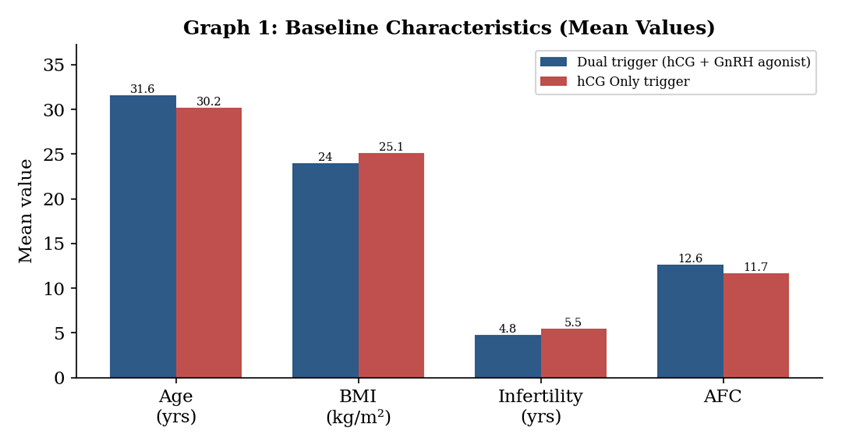
Graph 1: Baseline characteristics of patients (mean values)
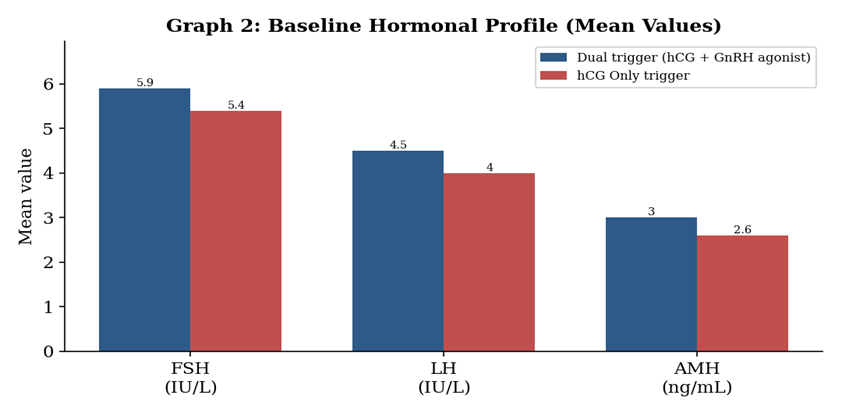
Graph 2: Baseline hormonal profile of patients (mean values)
Ovarian Stimulation Characteristics of Patients
In the ‘dual trigger’ group, the mean FSH dose was 2435 ± 625 IU, while in the hCG Only group, it was 2310 ± 585 IU, showing no statistically significant difference (p = 0.86).
Table 8: Total FSH Dose (IU) administered to patients
|
Parameter |
Category |
‘dual trigger’ (hCG + GnRH Agonist) (n = 46) |
hCG Only Trigger (n = 46) |
p-value |
|
Total FSH Dose (IU) |
< 2000 IU |
10 (21.7%) |
9 (19.6%) |
0.86 |
|
2000–3000 IU |
27 (58.7%) |
28 (60.9%) |
||
|
> 3000 IU |
9 (19.6%) |
9 (19.6%) |
||
|
Mean ± SD |
2435 ± 625 |
2310 ± 585 |
These results suggest that the ovarian response to FSH stimulation was equivalent between the two triggering protocols. The ‘dual trigger’ group required a mean of 815 ± 690 IU of HMG, whereas the hCG Only group required 965 ± 760 IU (p = 0.91).
Table 9: Total HMG Dose (IU) administered to patients
|
Parameter |
Category |
‘dual trigger’ (hCG + GnRH Agonist) (n = 46) |
hCG Only Trigger (n = 46) |
p-value |
|
Total HMG Dose (IU) |
< 500 IU |
16 (34.8%) |
14 (30.4%) |
0.91 |
|
500–1000 IU |
18 (39.1%) |
17 (37.0%) |
||
|
> 1000 IU |
12 (26.1%) |
15 (32.6%) |
||
|
Mean ± SD |
815 ± 690 |
965 ± 760 |
These findings confirm that the additional use of a GnRH agonist in the trigger protocol did not influence overall HMG usage during stimulation.
The average duration of ovarian stimulation was 9.5 ± 1.4 days in the ‘dual trigger’ group and 10.0 ± 1.3 days in the hCG Only group (p = 0.52).
Table 10: Duration of ovarian stimulation for patients
|
Parameter |
Category |
‘dual trigger’ (hCG + GnRH Agonist) (n = 46) |
hCG Only Trigger (n = 46) |
p-value |
|
Days of Stimulation |
≤ 9 days |
25 (54.3%) |
21 (45.7%) |
0.52 |
|
10–11 days |
18 (39.1%) |
20 (43.5%) |
||
|
≥ 12 days |
3 (6.5%) |
5 (10.9%) |
||
|
Mean ± SD |
9.5 ± 1.4 |
10.0 ± 1.3 |
This similarity suggests that both groups achieved follicular growth and readiness for trigger within a similar time frame.
The mean Estradiol levels on the day of trigger were 2620 ± 275 pg/mL for the ‘dual trigger’ group and 2785 ± 290 pg/mL for the hCG Only group, showing no significant difference (p = 0.24).
Table 11: Estradiol levels on the day of trigger for patients
|
Parameter |
Category |
‘dual trigger’ (hCG + GnRH Agonist) (n = 46) |
hCG Only Trigger (n = 46) |
p-value |
|
Estradiol on Day of Trigger (pg/mL) |
< 2500 |
17 (37.0%) |
15 (32.6%) |
0.24 |
|
2500–3000 |
21 (45.7%) |
22 (47.8%) |
||
|
> 3000 |
8 (17.4%) |
9 (19.6%) |
||
|
Mean ± SD |
2620 ± 275 |
2785 ± 290 |
This indicates that the follicular response to stimulation was adequate and comparable in both treatment groups.
The mean progesterone level on the day of trigger was 1.35 ± 0.45 ng/mL in the ‘dual trigger’ group and 1.15 ± 0.50 ng/mL in the hCG Only group (p = 0.74).
Table 12: Progesterone levels on the day of trigger for patients
|
Parameter |
Category |
‘dual trigger’ (hCG + GnRH Agonist) (n = 46) |
hCG Only Trigger (n = 46) |
p-value |
|
Progesterone on Day of Trigger (ng/mL) |
< 1.0 |
11 (23.9%) |
14 (30.4%) |
0.74 |
|
1.0–1.5 |
23 (50.0%) |
22 (47.8%) |
||
|
> 1.5 |
12 (26.1%) |
10 (21.7%) |
||
|
Mean ± SD |
1.35 ± 0.45 |
1.15 ± 0.50 |
Since no significant difference was noted, it can be inferred that premature luteinization was minimal and equally controlled in both groups.
Oocyte Retrieval and Embryology Outcomes of Patients
Overall, the ‘dual trigger’ (hCG + GnRH agonist) group demonstrated a numerically higher oocyte yield and superior embryological outcomes compared to the ‘hCG-only’ group, with statistically significant differences observed in key parameters related to oocyte maturity and embryo quality.
The mean total number of oocytes retrieved was 9.8 ± 4.1 in the ‘dual trigger’ group and 8.0 ± 3.3 in the hCG Only group (p = 0.08), indicating a trend toward higher oocyte recovery with ‘dual triggering’. However, the number of mature (Metaphase II) oocytes was significantly greater in the ‘dual trigger’ group (8.0 ± 3.3) compared with the hCG Only group (6.0 ± 2.8, p = 0.003). This finding suggests that the addition of GnRH agonist to hCG enhances maturation of oocyte, likely due to the more physiologic induction of both LH and FSH surges.
Table 13: Oocyte retrieval and maturation outcomes of patients
|
Parameter |
Category |
‘dual trigger’ (hCG + GnRH Agonist) (n = 46) |
hCG Only Trigger (n = 46) |
p-value |
|
Total Oocytes Retrieved |
< 6 |
9 (19.6%) |
13 (28.3%) |
0.08 |
|
6–10 |
24 (52.2%) |
22 (47.8%) |
||
|
> 10 |
13 (28.3%) |
11 (23.9%) |
||
|
Mean ± SD |
9.8 ± 4.1 |
8.0 ± 3.3 |
||
|
Metaphase II (MII) Oocytes |
< 5 |
8 (17.4%) |
14 (30.4%) |
0.003 |
|
5–8 |
23 (50.0%) |
25 (54.3%) |
||
|
> 8 |
15 (32.6%) |
7 (15.2%) |
||
|
Mean ± SD |
8.0 ± 3.3 |
6.0 ± 2.8 |
The mean number of 2PN (normally fertilized) embryos was significantly higher in the ‘dual trigger’ group (7.4 ± 3.1) compared with the hCG Only group (5.3 ± 2.6, p = 0.001). The cleavage rate was slightly higher in the ‘dual trigger’ group (92.5 ± 6.0%) compared to the hCG Only group (88.2 ± 7.2%), though the difference was not statistically significant (p = 0.18). However, the mean number of Grade I embryos was significantly higher in the ‘dual trigger’ group (4.4 ± 2.1) versus the hCG Only group (2.0 ± 1.7, p < 0.001). Similarly, the number of embryos frozen was markedly greater following ‘dual trigger’ (2.9 ± 2.3 vs. 1.0 ± 1.5, p < 0.001), suggesting improved embryo quality and surplus for cryopreservation.
Table 14: Fertilization and embryo development of patients
|
Outcomes |
Category |
‘dual trigger’ (hCG + GnRH Agonist) (n = 46) |
hCG Only Trigger (n = 46) |
p-value |
|
2PN Embryos (Normal Fertilization) |
< 5 |
10 (21.7%) |
18 (39.1%) |
0.001 |
|
5–8 |
27 (58.7%) |
24 (52.2%) |
||
|
> 8 |
9 (19.6%) |
4 (8.7%) |
||
|
Mean ± SD |
7.4 ± 3.1 |
5.3 ± 2.6 |
||
|
Cleavage Rate (%) |
< 85 |
8 (17.4%) |
11 (23.9%) |
0.18 |
|
85–95 |
30 (65.2%) |
27 (58.7%) |
||
|
> 95 |
8 (17.4%) |
8 (17.4%) |
||
|
Mean ± SD |
92.5 ± 6.0 |
88.2 ± 7.2 |
||
|
Grade I Embryos |
< 3 |
14 (30.4%) |
27 (58.7%) |
<0.001 |
|
3–5 |
23 (50.0%) |
15 (32.6%) |
||
|
> 5 |
9 (19.6%) |
4 (8.7%) |
||
|
Mean ± SD |
4.4 ± 2.1 |
2.0 ± 1.7 |
||
|
Embryos Frozen |
0 |
8 (17.4%) |
19 (41.3%) |
<0.001 |
|
1–3 |
27 (58.7%) |
22 (47.8%) |
||
|
> 3 |
11 (23.9%) |
5 (10.9%) |
||
|
Mean ± SD |
2.9 ± 2.3 |
1.0 ± 1.5 |
Cycle cancellation occurred only in the ‘hCG-only’ group (2.2%) and not in the ‘dual trigger’ group, though the difference was not significant (p = 0.56). The clinical pregnancy rate was slightly higher with ‘dual triggering’ (22.8%) than with hCG only (20.3%), but this difference was not statistically significant (p = 0.77), possibly due to the limited sample size.
Table 15: Cycle cancellation and clinical pregnancy outcomes of patients
|
Parameter |
‘dual trigger’ (hCG + GnRH Agonist) (n = 46) |
hCG Only Trigger (n = 46) |
p-value |
|
Cycle Cancellation Rate (%) |
0.0% |
2.2% |
0.56 |
|
Clinical Pregnancy Rate (%) |
22.8% |
20.3% |
0.77 |
These results indicate that the ‘dual trigger’ protocol resulted in superior oocyte maturation and fertilization outcomes compared to the ‘hCG-only’ protocol, while maintaining similar stimulation and hormonal conditions.
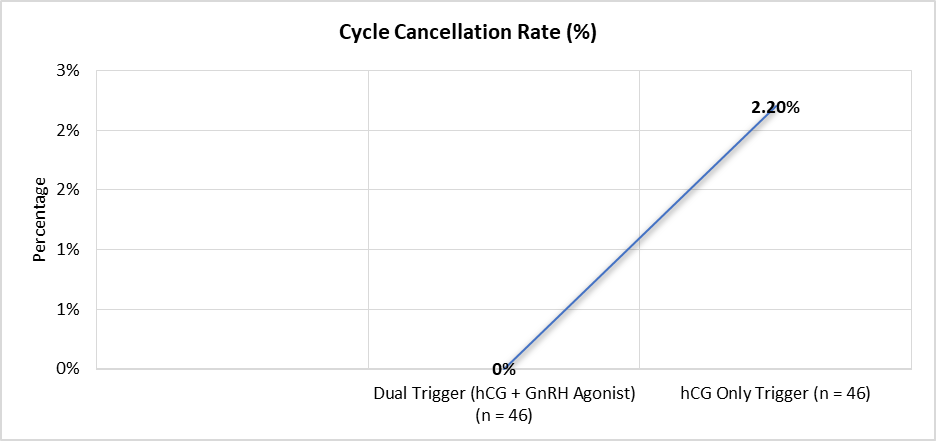
Graph 3: Cycle cancellation rate
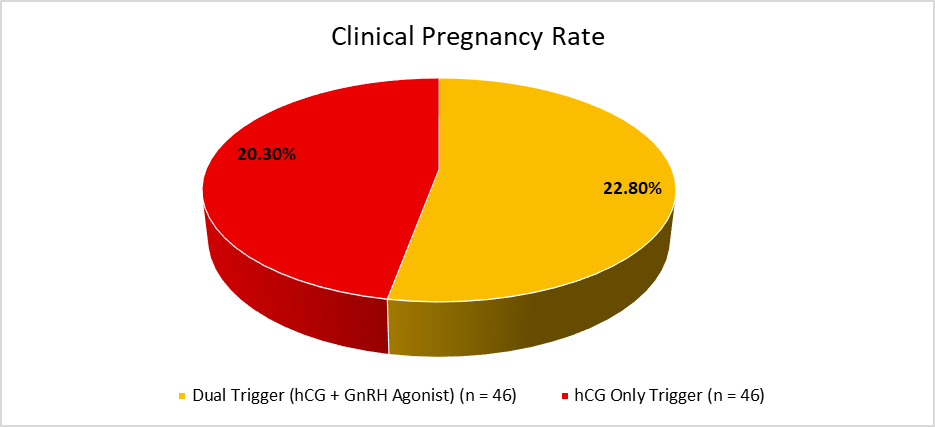
Graph 4: Clinical pregnancy rates
DISCUSSION:
Baseline Demographic and Hormonal Characteristics
The two classes in the study (one given both hCG and GnRH, and the other given only hCG) were very similar at the start. They did not differ in age, how long they had been infertile, or their hormone levels (FSH, LH, AMH) and follicle quantity (AFC). This homogeneity confirms that both groups were well matched at baseline, minimizing potential confounding factors and strengthening the validity of subsequent comparisons related to ovarian response, oocyte maturity, and clinical outcomes. The comparable ovarian reserve parameters (AMH, FSH, LH, and AFC) suggest that both groups had similar baseline reproductive potential. Hence, any differences observed in oocyte maturation or fertilization outcomes can be confidently attributed to the triggering method rather than intrinsic biological variability. These results are very similar to many other studies, all of which have also found that the two classes (‘dual-trigger’ and ‘hCG-only’) were the same at the beginning.
Ovarian Stimulation Characteristics
Both groups responded the same during treatment. They needed similar amounts of medicine, had similar treatment duration, and similar hormone levels before the trigger. The estrogen level was high (more than 2500 pg/mL) in both groups, which means the ovaries responded well and made good follicles. The progesterone level was low (below 1.5 ng/mL) in most patients, which means there was no early problem. Our results are similar to Singh’s study [31]. Dong et al. [33] similarly reported equivalent total gonadotropin doses and trigger-day estradiol concentrations when using propensity-score matching. Many other studies also demonstrated comparable stimulation and hormonal parameters between trigger strategies, reinforcing the reproducibility of these observations.
Oocyte and Embryological Outcomes
Even though both groups were similar in treatment and hormone levels, ‘dual-trigger’ class had better results. They produced more mature eggs, more fertilized embryos, better-quality embryos, and more embryos that could be frozen for later use. Many recent studies show that the dual-trigger method works better. Adding GnRH (with hCG) may help eggs develop better. This happens because it creates a more natural hormone peak (LH and FSH), like what happens in the body. The FSH hormone helps egg grow properly, restart its development through meiosis, and become stronger. Because of this, the eggs and embryos are of better quality.
CONCLUSION:
Both groups were demographically and hormonally comparable at baseline, with equivalent gonadotropin dose, stimulation duration, and hormonal environment at trigger. Despite these similar stimulation profiles, the ‘dual trigger’ (hCG + GnRH agonist) protocol yielded remarkably more mature oocytes, 2PN embryos, and Grade I embryos, reflecting superior oocyte competence and embryological development, while pregnancy and cancellation rates did not differ significantly between groups. The inclusion of a GnRH agonist induces a physiologic LH and FSH surge that more closely replicates the natural mid-cycle endocrine profile, thereby enhancing oocyte maturation and fertilization potential. Overall, the ‘dual trigger’ protocol demonstrated superior embryological performance while maintaining equivalent stimulation profiles and safety outcomes, representing a clinically valuable modification to conventional triggering in ART, particularly for patients with low oocyte maturity or frequent immature oocyte retrievals.
REFERENCES:
1. Zegers-Hochschild F, Adamson GD, Dyer S, et al. The International Glossary on Infertility and Fertility Care, 2017. Hum Reprod. 2017;32:1786-801.
2. Thoma ME, McLain AC, Louis JF, et al. Prevalence of infertility in the United States as estimated by the current duration approach and a traditional constructed approach. Fertil Steril. 2013;99(5):1324-31.
3. Orisaka M, Miyazaki Y, Shirafuji A, et al. The role of pituitary gonadotropins and intraovarian regulators in follicle development: A mini-review. Reprod Med Biol. 2021;20:169-75.
4. Wu X, Yang L, Tang H, et al. Safety and effectiveness of dual trigger (GnRH agonist + hCG) versus hCG alone in high responders. Am J Transl Res. 2024;16(11):6668-78.
5. Vyrides AA, El Mahdi E, Lamnisos D, Giannakou K. Dual trigger with GnRH agonist and hCG of fresh autologous cycles in high responders: A systematic review. J Reprod Infertil. 2022;23(1):3.
6. Haas J, Bassil R, Samara N, et al. GnRH agonist and hCG (dual trigger) versus hCG trigger for final follicular maturation: a double-blinded, randomized controlled study. Hum Reprod. 2020;35(7):1648-54.
7. Ludwig M, Doody KJ, Doody KM. Use of recombinant human chorionic gonadotropin in ovulation induction. Fertil Steril. 2003;79(5):1051-9.
8. Riccetti L, Yvinec R, Klett D, et al. Human luteinizing hormone and chorionic gonadotropin display biased agonism at the LH and LH/CG receptors. Sci Rep. 2017;7:940.
9. Casarini L, Lispi M, Longobardi S, et al. LH and hCG action on the same receptor results in quantitatively and qualitatively different intracellular signaling. PLoS One. 2012;7:e46682.
10. Zhou X, Guo P, Chen X, et al. Comparison of dual trigger with GnRH agonist and hCG versus hCG alone for normal responders. Int J Gynaecol Obstet. 2018;141(3):327-31.
11. Gonen Y, Balakier H, Powell W, Casper RF. Use of gonadotropin-releasing hormone agonist to trigger follicular maturation for in vitro fertilization. J Clin Endocrinol Metab. 1990;71:918-22.
12. Syam HH, Ritonga MA, Adrianto N. Efficacy of double trigger versus hCG trigger alone in GnRH-antagonist cycles: a systematic review and meta-analysis. Gynecol Obstet Invest. 2025.
13. Engmann L, DiLuigi A, Schmidt D, et al. The use of GnRH agonist to induce oocyte maturation after cotreatment with GnRH antagonist in high-risk patients undergoing IVF prevents OHSS: a prospective randomized controlled study. Fertil Steril. 2008;89(1):84-91.
14. Orvieto R. Triggering final follicular maturation — hCG, GnRH-agonist or both, when and to whom? J Ovarian Res. 2015;8(1):60.
15. Tesarik J, Hazout A, Mendoza-Tesarik R, et al. Beneficial effect of luteal-phase GnRH agonist administration on embryo implantation after ICSI. Hum Reprod. 2006;21(10):2572-9.
16. Shapiro BS, Daneshmand ST, Garner FC, et al. GnRH agonist combined with a reduced dose of hCG for oocyte maturation in fresh autologous IVF cycles. Fertil Steril. 2008;90(1):231-3.
17. Fauser BC, de Jong D, Olivennes F, et al. Endocrine profiles after triggering of oocyte maturation with GnRH agonist after cotreatment with the GnRH antagonist ganirelix during ovarian hyperstimulation for IVF. J Clin Endocrinol Metab. 2002;87:709-15.
18. Humaidan P, Bredkjaer HE, Bungum L, et al. GnRH agonist (buserelin) or hCG for ovulation induction in GnRH antagonist IVF/ICSI cycles: a prospective randomized study. Hum Reprod. 2005;20:1213-20.
19. Kolibianakis EM, Schultze-Mosgau A, Schroer A, et al. A lower ongoing pregnancy rate can be expected when GnRH agonist is used for triggering oocyte maturation instead of hCG. Hum Reprod. 2005;20:2887-92.
20. Erb TM, Vitek W, Wakim AN. GnRH agonist or hCG for oocyte maturation in an oocyte donor program. Fertil Steril. 2010;93:374-8.
21. Haas J, Zilberberg E, Nahum R, et al. Does double trigger (GnRH-agonist + hCG) improve outcome in poor responders undergoing IVF-ET cycle? A pilot study. Gynecol Endocrinol. 2019;35(7):628-30.
22. He FF, Hu W, Yong L, Li YM. Triggering of ovulation for GnRH-antagonist cycles in normal and low ovarian responders undergoing IVF/ICSI: a systematic review and meta-analysis. Eur J Obstet Gynecol Reprod Biol. 2023;289:65-73.
23. Hsia LH, Lee TH, Lin YH, et al. Dual trigger improves the pregnancy rate in fresh IVF cycles compared with the hCG trigger: a systematic review and meta-analysis. J Assist Reprod Genet. 2023;40(9):2063-77.
24. Humaidan P, Papanikolaou EG, Tarlatzis BC. GnRHa to trigger oocyte maturation: a time to reconsider. Hum Reprod. 2009;24(10):2389-94.
25. TÜLEK F, Kahraman A. Dual trigger with GnRH agonist and hCG improves live birth rate for women with expected normal ovarian response in GnRH antagonist cycles: retrospective study. J Clin Obstet Gynecol. 2021;31(3):89-96.
26. Chern CU, Li JY, Tsui KH, et al. Dual trigger improves outcomes of IVF cycles in older patients with diminished ovarian reserve: a retrospective cohort study. PLoS One. 2020;15:e0235707.
27. Hu KL, Wang S, Ye X, et al. GnRH agonist and hCG (dual trigger) versus hCG trigger for follicular maturation: a systematic review and meta-analysis. Reprod Biol Endocrinol. 2021;19(1):78.
28. Tu B, Zhang H, Chen L, et al. Co-administration of GnRH-agonist and hCG (double trigger) for oocyte maturation increases the number of top-quality embryos in IVF/ICSI cycles. J Ovarian Res. 2024;17(1):137.
29. Kim CH, Ahn JW, You RM, et al. Combined administration of GnRH agonist with hCG for oocyte maturation in GnRH antagonist cycles for IVF. J Reprod Med. 2014;59(1-2):63-8.
30. Lin MH, Wu FS, Lee RK, et al. Dual trigger with combination of GnRH agonist and hCG significantly improves the live-birth rate for normal responders in GnRH-antagonist cycles. Fertil Steril. 2013;100(5):1296-302.
31. Singh N, Kashyap A, Malhotra N, et al. Comparison of dual (hCG + leuprolide) versus hCG trigger in antagonist IVF cycles: a randomized controlled trial. JBRA Assist Reprod. 2023;27(3):467-73.
32. Yan MH, Cao JX, Hou JW, et al. GnRH agonist and hCG (dual trigger) versus hCG trigger for oocyte maturation in expected normal responders: a randomized controlled trial protocol. Front Endocrinol. 2022;13:831859.
33. Dong L, Lian F, Wu H, et al. Reproductive outcomes of dual trigger with combination GnRH agonist and hCG versus trigger with hCG alone in women undergoing IVF/ICSI cycles: a retrospective cohort study with propensity score matching. BMC Pregnancy Childbirth. 2022;22(1):583.
34. Shakerian B, Turkgeldi E, Guler Cekic S, et al. Dual trigger compared with hCG alone and effects on ICSI outcomes. Int J Fertil Steril. 2021;15(4):294-9.
35. Decleer W, Osmanagaoglu K, Seynhave B, et al. Comparison of hCG triggering versus hCG plus GnRH agonist: a prospective randomized controlled trial. Facts Views Vis ObGyn. 2014;6(4):203-9.
36. Chen K, Zhang C, Chen L, et al. Reproductive outcomes of dual trigger therapy with GnRH agonist and hCG versus hCG trigger in women with diminished ovarian reserve: a retrospective study. Reprod Biol Endocrinol. 2024;22(1):35.
37. De Oliveira Filho CM, de Oliveira CA, Fonseca LL, et al. GnRH agonist with hCG versus hCG alone for oocyte maturation in antagonist cycles. JBRA Assist Reprod. 2021;25(2):246.
38. Guner FC, Ozekinci M, Mendilcioglu II, Kasabali Z. Reproductive outcomes of dual trigger versus hCG alone in women undergoing IVF with fresh embryo transfer cycles. Obstet Gynecol Int. 2024;2024:9972437.
39. Keskin M, Ecemiş T, Atik A, et al. Cycle outcomes of dual trigger (GnRH agonist + hCG) versus hCG alone in POSEIDON group 3-4 poor and normal responders. J Gynecol Obstet Hum Reprod. 2023;52(8):102633.
40. Wang T, Ren J, Qi Z, et al. Impact of hCG trigger versus dual trigger on reproductive outcomes in elderly infertile women. Front Endocrinol. 2025;16:1580610.
41. Li Q, Li X, Li T, et al. Comparison of hCG-only versus dual trigger for oocyte maturation in a PPOS protocol. Reprod Biomed Online. 2022;45(6):1176-81.
42. Gupta R, Makwana S, Sen RK. Evaluation of dual trigger (GnRH agonist plus hCG) versus hCG in improving IVF outcome in normal responders: a prospective randomized clinical study. Fertil Steril. 2020;114(3):e543.
43. Yuan M, Lv X, Yuan Y, et al. Comparative analysis of hCG and dual-trigger protocols in IVF for advanced maternal age: a retrospective cohort study. Arch Gynecol Obstet. 2025;312:525-36.
44. Wang Y, Yi YC, Guu HF, et al. GnRH agonist-only trigger versus dual trigger in high responders: impact on oocyte retrieval and cumulative live birth rate. Front Endocrinol. 2024;15:1461317.
45. Akdulum MF, Arık Sİ, Demirdağ E, et al. IVF outcomes with a dual trigger in normoresponders in antagonist cycles. Cureus. 2023;15(9):e43837.
46. Maged AM, Ragab MA, Shohayeb A, et al. Comparative study between single versus dual trigger for poor responders in GnRH-antagonist ICSI cycles: a randomized controlled study. Int J Gynaecol Obstet. 2021;152:395-400.
47. Mahajan N, Sharma S, Arora PR, et al. Evaluation of dual trigger with GnRH agonist and hCG in improving oocyte maturity rates: a prospective randomized study. J Hum Reprod Sci. 2016;9(2):101-6.
48. Zhou C, Yang X, Wang Y, et al. Ovulation triggering with hCG alone, GnRH agonist alone or combination in advanced-age women: a randomized trial. Hum Reprod. 2022;37(8):1795-805.
49. Li S, Zhou D, Yin T, et al. Dual trigger of triptorelin and hCG optimizes clinical outcome for high ovarian responder in GnRH-antagonist protocols. Oncotarget. 2018;9(4):5337-43.
50. Ali SS, Elsenosy E, Sayed GH, et al. Dual trigger using recombinant hCG and GnRH agonist improve oocyte maturity and embryo grading for normal responders in GnRH antagonist cycles: randomized controlled trial. J Gynecol Obstet Hum Reprod. 2020;49(5):101728.
51. Mizrachi Y, Horowitz E, Farhi J, et al. Ovarian stimulation for freeze-all IVF cycles: a systematic review. Hum Reprod Update. 2020;26(1):118-35.
52. Maredia NN, Szczupak A, Ayinon C, et al. Dual trigger improves oocyte yield and embryo quality over hCG-only trigger in GnRH antagonist ICSI cycles. Fertil Steril. 2022;118(4 Suppl):e283-4.
53. Riobó A, Martínez Acosta A, Martinez-Rocca L, et al. Dual triggering for oocyte maturation. A narrative review. Front Endocrinol. 2025;16:1556732.
54. Schachter M, Friedler S, Ron-El R, et al. Can pregnancy rate be improved in GnRH antagonist cycles by administering GnRH agonist before oocyte retrieval? A prospective, randomized study. Fertil Steril. 2008;90(4):1087-93.
55. Seval MM, Özmen B, Atabekoğlu C, et al. Dual trigger with GnRH agonist and recombinant hCG improves IVF outcome in GnRH antagonist cycles. J Obstet Gynaecol Res. 2016;42:1146-51.
56. Lin MH, Wu FS, Hwu YM, et al. Dual trigger with GnRH agonist and hCG significantly improves live birth rate for women with diminished ovarian reserve. Reprod Biol Endocrinol. 2019;17(1):7.
57. Yan MH, Sun ZG, Song JY. Dual trigger for oocyte maturation in expected normal responders with a high immature oocyte rate: a randomized controlled trial. Front Med. 2023;10:1254982.
58. Zhou Z, Zheng D, Wu H, et al. Epidemiology of infertility in China: a population-based study. BJOG. 2018;125(4):432-41.
59. Alleyassin A, Ghasemi M, Aghahosseini M, et al. Oocyte maturation with a dual trigger compared to hCG trigger in antagonist co-treated cycles: a randomized clinical trial. Middle East Fertil Soc J. 2018;23:199-204.