Comparative Assessment of the Clinical Performance of 3D-Printed and Conventionally Manufactured Dental Prostheses
- Jay Prakash Narayan , Lecturer, Department of Prosthodontics, Government Dental College, Rahui, Nalanda (Bihar).
- Bimleshwar Kumar , Tutor, Department of Oral and Maxillofacial Surgery, Government Dental College, Rahui, Nalanda (Bihar).
- Nisha Kumari , Dental Surgeon, Department of Paediatric and Preventive Dentistry, Patna Dental College and Hospital, Patna (Bihar).
- Ahtasham Anwar , Assistant Professor, Department of Prosthodontics, Government Dental College, Rahui, Nalanda (Bihar).
- Shagufta Syreen , Reader, Department of Paediatric and Preventive Dentistry, Mithila Minority Dental College and Hospital, Darbhanga (Bihar).
- Vikash Vaibhav , Professor and Head, Department of Prosthodontics, Government Dental College, Rahui, Nalanda (Bihar).
Article Information:
Abstract:
Background: 3D printing is increasingly used in prosthodontics, but evidence comparing its clinical performance with conventional fabrication of fixed dental prostheses remains limited. This study compared the two techniques regarding marginal discrepancy, patient satisfaction, and prosthesis-related complications over 12 months. Materials and Methods: A prospective, randomised, comparative clinical study was conducted among 80 patients requiring 1–4-unit fixed dental prosthetic rehabilitation at Government Dental College, Rahui, Nalanda, Bihar. Participants were randomly allocated into two groups of 40 each. Group A received 3D-printed prostheses, while Group B received conventionally manufactured prostheses. Prosthetic fit was assessed by measuring marginal discrepancy, and patient satisfaction was evaluated using a 10-point Visual Analogue Scale (VAS). Prosthesis-related complications were recorded during follow-up. Assessments were performed immediately after placement and at 6 and 12 months. Results: The mean marginal discrepancy was significantly lower in the 3D-printed group than in the conventional group immediately after placement (34 ± 4 vs. 62 ± 6 µm), at 6 months (38 ± 5 vs. 64 ± 7 µm), and at 12 months (44 ± 6 vs. 68 ± 8 µm; p < 0.001 for all comparisons). Patient satisfaction was also significantly higher in the 3D-printed group at immediate assessment (8.4 ± 0.6 vs. 7.4 ± 0.8), 6 months (8.2 ± 0.8 vs. 6.6 ± 0.9), and 12 months (7.2 ± 0.9 vs. 6.2 ± 1.1; p < 0.001). Prosthesis-related complications occurred in 5.0% of patients in the 3D-printed group compared with 20.0% in the conventional group, although this difference was not statistically significant (p = 0.087). Conclusion: 3D-printed dental prostheses demonstrated clinically relevant outcomes, suggesting that digital additive manufacturing may be a promising alternative to conventional prosthetic fabrication. Further well-designed clinical studies with larger samples and longer follow-up are warranted to establish their long-term clinical effectiveness and applicability.
Keywords:
Article :
INTRODUCTION:
Dental prostheses play an important role in restoring oral function, mastication, speech, aesthetics, and overall quality of life in patients with partial or complete tooth loss. Conventional prosthetic fabrication has traditionally relied on clinical impressions, laboratory procedures, casting, milling, polymerisation, and manual finishing and adjustment. Although these techniques have been used successfully for decades, they are dependent on multiple clinical and laboratory steps and may require considerable chairside adjustment to achieve satisfactory fit, occlusion, function, and aesthetics. The rapid development of digital dentistry has introduced computer-aided design and computer-aided manufacturing (CAD/CAM) into prosthodontic practice. Within this digital workflow, three-dimensional (3D) printing represents an additive manufacturing approach in which prosthetic components are fabricated layer by layer from a digitally designed model.
Technologies such as stereolithography, digital light processing, material jetting, and related additive manufacturing techniques have expanded the possibilities for the fabrication of dental and prosthodontic appliances. These technologies allow digital data to be transferred directly to the manufacturing stage, facilitating reproducibility, customisation, and potentially greater control over prosthesis design and fabrication [1,2]. The potential clinical advantages of 3D-printed prostheses include reduced dependence on extensive manual laboratory procedures, improved standardisation, efficient reproduction of digital designs, and greater flexibility in individualised prosthetic fabrication. Digital workflows may also reduce clinical working time and the number of appointments required for certain types of prosthetic rehabilitation. A systematic review of clinical studies comparing digitally fabricated and conventionally fabricated dentures reported that digital techniques may provide advantages in tissue adaptation, clinical working time, cost, and patient experience, although the available evidence remains heterogeneous [3].
Prosthetic fit is one of the most important determinants of clinical success because inadequate adaptation may compromise comfort, function, retention, and long-term biological and mechanical outcomes. Patient-reported outcomes, including comfort and satisfaction, are also increasingly recognised as important measures of prosthetic treatment success. Recent clinical evidence suggests that digitally fabricated prostheses can provide clinical outcomes comparable to conventional prostheses, although the magnitude and consistency of these benefits may vary according to the type of prosthesis, manufacturing technique, material, and clinical workflow [4, 5]. Despite the increasing adoption of digital prosthodontic workflows, questions remain regarding their clinical performance compared with conventional manufacturing techniques. In particular, the evidence concerning prosthetic adaptation, patient satisfaction, functional performance, mechanical complications, and long-term clinical behaviour is still evolving.
Recent systematic reviews have reported generally comparable or favourable outcomes for digitally fabricated prostheses, while also emphasising the need for well-designed clinical studies to establish their clinical effectiveness and limitations. Therefore, a direct clinical comparison of 3D-printed and conventionally manufactured dental prostheses is relevant for determining whether the advantages demonstrated by digital manufacturing translate into meaningful clinical benefits. The present study was undertaken to comparatively assess the clinical performance of 3D-printed and conventionally manufactured dental prostheses, with particular emphasis on clinically relevant parameters such as prosthetic fit, patient satisfaction, and prosthesis-related complications. The findings may contribute to the growing evidence regarding the role of additive manufacturing as an alternative to conventional prosthetic fabrication in routine clinical practice.
MATERIALS AND METHODS:
Study Design and Setting
A prospective, randomised, comparative clinical study was conducted in the Department of Prosthodontics, Government Dental College, Rahui, Nalanda, Bihar, to comparatively evaluate the clinical performance of 3D-printed and conventionally manufactured dental prostheses. The study was designed to assess the clinical outcomes of the two fabrication techniques with respect to prosthetic fit, patient satisfaction, and prosthesis-related complications during the follow-up period.
The study was conducted in accordance with the ethical principles outlined in the Declaration of Helsinki and its subsequent amendments. Written informed consent was obtained from all participants after explaining the nature, purpose, procedures, potential benefits, and possible risks of the study.
Sample Size Calculation
The sample size was calculated a priori using G*Power software (version 3.1) for comparison of two independent groups using a two-tailed independent-samples t-test, with marginal discrepancy as the primary outcome. Assuming a standardised effect size (Cohen’s d) of 0.63 and a significance level (α) of 0.05, a sample size of 40 participants per group provided approximately 79.5% statistical power. Accordingly, a total of 80 participants were planned, with 40 participants allocated to each group in a 1:1 ratio. This sample size was considered adequate to detect a clinically meaningful between-group difference in marginal discrepancy while maintaining balanced allocation between the two treatment groups.
Study Population
Thus, a total of 80 patients requiring fixed dental prosthetic rehabilitation were included in the study. The participants were randomly allocated into two equal groups of 40 patients each:
· Group A (3D-printed group): 40 patients received dental prostheses fabricated using a 3D-printing-based digital workflow.
· Group B (Conventional group): 40 patients received dental prostheses fabricated using conventional laboratory techniques, including casting and/or milling.
Inclusion Criteria
Patients fulfilling the following criteria were included:
1. Patients aged 25–70 years.
2. Patients requiring fixed dental prosthetic rehabilitation involving 1–4 units.
3. Patients with adequate oral hygiene and satisfactory general oral health.
4. Patients without active periodontal disease.
5. Patients willing to participate in the study and comply with scheduled follow-up visits.
6. Patients who provided written informed consent.
Exclusion Criteria
Patients were excluded if they had:
1. Severe bruxism or parafunctional habits likely to adversely affect the prosthesis.
2. Active periodontal or significant untreated oral disease.
3. Temporomandibular disorders requiring active treatment.
4. Conditions contraindicating fixed prosthetic rehabilitation.
5. Inability or unwillingness to attend follow-up appointments.
6. Failure to provide informed consent.
Randomisation and Group Allocation
Eligible participants were randomly assigned to either Group A or Group B in a 1:1 allocation ratio. Randomisation was performed using a computer-generated randomisation sequence. Allocation was performed after confirmation of eligibility and completion of the baseline clinical assessment.
Blinding
Due to the nature of the prosthetic fabrication procedures, blinding of the participants and treating clinicians was not feasible. The outcome assessment was performed using predefined assessment criteria, and no separate blinding of the outcome assessor was undertaken. The statistical analysis was performed by the study investigators.
Clinical and Prosthetic Procedures
Group A: 3D-Printed Prostheses
Patients allocated to Group A underwent a digital prosthetic workflow. The required dental and intraoral structures were recorded using an intraoral digital scanner. The digital impression was transferred to computer-aided design (CAD) software, where the prosthesis was designed according to the patient's anatomical and functional requirements.
The finalised digital design was transferred to a compatible 3D printer for additive fabrication using an appropriate dental resin/material. Following printing, the prosthesis underwent the manufacturer's recommended post-processing procedures, including removal of support structures, cleaning, curing, and polishing. The completed prosthesis was clinically evaluated for marginal adaptation, proximal contacts, occlusion, contour, and aesthetics. Necessary minor adjustments were performed before final placement/cementation.
Group B: Conventionally Manufactured Prostheses
For patients in Group B, conventional dental impressions were obtained using an appropriate impression material, and the impressions were used to prepare the corresponding working casts. Prostheses were subsequently fabricated using conventional laboratory procedures, including lost-wax casting and/or milling, as indicated for the planned prosthesis. The completed prostheses were evaluated clinically for marginal adaptation, proximal contacts, occlusion, contour, and aesthetics. Necessary laboratory or chairside adjustments were performed before final placement/cementation.
Outcome Measures
The clinical performance of the prostheses was evaluated using the following parameters:
1. Prosthetic Fit
Prosthetic fit was assessed clinically, with particular emphasis on marginal adaptation. The marginal discrepancy was evaluated using an intraoral digital scanning method, where applicable, and recorded in micrometres (µm). A smaller marginal discrepancy was considered indicative of better adaptation.
The assessment was performed at:
· Immediately after prosthesis placement
· 6 months
· 12 months
2. Patient Satisfaction
Patient satisfaction was assessed using a 10-point Visual Analogue Scale (VAS), anchored at 0 (very dissatisfied/uncomfortable) and 10 (completely satisfied/very comfortable). Patients were asked to indicate their overall satisfaction with the prosthesis, considering comfort, function, aesthetics, and general acceptance. The VAS assessment was performed immediately after prosthesis placement and repeated at 6- and 12-month follow-up visits.
Prosthesis-Related Complications
During follow-up, patients were examined for mechanical and prosthesis-related complications, including:
· Fracture
· Chipping
· Wear
· Loss of retention
· Need for prosthetic adjustment
· Prosthesis replacement or failure
Any complication occurring during the follow-up period was recorded in the study proforma. The requirement for additional clinical intervention was also documented.
Follow-up
All participants were recalled at predetermined intervals following prosthesis placement. Clinical assessments were performed immediately after placement and at 6 and 12 months. At each follow-up visit, prosthetic fit, patient satisfaction, and prosthesis-related complications were evaluated and recorded. Participants who developed any prosthetic complication during the study period were managed according to standard clinical practice, and the nature of the intervention was documented.
Statistical Analysis
The collected data were entered into a structured database and analysed using IBM SPSS Statistics for Windows, Version 25.0 (IBM Corp., Armonk, NY, USA). Continuous variables were expressed as mean ± standard deviation (SD), while categorical variables were presented as frequencies and percentages. Between-group comparisons of continuous outcomes, including marginal discrepancy and patient satisfaction scores, were performed using a two-tailed independent-samples Student’s t-test at each assessment time point (immediately after prosthesis placement, 6 months, and 12 months). Categorical variables, including the occurrence of prosthesis-related complications, were compared between the two groups using Fisher’s exact test because of the small number of observed events. All statistical tests were two-tailed, and a p-value <0.05 was considered statistically significant.
RESULTS:
A total of 80 patients requiring fixed dental prosthetic rehabilitation were included in the study and randomly allocated equally into two groups, with 40 patients in each group. Group A received 3D-printed prostheses, whereas Group B received conventionally manufactured prostheses. Clinical outcomes were evaluated immediately after placement and at 6- and 12-month follow-up.
Prosthetic Fit
The 3D-printed prostheses demonstrated significantly lower marginal discrepancy than the conventionally manufactured prostheses at all assessment time points. Immediately after placement, the mean marginal discrepancy was 34 ± 4 µm in Group A compared with 62 ± 6 µm in Group B (p < 0.001). At 6 months, the corresponding values were 38 ± 5 µm and 64 ± 7 µm, respectively (p < 0.001). At 12 months, the mean marginal discrepancy remained significantly lower in the 3D-printed group (44 ± 6 µm) than in the conventional group (68 ± 8 µm; p < 0.001) (Table 1 and Figure 1). Thus, 3D-printed prostheses demonstrated consistently better marginal adaptation throughout the follow-up period.
Patient Satisfaction
Patient satisfaction scores were significantly higher among participants receiving 3D-printed prostheses at all assessment points. Immediately after placement, the mean VAS score was 8.4 ± 0.6 in Group A compared with 7.4 ± 0.8 in Group B (p < 0.001). At 6 months, the mean satisfaction score was 8.2 ± 0.8 in the 3D-printed group and 6.6 ± 0.9 in the conventional group (p < 0.001). At 12 months, Group A continued to show a significantly higher mean VAS score (7.2 ± 0.9) compared with Group B (6.2 ± 1.1; p < 0.001) (Table 2 and Figure 2).
Prosthesis-Related Complications
Prosthesis-related complications were less frequent in the 3D-printed group than in the conventional group. Fracture occurred in 1 (2.5%) patient in Group A and 4 (10.0%) patients in Group B (p = 0.359). Chipping was observed in 1 (2.5%) and 2 (5.0%) patients, respectively (p = 1.000). Wear was recorded in none (0.0%) of the patients in Group A and 1 (2.5%) patient in Group B (p = 1.000), while other complications occurred in none (0.0%) and 1 (2.5%) patient, respectively (p = 1.000).
Overall, prosthesis-related complications occurred in 2 (5.0%) patients in the 3D-printed group compared with 8 (20.0%) patients in the conventional group. Although a lower overall complication rate was observed with 3D-printed prostheses, the difference between the groups was not statistically significant (p = 0.087) (Table 3 and Figure 3).
Overall Clinical Outcome
Overall, the 3D-printed prostheses showed significantly better marginal adaptation and higher patient satisfaction than conventionally manufactured prostheses at all evaluated time points (Tables 1 and 2). Although prosthesis-related complications were numerically less frequent in the 3D-printed group, the difference in overall complication rates did not reach statistical significance (Table 3). These findings indicate favourable clinical performance of 3D-printed prostheses, particularly with regard to prosthetic fit and patient-reported satisfaction.
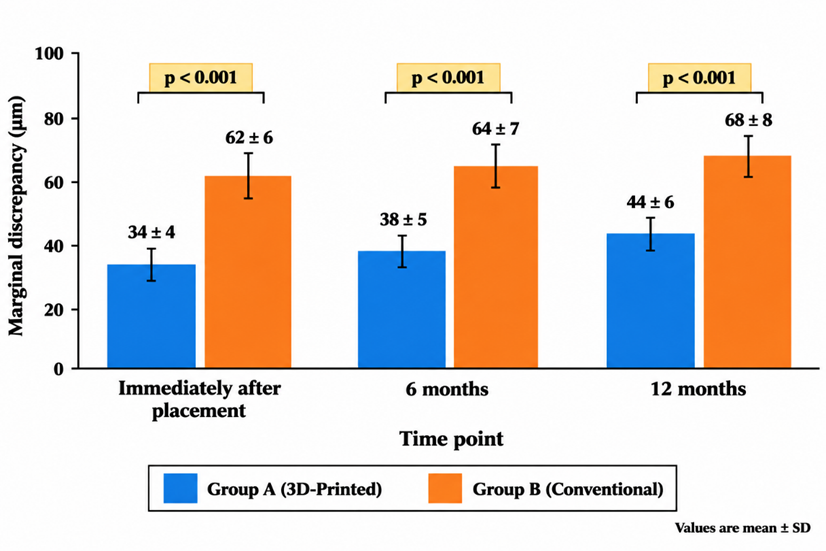
Table 1. Comparison of marginal discrepancy between 3D-printed and conventionally manufactured prostheses
|
Time Point |
Group A (3D-Printed) (Mean ± SD, µm) |
Group B (Conventional) (Mean ± SD, µm) |
p-value |
|
Immediately after placement |
34 ± 4 |
62 ± 6 |
<0.001 |
|
6 months |
38 ± 5 |
64 ± 7 |
<0.001 |
|
12 months |
44 ± 6 |
68 ± 8 |
<0.001 |
(P-values were calculated using a two-tailed independent-samples Student’s t-test. A p-value <0.05 was considered statistically significant.)
Figure 1. Comparison of mean marginal discrepancy between 3D-printed and conventionally manufactured prostheses at different time points.
Table 2. Comparison of patient satisfaction (VAS score)
|
Time Point |
Group A (3D-Printed) (Mean ± SD) VAS score |
Group B (Conventional) (Mean ± SD) VAS score |
p-value |
|
Immediately after placement |
8.4 ± 0.6 |
7.4 ± 0.8 |
<0.001 |
|
6 months |
8.2 ± 0.8 |
6.6 ± 0.9 |
<0.001 |
|
12 months |
7.2 ± 0.9 |
6.2 ± 1.1 |
<0.001 |
(P-values were calculated using a two-tailed independent-samples Student’s t-test. A p-value <0.05 was considered statistically significant.)
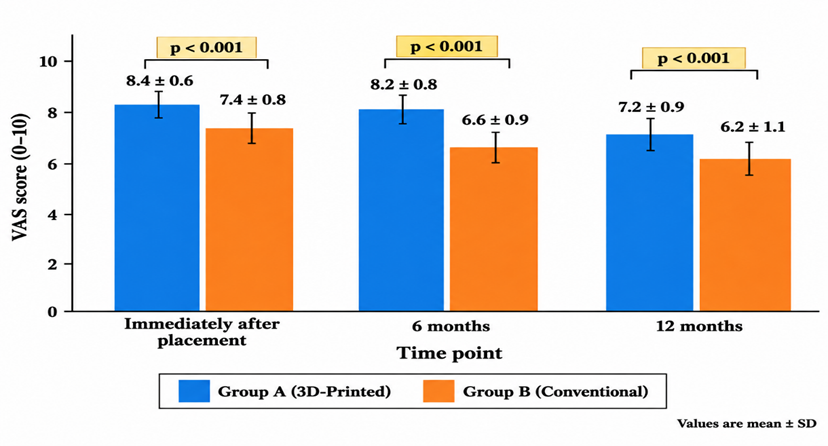
Figure 2. Comparison of mean patient satisfaction scores (VAS) between 3D-printed and conventionally manufactured prostheses at different time points.
Table 3. Comparison of prosthesis-related complications
|
Complication |
Group A (3D-Printed) n (%) |
Group B (Conventional) n (%) |
p-value |
|
Fracture |
01 (2.5%) |
04 (10%) |
0.359 |
|
Chipping |
01 (2.5%) |
02 (5.0%) |
1.000 |
|
Wear |
00 (0.0%) |
01 (2.5%) |
1.000 |
|
Other complications |
00 (0.0%) |
01 (2.5%) |
1.000 |
|
Total |
02 (5.0%) |
08 (20.0%) |
0.087 |
(p-values calculated using two-tailed Fisher's exact test based on per group).
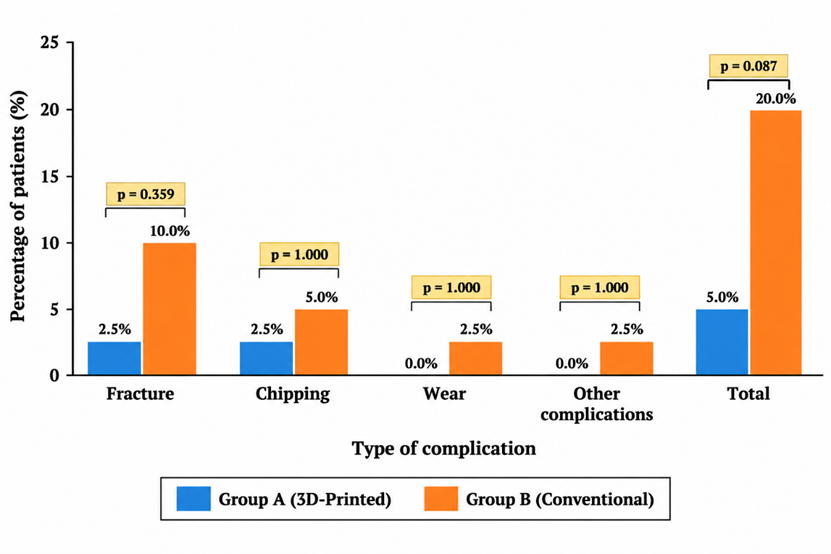
Figure 3. Comparison of prosthesis-related complications between 3D-printed and conventionally manufactured prostheses.
DISCUSSION:
The present study demonstrated favourable clinical performance of 3D-printed fixed dental prostheses compared with conventionally manufactured prostheses, particularly with respect to marginal adaptation and patient satisfaction. The 3D-printed prostheses showed significantly lower marginal discrepancy immediately after placement and throughout the 12-month follow-up, while patient satisfaction remained significantly higher at all assessment points. Although prosthesis-related complications were numerically less frequent in the 3D-printed group, the difference between the two groups did not reach statistical significance. These findings indicate that additive manufacturing may provide clinically meaningful advantages in prosthetic fit and patient acceptance, while its effect on long-term mechanical durability requires further evaluation.
The significantly lower marginal discrepancy observed with 3D-printed prostheses represents one of the principal findings of the study. Marginal adaptation is an important determinant of the biological and mechanical behaviour of fixed prostheses because excessive marginal discrepancies may facilitate plaque accumulation, cement dissolution and bacterial penetration, potentially compromising periodontal health and the longevity of the restoration. In the present study, the mean marginal discrepancy remained substantially lower in the 3D-printed group at immediate placement, 6 months and 12 months. The persistence of this difference over the observation period suggests that the improved initial adaptation achieved through the digital workflow was maintained during clinical service.
A possible explanation for the improved marginal adaptation is the greater standardisation associated with the digital workflow. In the present study, intraoral scanning was followed by CAD-based prosthesis design and additive fabrication, thereby reducing several intermediate laboratory procedures that are inherent to conventional impression, cast fabrication and manual adjustment. CAD/CAM technologies have been associated with improved reproducibility, standardisation and production efficiency because the digital design can be transferred directly to the manufacturing stage with less dependence on repeated manual procedures [1,2]. The use of digital impressions may also reduce errors associated with conventional impression procedures. A clinical comparison of digital and conventional impression techniques for single-tooth restorations demonstrated that digital workflows can provide clinically acceptable accuracy, although the performance varies according to the scanning system and clinical circumstances [6].
The present findings are broadly consistent with the growing evidence supporting digitally fabricated prostheses. Systematic reviews have reported favourable or comparable clinical outcomes for digitally fabricated dentures, including adaptation, clinical working time and patient experience [3,4]. However, direct comparison with the present study should be made cautiously because much of the available clinical literature concerns complete dentures rather than fixed dental prostheses. Differences in prosthesis type, materials, manufacturing systems and clinical protocols can substantially influence the accuracy and clinical performance of digitally fabricated restorations. Therefore, the present results should be interpreted as evidence supporting the effectiveness of the specific digital workflow used in this study rather than as evidence that all 3D-printing systems will invariably provide superior marginal adaptation.
The accuracy of additive manufacturing is influenced by several technical factors. Printer resolution, layer thickness, build orientation, polymerisation and post-processing procedures can affect dimensional accuracy and mechanical behaviour. For example, experimental evidence has demonstrated that the build direction of 3D-printed dental materials can influence their mechanical properties [7]. Similarly, studies evaluating provisional dental materials have shown that printing orientation and other fabrication parameters influence accuracy and material performance [8]. Consequently, the favourable marginal adaptation observed in the present study is likely to reflect the combined effect of the intraoral scanning procedure, CAD design, printer characteristics, material selection and post-processing protocol rather than 3D printing alone.
Patient satisfaction was another important outcome in the present investigation. Participants receiving 3D-printed prostheses reported significantly higher satisfaction scores immediately after placement and at both follow-up assessments. Although the study did not separately quantify the contribution of comfort, aesthetics, chairside time or number of adjustments to the overall VAS score, improved marginal adaptation may have contributed to the more favourable patient-reported experience. A well-adapted prosthesis may require fewer corrective adjustments and may provide greater comfort and confidence during function. Digital workflows can also reduce dependence on multiple manual laboratory procedures and may improve the predictability of prosthesis fabrication [1,2]. Previous clinical evidence regarding patient satisfaction with digitally fabricated prostheses has, however, been heterogeneous. A systematic review reported that digital denture fabrication may improve patient experience and satisfaction, although the available clinical evidence was limited and varied according to the fabrication method [3]. More recent evidence has similarly shown that 3D-printed dentures can provide patient-reported outcomes comparable with conventional dentures rather than consistently superior outcomes [4]. Conversely, randomised clinical studies have reported both favourable and comparable patient satisfaction with 3D-printed dentures [9,10]. These differences highlight the importance of considering the type of prosthesis, material, clinical protocol and patient population when interpreting satisfaction outcomes. The higher satisfaction observed in the present study therefore appears encouraging but should not be generalised to every form of digitally fabricated prosthesis.
The complication findings provide a more cautious perspective. Fracture, chipping, wear and other prosthesis-related complications were numerically less frequent in the 3D-printed group than in the conventional group. Nevertheless, the difference in the overall complication rate was not statistically significant. Therefore, the present study does not establish that 3D-printed prostheses have superior mechanical survival. The lower observed complication frequency may represent a favourable trend, but the relatively small number of events and the 12-month observation period limit the strength of conclusions regarding long-term durability.
The mechanical behaviour of 3D-printed prostheses is closely related to material composition and manufacturing parameters. Additive manufacturing permits fabrication of complex geometries and highly reproducible designs, but the properties of printed polymers may differ from those of conventionally processed or milled materials. Revilla-León and Özcan highlighted the broad range of additive manufacturing technologies and polymeric materials available for prosthodontic applications, while also noting the importance of processing parameters and material characteristics [2]. Similarly, Tahayeri et al. demonstrated that 3D-printed provisional restorative materials can achieve clinically relevant mechanical properties, although their performance depends on printing conditions and material formulation [8]. The influence of build orientation on mechanical strength further supports the need for standardised printing protocols [7].
The complication findings should also be considered in the context of the current clinical literature. Recent systematic reviews have generally reported that digitally fabricated prostheses provide clinical outcomes that are comparable to, and in some respects favourable over, conventional prostheses, but they have also emphasised heterogeneity among the available studies [3,4]. Importantly, recent randomised trials have not consistently demonstrated superiority of 3D-printed prostheses for all patient-centred outcomes. For example, a randomised crossover trial reported that 3D-printed complete dentures were comparable to conventional dentures with respect to oral health-related quality of life and patient satisfaction [10]. Another recent pilot randomised controlled trial reported differences in patient-reported outcomes and technical complications between 3D-printed and conventionally fabricated complete dentures, highlighting the influence of fabrication protocols and prosthesis type on clinical outcomes [11]. Such evidence reinforces the need to avoid interpreting the present results as evidence of universal superiority of 3D printing.
From a clinical perspective, the findings support the potential use of additive manufacturing as an alternative approach for fixed prosthetic rehabilitation when appropriate digital infrastructure, materials and technical expertise are available. The consistently favourable marginal adaptation observed in the present study is particularly relevant because accurate prosthesis fabrication can reduce the need for extensive corrective procedures. Digital workflows also provide the possibility of storing the definitive prosthetic design electronically, which may facilitate reproduction or modification when required. Nevertheless, successful clinical implementation depends on the complete digital workflow rather than the printer alone. Scanner accuracy, CAD design, printer calibration, material characteristics, build orientation, post-processing and clinical finishing all have the potential to influence the final restoration. Current systematic evidence also indicates that digital workflows can reduce clinical working time, although the precise benefit depends on the specific workflow and type of prosthesis [12-15].
An important strength of the present study is its prospective randomised comparative design, which allowed direct clinical comparison between 3D-printed and conventionally manufactured prostheses. The inclusion of repeated assessments immediately after placement and at 6 and 12 months also allowed the clinical behaviour of the prostheses to be evaluated over time rather than relying solely on immediate post-placement measurements. Furthermore, the study incorporated both clinician-oriented and patient-reported outcomes, namely marginal adaptation, prosthesis-related complications and patient satisfaction. These features provide a clinically relevant assessment of prosthetic performance.
Overall, the present findings support the clinical potential of 3D-printed prostheses, particularly in relation to marginal adaptation and patient satisfaction. The results are consistent with the broader evidence that digital prosthodontic workflows can provide clinically acceptable and, in selected circumstances, favourable outcomes compared with conventional techniques. At the same time, the absence of a statistically significant difference in prosthesis-related complications indicates that improved fit and patient acceptance should not be interpreted as proof of superior long-term mechanical durability. Continued clinical evaluation of newer materials and standardised additive manufacturing protocols will be important for establishing the long-term role of 3D printing in fixed prosthodontic rehabilitation.
Limitations of the Study:
The present study has certain limitations that should be considered while interpreting the findings. The study was conducted with a relatively small sample size of 80 patients at a single dental institution, which may limit the generalisability of the findings to a wider population. The follow-up period was restricted to 12 months; therefore, the long-term durability and clinical performance of the prostheses could not be assessed. In addition, the study evaluated selected clinical parameters, namely marginal adaptation, patient satisfaction, and prosthesis-related complications, and did not include other potentially relevant outcomes such as detailed occlusal changes, periodontal response, or cost-effectiveness. Differences in digital and conventional fabrication workflows, including materials and laboratory procedures, may also influence clinical outcomes. Larger multicentric studies with longer follow-up periods and assessment of additional clinical and patient-reported outcomes are therefore needed to provide a more comprehensive evaluation of 3D-printed dental prostheses.
CONCLUSION:
3D-printed dental prostheses demonstrated favourable clinical performance compared with conventionally manufactured prostheses, particularly in terms of marginal adaptation and patient satisfaction. The significantly lower marginal discrepancy observed in the 3D-printed group at immediate placement and at 6- and 12-month follow-up indicates improved prosthetic fit. Patients receiving 3D-printed prostheses also reported significantly higher satisfaction scores throughout the follow-up period. Although prosthesis-related complications were less frequent in the 3D-printed group, the difference in overall complication rates was not statistically significant. Overall, the findings highlight the clinical potential of 3D-printing technology as an effective and promising alternative to conventional prosthetic fabrication, with notable benefits in prosthetic fit and patient acceptance. Further long-term clinical evaluation will help establish its broader application in routine prosthodontic practice.
REFERENCES:
1. Dawood A, Marti Marti B, Sauret-Jackson V, Darwood A. 3D printing in dentistry. Br Dent J. 2015 Dec;219(11):521-9. doi: 10.1038/sj.bdj.2015.914. Erratum in: Br Dent J. 2016 Jan 22;220(2):86. doi: 10.1038/sj.bdj.2016.50. PMID: 26657435.
2. Revilla-León M, Özcan M. Additive Manufacturing Technologies Used for Processing Polymers: Current Status and Potential Application in Prosthetic Dentistry. J Prosthodont. 2019 Feb;28(2):146-158. doi: 10.1111/jopr.12801. Epub 2018 Apr 22. PMID: 29682823.
3. Chappuis Chocano AP, Venante HS, Bringel da Costa RM, Pordeus MD, Santiago Junior JF, Porto VC. Evaluation of the clinical performance of dentures manufactured by computer-aided technology and conventional techniques: A systematic review. J Prosthet Dent. 2023 Apr;129(4):547-553. doi: 10.1016/j.prosdent.2021.06.029. Epub 2021 Jul 29. PMID: 34332774.
4. Zandinejad A, Floriani F, Lin WS, Naimi-Akbar A. Clinical outcomes of milled, 3D-printed, and conventional complete dentures in edentulous patients: A systematic review and meta-analysis. J Prosthodont. 2024 Oct;33(8):736-747. doi: 10.1111/jopr.13859. Epub 2024 Apr 26. PMID: 38666691.
5. Thu KM, Molinero-Mourelle P, Yeung AWK, Abou-Ayash S, Lam WYH. Which clinical and laboratory procedures should be used to fabricate digital complete dentures? A systematic review. J Prosthet Dent. 2024 Nov;132(5):922-938. doi: 10.1016/j.prosdent.2023.07.027. Epub 2023 Sep 9. PMID: 37689573.
6. Boeddinghaus M, Breloer ES, Rehmann P, Wöstmann B. Accuracy of single-tooth restorations based on intraoral digital and conventional impressions in patients. Clin Oral Investig. 2015 Nov;19(8):2027-34. doi: 10.1007/s00784-015-1430-7. Epub 2015 Feb 20. PMID: 25693497.
7. Alharbi N, Osman R, Wismeijer D. Effects of build direction on the mechanical properties of 3D-printed complete coverage interim dental restorations. J Prosthet Dent. 2016 Jun;115(6):760-7. doi: 10.1016/j.prosdent.2015.12.002. Epub 2016 Jan 21. PMID: 26803175.
8. Tahayeri A, Morgan M, Fugolin AP, Bompolaki D, Athirasala A, Pfeifer CS, Ferracane JL, Bertassoni LE. 3D printed versus conventionally cured provisional crown and bridge dental materials. Dent Mater. 2018 Feb;34(2):192-200. doi: 10.1016/j.dental.2017.10.003. Epub 2017 Oct 27. PMID: 29110921; PMCID: PMC5801146.
9. Elawady DM, Ibrahim WI, Osman RB. Clinical evaluation of implant overdentures fabricated using 3D-printing technology versus conventional fabrication techniques: a randomized clinical trial. Int J Comput Dent. 2021 Dec 21;24(4):375-384. PMID: 34931773.
10. Ohara K, Isshiki Y, Hoshi N, Ohno A, Kawanishi N, Nagashima S, Inoue M, Kubo D, Yamaya K, Inoue E, Kimoto K. Patient satisfaction with conventional dentures vs. digital dentures fabricated using 3D-printing: A randomized crossover trial. J Prosthodont Res. 2022 Oct 7;66(4):623-629. doi: 10.2186/jpr.JPR_D_21_00048. Epub 2022 Jan 27. PMID: 35082225.
11. Keeling A, Osnes C, Davda K, Khalid S, Dukanovic G, Porter C, Attrill D, Devlin H, Archer N, Shuweihdi F, Hyde TP. A Pilot Randomised Controlled Trial to Compare 3D Printed Versus Conventionally Fabricated Complete Dentures. Eur J Prosthodont Restor Dent. 2025 Aug 14. doi: 10.1922/EJPRD_2835Keeling09. Epub ahead of print. PMID: 40843980.
12. Kostunov J, Crocoll J, Hetzler S, Rammelsberg P, Zeiß J, Zenthöfer A, Rues S. Fit of Three-Unit Posterior Fixed Dental Prostheses Made from Tetragonal Zirconia Polycrystal by 3D Printing and Milling. Materials (Basel). 2026 Feb 3;19(3):597. doi: 10.3390/ma19030597. PMID: 41681285; PMCID: PMC12898067.
13. Khalil AS, Alrehaili RS, Alenazi S, Alfawzan F, Alobaidi R, Alshami A, Sultan T, Alahmari F, Alarjan L, Alshammari N, Alzahrani TM. How Accurate is the Fit of Additive 3D-Printed Implant-Supported Restorations and Partial Coverage Posterior Restorations? A Systematic Review. Journal of Pioneering Medical Sciences. 2025 Sep;14(9):12-22.
14. Luna-Domínguez CR, Luna-Vega AC, Salas-Orozco MF, Oliver-Parra R, Luna-Lara CA, Luna-Domínguez JH. Clinical Implementation of a Fully Digital Workflow for the Fabrication of a Maxillary Complete Denture: A Case Report. Dent J (Basel). 2025 Nov 10;13(11):524. doi: 10.3390/dj13110524. PMID: 41294505; PMCID: PMC12651307.
15. Abdelhady W, Abozaid D, Mohammed M, Ashraf M, Metwally M, Mohammed H. A systematic review on influence of printing layer thickness on the marginal and internal fit of 3D-printed fixed dental prostheses. Odontology. 2026 Jul;114(3):1021-1043. doi: 10.1007/s10266-025-01241-y. Epub 2025 Nov 20. PMID: 41264112; PMCID: PMC13320041.