Determination of Diagnostic Accuracy of NT Pro B - Type Natriuretic Peptide (BNP) to Differentiate Between Cardiac and Non-Cardiac Cause of Acute Breathlessness in Patients Presenting to Emergency Medicine Department in a Tertiary Care Hospital.
- Prerna Veer , PG Student (EMD)
- Elizabeth C. Sada , MD. DA. IDCCM, Professor, Emergency Department, BUDUMC, Pune
- Bhavin Katariya , Assistant Professor, MD (Med) IDCCM
- Pushkar Shah , Prof & HOD, MD (Med), FACEE, IDCCM, PGDC, PGDCED
Article Information:
Abstract:
Background: Acute breathlessness is a common emergency presentation in which rapid identification of cardiac dysfunction is essential. N-terminal pro-B-type natriuretic peptide (NT-proBNP) may facilitate early assessment of left ventricular systolic dysfunction. Objective: To evaluate the diagnostic performance of NT-proBNP for detecting left ventricular systolic dysfunction in patients presenting with acute breathlessness. Methods: This cross-sectional diagnostic-accuracy study included 179 adults presenting with acute breathlessness. NT-proBNP ≥300 ng/L was considered positive, with echocardiographic left ventricular ejection fraction (LVEF) ≤45% as the reference standard. Results: LVEF ≤45% was present in 106 (59.2%) patients, while 162 (90.5%) had NT-proBNP ≥300 ng/L. At this threshold, sensitivity was 100%, specificity 23.3%, positive predictive value 65.4%, negative predictive value 100%, and overall accuracy 68.7%. NT-proBNP demonstrated high overall discrimination (AUC 0.917, 95% CI 0.869–0.957) and correlated strongly and inversely with LVEF (ρ=−0.763, p<0.001). Conclusion: NT-proBNP provides excellent rule-out performance for left ventricular systolic dysfunction but should complement rather than replace echocardiography.
Keywords:
Article :
INTRODUCTION:
Acute breathlessness is a frequent and often difficult to diagnose presentation in the ED, and cardiac and respiratory disease often have similar clinical features. Early detection of cardiac dysfunction is especially critical as delayed or inappropriate treatment can have a negative impact on outcome. While clinical assessment, electrocardiography, chest radiography and echocardiography continue to play a key role in the evaluation, bedside differentiation of cardiac from non-cardiac causes of dyspnoea can be challenging [1,2].
In this context, natriuretic peptides have proven to be valuable markers. B-type natriuretic peptide (BNP) and its biologically inactive N-terminal fragment, NT-proBNP, are released when there is increased myocardial wall stress and are biochemical markers of haemodynamic cardiac burden. The Breathing Not Properly Multinational Study showed that rapid measurement of natriuretic-peptide levels was a useful tool for the diagnosis of acute dyspnoea [1] and the PRIDE study subsequently confirmed that NT-proBNP was a valuable adjunct in the diagnosis of acute cardiac failure in patients attending the emergency department [2].
NT-proBNP is particularly useful as a rule-out test. The use of NT-proBNP in combination with clinical assessment has been demonstrated to enhance diagnostic classification over either method alone [3,4]. Further studies showed that BNP and NT-proBNP are good discriminators in patients with acute dyspnoea [5] and systematic evidence showed that low natriuretic-peptide levels are highly sensitive for ruling out acute heart failure [6].
However, the interpretation of an elevated NT-proBNP concentration is not as simple. Values are affected by age, renal function and other cardiovascular or systemic disease and high levels do not necessarily reflect poor left ventricular systolic function [7,8]. Echocardiography is therefore still important for cardiac structure and function definition, and NT-proBNP can be used as a quick screening tool to select patients for further cardiac evaluation. Current evidence still supports the use of NT-proBNP in the ED setting, and highlights the need for correct thresholds and clinical context [9].
In this context, the present study aimed to assess the diagnostic value of NT-proBNP for the detection of echocardiographic LVSD in adults with acute breathlessness. It also explored the association between NT-proBNP concentration and LVEF and the effect of age on these parameters.
MATERIALS AND METHODS:
Study design and setting
This hospital-based cross-sectional diagnostic-accuracy study was conducted in the Department of Emergency Medicine, Bharati Hospital, a tertiary-care teaching hospital in Pune, India, from March 2024 to September 2025. The study evaluated the diagnostic performance of N-terminal pro-B-type natriuretic peptide (NT-proBNP) in patients presenting with acute breathlessness, using two-dimensional echocardiography as the reference investigation for left ventricular systolic dysfunction.
Study participants
Adults aged ≥18 years presenting to the emergency department with acute breathlessness were screened for eligibility. Patients presenting with recurrent breathlessness despite a previous diagnosis made at another healthcare facility were also eligible. Pregnancy was not considered an exclusion criterion.
Patients with severe renal failure, breathlessness following chest trauma, inability or unwillingness to cooperate with the study procedures, or refusal to provide informed consent were excluded.
A total of 179 eligible patients underwent both NT-proBNP measurement and two-dimensional echocardiography and were included in the final analysis.
Clinical assessment
Following enrolment, demographic characteristics, relevant medical history, associated comorbidities, vital signs, and clinical examination findings were recorded using a structured data-collection form. Particular attention was given to cardiovascular risk factors and associated illnesses, including hypertension and diabetes mellitus.
NT-proBNP measurement
Venous blood samples were collected under standard aseptic precautions at presentation. NT-proBNP was measured using the point-of-care assay available at the institution, and concentrations were recorded in ng/L.
For the prespecified diagnostic analysis, an NT-proBNP concentration of ≥300 ng/L was classified as a positive index-test result, whereas values <300 ng/L were considered negative. For descriptive purposes, NT-proBNP concentrations were additionally categorized as <300 ng/L, 300–1800 ng/L, and >1800 ng/L.
Echocardiographic assessment
All participants underwent two-dimensional transthoracic echocardiography in the cardiology department. Examinations were performed by experienced cardiologists, and left ventricular ejection fraction (LVEF) was documented for each participant.
For the diagnostic-accuracy analysis, LVEF ≤45% was considered a positive echocardiographic reference finding, representing reduced left ventricular systolic function, while LVEF >45% was classified as reference negative. LVEF was additionally categorized descriptively as ≤40%, 41–49%, and ≥50%.
Outcome measures
The primary outcome was the diagnostic performance of NT-proBNP at the prespecified threshold of ≥300 ng/L for identifying echocardiographic left ventricular systolic dysfunction.
Index-test and reference-test findings were cross-classified as true positive, false positive, false negative, or true negative. From these data, sensitivity, specificity, positive predictive value (PPV), negative predictive value (NPV), overall diagnostic accuracy, positive likelihood ratio (LR+), and negative likelihood ratio (LR−) were determined.
Secondary analyses evaluated the relationship between NT-proBNP concentration and LVEF and the associations of age with NT-proBNP and LVEF. The discriminatory ability of NT-proBNP across its continuous concentration range was assessed using receiver operating characteristic (ROC) curve analysis.
Statistical analysis
Categorical variables were summarized as frequency and percentage, expressed as n (%). Continuous variables were summarized using mean ± standard deviation and, where appropriate, median with interquartile range and range.
Sensitivity, specificity, PPV, NPV, and overall accuracy were calculated from the 2×2 diagnostic contingency table, with corresponding 95% confidence intervals. Likelihood ratios were also calculated. The diagnostic discrimination of continuous NT-proBNP values for identifying LVEF ≤45% was evaluated using ROC analysis, and the area under the ROC curve (AUC) was reported with a 95% confidence interval.
Because NT-proBNP concentrations were markedly skewed and the relationships between variables were not assumed to be linear, associations between NT-proBNP and LVEF, age and NT-proBNP, and age and LVEF were assessed using Spearman’s rank correlation coefficient (ρ). All statistical tests were two-sided, and a p value <0.05 was considered statistically significant. Available-case analysis was used for variables with missing observations; age-based analyses included 178 participants.
Ethical considerations
The study was initiated after approval from the Institutional Ethics Committee. Written informed consent was obtained from all participants before enrolment. Patient confidentiality was maintained throughout data collection, analysis, and reporting.
RESULTS:
Study population and baseline characteristics
A total of 179 patients presenting with acute breathlessness were included. Age was available for 178 participants, with a mean age of 59.9 ± 15.8 years; 106 (59.2%) were male. At least one recorded comorbidity was present in 149 (83.2%), with hypertension and diabetes mellitus documented in 121 (67.6%) and 76 (42.5%), respectively. Baseline and diagnostic characteristics are summarized in Table 1.
Table 1. Baseline and diagnostic characteristics of the study population
|
Characteristic |
Category |
Overall (N=179) |
|
Age, years |
Mean ± SD |
59.91 ± 15.75 |
|
Median (IQR) |
60.0 (51.2–72.0) |
|
|
Range |
20–94 |
|
|
Sex |
Male |
106 (59.2%) |
|
Female |
73 (40.8%) |
|
|
Comorbidities |
Any comorbidity |
149 (83.2%) |
|
Hypertension |
121 (67.6%) |
|
|
Diabetes mellitus |
76 (42.5%) |
|
|
NT-proBNP |
<300 ng/L |
17 (9.5%) |
|
300–1800 ng/L |
33 (18.4%) |
|
|
>1800 ng/L |
129 (72.1%) |
|
|
LVEF |
≤40% |
86 (48.0%) |
|
41–49% |
20 (11.2%) |
|
|
≥50% |
73 (40.8%) |
|
|
Diagnostic classification |
Echocardiographic positive (LVEF ≤45%) |
106 (59.2%) |
|
NT-proBNP positive (≥300 ng/L) |
162 (90.5%) |
Values are n (%) unless otherwise stated. Age summaries are based on n=178.
NT-proBNP and echocardiographic findings
Echocardiography demonstrated LVEF ≤45% in 106 (59.2%), while NT-proBNP was ≥300 ng/L in 162 (90.5%). Most participants had NT-proBNP concentrations >1800 ng/L (129 (72.1%)). NT-proBNP showed a strong inverse relationship with LVEF, whereas its association with age was weaker (Table 2 and Figure 1).
Table 2. Correlation of age, NT-proBNP, and left ventricular ejection fraction
|
Variables |
n |
Spearman ρ |
p-value |
|
Age vs NT-proBNP |
178 |
0.347 |
<0.001 |
|
Age vs LVEF |
178 |
-0.347 |
<0.001 |
|
NT-proBNP vs LVEF |
179 |
-0.763 |
<0.001 |
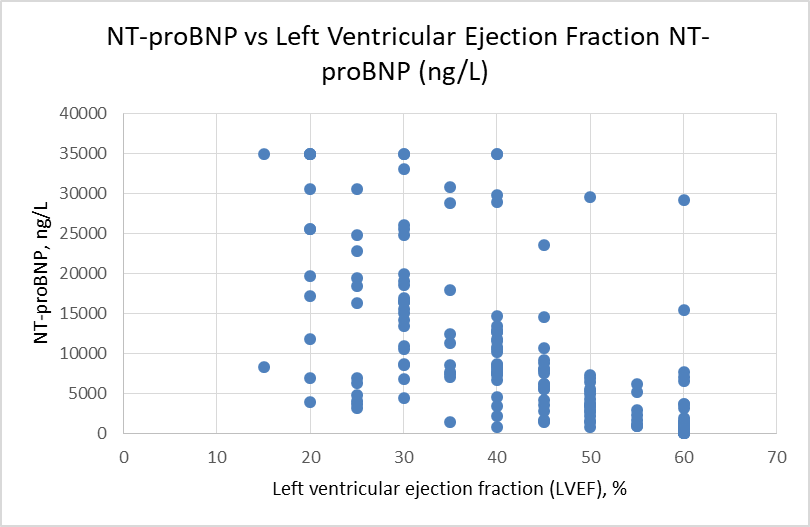
Figure 1. Relationship between NT-proBNP and left ventricular ejection fraction. NT-proBNP was inversely correlated with LVEF (Spearman ρ=-0.763, p<0.001).
Diagnostic accuracy of NT-proBNP
Using echocardiographic LVEF ≤45% as the reference standard and NT-proBNP ≥300 ng/L as the index-test threshold, all reference-positive patients had a positive NT-proBNP result. The threshold therefore showed very high sensitivity and negative predictive performance, but low specificity. The complete 2×2 distribution and diagnostic indices are presented in Tables 3 and 4.
Table 3. Cross-classification of NT-proBNP at 300 ng/L against echocardiographic LVEF
|
NT-proBNP result |
LVEF ≤45% |
LVEF >45% |
Total |
|
Positive (≥300 ng/L) |
106 |
56 |
162 |
|
Negative (<300 ng/L) |
0 |
17 |
17 |
|
Total |
106 |
73 |
179 |
Table 4. Diagnostic performance of NT-proBNP for echocardiographic cardiac dysfunction
|
Diagnostic measure |
Estimate |
95% CI |
|
Sensitivity |
100.0% |
96.6–100.0% |
|
Specificity |
23.3% |
14.2–34.6% |
|
Positive predictive value |
65.4% |
57.6–72.7% |
|
Negative predictive value |
100.0% |
80.5–100.0% |
|
Overall accuracy |
68.7% |
61.4–75.4% |
|
Positive likelihood ratio |
1.30 |
— |
|
Negative likelihood ratio |
0.00 |
— |
|
ROC area under the curve |
0.917 |
0.869–0.957 |
Confidence intervals for proportions are exact 95% binomial intervals; the AUC confidence interval is based on bootstrap resampling.
Across the full range of NT-proBNP values, discrimination for LVEF ≤45% was high, with an area under the ROC curve of 0.917 (95% CI 0.869–0.957) (Figure 2).
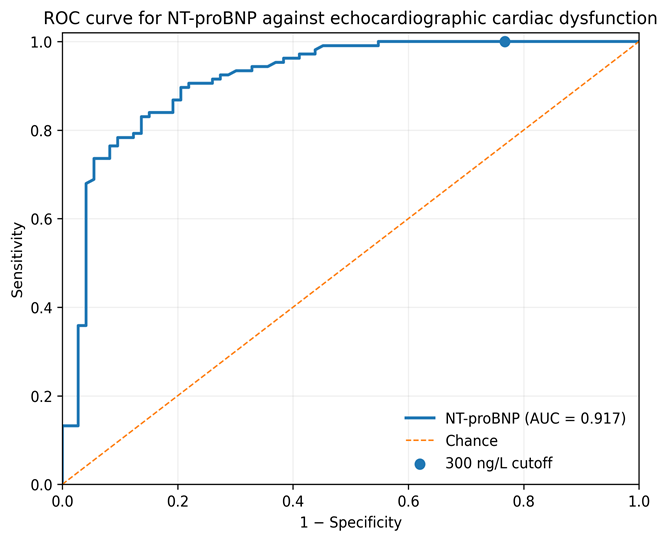
Figure 2. Receiver operating characteristic curve of NT-proBNP for identifying LVEF ≤45%. AUC=0.917 (95% CI 0.869–0.957). The operating point for the 300 ng/L threshold is shown.
Overall, NT-proBNP concentrations were strongly associated with echocardiographic systolic dysfunction. The 300 ng/L threshold maximized sensitivity and negative predictive value, while continuous NT-proBNP provided substantially better overall discrimination across the observed concentration range.
DISCUSSION:
In this diagnostic-accuracy study of 179 adults presenting with acute breathlessness, echocardiographic left ventricular systolic dysfunction (LVEF ≤45%) was present in 59.2%, whereas 90.5% had NT-proBNP ≥300 ng/L. At this threshold, NT-proBNP achieved 100% sensitivity and 100% negative predictive value but only 23.3% specificity, yielding an overall accuracy of 68.7%. Importantly, discrimination across the full range of NT-proBNP values was substantially better (AUC 0.917), and NT-proBNP showed a strong inverse correlation with LVEF (ρ=−0.763). These findings indicate that a low threshold is particularly useful for excluding significant systolic dysfunction, whereas elevated concentrations require echocardiographic confirmation.
The high rate of rule-out is similar to that of the large hospital-based study by Bay et al., which included 2,193 unselected admissions who had both NT-proBNP and echocardiography performed. They found that LVEF ≤40% was detected with 73% sensitivity and 82% specificity at a threshold of 357 pmol/L, and a concentration below the threshold had a 98% negative predictive value. NT-proBNP also increased with age and decreasing LVEF. Our study demonstrated even greater sensitivity at 300 ng/L, but significantly lower specificity, likely due to the high-risk emergency population and the slightly more liberal definition of LVEF ≤45%.
In the PRIDE echocardiographic substudy, Chen et al. assessed 134 patients with breathlessness in the ED and showed that NT-proBNP was independently associated with LVEF, mitral annular diastolic velocities, right-ventricular hypokinesis, and tricuspid regurgitation. The negative predictive value of an NT-proBNP concentration <300 pg/mL for significant systolic or diastolic dysfunction was 91%. NT-proBNP also gave prognostic information outside of the echocardiogram, as 20.1% of the cohort died within 1 year. The absence of false-negative cases at the same nominal threshold reinforces the use of 300 ng/L as a screening threshold for systolic dysfunction, but our endpoint was specifically LVEF and not combined systolic and diastolic abnormalities.
The high AUC in our cohort is also similar to that reported in population-based studies. In 1,229 older adults, Abhayaratna et al. found that NT-proBNP was not very useful for detecting mild ventricular abnormalities (AUC 0.56–0.66), but was very useful for LVEF ≤40% or moderate-to-severe diastolic dysfunction (AUC > 0.90). NT-proBNP levels were affected by age, sex, BMI, renal function, ventricular mass, and left atrial volume, and importantly, 88% of apparent false-positive results were attributable to underlying cardiorenal abnormalities. This distinction is important for our study, where the AUC was 0.917, but the specificity was low at the fixed threshold of 300 ng/L. It implies that NT-proBNP is a good marker of clinically relevant cardiac dysfunction over its entire range, but a low binary cut-off will inevitably result in a high number of patients with normal LVEF being classified as positive.
Corteville et al. came to a similar conclusion in 815 patients with stable coronary disease and no previous history of heart failure. For ventricular dysfunction, the AUC was 0.78, with a concentration <100 pg/mL having an 88% sensitivity and a low post-test probability of disease, and a concentration >500 pg/mL having an 89% specificity. The positive predictive value at >500 pg/mL was, however, only 47% due to the fact that only 18% of the patients had ventricular dysfunction. These data show the importance of the influence of prevalence and case mix on predictive values. The PPV was 65.4% in a cohort with a much higher prevalence of reduced LVEF (59.2%), and the NPV was excellent.
The magnitude of the inverse relationship between NT-proBNP and LVEF was particularly striking. In a study of 100 patients in the ED with dyspnoea and age >60 years, Belagavi et al. found that NT-proBNP levels increased as EF decreased: mean NT-proBNP levels were around 892 pg/mL with normal EF, 1,359 pg/mL with mild dysfunction, 2,092 pg/mL with moderate dysfunction, and 2,764 pg/mL with severe dysfunction. The correlation between NT-proBNP and LVEF was −0.721, and patients with predominantly respiratory causes of dyspnoea had a mean NT-proBNP of around 309 pg/mL. Our correlation of −0.763 is very close and confirms a graded relationship between myocardial dysfunction and peptide release, not a dichotomous diagnostic response.
Special attention should be paid to age. Age was positively associated with NT-proBNP (ρ=0.347) and negatively associated with LVEF (ρ=−0.347) in our cohort. In 80 well-functioning nonagenarians, Vaes et al. found that NT-proBNP increased with the number of echocardiographic abnormalities and was correlated with LV dimensions, systolic and diastolic function, left atrial enlargement, and valvular disease. The threshold of 269.5 pg/mL had an 85% sensitivity, 77% NPV, and an AUC of 0.75 for detecting abnormal LV dimensions or depressed systolic function. These results highlight the importance of using a low threshold for the best sensitivity, but at the cost of specificity, especially in older individuals.
The low specificity seen in our study should therefore not be interpreted as a lack of biological performance of NT-proBNP. Acute breathlessness is often associated with both pulmonary and cardiac disease, and NT-proBNP can be elevated in cardiac disease without an LVEF ≤45%. This was shown by Andrijevic et al. in 209 patients admitted to hospital with acute exacerbations of chronic obstructive pulmonary disease. Twenty-two.5% had LV dysfunction, with a mean NT-proBNP of 3,303 pg/mL in those with LV dysfunction and 1,093 pg/mL in those without. At a much higher threshold of 1,505 pg/mL, sensitivity was 76.6%, specificity 83.3%, PPV 57.1%, and NPV 92.5%. The contrast with our 300-ng/L threshold is illustrative of the fundamental trade-off between sensitivity and specificity and is consistent with the idea of choosing thresholds based on the clinical purpose.
Taken together, the present findings suggest two complementary uses of NT-proBNP. First, a value <300 ng/L seems very effective in excluding patients with significant LV systolic dysfunction, which may be useful in prioritizing the use of echocardiography in resource-limited emergency settings. Second, continuous NT-proBNP offers useful information regarding the likelihood and severity of ventricular dysfunction, as evidenced by the high ROC AUC and inverse relationship with LVEF. However, an elevated result does not necessarily mean a decreased systolic function, as other factors such as age, structural heart disease, diastolic dysfunction, right-heart strain, and other comorbidities can increase concentrations without a decrease in LVEF.
The study has a number of strengths. It was conducted on a consecutive population of patients attending the ED, all 179 patients had a paired NT-proBNP and echocardiographic assessment, a prespecified threshold was used, and likelihood ratios, predictive values, ROC discrimination, and correlations with LVEF were reported. The relatively high prevalence of systolic dysfunction also allowed clinically meaningful assessment of test performance, both positive and negative.
There are a few limitations to be noted. This was a single centre study and severe renal failure was not included, which may restrict the generalizability of the results to patients in whom the interpretation of NT-proBNP is most difficult. The reference outcome was LVEF ≤45% and did not include heart failure with preserved ejection fraction or isolated diastolic dysfunction. The fixed 300-ng/L threshold was chosen for rule-out performance rather than optimization of specificity, and age-specific thresholds were not evaluated. Finally, the point-of-care assay and high prevalence of ventricular dysfunction may limit direct extrapolation of predictive values to lower-risk populations.
CONCLUSION:
NT-proBNP showed strong diagnostic discrimination for left ventricular systolic dysfunction in patients presenting with acute breathlessness. A threshold of 300 ng/L provided excellent sensitivity and negative predictive value but limited specificity, supporting its use as a rapid rule-out adjunct rather than a replacement for echocardiography.
REFERENCES:
1. Maisel AS, Krishnaswamy P, Nowak RM, et al. Rapid measurement of B-type natriuretic peptide in the emergency diagnosis of heart failure. N Engl J Med. 2002;347(3):161–167. doi:10.1056/NEJMoa020233
2. Januzzi JL Jr, Camargo CA, Anwaruddin S, et al. The N-terminal Pro-BNP Investigation of Dyspnea in the Emergency Department (PRIDE) study. Am J Cardiol. 2005;95(8):948–954. doi:10.1016/j.amjcard.2004.12.032
3. Baggish AL, Siebert U, Lainchbury JG, et al. A validated clinical and biochemical score for the diagnosis of acute heart failure: the PRIDE Acute Heart Failure Score. Am Heart J. 2006;151(1):48–54. doi:10.1016/j.ahj.2005.02.031
4. Baggish AL, Cameron R, Anwaruddin S, et al. A clinical and biochemical critical pathway for the evaluation of patients with suspected acute congestive heart failure: the PRIDE algorithm. Congest Heart Fail. 2006;12(4):171–176. doi:10.1111/j.1527-5299.2006.05521.x
5. Mueller T, Gegenhuber A, Poelz W, Haltmayer M. Diagnostic accuracy of B type natriuretic peptide and amino terminal proBNP in the emergency diagnosis of heart failure. Heart. 2005;91(5):606–612. doi:10.1136/hrt.2004.037762
6. Roberts E, Ludman AJ, Dworzynski K, et al. The diagnostic accuracy of the natriuretic peptides in heart failure: systematic review and diagnostic meta-analysis in the acute care setting. BMJ. 2015;350:h910. doi:10.1136/bmj.h910
7. Mueller C, Laule-Kilian K, Scholer A, et al. B-type natriuretic peptide for acute dyspnea in patients with kidney disease: insights from a randomized comparison. Kidney Int. 2005;67(1):278–284. doi:10.1111/j.1523-1755.2005.00079.x
8. Januzzi JL Jr, Chen-Tournoux AA, Moe G. Amino-terminal pro-B-type natriuretic peptide testing for the diagnosis or exclusion of heart failure in patients with acute symptoms. Am J Cardiol. 2008;101(3A):29S–38S. doi:10.1016/j.amjcard.2007.11.017
9. Januzzi JL Jr, Chen-Tournoux AA, Christenson RH, et al. N-terminal pro-B-type natriuretic peptide in the emergency department: the ICON-RELOADED study. J Am Coll Cardiol. 2018;71(11):1191–1200. doi:10.1016/j.jacc.2018.01.021
10. Bay M, Kirk V, Parner J, et al. NT-proBNP: a new diagnostic screening tool to differentiate between patients with normal and reduced left ventricular systolic function. Heart. 2003;89(2):150–154. doi:10.1136/heart.89.2.150
11. Chen AA, Wood MJ, Krauser DG, et al. NT-proBNP levels, echocardiographic findings, and outcomes in breathless patients: results from the PRIDE echocardiographic substudy. Eur Heart J. 2006;27(7):839–845. doi:10.1093/eurheartj/ehi811
12. Abhayaratna WP, Marwick TH, Becker NG, Jeffery IM, McGill DA, Smith WT. Population-based detection of systolic and diastolic dysfunction with amino-terminal pro-B-type natriuretic peptide. Am Heart J. 2006;152(5):941–948. doi:10.1016/j.ahj.2006.05.007
13. Corteville DCM, Bibbins-Domingo K, Wu AHB, Ali S, Schiller NB, Whooley MA. N-terminal pro-B-type natriuretic peptide as a diagnostic test for ventricular dysfunction in patients with coronary disease: data from the Heart and Soul Study. Arch Intern Med. 2007;167(5):483–489. doi:10.1001/archinte.167.5.483
14. Belagavi AC, Rao M, Pillai AY, Srihari US. Correlation between NT-proBNP and left ventricular ejection fraction in elderly patients presenting to emergency department with dyspnoea. Indian Heart J. 2012;64(3):302–304. doi:10.1016/S0019-4832(12)60091-1
15. Vaes B, Delgado V, Bax J, Degryse J, Westendorp RGJ, Gussekloo J. Diagnostic accuracy of plasma NT-proBNP levels for excluding cardiac abnormalities in the very elderly. BMC Geriatr. 2010;10:85. doi:10.1186/1471-2318-10-85
16. Andrijevic I, Milutinov S, Lozanov Crvenkovic Z, et al. N-terminal prohormone of brain natriuretic peptide (NT-proBNP) as a diagnostic biomarker of left ventricular systolic dysfunction in patients with acute exacerbation of chronic obstructive pulmonary disease. Lung. 2018;196:583–590. doi:10.1007/s00408-018-0137-3