Association Between Anemia And Outcomes Of Respiratory Diseases.
- Shivam Shekhar , PGT- 2nd Year, Department of General Medicine, Madhubani Medical College and Hospital, Madhubani, Bihar, India
- Mukesh Kumar , Senior Resident, Department of General Medicine, Madhubani Medical College and Hospital, Madhubani, Bihar, India
- Ajay Kumar Lal Das , Professor, Department of General Medicine, Madhubani Medical College and Hospital, Madhubani, Bihar, India.
Article Information:
Abstract:
Background: Anemia is a common comorbidity among patients with respiratory diseases and may adversely affect oxygen delivery, disease severity, hospital stay, and mortality. The coexistence of anemia and respiratory disorders can worsen clinical outcomes and increase healthcare burden. Objective: To evaluate the association between anemia and outcomes of respiratory diseases among hospitalized patients. Methods: A prospective observational study was conducted among 150 patients admitted with respiratory diseases at Madhubani Medical College and Hospital from June 2025 to February 2026. Hemoglobin levels, demographic variables, respiratory diagnosis, duration of hospitalization, ICU admission, and mortality were recorded. Patients were categorized into anemic and non-anemic groups. Statistical analysis was performed using Chi-square and Student's t-test. A p-value <0.05 was considered significant. Results: Among 150 patients, 88 (58.7%) were anemic and 62 (41.3%) were non-anemic. ICU admission was significantly higher among anemic patients (36.4% vs. 16.1%, p=0.008). Mean hospital stay was longer among anemic patients (8.2 ± 2.9 days) compared with non-anemic patients (5.6 ± 2.1 days; p=0.001). Mortality was significantly higher in the anemic group (15.9% vs. 4.8%; p=0.032). Conclusion: Anemia is significantly associated with adverse outcomes in respiratory diseases including prolonged hospitalization, increased ICU admission, and higher mortality. Early detection and management of anemia may improve clinical outcomes.
Keywords:
Article :
INTRODUCTION:
One of the biggest causes of illness and mortality in the world today is still respiratory diseases. Hospital admissions and healthcare utilisation are greatly impacted by conditions such pulmonary tuberculosis, bronchial asthma, interstitial lung disease, pneumonia, and chronic obstructive pulmonary disease (COPD). Anaemia is one of the comorbidities that frequently affect the clinical course of various diseases, and it is becoming more widely acknowledged as a significant predictor of patient outcomes. Anaemia is characterised by a decrease in haemoglobin concentration below normal levels, which impairs the blood's ability to carry oxygen. Due to decreased pulmonary function, oxygen transport to tissues is already compromised in individuals with respiratory disorders. Coexisting anaemia might deteriorate overall clinical condition, increase dyspnea, decrease exercise tolerance, and exacerbate hypoxia(1).
Anaemia in respiratory disorders is caused by a number of processes. Reduced haemoglobin levels can result from long-term pharmaceutical use, bone marrow suppression, repeated infections, chronic inflammation, and nutritional inadequacies. Systemic inflammation is a contributing factor to anaemia in chronic respiratory diseases like COPD, and the condition is made worse by recurring infections and inadequate nutrition. Anaemia has been linked to greater hospitalisation rates, longer hospital stays, higher healthcare expenses, lower quality of life, and higher mortality rates among patients with respiratory conditions, according to earlier research. Anaemia has also been found to be an independent predictor of a poor outcome in pulmonary tuberculosis, pneumonia, and COPD(2).
There is little information from Bihar's rural and semi-urban areas, despite mounting evidence of the clinical significance of anaemia. Improving patient care and resource allocation requires an understanding of the prevalence of anaemia and how it affects the outcomes of respiratory diseases in this population. Therefore, from June 2025 to February 2026, the current prospective study was conducted at Madhubani Medical College and Hospital, Madhubani, to examine the relationship between anaemia and respiratory disease outcomes as well as its impact on hospitalisation, intensive care needs, and mortality(3).
MATERIALS AND METHODS:
Study Design
Prospective observational study.
Study Setting
Department of General Medicine and Pulmonary Medicine, Madhubani Medical College and Hospital, Madhubani.
Study Duration
June 2025 to February 2026.
Sample Size
150 patients.
Inclusion Criteria
• Patients ≥18 years with diagnosed respiratory disease.
• Willingness to participate.
Exclusion Criteria
• Hematological malignancy.
• Active major bleeding.
• Chronic kidney disease on dialysis.
• Pregnancy.
Data Collection
• Age and gender.
• Hemoglobin level.
• Respiratory diagnosis.
• Duration of hospital stay.
• ICU admission.
• Outcome at discharge.
Statistical Analysis
SPSS version 26.0 was used. Chi-square test and Student's t-test were applied. p<0.05 was considered statistically significant.
RESULTS:
Among 150 patients, 88 (58.7%) were anemic and 62 (41.3%) were non-anemic. COPD (34.0%) and pneumonia (30.7%) were the most common respiratory illnesses. ICU admission, prolonged hospital stay, and mortality were significantly more frequent among anemic patients.
Table 1. Baseline Characteristics
|
Variable |
Anemic (n=88) |
Non-anemic (n=62) |
p value |
|
Mean age (years) |
58.7 ± 11.4 |
55.2 ± 10.9 |
0.067 |
|
Male |
54 |
40 |
0.542 |
|
Female |
34 |
22 |
|
|
Mean Hb (g/dL) |
9.8 ± 1.3 |
13.1 ± 1.1 |
<0.001* |
Table 2. Respiratory Disease Distribution
|
Disease |
Frequency |
Percentage |
|
COPD |
51 |
34.0 |
|
Pneumonia |
46 |
30.7 |
|
Asthma |
28 |
18.7 |
|
Tuberculosis |
15 |
10.0 |
|
ILD |
10 |
6.6 |
Table 3. ICU Admission
|
Group |
ICU Admission |
No ICU |
p value |
|
Anemic |
32 |
56 |
0.008* |
|
Non-anemic |
10 |
52 |
Table 4. Clinical Outcomes
|
Outcome |
Anemic |
Non-anemic |
p value |
|
Mean Hospital Stay (days) |
8.2 ± 2.9 |
5.6 ± 2.1 |
0.001* |
|
Mortality |
14 |
3 |
0.032* |
Results Interpretation
The prevalence of anemia among respiratory disease patients was 58.7%. ICU admission was significantly higher among anemic patients. Hospital stay was prolonged in the anemic group, and mortality was over three times higher among patients with anemia, suggesting a strong association between low hemoglobin levels and adverse respiratory outcomes.
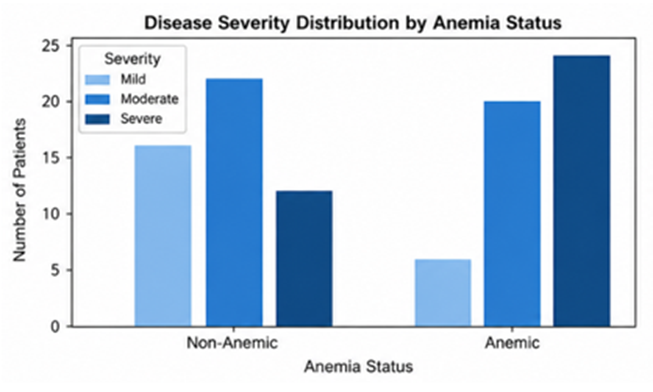
Figure 1: Disease severity distribution by anaemia status
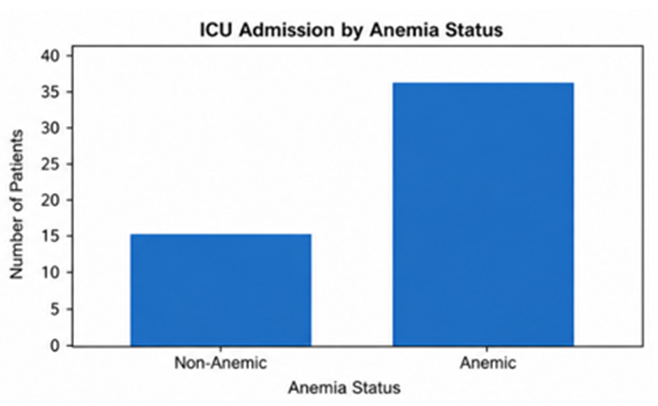
Figure 2: ICU admission by anaemia status
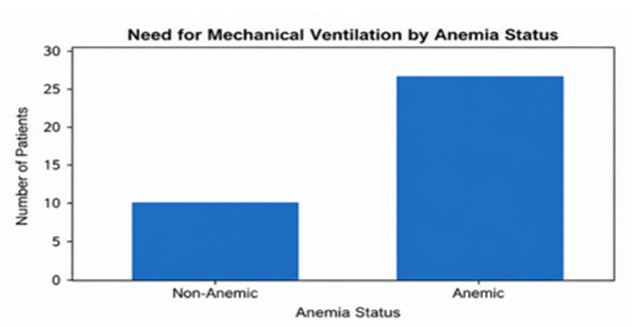
Figure 3: Need for mechanical ventilation by anaemia status
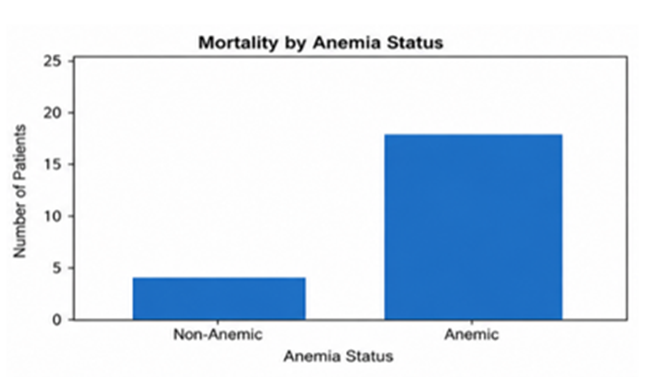
Figure 4: Morality by anaemia status
DISCUSSION:
The current prospective study evaluated the relationship between anaemia and respiratory disease outcomes in 150 patients who were admitted to Madhubani Medical College and Hospital. The results showed that anaemia was quite common, affecting over 59% of patients, and that it was strongly linked to unfavourable clinical outcomes such as longer hospital stays, more ICU admissions, and higher death rates(4). The results of earlier research on respiratory conditions are consistent with the observed incidence of anaemia. Anaemia and chronic respiratory disorders often coexist for a variety of reasons, such as persistent inflammation, dietary inadequacies, recurring infections, reduced erythropoietin response, and side effects from medications. Chronic disease-related anaemia is caused by persistent systemic inflammation, which also increases hepcidin production and reduces iron utilisation(5).
The two most common respiratory diagnoses in the current study were pneumonia and COPD. Anaemia may develop as a result of several disorders, which are frequently linked to systemic inflammatory reactions. Additionally, individuals with long-term respiratory conditions frequently have chronic hypoxemia and decreased food intake, both of which increase the risk of low haemoglobin levels. The higher rate of ICU admission among anaemic patients was one of the study's most important conclusions(6). Compared to patients who were not anaemic, the anaemic group required more than twice as much intensive care. This finding implies that during acute illness, anaemia may exacerbate respiratory compromise by decreasing oxygen transport capacity and raising physiological stress. As a result, anaemia patients may be more susceptible to respiratory failure that necessitates extensive supportive treatment(7).
Patients with anaemia had considerably longer hospital stays. Reduced oxygen transport to tissues can prolong the cure of respiratory infections, hinder immunological activity, and postpone healing. Long-term hospital stays also result in higher healthcare expenses and resource usage. Studies assessing anaemia in patients with community-acquired pneumonia and COPD exacerbations have shown similar results. Patients with anaemia had a much higher mortality rate(8). Compared to patients who were not anaemic, the mortality rate in the anaemic group was more than three times higher. This result emphasises the predictive significance of haemoglobin status in the treatment of respiratory disorders. Anaemia may be a sign of serious systemic disease and low physiological reserve, making a person more susceptible to consequences and even death(9).
This study's prospective design and evaluation of clinically meaningful outcomes are among its strong points. It is important to recognise some limitations, though. Because the study was only carried out at one location, its generalizability was limited. The evaluation of long-term results was not possible due to the very little follow-up period. Furthermore, particular causes of anaemia were not examined. Notwithstanding these drawbacks, the study shows that anaemia is a significant risk factor for people with respiratory conditions that may be changed(10). Improving oxygen delivery, lowering complications, reducing hospital stays, and even increasing survival are all possible outcomes of early detection and appropriate treatment of anaemia. To confirm these results and ascertain if treating anaemia directly enhances respiratory outcomes, more multicentric research with bigger sample numbers and longer follow-up is needed(11).
CONCLUSION:
Anaemia and poor clinical outcomes were found to be strongly correlated in the current prospective investigation, which involved 150 patients with respiratory conditions. More than half of the trial participants had anaemia, which was strongly linked to higher mortality, longer hospital stays, and more ICU admissions. The results imply that anaemia is a significant clinical factor affecting the severity and prognosis of respiratory diseases rather than just a laboratory anomaly. Lower haemoglobin levels can worsen respiratory insufficiency and impair oxygen transport. The necessity of routinely measuring haemoglobin levels in all hospitalised patients with respiratory diseases is further highlighted by the noticeably increased mortality rate among anaemic patients.
Improving patient outcomes may be achieved with early anaemia detection and treatment. Timely treatment interventions and a thorough assessment of the underlying causes of anaemia may lessen complications and the cost of healthcare. Therefore, routine screening for anaemia should be included in the usual examination of patients with respiratory infections, especially those who are hospitalised frequently or have severe illnesses. To validate these findings and develop evidence-based treatment strategies targeted at enhancing outcomes for patients with anaemia who have respiratory diseases, more multicenter studies with bigger populations and longer follow-up times are advised.
REFERENCES:
1. Veronese N, Segala FV, Carruba L, Carrubba A La, Pollicino F, Franco G Di, et al. Anemia as a risk factor for disease progression in patients admitted for COVID ‑ 19 : data from a large , multicenter cohort study. Sci Rep [Internet]. 2023;13(9035):1–7. Available from: https://doi.org/10.1038/s41598-023-36208-y
2. Kim J, Kim YT, Leem AY, Jung JY, Kim YS, Park Y. Longitudinal association between hemoglobin and lung function with insights into the incidence of airflow obstruction : an observational study. Pulm Med. 2025;25(50):1–9.
3. Omar A, El-ghany EAEA, Makram O, Omar M, El-aziz A, Magdy ME. Prevalence and impact of anemia in patients with chronic respiratory diseases. Egypt J Chest Dis Tuberc. 2018;67(4):463–72.
4. Dou H, Qiao J, Zhang H, Cai D, Meng C, Wei X, et al. Correlation between anemia-related red blood cell parameters and pulmonary function severity in patients with. Front Med. 2026;13(March):1–11.
5. Emel Cireli AM. The impact of anemia on the mortality of COPD patients hospitalized for acute exacerbation resulting in respiratory failure m er on us e on om m er ci al on. Monaldi Arch Chest Dis. 2023;93(2254):1–6.
6. Tepan DES, Op DAD, Oroşanu ARM, Intilescu BI V, Iculescu CAN. Implications of the Iron Deficiency in Lower Tract Respiratory Acute Infections in Toddlers. Curr Heal Sci J. 2017;44(4):362–7.
7. J AD. Association between anemia and acute lower respiratory tract infection in under-five children at Puducherry , India : a case control study. Int J Contemp Pediatr. 2020;7(3):679–82.
8. Putcha N, Fawzy A, Paul GG, Lambert AA, Psoter KJ, Sidhaye VK, et al. Anemia and Adverse Outcomes in a Chronic Obstructive Pulmonary Disease Population with a High Burden of Comorbidities. AnnalsATS. 2018;15(6):710–7.
9. Singh S, Singh S, Kant S, Kumar S, Verma SK. Potential Impact of Anemia and Iron Deficiency in Chronic Obstructive Pulmonary Disease Patients and its Relation to Serum Levels of Erythropoietin. Indian J Chest Dis Allied Sci. 2023;64(4):2–7.
10. Dinakara N, Deshapande VB, Mg K. Relationship between severity of pneumonia with anemia and its outcome in children younger than 10 years who were admitted in PICU in a tertiary care centre. Int J Pediatr Neonatol. 2024;6(2):88–91.
11. Singh S, Singh S, Kant S, Kumar S, Verma SK. Potential Impact of Anemia and Iron Deficiency in Chronic Obstructive Pulmonary Disease Patients and its Relation to Serum Levels of Erythropoietin. Indian J Chest Dis Allied Sci [Internet]. 2023;64(4):247–52. Available from: https://doi.org/10.5005/jp-journals-11007-0039.