Comparative Evaluation of Low-Dose Intrathecal Clonidine (7.5 µg and 15 µg) as an Adjuvant to Hyperbaric Bupivacaine for Spinal Anaesthesia in Infra-Umbilical Surgeries.
- Akshay C. , Senior resident, Department of Anesthesiology, Farookh Academy of Medical Education Hospital and Research Institute, Mysore, Karnataka, India.
- Manasa Deepthi Vaka , Assistant Professor, Department of Anesthesiology, Farookh Academy of Medical Education Hospital and Research Institute, Mysore, Karnataka, India.
- Sharath K , Senior resident, Department of Anesthesiology, Farookh Academy of Medical Education Hospital and Research Institute, Mysore, Karnataka, India.
Article Information:
Abstract:
Background: Spinal anaesthesia with hyperbaric bupivacaine is commonly used for infra-umbilical surgeries; however, its duration of postoperative analgesia is limited. Intrathecal clonidine, an α2-adrenergic receptor agonist, has been used as an adjuvant to prolong sensory and motor blockade and postoperative analgesia. The present study evaluated the effects of two low doses of intrathecal clonidine, 7.5 µg and 15 µg, when added to hyperbaric bupivacaine. Aim and Objectives: The primary objective was to compare the sensory and motor block characteristics among patients receiving plain hyperbaric bupivacaine, hyperbaric bupivacaine with 7.5 µg clonidine, and hyperbaric bupivacaine with 15 µg clonidine. Secondary objectives were to compare haemodynamic changes and adverse effects among the groups. Materials and Methods: This hospital-based prospective observational study was conducted at Mandya Institute of Medical Sciences, Mandya, Karnataka, from November 2023 to October 2024. A total of 126 adult patients aged ≥18 years, belonging to ASA physical status I or II and undergoing elective infra-umbilical surgeries under spinal anaesthesia, were included. Patients were divided into three groups of 42 each: Group BC received 15 mg of 0.5% hyperbaric bupivacaine alone, Group BC1 received 15 mg hyperbaric bupivacaine with 7.5 µg clonidine, and Group BC2 received 15 mg hyperbaric bupivacaine with 15 µg clonidine. Sensory block, motor block, postoperative analgesia, haemodynamic parameters and adverse effects were assessed. Results: The three groups were comparable with respect to demographic characteristics and ASA physical status (Tables 1 and 2). The onset of sensory block at T6 was significantly faster in Group BC2 than in Groups BC and BC1, with mean onset times of 4.74 ± 1.63, 4.68 ± 2.20 and 3.44 ± 1.38 minutes, respectively (p=0.001). Sensory regression to T10 was significantly prolonged with clonidine, measuring 112.66 ± 16.27 minutes in Group BC, 175.34 ± 36.41 minutes in Group BC1 and 210.34 ± 33.20 minutes in Group BC2 (p<0.001). Similarly, duration of analgesia increased significantly from 146.83 ± 23.10 minutes in Group BC to 223.97 ± 57.52 minutes in Group BC1 and 270.06 ± 33.56 minutes in Group BC2 (p<0.001). Pairwise comparisons showed significant differences in sensory regression and analgesia between all three groups (p<0.001). Conclusion: Addition of low-dose intrathecal clonidine to hyperbaric bupivacaine significantly prolonged sensory blockade and postoperative analgesia in patients undergoing infra-umbilical surgeries. The 15 µg dose produced the greatest prolongation, while 7.5 µg also provided significant prolongation compared with plain bupivacaine. Considering the balance between prolonged anaesthesia and the potential for dose-related haemodynamic effects, 7.5 µg clonidine may represent an effective low-dose intrathecal adjuvant.
Keywords:
Article :
INTRODUCTION:
Spinal anaesthesia is the most common central neuraxial blockade used in practice. For spinal anaesthesia, 0.5% hyperbaric bupivacaine is the most commonly used local anaesthetic. Bupivacaine has longer anaesthesia duration of approximately 3 to 4 hours, but it will not cause prolonged post-operative analgesia.[1,2]
Numerous adjuvants along with bupivacaine have been used intrathecally to improve the quality and duration of both the intra operative and post operative analgesia without significantly affecting motor characteristics of spinal anaesthesia. Among them opioids (fentanyl or morphine) and α2 adrenergic receptor agonists (clonidine or dexmedetomidine) are the most frequently used as intrathecal adjuvants to extend and enhance intra operative analgesia. However adverse effects of opioids such as pruritis, nausea, vomiting, urinary retention are non-fatal but troublesome whereas delayed respiratory depression especially with morphine can be a fatal side effect.[3]
Clonidine is a selective α2- adrenoreceptors (α2: α1 =220:1) agonist. It is known to increase both sensory and motor block of local anaesthetics when administered intrathecally.[4,5] Various doses of clonidine (such as 30µg, 60µg, 75µg or 150µg) have been used intrathecally along with hyperbaric bupivacaine for spinal anaesthesia.[6-14] Clonidine in a dose as low as 7.5µg has been studied along with hyperbaric bupivacaine in elderly and has shown to significantly prolonged the duration of sensory blockade.[6-13] So, this study has been designed to evaluate the effect of 7.5µg of clonidine along with hyperbaric bupivacaine (Group BC 1) on sensory and motor block characteristics in comparison with hyperbaric bupivacaine with 15µg clonidine (Group BC 2) and plain hyperbaric bupivacaine alone (Group BC) for spinal anaesthesia in patients undergoing infra umbilical surgeries.
There is also evidence of a dose-response relationship between intrathecal clonidine and the duration of spinal anaesthesia. Strebel et al. demonstrated that the analgesic and anaesthetic effects of bupivacaine were sustained in a dose-dependent way when they evaluated intrathecal clonidine doses of 37.5, 75, and 150 µg with bupivacaine.[9] However, because greater doses may be linked to stronger haemodynamic effects, the use of lower dosages is tempting, particularly in patients where cardiovascular stability is critical.
The effects of 15 µg of clonidine have also been investigated. Dobrydnjov et al. found that adding 15 and 30 µg of clonidine to intrathecal bupivacaine improved the spread and duration of analgesia and prolonged the time until the first analgesic request.[14] Similarly, Thakur et al. compared 15 and 30 µg clonidine as adjuvants to hyperbaric bupivacaine for inguinal herniorrhaphy and discovered that the higher 30 µg dose was associated with a higher incidence and duration of hypotension, whereas 15 µg provided effective sensory and motor blockade with a more favourable haemodynamic profile.[10]
More recent research has shown the effectiveness of clonidine as an intrathecal adjuvant. Chhaiya et al. tried 30 and 45 µg of clonidine with hyperbaric bupivacaine for lower limb surgery. They discovered that while the higher dosage produced prolonged analgesia and sensory and motor block, hypotension, bradycardia, and dry mouth were more frequent side effects. [4] Hyndavi et al. examined the anaesthetic and analgesic effects of 0.25 and 0.5 µg/kg clonidine with intrathecal bupivacaine in patients undergoing infra-umbilical surgery. Improved haemodynamic stability was demonstrated by the reduced dose.[7]
Increasing the intrathecal clonidine dose may thereby extend postoperative analgesia and sensory and motor blockage, according to the research that is currently available. However, this benefit must be balanced against the danger of bradycardia and hypotension. Furthermore, the thesis literature demonstrates that 7.5 µg of clonidine can significantly prolong sensory and motor blockade with no alteration in haemodynamics, whereas doses of 15 µg and higher may provide further extension but may potentially be associated with more pronounced haemodynamic variability.
Although clonidine has been demonstrated to be a useful intrathecal adjuvant, it is still important to consider the optimal low dosage that provides a clinically meaningful prolongation of spinal anaesthesia with minimal side effects. To determine if increasing the clonidine dosage from 7.5 to 15 µg delivers any further clinically meaningful benefits for patients having infra-umbilical surgery, a direct comparison between 7.5 µg and 15 µg clonidine and a straightforward hyperbaric bupivacaine control may be helpful. Using the same three treatment combinations—15 mg hyperbaric bupivacaine alone, 15 mg bupivacaine with 7.5 µg clonidine, and 15 mg bupivacaine with 15 µg clonidine—the uploaded thesis assessed sensory, motor, and haemodynamic parameters. The current study examines the duration of postoperative analgesia, the onset and duration of sensory and motor blockade, haemodynamic changes, and side effects in order to compare the efficacy of low-dose intrathecal clonidine at 7.5 µg and 15 µg as an adjuvant to 0.5% hyperbaric bupivacaine for spinal anaesthesia in patients undergoing infra-umbilical surgeries. The objective is to determine a dose that offers the greatest feasible balance between prolonged spinal anaesthesia and postoperative analgesia while maintaining haemodynamic stability.
AIMS AND OBJECTIVES
Primary objective:
• Sensory and motor characteristics between the groups.
Secondary objective:
• To compare the hemodynamic changes between the groups
• To compare the adverse effects between the groups
MATERIALS AND METHODS:
Study Design
The present study was a hospital-based prospective observational study conducted to comparatively evaluate the effect of low-dose intrathecal clonidine (7.5 µg and 15 µg) as an adjuvant to 0.5% hyperbaric bupivacaine for spinal anaesthesia in patients undergoing infra-umbilical surgeries.
Study Setting
The study was conducted at Mandya Institute of Medical Sciences, Mandya, Karnataka, India, after obtaining approval from the Institutional Ethics Committee.
Study Duration
The study was conducted over a period of 12 months, from November 2023 to October 2024.
Study Population
The study included adult patients aged ≥18 years, of either sex, belonging to American Society of Anesthesiologists (ASA) physical status I or II, who were scheduled for elective infra-umbilical surgeries under spinal anaesthesia.
A total of 126 patients fulfilling the predefined inclusion and exclusion criteria were included in the study. Patients were categorized into three groups according to the intrathecal drug combination received.
Study Groups
Group BC:
0.5% hyperbaric bupivacaine 15 mg alone.
Group BC1:
0.5% hyperbaric bupivacaine 15 mg + clonidine 7.5 µg.
Group BC2:
0.5% hyperbaric bupivacaine 15 mg + clonidine 15 µg.
Each group consisted of 42 patients. The same three treatment groups were used in the thesis results.
Sample Size
The sample size was calculated using the formula:
n = 2(Zα/2 + Zβ)² × σ² / d²
Where:
- Zα/2 = 1.96 for 95% confidence interval
- Zβ = 0.84 for 80% power
- σ = Standard deviation = 14.936
- d = Mean difference between two groups = 6.25
The calculated sample size was 41.08 patients per group. Therefore, the sample size was rounded off to 42 patients per group, giving a total sample size of 126 patients.
Sampling Method
Patients were selected by convenience sampling.
Ethical Considerations
Institutional Ethics Committee approval was obtained before commencement of the study. Written informed consent was obtained from all participants before enrolment. Patient confidentiality was maintained throughout the study.
Inclusion Criteria
Patients were included if they fulfilled all of the following criteria:
- Patients aged ≥18 years.
- Patients of either sex.
- Body mass index between 18.5 and 24.9 kg/m².
- Patients scheduled for elective infra-umbilical surgery.
- Patients belonging to ASA physical status I or II.
- Patients receiving spinal anaesthesia with either:
- 15 mg hyperbaric bupivacaine alone,
- 15 mg hyperbaric bupivacaine + 7.5 µg clonidine, or
- 15 mg hyperbaric bupivacaine + 15 µg clonidine.
- Patients willing to participate and providing written informed consent.
Exclusion Criteria
Patients were excluded if they:
- Were receiving α-adrenergic receptor antagonists.
- Were receiving calcium channel blockers.
- Were receiving angiotensin-converting enzyme inhibitors.
- Were taking analgesic medications.
- Had any contraindication to spinal anaesthesia.
- Had failed spinal anaesthesia.
Pre-Anaesthetic Evaluation
All patients underwent a thorough pre-anaesthetic evaluation on the day before surgery. Relevant demographic data, medical history, physical examination and baseline clinical parameters were recorded. Patients were instructed to remain nil per oral for 6–8 hours before surgery.
Premedication
Patients received:
- Cap. Omeprazole 20 mg orally
- Tab. Alprazolam 0.25 mg orally on the night before surgery.
Intravenous Access and Fluid Preloading
After shifting the patient to the operating room, intravenous access was established using an 18G intravenous cannula. Patients were preloaded with 10 mL/kg of crystalloid solution before administration of spinal anaesthesia.
Technique of Spinal Anaesthesia
Spinal anaesthesia was performed under strict aseptic precautions with the patient in the sitting position. A 25G Quincke spinal needle was introduced into the L3–L4 intervertebral space. Following free flow of cerebrospinal fluid, the allocated study drug was administered intrathecally.
The three intrathecal regimens were:
|
Group |
Intrathecal drug administered |
|
BC |
0.5% hyperbaric bupivacaine 15 mg |
|
BC1 |
0.5% hyperbaric bupivacaine 15 mg + clonidine 7.5 µg |
|
BC2 |
0.5% hyperbaric bupivacaine 15 mg + clonidine 15 µg |
Monitoring of Haemodynamic Parameters
Heart rate (HR), systolic blood pressure (SBP), diastolic blood pressure (DBP), mean arterial pressure (MAP) and peripheral oxygen saturation (SpO₂) were monitored and recorded at predefined intervals throughout the intraoperative period and postoperatively.
Assessment of Sensory Block
Sensory blockade was assessed by loss of sensation to pinprick along the bilateral mid-clavicular lines. If the sensory levels differed between the two sides, the higher level was considered for statistical analysis.
The following sensory parameters were recorded:
- Time to onset of sensory block at T6.
- Maximum sensory block level achieved.
- Time for regression of sensory block to T10.
- Duration of postoperative analgesia.
Assessment of Motor Block
Motor blockade was assessed using the Modified Bromage Scale:
|
Bromage Grade |
Description |
|
0 |
No motor block |
|
1 |
Inability to raise extended leg; able to move knees and feet |
|
2 |
Inability to raise extended leg or move knee; able to move feet |
|
3 |
Complete motor block of the lower limbs |
The onset and duration of motor blockade were recorded.
Assessment of Postoperative Analgesia
Postoperative pain was assessed using the Visual Analog Scale (VAS) for up to 24 hours after surgery. The duration of analgesia was defined as the interval from intrathecal drug administration to the patient's first request for rescue analgesia. Definitions of Study Parameters
Onset of Sensory Blockade
Time from intrathecal drug administration to loss of pinprick sensation at the T6 dermatome.
Onset of Motor Blockade
Time from intrathecal drug administration to achievement of Modified Bromage Grade 1.
Sensory Regression to T10
Time from intrathecal drug administration until regression of sensory blockade to the T10 dermatome.
Duration of Motor Blockade
Time from onset of motor blockade until complete motor recovery, corresponding to Modified Bromage Grade 0.
Duration of Analgesia
Time from intrathecal drug administration until the patient's first request for rescue analgesia.
Follow-Up Period
Patients were followed for 24 hours postoperatively.
Management of Adverse Effects
Hypotension, bradycardia, nausea, vomiting and respiratory depression were monitored throughout the study. A systolic blood pressure drop of more than 30% from the baseline was considered hypotension. Initially, intravenous fluids and titrated intravenous mephentermine were used to control it. When clinically necessary, intravenous atropine 0.3–0.6 mg was used to treat bradycardia. Oxygen supplementation and respiratory assistance were used to treat respiratory depression, which was defined as respiratory rate <8/min or SpO₂ <95%.
Statistical Analysis
Continuous variables were expressed as mean ± standard deviation, while categorical variables were expressed as frequencies and percentages. Differences among the three study groups were assessed statistically, with a p-value <0.05 considered statistically significant.
RESULTS:
This prospective observational study was conducted to compare effectiveness of 7.5µg clonidine with hyperbaric bupivacaine versus 15µg clonidine with hyperbaric bupivacaine and plain hyper bupivacaine in patients undergoing infra umbilical surgeries under spinal anaesthesia. The study population included 126 participants who were assigned into 3 groups namely:
Group BC: Plain Hyperbaric bupivacaine 0.5% (15mg)
Group BC 1: Hyperbaric bupivacaine 0.5% (15mg) + 7.5µg clonidine
Group BC 2: Hyperbaric bupivacaine 0.5% (15mg) + 15µg clonidine
Table 1: Demographic and ASA Characteristics of Study Participants
|
Characteristic |
Group BC (n=42) |
Group BC1 (n=42) |
Group BC2 (n=42) |
|
Sex |
|||
|
Male |
22 (51.4%) |
22 (52.4%) |
23 (52.9%) |
|
Female |
20 (48.6%) |
20 (47.6%) |
19 (47.1%) |
|
ASA Grade |
|||
|
ASA I |
19 (45.7%) |
24 (58.6%) |
26 (62.9%) |
|
ASA II |
23 (54.3%) |
18 (41.4%) |
16 (37.1%) |
Table 1 presents the demographic and American Society of Anesthesiologists (ASA) physical status characteristics of participants across the three study groups. There were forty-two people in each group. Males made up 51.4% of Group BC, 52.4% of Group BC1, and 52.9% of Group BC2, while females made up 48.6%, 47.6%, and 47.1%, respectively. This sex distribution was similar across the groups. In terms of ASA physical status, ASA I individuals made up 45.7% of Group BC, 58.6% of Group BC1, and 62.9% of Group BC2, whereas ASA II participants made up 54.3%, 41.4%, and 37.1%, respectively. Overall, the distribution of ASA status and demographics was similar throughout the three groups.
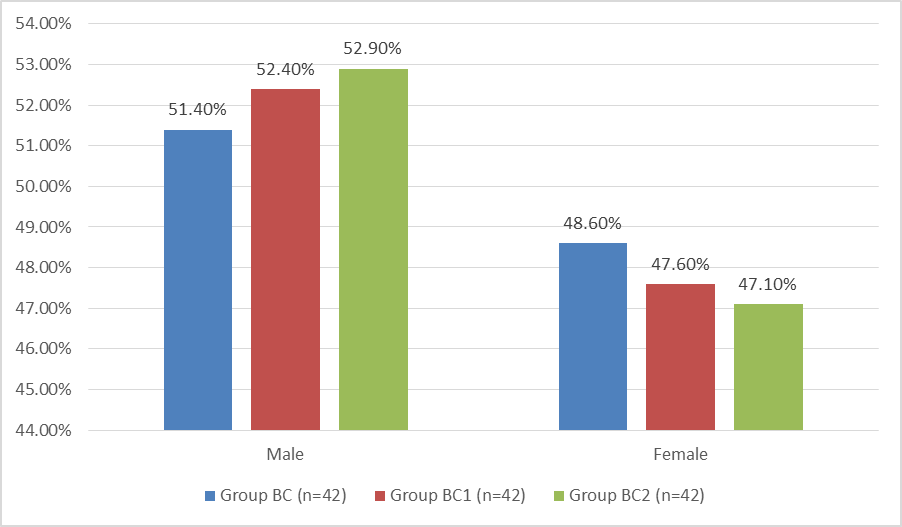
Figure 1: Sex Distribution
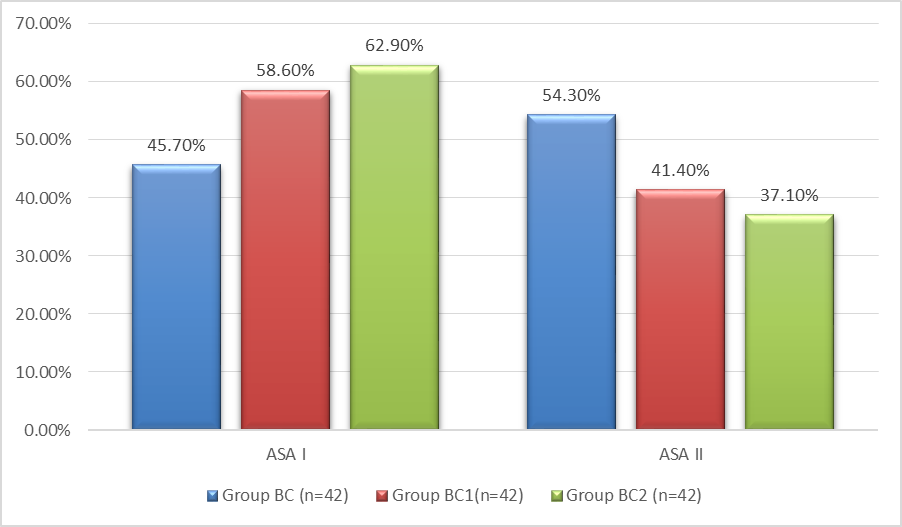
Figure 1B: ASA Grade
TABLE 2: BASELINE VARIABLES
|
Variable |
Mean ± SD IN BC |
Mean ± SD IN BC |
Mean ± SD IN BC |
p Value |
|
Age in years |
48±16.3 |
54.4±14.3 |
45.9±13.7 |
0.067 |
|
Height in cm |
169.4 ± 5.1 |
169.9 ± 4.4 |
170.1 ± 5.1 |
0.079 |
|
Weight in kg |
64.03 ± 4.8 |
63.6 ± 5.6 |
66.8 ± 4.5 |
0.052 |
|
BMI in kg/sq.m |
22.3 ± 1.1 |
21.9 ± 1.5 |
22.5 ± 1.2 |
0.169 |
The baseline characteristics of Group BC participants show that the average age was 48 ± 16.3 years. The mean height was 169.4 ± 5.1 cm, and the mean weight was 64.03 kg. The average BMI was 22.3 ± 1.1 kg/sq.m, indicating a normal weight range. The baseline characteristics of Group BC1 participants show that the average age was 54.4± 14.3 years. The mean height was 169.9 ± 4.4 cm, and the mean weight was 63.6 ± 5.6 kg. The average BMI was 21.9 ± 1.5 kg/sq.m, indicating a normal weight range. The baseline characteristics of Group BC2 participants show that the average age was 45.9± 13.7 years. The mean height was 170.1 ± 5.1 cm, and the mean weight was 66.8 ± 4.5 kg. The
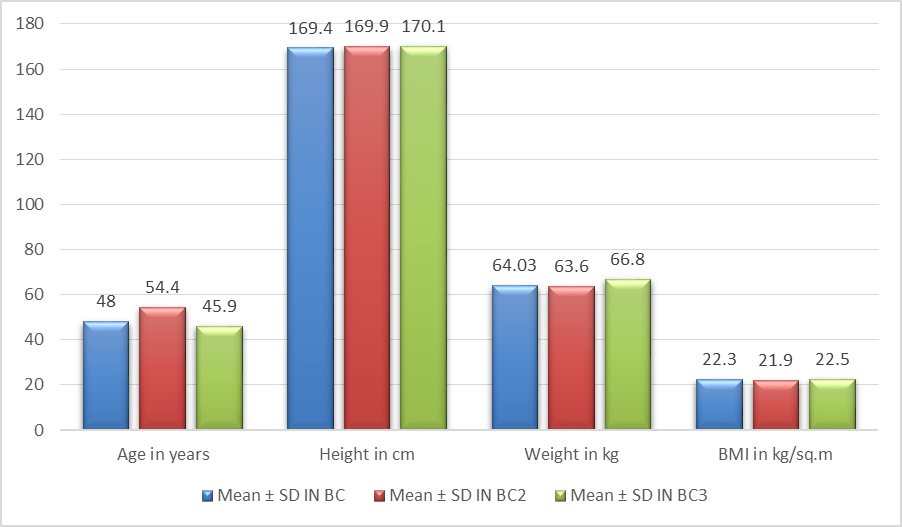
FIG 12: BASELINE VARIABLES
Table 3. Comparison of Sensory Block Characteristics Among the Three Groups
|
Sensory Block Parameter |
Group BC (n=42) |
Group BC1 (n=42) |
Group BC2 (n=42) |
p-value |
|
Onset of sensory block at T6 (min) |
4.74 ± 1.63 |
4.68 ± 2.20 |
3.44 ± 1.38 |
0.001 |
|
Sensory regression to T10 (min) |
112.66 ± 16.27 |
175.34 ± 36.41 |
210.34 ± 33.20 |
<0.001 |
|
Total duration of analgesia (min) |
146.83 ± 23.10 |
223.97 ± 57.52 |
270.06 ± 33.56 |
<0.001 |
Values are expressed as mean ± SD.
Table 3 compares the sensory block characteristics among the three study groups. The mean onset time of sensory block at T6 was 4.74 ± 1.63 minutes in Group BC, 4.68 ± 2.20 minutes in Group BC1, and 3.44 ± 1.38 minutes in Group BC2, with a statistically significant difference among the groups (p=0.001). A significantly significant difference (p<0.001) was seen in the mean time for sensory regression to T10, which was 112.66 ± 16.27 minutes in Group BC, 175.34 ± 36.41 minutes in Group BC1, and 210.34 ± 33.20 minutes in Group BC2. In a similar vein, the overall duration of analgesia gradually rose from 146.83 ± 23.10 minutes in Group BC to 223.97 ± 57.52 minutes in Group BC1 and 270.06 ± 33.56 minutes in Group BC2 (p<0.001). As a result, intrathecal clonidine considerably extended postoperative analgesia and sensory block, with the 15 µg clonidine group (BC2) exhibiting the longest duration.
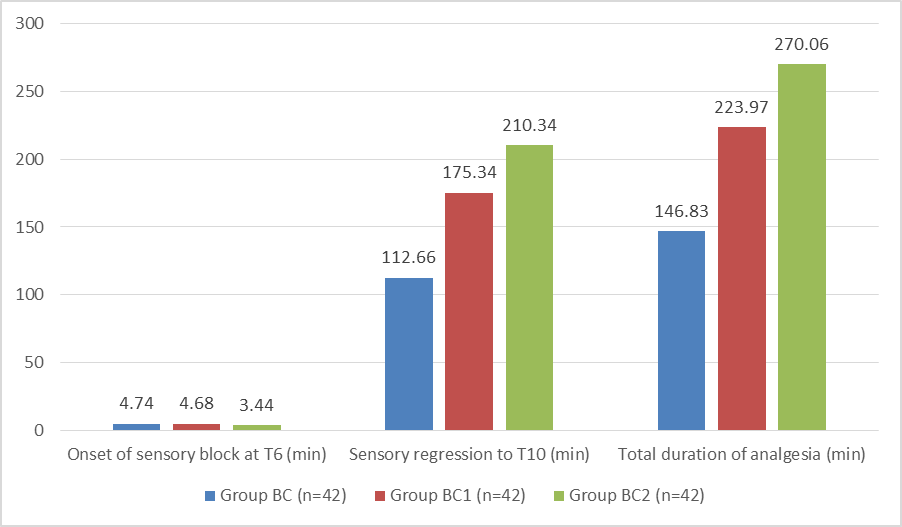
FIGURE 3: Sensory Block Parameter
Table 4: Pairwise Comparison of Sensory Block Characteristics
|
Comparison |
Onset of Sensory Block p-value |
Sensory Regression to T10 p-value |
Duration of Analgesia p-value |
|
Group BC vs Group BC1 |
0.287 |
<0.001 |
<0.001 |
|
Group BC vs Group BC2 |
0.001 |
<0.001 |
<0.001 |
|
Group BC1 vs Group BC2 |
0.001 |
<0.001 |
<0.001 |
Table 4 presents the pairwise comparison of sensory block characteristics between the study groups. There was no significant difference in the onset of sensory block between Group BC and Group BC1 (p=0.287). Nonetheless, there was a statistically significant difference in onset between Group BC and Group BC2 (p=0.001) as well as between Group BC1 and Group BC2 (p=0.001). All three paired tests showed a significant difference in sensory regression to T10 (p<0.001). Likewise, there was a statistically significant difference in the duration of analgesia between Group BC and BC1, Group BC and BC2, and Group BC1 and BC2 (p<0.001 for all comparisons). These results show that intrathecal clonidine prolongs sensory regression and analgesia in a dose-dependent manner; the greatest duration of sensory block and analgesia is produced by 15 µg of clonidine.
DISCUSSION:
Spinal anaesthesia is widely used for infra-umbilical surgeries because it provides effective surgical anaesthesia with a relatively simple technique. However, the limited duration of sensory and motor blockade and postoperative analgesia with local anaesthetic alone remains an important limitation. In order to extend the duration and enhance the quality of spinal anaesthesia, several intrathecal adjuvants have been studied. Among them, it has been demonstrated that clonidine, a selective α2-adrenergic receptor agonist, increases the effects of intrathecal local anaesthetics via spinal analgesic processes. Intrathecal clonidine prolongs sensory and motor block and delays the need for postoperative analgesia, according to a comprehensive analysis of randomised studies [15], albeit its usage may increase the risk of hypotension. In patients having infra-umbilical operations, the current study compared plain hyperbaric bupivacaine with low-dose clonidine 7.5 µg and 15 µg added to hyperbaric bupivacaine.
Demographic and Baseline Characteristics
In the present study, 126 participants were included, with 42 participants in each group. The distribution of male and female participants was comparable among Groups BC, BC1 and BC2. In a similar vein, the three groups' ASA physical status distributions were rather similar (Table 1). There were no statistically significant differences between the groups in terms of mean age, height, weight, or BMI (Table 2). Because the three groups' baseline demographics were mostly comparable, it is less likely that these factors had a significant impact on the observed variations in sensory block characteristics. The distribution and duration of spinal anaesthesia may be influenced by age, body habit, and physical state, thus the comparability of baseline parameters is crucial. Age, sex, height, weight, and BMI were similar throughout the research groups, according to the thesis discussion that is included.
Onset of Sensory Block
In the present study, the onset of sensory blockade to the T6 dermatome was significantly faster in Group BC2 receiving 15 µg clonidine. The mean onset was 4.74 ± 1.63 minutes in Group BC, 4.68 ± 2.20 minutes in Group BC1 and 3.44 ± 1.38 minutes in Group BC2, with an overall p-value of 0.001 (Table 3). Pairwise analysis showed that while there were significant differences between BC and BC2 and between BC1 and BC2 (both p=0.001), there was no significant difference between BC and BC1 (p=0.287) (Table 4). The greater low-dose regimen may have accelerated the early establishment of sensory blockage, as seen by the quicker start seen with 15 µg clonidine. This result should be interpreted cautiously, though, as prior research has typically shown that clonidine has little to no clinically significant impact on the onset of sensory block. Clonidine prolonged sensory and motor block but did not consistently change the time needed to achieve complete sensory or motor block, according to a systematic review of 22 randomised trials [15]. Similarly, studies evaluating different doses of intrathecal clonidine have generally reported comparable onset characteristics between groups [11,14]. Thus, although the present study demonstrated a statistically significant difference in onset, its principal clinical benefit appears to be the prolongation of blockade rather than acceleration of onset.
Sensory Regression to T10
A major finding of the present study was the significant prolongation of sensory blockade following addition of clonidine. The mean time for regression of sensory block to T10 was 112.66 ± 16.27 minutes in Group BC, 175.34 ± 36.41 minutes in Group BC1 and 210.34 ± 33.20 minutes in Group BC2 (p<0.001) (Table 3). All three groups showed significant differences when compared pairwise (p<0.001 for BC vs. BC1, BC vs. BC2, and BC1 vs. BC2) (Table 4). These results show a definite dose-related extension of sensory blocking, with 15 µg clonidine yielding the longest time, followed by plain bupivacaine and 7.5 µg clonidine. This finding aligns with clonidine's pharmacological activity at spinal α2-adrenergic receptors. The dorsal horn contains α2 receptors, whose activation increases the effects of local anaesthetics and decreases nociceptive neurotransmission [16]. Therefore, it has been demonstrated that intrathecal administration of clonidine with local anaesthetics prolongs sensory blocking [17].
The current results are also in line with Strebel et al.'s dose-response studies, which showed that increasing intrathecal clonidine dosages resulted in a gradual prolonging of the sensory block [11]. In comparison to bupivacaine alone, their investigation discovered that clonidine dosages of 37.5, 75, and 150 µg extended the duration of sensory block. Similarly, Dobrydnjov et al. showed that spinal anaesthesia and postoperative analgesia were extended when 15 or 30 µg of clonidine was added to intrathecal bupivacaine [14]. Because considerable extension was attained even at the modest dosages of 7.5 and 15 µg, the results of this investigation are very pertinent. According to the thesis discussion that is attached, prior research has consistently shown that intrathecal clonidine causes protracted recovery of sensory block, and larger clonidine dosages typically result in greater prolongation.
Duration of Analgesia
The total duration of analgesia was significantly prolonged by the addition of clonidine. In Group BC, the mean duration of analgesia was 146.83 ± 23.10 minutes, compared with 223.97 ± 57.52 minutes in Group BC1 and 270.06 ± 33.56 minutes in Group BC2 (p<0.001) (Table 3). Significant differences were found across all groups in pairwise comparisons (p<0.001 for each comparison) (Table 4). As the dosage of clonidine increased, the analgesic duration increased as well. The addition of 7.5 µg clonidine significantly extended analgesia as compared to pure bupivacaine, and 15 µg resulted in an even longer duration. This aligns with the known analgesic effect of intrathecal α2-adrenergic agonists. The analgesic action of local anaesthetics is enhanced and nociceptive transmission is inhibited when spinal α2 receptors are activated[14,5].
Sen et al. discovered a significant increase in the time to first analgesic request when comparing 7.5 µg intrathecal clonidine with hyperbaric bupivacaine to bupivacaine alone in elderly patients having sub-umbilical surgery [6]. According to their research, clonidine provided analgesia for around 295 minutes, whereas the control group had analgesia for about 136 minutes. The direction of impact was comparable even though the study's absolute length was longer than the current study's. Strebel et al. showed increasingly longer postoperative pain relief with higher dosages of intrathecal clonidine [11], which supports the dose-response relationship shown in our investigation. Intrathecal clonidine's effectiveness as an adjuvant to spinal local anaesthetics is further supported by a comprehensive study that showed it lengthens the time to first analgesic request [15].
Clinical Implications of 7.5 µg Versus 15 µg Clonidine
The comparison between the two clonidine groups is particularly important because the present study specifically evaluated two low doses. When compared to plain bupivacaine, both 7.5 µg and 15 µg considerably extended analgesia and sensory regression; however, 15 µg generated a much longer duration than 7.5 µg (Tables 3 and 4). Consequently, the findings show a dose-response pattern whereby increasing clonidine from 7.5 to 15 µg prolongs analgesia and sensory blockage. However, the possibility of greater haemodynamic effects should be taken into account while choosing the larger dose. According to earlier research, the cardiovascular effects of clonidine may become more noticeable as the intrathecal dosage rises [15,11]. Prolonged block features have also been seen in studies utilising 15 and 30 µg clonidine, with the larger dosage showing more hypotension [18]. According to the results, 7.5 µg may offer a good compromise between avoiding severe pharmacological effects and prolonging spinal anaesthesia, whereas 15 µg may be taken into consideration when longer sensory blockade and postoperative analgesia are desired.
Comparison with Previous Studies
The overall results of this study are in line with the larger body of research showing that clonidine prolongs and intensifies spinal anaesthesia. Dobrydnjov et al. discovered that adding 15 and 30 µg of clonidine to low-dose hyperbaric bupivacaine extended the duration of spinal block and postoperative analgesia [14]. In a similar vein, a research comparing 15 and 30 µg of clonidine with hyperbaric bupivacaine discovered that while the larger dosage was linked to more hypotension, clonidine caused longer sensory regression and motor block duration [18].
With 37.5–150 µg clonidine, Strebel et al. showed a dose-dependent increase in both sensory block and analgesic duration [11]. Despite the far lower dosages utilised here, these data corroborate the dose-dependent pattern seen in the current investigation. Sen et al.'s trial, which assessed 7.5 µg clonidine with 15 mg hyperbaric bupivacaine for sub-umbilical surgery, is very similar. They found that even a little dosage of clonidine significantly prolonged the motor block and provided postoperative analgesia [6]. The current investigation also showed that, in comparison to ordinary bupivacaine, 7.5 µg clonidine significantly extended sensory blockage and analgesia.
CONCLUSION:
The present study demonstrates that addition of low-dose intrathecal clonidine to hyperbaric bupivacaine significantly prolongs sensory blockade and postoperative analgesia in patients undergoing infra-umbilical surgeries. When compared to ordinary bupivacaine, both 7.5 µg and 15 µg of clonidine generated considerably longer sensory regression to T10 and analgesia duration. The longest duration was achieved with a dosage of 15 µg, which was followed by 7.5 µg. Therefore, when extended spinal anaesthesia and postoperative analgesia are needed while keeping a low-dose strategy, low-dose clonidine, especially 7.5 µg, may be regarded an effective intrathecal adjuvant.
LIMITATIONS OF THE STUDY
1. The study had a relatively small sample size of 126 participants, which may limit the generalizability of the findings to a larger population.
2. The study included patients undergoing different types of infra-umbilical surgeries, which may have introduced variability in surgical duration and postoperative pain requirements.
3. The study population was limited to patients aged 18–60 years, restricting applicability to elderly patients and other age groups.
4. The study was conducted at a single centre, which may limit external validity.
5. Longer-term postoperative outcomes beyond the 24-hour follow-up period were not evaluated.
6. A study involving a more specific surgical population and a larger sample size could provide more precise comparisons between the two low doses of intrathecal clonidine.
REFERENCES:
1. David LB. Spinal, epidural and caudal anaesthesia. In Miller RD, editor. Miller’s anaesthesia 6th ed, vol.2.Philadelphia: Churchill Livingstone; 2005.1653-83.
2. Local anaesthetics. In: Collins VJ, editor. Principles of Anaesthesiology. 3rd ed, vol.2. Philadelphia: Lea and Febiger; 1993.1232-81.
3. Chaney MA. Side effects of intrathecal and epidural opioids. Can J Anaesth 1995; 42:891-903.
4. 4. Chhaiya KV, Shah SA, Kapadia RK, Pandya DK, Pipaliya DP. Comparative study of different doses of intrathecal clonidine as an adjuvant to bupivacaine for lower limb surgeries: A prospective observational study. Indian Journal of Clinical Anaesthesia [Internet]. 2024 Aug 15;11(3):334–40. Available from: https://doi.org/10.18231/j.ijca.2024.064
5. Sethi.BS, Samuel Mary, Sreevastava D. Efficacy of Analgesic Effects of Low Dose Intrathecal Clonidine as Adjuvant to Bupivacaine. Indian Journal of Anaesthesia 2007; 51: 415-19.
6. Sen J, Sen B. Response to low-dose intrathecal clonidine in septuagenarians undergoing sub-umbilical surgeries. A study. Saudi J Anaesth. 2015;9:142-7.
7. Hyndavi.K, Divakar patil, Jyotsna paranjpe. Comparison of two different doses of clonidine as adjuvant to intrathecal bupivacaine for prolongation of post operative analgesia. International Journal of Anaesthesiology. 2022; 22:35-40.
8. Kamal.G, Piplani,R., Gupta. A, Sehgal, N. Clonidine as an adjuvant to bupivacaine in spinal anaesthesia for infra-umbilical surgeries in children: a prospective randomized, double-blind trial. Ghana Medical Journal, 2021; 55: 103-10.
9. Thomas S M, Verghese Mary, Melchisedec. Intrathecal clonidine as an adjuvant to hyperbaric bupivacaine: A dose-response study. International journal of contemporary medical research. 2018. 5:2393-7.
10. Thakur A, Bhardwaj M, Kaur K, Dureja J, Hooda S, Taxak S. Intrathecal clonidine as an adjuvant to hyperbaric bupivacaine in patients undergoing inguinal herniorrhaphy: A randomized double-blinded study. J Anaesthesiol Clin Pharmacol 2013; 29:66-70.
11. Strebel S, Gurzeler J A, Schneider M C, Aeschbach A, Kindler C. H. Small-dose intrathecal clonidine and isobaric bupivacaine for orthopedic surgery: a dose-response study. Anesthesia and Analgesia.2004; 99: 1231–8.
12. Niemi L. Effects of intrathecal clonidine on duration of bupivacaine spinal anaesthesia, Hemodynamics and postoperative analgesia in patients undergoing knee arthroscopy, Acta Anaesthesia Scandinavia 1994. Oct ;34(7):724-8.
13. Seah YS, Chen C –Prolongation of hyperbaric bupivacaine spinal anaesthesia with clonidine 1991 Mar ;29(1) 533-7.
14. Dobrydnjov, I., Axelsson, K., Thörn, S. E., Matthiesen, P., Klockhoff, H., Holmström, B., & Gupta, A. (2003). Clonidine combined with small-dose bupivacaine during spinal anesthesia for inguinal herniorrhaphy: a randomized double-blinded study. Anesthesia and analgesia, 96(5), 1496–1503. https:// doi.org/10.1213/01. ANE. 0000061110. 62841.E9
15. Elia N, Culebras X, Mazza C, Schiffer E, Tramer MR. Clonidine as an adjuvant to intrathecal local anesthetics for surgery: systematic review of randomized trials. Reg Anesth Pain Med. 2008;33(2):159-167.
16. Eisenach JC, De Kock M, Klimscha W. Alpha(2)-adrenergic agonists for regional anesthesia: a clinical review of clonidine (1989-1995). Anesthesiology. 1996;85(3):655-674.
17. Bernard JM, Hommeril JF, Passuti N, Pinaud M. Postoperative analgesia by intrathecal clonidine. Anesthesiology. 1994;81(5):1191-1194.
18. Kaur K, Kaur M, Attri JP, Sethi P, Singh K. Intrathecal clonidine as an adjuvant to hyperbaric bupivacaine in patients undergoing inguinal herniorrhaphy: a randomized double-blinded study. J Anaesthesiol Clin Pharmacol. 2013;29(3):340-345.