Comparison Of Problem-Based Learning, Active Learning Strategies, And Traditional Lectures In Anatomy Education Among First-Year Mbbs Students.
- Yagika Pareek , Junior Resident (JR) 2 Department of Anatomy, Sarojini Naidu Medical College Agra, UP
- Reena Pareek , Assistant Professor, Department of Community Medicine,Reg no - H042416 Bakson Homoeopathic Medical College and Hospital 36-B knowledge Park phase 1 Greater Noida 201306 U.P
- Lokesh Singh , Junior Resident (JR) 1 Department of Anatomy, Sarojini Naidu Medical College Agra, UP.
Article Information:
Abstract:
Background: Anatomy is a content-heavy subject in the first year of medical education, and students often need more than lectures alone to develop spatial understanding and clinical reasoning. Problem-based learning (PBL) and other active learning strategies (ALS) are increasingly used to increase student involvement in the learning process. The present survey explored students’ previous learning experiences, exposure to active learning, and preferred approaches to anatomy teaching and assessment. Methods: A cross-sectional mixed-methods questionnaire survey was conducted among first-year MBBS students in North India. The questionnaire was distributed electronically through Google Forms. The available charts used for the present analysis contained responses from 102 students. Descriptive statistics summarized categorical responses. Multiple-response items were reported as the number and percentage of students selecting each option. Results: For NEET-UG preparation, 54.9% of students reported using a combination of self-study and coaching, while 23.5% relied mainly on self-study and 20.6% on coaching institutes. Before entering MBBS, 45.1% reported no previous experience with active learning and another 45.1% reported only limited exposure. In the anatomy course, cadaver dissection/prosection was the most commonly experienced active learning strategy (64.7%), followed by small-group discussions/tutorials (40.2%) and peer teaching (39.2%). For assessment of learning through PBL, case-based questions were preferred most often (58.8%), followed by MCQs (33.3%), viva (30.4%), and dissection practicals (29.4%). Conclusion: The findings suggest that many students enter MBBS with little experience of active learning, but they encounter several active approaches once anatomy teaching begins. Cadaver-based teaching remains particularly important, while case-based assessment appears to be well suited to PBL-oriented learning. A balanced approach combining structured teaching with guided active learning may help students make a smoother transition from examination-focused preparation to clinically meaningful anatomy learning.
Keywords:
Article :
INTRODUCTION:
Anatomy is one of the first subjects through which medical students begin to understand the structure of the human body. It provides the framework needed later for physical examination, interpretation of imaging, surgery, and many other areas of clinical practice. At the same time, anatomy is not simply a subject of remembering names. Students have to understand three-dimensional relationships, connect structure with function, and gradually learn how anatomical knowledge is used in clinical situations.
5,9
The transition into medical college can be demanding. Students come from a learning environment in which preparation for a high-stakes entrance examination is often centred on individual study, coaching, repeated revision and objective questions. Once they enter MBBS, the learning environment changes. They are expected to participate in dissection, discuss clinical problems, work with peers and understand structures rather than only recall facts.
Traditional lectures continue to have an important role because they allow teachers to introduce large areas of the syllabus in a systematic way. They are especially useful when a class is large and the available teaching time is limited. However, lectures may provide fewer opportunities for students to practise reasoning, discussion and application if they are used as the only teaching method.[8,10]
Problem-based learning uses a clinical or practical problem as the starting point for learning. Active learning is a broader term that includes approaches such as small-group discussion, peer teaching, flipped learning, cadaveric activities and digital anatomy tools. These methods can give students a more active role and may help them connect anatomical knowledge with clinical situations. [3,11]
The usefulness of these approaches depends on the context in which they are introduced. Student preparedness, faculty availability, group size, curriculum time and access to cadavers or digital resources can all influence how well an active learning method works. Understanding students’ previous educational experiences is therefore important before expecting them to adapt immediately to PBL or other student-centred methods. [1,2,4,6,7]
The present study was undertaken to understand how first-year MBBS students experience different approaches to anatomy learning. Particular attention was given to their preparation background before MBBS, previous exposure to active learning, the active strategies they experienced during anatomy teaching, and the types of assessment they considered appropriate for knowledge gained through PBL.
Objectives
• To explore the learning background of first-year MBBS students before entering medical college.
• To assess students’ previous exposure to active learning strategies before joining MBBS.
• To identify the active learning strategies most commonly experienced during the anatomy course.
• To examine students’ preferred methods of assessing knowledge gained through PBL.
• To use the findings to suggest a practical balance between traditional teaching and active learning in undergraduate anatomy.
Review of Literature
Anatomy education has changed considerably as medical curricula have become more integrated and clinically oriented. Students are expected to retain a large amount of structural information while also understanding its relevance to diagnosis and treatment. Reviews of anatomy education have highlighted the importance of using a variety of teaching methods rather than relying on a single approach. [5,8,9]
Traditional lectures remain useful for establishing a common foundation and for presenting complex topics in a structured sequence. Their strength is efficiency, particularly when a large group has to cover the same content. The limitation is that students can become passive if there is little opportunity to ask questions, discuss cases, or apply the information. [8,10]
PBL offers a different starting point. Instead of beginning with a list of anatomical facts, students are presented with a problem and work together to identify what they need to learn. The approach can encourage self-directed learning, communication, and clinical reasoning. However, it requires appropriate cases, trained facilitators, sufficient time, and manageable group sizes. [3,6,11]
Active learning extends beyond PBL. Cadaver dissection, small-group tutorials, peer teaching, flipped classrooms and virtual anatomy resources can all encourage students to participate actively. Digital tools may be particularly useful for visualising three-dimensional relationships, while cadaveric teaching provides direct exposure to real anatomical variation. [1,2,4,7]
Previous work has suggested that active and multimodal approaches can improve engagement and support clinical integration. At the same time, implementation should be realistic. An approach that works well in a small class with extensive faculty support may be difficult to reproduce in a large undergraduate batch. The present survey therefore focuses not only on students’ preferences but also on the educational background from which they enter the MBBS programme. [1,3,8].
METHODOLOGY:
Study design and setting
A cross-sectional mixed-methods questionnaire survey was conducted among first-year MBBS students from North Indian medical colleges. The questionnaire was administered electronically using Google Forms. The survey included structured questions as well as opportunities for students to describe their experiences and suggestions.
Participants and sampling
Students were approached through electronic communication and student groups. Convenience sampling was used. For the figures included in the present manuscript, 102 responses were available for the relevant questionnaire items. Students who did not meet the questionnaire’s eligibility requirements were not included in the final analysis of those items.
Questionnaire
The questionnaire covered students’ educational background, previous exposure to active learning, experience with PBL and other active learning approaches during anatomy, perceptions of different teaching methods, and preferences regarding assessment. The questions were written in simple language so that students could respond without requiring additional explanation.
Data collection and analysis
Responses were collected through Google Forms and reviewed in spreadsheet format. Categorical responses were summarized using frequencies and percentages. The multiple-response question on active learning strategies was analysed by counting each selected option separately; therefore, percentages for that item do not add up to 100%. No inferential statistical test was applied to the four charts presented here because the supplied results contain descriptive summaries rather than individual-level data.
Ethical considerations
Participation was voluntary, and the questionnaire included an informed-consent statement. No personal identifiers were required for the responses reported in this manuscript. Before journal submission, the manuscript should include the name of the approving institutional ethics committee and the relevant approval/reference number, if applicable.
RESULTS:
The following results are based directly on the four Google Forms charts supplied for the manuscript. Each chart reports 102 responses. The findings are presented descriptively and are intended to show students’ learning background and experiences with active learning rather than to claim a causal advantage of one teaching method over another.
Primary mode of NEET-UG preparation
More than half of the respondents (54.9%; 56 students) reported that they used a combination of self-study and coaching for NEET-UG preparation. Self-study alone was reported by 23.5% (24 students), while 20.6% (21 students) relied primarily on a coaching institute. Only about 1% (1 student) selected another form of preparation. Thus, most students entered MBBS after experiencing a combination of structured external guidance and independent study.
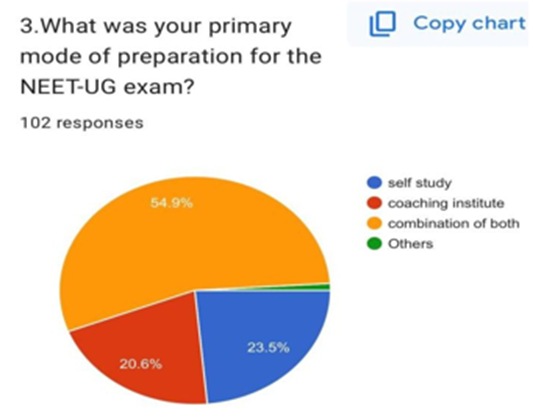
Figure 1. Primary mode of preparation for the NEET-UG examination among respondents (n=102).
Previous experience with active learning before MBBS
Previous exposure to active learning before entering MBBS was limited for most respondents. Exactly 45.1% (46 students) reported no previous experience, and another 45.1% (46 students) reported limited exposure through school or coaching. Only 8.8% (9 students) reported moderate experience, while approximately 1% (1 student) reported extensive experience. Taken together, about nine out of ten students had either no or only limited exposure to active learning before joining MBBS.
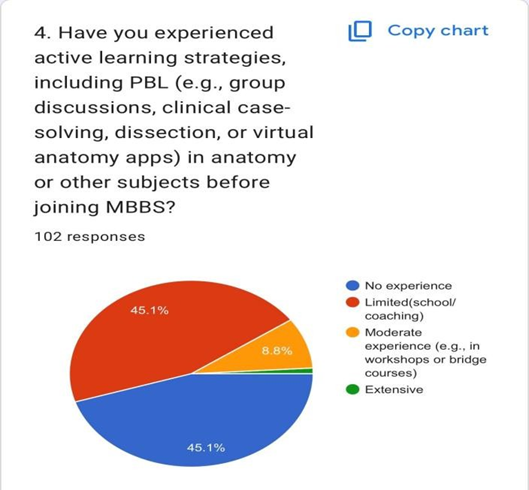
Figure 2. Previous experience with active learning strategies before joining MBBS (n=102).
Active learning strategies experienced during the anatomy course
Cadaver dissection or prosection was the most frequently reported active learning experience, selected by 66 students (64.7%). Small-group discussions or non-PBL tutorials were selected by 41 students (40.2%), and peer teaching by 40 students (39.2%). Virtual anatomy tools, including anatomy applications and three-dimensional models, were reported by 35 students (34.3%). Flipped classroom activities were reported by 31 students (30.4%). Because students could select more than one option, these percentages represent the proportion of respondents who had experienced each strategy and should not be added together.
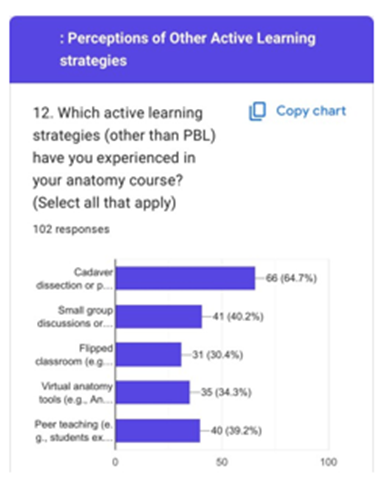
Figure 3. Active learning strategies experienced during the anatomy course; multiple responses were permitted (n=102).
Assessment methods considered appropriate for PBL
Case-based questions were the most commonly selected assessment format for knowledge gained through PBL, with 60 students (58.8%) choosing this option. MCQs were selected by 34 students (33.3%), viva by 31 students (30.4%), and dissection practicals by 30 students (29.4%). way PBL is taught and the way its learning outcomes should be assessed.
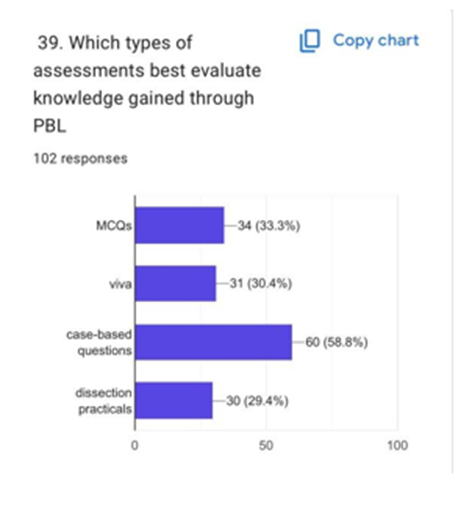
Figure 4. Assessment methods considered most suitable for evaluating knowledge gained through PBL (n=102).
DISCUSSION:
The findings give a useful picture of the educational transition experienced by first-year MBBS students. A large proportion of respondents reported preparing for NEET-UG through a combination of self-study and coaching. This is important because students entering medical college may be accustomed to a highly examination-oriented style of learning in which efficiency, recall and repeated practice are central. The move to anatomy teaching, particularly dissection and PBL, asks students to use a wider set of skills, including observation, discussion, explanation and application.
The most notable finding was the limited active learning exposure before MBBS. Nearly 90% of students reported either no previous experience or only limited experience. This suggests that active learning should not be introduced on the assumption that students already know how to participate in it. A short orientation can be helpful. Students may need clear instructions on how to prepare before a session, how to contribute to a group, how to ask questions, and how to use a clinical case to identify learning objectives.
Once students entered the anatomy course, cadaver dissection or prosection was the most common active learning experience. This is encouraging because anatomy is a visually and spatially oriented subject, and direct observation of structures can help students understand relationships that are difficult to appreciate from two-dimensional images alone. The result also shows that active learning in anatomy does not necessarily depend on expensive technology. The dissection hall itself can provide a strong setting for observation, discussion, and guided discovery. [5,8,10]
Small-group discussion and peer teaching were also commonly experienced. These approaches require less infrastructure than some digital methods and can be incorporated into existing teaching schedules. Peer teaching may be particularly useful because explaining a structure to another student requires the learner to organise the information and identify gaps in understanding. However, such sessions need faculty guidance to prevent incorrect information from being reinforced. [4,7]
Virtual anatomy tools were reported by about one-third of respondents, while flipped classroom activities were reported by 30.4%. These findings suggest that digital and pre-class learning are present but are not yet universal. This may reflect differences in access to devices, internet connectivity, institutional resources or faculty familiarity with digital teaching. Rather than replacing cadaveric teaching or face-to-face discussion, digital tools can be used as an additional layer, particularly for difficult three-dimensional relationships and revision. [1,2]
The assessment findings are also relevant. Case-based questions were selected by 58.8% of students, clearly more often than the other options shown. Students work through a problem and use knowledge to explain or solve a situation. If PBL sessions are assessed only through isolated factual recall, there may be a mismatch between the learning activity and assessment. Case-based questions can better examine whether students can identify relevant anatomical structures, explain relationships, and apply their knowledge to a clinical context. [6,11]
At the same time, the results do not suggest that MCQs, viva, or dissection practicals should be removed. Each method tests a different part of anatomical learning. MCQs can efficiently assess broad factual knowledge, viva can explore verbal explanation and understanding, and practical examination can assess identification and three-dimensional orientation. A combination of assessment methods is therefore likely to be more appropriate than relying on a single format. An important practical message from this survey is that active learning should complement rather than completely replace structured teaching. First-year students still need a clear framework for a large and unfamiliar subject. Short, focused lectures can introduce the essential anatomy; dissection can provide direct visual experience; small-group discussion and PBL can then help students apply the knowledge; and case-based assessment can check whether they can use it. Such sequencing may be more realistic than expecting every topic to be taught entirely through PBL [3,8,11]
Because the present analysis is based on selected descriptive charts, it is not possible to conclude that PBL or any other strategy is objectively superior to traditional lectures. The results mainly describe exposure and student preferences. Future analysis of the complete questionnaire should compare perception scores for PBL, ALS, and traditional lectures and, where appropriate, examine whether demographic or educational background is associated with these preferences.
Practical Implications for Anatomy Teaching
• Introduce first-year students gradually to active learning rather than assuming prior experience.
• Use short introductory explanations before PBL or small-group activities so that students understand the expected role of each participant.
• Retain cadaver dissection/prosection as a central component of anatomy teaching while using digital resources for three-dimensional visualisation and revision [5,8,10]
• Use peer teaching and small-group discussions for selected topics where explanation and clinical application are particularly useful. [4,7]
• Align assessment with learning activities by including case-based questions alongside MCQs, viva and practical assessment. [6,11]
• Use a blended model in which lectures provide the basic framework and active learning is used for application, discussion and reinforcement. [1,3,8]
Strengths and Limitations
A strength of the survey is that it considers the students’ educational background before MBBS, together with their experiences during anatomy teaching. It also includes different forms of active learning rather than treating active learning as a single method. The use of Google Forms allowed the questionnaire to be distributed easily and enabled direct collection of structured responses.
The study has several limitations. Convenience sampling limits the generalisability of the findings. The available analysis contains 102 responses for the reported questions, and the results are based on self-reported experiences rather than objective examination scores. The cross-sectional design cannot establish whether a teaching strategy improves long-term retention. In addition, the four charts supplied for this manuscript represent selected questionnaire items, so they do not provide enough information to make a complete statistical comparison of PBL, ALS, and traditional lectures. The findings should therefore be interpreted as descriptive survey evidence.
CONCLUSION:
This survey highlights an important gap between the learning environment many students experience before MBBS and the learning environment expected during anatomy training. Most respondents had no or only limited exposure to active learning before entering medical college. During the anatomy course, however, many students experienced cadaver-based teaching, small-group discussion, peer teaching, and digital resources. Case-based questions were the most commonly preferred method for assessing learning gained through PBL. The findings support a balanced approach in which traditional teaching provides structure while active learning creates opportunities for students to observe, discuss, reason, and apply anatomical knowledge. A gradual introduction to these methods, supported by clear faculty guidance and assessment that matches the learning objectives, may make the transition into undergraduate anatomy smoother and more meaningful.
REFERENCES:
1. Xiao J, Adnan S. Flipped anatomy classroom integrating multimodal digital resources shows positive influence upon students’ experience and learning performance. Anat Sci Educ. 2022;15(6):1086-1102. doi:10.1002/ase.2207.
2. Khalil MK, Kibble JD. Flipped classroom model in medical education: a review. Med Sci Educ. 2021;31(6):2111-2118. doi:10.1007/s40670-021-01394-3.
3. Mubuuke AG, Louw AJN. Challenges of implementing problem-based learning in resource-constrained settings: lessons from a medical school in Uganda. Afr J Health Prof Educ. 2020;12(2):82-86. doi:10.7196/AJHPE.2020.v12i2.1356.
4. Thompson BM, Haidet P, Borges NJ, Carrese JA, Levine RE. Team-based learning in medical education: faculty and student perspectives. Med Teach. 2020;42(3):294-300. doi:10.1080/0142159X.2019.1681061.
5. McBride JM, Drake RL. Anatomy education in a changing medical curriculum. Anat Sci Educ. 2018;11(2):162-170. doi:10.1002/ase.1746.
6. Bergman EM, de Bruin ABH, Herrler A, Verheijen IW, Scherpbier AJ, van der Vleuten CPM. Students’ perceptions of anatomy across the undergraduate problem-based learning medical curriculum. Anat Sci Educ. 2018;11(5):447-455. doi:10.1002/ase.1765.
7. Burgess A, Bleasel J, Haq I, Roberts C, Garsia R, Mellis C. Team-based learning (TBL) in the medical curriculum: better than PBL? BMC Med Educ. 2018;18:315. doi:10.1186/s12909-018-1408-9.
8. Estai M, Bunt S. Best teaching practices in anatomy education: a critical review. Ann Anat. 2016;208:151-157. doi:10.1016/j.aanat.2016.02.010.
9. Drake RL, McBride JM, Lachman N, Pawlina W. Medical education in the anatomical sciences: the winds of change continue to blow. Anat Sci Educ. 2014;7(4):253-260. doi:10.1002/ase.1467.
10. Johnson EO, Charchanti AV, Troupis TG. Modernization of an anatomy class: from conceptualization to implementation. A case for integrated multimodal-multidisciplinary teaching. Anat Sci Educ. 2012;5(6):354-366. doi:10.1002/ase.1296.
11. Thistlethwaite JE, Davies D, Ekeocha S, Kidd JM, MacDougall C, Matthews P, et al. The effectiveness of problem-based learning in medical education: a literature review. Med Educ. 2012;46(8):727-737. doi:10.1111/j.1365-2923.2012.04281.x.