Comparison of Phenylephrine and Norepinephrine for Prevention and Treatment of Spinal Anaesthesia-Induced Hypotension during Caesarean Section: A Prospective Randomized Controlled Study.
- Shilpi Tada , Specialist Medical Officer (SMO), Department of Anaesthesia, Sadar Hospital, Araria, Bihar (India).
- Samsuj Joha , Senior Resident, Department of Pharmacology, Viraat Ramayan Institute of Medical Sciences (VRIMS), Chakiya, Bihar (India).
- Ritika Singh , Assistant Professor, Department of Pharmacology, Mahabodhi Medical College and Hospital, Gaya Ji, Bihar (India).
- Arun Kumar , Assistant Professor, Department of Pharmacology, Viraat Ramayan Institute of Medical Sciences (VRIMS), Chakiya, Bihar (India).
- KK Kshayap , Superintendent, Sadar Hospital, Araria, Bihar (India).
Article Information:
Abstract:
Background: Spinal anaesthesia-induced hypotension is a common complication during caesarean section. Phenylephrine is widely used, but its tendency to cause reflex maternal bradycardia has prompted interest in norepinephrine. This study compared phenylephrine and norepinephrine for prevention and treatment of spinal anaesthesia-induced hypotension, focusing on maternal haemodynamics and neonatal outcomes. Methods: This prospective randomized controlled study included 80 pregnant women undergoing elective or emergency caesarean section under spinal anaesthesia. Participants were randomized into phenylephrine (n=40) and norepinephrine (n=40) groups. Maternal blood pressure and heart rate were assessed at predefined intervals. Incidence of hypotension, vasopressor requirements, bradycardia, reactive hypertension, atropine requirement, and neonatal outcomes including Apgar scores and umbilical arterial blood gas parameters were compared. Results: Baseline demographic and haemodynamic characteristics were comparable between groups. Hypotension occurred less frequently with norepinephrine than phenylephrine, although the difference was not statistically significant. Norepinephrine required significantly fewer boluses and a lower cumulative vasopressor dose. Maternal heart rate was significantly higher with norepinephrine at 3, 5, 10, and 15 minutes after spinal anaesthesia, while maternal bradycardia was significantly less frequent. Atropine requirement and reactive hypertension were also lower with norepinephrine but did not reach statistical significance. Apgar scores, umbilical arterial pH, PCO₂, base excess, and NICU admission were comparable between groups. Conclusion: Norepinephrine provided haemodynamic control comparable to phenylephrine while requiring lower vasopressor doses and causing significantly less maternal bradycardia, without adversely affecting neonatal outcomes. It may therefore be a useful alternative to phenylephrine during caesarean delivery under spinal anaesthesia.
Keywords:
Article :
INTRODUCTION:
Spinal anesthesia is the preferred and gold-standard technique for elective and emergency cesarean sections because of its rapid onset, dense neural blockade, and avoidance of airway manipulation associated with general anesthesia [1]. However, spinal anesthesia-induced hypotension (SAIH) is a frequent complication, with incidence exceeding 75% in obstetric patients without prophylactic measures [2]. It results primarily from abrupt sympathetic blockade, causing peripheral vasodilation, reduced systemic vascular resistance (SVR), venous pooling, decreased venous return, and ultimately reduced maternal cardiac output (CO) [1]. Uncorrected SAIH can cause maternal dizziness, nausea, vomiting, cardiovascular collapse, and loss of consciousness [3]. More importantly, uteroplacental perfusion depends largely on maternal blood pressure; therefore, significant hypotension reduces fetal oxygen delivery and may result in fetal hypoxia, low Apgar scores, and metabolic acidosis, reflected by reduced umbilical arterial pH [4].
Prevention and prompt treatment of maternal hypotension are consequently essential in obstetric anesthesia. Vasopressors, often combined with intravenous fluid co-loading, are central to SAIH prevention and treatment [4]. Ephedrine was historically preferred because of its mixed alpha- and beta-adrenergic activity and presumed preservation of uteroplacental flow. However, its substantial placental transfer increases fetal metabolic activity and is associated with fetal tachycardia and acidosis [3]. Phenylephrine (PE), a selective alpha-1 agonist, subsequently became the first-line vasopressor because it effectively restores SVR and blood pressure and provides a more favorable neonatal acid-base profile [3, 5]. However, reflex maternal bradycardia caused by alpha-1 stimulation can reduce CO, potentially compromising overall maternal perfusion [6].
Norepinephrine (NE) has therefore emerged as an alternative because its potent alpha-1 activity is accompanied by mild beta-1 effects. This combination maintains blood pressure while limiting reflex bradycardia and better preserving maternal heart rate and CO than phenylephrine [5, 7, 8]. Studies using continuous infusions have demonstrated improved maternal hemodynamic stability and fewer episodes of bradycardia with NE [8]. Meta-analyses of randomized trials similarly report reduced maternal bradycardia with NE, without significant differences in adverse maternal outcomes [9]. Importantly, non-inferiority trials have shown no detrimental effect of NE on umbilical arterial pH, indicating fetal safety comparable to phenylephrine [10]. Similar benefits have also been demonstrated in high-risk parturients, including those with severe pre-eclampsia [4].
Although prophylactic vasopressor infusions are effective, they require programmable infusion pumps and may be impractical in resource-limited settings. Intermittent intravenous boluses therefore remain important for prevention and rescue treatment of SAIH [2]. Recent studies suggest that equipotent NE boluses provide blood pressure control comparable to PE while causing less bradycardia and requiring fewer rescue interventions [2, 5]. Nevertheless, optimal dosing and the comparative effectiveness of these agents when used dynamically for both prophylaxis and rescue treatment remain incompletely established [1]. Therefore, this prospective randomized controlled study was designed to compare phenylephrine and norepinephrine for the prevention and treatment of SAIH during elective and emergency cesarean sections, focusing on maternal hemodynamics and fetal outcomes. We hypothesized that NE would provide equivalent blood pressure control while reducing maternal bradycardia, better preserving CO, and maintaining neonatal acid-base status.
MATERIALS AND METHODS:
This was a prospective, randomized, controlled, comparative study conducted in a tertiary care hospital of eastern India. The study was conducted in accordance with the ethical principles governing biomedical research involving human participants. Approval was obtained from the Institutional Ethics Committee before commencement of participant recruitment.
Study Population
The study population comprised pregnant women undergoing caesarean section under spinal anaesthesia at the study institution during the study period. Participants were adults with singleton term pregnancies who were scheduled for either elective or emergency caesarean delivery and were considered suitable for spinal anaesthesia. Patients with contraindications to spinal anaesthesia, known hypersensitivity to either study drug, significant cardiovascular disease, clinically important arrhythmias, severe hepatic or renal dysfunction, or other conditions likely to substantially influence haemodynamic measurements were excluded. Patients receiving drugs known to significantly interfere with cardiovascular responses to vasopressors were also excluded. Women with multiple pregnancy or major fetal abnormalities were excluded from the study population when assessment of neonatal outcomes was required.
Sampling Method and Sample Size
The sample size was calculated using the incidence of maternal bradycardia reported in the randomized controlled trial by Zou et al. (2026), in which maternal bradycardia occurred in 5% of patients receiving norepinephrine compared with 30% receiving phenylephrine. Assuming a two-sided alpha error of 5% and a statistical power of 80%, the estimated sample size using comparison of two independent proportions was approximately 33 participants per group. To compensate for possible exclusions, the sample size was increased to 40 participants in each group. Thus, a total of 80 participants were planned for enrolment, with 40 participants allocated to the phenylephrine group and 40 to the norepinephrine group.
Outcome Parameters
The primary outcome parameter was the incidence of maternal spinal anaesthesia-induced hypotension requiring vasopressor intervention. Hypotension was defined according to the prespecified study criterion as a decrease of 30% or more in mean arterial pressure from baseline or an absolute MAP below 65 mmHg. Secondary maternal outcomes included changes in MAP and heart rate at baseline, 3, 5, 10, 15, 30, and 60 minutes following spinal anaesthesia. The number and cumulative dose of vasopressor boluses required, incidence of maternal bradycardia, reactive hypertension, nausea, vomiting, dizziness, and requirement for atropine or other rescue medication were also recorded. Neonatal outcomes included Apgar scores at 1 and 5 minutes after birth and umbilical cord blood gas parameters, including umbilical arterial pH, partial pressure of carbon dioxide and base excess where sampling was feasible.
Methodology
After enrolment, baseline demographic and obstetric characteristics were recorded, including maternal age, gestational age, weight, indication for caesarean section, baseline blood pressure and baseline heart rate. Standard monitoring consisting of non-invasive blood pressure, pulse rate, peripheral oxygen saturation and electrocardiographic monitoring was instituted before administration of spinal anaesthesia. An intravenous line was secured, and appropriate crystalloid fluid co-loading was administered according to the institutional protocol. Spinal anaesthesia was performed under aseptic precautions using the standard institutional technique and an appropriate dose of local anaesthetic to achieve an adequate sensory block for caesarean delivery.
Participants were randomly allocated into two groups. The phenylephrine group received phenylephrine as the study vasopressor, whereas the norepinephrine group received norepinephrine in an equipotent or protocol-defined dose. The vasopressor was administered prophylactically and/or as an intermittent rescue bolus according to the haemodynamic response following spinal anaesthesia. Blood pressure and heart rate were assessed at baseline and at predefined short intervals after spinal anaesthesia and subsequently throughout the operative period. When hypotension occurred, the assigned vasopressor was administered according to the predefined rescue protocol. Further doses were repeated when required until the target blood pressure was restored. Bradycardia was managed according to the institutional rescue protocol, including atropine when clinically indicated, while excessive elevation of blood pressure was managed by withholding further vasopressor administration and providing appropriate supportive treatment.
The sensory level of spinal block and surgical events were documented. The time of spinal anaesthesia, onset of hypotension, administration of each vasopressor dose, delivery of the fetus and occurrence of adverse maternal events were recorded. Immediately after delivery, neonatal condition was assessed using Apgar scoring at 1 and 5 minutes. Umbilical cord blood was collected when feasible using standardized sampling technique, and arterial blood gas analysis was performed for assessment of neonatal acid-base status. Maternal haemodynamic observations were continued until the end of surgery and during the immediate postoperative period.
Statistical Analysis
The collected data were entered into a computerized database and analysed using Graph Pad version 11. Continuous variables were expressed as mean with standard deviation, whereas categorical variables were expressed as frequencies and percentages. Continuous variables between the two study groups were compared using the independent-samples t-test for normally distributed data. Categorical variables, including the incidence of hypotension, bradycardia, nausea, vomiting and other adverse events, were compared using the chi-square test or Fisher's exact test as appropriate. A two-sided P value of less than 0.05 was considered statistically significant. Where appropriate, effect estimates with 95% confidence intervals were reported to provide an assessment of the magnitude and precision of between-group differences.
RESULTS:
40 patients were enrolled in each group. Their baseline demographic and clinical characteristics are presented in Table 1.
Table 1. Comparison of baseline characteristics between the phenylephrine and norepinephrine groups
|
Parameter |
Phenylephrine (n=40) |
Norepinephrine (n=40) |
P value |
|
Age (years), mean ± SD |
27.8 ± 3.9 |
28.1 ± 4.1 |
0.7383 |
|
Gestational age (weeks), mean ± SD |
38.2 ± 1.1 |
38.1 ± 1.2 |
0.6987 |
|
Weight (kg), mean ± SD |
65.4 ± 7.2 |
66.1 ± 6.9 |
0.6583 |
|
Baseline MAP (mmHg), mean ± SD |
89.6 ± 6.8 |
90.1 ± 7.1 |
0.7486 |
|
Baseline HR (beats/min), mean ± SD |
86.3 ± 9.4 |
85.7 ± 8.8 |
0.7690 |
Table 1 demonstrates that the phenylephrine and norepinephrine groups were comparable with respect to baseline demographic and clinical characteristics. There were no statistically significant differences in maternal age, gestational age, weight, baseline mean arterial pressure, or baseline heart rate between the two groups (all P > 0.05), indicating good baseline comparability and suggesting that these variables were unlikely to confound subsequent comparisons.
Figure 1 shows that baseline MAP and heart rate were comparable between the two groups. Following spinal anaesthesia, MAP was numerically higher in the norepinephrine group at all measured time points, although the difference reached statistical significance only at 5 minutes. In contrast, heart rate was consistently higher in the norepinephrine group during the early post-spinal period, with statistically significant differences at 3, 5, 10, and 15 minutes. By 30 and 60 minutes, the differences in both MAP and heart rate were no longer statistically significant [Figure 1, Figure 2].
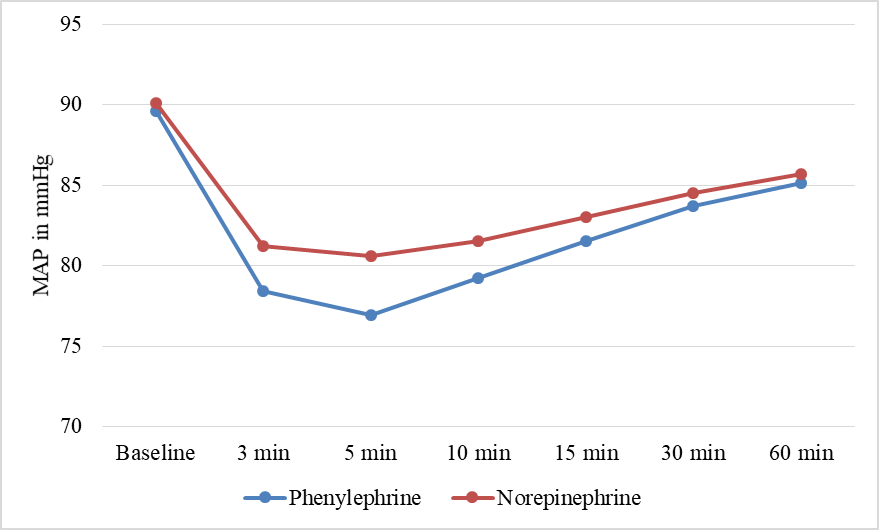
Figure 1: Comparison of Mean Arterial Pressure
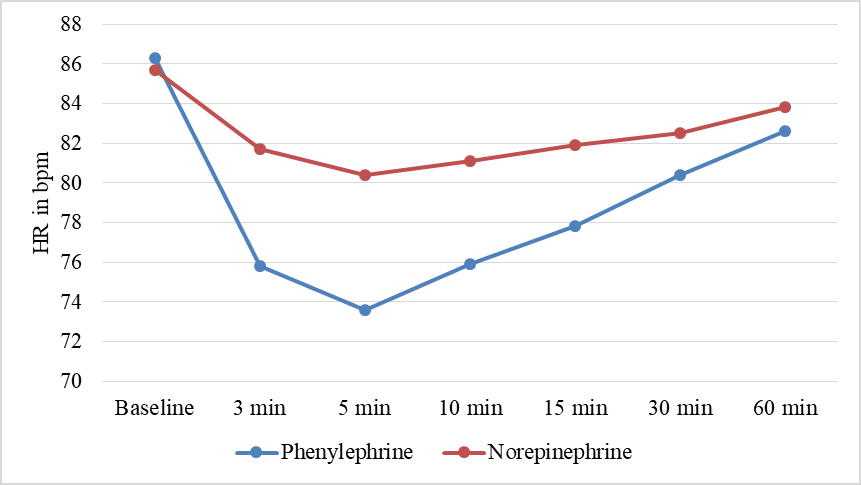
Figure 2: Comparison of Heart Rate
Table 2. Comparison of vasopressor requirement and maternal haemodynamic adverse effects
|
Outcome |
Phenylephrine (n=40) |
Norepinephrine (n=40) |
P value |
|
Spinal anaesthesia-induced hypotension, n (%) |
11 (27.5%) |
8 (20.0%) |
0.6001* |
|
Patients requiring rescue bolus, n (%) |
11 (27.5%) |
8 (20.0%) |
0.6001* |
|
Number of boluses required, mean ± SD |
2.36 ± 1.05 |
1.88 ± 0.83 |
0.0261** |
|
Cumulative vasopressor dose, mean ± SD |
236.0 ± 105.2 µg |
15.0 ± 6.6 µg |
<0.0001** |
|
Maternal bradycardia, n (%) |
10 (25.0%) |
2 (5.0%) |
0.0252* |
|
Atropine requirement, n (%) |
7 (17.5%) |
1 (2.5%) |
0.0568* |
|
Reactive hypertension, n (%) |
5 (12.5%) |
3 (7.5%) |
0.7119* |
*Fisher’s Exact Test; **Unpaired t test
Table 2 demonstrates that the incidence of spinal anaesthesia-induced hypotension and the proportion of patients requiring rescue vasopressor boluses were lower with norepinephrine than with phenylephrine, although these differences were not statistically significant. However, patients receiving norepinephrine required significantly fewer vasopressor boluses and a markedly lower cumulative vasopressor dose. Maternal bradycardia was also significantly less frequent with norepinephrine than with phenylephrine. Although atropine requirement was lower in the norepinephrine group, the difference did not reach statistical significance. Similarly, reactive hypertension occurred less frequently with norepinephrine, but without a statistically significant difference.
Table 4. Comparison of neonatal outcomes and umbilical cord blood gas parameters
|
Neonatal outcome |
Phenylephrine (n=40) |
Norepinephrine (n=40) |
P value |
|
Apgar score at 1 min, mean ± SD |
7.75 ± 0.54 |
7.83 ± 0.44 |
0.4698 |
|
Apgar score at 5 min, mean ± SD |
8.83 ± 0.38 |
8.88 ± 0.33 |
0.5316 |
|
Umbilical arterial pH, mean ± SD |
7.30 ± 0.04 |
7.31 ± 0.04 |
0.2670 |
|
Umbilical arterial PCO₂ (mmHg), mean ± SD |
46.8 ± 8.9 |
45.9 ± 8.4 |
0.6431 |
|
Umbilical arterial base excess (mmol/L), mean ± SD |
−2.1 ± 2.1 |
−1.9 ± 2.0 |
0.6639 |
|
NICU admission, n (%) |
3 (7.5%) |
2 (5.0%) |
1.000 |
*Unpaired t test, **Fisher’s Exact Test
Table 3 shows that neonatal outcomes were comparable between the phenylephrine and norepinephrine groups. Apgar scores at both 1 and 5 minutes did not differ significantly between groups. Similarly, umbilical arterial pH, PCO₂, and base excess were comparable, with no statistically significant differences in any cord blood gas parameter. NICU admission was also similar between the two groups. These findings indicate that the use of norepinephrine, compared with phenylephrine, was not associated with any apparent adverse effect on immediate neonatal condition or umbilical arterial acid-base status.
DISCUSSION:
The present prospective randomized controlled study compared phenylephrine (PE) and norepinephrine (NE) for the prevention and treatment of spinal anaesthesia-induced hypotension during caesarean section, with assessment of maternal haemodynamic and neonatal outcomes. The two groups were comparable at baseline with respect to maternal age, gestational age, weight, baseline mean arterial pressure (MAP), and heart rate, indicating adequate randomization and minimizing the possibility of baseline confounding.
The comparable incidence of hypotension between NE and PE in the present study is consistent with the findings of previous research. Alrashid et al. (2026) concluded that NE is essentially equivalent to PE for maternal blood pressure control [12], while Badran et al. (2025), in a network meta-analysis of nine randomized trials involving 804 patients, also found no significant prophylactic difference between the two agents for hypotension [13]. Similarly, Liu et al. (2025) reported no significant difference in hypotension with prophylactic NE versus PE [14], while Sathyaseelan et al. (2025) found hypotension rates of 3.1% and 13.8% with NE and PE, respectively, although the difference was not statistically significant [15]. These findings support the interpretation that both vasopressors provide effective prevention and treatment of spinal anaesthesia-induced hypotension.
The present finding of comparable MAP control but relatively better early haemodynamic stability with NE is also in agreement with previous studies. In the current study, MAP was numerically higher with NE at most post-spinal time points, with a statistically significant difference at 5 minutes, whereas heart rate was significantly higher with NE at 3, 5, 10, and 15 minutes. Jalili et al. (2025) reported no significant differences in SBP, DBP, or MAP between NE and PE during prophylactic infusion, supporting the overall equivalence of the two drugs in maintaining blood pressure [16]. Sathyaseelan et al. (2025), however, observed significantly higher SBP with NE between 2 and 5 minutes after spinal anaesthesia [15]. Goel et al. (2021) similarly reported lower SBP during the first 2–6 minutes with PE, while overall hypotension remained comparable [17]. Differences in the timing and magnitude of these haemodynamic effects may be explained by variations in dosing, infusion versus bolus administration, timing of vasopressor initiation, spinal anaesthetic technique, fluid co-loading, and patient characteristics.
An important finding of the present study was the significantly lower number of vasopressor boluses and cumulative vasopressor dose required with NE. This supports the greater potency of NE on a microgram-for-microgram basis reported in earlier studies. Qian et al. (2022) demonstrated a relative potency ratio of approximately 6:1 for NE compared with PE, while Goel et al. (2021) reported an approximate potency ratio of 20:1 based on cumulative drug doses [17, 18]. The lower dose requirement observed in our NE group is therefore pharmacologically plausible and may reflect the combined α1-mediated vasoconstriction and mild β1-adrenergic activity of NE.
The significantly lower incidence of maternal bradycardia with NE in the present study is one of its most clinically important findings. Bradycardia occurred substantially less frequently with NE than PE, consistent with the pharmacological advantage of NE's mild β1 activity, which counteracts the reflex reduction in heart rate associated with α1-mediated vasoconstriction. This finding closely agrees with Zou et al. (2026), who reported significantly less bradycardia with NE in severe pre-eclamptic women, as well as Liu et al., Sathyaseelan et al., and Goel et al., all of whom demonstrated a lower incidence of bradycardia with NE [11, 14, 15, 17]. The magnitude of difference varies across studies, probably because of differences in patient population, definition of bradycardia, vasopressor dose, and administration method. Patil et al. (2022), in contrast, found no significant difference in bradycardia with bolus NE and PE, suggesting that the advantage of NE may be influenced by dosing and treatment protocol.
The neonatal findings of the present study further support the safety of NE. No significant differences were observed in Apgar scores, umbilical arterial pH, PCO₂, base excess, or NICU admission. These results are strongly consistent with the existing literature. Zou et al., Jalili et al., Liu et al., and Du et al. (2022) reported comparable neonatal acid-base parameters and Apgar scores between the two vasopressors [12, 14, 16, 20]. Kang et al. (2024)'s meta-analysis of 21 randomized trials involving 1,628 patients likewise found no evidence of a difference in umbilical pH or base excess between NE and PE [21]. Mohta et al. (2022) [22] and Patil et al. (2022) [19] also reported comparable neonatal outcomes following intermittent bolus administration. The absence of neonatal differences may be explained by the effective maintenance of maternal blood pressure with both agents and the relatively limited placental transfer and/or short duration of exposure to these vasopressors.
The study was conducted at a single tertiary-care centre with a relatively small sample size, which may limit the generalizability of the findings. Variations in vasopressor dosing and the inclusion of both elective and emergency caesarean sections may have introduced clinical heterogeneity. Additionally, cardiac output was not directly measured, limiting assessment of the comparative effects of the two drugs on maternal cardiac performance. Larger multicentre studies with standardized dosing protocols and comprehensive haemodynamic monitoring are warranted.
CONCLUSION:
Overall, the present findings reinforce the evidence that norepinephrine provides blood pressure control comparable to phenylephrine while offering advantages in preservation of maternal heart rate and reduction in vasopressor requirement. The neonatal safety profile appears equivalent, with no evidence of detrimental effects on Apgar scores or umbilical arterial acid-base status. Thus, NE represents a promising alternative to PE, particularly when avoidance of maternal bradycardia and excessive vasopressor dosing is clinically desirable. Nevertheless, PE remains an established first-line agent, and the optimal choice should consider the dosing protocol, clinical setting, available monitoring, and institutional experience.
REFERENCES:
1. Pauline A, Arthi K, Parameswari A, Vakamudi M, Manickam A. Prophylactic fixed rate phenylephrine versus norepinephrine infusion in the prevention of post spinal anesthesia hypotension during cesarean delivery. Cureus. 2023;15:e41251. doi:10.7759/cureus.41251
2. Puthenveettil N, Sivachalam S, Rajan S, Paul J, Kumar L. Comparison of norepinephrine and phenylephrine boluses for the treatment of hypotension during spinal anaesthesia for caesarean section – a randomised controlled trial. Indian J Anaesth. 2019;63:995 1000. doi:10.4103/ija.ija_481_19
3. Akhileshwar, Kumar C, Husain N, Hameed S. Efficacy and Safety of Ramelteon in the Reduction of Delirium and Duration of ICU Stay: A Randomized Placebo-Controlled Trial. Cureus. 2025 Aug 6;17(8):e89480. doi: 10.7759/cureus.89480
4. Pan ZB, Sheng ZM, Zhu M, Mei Z, Shen YP, Liu JP, Qian XW. Randomized double blinded comparison of intermittent boluses phenylephrine and norepinephrine for the treatment of postspinal hypotension in patients with severe pre eclampsia during cesarean section. Drug Des Devel Ther. 2024;18:639 50. doi:10.2147/dddt.s446657
5. Sharkey AM, Siddiqui N, Downey K, Ye XY, Guevara J, Carvalho JCA. Comparison of intermittent intravenous boluses of phenylephrine and norepinephrine to prevent and treat spinal induced hypotension in cesarean deliveries: randomized controlled trial. Anesth Analg. 2019;129:1312 8. doi:10.1213/ane.0000000000003704
6. Renu W, Heena B, Megha G, Era S. Comparison of phenylephrine and norepinephrine for prevention of hypotension in patients undergoing cesarean section under spinal anesthesia – a randomized prospective study. J Obstet Anaesth Crit Care. 2022;12:122 6. doi:10.4103/joacc.joacc_44_21
7. Sun L, Tang Y, Guo F, Liu J, Xu L, Zhu G, Wang Y, Ma N, Chen X, Qian X. Norepinephrine or phenylephrine for the prevention of post spinal hypotension after caesarean section: a double blinded, randomized, controlled study of fetal heart rate and fetal cardiac output. J Clin Anesth. 2024;97:111533. doi:10.1016/j.jclinane.2024.111533
8. Ngan Kee WD, Lee SWY, Tan PE, Khaw KS. Randomized double blinded comparison of norepinephrine and phenylephrine for maintenance of blood pressure during spinal anesthesia for cesarean delivery. Obstet Anesth Dig. 2016;36:1. doi:10.1097/01.aoa.0000479438.41471.61
9. Kumari K, Chaudhary K, Sethi P, Rathod D, Meshram T, Kothari N, Sharma A, Bhatia P, Singh S. Norepinephrine versus phenylephrine for postspinal hypotension in parturients undergoing cesarean section: a systematic review and meta analysis. Minerva Anestesiol. 2022;88:16654. doi:10.23736/s0375-9393.22.16654-x
10. Ngan Kee WD, Lee SWY, Ng FF, Lee A. Norepinephrine or phenylephrine during spinal anaesthesia for caesarean delivery: a randomised double blind pragmatic non inferiority study of neonatal outcome. Br J Anaesth. 2020;125:588 95. doi:10.1016/j.bja.2020.05.057
11. Zou L, Li H, Shi Y, Xi N, Chen Y. The hemodynamic effects of bolus norepinephrine and phenylephrine in the treatment of hypotensive events in preeclamptic women with severe features following spinal anesthesia during cesarean section: a randomized controlled trial. Front Pharmacol. 2026 Jun 25;17:1783419. doi: 10.3389/fphar.2026.1783419
12. Alrashid MA, Hamdan JH, Lari SA. Phenylephrine versus noradrenaline for the prevention and treatment of spinal-induced hypotension during caesarean section: a literature review. Cureus. 2026 Jun 27;18(6):e111632. doi: 10.7759/cureus.111632
13. Badran AS, Shata KS, Elgammal A, Samir AA, Farag MO, Allam S, et al. Comparison of phenylephrine, ephedrine, and norepinephrine for the prevention and treatment of spinal-induced hypotension in pre-eclamptic patients undergoing caesarean section: A systematic review and network meta-analysis. Indian J Anaesth. 2025 May;69(5):526–539. doi: 10.4103/ija.ija_62_25
14. Liu J, Sheng Z, Guo F, Lin X, Xu L, Sun L, et al. Norepinephrine or phenylephrine to prevent spinal anesthesia-induced hypotension during cesarean section: a double-blinded, randomized, controlled study of fetal cerebral perfusion. Drug Des Devel Ther. 2025 Sep 1;19:7571–7580. doi: 10.2147/DDDT.S535671
15. Sathyaseelan R, Sangeetha A, Pravinkumar I, Jayapradha C. Comparison of norepinephrine and phenylephrine infusion for the prevention of post-spinal hypotension for cesarean section. Int J Acad Med Pharm. 2025;7(1):993–998. doi: 10.47009/jamp.2025.7.1.194
16. Jalili S, Hojatansari M, Sabet SA. Comparison of the effects of norepinephrine and phenylephrine infusion in preventing hypotension during spinal anesthesia for cesarean delivery: a randomized, double-blind clinical trial. Arch Iran Med. 2025 Mar;28(3):149–154. doi: 10.34172/aim.33931
17. Goel K, Luthra N, Goyal N, Grewal A, Taneja A. Comparison of norepinephrine and phenylephrine infusions for maintenance of haemodynamics following subarachnoid block in lower segment caeserean section. Indian J Anaesth. 2021 Aug;65(8):600–605. doi: 10.4103/ija.IJA_185_21
18. Qian J, Zhao YP, Deng JL, Wang LZ, Xiao F, Shen B, et al. Determination of the relative potency of norepinephrine and phenylephrine given as infusions for preventing hypotension during combined spinal-epidural anesthesia for cesarean delivery: a randomized up-and-down sequential allocation study. Front Pharmacol. 2022 Jul 14;13:942005. doi: 10.3389/fphar.2022.942005
19. Patil A, Chavan R, Mudalagirigowda SK, Adda S. A comparative study to evaluate the effect of norepinephrine and phenylephrine in the treatment of post spinal hypotension for caesarean section. Arch Anesthesiol Crit Care. 2022 Winter;8(1):25–28. DOI: 10.18502/aacc.v8i1.8240
20. Du W, Song Y, Li J, Zhou X, Xu Z, Liu Z. Comparison of prophylactic norepinephrine and phenylephrine infusions during spinal anaesthesia for primary caesarean delivery in twin pregnancies: a randomized double-blinded clinical study. Drug Des Devel Ther. 2022 Mar 24;16:789–798. doi: 10.2147/DDDT.S357507
21. Kang H, Sung TY, Jee YS, Kwon W, Cho SA, Ahn S, et al. A comparison of norepinephrine versus phenylephrine to prevent hypotension after spinal anesthesia for cesarean section: systematic review and meta-analysis. J Pers Med. 2024 Jul 29;14(8):803. doi: 10.3390/jpm14080803
22. Mohta M, Bambode N, Chilkoti GT, Agarwal R, Malhotra RK, Batra P. Neonatal outcomes following phenylephrine or norepinephrine for treatment of spinal anaesthesia-induced hypotension at emergency caesarean section in women with fetal compromise: a randomised controlled study. Int J Obstet Anesth. 2022 Feb;49:103247. doi: 10.1016/j.ijoa.2021.103247.