A Prospective Before and After Study on Dietary Pattern Among Medical College Students Before and During the CRMI Period.
- R. Hanitha , Assistant Professor, Department of Community Medicine Madha Medical College and Hospital, Affiliated to The Tamil Nadu Dr MGR Medical University Kovur, Chennai: 128
- Rekha Palani , Assistant Professor Department of Community Medicine Bhaarath Medical College and Hospital Bharath Institute of Higher Education and Research (BIHER)
- Zubaidabegum kadar , Assistant Professor Community medicine Bhaarath Medical college and Hospital Bharath Institute of Higher Education and Research (BIHER)
- KR Sowmiya , Professor and Head Department of Community Medicine Madha Medical College and Hospital, Affiliated to The Tamil Nadu Dr MGR Medical University Kovur, Chennai: 128
Article Information:
Abstract:
Background: Dietary practices play a fundamental role in maintaining overall health, influencing physical well-being, cognitive function, and daily performance. For medical students, these habits are particularly significant, as they are expected not only to safeguard their own health but also to serve as future advocates of healthy living1. Despite this, maintaining balanced nutrition becomes increasingly challenging during the course of medical training, especially in the internship phase. Methodology: A Comparative Cross-Sectional Study was conducted among medical college students of a private medical college located in Chennai, Kanchipuram district, Tamil Nadu, for a duration of 6 months. Total of 2 weeks for preparing the proposal, 10 weeks of data collection before final examination and 3 months following internship. 100 students were selected through a convenience sampling method after obtaining informed consent to participate in the study. Results: The sociodemographic characteristics suggested that the majority of the participants were female 63% and belonged to the age group 23-26 years. The mean weight of the participants was 64.67 ± 11.73kg, mean height was 164.85 ± 10.11 cm and the mean BMI was 23.7+ 3.7kg/m2. Conclusion: The primary objective of this study is to assess the dietary pattern among medical college students before and during the Compulsory Rotational Medical Internship, such as the type of diet consumed, and to determine associated factors responsible for influencing improper dietary patterns among them before and after starting their CRMI period. Our findings in this study suggest that clinical responsibilities, prolonged duty hours and irregular shift schedules act as direct barriers to maintaining proper nutrition, hydration, and overall physical health.
Keywords:
Article :
INTRODUCTION:
Dietary practices play a fundamental role in maintaining overall health, influencing physical well-being, cognitive function, and daily performance. For medical students, these habits are particularly significant, as they are expected not only to safeguard their own health but also to serve as future advocates of healthy living1. Despite this, maintaining balanced nutrition becomes increasingly challenging during the course of medical training, especially in the internship phase.
The transition from pre-internship academic life to internship marks a substantial change in routine and responsibilities. While earlier phases of training often allow for relatively structured schedules, an internship is characterised by prolonged working hours, frequent night duties, unpredictable shifts, and increased clinical demands3. These changes tend to disrupt regular eating patterns and negatively influence food choices. During this period, many interns adopt irregular dietary behaviors, including skipping meals, eating at inconsistent times, and relying more on readily available fast foods2,3. At the same time, the intake of nutrient-rich foods such as fruits, vegetables, and home-cooked meals often declines. Contributing factors include time limitations, physical exhaustion, psychological stress, and limited availability of healthy food options within hospital environments4. Additionally, stress may alter appetite, leading either to overeating or reduced food intake. Sleep deprivation further compounds these issues. Interns frequently experience inadequate sleep, which can disrupt hormonal balance and increase cravings for calorie-dense, sugary foods5. This may also lead to greater dependence on stimulants such as tea or coffee and the omission of important meals like breakfast. Such alterations in diet and lifestyle can have meaningful consequences for health6. Short-term effects may include fatigue, reduced concentration, gastrointestinal disturbances, and fluctuations in body weight. Over time, these patterns may contribute to weakened immunity and an increased risk of chronic conditions, including metabolic and cardiovascular disorders4. These health impacts can also affect work efficiency and overall quality of life. Given these concerns, it is important to examine how dietary habits change during the transition into internship and how these changes influence health outcomes7.
Understanding these patterns can help identify modifiable risk factors and support the development of targeted strategies, such as improving access to nutritious food, promoting healthier routines, and increasing awareness about the importance of diet among medical trainees8. In this context, the present study aims to compare dietary habits among MBBS interns before and during their internship and to assess the impact of these changes on their nutritional status and overall health.
MATERIALS AND METHODS:
A Comparative Cross-Sectional Study was conducted among medical college students of a private medical college located in Chennai, Kanchipuram district, Tamil Nadu, for a duration of 6 months. Total of 2 weeks for preparing the proposal, 10 weeks of data collection before final examination and 3 months following internship. 100 students were selected through a convenience sampling method after obtaining informed consent to participate in the study. These students were questioned later after they entered the internship with the same set of questions using the study tool. Students who are on long leave for more than 15 days, including medical and maternity leave during the period of study and students suffering from Gastrointestinal manifestations are excluded from the study. A Semi-structured questionnaire was designed with demographic data (age, gender, etc.), dietary habits - like meal frequency, junk food intake, consumption of fruits, vegetables and water, lifestyle factors like sleep duration & physical activity as a study tool. A face-to-face interview was conducted to collect the required data from the study participants. The students had the option of choosing more than one answer based on the nature of the question. SPSS was used for analysis of data collected, frequencies were expressed as percentage, Chi square test was used to find the association between categorical variables and mean difference in dietary pattern before and after CRMI period was analysed by using Paired sample T test.
RESULTS:
The sociodemographic characteristics suggested that the majority of the participants were female 63% and belonged to the age group 23-26 years. The mean weight of the participants was 64.67 ± 11.73kg, mean height was 164.85 ± 10.11 cm and the mean BMI was 23.7+ 3.7kg/m2.
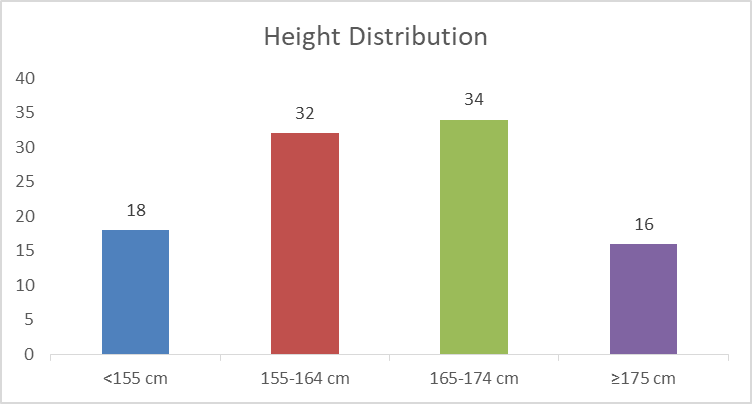
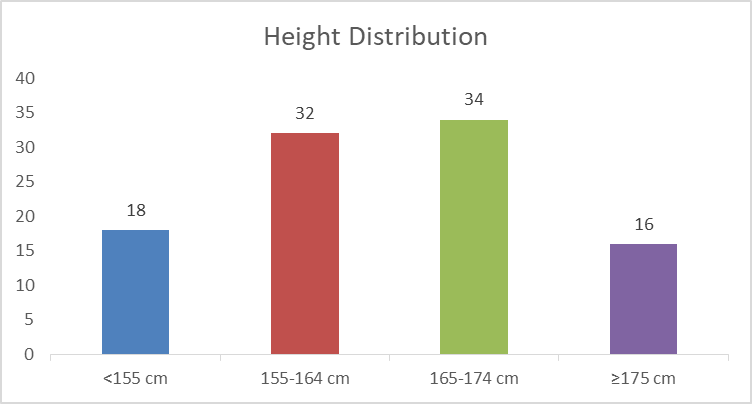
Figure 1,2: Weight and Height distribution of Study participants
The Dietary pattern of the study participants was analyzed; accordingly, only 10% of the participants consumed a healthy diet, majority of them had the habit of skipping breakfast 93%, Majority of them had the habit of fast-food consumption, especially sugary food and sweetened beverages 61%, Nearly 58% of study participants had the habit of drinking caffeinated drinks for more than 6 times per week and 80% of them had started this habit after the start of their internship. Only 41% of study participants consume balanced diet and regarding adequate hydration, nearly 68% has habit of drinking less than 2 liters of water per day. 81% had gained significant weight after starting their internship and 47% of the study participants felt that their dietary pattern had negatively influenced their work performance during the internship. Chi square test was done to assess the factors responsible for influencing improper dietary pattern during internship. 25% of female interns were overweight according to BMI classification compared to males and 62% of female interns practiced unhealthy dietary habit compared to 45.9% of male interns. However, 54% of female interns underwent frequent physical activity of more than 3 times per week compared to males. 50% of interns with normal BMI were well aware about the importance of dietary pattern and shockingly 34.8% of the interns belonging to the overweight category were unsure about the healthy dietary pattern. 53% of study participants with an unhealthy dietary pattern skipped meals more frequently, and this association was statistically significant. 22% of interns who had less than 8-hour duty followed a healthy diet, and 63% of interns on more than 8-hour shift duty consumed an unhealthy diet; this association was found to be statistically significant.
Table 1: Chi-square test: Association between factors influencing the dietary pattern during Internship
|
|
Dietary pattern |
P value |
|
|
Healthy |
Unhealthy |
|
|
|
Factors |
|
|
|
|
Gender Male Female |
20 17 |
24 39 |
0.2 |
|
Shift timings >8 hours <8 hours |
8 22 |
63 7 |
0.01* |
|
Department posted Clinical Paraclinical |
17 28 |
43 12 |
0.02* |
|
Skipping meals Never/rarely Occasionally/more |
33 6 |
53 8 |
0.01* |
|
Academic factor Preparing for PG Not preparing for PG |
6 4 |
73 17 |
0.3 |
Paired sample T test was done to compare the mean of various factors influencing dietary pattern before and after internship, results are enumerated in table 2.
Table 2: Comparing the mean of various factors influencing dietary pattern before and after internship
|
Variables |
Time frame |
Mean |
Mean difference |
T value |
Significance P value |
|
Average working hours Hours/day |
Before CRMI |
5.8 |
-3.8 |
-19.7 |
<0.001* |
|
After CRMI |
9.6 |
|
|
|
|
|
Meal frequency Meals/day |
Before CRMI |
3.1 |
1.04 |
15.6 |
<0.001* |
|
After CRMI |
2.08 |
||||
|
Balanced diet consumption [Days/week] |
Before CRMI |
4.95 |
3.13 |
23.2 |
<0.001* |
|
After CRMI |
1.8 |
|
|
|
|
|
Caffeinated drinks intake |
Before CRMI |
5.8 |
1.6 |
13.2 |
0.2 |
|
After CRMI |
4.2 |
|
|
|
|
|
Junk food/Fast food consumption Times/week |
Before CRMI |
1.4 |
-3.08 |
-20.5 |
0.1 |
|
After CRMI |
4.4 |
|
|
|
|
|
Fluid intake Litres/day |
Before CRMI |
2.8 |
1.5 |
14.9 |
0.02* |
|
After CRMI |
1.3 |
|
|
|
Paired T test suggests that factors influencing dietary pattern is more pronounced during CRMI period compared to student period and some variables such as average working hours, frequency of meals, balanced diet consumption and fluid intake were statistically significant with P value of <0.05.
DISCUSSION:
The primary objective of this study is to assess the dietary pattern among medical college students before and during the Compulsory Rotational Medical Internship, such as the type of diet consumed, and to determine associated factors responsible for influencing improper dietary patterns among them before and after starting their CRMI period. Our findings in this study suggest that clinical responsibilities, prolonged duty hours and irregular shift schedules act as direct barriers to maintaining proper nutrition, hydration, and overall physical health.
According to this study, a statistically significant relationship was noted between prolonged working hours and poor dietary choices. The percentage of interns consuming an unhealthy diet was 63% among those working longer than 8" hours" . A previous study by Senthil et al9 indicated that physical exhaustion and severe time constraints prevent medical trainees from purchasing or preparing a balanced meal. It was clearly established from the current study that department posting and nutritional quality were related; interns assigned to clinical departments experienced worse dietary outcomes than those in paraclinical postings. Eating habits are compromised in such instances due to emergency duties, delivering patient care and unpredictable workloads, which force the interns to compromise their eating habits.10 The fall in meal frequency from a mean of 3.1" meals/day" in the students' period to 2.08" meals/day" during the CRMI period establishes a relationship in this context. Nearly 93% of the study participants skipped breakfast regularly. A Cross-sectional study done by Kavitha et al makes it evident that skipping breakfast is associated with fatigue, sleep disturbances, and abnormal eating behaviour, hence awareness regarding this is essential as skipping meals may exacerbate these conditions during internship phase.
Reduction in balanced diet consumption from 4.95" days/week" to just 1.8" days/week" (P<0.001), and a surge in junk food consumption 1.4" times/week" to 4.4" times/week" could be because of restricted access to hospital canteens at odd hours. As a result, Interns rely on high calorie, sugary, and convenience food as a result of post duty exhaustion. The transition of dietary pattern from student phase to CRMI phase may not be always behavioural, sometimes hormonal factors play a role because of chronic sleep deprivation which enhances cravings for high-glycaemic index foods and sweetened beverages.12 Surprisingly, caffeine dependence was more in both phases, suggesting it to be a vital functional tool and high baseline intake was already established during intense exam preparation in student phase.This study showed that daily fluid intake was substantially reducing in CRMI phase compared to student phase, clinical shifts, wearing PPE, lack of access to clean drinking water often leads to dehydration during CRMI phase. Subclinical dehydration may lead to reduced concentration, short-term memory lapses, and increased fatigue.13 This is evident in the current study, 47% of the interns had a feeling that altered dietary patterns had caused poor work performance and clinical efficiency.
81% of the participants gained significant weight after starting their internship, a sharp increase irregular meal timing and calorie dense food intake were possible causes, however, gender-based differences were present. Female interns demonstrated unhealthy dietary practices and they also engaged in frequent physical activity according to this study. Hence structural barriers in workplace which had contributed to poor dietary pattern needs attention among these interns. This study also suggested that nearly 34.8% of overweight students were unaware about factors contributing healthy dietary pattern, hence there is clearly a lack of structured nutritional education to medical students that helps them to navigate to healthy dietary habits during their course.
CONCLUSION:
The transition into CRMI induces a high-stress environment characterised by prolonged working hours. This drastic lifestyle shift severely compromises basic self-care, leading to significantly reduced meal frequencies, poor nutritional intake, and borderline dehydration among medical interns
REFERENCES:
1. Likus W, Milka D, Bajor G, Jachacz-Łopata M, Dorzak B. Dietary habits and physical activity in students from the Medical University of Silesia in Poland. Rocz Panstw Zakl Hig. 2013;64(4):317-24.
2. Dhruv, J.Food habits and the emerging health crisis among Indian Students: An Analytical Study of causes, effects and impact, International Journal Of Public Health Research And Development.2026;7(1):23–40.
3. S,S et al.A Study on Association between Dietary Eating Habits and Mental Health among Medical Students in Kancheepuram District, Tamil Nadu. National Journal of Community Medicine.2021;12(10):331-335.
4. Ganasegeran, K., Al-Dubai, S. A., Qureshi, A. M., Al-Abed, A. A., Am, R., & Aljunid, S. M. Social and psychological factors affecting eating habits among university students in a Malaysian medical school: a cross-sectional study. Nutrition Journal.2012;11(1):48.
5. Memon, A. A., Adil, S. E., Siddiqui, E. U., Naeem, S. S., Ali, S. A., & Mehmood, K. Eating disorders in medical students of Karachi, Pakistan-a cross-sectional study. BMC Research Notes.2012;5(1):84.
6. Yahia N, Wang D, Rapley M, Dey R. Assessment of weight status, dietary habits and beliefs, physical activity, and nutritional knowledge among university students. Perspect Public Health. 2016 Jul;136(4):231-44. doi: 10.1177/1757913915609945. Epub 2015 Oct 16. PMID: 26475773.
7. Gajda R, Bronkowska M. Dietary patterns of health sciences students in regarding to physical activity levels and somatic indicators of nutritional status. Rocz Panstw Zakl Hig. 2020;71(3):271-278.
8. Szypowska A, Jeziorek M, Regulska-Ilow B. Assessment of eating and lifestyle habits among Polish cosmetology and physiotherapy students. Rocz Panstw Zakl Hig. 2020;71(2):157-163.
9. Senthil, S. Dietary factors and prevalence of overweight and obesity among medical students in Kancheepuram: A cross-sectional study. Indian Journal of Community Medicine.2025;50(2):112–11
10. Mathew, M. S. Exploring the digital mirror: Problematic lifestyle usage and its influence on health outcomes among medical students in a South Indian Tertiary Care Setting. Journal of Medical Academics.2026;9(1):45–52.
11. Kavitha, V., Jeyalakshmi, P., & Murugan, S. A. Prevalence of breakfast skipping and associated health outcomes among medical students: A cross-sectional study. International Journal of Pharmacy Research & Technology.2026;16(1):22–29.
12. Pengpid, S., & Peltzer, K. Skipping breakfast and its association with health risk behaviour and mental health among university students in 28 countries. Diabetes, Metabolic Syndrome and Obesity: Targets and Therapy.2020;13:2889–2897.
13. Ilow, R. Dietary habits and hydration risks among medical university students. Roczniki Państwowego Zakładu Higieny.2019;70(3): 243–251.