Enhanced Recovery after Surgery (ERAS) versus Conventional Care in Elective Laparoscopic Cholecystectomy: A Randomised Controlled Trial in a Tertiary Care Setting.
- Carunya Mannan , Assistant Professor, Department of General Surgery, Indira Medical College and Hospitals, Pandur, Thiruvallur, Tamil Nadu, India.
- Vignesh Palanivel , Assistant Professor, Department of General Surgery, Indira Medical College and Hospitals, Pandur, Thiruvallur, Tamil Nadu, India.
- Vinoth Kumar Elumalai , Assistant Professor, Department of Anaesthesiology, Indira Medical College and Hospitals, Pandur, Thiruvallur District, Tamil Nadu, India.
Article Information:
Abstract:
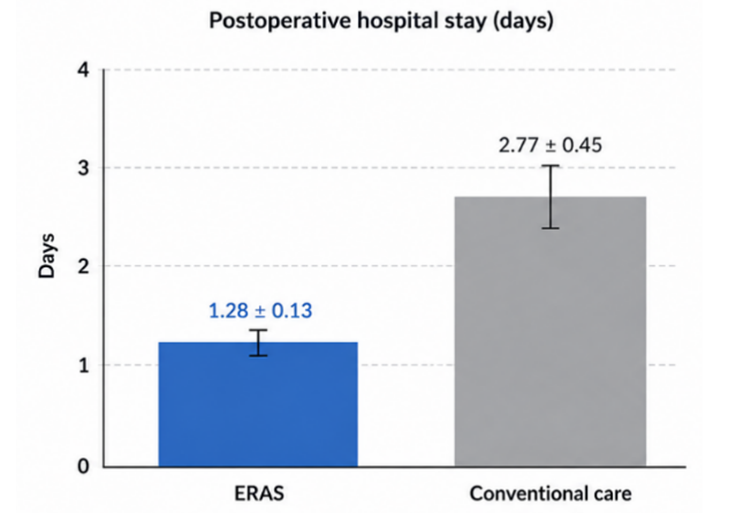
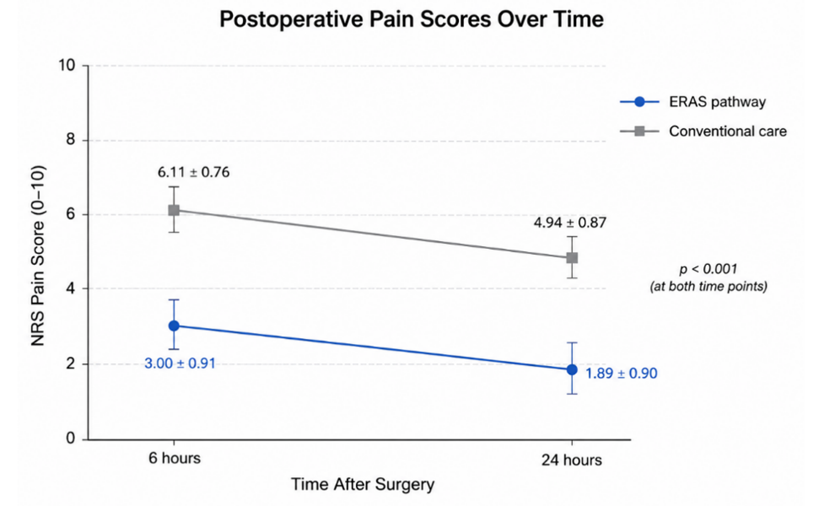
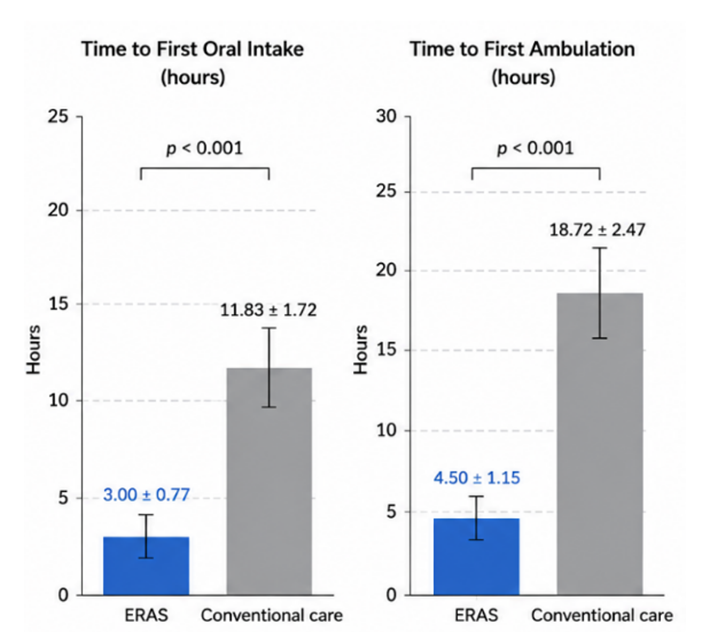
Background: Although laparoscopic cholecystectomy (LC) is the operation of choice for symptomatic gallstone disease, recovery is frequently held back by long-standing perioperative habits such as overnight starvation, opioid-centred pain relief and postponed feeding. The Enhanced Recovery After Surgery (ERAS) approach bundles several evidence-informed measures intended to blunt the operative stress response and speed the return to normal function, yet procedure-specific data for LC, particularly from Indian tertiary hospitals, remain scarce. Aim: To compare recovery outcomes after elective LC managed either with an ERAS pathway or with conventional perioperative care. Methods: In this single-institution, two-arm parallel randomised trial, 36 adults aged 18–70 years (ASA I–III) listed for elective LC were assigned in equal numbers-by a computer-generated sequence concealed in sealed opaque envelopes-to ERAS (n=18) or conventional management (n=18). Duration of hospitalisation served as the primary endpoint. Secondary endpoints were pain on a visual analogue scale (VAS) at 6 and 24 hours, interval to first oral intake, interval to walking, nausea and vomiting, rescue analgesic use, complications and readmission within 30 days. Arms were contrasted with the unpaired t-test and the Fisher exact or chi-square test, and determinants of stay were explored by multivariable linear regression. Results: The two arms were well matched before surgery (all p>0.05). Stay was shorter with ERAS (1.28±0.13 vs 2.77±0.45 days; difference 1.48 days, 95% CI 1.25–1.71; p<0.001). ERAS patients reported milder pain at 6 h (3.00±0.91 vs 6.11±0.76) and 24 h (1.89±0.90 vs 4.94±0.87), resumed eating sooner (3.00±0.77 vs 11.83±1.72 h) and walked earlier (4.50±1.15 vs 18.72±2.47 h), all p<0.001, and less often required rescue analgesia (22.2% vs 77.8%; p=0.002). Nausea and vomiting (27.8% vs 38.9%), complications (0% vs 16.7%) and readmission (0% vs 5.6%) were statistically similar. In the adjusted model, allocation alone predicted stay (β=1.51; 95% CI 1.26–1.75; p<0.001; R²=0.85). Conclusion: An ERAS pathway markedly reduced hospital stay and hastened functional recovery while lowering analgesic demand and adding no excess complications, supporting its routine adoption for elective LC.
Keywords:
Article :
INTRODUCTION:
For symptomatic gallstone disease, laparoscopic cholecystectomy (LC) has become the reference procedure and ranks among the commonest elective operations in general surgery. In opposition to the conventional open technique, it results in smaller wounds, less bleeding during the operation, less pain in recovery and a return to activity quicker than before.[1] How quickly a patient does recover following LC, however, is very dependent on the non-surgical care surrounding the operation itself.
Conventional management still tends to combine a prolonged preoperative fast, anxiolytic premedication, generous intravenous fluids, opioid-based pain control and a cautious, late return to eating and walking. Taken together, these practices amplify the neuroendocrine and inflammatory reaction to surgery, foster insulin resistance, nausea and gut stasis, and can keep an otherwise well patient in hospital longer than necessary.[2]
ERAS grew out of the multimodal “fast-track” philosophy first articulated by Kehlet and amounts to a coordinated package of perioperative steps aimed at dampening the stress of surgery and shortening convalescence.[2-4] Spanning all three phases of care, it typically pairs shorter fasting and preoperative carbohydrate drinks with opioid-sparing multimodal analgesia, individualised fluid therapy, maintenance of normothermia, restraint in the use of drains and catheters, and prompt feeding and mobilisation. First validated in colorectal practice-where trials and pooled analyses have shown both briefer admissions and fewer complications-such pathways are now applied across virtually every surgical discipline and are formalised in ERAS® Society guidance.[5-8]
Because an LC is brief, well tolerated and intrinsically suited to rapid discharge, most ERAS elements map naturally onto it; even so, randomised evaluations of a complete ERAS bundle in LC remain comparatively few, particularly from Indian tertiary care.[9] Against this background, we undertook a randomised trial contrasting an ERAS pathway with conventional care after elective LC, taking duration of hospitalisation as the principal measure of interest.
MATERIALS AND METHODS:
Study design and setting
The work was designed as a prospective, two-group, parallel randomised trial run jointly by the surgical and anaesthesia teams at Indira Medical College and Hospitals, a tertiary teaching centre in Thiruvallur District, Tamil Nadu, India. Institutional ethics clearance was obtained (IMCH/IEC/2025/016, dated 30 December 2025), and the trial adhered to the tenets of the Declaration of Helsinki. Each participant gave written consent after counselling, with information sheets and consent forms supplied in the patient’s own language and covering both the rationale of the study and the advantages and drawbacks of each pathway.
Participants
We enrolled adults between 18 and 70 years of age who were listed for elective LC for benign biliary disease, classified ASA I to III, and able to consent. Patients presenting with acute cholecystitis or common bile duct calculi, those whose operation was converted to an open procedure, and those who were immunosuppressed or acutely unwell were not eligible.
Sample size
The required number was derived from the standard two-mean comparison formula, n = 2 × [(Zα + Zβ) × σ / Δ]². Taking Zα as 1.96 (two-sided α of 0.05), Zβ as 0.84 (80% power), a standard deviation of 1.0 day and a clinically relevant between-group gap of 1.0 day in stay, the calculation returned about 15.7 patients per arm, which we rounded to 18 per arm, giving 36 participants in all. The underlying estimates were drawn from earlier ERAS-versus-conventional comparisons in LC.[9]
Randomisation and allocation concealment
Eligible, consenting patients were assigned in equal proportion to the two arms using a computer-generated random sequence. To keep the forthcoming allocation concealed, the sequence was held in serially numbered, sealed, opaque envelopes that were opened only once a patient had been entered. As is inherent to a trial of a care pathway, neither patients nor the clinical team could be masked; the predefined outcome definitions, however, were largely objective and applied identically across both arms.
Interventions
Both arms reflect accepted, evidence-based ways of managing patients around LC; the study introduced no investigational agent and no additional invasive procedure, the two pathways differing solely in their perioperative steps. The key components of each are set out in Table 1.
Table 1. Perioperative care components of the ERAS and conventional pathways.
|
Perioperative Element |
ERAS Pathway |
Conventional Care |
|
Preoperative fasting |
Clear liquids permitted until 2 h and solids until 6 h before surgery |
Routine overnight fast of 8–12 h |
|
Carbohydrate loading |
Carbohydrate drink given 2 h beforehand; omitted in diabetics |
Not used |
|
Patient education |
Structured counselling with discharge planned in advance |
Limited counselling; discharge timing decided afterwards |
|
Premedication |
Sedative premedication withheld |
Sedatives frequently administered |
|
Antibiotics |
A single preoperative dose for uncomplicated cases |
Repeated or postoperative doses often used |
|
Pneumoperitoneum |
Lower insufflation pressure (8–10 mmHg) where practical |
Standard pressure (12–14 mmHg) |
|
Fluid management |
Individualised, avoiding excess |
Free use of intravenous fluids |
|
Temperature control |
Continuous active warming |
Warming applied inconsistently |
|
Analgesia |
Multimodal and opioid-minimising (paracetamol ± NSAIDs with wound infiltration) |
Predominantly opioid-based |
|
PONV prophylaxis |
Two-agent prophylaxis (ondansetron plus dexamethasone for higher-risk patients) |
One agent, or treatment only once symptoms appear |
|
Drains / catheters |
Routine abdominal drains and urinary catheters avoided |
Drains and catheters used more liberally |
|
Postoperative feeding |
Light oral intake resumed within 2–4 h |
Feeding deferred for several hours |
|
Mobilisation |
Out of bed within 6 h of surgery |
Usually mobilised the following day |
|
Discharge |
Same day or under 24 h once criteria are met |
Typically 1–2 days |
|
ERAS-Enhanced Recovery After Surgery; NSAIDs-non-steroidal anti-inflammatory drugs; PONV-Postoperative nausea and vomiting. |
||
Outcome Measures
The principal endpoint was the duration of postoperative hospitalisation, in days. Secondary endpoints comprised pain rated on a 0–10 visual analogue scale (VAS) at 6 and 24 hours after operation, the interval to first oral intake and to first walking (both in hours), the occurrence of nausea or vomiting, any need for rescue analgesia, postoperative complications and readmission within 30 days; operating time was logged as well. All information was entered on a structured proforma capturing demographics, intra-operative observations, recovery milestones and adverse events.
Statistical Analysis
Analyses were conducted with SPSS version 21.0 software. Continuous scale measurements are reported as mean and SD and compared between arms with the unpaired t test, applying Welch’s adjustment for cases where variance differed. Counts are presented as n with percentages and compared with the chi square or Fisher exact test according to expected cell size. To derive the independent factors associated with length of stay, a linear regression model incorporating allocation, age, BMI, sex and ASA class was fitted. Two-sided p<0.05 was considered significant.
RESULTS:
Participants and Baseline Characteristics
All 36 recruited patients-18 per arm-completed the protocol and entered analysis. Pre-operatively the arms did not differ appreciably with respect to age, sex, BMI, ASA class or operating time (every comparison p>0.05), confirming that randomisation created equivalent groups (Table 2). The near-identical operating times (56.0 ± 6.1min vs 56.8 ± 6.9min; p=0.704) also suggests surgical workload was similar across arms.
Table 2. Baseline demographic, clinical and operative characteristics by group.
|
Characteristic |
ERAS (n=18) |
Conventional (n=18) |
p-value |
|
Age, years, mean ± SD |
46.7 ± 11.3 |
43.7 ± 9.0 |
0.376 |
|
Sex, male / female, n |
8 / 10 |
12 / 6 |
0.315 |
|
BMI, kg/m², mean ± SD |
25.6 ± 2.6 |
25.8 ± 2.4 |
0.818 |
|
ASA grade I / II, n |
10 / 8 |
14 / 4 |
0.289 |
|
Operative time, min, mean ± SD |
56.0 ± 6.1 |
56.8 ± 6.9 |
0.704 |
|
ASA-American Society of Anesthesiologists; BMI-Body mass index; SD-Standard deviation, Continuous variables compared by unpaired t-test; categorical variables by Fisher's exact test. |
|||
Primary Outcome: Duration of Hospitalisation
Postoperative stay, the main endpoint, was considerably briefer under ERAS than under conventional care (1.28 ± 0.13 vs 2.77 ± 0.45 days)-a difference of 1.48 days (95% CI 1.25–1.71; p<0.001) and a relative saving of roughly 53% (Table 3).
Graph 1
Secondary Outcomes
Patients on the ERAS pathway recorded much milder pain at both 6 hours (3.00 ± 0.91 vs 6.11 ± 0.76) and 24 hours (1.89 ± 0.90 vs 4.94 ± 0.87), began oral intake far sooner (3.00 ± 0.77 vs 11.83 ± 1.72 h) and were on their feet considerably earlier (4.50 ± 1.15 vs 18.72 ± 2.47 h); each contrast was highly significant (p<0.001) (Table 3).
Graph 2
Graph 3
Table 3. Primary and secondary continuous outcomes by group.
|
Outcome |
ERAS (n=18) |
Conventional (n=18) |
Difference (95% CI)* |
p-value |
|
Length of stay, days |
1.28 ± 0.13 |
2.77 ± 0.45 |
1.48 (1.25–1.71) |
<0.001 |
|
VAS pain at 6 h |
3.00 ± 0.91 |
6.11 ± 0.76 |
3.11 (2.54–3.68) |
<0.001 |
|
VAS pain at 24 h |
1.89 ± 0.90 |
4.94 ± 0.87 |
3.06 (2.45–3.66) |
<0.001 |
|
Time to oral intake, h |
3.00 ± 0.77 |
11.83 ± 1.72 |
8.83 (7.91–9.75) |
<0.001 |
|
Time to ambulation, h |
4.50 ± 1.15 |
18.72 ± 2.47 |
14.22 (12.90–15.55) |
<0.001 |
|
Values are mean ± SD. VAS, visual analogue scale (0–10); CI, confidence interval. *Difference (conventional minus ERAS) is the reduction achieved with ERAS; compared by unpaired t-test. |
||||
Rescue analgesia was needed far less frequently in the ERAS arm (22.2% vs 77.8%; p=0.002). Nausea and vomiting were somewhat less common with ERAS, although the gap did not reach significance (27.8% vs 38.9%; p=0.725). Neither complications nor 30-day readmissions arose in the ERAS arm, whereas the conventional arm recorded three complications (16.7%) and one readmission (5.6%); with the numbers available, these contrasts were not significant (p=0.229 and p=1.000, respectively) (Table 4).
Table 4. Categorical postoperative outcomes by group.
|
Outcome, n (%) |
ERAS (n=18) |
Conventional (n=18) |
p-value |
|
Rescue analgesia required |
4 (22.2) |
14 (77.8) |
0.002 |
|
Nausea and vomiting |
5 (27.8) |
7 (38.9) |
0.725 |
|
Postoperative complications |
0 (0.0) |
3 (16.7) |
0.229 |
|
30-day readmission |
0 (0.0) |
1 (5.6) |
1.000 |
|
Compared by Fisher's exact test. |
|||
Independent Determinants of Length of Stay
Table 5. Multivariable linear regression for predictors of postoperative length of stay (days).
|
Predictor |
β coefficient |
95% CI |
p-value |
|
Group (conventional vs ERAS) |
1.51 |
1.26 to 1.75 |
<0.001 |
|
Age, per year |
0.007 |
−0.005 to 0.019 |
0.239 |
|
BMI, per kg/m² |
0.027 |
−0.023 to 0.077 |
0.277 |
|
Sex (male vs female) |
0.027 |
−0.224 to 0.278 |
0.828 |
|
ASA grade (II vs I) |
0.063 |
−0.191 to 0.316 |
0.619 |
|
Model R² = 0.85; adjusted R² = 0.83. ERAS is the reference category. CI-confidence interval; BMI-Body mass index; ASA-American Society of Anesthesiologists. |
|||
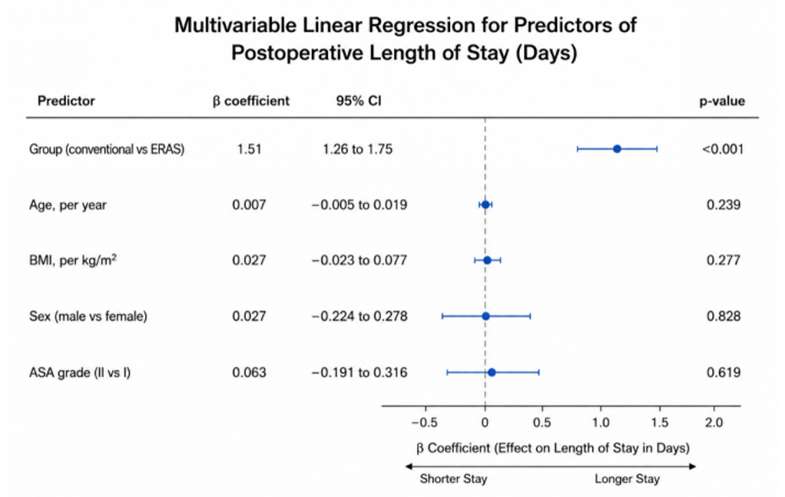
When age, BMI, sex and ASA class were entered alongside allocation, only the assigned pathway independently affected stay: conventional care lengthened it by 1.51 days (95% CI 1.26–1.75; p<0.001) relative to ERAS. None of the demographic or clinical covariates reached significance, and the model captured most of the variation in stay (R² = 0.85), underlining how strongly the pathway itself governed the outcome (Table 5).
Graph 4
DISCUSSION:
In this randomised comparison within elective LC, adopting a structured ERAS pathway cut postoperative stay by roughly a day and a half-better than a 50% reduction-and delivered uniform, clinically relevant gains throughout recovery: less pain at 6 and 24 hours, earlier resumption of eating, earlier walking and a sharply lower call for rescue analgesia. Importantly, none of this came at the cost of safety; every complication and the single readmission occurred among patients receiving conventional care.
These results sit comfortably within an expanding literature that endorses ERAS for LC and for laparoscopic surgery more generally. An Indian interventional comparison by Praveen Kumar and colleagues likewise found a shorter stay and reduced opioid use among ERAS patients undergoing LC.[9] The size and direction of the benefit we recorded also echo experience in colorectal and other major surgery, where randomised studies, meta-analyses and ERAS® Society recommendations have repeatedly linked multimodal pathways to briefer admissions and fewer complications.[10,11]
There is a clear physiological logic to these gains. Curtailing the fast and giving a preoperative carbohydrate drink lessen perioperative insulin resistance and catabolic stress,[6] while sparing opioids sharpens pain relief and curbs the nausea and ileus that opioids provoke, in turn permitting the early feeding and walking that drive functional recovery and earlier discharge. The pronounced differences we observed in time to eating and to mobilisation fit this mechanism neatly and feed directly into the shorter stay.
Nausea and vomiting, though numerically lower with ERAS, did not differ significantly-unsurprising given that a 36-patient trial has limited power for a moderately common categorical event and that antiemetic measures were employed in both arms; the trend nonetheless favoured ERAS, consistent with risk-based dual-agent prophylaxis.[10,12] Likewise, the complete absence of complications or readmissions under ERAS, set against three complications and one readmission with conventional care, speaks to the safety of the pathway, even if such infrequent events could not be tested meaningfully in a study sized for length of stay.
A particular strength is that allocation remained the sole independent determinant of stay after adjustment for age, BMI, sex and ASA class, accounting for the bulk of its variance. Together with the balanced baseline profile and matched operating times, this lends confidence that the improvement stemmed from the pathway itself rather than from differences in case-mix. In practical terms, a shorter and more predictable stay carries obvious benefits for bed turnover, expenditure and the viability of day-case or short-stay LC in cost-conscious tertiary settings.[4]
Limitations
Several caveats apply. The trial was conducted at a single site with a fairly small cohort; while sufficiently powered for the primary endpoint of stay, it could not reliably detect differences in less frequent events such as complications, readmission or nausea and vomiting. We were unable to mask patients and staff in our pathway trial, raising the risk of performance bias, but most endpoints are objective or uniformly applied. Length of stay is also sensitive to discharge rules and social circumstances. Follow up is to only 30 days and we did not conduct a formal cost analysis or include patient-reported quality of life. Larger multicentre trials that audit adherence to protocol and add economic and patient-reported endpoints would confirm and extend these preliminary observations.
CONCLUSION:
Among patients having elective laparoscopic cholecystectomy, an ERAS pathway substantially shortened hospital stay, eased postoperative pain and brought forward both eating and walking, all while reducing analgesic requirements and adding no complications or readmissions. ERAS is a safe, effective and easily adopted approach to perioperative care for elective LC and merits routine use in tertiary practice.
REFERENCES:
1. Keus F, de Jong JA, Gooszen HG, et al. Laparoscopic versus open cholecystectomy for patients with symptomatic cholecystolithiasis. Cochrane Database Syst Rev 2006;(4):CD006231.
2. Kehlet H. Multimodal approach to control postoperative pathophysiology and rehabilitation. Br J Anaesth 1997;78(5):606-17.
3. Ljungqvist O, Scott M, Fearon KC. Enhanced recovery after surgery: a review. JAMA Surg 2017;152(3):292-8.
4. Fearon KC, Ljungqvist O, Von Meyenfeldt M, et al. Enhanced recovery after surgery: a consensus review of clinical care for patients undergoing colonic resection. Clin Nutr 2005;24(3):466-77.
5. Varadhan KK, Neal KR, Dejong CH, et al. The enhanced recovery after surgery (ERAS) pathway for patients undergoing major elective open colorectal surgery: a meta-analysis of randomized controlled trials. Clin Nutr 2010;29(4):434-40.
6. Smith MD, McCall J, Plank L, et al. Preoperative carbohydrate treatment for enhancing recovery after elective surgery. Cochrane Database Syst Rev 2014;(8):CD009161.
7. Greco M, Capretti G, Beretta Let al. Enhanced recovery program in colorectal surgery: a meta-analysis of randomized controlled trials. World J Surg 2014;38(6):1531-41.
8. Gustafsson UO, Scott MJ, Hubner M, et al. Guidelines for perioperative care in elective colorectal surgery: Enhanced Recovery After Surgery (ERAS®) Society recommendations: 2018. World J Surg 2019;43(3):659-95.
9. Praveen Kumar B, Vinoth Kumar S, Sendhil Sudarsan S, et al. Comparison of Enhanced Recovery After Surgery (ERAS) protocol versus conventional approach for laparoscopic cholecystectomy: an interventional study. J Clin Diagn Res 2024;18(4):PC15-8.
10. Apfel CC, Läärä E, Koivuranta M, et al. A simplified risk score for predicting postoperative nausea and vomiting: conclusions from cross-validations between two centers. Anesthesiology 1999;91(3):693-700.
11. Thiele RH, Rea KM, Turrentine FE, et al. Standardization of care: impact of an enhanced recovery protocol on length of stay, complications, and direct costs after colorectal surgery. J Am Coll Surg 2015;220(4):430-43.
12. Gan TJ, Belani KG, Bergese S, et al. Fourth consensus guidelines for the management of postoperative nausea and vomiting. Anesth Analg 2020;131(2):411-48.