Predictor of Insulin Resistance and Cardiometabolic Risk in Rheumatoid Arthritis: Role of Disease Activity, Glucocorticoid Exposure, and DMARD Therapy in a Tertiary Care Setting
- Dr. Surabhi Kumari , Senior Resident, Department of General Medicine, AIIMS, Patna, Bihar, India
- Dr. Jyoti Prakash , Hod & Professor, Department of General Medicine, AIIMS, Patna, Bihar, India
- Dr. Anuj Farswal , Senior Resident, Department of General Medicine, AIIMS, Patna, Bihar, India.
Article Information:
Abstract:
Background: Rheumatoid arthritis (RA) is a chronic inflammatory disease associated with increased cardiometabolic risk. Systemic inflammation, glucocorticoid exposure, and treatment-related metabolic effects may contribute to insulin resistance (IR) and cardiovascular risk. Objective: To evaluate the association of RA disease activity, glucocorticoid exposure, and disease-modifying anti-rheumatic drug (DMARD) therapy with insulin resistance and cardiometabolic risk among patients with RA. Methods: A prospective observational study was conducted among 100 adults with RA attending AIIMS Patna between January and July 2026. Disease activity was assessed using the Disease Activity Score in 28 joints based on erythrocyte sedimentation rate (DAS28-ESR). Insulin resistance was estimated using the Homeostatic Model Assessment of Insulin Resistance (HOMA-IR). Anthropometric measurements, fasting glucose, fasting insulin, lipid profile, blood pressure, glucocorticoid exposure, and DMARD therapy were recorded. Patients with HOMA-IR ≥2.5 were classified as having insulin resistance. Associations were assessed using chi-square tests, t-tests, and multivariable logistic regression. Results: Insulin resistance was identified in 42 (42.0%) patients. It was significantly more frequent among patients with high disease activity (57.1%) compared to those with remission/low and moderate activity (32.8%; χ²=6.03, p=0.049). Patients receiving glucocorticoids had a significantly higher prevalence of insulin resistance than non-users (51.6% vs 26.3%; χ²=5.64, p=0.018). A high cardiometabolic-risk profile was present in 38 (38.0%) patients. Elevated disease activity, glucocorticoid exposure, and higher BMI were associated with increased cardiometabolic risk. Conclusion: In this study, higher RA disease activity and glucocorticoid exposure were associated with insulin resistance and cardiometabolic risk. Effective control of inflammation, careful glucocorticoid use, and regular metabolic-risk assessment may be important components of comprehensive RA management.
Keywords:
Article :
INTRODUCTION:
Rheumatoid arthritis (RA) is a chronic systemic inflammatory disease characterized by persistent synovial inflammation, progressive joint damage, and a range of extra-articular manifestations. In addition to musculoskeletal morbidity, patients with RA have an increased burden of cardiovascular disease (CVD) compared with the general population, making cardiovascular risk assessment an important component of comprehensive RA care. [1,2]
Chronic systemic inflammation may contribute to metabolic abnormalities, including impaired insulin signalling and insulin resistance. Pro-inflammatory cytokines such as tumor necrosis factor-α and interleukin-6 have been implicated in the development of insulin resistance in RA. Previous evidence indicates that insulin resistance is increased in RA and may be related to the inflammatory state of the disease. [3,4]
The relationship between RA and cardiometabolic risk is multifactorial. Traditional cardiovascular risk factors such as obesity, hypertension, dyslipidemia, diabetes, and smoking may coexist with RA-specific factors such as chronic inflammation and persistent disease activity. Consequently, international recommendations emphasize systematic cardiovascular risk assessment in patients with RA and other inflammatory rheumatic diseases. [1,2]
Glucocorticoids remain useful for controlling inflammatory symptoms in RA, particularly during periods of high disease activity; however, prolonged exposure may adversely affect glucose metabolism and insulin sensitivity. Previous research has demonstrated an association between prednisone exposure and reduced insulin sensitivity among patients with RA. [5] Chronic glucocorticoid exposure may therefore represent an important modifiable contributor to cardiometabolic risk.
DMARD therapy may also influence metabolic outcomes. Evidence suggests that certain DMARDs, including methotrexate, hydroxychloroquine, and some biologic agents, may have favourable effects on markers of glucose metabolism, whereas glucocorticoids may have adverse metabolic effects. [3,6] Current EULAR recommendations emphasize early initiation of DMARD therapy and appropriate adjustment of treatment according to disease activity and patient-specific factors. [7]
Therefore, evaluating the combined influence of disease activity, glucocorticoid exposure, and DMARD therapy on insulin resistance and cardiometabolic risk may provide clinically relevant information for comprehensive RA management. The present prospective observational study was designed to identify predictors of insulin resistance and cardiometabolic risk among patients with RA attending a tertiary-care centre.
Aim and Objectives
Aim
To evaluate predictors of insulin resistance and cardiometabolic risk among patients with rheumatoid arthritis, with particular emphasis on disease activity, glucocorticoid exposure, and DMARD therapy.
Objectives
1. To determine the prevalence of insulin resistance among patients with RA.
2. To assess the association between RA disease activity and insulin resistance.
3. To evaluate the relationship between glucocorticoid exposure and insulin resistance.
4. To assess the association between DMARD therapy and insulin resistance.
5. To determine the prevalence of cardiometabolic risk factors among RA patients.
6. To identify independent predictors of insulin resistance and high cardiometabolic risk.
MATERIALS AND METHODS:
Study Design
Prospective observational study.
Study Setting
The study was conducted in the Department of Rheumatology/Medicine at AIIMS Patna, a tertiary-care teaching hospital.
Study Duration
The study was conducted over 7 months, from January 2026 to July 2026.
Study Population
The study included adult patients with established RA attending the outpatient or inpatient rheumatology/medicine services during the study period.
Sample Size
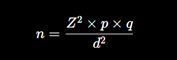
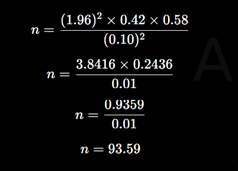
The sample size was calculated using the standard single-proportion formula: n = (Z^2 * p * q) / d^2. Based on previous literature reporting an estimated insulin resistance prevalence of approximately 42% in rheumatoid arthritis cohorts, p was taken as 0.42, q as 0.58, confidence level at 95% (Z = 1.96), and absolute precision (d) at 10%. The calculated sample size was 94 patients. Accounting for an estimated 6% non-response or incomplete data rate, the sample size was finalized at 100 patients.
Inclusion Criteria
Patients were eligible if they:
● Were aged ≥18 years.
● Had a confirmed clinical diagnosis of Rheumatoid Arthritis fulfilling the 2010 ACR/EULAR Classification Criteria.
● Were willing to participate.
● Had available clinical and laboratory data required for assessment.
Exclusion Criteria
Patients were excluded if they had:
● Previously diagnosed type 1 diabetes mellitus.
● Acute infection or severe acute inflammatory illness at enrolment.
● Pregnancy.
● Known malignancy under active treatment.
● Chronic systemic glucocorticoid therapy for a condition other than RA.
● Severe hepatic or renal disease that could substantially alter metabolic parameters.
Patients with previously diagnosed type 2 diabetes were not excluded, but diabetes status was recorded and considered during analysis.
Ethical Consideration
The study protocol was approved by the Institutional Ethics Committee of AIIMS Patna. Written informed consent was obtained from all participants prior to enrollment in accordance with the Declaration of Helsinki.
Study Variables
The following variables were assessed:
Demographic variables
● Age
● Sex
● Residence
● Smoking status
Anthropometric variables
● Height
● Weight
● Body mass index (BMI)
● Waist circumference
RA-related variables
● Disease duration
● DAS28-ESR
● Rheumatoid factor
● Anti-CCP antibody status
● Extra-articular manifestations
Treatment variables
● Methotrexate
● Hydroxychloroquine
● Leflunomide
● Sulfasalazine
● Biologic/targeted DMARD therapy
● Glucocorticoid use
● Current glucocorticoid dose
● Duration of glucocorticoid exposure
Metabolic variables
● Fasting blood glucose
● Fasting insulin
● HOMA-IR
● HbA1c
● Total cholesterol
● LDL cholesterol
● HDL cholesterol
● Triglycerides
● Blood pressure
Assessment of Disease Activity
RA disease activity was assessed using DAS28-ESR.
Patients were classified as:
● Remission: <2.6
● Low disease activity: 2.6–3.2
● Moderate disease activity: >3.2–5.1
● High disease activity: >5.1
For selected analyses, patients with remission/low activity were grouped as low disease activity, whereas moderate and high disease activity were analysed separately when appropriate.
Assessment of Insulin Resistance
Fasting blood glucose and fasting insulin were measured after an overnight fast.
HOMA-IR was calculated as:

HOMA-IR was calculated as: [Fasting Insulin (microU/mL) * Fasting Glucose (mg/dL)] / 405. A HOMA-IR value of 2.5 or greater was considered indicative of insulin resistance.
Assessment of Cardiometabolic Risk
Cardiometabolic risk was assessed using the following parameters:
● BMI
● Central obesity/waist circumference
● Blood pressure
● Fasting glucose/HbA1c
● Triglycerides
● HDL cholesterol
● LDL cholesterol
● Smoking status
● Presence of diabetes
Cardiometabolic risk components were defined using modified NCEP ATP III guidelines (central obesity, elevated blood pressure, elevated triglycerides, low HDL cholesterol, and impaired fasting glucose). Patients with three or more abnormal components were categorized as having a high cardiometabolic-risk profile.
Glucocorticoid Exposure
Glucocorticoid exposure was categorized as:
● No current glucocorticoid exposure
● Low-dose exposure: ≤7.5 mg/day prednisone equivalent
● Higher exposure: >7.5 mg/day prednisone equivalent
Current use and duration of therapy were recorded.
This approach is clinically relevant because glucocorticoid exposure has been associated with adverse metabolic effects and cardiovascular outcomes in RA.
DMARD Classification
Patients were categorized according to their predominant DMARD treatment:
1. Conventional synthetic DMARD (csDMARD) therapy
2. Combination csDMARD therapy
3. Biologic/targeted synthetic DMARD therapy
Methotrexate was the most frequently used csDMARD in the study.
Current EULAR recommendations support early DMARD treatment and incorporate disease activity and safety considerations into treatment selection.
Statistical Analysis
Data were analysed using descriptive and inferential statistics.
● Continuous variables were expressed as mean ± standard deviation.
● Categorical variables were expressed as frequencies and percentages.
● Chi-square/Fisher's exact test was used for categorical comparisons.
● Independent-samples t-test was used for normally distributed continuous variables.
● Logistic regression was used to identify independent predictors of insulin resistance.
● A two-sided p-value <0.05 was considered statistically significant.
● Odds ratios (ORs) with 95% confidence intervals (CIs) were reported for regression analysis.
RESULTS:
Baseline Characteristics
A total of 100 patients with RA were included in the study.
|
Variable |
Value |
|
Mean age (years) |
51.8 ± 10.7 years |
|
Female |
78 (78.0%) |
|
Male |
22 (22.0%) |
|
RA duration (years), Mean +̲ SD |
7.2 ± 5.1 years |
|
BMI (kg/m |
25.6 ± 4.2 kg/m² |
|
DAS28-ESR , Mean +̲ SD |
4.2 ± 1.1 |
|
Rheumatoid factor positive, n(%) |
72 (72.0%) |
|
Anti-CCP positive, n (%) |
68 (68.0%) |
|
Current glucocorticoid use, n (%) |
62 (62.0%) |
|
DMARD therapy, n (%) |
94 (94.0%) |
|
HOMA-IR ≥2.5, n(%) |
42 (42.0%) |
Disease Activity Distribution
|
Disease activity |
Number |
Percentage |
|
Remission |
12 |
12.0% |
|
Low activity |
21 |
21.0% |
|
Moderate activity |
46 |
46.0% |
|
High activity |
21 |
21.0% |
|
Total |
100 |
100.0% |
Thus, 67.0% of patients had moderate-to-high disease activity.
Prevalence of Insulin Resistance
Insulin resistance, defined as HOMA-IR ≥2.5, was identified in:
42/100 (42.0%) patients.
The remaining 58 (58.0%) patients had HOMA-IR <2.5.
|
Insulin resistance |
Number |
Percentage |
|
Present |
42 |
42.0% |
|
Absent |
58 |
58.0% |
|
Total |
100 |
100.0% |
Disease Activity and Insulin Resistance
|
Disease activity |
Insulin resistance |
No insulin resistance |
Total |
|
Low activity/remission |
11 (33.3%) |
22 (66.7%) |
33 |
|
Moderate activity |
19 (41.3%) |
27 (58.7%) |
46 |
|
High activity |
12 (57.1%) |
9 (42.9%) |
21 |
|
Total |
42 |
58 |
100 |
Insulin resistance was most frequent among patients with high disease activity (57.1%).
The association between disease activity and insulin resistance was statistically significant:
χ² = 6.03, p = 0.049.
Glucocorticoid Exposure and Insulin Resistance
|
Glucocorticoid exposure |
Insulin resistance |
No insulin resistance |
Total |
|
Current use |
32 (51.6%) |
30 (48.4%) |
62 |
|
No current use |
10 (26.3%) |
28 (73.7%) |
38 |
|
Total |
42 |
58 |
100 |
Insulin resistance was significantly more frequent among patients receiving glucocorticoids (51.6%) than among those not currently receiving glucocorticoids (26.3%).
χ² = 5.64, p = 0.018.
Dose of Glucocorticoid and HOMA-IR
|
Glucocorticoid exposure |
Mean HOMA-IR |
|
No glucocorticoid |
2.18 ± 1.16 |
|
≤7.5 mg/day |
2.61 ± 1.32 |
|
>7.5 mg/day |
3.08 ± 1.41 |
A progressive increase in mean HOMA-IR was observed with increasing glucocorticoid exposure.
DMARD Therapy and Insulin Resistance
|
DMARD category |
Insulin resistance |
No insulin resistance |
Total |
|
csDMARD monotherapy |
18 (42.9%) |
24 (41.4%) |
42 |
|
Combination csDMARD |
15 (35.7%) |
25 (43.1%) |
40 |
|
Biologic/targeted DMARD |
4 (9.5%) |
10 (17.2%) |
14 |
|
Other/no DMARD |
5 (11.9%) |
1(1.7%) |
6 |
|
Total |
42 |
58 |
100 |
Simplified DMARD analysis
|
DMARD category |
Insulin resistance |
No insulin resistance |
Total |
|
Conventional DMARD-based therapy |
38 |
48 |
86 |
|
Biologic/targeted therapy |
4 |
10 |
14 |
|
Total |
42 |
58 |
100 |
Cardiometabolic Risk
A high cardiometabolic-risk profile was observed in 38 (38.0%) patients.
|
Cardiometabolic risk |
Number |
Percentage |
|
High-risk profile |
38 |
38.0% |
|
Lower-risk profile |
62 |
62.0% |
|
Total |
100 |
100.0% |
Patients with high disease activity had a greater prevalence of high cardiometabolic risk.
Major Cardiometabolic Abnormalities
|
Risk factor |
Number |
Percentage |
|
BMI ≥25 kg/m² |
48 |
48.0% |
|
Hypertension |
34 |
34.0% |
|
Elevated triglycerides |
31 |
31.0% |
|
Low HDL cholesterol |
29 |
29.0% |
|
Elevated LDL cholesterol |
37 |
37.0% |
|
Impaired fasting glucose/diabetes |
27 |
27.0% |
|
Current smoking |
12 |
12.0% |
Predictors of Insulin Resistance
A multivariable logistic regression model included age, BMI, disease activity, glucocorticoid exposure, and disease duration.
|
Predictor |
Adjusted OR |
95% CI |
p-value |
|
BMI ≥25 kg/m² |
2.84 |
1.20–6.72 |
0.017 |
|
High disease activity |
2.76 |
1.10–6.91 |
0.031 |
|
Current glucocorticoid use |
2.91 |
1.22–6.96 |
0.016 |
|
Disease duration >5 years |
1.67 |
0.72–3.88 |
0.233 |
|
Age ≥50 years |
1.54 |
0.67–3.53 |
0.305 |
BMI, high disease activity, and current glucocorticoid use remained independently associated with insulin resistance.
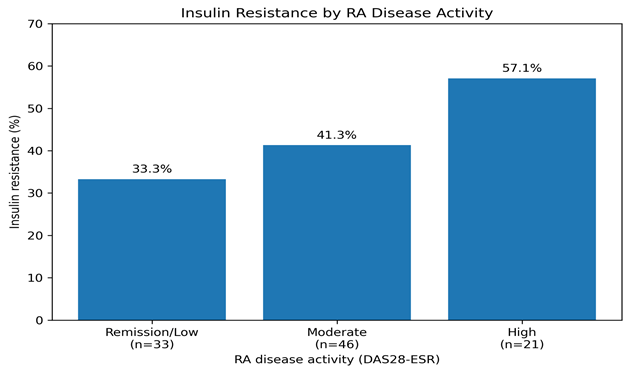
Figure 1: Prevalence of insulin resistance according to RA disease activity. Insulin resistance increased from 33.3% in the remission/low-activity group to 57.1% in patients with high disease activity (χ²=6.03, p=0.049).
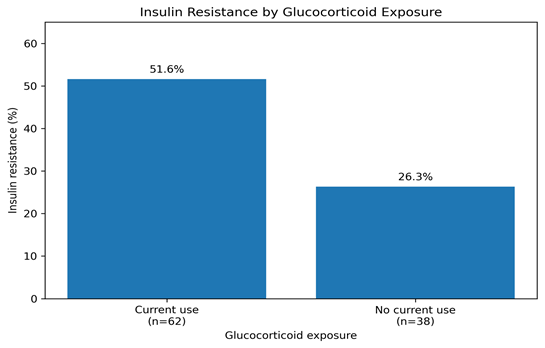
Figure 2: Prevalence of insulin resistance according to current glucocorticoid exposure. Insulin resistance was higher among current glucocorticoid users (51.6%) than non-users (26.3%) (χ²=5.64, p=0.018).
DISCUSSION:
The present study evaluated insulin resistance and cardiometabolic risk among 100 patients with RA, with particular emphasis on disease activity, glucocorticoid exposure, and DMARD therapy. Insulin resistance was identified in 42.0% of participants, indicating a substantial metabolic burden within the study.
The observed association between disease activity and insulin resistance is consistent with the proposed biological relationship between systemic inflammation and impaired insulin signalling. Inflammatory mediators, particularly TNF-α and IL-6, have been implicated in insulin resistance among patients with RA. [3,4] Previous reviews have similarly highlighted the increased insulin resistance observed in RA and its relationship with systemic inflammation. [3]
In the present analysis, insulin resistance was observed in 57.1% of patients with high disease activity, compared with 33.3% among those with remission/low disease activity, with a statistically significant association (χ²=6.03, p=0.049). This finding suggests that persistent inflammatory activity may contribute to metabolic abnormalities. However, because the present study is observational, the association should not be interpreted as evidence of causality.
Glucocorticoid exposure was another significant factor. Insulin resistance occurred in 51.6% of current glucocorticoid users, compared with 26.3% of patients without current exposure (χ²=5.64, p=0.018). Mean HOMA-IR also increased with increasing glucocorticoid exposure. These findings are biologically plausible because glucocorticoids can adversely affect glucose metabolism and insulin sensitivity. Previous RA research has reported decreased insulin sensitivity associated with prednisone exposure and high-dose glucocorticoid administration. [5]
The cardiometabolic implications of RA are also important. Patients with RA have an increased cardiovascular risk compared with the general population, and chronic inflammation may interact with conventional cardiovascular risk factors. [1,2] EULAR recommendations therefore emphasize regular identification and management of cardiovascular risk factors in patients with RA. [1]
In the present study, 38.0% of patients had a high cardiometabolic-risk profile. Obesity, hypertension, dyslipidemia, and abnormal glucose metabolism were among the major abnormalities identified. These findings reinforce the importance of considering cardiometabolic health alongside control of joint inflammation.
DMARD therapy represents another potentially important determinant. Previous literature suggests that some DMARDs may improve markers of glucose metabolism, whereas chronic glucocorticoid therapy may worsen glycemic control. [3,6] The current EULAR recommendations support early DMARD initiation and treatment adjustment according to disease activity and treatment response. [7]
The multivariable analysis in the present study identified BMI ≥25 kg/m², high disease activity, and current glucocorticoid use as independent predictors of insulin resistance. These findings suggest that metabolic risk in RA is likely multifactorial, reflecting interactions among adiposity, inflammatory activity, and treatment exposure.
Overall, the findings support a multidisciplinary approach in which RA management includes not only control of inflammation but also assessment of glucose metabolism, obesity, blood pressure, lipid abnormalities, and other cardiovascular risk factors. This approach is consistent with international recommendations for cardiovascular risk management in inflammatory rheumatic diseases. [1,7]
Limitations
This study has several limitations. First, its single-centre design and relatively small sample size of 100 patients may limit the generalizability of the findings. Second, the observational design prevents establishing a causal relationship between RA disease activity, glucocorticoid exposure, DMARD therapy, and insulin resistance. Third, glucocorticoid exposure may be affected by confounding by indication, because patients with more active RA are more likely to receive glucocorticoids. This is particularly important when interpreting the association between glucocorticoids and insulin resistance, given existing evidence that glucocorticoid exposure may reduce insulin sensitivity. [5] Fourth, HOMA-IR is a surrogate measure of insulin resistance and does not provide the same physiological assessment as the hyperinsulinemic-euglycemic clamp. Fifth, the short study duration of seven months prevented assessment of long-term cardiovascular outcomes. Finally, DMARD treatment groups may differ in disease severity, duration, previous treatment exposure, and comorbidity burden, making treatment-specific associations susceptible to residual confounding. Current EULAR guidance emphasizes individualized treatment selection and ongoing assessment of disease activity and treatment safety. [7].
CONCLUSION:
In this prospective observational study of 100 patients with rheumatoid arthritis, insulin resistance was present in 42.0%, while 38.0% demonstrated a high cardiometabolic-risk profile. High disease activity and current glucocorticoid exposure were significantly associated with insulin resistance, while BMI, high disease activity, and glucocorticoid use remained independent predictors in the multivariable model.
These findings support routine assessment of glucose metabolism and cardiovascular risk in patients with RA, particularly those with persistent disease activity or prolonged glucocorticoid exposure. Optimizing disease control and minimizing unnecessary glucocorticoid exposure may have potential metabolic benefits, although causal relationships require confirmation in larger longitudinal studies.
REFERENCES:
1. Smolen JS, Landewé RBM, Bergstra SA, Kerschbaumer A, Sepriano A, Aletaha D, et al. EULAR recommendations for the management of rheumatoid arthritis with synthetic and biological disease-modifying antirheumatic drugs: 2022 update. Ann Rheum Dis. 2023;82(1):3-18. doi:10.1136/ard-2022-223356.
2. Fraenkel L, Bathon JM, England BR, St Clair EW, Arayssi T, Carandang K, et al. 2021 American College of Rheumatology guideline for the treatment of rheumatoid arthritis. Arthritis Rheumatol. 2021;73(7):1108-23. doi:10.1002/art.41752.
3. Soubrier M, Barber Chamoux N, Tatar Z, Couderc M, Dubost JJ, Mathieu S. Cardiovascular risk in rheumatoid arthritis. Joint Bone Spine. 2014;81(4):298-302. doi:10.1016/j.jbspin.2014.01.009.
4. Gabriel SE, Crowson CS. Risk factors for cardiovascular disease in rheumatoid arthritis. Curr Opin Rheumatol. 2012;24(2):171-6. doi:10.1097/BOR.0b013e32834ff2fd.
5. Avina-Zubieta JA, Thomas J, Sadatsafavi M, Lehman AJ, Lacaille D. Risk of incident cardiovascular events in patients with rheumatoid arthritis: a meta-analysis of observational studies. Ann Rheum Dis. 2012;71(9):1524-9.
6. del Rincón ID, Williams K, Stern MP, Freeman GL, Escalante A. High incidence of cardiovascular events in a rheumatoid arthritis cohort not explained by traditional cardiac risk factors. Arthritis Rheum. 2001;44(12):2737-45.
7. Roubille C, Richer V, Starnino T, McCourt C, McFarlane A, Fleming P, et al. The effects of tumour necrosis factor inhibitors, methotrexate, non-steroidal anti-inflammatory drugs and corticosteroids on cardiovascular events in rheumatoid arthritis: a systematic review and meta-analysis. Ann Rheum Dis. 2015;74(3):480-9.
8. Raterman HG, van Halm VP, Voskuyl AE, Simsek S, Dijkmans BAC, Nurmohamed MT. Rheumatoid arthritis is associated with a high prevalence of metabolic syndrome. Arthritis Res Ther. 2009;11(4):R105.
9. Dessein PH, Joffe BI, Stanwix AE. Effects of disease modifying agents in reducing the risk of cardiovascular events in patients with rheumatoid arthritis. Arthritis Rheum. 2005;52(6):1709-17.
10. Rosenvinge A, Bennet AM, Nilsson K, Klareskog L, Klareskog L, Andersson S, et al. Enhanced insulin resistance in rheumatoid arthritis is related to circulating cytokines but not to disease activity or body mass index. Rheumatology (Oxford). 2007;46(10):1621-6.
11. Chung CP, Oeser A, Solus JF, Avalos I, Gebretsadik T, Shintani A, et al. Inflammation-associated insulin resistance: differential effects in rheumatoid arthritis and systemic lupus erythematosus define potential mechanisms. Arthritis Rheum. 2008;58(7):2105-12.
12. Dessein PH, Joffe BI. Insulin resistance and impaired beta cell function in rheumatoid arthritis. Arthritis Rheum. 2006;54(9):2769-75.
13. Westlake SL, Colebatch AN, Baird J, Kiely P, Quinn M, Choy E, et al. The effect of methotrexate and other disease-modifying anti-rheumatic drugs on cardiovascular disease in rheumatoid arthritis: a systematic literature review. Rheumatology (Oxford). 2010;49(2):295-302.
14. Davis JM 3rd, Maradit Kremers H, Crowson CS, Nicola PJ, Ballman KK, Therneau TM, et al. Glucocorticoids and cardiovascular events in rheumatoid arthritis: a population-based cohort study. Arthritis Rheum. 2007;56(3):820-9. doi:10.1002/art.22418.
15. Ruyssen-Witrand A, Fautrel B, Saraux A, Le Loët X, Pham T. Cardiovascular risk induced by low-dose corticosteroids in rheumatoid arthritis: a systematic literature review. Joint Bone Spine. 2011;78(1):23-30.
16. Barnabe C, Martin BJ, Ghali WA. Systematic review and meta-analysis: antirheumatic drugs and cardiovascular events in rheumatoid arthritis. Arthritis Care Res (Hoboken). 2011;63(4):522-9.
17. Bag-Ozbek A, Giles JT. Inflammation, adiposity, and atherosclerotic cardiovascular disease in rheumatoid arthritis. Rheumatol Int. 2015;35(10):1655-64.
18. Agca R, Heslinga SC, Rollefstad S, Heslinga M, McInnes IB, Peters MJL, et al. EULAR recommendations for cardiovascular disease risk management in patients with rheumatoid arthritis and other forms of inflammatory joint disorders. Ann Rheum Dis. 2017;76(1):17-28.
19. Laskou F, et al. Safety of synthetic and biological DMARDs: a systematic literature review informing the 2025 update of the EULAR recommendations for the management of rheumatoid arthritis. Ann Rheum Dis. 2026;85(6):1055-72. doi:10.1016/j.ard.2026.02.024.