The in-vitro activity of ceftazidime avibactum against multidrug resistant gram-negative isolates.
- Sarika Ghai , Associate Professor, Department of Microbiology, Acharya Shri Chander College of Medical Sciences and Hospital, Jammu.
- Dipender Kaur Najotra, , Professor, Department of Microbiology, Acharya Shri Chander College of Medical Sciences and Hospital, Jammu.
- Iqra Khan , Senior Resident, Department of Microbiology, Acharya Shri Chander College of Medical Sciences and Hospital, Jammu.
- Bella Mahajan , Professor & Head, Department of Microbiology, Acharya Shri Chander College of Medical Sciences and Hospital, Jammu.
Article Information:
Abstract:
Background: The global rise of multidrug-resistant (MDR) Gram-negative pathogens, particularly carbapenem-resistant Enterobacterales and non-fermenters, poses a major therapeutic challenge. Ceftazidime–avibactam (CZA), a novel β-lactam/β-lactamase inhibitor combination, has shown promise against resistant organisms. This study aimed to evaluate the susceptibility profile of CZA against MDR Gram-negative bacilli isolated from clinical specimens. Methods: A cross-sectional observational study was conducted in the Department of Microbiology, Acharya Shri Chander College of Medical Sciences & Hospital, Jammu, India (January–December 2025). Clinical samples were processed using standard microbiological techniques. Antimicrobial susceptibility testing was performed by Kirby–Bauer disc diffusion and interpreted per CLSI M100 (2025). Confirmed ESBL/CRE Enterobacteriaceae and MDR Pseudomonas aeruginosa underwent E-strip testing for CZA, with MIC values interpreted per manufacturer’s instructions. Results: Of 1800 clinical samples, 576 (32%) were culture positive, with 329 Gram-negative isolates. MDR prevalence was 78% (257/329). The most common MDR organisms were E. coli (33%), Pseudomonas (25%), Klebsiella (23%), and Acinetobacter (12%). Resistance to carbapenems was high (Imipenem 82–89%, Meropenem 66–84%), while last-resort agents showed resistance rates of 27–46%. CZA demonstrated excellent activity against Enterobacteriaceae (E. coli 95%, Enterobacter 91%, Klebsiella 86%, Proteus 86%, Citrobacter 83%), moderate activity against Pseudomonas aeruginosa (75%), and poor activity against Acinetobacter spp. (17%). Conclusion: CZA retains strong in vitro activity against MDR Enterobacteriaceae and moderate efficacy against Pseudomonas aeruginosa, but is ineffective against Acinetobacter spp.. These findings highlight its therapeutic potential in carbapenem-resistant Enterobacterales infections, while underscoring the urgent need for antimicrobial stewardship and alternative strategies for non-fermenters.
Keywords:
Article :
INTRODUCTION:
The global rise of multidrug-resistant (MDR) Gram-negative pathogens has become a pressing public health concern(1-3). Resistance to β-lactam antibiotics, driven largely by β-lactamase production, severely restricts therapeutic options for life-threatening infections. Globally, ESBL-producing organisms have escalated the dependence on carbapenems (3,4), however, the emergence of carbapenemase-producing bacteria—such as carbapenem-resistant Acinetobacter baumannii, Pseudomonas aeruginosa, and Enterobacteriaceae—poses an even greater challenge. This trend underscores the urgent need for novel agents to combat resistant pathogens(1,5).
Combining β-lactam antibiotics with β-lactamase inhibitors has been one strategy, but traditional inhibitors (clavulanic acid, tazobactam, sulbactam) show limited activity against many clinically important enzymes. Consequently, first-generation combinations oftenfail against MDR organisms(6). Avibactam, a novel non-β-lactam inhibitor, expands the spectrum by targeting Ambler class A, class C, and selected class D enzymes(7,8). Studies demonstrate that avibactam restores ceftazidime activity against ESBL-, AmpC-, Klebsiella pneumoniae carbapenemase (KPC)-, and OXA-48-producing Enterobacteriaceae, as well as resistant P. aeruginosa(9-11 )
Ceftazidime, a third-generation cephalosporin, acts by binding penicillin-binding proteins, disrupting cell wall synthesis, and causing bacterial lysis(12,13). Avibactam itself lacks antibacterial activity but protects ceftazidime from enzymatic degradation via reversible covalent acylation(8,14). The fixed 4:1 ceftazidime–avibactam combination is administered intravenously and approved for complicated urinary tract infections, intra-abdominal infections, and hospital-acquired pneumonia caused by Gram-negative bacteria(12).
This study evaluates the susceptibility profile of ceftazidime–avibactam against Gram-negative bacilli from clinical specimens, aiming to generate data on its therapeutic potential. With rising ESBLs and carbapenem-resistant Enterobacterales, assessing novel agents is imperative.
MATERIALS AND METHODS:
This cross-sectional observational study was conducted in the Department of Microbiology, Acharya Shri Chander College of Medical Sciences & Hospital, Jammu (J&K), India, from January–December 2025, following Institutional Ethics Committee approval. Clinical samples were processed using standard microbiological techniques. Antimicrobial susceptibility testing was performed by Kirby–Bauer disc diffusion and interpreted as per CLSI M100, 2025(15). Antibiotics tested included β-lactams, β-lactam/β-lactamase inhibitor combinations, aminoglycosides, fluoroquinolones, carbapenems, polymyxins, tigecycline, tetracycline, and fosfomycin. The isolates were categorized as MDR (resistant to ≥3 classes), XDR (resistant to all but one or two classes), and PDR (resistant to all available agents). ESBL detection was performed by Double Disk Synergy Test, carbapenemase production confirmed by mCIM, and MDR Pseudomonas aeruginosa which is non-susceptibility to at least one agent in three or more antimicrobial categories, in accordance with international consensus definitions(21) Confirmed ESBL/CRE Enterobacteriaceae and MDR P. aeruginosa underwent E strip testing for ceftazidime–avibactam, with MIC values interpreted per manufacturer’instructions.
RESULTS:
Out of a total of 1800 isolates, 576 (32%) were culture positive. Among these, 329 (57%) were identified as gram-negative bacteria.The prevalence of multidrug resistance (MDR) among gram-negative isolates was found to be 78%(257).The most common gram negative organisms isolated as MDR were E.coli 84(33%),Pseudomonas 63(25%),Klebsiella 58(23%),Acinetobacter 30(12%) ,Enterobacter11(4.2%), Proteus 7(3%) and Citrobacter 4(2%).(Figure 1)
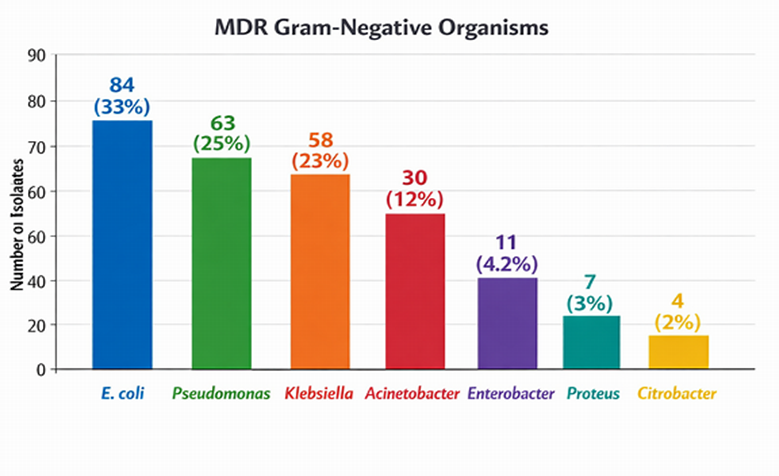
Figure 1: Species wise distribution of MDR Gram Negative bacterial isolates
The antimicrobial susceptibility profile of 257 Gram-negative isolates revealed widespread resistance across multiple drug classes. Ampicillin and Cotrimoxazole demonstrated near-universal resistance (94–100%) &(88–100%) respectively among all species tested, confirming its limited clinical utility. Fluoroquinolones & second- and third-generation cephalosporins exhibited high resistance rates (87–100%)&(80-100%) particularly in Pseudomonas and Acinetobacter & Klebsiella respectively , while Fosfomycin and Nitrofurantoin retained activity against Enterobacteriaceae but were not applicable to non-fermenters.
Aminoglycosides showed moderate efficacy, with resistance ranging between (54-90%). Carbapenem resistance was alarmingly high, with Imipenem showing resistance rates of( 82–89%) and Meropenem( 66–84%). These findings indicate that carbapenems have limited therapeutic utility in our setting, reflecting widespread resistance among Gram-negative pathogens. Resistance was notable in Enterobacter (89%) and Pseudomonas (85%), suggesting emerging carbapenem resistance.
Fosfomycin and Nitrofurantoin retained activity against Enterobacteriaceae but were not applicable to non-fermenters. Last-resort agents demonstrated resistance rates as Tigecycline(46%), Polymyxin B(28%), and Colistin(27%) raising concern about diminishing therapeutic options.(Table 1)
Table 1: Resistance Pattern of MDR gram negative isolates
|
|
|
|
|
|
|
|
|
|
Antimicrobial agent |
E. coli (N=84) |
Klebsiella (N=58) |
Pseudomonas (N=63) |
Acinetobacter (N=30) |
Enterobacter (N=11) |
Proteus (N=7) |
Citrobacter (N=4) |
|
Ampicillin |
78 (94%) |
57 (98%) |
63 (100%) |
30 (100%) |
11 (99%) |
7 (100%) |
4 (100%) |
|
Gentamycin |
63 (75%) |
46 (80%) |
48 (76%) |
27 (90%) |
9 (83%) |
5 (70%) |
3 (74%) |
|
Tobramycin |
45 (54%) |
35 (60%) |
37 (58%) |
18 (59%) |
7 (65%) |
4 (60%) |
2 (62%) |
|
Amoxyclav |
64 (76%) |
46 (80%) |
52 (82%) |
30 (100%) |
10 (87%) |
7 (100%) |
4 (98%) |
|
Piperacillin-tazobactam |
56 (67%) |
45 (78%) |
50 (80%) |
23 (78%) |
8 (76%) |
5 (74%) |
2 (52%) |
|
Cefepime |
66 (78%) |
46 (80%) |
47 (75%) |
21 (70%) |
9 (86%) |
5 (68%) |
3 (70%) |
|
Cefotaxime |
64 (76%) |
48 (82%) |
53 (84%) |
29 (95%) |
9 (85%) |
6 (85%) |
3 (81%) |
|
Ceftriaxone |
69 (82%) |
50 (87%) |
56 (89%) |
29 (98%) |
10 (88%) |
6 (90%) |
4 (92%) |
|
Cefuroxime |
71 (85%) |
53 (92%) |
63 (100%) |
30 (100%) |
11 (96%) |
7 (94%) |
4 (89%) |
|
Cefixime |
72 (86%) |
57 (98%) |
62 (98%) |
30 (100%) |
11 (98%) |
7 (98%) |
3 (87%) |
|
Imipenem |
72 (86%) |
51 (88%) |
54 (85%) |
26 (85%) |
10 (89%) |
6 (84%) |
3 (82%) |
|
Meropenem |
55 (66%) |
42 (72%) |
53 (84%) |
21 (70%) |
8 (74%) |
5 (70%) |
3 (68%) |
|
Amikacin |
53 (63%) |
41 (70%) |
47 (75%) |
22 (72%) |
9 (78%) |
5 (72%) |
3 (70%) |
|
Ciprofloxacin |
73 (87%) |
55 (95%) |
62 (98%) |
30 (100%) |
11 (98%) |
7 (100%) |
4 (92%) |
|
Levofloxacin |
66 (79%) |
48 (82%) |
57 (90%) |
28 (92%) |
10 (89%) |
6 (90%) |
4 (92%) |
|
Ceftazidime |
64 (76%) |
49 (84%) |
45 (72%) |
20 (68%) |
10 (88%) |
5 (65%) |
3 (69%) |
|
Aztreonam |
57 (68%) |
42 (72%) |
48 (76%) |
22 (74%) |
9 (78%) |
5 (70%) |
3 (66%) |
|
Norfloxacin |
71 (85%) |
55 (94%) |
57 (90%) |
29 (95%) |
11 (96%) |
6 (92%) |
4 (95%) |
|
Cotrimoxazole |
74 (88%) |
58 (100%) |
63 (100%) |
NA |
11 (100%) |
7 (100%) |
4 (96%) |
|
Fosfomycin |
59 (70%) |
55 (94%) |
NA |
NA |
11 (96%) |
NA |
NA |
|
Nitrofurantoin |
55 (65%) |
46 (80%) |
NA |
NA |
10 (90%) |
NA |
NA |
|
Tigecycline |
35 (42%) |
26 (44%) |
25 (40%) |
11 (35%) |
5 (46%) |
NA |
1 (30%) |
|
Polymyxin B |
24 (28%) |
15 (26%) |
13 (20%) |
5 (18%) |
3 (23%) |
NA |
1 (28%) |
|
Colistin |
23 (27%) |
14 (24%) |
14 (22%) |
7 (24%) |
3 (25%) |
NA |
1 (20%) |
Ceftazidime-avibactam demonstrated high in-vitro activity against multidrug-resistant Enterobacteriaceae, with susceptibility rates of 95% in E. coli, 91% in Enterobacter spp, 86% in Klebsiella & Proteus spp., and 83% in Citrobacter spp.Activity against Pseudomonas aeruginosa was moderate, with 75% of isolates susceptible. In contrast, Acinetobacter spp. showed poor susceptibility (17%).(Table 2)
Table 2: Susceptibility of Ceftazidime-Avibactam Against MDR Gram-Negative Isolates
|
Organism |
Total Isolates (N) |
No. Susceptible |
% Susceptible |
|
84 |
80 |
95% |
|
|
58 |
50 |
86% |
|
|
63 |
47 |
75% |
|
|
30 |
5 |
17% |
|
|
11 |
10 |
91% |
|
|
7 |
6 |
86% |
|
|
4 |
3 |
83% |
|
|
Total |
257 |
201 |
|
DISCUSSION:
Our study demonstrated a 78% prevalence of MDR among Gram-negative isolates, markedly higher than the national average of 33% reported by CDDEP( Center for Disease Dynamics, Economics & Policy). This difference likely reflects hospital-based sampling, where selective antibiotic pressure and nosocomial transmission contribute to elevated resistance rates compared to community settings(16). Comparable findings have been reported in Indian multicenter studies. The ICMR AMR network reported MDR rates of 65–82% across E. coli, Klebsiella pneumoniae, and Acinetobacter baumannii, while multicenter ICU studies documented overall MDR prevalence of 68–74%(17,18) .
Ampicillin resistance was nearly universal (94–100%), confirming its limited clinical utility against Gram-negative infections. Our study also showed resistance to second- and third-generation cephalosporins exceeded 80–100% in Klebsiella, Pseudomonas, and Acinetobacter. Similar findings were seen in a study conducted by Chavan & Panwar in 2020(19) in which Ampicillin was largely ineffective & 55.2% were resistant to 3rd-gen cephalosporins . Mohamudha Parveen R, Harish BN, Parija SC(20) also had similar results in which high resistance was noted against Ampicillin and 57% resistance to 3rd-generation cephalosporins .Both the studies reflected widespread dissemination of extended-spectrum β-lactamases (ESBLs) and plasmid mediated AmpC enzymes. Our isolates showed >80–100% resistance to fluoroquinolones, a pattern that closely parallels the description by Paterson & Bonomo (2005)(21), who emphasized that ESBL-producing strains often carry plasmid-mediated co-resistance mechanisms, severely limiting treatment options. Our findings can be explained at molecular level by Hooper and Jacoby(22) who explained the basis of fluoroquinolone resistance was due to QRDR mutations,efflux pumps and plasmid mediated.
Our study demonstrated moderate efficacy among Aminoglycosides, with resistance rates of 54%-90% to Gentamicin and Amikacin respectively. Cullen LBL et.al(23) demonstrated enzymatic modification and efflux pumps as key drivers, with gentamicin resistance rates surpassing 70%, consistent with our 54–90% range. Gupta V, Bansal N(24) reported Gentamicin resistance ~75% and Amikacin resistance ~69% among Gram-negative pathogens which resonates with our dataset.
Carbapenems(63-89%) retained partial activity, with resistance to Imipenem ranging from 82–89% and Meropenem from 66-84%. These findings are consistent with national surveillance data from the Kaur J et.al,(25), which reported Klebsiella pneumoniae resistance to Imipenem at 68–69% and Meropenem at 62–65%, while Acinetobacter baumannii exhibited resistance exceeding 80%. Similarly, a systematic review by Kapoor et al. (2026)(26) highlighted carbapenem resistance rates of ~59% in A. baumannii and ~42% in K. pneumoniae, with NDM and OXA-48-like carbapenemases predominating. A meta-analysis by Khan et al. (2026)(27) further confirmed pooled prevalence of carbapenem-resistant Enterobacteriaceae (~9%) and non-Enterobacteriaceae (~16%), underscoring the widespread dissemination of resistance genes across India. Taken together, these studies corroborate the present findings, suggesting that carbapenem resistance in India has reached critical levels, particularly for Imipenem, where resistance rates above 80% are now frequently observed. The convergence of local data with national and systematic reviews emphasizes the urgent need for strengthened antimicrobial stewardship and surveillance programs to mitigate the therapeutic challenges posed by carbapenem-resistant pathogens.
In our study, resistance to Polymyxin B, and Colistin ranged from 18-28% respectively, underscoring the narrowing therapeutic options for multidrug-resistant Gram-negative infections. Comparable findings have been reported in Indian settings. Kalaivani et al. (2025)(28) documented resistance rates of 14.7% to colistin and 10.1% to polymyxin B among XDR Enterobacterales in Puducherry. Similarly, Singh et al. (2026)(29) highlighted the rapid emergence of colistin resistance in India, driven by plasmid-mediated mcr genes and chromosomal mutations. These reports, though showing slightly lower percentages than ours, confirm the national trend of rising resistance to last-line agents, reinforcing the urgent need for antimicrobial stewardship and novel therapeutic strategies.The resistance of Tigecycline ranged from(30-46%) in our study,comparable findings have been reported in Indian settings. Jyoti et al. (2024)(30) documented tigecycline resistance among carbapenem-resistant isolates in Lucknow& Acharya et al. (2026)(31) provided genomic evidence of efflux pump mutations driving tigecycline resistance in Acinetobacter baumannii.
Ceftazidime–avibactam (CZA) demonstrated high in vitro activity against multidrug resistant Enterobacteriaceae in our study, with susceptibility rates of 95% in E. coli, 91% in Enterobacter spp., 86% in Klebsiella and Proteus spp., and 83% in Citrobacter spp.. Activity against Pseudomonas aeruginosa was moderate, with 75% of isolates susceptible, whereas Acinetobacter spp. showed poor susceptibility. These findings emphasize the therapeutic potential of CZA against carbapenem resistant Enterobacterales, while highlighting its limitations against non fermenters such as Acinetobacter.
Priyadarshi et al. (2023)(32) documented >90% susceptibility among Enterobacterales isolates, moderate activity (~72%) against Pseudomonas aeruginosa, and poor activity against Acinetobacter spp. in bloodstream infections which matches our data. Todi et al. (2024)(33) observed microbiological success in ~76% of patients treated with CZA, with outcomes consistent with its strong activity against Enterobacterales and moderate efficacy against Pseudomonas. Taken together, these Indian studies corroborate our findings, confirming that CZA retains excellent activity against Enterobacterales, moderate efficacy against Pseudomonas aeruginosa, and poor activity against Acinetobacter spp. Similarly, the ATLAS India surveillance program (2018–2019)(34) reported CZA activity against 85–95% of carbapenem resistant Enterobacterales, ~70% of Pseudomonas aeruginosa, and <20% of Acinetobacter spp. This concordance highlights the regional relevance of our data and reinforces the role of CZA as a valuable therapeutic option in India for multidrug resistant Enterobacterales infections, while cautioning against its use as monotherapy for Acinetobacter infections.
CONCLUSION:
Our findings reinforce the urgent need for antimicrobial stewardship, surveillance, and the development of novel therapeutic agents. The high prevalence of MDR Gram-negative pathogens, coupled with emerging resistance to carbapenems and last-resort agents, poses a significant public health challenge. Ceftazidime-avibactam offers promise against Enterobacteriaceae but remains ineffective against Acinetobacter, necessitating alternative strategies for these infections.
REFERENCES:
1. World Health Organization. Global priority list of antibiotic-re sistant bacteria to guide research, discovery, and development of new antibiotics. 2017. http://www.who.int/medicines/ publications/WHO-PPL-Short_Summary_25Feb-ET_NM_WHO. pdf?ua=1. Accessed 16 Mar 2018.
2. Ta¨ngde´n T, Giske CG. Global dissemination of extensively drug resistant carbapenemase-producing Enterobacteriaceae: clinical perspectives on detection, treatment and infection control. J In tern Med. 2015;277(5):501–12.
3. Zowawi HM, Harris PN, Roberts MJ, Tambyah PA, Schembri MA,et.al. The emerging threat of multidrug-resistant Gram-negative bacteria in urology. Nat Rev Urol. 2015 Oct;12(10):570-84. doi: 10.1038/nrurol.2015.199. Epub 2015 Sep 1. PMID: 26334085.
4. Pitout JD. Infections with extended-spectrum beta-lactamase-producing enterobacteriaceae: changing epidemiology and drug treatment choices. Drugs. 2010 Feb 12;70(3):313-33. doi: 10.2165/11533040-000000000-00000. PMID: 20166768.
5. Cantón R, Akóva M, Carmeli Y, Giske CG, Glupczynski Y,et.al European Network on Carbapenemases. Rapid evolution and spread of carbapenemases among Enterobacteriaceae in Europe. Clin Microbiol Infect. 2012 May;18(5):413-31. doi: 10.1111/j.1469-0691.2012.03821.x. PMID: 22507109.
6. 6.Bebrone C, Lassaux P, Vercheval L, et al. Current challenges in antimicrobial chemotherapy: focus on b-lactamase inhibition. Drugs. 2010;70(6):651–79.
7. Bonnefoy A, Dupuis-Hamelin C, Steier V, Delachaume C, Seys C, et.al In vitro activity of AVE1330A, an innovative broad-spectrum non-beta-lactam beta-lactamase inhibitor. J Antimicrob Chemother. 2004 Aug;54(2):410-7. doi: 10.1093/jac/dkh358. Epub 2004 Jul 14. PMID: 15254025.
8. Ehmann DE, Jahić H, Ross PL, Gu RF, Hu J,et.al Avibactam is a covalent, reversible, non-β-lactam β-lactamase inhibitor. Proc Natl Acad Sci U S A. 2012 Jul 17;109(29):11663-8. doi: 10.1073/pnas.1205073109. Epub 2012 Jul 2. PMID: 22753474; PMCID: PMC3406822.
9. Berkhout J, Melchers MJ, van Mil AC, Nichols WW, Mouton JW. In vitro activity of ceftazidime-avibactam combination in in vitro checkerboard assays. Antimicrob Agents Chemother. 2015 Feb;59(2):1138-44. doi: 10.1128/AAC.04146-14. Epub 2014 Dec 8. PMID: 25487794; PMCID: PMC4335900.
10. Levasseur P, Girard AM, Miossec C, Pace J, Coleman K. In vitro antibacterial activity of the ceftazidime-avibactam combination against enterobacteriaceae, including strains with well-characterized β-lactamases. Antimicrob Agents Chemother. 2015 Apr;59(4):1931-4. doi: 10.1128/AAC.04218-14. Epub 2015 Jan 12. PMID: 25583732; PMCID: PMC4356809.
11. Karlowsky JA, Biedenbach DJ, Kazmierczak KM, Stone GG, Sahm DF. Activity of Ceftazidime-Avibactam against Extended-Spectrum- and AmpC β-Lactamase-Producing Enterobacteriaceae Collected in the INFORM Global Surveillance Study from 2012 to 2014. Antimicrob Agents Chemother. 2016 Apr 22;60(5):2849-57. doi: 10.1128/AAC.02286-15. PMID: 26926635; PMCID: PMC4862475.
12. 12.European Medicines Agency. Zavicefta: summary of product characteristics. 2018. http://www.ema.europa.eu. Accessed 16 Mar 2018.
13. 13 Rains CP, Bryson HM, Peters DH. Ceftazidime. An update of its antibacterial activity, pharmacokinetic properties and therapeutic efficacy. Drugs. 1995 Apr;49(4):577-617. doi: 10.2165/00003495-199549040-00008. PMID: 7789291.
14. 14. Lahiri SD, Mangani S, Durand-Reville T, Benvenuti M, De Luca F,et.al. Structural insight into potent broad-spectrum inhibition with reversible recyclization mechanism: avibactam in complex with CTX-M-15 and Pseudomonas aeruginosa AmpC β-lactamases. Antimicrob Agents Chemother. 2013 Jun;57(6):2496-505. doi: 10.1128/AAC.02247-12. Epub 2013 Feb 25. PMID: 23439634; PMCID: PMC3716117.
15. 15.CLSI.Performance Standards for Antimicrobial Susceptibility Testing. 35th ed. CLSI standard M100. Clinical and Laboratory Standards Institute, USA; 2025.
16. 16 Center for Disease Dynamics, Economics & Policy (CDDEP). State of the World’s Antibiotics, 2021. Washington, DC: CDDEP; 2021. Available from: https://cddep.org/publications/state-of-the-worlds-antibiotics-2021/ (cddep.org in Bing)
17. 17 Dixit A, Kumar N, Kumar S, Trigun V. Antimicrobial Resistance: Progress in the Decade since Emergence of New Delhi Metallo-β-Lactamase in India. Indian J Community Med. 2019 Jan-Mar;44(1):4-8. doi: 10.4103/ijcm.IJCM_217_18. PMID: 30983704; PMCI
18. 18 Das SK, Joshi Z, Govil D, Shah MS, Jakaraddi GN,et.al . Epidemiology and Clinical Outcome of Common Multi-drug Resistant Gram-negative Bacterial Infections in a Network of Hospitals in India (IMPRES): A Multicenter Intensive Care Unit-based Prospective Clinical Study. Indian J Crit Care Med. 2025 Jun;29(6):504-509. doi: 10.5005/jp-journals-10071-24988. Epub 2025 Jun 5. PMID: 40567323; PMCID: PMC12186078. IMPRES Study Group. Indian Multicenter Prospective Study on Antimicrobial Resistance in ICUs (IMPRES). Journal of Global Antimicrobial Resistance. 2025; 31: 112–120.
19. 19. Chavan SKD, Panwar S / Indian Journal of Microbiology Research 2020;7(2):182–191 doi:10.18231/j.ijmr.2020.032
20. 20. Mohamudha Parveen R, Harish BN, Parija SC. Ampc Beta lactamases among gram negative clinical isolates from a tertiary hospital, South India. Braz J Microbiol. 2010 Jul;41(3):596-602. doi: 10.1590/S1517-83822010000300009. Epub 2010 Sep 1. PMID: 24031534; PMCID: PMC3768642.
21. 21 Paterson DL, Bonomo RA. Extended-spectrum beta-lactamases: a clinical update. Clin Microbiol Rev. 2005 Oct;18(4):657-86. doi: 10.1128/CMR.18.4.657-686.2005. PMID: 16223952; PMCID: PMC1265908.
22. 22. Hooper DC. Mechanisms of fluoroquinolone resistance. Drug Resist Updat. 1999 Feb;2(1):38-55. doi: 10.1054/drup.1998.0068. PMID: 11504468.
23. 23. Cullen LBL, Eldridge CJL, Jones BP, Forster-Wilkins G, Lawton SP,et.al Fielder Exploring molecular mechanisms of aminoglycoside resistance in Escherichia coli MG1655 using the antibiotic resistance growth plate. Sci Rep. 2026 Mar 4;16(1):11958. doi: 10.1038/s41598-026-41386-6. PMID: 41781441; PMCID: PMC13068909.
24. 24. Gupta V, Bansal N, AIIMS AMR Surveillance Team. Trends in Antimicrobial Resistance among Gram-negative Pathogens in a Tertiary Care Hospital in Delhi, 2022–2024. Indian J Med Microbiol. 2024;42(2):145–152.
25. 25. Kaur J, Dhama AS, Buttolia H, Kaur J, Walia K, et.al. ICMR's Antimicrobial Resistance Surveillance system (i-AMRSS): a promising tool for global antimicrobial resistance surveillance.b JAC Antimicrob Resist. 2021; 3: dlab023.
26. 26. Kapoor A, Gupta A, Sansar B, Mishra BK, Singh M,et.al. Carbapenem Resistance in India: A Systematic Review of Epidemiology, Diagnostic Strategies, and Therapeutic Approaches. Biomed Res Int. 2026;2026(1):e6806493. doi: 10.1155/bmri/6806493. PMID: 42581833; PMCID: PMC13463129.
27. 27. Khan Z, Bose P, Kumari S, Rangnekar A, Panwalkar N,et.al . Carbapenem resistance and associated resistance genes in enterobacteriaceae and non-enterobacteriaceae in India: A systematic review and meta-analysis. Indian J Med Res. 2026;163:505-19. doi: 10.25259/IJMR_2824_2025
28. 28. Kalaivani R, Kali A, Easow JM. MIC breakpoints of XDR Enterobacterales Towards Polymyxin B, Colistin, and Tigecycline – Clinical Insights and Therapeutic Outcomes from a Descriptive Study. J Pure Appl Microbiol. 2025;19(1):682-691. doi: 10.22207/JPAM.19.1.57
29. 29. Singh I, Kumar A, Verma IK, Sharma D, Singh AK. Colistin Resistance in Bacteria: Current Updates on Mechanism of Action and Combating Strategies. Can J Infect Dis Med Microbiol. 2026 Apr 21;2026:8603173. doi: 10.1155/cjid/8603173. PMID: 42022846; PMCID: PMC13096796.
30. 30 Jyoti, Sahu C, Sinha R., Pathak A, Verghese G. Tigecycline Resistant Pattern Among Carbapenem Resistant Gram-Negative Bacilli: Prospective Cross-Sectional Study. S. Asian J. Res. Microbiol. 2024, 18, 21-29.
31. 31. Acharya K, Biswas S, Bhattacharyya S, Ghosh M, Bhattacharya A. Resistance associated genomic variations for moderate level tigecycline resistance evolution in Acinetobacter baumannii. World J Microbiol Biotechnol. 2026 Apr 4;42(4):181. doi: 10.1007/s11274-026-04908-y. PMID: 41933192.
32. 32. Priyadarshi K, Dhandapani S, Sivaradjy M, Shanmugam L, Sastry AS. Feasibility of Using Ceftazidime-Avibactam as a Therapeutic Option for Bloodstream Infections Caused by Multidrug-Resistant Enterobacterales and Pseudomonas aeruginosa Based on Its Susceptibility Profile. Cureus. 2023 Apr 1;15(4):e37002. doi: 10.7759/cureus.37002. Erratum in: Cureus. 2025 Aug 11;17(8):c236. doi: 10.7759/cureus.c236. PMID: 37139019; PMCID: PMC10151155.
33. 33. Todi S, Sathe P, V R, Swaminathan S, Talwar D, Prayag P,et.al . Real-World Evidence on Use of Ceftazidime-Avibactam in the Management of Gram-Negative Infections: A Retrospective Analysis. Cureus. 2024 Sep 26;16(9):e70234. doi: 10.7759/cureus.70234. PMID: 39463643; PMCID: PMC11512339.
34. 34 Bakthavatchalam YD, Routray A, Mane A, Kamat S, Gupta A,et.al . In vitro activity of Ceftazidime-Avibactam and its comparators against Carbapenem resistant Enterobacterales collected across India: results from ATLAS surveillance 2018 to 2019. Diagn Microbiol Infect Dis. 2022 May;103(1):115652. doi: 10.1016/j.diagmicrobio.2022.115652. Epub 2022 Jan 31. PMID: 35255290.