Prevalence Of Pregnancy-Associated Low Back Pain And Pelvic Girdle Pain: A Cross-Sectional Study And Analysis Of Maternal Risk Factors.
- Dr. Megha Bandil , Assistant Professor, Department Obstetrics & Gynecology, Gajra Raja Medical College, Gwalior, Madhya Pradesh, India.
- Dr. Manisha Chauhan , Assistant Professor, Department of Obstetrics and gynaecology, Gajra Raja Medical College, Gwalior, Madhya Pradesh, India.
- Dr. Devesh Bandil , Associate Professor, Department of orthopedics, Gajra Raja Medical College, Gwalior, Madhya Pradesh, India.
Article Information:
Abstract:
Background: Pregnancy-associated low back pain (LBP) and pelvic girdle pain (PGP) are among the most common musculoskeletal complaints during pregnancy and may adversely affect mobility, daily activities, and quality of life. Objective: To determine the prevalence of pregnancy-associated LBP and PGP and to evaluate maternal factors associated with their occurrence. Materials and Methods: A clinic-based cross-sectional study was conducted among 250 pregnant women attending the antenatal clinic. Demographic and obstetric characteristics, pain location, severity, and potential maternal risk factors were recorded using a structured questionnaire. Statistical analysis was performed using SPSS version 26.0, and p<0.05 was considered statistically significant. Results: Pregnancy-associated LBP and/or PGP were observed in 156 (62.4%) participants. Higher maternal age, multiparity, increased body mass index, advanced gestational age, and previous history of back pain were significantly associated with pain occurrence (p<0.05). Conclusion: Pregnancy-associated LBP and PGP are highly prevalent and are influenced by several maternal characteristics. Early identification of high-risk women may facilitate timely preventive and supportive interventions.
Keywords:
Article :
INTRODUCTION:
Pregnancy is accompanied by profound anatomical, biomechanical, and hormonal changes that predispose women to a variety of musculoskeletal disorders, among which low back pain (LBP) and pelvic girdle pain (PGP) are the most frequently reported complaints. These conditions may develop independently or coexist during pregnancy and can substantially impair physical function, sleep quality, occupational performance, and overall quality of life. The reported prevalence of pregnancy-associated LBP and PGP varies widely across populations, ranging from 20% to over 70%, depending on diagnostic criteria, gestational age, and study methodology [1,2].
The etiology of pregnancy-associated LBP and PGP is multifactorial. Hormonal influences, particularly increased relaxin levels, contribute to ligamentous laxity, while progressive weight gain, altered posture, increased lumbar lordosis, and displacement of the body's center of gravity impose additional mechanical stress on the spine and pelvic joints. Maternal characteristics such as advanced maternal age, multiparity, elevated body mass index (BMI), previous history of low back pain, physically demanding occupations, and lower levels of physical activity have also been identified as potential risk factors for developing these conditions [3,4].
Although pregnancy-associated LBP and PGP are generally considered self-limiting, they may persist beyond childbirth in a proportion of women, leading to chronic pain and functional disability. Despite their high prevalence, these conditions remain under-recognized in routine antenatal care, particularly in low- and middle-income countries, where screening and early intervention are often inadequate. Identifying the burden of disease and associated maternal risk factors is essential for improving antenatal management and implementing preventive strategies [5,6].
Therefore, the present study was undertaken to determine the prevalence of pregnancy-associated low back pain and pelvic girdle pain among pregnant women attending a tertiary care hospital and to analyze the maternal risk factors associated with their occurrence.
MATERIALS AND METHODS:
A clinic-based cross-sectional study was conducted in the Obstetrics and Gynecology setup in a private hospital at central India, over a period of 18 months (January 2025 to June 2026). A total of 250 pregnant women attending the antenatal outpatient department and fulfilling the eligibility criteria were enrolled using consecutive sampling. After obtaining informed consent, demographic details, obstetric history, body mass index (BMI), gestational age, parity, previous history of low back pain, occupation, and physical activity were recorded using a pre-designed structured proforma. Pregnancy-associated low back pain and pelvic girdle pain were identified based on clinical history and physical examination. Pain severity was assessed using the Visual Analogue Scale (VAS).
Inclusion Criteria
· Pregnant women aged 18–40 years.
· Singleton pregnancy.
· Gestational age of ≥12 weeks.
· Women willing to participate in the study.
Exclusion Criteria
· History of spinal trauma or spinal surgery.
· Congenital spinal deformities or known musculoskeletal disorders.
· Pre-existing neurological disorders affecting gait or posture.
· High-risk pregnancies requiring emergency intervention.
· Women unwilling to participate.
Statistical Analysis
Data were analyzed using SPSS version 26.0. Categorical variables were expressed as frequencies and percentages, while continuous variables were presented as mean ± standard deviation. The Chi-square test and independent t-test were used for comparison as appropriate.
Multivariable logistic regression analysis was performed to identify independent maternal risk factors associated with pregnancy-related low back pain and pelvic girdle pain. A p-value <0.05 was considered statistically significant.
RESULTS:
A total of 250 pregnant women were included in the study. The mean maternal age was 27.8 ± 4.6 years, and the mean gestational age was 28.9 ± 7.4 weeks. Pregnancy-associated low back pain and/or pelvic girdle pain were reported in 156 (62.4%) participants, while 94 (37.6%) women did not report pain.
The prevalence of pain increased with advancing gestational age and was more common among multiparous women, those with higher body mass index, and women with a previous history of low back pain.
Table 1: Baseline Characteristics of the Study Participants (n = 250)
|
Variable |
Number |
Percentage |
|
|
Age (years) |
<25 |
68 |
27.2% |
|
25–30 |
112 |
44.8% |
|
|
>30 |
70 |
28% |
|
|
Parity |
Primigravida |
104 |
41.6% |
|
Multigravida |
146 |
58.4% |
|
|
Gestational Age |
Second trimester |
98 |
39.2% |
|
Third trimester |
152 |
60.8% |
|
|
BMI (kg/m²) |
Normal |
86 |
34.4% |
|
Overweight |
108 |
43.2% |
|
|
Obese |
56 |
22.4% |
|
Most participants were aged 25–30 years (44.8%), were multigravida (58.4%), in the third trimester (60.8%), and were overweight (43.2%).
Table 2: Prevalence of Pregnancy-Associated Low Back Pain and Pelvic Girdle Pain (n = 250)
|
Pain Status |
Number |
Percentage |
|
Low back pain only |
86 |
34.4% |
|
Pelvic girdle pain only |
24 |
9.6% |
|
Both low back pain and pelvic girdle pain |
46 |
18.4% |
|
No pain |
94 |
37.6% |
Overall, 156 (62.4%) pregnant women experienced pregnancy-associated low back pain and/or pelvic girdle pain. Low back pain alone was the most common presentation.
Table 3: Association of Maternal Risk Factors with Pregnancy-Associated Low Back Pain and Pelvic Girdle Pain
|
Risk Factor |
Pain Present (n=156) |
Pain Absent (n=94) |
p-value |
|
Age >30 years |
56 (35.9%) |
14 (14.9%) |
0.001 |
|
Multigravida |
108 (69.2%) |
38 (40.4%) |
<0.001 |
|
BMI ≥25 kg/m² |
118 (75.6%) |
46 (48.9%) |
<0.001 |
|
Third trimester |
112 (71.8%) |
40 (42.6%) |
<0.001 |
|
Previous history of back pain |
48 (30.8%) |
10 (10.6%) |
0.001 |
Advanced maternal age, multiparity, higher BMI, third-trimester pregnancy, and a previous history of back pain were significantly associated with pregnancy-associated low back pain and pelvic girdle pain.
Table 4: Severity of Pain According to Visual Analogue Scale (VAS) (n = 156)
|
Pain Severity |
Number |
Percentage |
|
Mild (VAS 1–3) |
38 |
24.4% |
|
Moderate (VAS 4–6) |
82 |
52.6% |
|
Severe (VAS 7–10) |
36 |
23% |
Moderate pain was the most frequent presentation, affecting 52.6% of women with pregnancy-associated low back pain and/or pelvic girdle pain.
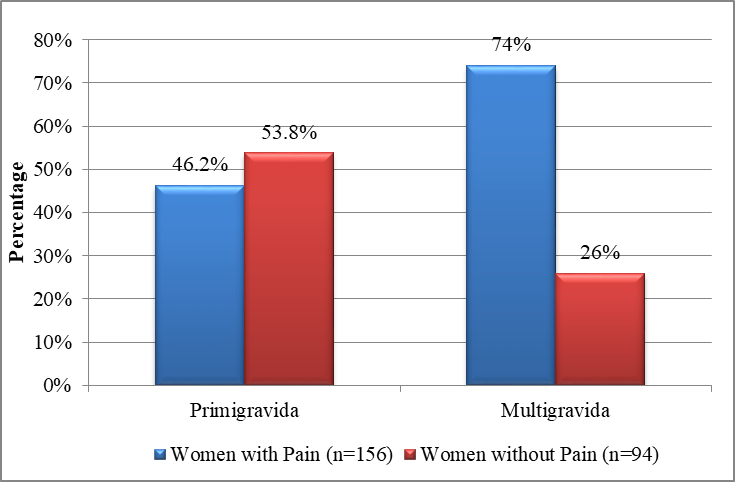
Figure 1: Distribution of Pregnancy-Associated Low Back Pain and Pelvic Girdle Pain According to Parity
Pregnancy-associated low back pain and pelvic girdle pain were observed more frequently among multigravida women than primigravida women, suggesting that multiparity is associated with a higher prevalence of pregnancy-associated low back pain and pelvic girdle pain in the study population.
DISCUSSION:
The present study demonstrated that 62.4% of pregnant women experienced pregnancy-associated low back pain (LBP) and/or pelvic girdle pain (PGP), indicating that lumbopelvic pain remains one of the most common musculoskeletal complaints during pregnancy. The prevalence observed in the present study is comparable with findings from recent systematic reviews and observational studies, which have reported that pregnancy-related LBP and PGP affect a substantial proportion of pregnant women and are associated with reduced mobility, impaired functional capacity, and poorer quality of life [7,8].
Maternal age was significantly associated with the occurrence of pregnancy-related pain in the present study. Women aged more than 30 years showed a higher prevalence of LBP and PGP than younger women. In addition, a previous history of low back pain was significantly associated with the development of pregnancy-related pain. Similar findings have been reported in recent systematic reviews, which identified advanced maternal age and pre-existing back pain as important predictors for the occurrence and persistence of lumbopelvic pain during and after pregnancy [9,10].
Multiparity was another significant maternal risk factor identified in this study. Multigravida women experienced pregnancy-associated pain more frequently than primigravida women, possibly because repeated pregnancies expose the lumbar spine and pelvic joints to cumulative biomechanical stress, ligamentous laxity, and reduced muscular support. Recent evidence has also highlighted parity as an important determinant of pregnancy-related pelvic girdle pain and its persistence beyond childbirth [8].
Higher body mass index and advancing gestational age were independently associated with pregnancy-associated LBP and PGP. Maternal weight gain, altered posture, increased lumbar lordosis, and progressive fetal growth increase mechanical loading of the lumbopelvic region, particularly during the third trimester. These findings are consistent with recent observational studies and systematic reviews demonstrating that overweight women and those in late pregnancy are more likely to experience pregnancy-related musculoskeletal pain [8,11].
The findings of the present study emphasize the importance of routine screening for pregnancy-associated LBP and PGP during antenatal care. Early identification of women at increased risk, together with appropriate counselling regarding posture, supervised exercise, ergonomic modifications, and physical activity, may reduce pain severity and improve maternal functional status. Recent evidence supports the effectiveness of exercise-based interventions and preventive strategies in improving pregnancy-related lumbopelvic pain and quality of life [7,11,12].
CONCLUSION:
Pregnancy-associated low back pain and pelvic girdle pain were highly prevalent among pregnant women in the present study, affecting nearly two-thirds of the participants. Advanced maternal age, multiparity, higher body mass index, third-trimester pregnancy, and a previous history of low back pain were identified as significant maternal risk factors. Early recognition of women at increased risk during routine antenatal care may facilitate timely counselling, appropriate exercise-based interventions, and ergonomic advice to reduce pain severity and improve maternal functional status. Incorporating screening for pregnancy-related musculoskeletal pain into standard antenatal practice may enhance maternal well-being and quality of life throughout pregnancy.
REFERENCES:
1. Wuytack F, Daly D, Curtis E, Begley C. Prognostic factors for pregnancy-related pelvic girdle pain, a systematic review. Midwifery. 2018 Nov;66:70-78. doi: 10.1016/j.midw.2018.07.012.
2. Wiezer M, Hage-Fransen MAH, Otto A, Wieffer-Platvoet MS, Slotman MH, Nijhuis-van der Sanden MWG, et al. Risk factors for pelvic girdle pain postpartum and pregnancy related low back pain postpartum; a systematic review and meta-analysis. Musculoskelet Sci Pract. 2020 Aug;48:102154. doi: 10.1016/j.msksp.2020.102154.
3. Shi Z, Yan F, Lu Y, Liu W, Wang Z, Zhang H. Pregnancy-related low back/pelvic girdle pain: Prevalence, severity, and risk factors in Zhengzhou, China. J Back Musculoskelet Rehabil. 2023;36(4):895-902. doi: 10.3233/BMR-220147.
4. Kandru M, Zallipalli SN, Dendukuri NK, Linga S, Jeewa L, Jeewa A, et al. Effects of Conventional Exercises on Lower Back Pain and/or Pelvic Girdle Pain in Pregnancy: A Systematic Review and Meta-Analysis. Cureus. 2023 Jul 17;15(7):e42010. doi: 10.7759/cureus.42010.
5. Burani E, Marruganti S, Giglioni G, Bonetti F, Ceron D, Cozzi Lepri A. Predictive Factors for Pregnancy-Related Persistent Pelvic Girdle Pain (PPGP): A Systematic Review. Medicina (Kaunas). 2023 Dec 5;59(12):2123. doi: 10.3390/medicina59122123.
6. Salari N, Mohammadi A, Hemmati M, Hasheminezhad R, Kani S, Shohaimi S, et al. The global prevalence of low back pain in pregnancy: a comprehensive systematic review and meta-analysis. BMC Pregnancy Childbirth. 2023 Dec 2;23(1):830. doi: 10.1186/s12884-023-06151-x.
7. Sánchez-Polán M, Nagpal TS, Zhang D, Silva-Jose C, Montejo R, Barakat R. The Influence of Physical Activity during Pregnancy on Maternal Pain and Discomfort: A Meta-Analysis. J Pers Med. 2023 Dec 28;14(1):44. doi: 10.3390/jpm14010044.
8. Ceprnja D, Chipchase L, Fahey P, Liamputtong P, Gupta A. Prevalence and Factors Associated with Pelvic Girdle Pain During Pregnancy in Australian Women: A Cross-Sectional Study. Spine (Phila Pa 1976). 2021 Jul 15;46(14):944-949. doi: 10.1097/BRS.0000000000003954.
9. Ahlqvist K, Bjelland EK, Pingel R, Schlager A, Peterson M, Olsson CB, et al. Generalized joint hypermobility and the risk of pregnancy-related pelvic girdle pain: Is body mass index of importance?-A prospective cohort study. Acta Obstet Gynecol Scand. 2023 Oct;102(10):1259-1268. doi: 10.1111/aogs.14664.
10. Robinson HS, Vøllestad NK, Bennetter KE, Waage CW, Jenum AK, Richardsen KR. Pelvic girdle pain in pregnancy and early postpartum - prevalence and risk factors in a multi-ethnic cohort. BMC Musculoskelet Disord. 2024 Jan 2;25(1):21. doi: 10.1186/s12891-023-07135-w.
11. Shanshan H, Liying C, Huihong Z, Yanting W, Tiantian L, Tong J, et al. Prevalence of lumbopelvic pain during pregnancy: A systematic review and meta-analysis of cross-sectional studies. Acta Obstet Gynecol Scand. 2024 Feb;103(2):225-240. doi: 10.1111/aogs.14714. Epub 2023 Nov 23.
12. Byberg R, Marie Mjølsnes I, Dalen I, Inger Økland, Marie Gausel A. Associations of physical activity and weight gain during pregnancy with pregnancy-related pelvic girdle pain intensity - A retrospective cohort study. Sex Reprod Healthc. 2024 Sep;41:101008. doi: 10.1016/j.srhc.2024.101008.