Comparison of Short-Term Memory Performance Before and After Audio-Visual Tasks.
- Amera Anjum Saifee , Senior Resident, Department of Physiology, ESIC, Medical College & Hospital, Sanath Nagar, Hyderabad (TS), 500 0181
- Dr. Prajwal Toragal , Assistant Professor, Department of Physiology, KLE Jagadguru Gangadhar Mahaswamigalu Moorusavirmath Medical college & Hospital, Hubli, KLE academy of Higher Education and Research, deemed to be University, Belagavi, Karnataka, India-590 010
- Sumit Ourasang , Assistnt Professor, Department of Pharmacology, KLE Jagadguru Gangadhar Mahaswamigalu Moorusavirmath medical college and Hospital, Hubli, KLE academy of Higher Education and Research, deemed to be University, Belagavi, Karnataka, India-590010
Article Information:
Abstract:
Background: Short-term memory is essential for learning and immediate recall. Audio-visual encoding, including chunking and mental association, may improve memory by engaging multiple sensory modalities. This study compared short-term memory performance before and after audio-visual encoding tasks among medical students. A comparative study was conducted among 144 healthy MBBS students aged 18–25 years at the Department of Physiology, Bidar Institute of Medical Sciences, Karnataka. Participants underwent auditory word recall, auditory digit span, visual- word recall, object recall, and picture recall tests. After baseline assessment, students received 30 minutes of training in chunking and mental association. Pre- and post-training scores were compared using paired t-test, one-way ANOVA, and Tukey’s post hoc test. Significant improvements occurred in all memory tasks (p<0.01). Auditory word recall increased from 8.95 ± 0.64 to 13.53 ± 0.28, and digit span from 9.28 ± 0.64 to 15.27 ± 0.42. Visual word, object, and picture recall also improved significantly. Digit span showed Marked memory retention, while object recall exceeded word and picture recall. Audio-visual encoding strategies improved short-term memory. Chunking and mental association may support medical education and cognitive training.
Keywords:
Article :
INTRODUCTION:
Short-term memory, often referred to as primary or active memory, is the cognitive system responsible for holding 7 ± 2 bits of information in an accessible state for brief periods of time (1). Its duration typically ranges from 20 to 30 seconds, unless information is actively rehearsed or encoded into long-term memory (2). The efficiency of short-term memory is influenced by encoding strategies, which determine how sensory inputs are processed and retained (3,4). Among these strategies, audio-visual encoding has gained attention for its ability to engage multiple sensory modalities, thereby enhancing comprehension and recall (5,6). Audio-visual tasks, which integrate auditory and visual stimuli, provide learners with a dynamic and interactive method of encoding information.
This multi-sensory approach is believed to strengthen memory traces and reduce the likelihood of rapid decay, as repetition and dual coding in multimedia presentations enhance retention (7). Spatial and modality-specific working memory systems have been shown to process auditory and visual information through distinct but interacting pathways (8). The present study aims to compare short-term memory performance before and after exposure to audio-visual tasks, thereby evaluating the effectiveness of such interventions in improving memory retention. By employing standardized memory tests, including auditory digit span and visual recognition tasks, the research seeks to quantify changes in memory capacity and accuracy (9). The comparative analysis will highlight whether audio-visual encoding produces measurable improvements in short-term memory performance. The findings are expected to contribute to the understanding of how multi-sensory learning strategies can be applied to enhance cognitive functions (2,6). This study reinforces the importance of encoding methods in memory processes and provides evidence for the practical application of audio-visual tasks in educational and cognitive training contexts (10,11).
MATERIALS AND METHODS:
This study was carried out in the Department of Physiology, Bidar Institute of Medical Sciences, Bidar, Karnataka, with 144 healthy medical students aged 18–25 years as participants. Subjects were screened through demographic data, medical history, and clinical examination to exclude neuropsychiatric disorders, hearing or visual impairment, head injury, or drug use affecting cognition. Only right-handed students proficient in English were included.
Participants signed informed consent forms, and testing was conducted in the forenoon after breakfast. Short-term memory (STM) was assessed using both auditory and visual tasks. Auditory tasks comprised a Word Recall Test (six trials of 15 familiar words) and a Digit Span Test (sequences of 2–9 digits). Visual tasks included a Word Test, Object Test (tray of vegetables), and Picture Test (fruit photographs), each presented for 30 seconds followed by immediate recall.
After initial testing, students received 30 minutes of training in encoding methods: chunking (grouping items into meaningful clusters) and mental association (linking items by similarity or purpose). Post-testing was conducted using the same tasks, with participants asked to record both recalled items and the encoding method used.
Scoring was uniform: one point for each correct recall, zero for incorrect. Pre-test and post-test scores were compared across all tasks to determine improvements in STM performance. This comparative design allowed evaluation of the effectiveness of audio-visual encoding strategies in enhancing short-term memory retention.
Statistical Analysis
All data from 144 participants was compiled using a structured proforma, entered into MS Excel, and analyzed with SPSS version 24.0 (IBM, USA). Quantitative variables were expressed as mean ± SD, while qualitative data was presented as percentages and proportions. Pre-test and post-test scores for auditory and visual tasks were compared using the paired t-test, enabling assessment of whether audio-visual tasks produced significant improvements in short-term memory performance. Descriptive statistics, including mean, SD, and SEM, were calculated for each variable. To compare performance across multiple tasks (word recall, object recognition, picture recognition, digit span), one-way ANOVA was employed. If ANOVA results were significant, Post Hoc Tukey’s HSD test was applied to determine pairwise differences. The sample size of 144 was determined using Statulator software, providing 80% power to detect a mean difference of 2 with SD of 8.5 at α=0.05 for a two-sided paired t-test design. Statistical significance was set at p<0.05, with p<0.001 considered highly significant. This comparative analysis provided a robust framework to evaluate improvements in short-term memory performance before and after audio-visual tasks.
RESULTS:
Comparative analysis across auditory and visual tasks revealed highly significant improvements in short-term memory following encoding training, consistent with previous reports on repetition learning in visual and auditory materials (9) and chunking as a rational strategy for data compression in visual working memory (10).
Pre-test analysis (Table 8, figure 6) revealed significant differences across auditory and visual tasks (F = 244.55, p < 0.01). Visual-object recall (Mean = 9.43 ± 0.39) showed the highest baseline performance, while visual-word recall (Mean = 7.72 ± 0.56) was the weakest. Physiologically, object recognition engages occipital and temporal regions with strong semantic associations, whereas visual-word recall requires orthographic-to-phonological conversion, increasing cognitive load. Auditory-digit span (Mean = 9.28 ± 0.64) relied on the phonological loop for rehearsal but lacked semantic anchors.
Overall, visual memory tasks demonstrated stronger baseline performance than auditory memory tasks, as visual encoding benefits from dual coding (image + meaning) and recognition pathways, while auditory memory depends on transient phonological storage that decays quickly without rehearsal.
Post-test analysis (Table 10 , figure 8) revealed highly significant improvements across all auditory and visual tasks following the application of memory encoding methods (F = 790.64, p < 0.01). Auditory word recall increased from 8.95 ± 0.64 to 13.53 ± 0.28 (p<0.01), while digit span rose from 9.28 ± 0.64 to 15.27 ± 0.42 (p<0.01), supporting the role of semantic encoding and active maintenance in primary memory (3,4). Among visual tasks, word recall improved from 7.72 ± 0.56 to 12.71 ± 0.62 (p<0.01), object recall from 9.43 ± 0.39 to 14.45 ± 0.46 (p<0.01), and picture recall from 8.33 ± 0.46 to 13.18 ± 0.34 (p<0.01), in line with findings on dual coding and multimedia learning benefits
Post hoc comparisons (Table 11) showed that object recall remained superior to word and picture recall, while digit span demonstrated substantial improvement, highlighting the effectiveness of chunking strategies in auditory memory.
Table 1: Age wise distribution of subjects
|
Age in year |
N |
% |
|
18 |
28 |
19.4 |
|
19 |
22 |
15.3 |
|
20 |
22 |
15.3 |
|
21 |
22 |
15.3 |
|
22 |
20 |
13.9 |
|
23 |
12 |
8.3 |
|
24 |
12 |
8.3 |
|
25 |
6 |
4.2 |
|
Total |
144 |
100 |
Table 2: Sex wise distribution of subjects
|
Gender |
N |
% |
|
Male |
72 |
50 |
|
Female |
72 |
50 |
|
Total |
144 |
100 |
Table 3: Comparison of memory status before (Pre Test) and after (Post Test) application of memory encoding methods in auditory-word test
|
Test |
Before (Pre Test) Mean ± SD |
After (Post Test) Mean ± SD |
Paired t test |
P value & significant |
|
Auditory-word test |
8.95 ± 0.64 |
13.53 ± 0.28 |
t = -79.58 |
p < 0.01; HS |
Table 4: Comparison of memory status before (Pre Test) and after (Post Test) application of memory encoding methods in auditory-digit span test
|
Test |
Before (Pre Test) Mean ± SD |
After (Post Test) Mean ± SD |
Paired t test |
P value & significant |
|
Auditory-Digit span test |
9.28 ± 0.64 |
15.27 ± 0.42 |
t = -94.9 |
p < 0.01; HS |
Table 5: Comparison of memory status before (Pre Test) and after (Post Test) application of memory encoding methods in visual-word test
|
Test |
Before (Pre Test) Mean ± SD |
After (Post Test) Mean ± SD |
Paired t test |
P value & significant |
|
Visual-word test |
7.72 ± 0.56 |
12.71 ± 0.62 |
t = -146.70 |
p < 0.01; HS |
Table 6: Comparison of memory status before (Pre Test) and after (Post Test) application of memory encoding methods in visual-object test
|
Test |
Before (Pre Test) Mean ± SD |
After (Post Test) Mean ± SD |
Paired t test |
P value & significant |
|
Visual-object test |
9.43 ± 0.39 |
14.45 ± 0.46 |
t = -98.32 |
p < 0.01; HS |
Table 7: Comparison of memory status before (Pre Test) and after (Post Test) application of memory encoding methods in visual-picture test
|
Test |
Before (Pre Test) Mean ± SD |
After (Post Test) Mean ± SD |
Paired t test |
P value & significant |
|
Visual-picture test |
8.33 ± 0.46 |
13.18 ± 0.34 |
t = -112.55 |
p < 0.01; HS |
Table 8: Comparison of auditory-word, auditory-digit span, visual-word, visual-object and visual-picture tests before application of memory encoding methods
|
Test |
Before (Pre Test) Mean ± SD |
F, p value & significant |
|
Auditory-word test |
8.95 ± 0.64 |
244.55, p < 0.01; HS |
|
Auditory-Digit span test |
9.28 ± 0.64 |
244.55, p < 0.01; HS |
|
Visual-word test |
7.72 ± 0.56 |
244.55, p < 0.01; HS |
|
Visual-object test |
9.43 ± 0.39 |
244.55, p < 0.01; HS |
|
Visual-picture test |
8.33 ± 0.46 |
244.55, p < 0.01; HS |
|
Total |
8.74 ± 0.84 |
244.55, p < 0.01; HS |
Table 9: Post Hoc Tukey’s HSD test (Pre Test)
|
Comparison |
Mean difference |
|
Auditory-Word vs Auditory-Digit Span |
-0.32* |
|
Auditory-Word vs Visual-picture |
0.62* |
|
Auditory-Word vs Visual-Word |
1.23* |
|
Auditory-Word vs Visual-Object |
-0.47* |
|
Auditory-Digit Span vs Visual-picture |
0.94* |
|
Auditory-Digit Span vs Visual-Word |
1.55* |
|
Auditory-Digit Span vs Visual-Object |
-0.15 |
|
Visual-picture vs Visual-Word |
0.6* |
|
Visual-picture vs Visual-Object |
-1.1* |
|
Visual-Word vs Visual-Object |
-1.71* |
* Indicates that the mean difference is significant at 0.05 level (p < 0.05).
Table 10: Comparison of auditory-word, auditory-digit span, visual-word, visual-object and visual-picture tests after application of memory encoding methods
|
Test |
After (Post Test) Mean ± SD |
F, p value & significant |
|
Auditory-word test |
13.53 ± 0.28 |
790.64, p < 0.01; HS |
|
Auditory-Digit span test |
15.27 ± 0.42 |
790.64, p < 0.01; HS |
|
Visual-word test |
12.71 ± 0.62 |
790.64, p < 0.01; HS |
|
Visual-object test |
14.45 ± 0.46 |
790.64, p < 0.01; HS |
|
Visual-picture test |
13.18 ± 0.34 |
790.64, p < 0.01; HS |
|
Total |
13.83 ± 1.02 |
790.64, p < 0.01; HS |
Table 11: Post Hoc Tukey’s HSD test (Post Test)
|
Comparison |
Mean difference |
|
Auditory-Word vs Digit Span |
-1.74* |
|
Auditory-Word vs Visual-picture |
0.34* |
|
Auditory-Word vs Visual-Word |
0.82* |
|
Auditory-Word vs Object |
-0.92* |
|
Digit Span vs Visual-picture |
2.08* |
|
Digit Span vs Visual-Word |
2.56* |
|
Digit Span vs Object |
0.81 |
|
Visual-picture vs Visual-Word |
0.47* |
|
Visual-picture vs Object |
-1.27* |
|
Visual-Word vs Object |
-1.74* |
* Indicates that the mean difference is significant at 0.05 level (p < 0.05).
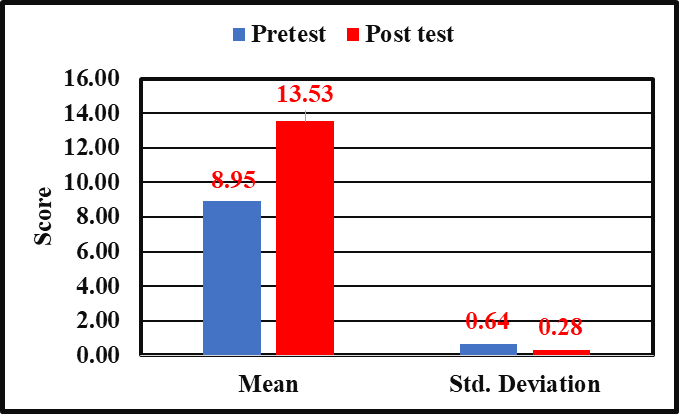
Figure-1: Graphical Representation of Memory Status Before and After Application of Memory Encoding Methods in Auditory word test
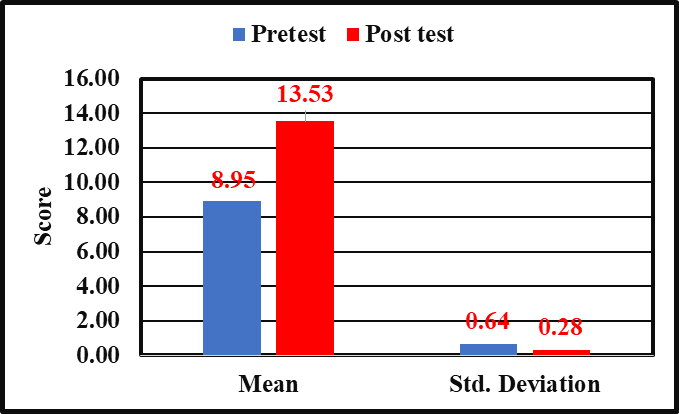
Figure 2: Graphical Representation of Memory Status Before and After Application of Memory Encoding Methods in Auditory-Digit Span Test.
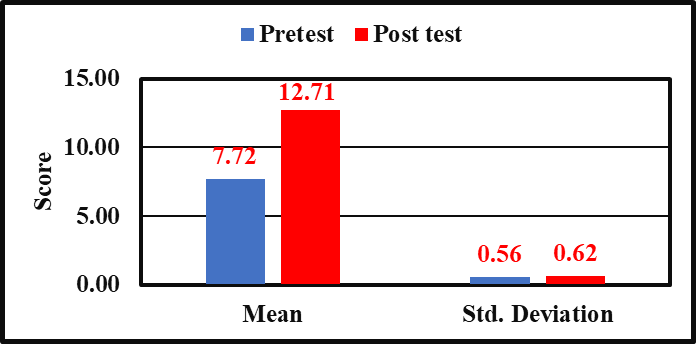
Figure 3: Graphical Representation of Memory Status Before and After Application of Memory Encoding Methods in Visual-Word Test.
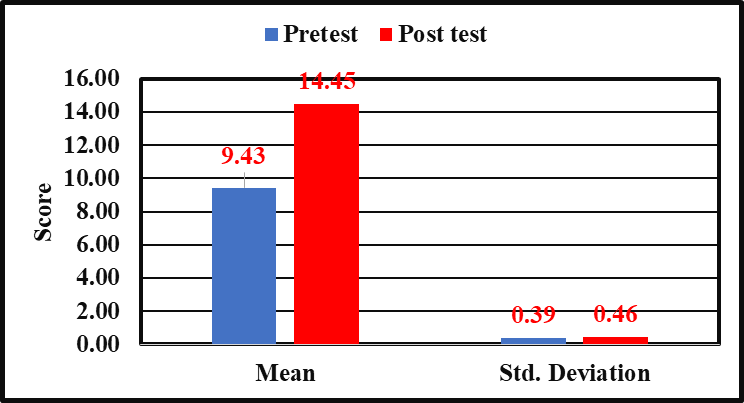
Figure 4: Graphical Representation of Memory Status Before and After Application of Memory Encoding Methods in Visual-Object Test.
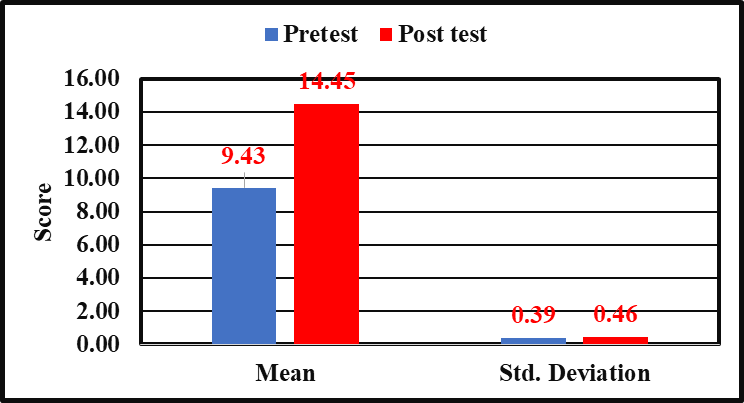
Figure 5: Graphical Representation of Memory Status Before and After Application of Memory Encoding Methods in Visual-Picture Test.
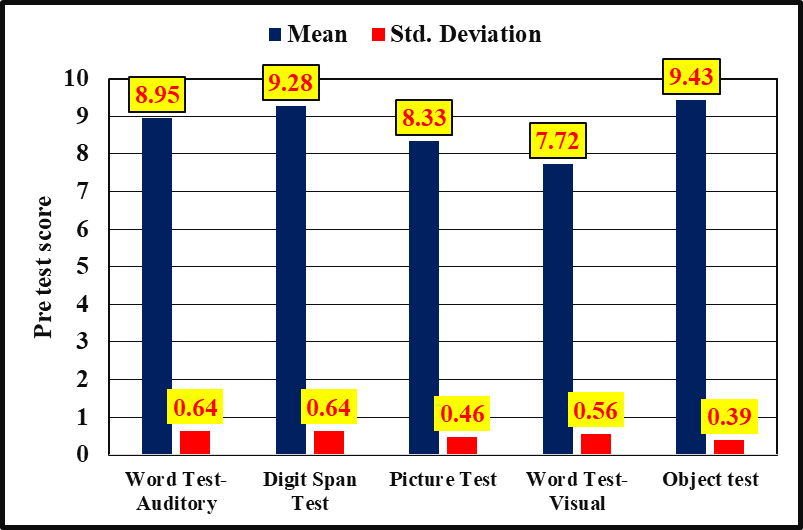
Figure 6: Graphical Representation of Pre-test Score Comparison in All the Groups.
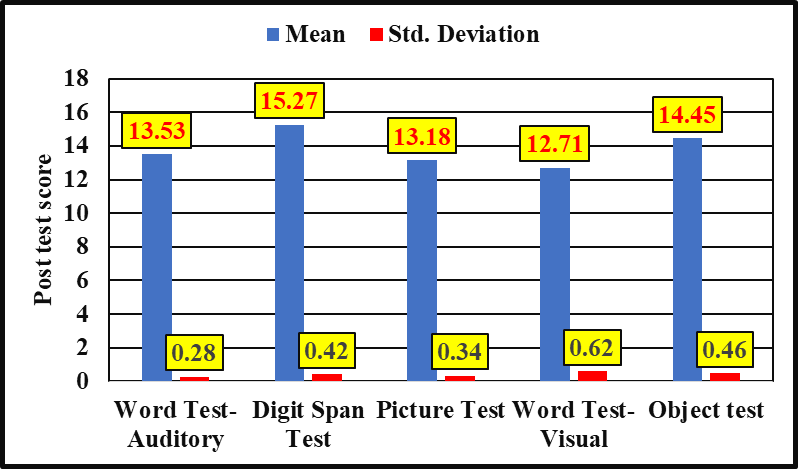
Figure 7: Graphical Representation of Post-test Score Comparison in All the Groups.
CONCLUSION:
This comparative study confirmed that audio-visual tasks significantly enhance short-term memory capacity across modalities. Pre- and post-test analysis revealed highly significant improvements (p<0.01) in auditory word recall, digit span, visual word recall, object recognition, and picture recognition. Among these, digit span and object recall produced the highest gain, in memory that structured encoding strategies such as chunking and association are particularly effective in tasks involving sequences or familiar categories.
Post hoc analysis highlighted that object recall was consistently superior to word and picture recall, likely due to the familiarity and concreteness of the stimuli. Gender differences were minimal, with females showing stronger performance in object recall and males in picture recall, though none reached statistical significance.
Visual memory demonstrated stronger baseline performance due to richer semantic and recognition pathways, whereas auditory memory showed dramatic post-test gains when encoding strategies were applied. These findings highlight the physiological interplay of phonological rehearsal, semantic anchoring, and dual coding mechanisms in enhancing memory performance across modalities
The results emphasize that short-term memory performance is not fixed but can be significantly improved through targeted interventions. Audio-visual encoding strategies engage multiple sensory pathways, reduce memory decay, and enhance recall accuracy. These findings support the integration of multi-sensory learning approaches into educational and cognitive training programs, particularly in medical education where rapid assimilation of information is critical. Furthermore, simple visual and auditory tasks can serve as bedside tools to assess memory status in healthy individuals and differentiate them from neurodegenerative conditions such as Alzheimer’s disease or Parkinson’s disease.
REFERENCES:
1. Miller, G. A. (1956). The magical number seven, plus or minus two: Some limits on our capacity for processing information. Psychological Review, 63(2), 81–97. https://doi.org/10.1037/h0043158
2. Cowan, N. (2008). What are the differences between long-term, short-term, and working memory? Progress in Brain Research, 169, 323–338.
3. Little, D. M., McGrath, L. M., Prentice, K. J., & Wingfield, A. (2006). Semantic encoding of spoken sentences: Adult aging and the preservation of conceptual short-term memory. Applied Psycholinguistics, 27(3), 487–511.
4. Unsworth, N., & Engle, R. W. (2007). The nature of individual differences in working memory capacity: Active maintenance in primary memory and controlled search from secondary memory. Psychological Review, 114(1), 104–132.
5. Mayer, R. E. (2009). Multimedia learning: Research and its applications. Educational Psychology Review, 21, 1–19.
6. Schroeder, N. L., & Cenkci, A. T. (2019). Spatial contiguity and spatial split-attention effects in multimedia learning environments: A meta-analysis. Educational Psychology Review.
7. Brunyé, T. T., Taylor, H. A., & Rapp, D. N. (2008). Repetition and dual coding in procedural multimedia presentations. Applied Cognitive Psychology, 22, 877–895.
8. Lehnert, G., & Zimmer, H. D. (2006). Auditory and visual spatial working memory. Memory & Cognition, 34(5), 1080–1090.
9. Page, M. P. A., Cumming, N., Norris, D., Hitch, G. J., & McNeil, A. M. (2006). Repetition learning in the immediate serial recall of visual and auditory materials. Journal of Experimental Psychology: Learning, Memory, and Cognition, 32(4), 716–733.
10. Nassar, M. R., Helmers, J. C., & Frank, M. J. (2018). Chunking as a rational strategy for lossy data compression in visual working memory. Psychological Review, 125(4), 486–511.
11. Norris, D., & Kalm, K. (2021). Chunking and data compression in verbal short-term memory. Cognition, 208, 104534.