Correlation of Severity of Stroke and HbA1C in Patients with Type 2 Diabetes.
- Dr. Chandan Kumar Nihala , Senior Resident, Department of Medicine, RUHS Jaipur.
- Dr. Megh Shyam , Senior Resident, Department of Medicine, SJP Medical College, Bharatpur.
- Dr. Vikram Singh Meena , Senior Resident, Department of Medicine, Medical College, Dausa.
Article Information:
Abstract:
Introduction: Type 2 diabetes affects about 220 million people worldwide, with an alarming number of new cases in Asia, and is a major risk factor for ischemic strokes. Furthermore, hyperglycemia, defined as high Glycated hemoglobin (HBA1C), is linked to a poor outcome in acute ischemic stroke. Aim: To investigate the relationship between HbA1C levels and the severity of stroke in diabetic patients. Methodology: Hospital based cross sectional observational study conducted at Medicine OPD, medicine wards of SMS hospital, Jaipur from July 2021 to November 2022 on 40 diabetic patients of Stroke. Results: In our study, patients with HbA1C levels greater than 10 had NIHSS scores of 5-15, 16-20, and 21, respectively. Patients with HbA1C levels 9.1-10, two with NIHSS scores 5-15, one with NIHSS score 16-20, and each. Patients with HbA1C levels 8.1-9 had NIHSS scores 1-4 and 16-20, respectively, while two had NIHSS scores 5-15. Patients with a HbA1c level of 7.18 had three NIHSS scores ranging from 16 to 20, and one NIHSS score. All three patients with HbA1c levels of 6.5-7 had an NIHSS score of 5-15. Patients with HbA1c levels < 6.5 had NIHSS scores of 1-4, 5-15, and 16-20. Thus, most patients with a better prognosis as determined by their lower NIHSS score had a lower HbA1C level, and most with a worse prognosis as per their higher NIHSS score had a higher HbA1c level. Pearson correlation between NIHSS severity score and HbA1C found r=0.479 with p value 0.001. Conclusion: Stroke severity is associated with glycemic control. Early identification and treatment of diabetes, including lifestyle modification and prevention, may lessen the development of stroke and its effects, as it provides a significant problem for health care providers dealing with an epidemic of both diabetes and stroke.
Keywords:
Article :
INTRODUCTION:
Diabetes mellitus affects about 200 million people worldwide [1]. across the last ten years, the prevalence of diabetes has almost doubled across Asia [2-3]. Currently, 5.3–13.6% of Indians have diabetes [2].
Stroke ranks third in terms of disability and is the second most common cause of death [4-5]. Diabetes mellitus is linked to poor patient outcomes and has been shown to be a risk factor for stroke [6]. Diabetics have a 1.5–3 times increased risk of stroke than people without the disease [7-8].
Diabetics have a distinct stroke pattern than non-diabetics. Diabetes dramatically raises the risk of stroke in both women and younger individuals [9]. According to a study, patients with small vessel cerebrovascular accidents had a significantly higher prevalence of diabetes (35.5%) than patients with cardio-embolic stroke (28.1%), large vessel atherosclerosis (29.0%), or other combined aetiologies of stroke (9.4%) [10].
The significance of the predictive value of glycated hemoglobin (HbA1C) has received attention in recent years due to the rising incidence of diabetes and ischemic stroke among Asians [11-12].
Research revealed that stroke in diabetic individuals differed from stroke in non-diabetics in a number of ways [13]. There is a dearth of Indian data, despite the fact that this issue has been extensively researched abroad. Thus, the goal of the current study is to determine the degree of stroke in diabetics in relation to HBA1C in the Indian population. By enhancing glycaemic management, this will help develop a more effective primary prevention strategy for stroke in the diabetic population.
Aim- To assess the association of HbA1C level on the severity of stroke in diabetic patients.
METHODOLOGY :
Hospital based cross sectional observational study conducted at Medicine OPD, medicine wards of SMS hospital, Jaipur from July 2021 to November 2022 on 40 diabetic patients of Stroke.
Statistical analysis- Qualitative data is presented as percentage & proportion. Quantitative data was presented as mean & SD. Appropriate statistical test like chi square test, spearman correlation test were used to determine association.
P value less than 0.05 is taken as significant.
Inclusion Criteria
Type 2 diabetic patients with features of new onset stroke
Exclusion Criteria
Patients with
• History of stroke
• Subdural haematoma / space occupying lesion/aneurismal rupture/head injury
• Drug induced focal deficit (anticoagulants)
• Transient ischaemic attack (TIA)
Methodology- The study covered all stroke patients who met the inclusion criteria. Basic investigative reports and radiological findings were recorded using a semi-structural data gathering proforma. Patients with HbA1C > 6.5% and diabetic patients on medication even with HbA1c < 6.5% were included in the study population after the HbA1C value was determined following the confirmation of stroke via radiologic evaluation. Other risk variables were identified, including age, sex, smoking, dyslipidemia, hypertension, ischemic heart disease, and prior cerebrovascular accidents. The National Institutes of Health Stroke Scale (NIHSS) score at the time of presentation was used to determine the severity of the stroke.
RESULTS:
Table 1: Age distribution of patients
|
Age |
Number of patients |
Percentage |
|
30-40 |
4 |
10 |
|
41-50 |
3 |
7.5 |
|
51-60 |
10 |
25 |
|
61-70 |
13 |
32.5 |
|
71-80 |
6 |
15 |
|
81-90 |
4 |
10 |
|
Total |
40 |
100 |
|
Mean ±SD |
62.42±14 |
.46 |
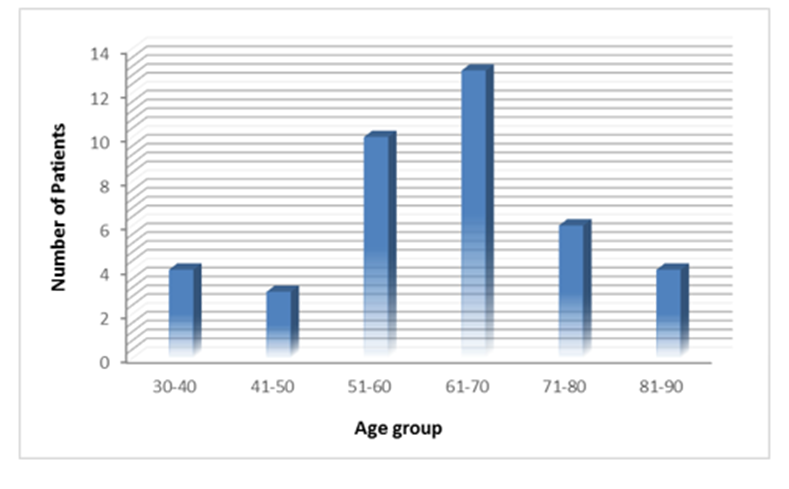
Fig 1: Age distribution of patients
Table 2: Gender wise distribution of patients
|
Gender |
Number of patients |
Percentage |
|
Male |
25 |
62.5 |
|
Female |
15 |
37.5 |
|
Total |
40 |
100 |
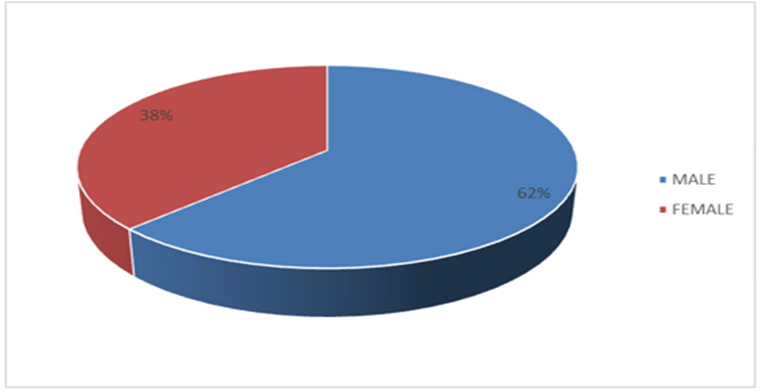
Fig 2: Gender wise distribution of patients
Table 3: Correlation of HbA1c with NIHSS score
|
Serum HbA1c |
0 |
1-4 |
5-15 |
16-20 |
>21 |
TOTAL |
|
>10.0 |
- |
- |
2 |
3 |
3 |
8 |
|
9.1--10 |
- |
- |
2 |
1 |
1 |
4 |
|
8.1-9 |
- |
1 |
2 |
1 |
2 |
6 |
|
7.1-8 |
- |
- |
- |
3 |
1 |
4 |
|
6.5-7 |
- |
- |
3 |
- |
- |
3 |
|
<6.5 |
- |
5 |
7 |
3 |
- |
15 |
|
Total |
- |
6 |
16 |
11 |
7 |
40 |
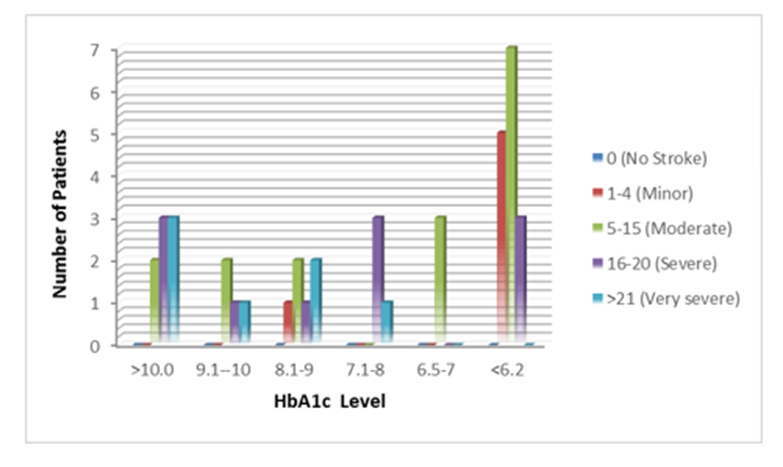
Fig 3: Correlation of HbA1c with NIHSS score
Table 4: Correlation of HbA1c with NIHS
|
NIHSS |
HbA1c |
|
|
r |
0.479 |
|
|
P-value |
0.001 |
|
Here we calculated Pearson correlation between NIHSS severity score and HbA1c and found r=0.469 with p value 0.001.
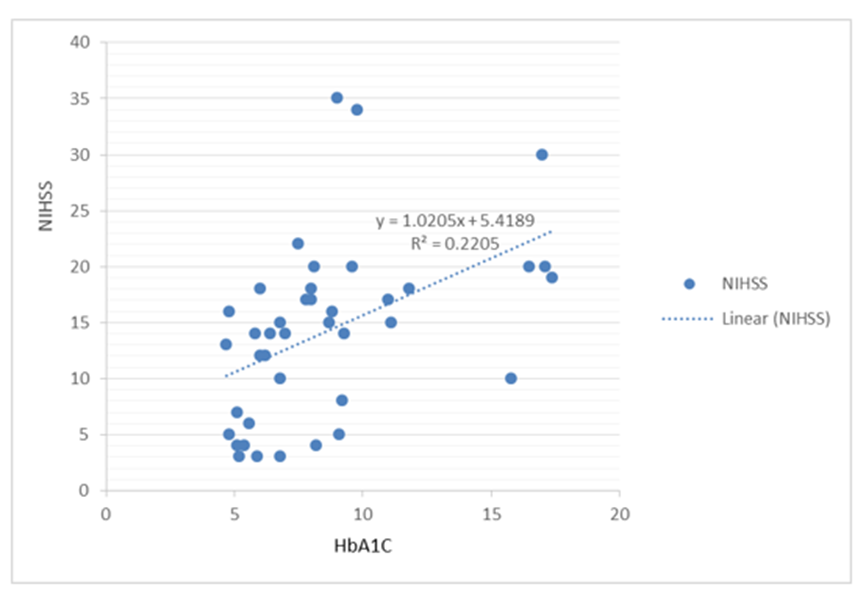
Fig 4: Correlation of HbA1c with NIHSS
DISCUSSION:
With a mean age of 62.42±14.46 years, the majority of patients (32.5%) in the current study were in the 61–70 age group, followed by 25% in the 51–60 age group. The mean age of stroke patients was 61.68±12.97 years, according to Patibandla et al.'s study [14], which is in line with the current study's findings. Similarly, K Ghanachandra Singh et al. [15] found that people in the 51–60 age range have a higher risk of stroke. Compared to their younger counterparts (those under 60), older people over 60 had a greater risk of having a stroke [16].
The male to female ratio in the current study was 1.7:1, with 62.5% of participants being men and 37.5% being women. In a similar vein, Patibandla et al. [14] discovered that of 60 stroke patients, 41 (68%) were men and 19 (32%) were women, with a male to female ratio of 2.1:1. In a similar vein, Sunanda et al. [17] discovered that 94 out of 130 stroke patients were male, making up 72.3% of the research group.
These results are similar with earlier research by Boehme et al. [18] and Kamalakannan, S. et al. [19], which found that stroke was more common among older individuals and men.
Differences in sex steroid hormones, particularly estrogen hormone, may account for sex-related variations in stroke [20]. While testosterone hormone in men causes endothelial constriction and reduces blood flow, estradiol in women has powerful dilatation effects on the vascular endothelium and increases blood flow [21].
In the current study, there are statistically significant differences between the severity of ischemic stroke as indicated by the NIHSS score and variation in HBA1C; that is, most patients with a better prognosis as indicated by their lower NIHSS score had a lower HbA1C level, and most patients with a worse prognosis as indicated by their higher NIHSS score had a higher HbA1C level.
Higher blood HbA1C levels are associated with more severe neurological impairment and a worse prognosis after three months, according to research by Kizer et al. [22].
In individuals with acute ischemic stroke, HbA1C levels may be a significant predictor of neurological damage. Blood vessel damage results from long-term blood glucose increase. Because they are not dependent on insulin, the endothelial cells lining the blood vessels absorb more glucose than usual. This results in the formation of more surface glycoproteins, thickening and weakening of the basement membrane, and microvascular complications (caused by damage to small blood vessels) and macrovascular complications (caused by damage to arteries). Research indicates that hyperglycemia is linked to a higher risk of stroke [23].
According to Kamouchi et al [24], greater blood HbA1C levels lead to more severe neurological damage. Patibandla et al. [14] discovered a correlation, or link, between serum Hb1AC levels and NIHSS scores, demonstrating a linear relationship between increases in NIHSS score and increases in HbA1C.
Garg et al. [25] proposed that hyperglycemia after stroke had a negative impact on the clinical course of ischemic stroke and was related with an increase in infarct volume due to neurotoxicity. Similar findings were reported by Ahmed Hussein et al [26], who discovered that hyperglycemia at the time of admission impacts the severity of stroke.
CONCLUSION:
Stroke severity is linked to glycemic control. Early identification and treatment of diabetes, including lifestyle modification and prevention, may lessen the development of stroke and its complications, which provides a significant problem for health care providers dealing with a diabetes and stroke epidemic.
REFERENCES:
1. Wild S, Roglic G, Green A, Sicree R, King H. Global prevalence of diabetes: estimates for the year 2000 and projections for 2030. Diabetes Care. 2004;27(5):1047-53.
2. Qureshi MS, Iqbal M, Nomani AZ. Rapidly increasing prevalence and associations of diabetes mellitus in a rural community of Pakistan. J Diabetol 2014;3:3. http://www.journalofdiabetology.org.
3. American Diabetes Association. Diagnosis and classification of diabetes mellitus. Diabetes Care 2011;34(Suppl 1):S62–9.
4. de Vegt F, Dekker JM, Ruhé HG, et al. Hyperglycaemia is associated with all-cause and cardiovascular mortality in the Hoorn population: the Hoorn Study. Diabetologia 1999;42:926–3.
5. Lozano R, Naghavi M, Foreman K, Lim S, Shibuya K, Aboyans V, et al. Global and regional mortality from 235 causes of death for 20 age groups in 1990 and 2010: a systematic analysis for the global burden of disease study 2010. Lancet. 2012;380(9859):2095-128.
6. Selvin E, Coresh J, Shahar E, et al. Glycaemia (haemoglobin A1c) and incident ischaemic stroke: the Atherosclerosis Risk in Communities (ARIC) Study. Lancet Neurol 2005;4:821–6.
7. HuGC,Hsieh SF, Chen YM, et al. Relationship of initial glucose level and all-cause death in patients with ischaemic stroke: the roles of diabetes mellitus and glycated hemoglobin level. Eur J Neurol 2012;19:884–91.
8. Kissela BM, Khoury J, Kleindorfer D, Woo D, Schneider A, Alwell K, et al. Epidemiology of ischemic stroke in patients with diabetes: the greater cincinnati/northern kentucky stroke study. Diabetes Care. 2005;28(2):355-9.
9. Mulnier HE, Seaman HE, Raleigh VS, Muthu SS, Colhoun HM, Lawrenson RA, et al. Risk of stroke in people with type 2 diabetes in the UK: a study using the general practice research database. Diabetologia. 2006;49(12):2859-65.
10. Grau AJ, Weimar C, Buggle F, Heinrich A, Goertler M, Neumaier S, et al. Risk factors, outcome, and treatment in subtypes of ischemic stroke: the german stroke data bank. Stroke. 2001;32(11):2559- 66.
11. Pradhan AD, Rifai N, Buring JE, et al. Hemoglobin A1c predicts diabetes but not cardiovascular disease in nondiabetic women. Am J Med 2007;120:720–7.
12. Park S, Barrett-Connor E, Wingard DL, et al. GHb is a better predictor of cardiovascular disease than fasting or postchallenge plasma glucose in women without diabetes. The Rancho Bernardo Study. Diabetes Care 1996;19:450–6.
13. Megherbi SE, Milan C, Minier D, Couvreur G, Osseby GV, Tilling K, et al. Association between diabetes and stroke subtype on survival and functional outcome 3 months after stroke: data from the European BIOMED stroke project. Stroke. 2003;34(3):688-94.
14. Patibandla S, Appikatla T, Jayasingh K. Study of the severity of stroke at the time of presentation in diabetic patients correlating with glycemic control. Int J Adv Med 2017;4:396-400.
15. Patibandla S, Appikatla T, Jayasingh K. Study of the severity of stroke at the time of presentation in diabetic patients correlating with glycemic control. Int J Adv Med 2017;4:396-400.
16. Das, S. K. et al. Prevalence of major neurological disorders among geriatric population in the metropolitan city of Kolkata. J. Assoc. Phys. India 56, 175–181 (2008).
17. Sunanda T, Kumar NSS, Reddy PA, Vallampalli G, Prasad PNS 2016 Role of HbA1c at Admission on Severity and Functional Outcome of Ischemic Stroke in Patients with Diabetes Mellitus. J Neurol Neurophysiol 7:377.
18. Boehme, A. K., Esenwa, C. & Elkind, M. S. V. Stroke risk factors, genetics, and prevention. Circ. Res. 120, 472–495 (2017).
19. Kamalakannan, S. et al. Incidence and prevalence of stroke in India: A systematic review. Indian J. Med. Res. 146, 175–185 (2017).
20. Reeves MJ, Bushnell CD, Howard G, et al. Sex differences in stroke: epidemiology, clinical presentation, medical care, and outcomes. Lancet Neurol. 2008;7(10):915–926. doi: 10.1016/S1474-4422(08)70193-5 [DOI] [PMC free article] [PubMed] [Google Scholar]
21. Krause DN, Duckles SP, Pelligrino DA. Influence of sex steroid hormones on cerebrovascular function. J Appl Physiol. 2006;101(4):1252–1261. doi: 10.1152/japplphysiol.01095.2005 [DOI] [PubMed] [Google Scholar]
22. Kizer JR, Wiebers DO, Whisnant JP, Galloway JM, Welty TK, Lee ET, et al. Glycemic level and future stroke in type 2 diabetes mellitus: the strong heart study. Circulation. 2006;114(18):444.
23. Dallas, John (2011). "Royal College of Physicians of Edinburgh. Diabetes,Doctors and Dogs:An exhibition on 221 Diabetes and Endocrinology by the College Library for the 43rd St. Andrew's Day Festival Symposium.
24. Kamouchi M, Matsuki T, Hata J, Kuwashiro T, Ago T, Sambongi Y, et al. Prestroke glycemic control is as- sociated with the functional outcome in acute ische- mic stroke: the Fukuoka Stroke Registry. Stroke 2011; 42:2788-94.
25. Garg R, Chaudhuri A, Munschauer F, Dandona P. Hyperglycemia, insulin, and acute ischemic stroke: a mechanistic justification for a trial of insulin infusion therapy. Stroke 2006;37:267-73.
26. Ahmed Hussein Abo El Fotoh El Weshahy et al. post stroke hyperglycemia as a marker of stroke severity and prognosis. Cairo University 2012.
27. Hjalmarsson C, Manhem K, Bokemark L, Andersson B. The role of prestroke glycemic control on severity and outcome of acute ischemic stroke. Stroke Res Treat. 2014;2014:694569. doi: 10.1155/2014/694569. Epub 2014 Sep 8.