Evaluating Interleukin-6 levels in relation to Body Mass Index and Lipid Profiles in Overweight and Obese individuals in Tertiary care Hospital.
- Jyothsna Vemu , Assistant Professor, Department of General Medicine, Rangaraya Medical College, Kakinada, Andhra Pradesh, India.
- Bonthu Mamatha Bharathi , Assistant Professor, Department of General Medicine, Rangaraya Medical College, Kakinada, Andhra Pradesh, India.
- Vinoda Kadali , Associate Professor, Department of General Medicine, Government Medical College, Rajamahendravaram, Andhra Pradesh, India.
- Bikkina Sreedevi , Assistant Professor, Department of General Medicine, Rangaraya Medical College, Kakinada, Andhra Pradesh, India.
- Shanthi Pulavarthi , Senior Resident, Department of Community Medicine, NRI Institute of Medical Sciences, Visakhapatnam, Andhra Pradesh, India.
Article Information:
Abstract:
Background: Obesity is a chronic low-grade inflammatory condition associated with metabolic abnormalities and increased cardiovascular risk. Interleukin-6 (IL-6), a pro-inflammatory cytokine secreted by adipose tissue has been implicated in obesity-related inflammation. Methods: A hospital-based cross-sectional study was conducted among 90 adults attending a tertiary care hospital. Participants were equally categorized into normal-weight, overweight and obese groups (30 each) according to WHO BMI criteria. Serum IL-6 levels were measured using enzyme-linked immunosorbent assay (ELISA) and lipid profile parameters were estimated. Kruskal–Wallis and Spearman correlation tests were used for statistical analysis. Results: Median serum IL-6 levels increased significantly across BMI categories, from 6.94pg/mL in normal-weight individuals to 16.10 pg/mL in overweight and 31.05 pg/mL in obese participants ( p <0.001). Post hoc analysis showed significantly higher IL-6 levels in overweight and obese groups than in normal-weight individuals. Elevated triglycerides and VLDL were observed in 56.7% of participants, while 94.4% had low HDL cholesterol. IL-6 demonstrated a weak but significant positive correlation with triglyceride levels, whereas correlations with other lipid parameters were not statistically significant. Conclusion: Serum IL-6 levels increase progressively with increasing BMI and are positively associated with triglyceride levels, supporting its role as a biomarker of obesity-related systemic inflammation. These findings reinforce the inflammatory basis of obesity and indicate that IL-6 may aid in identifying individuals at increased cardiometabolic risk.
Keywords:
Article :
INTRODUCTION:
|
|
This article is an open access article distributed under the terms and conditions of the Creative Commons Attribution (CC-BY) license (http://creativecommons.org/licenses/by/4.0/). |
INTRODUCTION
Obesity is a major global public health challenge, strongly associated with metabolic disorders, cardiovascular disease, type 2 diabetes, and premature mortality. In India, the prevalence of overweight and obesity has risen sharply due to urbanization, sedentary lifestyles, and dietary changes [1].
Obesity is now recognized not merely as excess fat storage but as a state of chronic low-grade inflammation. Adipose tissue functions as an endocrine organ, releasing cytokines and adipokines that influence systemic metabolism. Among these mediators, interleukin-6 (IL-6) has drawn particular attention. IL-6 is produced by adipocytes, macrophages, and endothelial cells, with adipose tissue contributing significantly to circulating IL-6 levels in obese individuals [2,3]. Early studies demonstrated raised IL-6 concentrations in obese patients and subsequent work confirmed increased IL-6 receptor activity in adipose tissue, highlighting enhanced inflammatory signaling in obesity [4,5].
Elevated IL-6 has been linked to insulin resistance, impaired glucose metabolism, and progression of metabolic disease [6-8]. Inflammation mediated by IL-6 is closely tied to lipid abnormalities. Obese individuals often present with dyslipidemia characterized by high triglycerides, elevated LDL cholesterol, and reduced HDL cholesterol. Chronic inflammation alters lipid metabolism, worsening cardiovascular risk [9]. Studying IL-6 alongside lipid parameters may therefore help explain mechanisms underlying obesity-related metabolic complications. Elevated IL-6 has been associated with obesity-related disturbances and may help identify individuals at higher cardiometabolic risk [10-12].
The present study was designed to evaluate serum IL-6 levels in overweight and obese South Indian adults and to examine their relationship with BMI and lipid profile parameters.
MATERIALS AND METHODS:
Study population: This hospital- based cross-sectional study included adult participants attending the outpatient department between March 2025 to January 2026. A total of 90 participants were included and categorized into three groups based on body mass index (BMI) according to WHO BMI criteria: normal weight group (BMI 18.5 – 24.9 kg/m ²), overweight group (BMI 25- 29.9 kg/m ²) and obese group (BMI ≥30 kg/m ²) with 30 participants in each group.
Adult subjects aged between 20 and 50 years and who were not following any special diet regimen were included in the study. Participants with severe infectious or inflammatory diseases, secondary causes of obesity, diabetes mellitus, malignancy, pregnancy, lactation, major systemic illnesses including hepatic, renal, rheumatologic and cardiovascular diseases and those receiving antihypertensive or hypolipidemic medications were excluded from the study.
After obtaining informed written consent, demographic and clinical details were collected using a predesigned proforma. Detailed medical history including comorbidities and medication history was recorded followed by clinical examination. Height and weight were measured using standard procedures and BMI was calculated as weight in kilograms divided by height in meters squared (kg/m ²).
Sample collection and Biochemical analysis: Venous blood samples were collected under aseptic precautions and immediately placed on ice. Serum was separated within 2 hours of collection and aliquots were stored at -80 °C until analysis. Serum IL-6 levels were measured using commercially available human enzyme linked immunosorbent assay (ELISA) kits supplied by Bioassay Technology Laboratory. Serum total cholesterol, triglycerides and high density lipoprotein cholesterol levels (HDL) were estimated using enzymatic methods with the Beckman Coulter AU680 Auto Analyzer. Low density Lipoprotein cholesterol was calculated using the formula:
LDL-C = Total Cholesterol – HDL-C – Triglycerides/5. Very low density lipoprotein cholesterol (VLDL) was derived from triglyceride values using standard calculation methods.
Statistical analysis:
Data were entered into Microsoft Excel and analyzed using Statistical Package for the Social Sciences (SPSS), software version 24.0 for windows. Categorical variables were expressed as frequencies and percentages. Continuous variables were assessed for normality. Normally distributed quantitative variables were summarised as mean and standard deviation (SD) whereas non- normally distributed variables were expressed as median and interquartile range (Q1-Q3).
Comparison of IL-6 levels across BMI categories were performed using Kruskal-Wallis followed by post hoc pairwise comparisons with Bonferroni correction. Correlation between IL-6 and lipid profile parameters were assessed using Spearman correlation analysis. A p value of <0.05 was considered statistically significant.
Ethical Statement
The study protocol was approved by the Institutional Ethics Committee, Rangaraya Medical College, Kakinada, Andhra Pradesh, India (Reg. No. IEC/RMC/2024/1326; approval dated 29 August 2024). Written informed consent was obtained from all participants prior to enrolment in the study. The study was conducted in accordance with applicable ethical principles for research involving human participants.
RESULTS:
The study included a total of 90 participants. The majority of participants belonged to the age group of 40 to 49 years (28.9%) followed by 30 to 39 years (27.8%) and 19–29 years (25.5%) while 17.8% were aged above 50 years. With regard to gender distribution, males constituted 61.1% of the study population, while 38.9% were females. The study population was equally distributed across normal, overweight and obese BMI categories.
The majority of participants had normal total cholesterol levels (81.1%), while 18.9% had elevated levels. Elevated triglyceride levels were observed in 56.7% of participants, whereas 43.3% had normal levels. A large proportion of participants (94.4%) had low HDL levels with only 5.6% having normal HDL. Most participants had normal LDL levels (76.7%) while 23.3% had elevated LDL levels. Similarly, 56.7% of participants had elevated VLDL levels while 43.3% had normal values.
Association of IL-6 with BMI categories and lipid profile parameters among study participants:
The distribution of IL-6 levels across BMI categories was assessed using the Kruskal–Wallis test, as the data were not normally distributed. A statistically significant difference was observed in IL-6 levels among the three BMI groups (H = 48.76, df = 2, p < 0.001). Median IL-6 levels increased progressively across BMI categories, with values of 6.94 (3.29–10.70) in normal, 16.10 (12.50–33.95) in overweight, and 31.05 (20.10–53.16) in obese individuals. Post hoc analysis using Bonferroni correction showed that IL-6 levels were significantly higher in overweight and obese groups compared to normal individuals (p < 0.001 for both comparisons). After Bonferroni correction for multiple comparisons, the difference between overweight and obese groups was not statistically significant (p = 0.028).
Spearman correlation analysis was done and it showed that IL-6 had a weak positive correlation with triglyceride levels, which was statistically significant (r = 0.210, p = 0.047). IL-6 also demonstrated weak positive correlations with total cholesterol, HDL, LDL, and VLDL and these associations were not statistically significant (p > 0.05).
Table 1: Distribution of Sociodemographic details and BMI distribution among study participants (n=90)
|
Variable |
Frequency |
Percentage |
|
Age |
||
|
19 to 29 years |
23 |
25.5 |
|
30 to 39 years |
25 |
27.8 |
|
40 to 49 years |
26 |
28.9 |
|
>50 years |
16 |
17.8 |
|
Gender |
||
|
Male |
55 |
61.1 |
|
Female |
35 |
38.9 |
|
BMI categories |
||
|
Normal |
30 |
33.3 |
|
Overweight |
30 |
33.3 |
|
Obese |
30 |
33.3 |
Table 2: Distribution of lipid profile parameters among study participants
|
Variable |
Frequency |
Percentage |
|
Total cholesterol |
||
|
Normal |
73 |
81.1 |
|
High |
17 |
18.9 |
|
Total Triglycerides |
||
|
Normal |
39 |
43.3 |
|
High |
51 |
56.7 |
|
HDL |
||
|
Normal |
5 |
5.6 |
|
Low |
85 |
94.4 |
|
LDL |
||
|
Normal |
69 |
76.7 |
|
High |
21 |
23.3 |
|
VLDL |
||
|
Normal |
39 |
43.3 |
|
High |
51 |
56.7 |
Table 3: Comparison of IL6 with BMI categories among study participants
|
BMI |
Frequency |
Median(Q1-Q3) |
|
Normal |
30 |
6.94(3.29-10.70) |
|
Overweight |
30 |
16.10(12.50-33.95) |
|
Obese |
30 |
31.05(20.10-53.16) |
|
Test |
Value |
|
|
Kruskal- Wallis H |
48.76 |
|
|
df |
2 |
|
|
P value |
<0.001 |
Table 4: Correlation of IL6 with lipid profile parameters among study participants
|
Variable |
Spearman Correlation(r) |
P value |
|
Total cholesterol |
0.186 |
0.080 |
|
Triglycerides |
0.210 |
0.047 |
|
HDL |
0.187 |
0.077 |
|
LDL |
0.073 |
0.495 |
|
VLDL |
0.204 |
0.054 |
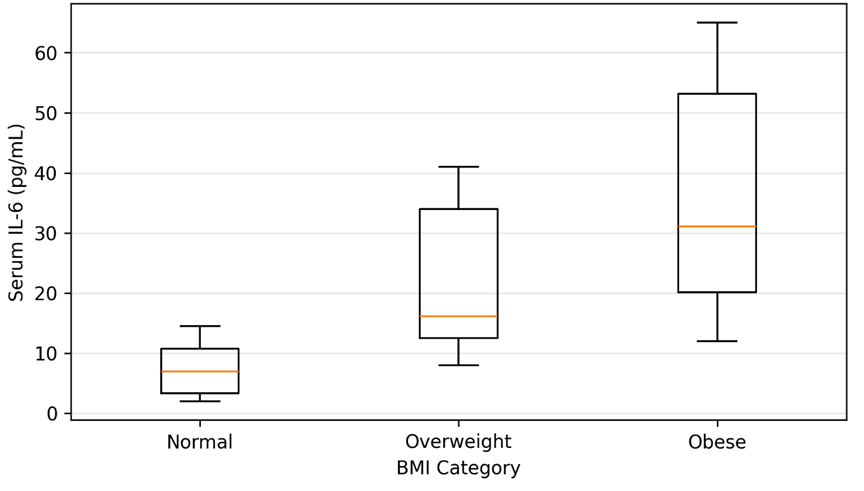
Figure 1: Distribution of IL-6 levels across BMI categories
Figure1 shows a progressive increase in serum IL-6 levels with increasing BMI. The obese group showed highest median IL-6 levels and the widest interquartile ranges indicating greater inflammatory burden and variability compared with the overweight and normal weight groups.
DISCUSSION:
The present cross-sectional study was conducted to evaluate the relationship between circulating interleukin-6, BMI, and lipid profile parameters among overweight and obese individuals attending a tertiary care hospital. The study showed a significant progressive increase in circulating IL-6 concentrations across BMI categories with overweight and obese individuals showing markedly higher IL-6 levels than normal weight participants. In the present study, the majority of participants were in the age group of 40 to 49 years (28.9%) followed by 30 to 39 years (27.8%) with males constituting 61.1% of the study population. Equal distribution of normal weight, overweight and obese individuals provided meaningful comparison of inflammatory and metabolic parameters across BMI categories. These demographic findings are comparable to several studies conducted among overweight and obese adults where middle-aged individuals constituted the major study population.
The present study showed significant increase in circulating IL-6 levels with increasing BMI. Median IL-6 levels progressively increased from 6.94 pg/ml among normal weight individuals to 16.10 pg/ml among overweight individuals and 31.05 pg/ml among obese individuals with a statistically highly significant association between BMI categories and IL-6 levels (<0.001). These findings indicate progressive elevation of inflammatory activity with increased adiposity. Similar findings were reported by Dalia M.E.El Mikkawy et al.,(Egypt) who observed significantly elevated circulating IL-6 levels among overweight and obese individuals compared to controls with positive correlation between IL-6 and BMI particularly among individuals with grade III obesity[13]. Likewise, Kathryna Fontana Rodrigues et al., found significantly higher IL-6 levels among obese individuals with type 2 diabetes mellitus compared to controls indicating that obesity and diabetes synergistically contribute to systemic inflammation [14]. Similar observations were also reported by Zahir Hussain et al., who observed elevated IL-6 levels among overweight women with type 2 diabetes mellitus compared to normal weight women[15].
The progressive increase in IL-6 levels observed in the present study may be due to endocrine function of adipose tissue. Obesity is associated with adipocyte hypertrophy and macrophage infiltration resulting in increased secretion of inflammatory cytokines including IL-6, TNF-α and resistin. Dalia M.E.El Mikkawy et al., (Egypt) reported that approximately one third of circulating IL-6 originates from adipose tissue [13]. Persistent low-grade inflammation induced by adipose tissue contributes to insulin resistance, endothelial dysfunction, oxidative stress and cardiovascular disease. The present study also showed a high prevalence of dyslipidemia among overweight and obese individuals. Elevated triglyceride levels were seen in 56.7% of participants, elevated VLDL levels in 56.7%, elevated LDL levels in 23.3% and low HDL levels in 94.4% of participants. These findings indicate the presence of atherogenic dyslipidemia associated with obesity and metabolic abnormalities.
Comparable findings were observed in the study conducted by Arun Kumar G et al., where diabetic individuals with higher BMI categories showed elevated triglycerides, VLDL, LDL levels along with reduced HDL cholesterol levels [16]. Similarly, Nnamdi Johnjude Chinonso et al., found significantly elevated triglycerides, VLDL, remnant cholesterol; and atherogenic index of plasma among overweight and obese Nigerian participants compared to normal weight controls[17]. These findings suggest that obesity associated dyslipidemia is consistently observed across different populations.
A notable finding in the present study was markedly high prevalence of low HDL cholesterol levels. HDL cholesterol had anti inflammatory and antioxidant properties and plays an important role in reverse cholesterol transport. Reduced HDL levels therefore indicate increased cardiovascular risk. Giovanni Zuliani et al., (Italy) in the InCHIANTI study demonstrated that elevated IL-6 levels were independently associated with low HDL -C levels (OR:2.10;95% CI:1.10 -3.75) independent of smoking, BMI, diabetes and other confounding factors [18]. Josh et al., in the ICMR–INDIAB Study reported low HDL in 72.3 % of participants, making it the most common lipid abnormality in India [19]. The present study shows a markedly greater burden of low HDL ( 94.4%) compared to the national representative study. The high prevalence of low HDL reported in the present study may indicate an increased inflammatory burden and altered lipid metabolism among overweight and obese individuals.
The present study further demonstrated a weak but statistically significant positive correlation between IL-6 and triglyceride levels (r= 0.210,p=0.047). Similar findings were observed by Dima Faris Abdulkhadum and AI-Mamoori and Adam Ali Hamza who reported strong positive correlations between IL-6 and triglycerides (r=0.48, p < 0.001) with inverse association between IL-6 and HDL among diabetic individuals [20]. Likewise, Zahir Hussain et al., found significant correlations between IL-6, BMI, total cholesterol and metabolic abnormalities among overweight women with type 2 diabetes mellitus. Although the strength of association observed in the present study was comparatively weaker, the direction of correlation remains consistent with previous studies [15]. The weaker correlations observed in the present study may be attributed to smaller sample size, dietary variations, physical activity differences, genetic predisposition and duration of metabolic disease.
The findings of the present study support the concept of obesity associated meta-inflammation where chronic low-grade inflammation contributes significantly to metabolic disturbances and cardiovascular disease. IL-6 influences hepatic lipid metabolism by increasing triglyceride synthesis and impairing HDL metabolism, thereby promoting an atherogenic lipid profile. Luz Andrea Martinez-Perez et al., found that chronic inflammation mediated by cytokines such as IL-6 plays a central role in insulin resistance, dyslipidemia, endothelial dysfunction and progression of metabolic syndrome [21]. The present study is also supported by Murkamilov IT et al.,(Russia) who observed significant associations between IL-6 and LDL cholesterol, blood pressure, glucose levels, uric acid and cardiovascular risk markers among overweight and obese individuals.[22] These observations suggest that IL-6 may serve as an important biomarker linking obesity, inflammation, dyslipidemia and cardiovascular disease.
The present study has certain strengths. Equal distribution of normal weight, overweight and obese groups enabled effective comparison across BMI categories. Simultaneous assessment of IL-6 and lipid profile parameters provided understanding of the interaction between inflammation and dyslipidemia in obesity. In addition, the study contributes important regional evidence regarding obesity associated inflammation which remains relatively underexplored in Indian population. However, certain limitations should be considered while interpreting the findings. The cross-sectional design limits causal relationship between IL-6 elevation and lipid abnormalities. Since the study was hospital based, the findings may not be generalizable to the community population. Other inflammatory markers such as TNF- α , CRP, adiponectin and leptin were not evaluated. Lifestyle related factors including dietary habits, physical activity, smoking, alcohol consumption and socioeconomic variables were not assessed in detail.
CONCLUSION:
The present study demonstrated significantly elevated IL-6 levels among overweight and obese individuals with progressive increase across increasing BMI categories. Significant dyslipidemia, particularly elevated triglycerides, elevated VLDL and markedly reduced HDL cholesterol levels were also observed among study participants. A significant positive association between IL-6 and triglyceride levels further highlights the interplay between inflammation and dyslipidemia in obesity. These findings support the concept that obesity is associated with chronic low-grade inflammation contributing to increased metabolic and cardiovascular risk. IL-6 may serve as a useful biomarker for identifying obesity related inflammatory and metabolic disturbances. Further longitudinal studies with larger sample size are recommended to evaluate the prognostic significance of IL-6 and its role in cardiovascular risk stratification and preventive strategies.
REFERENCES:
1. Misra A, Khurana L. The Metabolic Syndrome in South Asians: Epidemiology, Determinants, and Prevention. Metabolic Syndrome and Related Disorders [Internet]. 2009 Dec;7(6):497–514. Available from: https://pubmed.ncbi.nlm.nih.gov/19900153/
2. Gkrinia EMM, Belančić A. The Mechanisms of Chronic Inflammation in Obesity and Potential Therapeutic Strategies: A Narrative Review. Current Issues in Molecular Biology. 2025 May 13;47(5):357.
3. Eder K, Baffy N, Falus A, Fulop AK. The major inflammatory mediator interleukin-6 and obesity. Inflammation Research. 2009 Jun 19;58(11):727–36.
4. Roytblat L, Rachinsky M, Fisher A, Greemberg L, Shapira Y, Douvdevani A, et al. Raised Interleukin-6 Levels in Obese Patients. Obesity Research. 2000 Dec;8(9):673–5.
5. Sindhu S, Thomas R, Shihab P, Sriraman D, Behbehani K, Ahmad R. Obesity Is a Positive Modulator of IL-6R and IL-6 Expression in the Subcutaneous Adipose Tissue: Significance for Metabolic Inflammation. Stover CM, editor. PLOS ONE. 2015 Jul 22;10(7):e0133494.
6. Wueest S, Konrad D. The controversial role of IL-6 in adipose tissue on obesity-induced dysregulation of glucose metabolism. American Journal of Physiology Endocrinology and Metabolism [Internet]. 2020 Sep 1;319(3):E607–13. Available from: https://pubmed.ncbi.nlm.nih.gov/32715746/
7. Almuraikhy S, Kafienah W, Bashah M, Diboun I, Jaganjac M, Al-Khelaifi F, et al. Interleukin-6 induces impairment in human subcutaneous adipogenesis in obesity-associated insulin resistance. Diabetologia. 2016 Jun 24;59(11):2406–16.
8. Han MS, White A, Perry RJ, Camporez JP, Hidalgo J, Shulman GI, et al. Regulation of adipose tissue inflammation by interleukin 6. Proceedings of the National Academy of Sciences. 2020 Jan 24;117(6):2751–60.
9. Varra FN, Michail Varras, Varra VK, Panagiotis Theodosis Nobelos. Molecular and pathophysiological relationship between obesity and chronic inflammation in the manifestation of metabolic dysfunctions and their inflammation mediating treatment options (Review). Molecular Medicine Reports. 2024 Apr 9;29(6).
10. Puzikova OZ, Churyukina EV, Moskovkina AV, Popova VA, Afonin AA, Kravchenko LV. Clinical and diagnostic significance of interleukin 6 as a marker of metabolic inflammation in adolescents with obesity. Russian Medical Inquiry. 2024;8(7):421–6.
11. Voznesenskaya A, Sorokina A, Shestakova M, Shestakova E, Minniakhmetov I, Ivanova A, et al. From Metabolically Healthy to Unhealthy Obesity Through Low-Grade Inflammation. Biomedicines. 2026 May 20;14(5):1161.
12. Su JH, Luo MY, Liang N -, Gong SX, Chen W, Huang WQ, et al. Interleukin-6: A Novel Target for Cardio-Cerebrovascular Diseases. Frontiers in Pharmacology. 2021 Aug 24;12.
13. El-Mikkawy DME, EL-Sadek MA, EL-Badawy MA, Samaha D. Circulating level of interleukin-6 in relation to body mass indices and lipid profile in Egyptian adults with overweight and obesity. Egyptian Rheumatology and Rehabilitation. 2020 Jun 9;47(1).
14. Rodrigues KF, Pietrani NT, Bosco AA, Campos FMF, Sandrim VC, Gomes KB. IL-6, TNF-α, and IL-10 levels/polymorphisms and their association with type 2 diabetes mellitus and obesity in Brazilian individuals. Archives of Endocrinology and Metabolism. 2017 Feb 16;61(5):438–46.
15. Hussain Z. Correlation of Serum Homocysteine, Interleukin-6 and Cholesterol in Overweight Women of Reproductive Age Group with Type 2 Diabetes Mellitus: A Case-control Study. JOURNAL OF CLINICAL AND DIAGNOSTIC RESEARCH. 2025 Apr 1;
16. Arun Kumar. G, Shaik Anwar Hussain. K, Suresh. K. Serum Lipid Profile Variation with Body Mass Index (BMI) in Diabetic and Non-Diabetic Mellitus: A Tertiary Centre Study in Puducherry. The Bioscan. 2025 Sep 26;20(Special Issue-3):1025–30.
17. Johnjude Chinonso N, Ubuo Kalu A, Jude Anaelechi O. Correlations of Remnant Cholesterol and Atherogenic Index of Plasma as Predictors of Cardiovascular Accidents in Obese and Overweight Individuals in Nigeria. Journal of Cardiovascular and Cardiology. 2024 Jun 30;1–6.
18. Zuliani G, Volpato S, Blè A, Bandinelli S, Corsi AM, Lauretani F, et al. High interleukin-6 plasma levels are associated with low HDL-C levels in community-dwelling older adults: The InChianti study. Atherosclerosis. 2007 Jun;192(2):384–90.
19. Joshi SR, Anjana RM, Deepa M, Pradeepa R, Bhansali A, Dhandania VK, et al. Prevalence of Dyslipidemia in Urban and Rural India: The ICMR–INDIAB Study. Goel K, editor. PLoS ONE [Internet]. 2014 May 9 [cited 2019 Sep 5];9(5):e96808. Available from: https://www.ncbi.nlm.nih.gov/pmc/articles/PMC4016101/
20. Al-Mamoori DFA, Hamza AA. The Role of Th17/IL-17 Axis and IL-6 in Modulating Lipid Metabolism in Diabetic Patients: A Case-Control Biotechnological Study. South Asian Research Journal of Applied Medical Sciences. 2026 Feb 20;8(01):36–42.
21. Martínez-Pérez LA, González-Sánchez GD, Martínez-Esquivias F, Becerra-Ruiz JS, Guzmán-Flores JM. The Inflammatory Response in Metabolic Syndrome. Endocrine, metabolic & immune disorders drug targets [Internet]. 2025;10.2174/0118715303385742250610120711. Available from: https://pubmed.ncbi.nlm.nih.gov/40551699/
22. Murkamilov IT, Aitbaev KA, Fomin VV, Murkamilova ZhA, Yusupova ZF, Yusupova TF, et al. Assessment of inflammatory biomarkers and risk factors for cardiovascular diseases in overweight and obesity. Cardiovascular Therapy and Prevention. 2024 Jan 29;23(3):3733.