Study Of Sites Of Arterio-Venous Fistula In Dialysis Dependent Patients In A Tertiary Care Hospital.
- Dr. Nabanita Chakraborty , Associate Professor, Department of Anatomy, JIMSH- North Kolkata
- Dr. Tumpa Mandal , Assistant Professor, Department of Forensic Medicine and Toxicology, JIMSH- North Kolkata
- Dr. Deepa Poddar Ray , Assistant Professor, Department of Anatomy, JIMSH-North Kolkata
- Dr. Ankur Bhattacharjee , Assistant Professor, Department of Anatomy, JIMSH-North Kolkata
Article Information:
Abstract:
Background: End Stage Renal Disease patients need renal replacement therapy. Arterio-venous fistula is a permanent vascular access for maintenance haemodialysis. In this study, our aims and objectives are to compare functional outcome of arterio-venous fistulas in the study patients according to the sites of AVF and to compare stenotic complications of arterio-venous fistulas in the study patients according to age-group. Aims and objectives: To study the distribution of sites of arterio-venous fistula creation among dialysis-dependent patients in a tertiary care hospital. Materials and Methods: It was a retrograde study conducted in a tertiary care hospital from first July, 2024 to 30th June, 2025. All patients of End Stage Renal Disease requiring haemodialysis were included in the study. Data collection and documentation were done including age, gender, date of AVF surgery with location of fistula insertion, duration of renal failure, time of starting dialysis and information about fistula-related stenotic complications. Results: 59 patients were studied, 45 males and 14 females. Five cases out of fifty nine total cases were equal or less than 25 years of age who had no stenotic complications. Between 41 to 60 years of age, 10% patients had stenotic complications whereas above 60 years of age, 4.8% cases had stenotic complications. Conclusion: A mature arteriovenous fistula at haemodialysis initiation can reduce catheter-related complications, infection, and access-related morbidity, thereby improving patient safety and supporting better long-term dialysis outcomes.
Keywords:
Article :
INTRODUCTION:
Chronic kidney disease (CKD) is an important global health problem and is associated with substantial morbidity, mortality, and healthcare expenditure. With progressive deterioration of renal function, some patients eventually develop end-stage kidney disease (ESKD), requiring renal replacement therapy in the form of haemodialysis, peritoneal dialysis, or kidney transplantation. Among these modalities, haemodialysis remains one of the most widely used methods of renal replacement therapy. Effective and reliable vascular access is essential for adequate haemodialysis because it provides repeated access to the circulation for blood withdrawal and return during each dialysis session.
Therefore, the selection, creation, maturation, and long-term maintenance of vascular access are important components of the management of dialysis-dependent patients. The arterio-venous fistula (AVF) remains the preferred and generally considered the ideal vascular access for patients undergoing maintenance haemodialysis because it provides high blood flow, has greater durability, and is associated with lower rates of infection and thrombosis compared with synthetic grafts and central venous catheters [1]. An AVF is a surgically created vascular connection between an artery and an adjacent vein. Following creation, the increased arterial pressure and blood flow through the vein produce progressive venous arterialization, including dilatation and thickening of the venous wall.
This process, known as fistula maturation, allows the vein to withstand repeated needle cannulation and provide adequate blood flow for haemodialysis. The upper limb is generally preferred for AVF creation because it offers several accessible vascular sites and permits preservation of other vessels for future access procedures. The major types of upper-limb AVF include radiocephalic, brachiocephalic, and brachiobasilic fistulas. A radiocephalic fistula is usually created distally, commonly between the radial artery and cephalic vein at the wrist or anatomical snuff-box region. It is generally considered the preferred first option when suitable vessels are available because it preserves more proximal sites for future vascular access. When a distal fistula is not feasible because of inadequate vessel calibre, previous access failure, thrombosis, or other anatomical factors, a brachiocephalic fistula may be created at the elbow between the brachial artery and cephalic vein. A brachiobasilic fistula represents another proximal option and may require superficialization or transposition of the basilic vein to facilitate cannulation [2]. The choice of AVF site is therefore an important clinical decision. The principle of preserving the most distal suitable vascular site before progressing proximally is widely accepted because repeated vascular access procedures can progressively exhaust available vessels.
Distal, mid-forearm, and proximal forearm sites may be considered according to the patient's vascular anatomy and the condition of the artery and vein. Patient-related factors such as advanced age, diabetes mellitus, hypertension, peripheral vascular disease, cardiovascular disease, previous vascular access, and poor vessel quality may influence both the choice of access site and subsequent fistula maturation [3]. Although AVF is associated with better long-term outcomes than catheter-based vascular access, its creation does not guarantee successful maturation or prolonged patency. Failure of maturation, thrombosis, stenosis, infection, aneurysmal dilatation, and inadequate blood flow may compromise the effectiveness of the fistula. Reported AVF patency varies according to the type and location of the fistula, patient characteristics, surgical technique, and duration of follow-up. Several studies have reported first-year patency rates in the range of approximately 60–70%, with progressive reduction in patency during subsequent years [4].
Age is an important factor associated with vascular access outcomes. With increasing age, structural and functional changes occur within the arterial and venous systems. Atherosclerosis, arterial calcification, endothelial dysfunction, reduced vascular elasticity, and increased prevalence of comorbidities may adversely affect AVF maturation and long-term patency. Stenotic complications related to vascular access may consequently become more frequent in older dialysis-dependent patients [5]. In addition, the underlying disease responsible for CKD may contribute to vascular abnormalities even before AVF creation. Diabetes, hypertension, atherosclerotic disease, and other systemic disorders can produce pre-existing morphological and functional changes in blood vessels, potentially contributing to subsequent AVF insufficiency [6].
Preoperative assessment of the vascular system is therefore an important component of successful AVF planning. Clinical examination can provide information regarding arterial pulses, venous continuity, vessel size, previous scars, and collateral circulation. Where indicated, vascular mapping using Doppler ultrasonography can provide additional information regarding arterial diameter, venous calibre, vessel patency, and the presence of stenosis or thrombosis. Appropriate assessment and selection of the vascular site may increase the likelihood of successful maturation and help preserve future access options [7]. To study the distribution of sites of arterio-venous fistula creation among dialysis-dependent patients in a tertiary care hospital.
MATERIALS AND METHODS:
Study design- Hospital-based observational cross-sectional study.
Place of study- A Tertiary care hospital.
Study period- 12 Months (first July, 2024 to 30th June, 2025).
Study population- The study population comprised 59 dialysis-dependent patients with end-stage renal disease (ESRD) undergoing hemodialysis and requiring or having an arteriovenous fistula (AVF) at a tertiary care hospital during the 12-month study period.
Sample size- A total of 59 Patients Dialysis-dependent patients with end-stage renal disease (ESRD) requiring or having an arteriovenous fistula (AVF) for hemodialysis.
Inclusion Criteria:
· Patients aged ≥18 years who are diagnosed with end-stage kidney disease and undergoing maintenance haemodialysis.
· Patients requiring surgical creation of an arterio-venous fistula (AVF) for haemodialysis.
· Patients undergoing creation of radiocephalic or brachiocephalic AVF during the study period.
· Patients who provided written informed consent for participation in the study.
· Patients with adequate clinical and/or imaging records regarding the site and side of AVF creation.
Exclusion Criteria:
· Patients aged <18 years.
· Patients undergoing AVF revision, thrombectomy, or repair rather than primary AVF creation.
· Patients with a history of upper-limb vascular trauma or major vascular surgery affecting the proposed access site.
· Patients with central venous occlusion or severe peripheral vascular disease precluding AVF creation.
· Patients with incomplete clinical records or inadequate information regarding the AVF site or postoperative outcome.
· Patients who declined consent to participate in the study.
Study Variable:
· Site of AVF
· Side of AVF
· Age
· Stenotic complication
· Duration of renal failure
Statistical Analysis: After getting approval from institutional ethical committee, the study was initiated. Data collection and documentation were done including age, gender, date of AVF surgery with location of fistula insertion, duration of renal failure, time of starting dialysis and information about fistula-related stenotic complications. The data collected was analysed and assessed by using IBM SPSS Statistics version 27.0 statistical software and graphical representation was done.
RESULTS:
Table 1: Distribution of AVF Stenotic Complications by Site, Side, and Age Group
|
|
Subgroup |
Total Cases, n |
With Stenotic Complication, n |
Percentage (%) |
|
Site of AVF |
Radio-cephalic |
39 |
3 |
7.70% |
|
Brachiocephalic |
20 |
0 |
0.00% |
|
|
Side of AVF |
Left |
52 |
3 |
5.80% |
|
Right |
7 |
0 |
0.00% |
|
|
Age Group (years) |
≤25 |
5 |
0 |
0.00% |
|
26–40 |
13 |
0 |
0.00% |
|
|
41–60 |
20 |
2 |
10.00% |
|
|
>60 |
21 |
1 |
4.80% |
|
|
Total |
— |
59 |
3 |
5.10% |
Table 2: Clinical Features of Patients with or without AVF Stenotic Complications
|
Clinical Feature |
With Complication (n=3) |
Without Complication (n=56) |
|
Mean Age (years) |
59.3 |
51.2 |
|
Gender (M/F) |
3 / 0 |
42 / 14 |
|
Mean Duration of Renal Failure (days) |
135 |
747.6 |
|
Site: Radio-cephalic |
100% |
66.10% |
|
Site: Brachiocephalic |
0% |
33.90% |
|
Side: Left |
100% |
92.90% |
|
Side: Right |
0% |
7.10% |
Table 3: Summary Table for Duration of Renal Failure According to Gender, Complications, and AVF Site
|
Group Type |
Group |
Number |
Mean (days) |
SD (days) |
95% CI (days) |
|
Gender |
Male (M) |
21 |
776.7 |
505.2 |
[596.6, 956.9] |
|
Female (F) |
14 |
753.2 |
430.3 |
[527.8, 978.5] |
|
|
Complications |
NO |
26 |
720.6 |
457.4 |
[555.5, 885.8] |
|
YES |
9 |
901.1 |
524.8 |
[509.1, 1293.1] |
|
|
Site of AVF |
LEFT RADIOCEPHALIC |
20 |
745.5 |
465.3 |
[563.0, 928.0] |
|
LEFT BRACHIOCEPHALIC |
11 |
823.2 |
505.6 |
[523.7, 1122.6] |
|
|
RIGHT RADIOCEPHALIC |
2 |
570 |
127.3 |
[−44.8, 1184.8] (wide) |
|
|
RIGHT BRACHIOCEPHALIC |
2 |
765 |
326.3 |
[−341.6, 1871.6] (wide) |
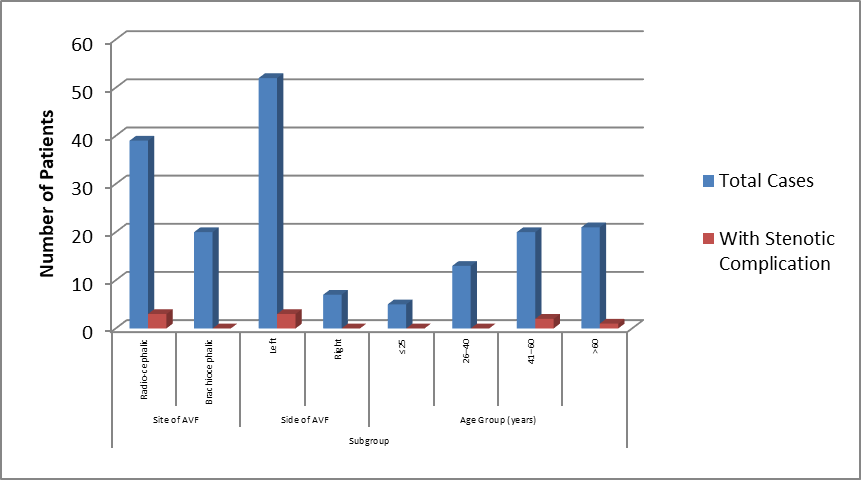
Figure 1: Distribution of AVF Stenotic Complications by Site, Side, and Age Group
AVF Stenotic Complications by Site, Side, and Age Group
Results:
Among the 59 study participants, 39 patients (66.10%) underwent radio-cephalic AVF and 20 patients (33.90%) underwent brachiocephalic AVF. Stenotic complications were observed in 3 patients (5.10%). All 3 complications occurred among patients with radio-cephalic AVF (7.70%), whereas none occurred in the brachiocephalic group (0.00%). Regarding side, 52 patients (88.10%) had left-sided AVF and 7 patients (11.90%) had right-sided AVF. All 3 stenotic complications occurred on the left side (5.80%). By age, complications were highest in the 41–60-year group (2/20; 10.00%), followed by the >60-year group (1/21; 4.80%).
Interpretation:
Radio-cephalic and left-sided AVFs were the predominant access types, with stenotic complications occurring exclusively in left-sided radio-cephalic AVFs. The highest complication rate was observed among patients aged 41–60 years.
Clinical Features of Patients With or Without AVF Stenotic Complications
Results:
Among the 3 patients with stenotic complications, all were male, with a mean age of 59.3 years. All had radio-cephalic AVF on the left side. Among the 56 patients without stenotic complications, the mean age was 51.2 years, with 42 males and 14 females. Radio-cephalic AVF was present in 66.10% and brachiocephalic AVF in 33.90% of patients without complications. Left-sided AVF was present in 92.90%, while right-sided AVF was present in 7.10%.
Interpretation:
Patients with stenotic complications were exclusively male and had a higher mean age than those without complications. All complications were observed in patients with left-sided radio-cephalic AVF.
Duration of Renal Failure According to Gender, Complications, and AVF Site
Results:
The mean duration of renal failure was 776.7 ± 505.2 days among males and 753.2 ± 430.3 days among females. Patients without complications had a mean duration of renal failure of 720.6 ± 457.4 days, whereas those with complications had a higher mean duration of 901.1 ± 524.8 days. According to AVF site, the mean duration was 745.5 ± 465.3 days among patients with left radio-cephalic AVF and 823.2 ± 505.6 days among those with left brachiocephalic AVF. Right radio-cephalic and right brachiocephalic AVFs had mean durations of 570.0 ± 127.3 days and 765.0 ± 326.3 days, respectively.
Interpretation:
The mean duration of renal failure was higher among patients with stenotic complications compared with those without complications. Among AVF sites, patients with left brachiocephalic AVF showed a comparatively longer mean duration of renal failure.
DISCUSSION:
As per Nakagawa Y et al, dysfunction and thrombosis of arterio-venous fistulas due to insufficient blood flow were the most common causes of complications in patients undergoing haemodialysis [8]. Inadequate blood flow through the vascular access can compromise the efficiency of haemodialysis and may ultimately result in access dysfunction or failure. The development of thrombosis and other flow-related abnormalities may therefore have an important impact on the longevity and functional usability of an arterio-venous fistula. Early identification of access dysfunction and appropriate intervention are essential to maintain adequate vascular access and prevent the need for repeated access procedures. In Eastern India, Gupta S et al did one study among patients of End Stage Renal Disease requiring long term vascular access for haemodialysis and concluded that radio-cephalic arteriovenous fistula remains the procedure of choice [9].
The preference for radio-cephalic fistula is consistent with the principle of using the most distal suitable vascular site initially, thereby preserving more proximal vessels for the creation of future vascular access if required. Radio-cephalic AVF also provides a relatively straightforward surgical option when suitable arterial and venous anatomy is present. However, successful fistula maturation depends on several patient-related, vascular, and clinical factors. Basit A et al did one study including burst arterio-venous fistula during the time period of six months and concluded its significant association with patients’ age and type of cannulation [10]. Their findings emphasize that patient-related characteristics and the technique used for fistula cannulation can influence vascular access-related complications. Repeated cannulation of a fistula is necessary for maintenance haemodialysis, and inappropriate cannulation techniques may contribute to vascular wall injury, bleeding, aneurysmal changes, or other access-related problems. Therefore, careful patient selection, appropriate cannulation practices, and regular monitoring of the fistula are important for maintaining its functional integrity. Pogula VR et al did a longitudinal observational study among patients with brachio-cephalic fistulas and found that majority patients were 51-70 years of age undergoing failure of fistula on 30 days follow up [11].
This finding highlights the influence of age on vascular access outcomes, particularly among patients undergoing proximal AVF procedures. Older patients frequently have associated vascular and systemic comorbidities that may affect arterial and venous quality, fistula maturation, and long-term patency. Consequently, age and the underlying vascular status should be considered during preoperative assessment and selection of the appropriate AVF site. As per Sahasrabudhe P et al, average blood urea and creatinine values are significantly lesser in patients undergoing haemodialysis through successful mature fistulas as compared to patients with failed fistulas [12]. This observation demonstrates the importance of a functional and mature AVF in providing effective haemodialysis. A successful fistula allows adequate blood flow during dialysis and facilitates efficient clearance of uremic waste products. Conversely, fistula failure may result in inadequate dialysis, necessitating alternative vascular access and potentially increasing morbidity. These findings collectively emphasize the importance of appropriate AVF site selection, successful maturation, regular monitoring, and prevention of access-related complications among dialysis-dependent patients.
CONCLUSION:
Radio-cephalic AVF remains an important and preferred vascular access option for maintenance haemodialysis in patients with end-stage renal disease. However, elderly patients may have a greater risk of delayed maturation or fistula failure because of underlying vascular disease, atherosclerosis, arterial calcification, and associated comorbidities. Despite these challenges, a successfully matured radio-cephalic fistula provides durable and effective vascular access with the advantage of preserving more proximal sites for future access creation. Therefore, careful preoperative vascular assessment, appropriate patient selection, meticulous surgical technique, and regular postoperative surveillance are essential to improve maturation and long-term patency. Early identification and management of stenosis or other access-related complications can further enhance fistula survival and ensure adequate haemodialysis.
REFERENCES:
1. Fan PY, Schwab SJ. Vascular access: concepts for the 1990s. Journal of the American Society of nephrology. 1992 Jul 1;3(1):1-1.
2. Hakim RM, Himmelfarb J. Hemodialysis access failure: a call to action—revisited. Kidney international. 2009 Nov 2;76(10):1040-8.
3. Munda R, First MR, Alexander JW, Linnemann CC, Fidler JP, Kittur D. Polytetrafluoroethylene graft survival in hemodialysis. Jama. 1983 Jan 14;249(2):219-22.
4. Wali MA, Eid RA, Dewan M, Al-Homrany MA. Pre-existing histopathological changes in the cephalic vein of renal failure patients before arterio-venous fistula (AVF) construction. Annals of Thoracic and Cardiovascular Surgery. 2006 Oct;12(5):341.
5. Malik J, de Bont C, Valerianova A, Krupickova Z, Novakova L. Arteriovenous hemodialysis access stenosis diagnosed by duplex Doppler ultrasonography: a review. Diagnostics (Basel). 2022;12(8):1979. doi:10.3390/diagnostics12081979.
6. Lin PH, Bush RL, Nguyen L, Guerrero MA, Chen C, Lumsden AB. Anastomotic strategies to improve hemodialysis access patency—a review. Vasc Endovascular Surg. 2005;39(2):127-134.
7. Lok CE, Huber TS, Orchanian-Cheff A, Rajan DK. Arteriovenous access for hemodialysis: a review. Jama. 2024 Apr 16;331(15):1307-17.
8. Nakagawa Y, Ota K, Sato Y, Fuchinoue S, Teraoka S, Agishi T. Complications in blood access for hemodialysis. Artificial Organs. 1994 Apr;18(4):283-8.
9. Gupta S. Technique and Outcome of Arterio-Venous Fistula for Dialysis Access.(2023)
10. Basit A, Masood B, Memon F, Habib FA, Zehra D, Keen IT. Predictors of Outcome in Management of Ruptured Arteriovenous Fistula in Hemodialysis Patients: A Cross-Sectional Study at a Tertiary Care Hospital, Karachi: Management of Ruptured Arteriovenous fistula. Pakistan Journal of Health Sciences. 2023 Nov 30:54-9.
11. Pogula VR, Nalubolu MR, Byram R, Maddiboina H, Bodduluri S, Pavan AP, Reddy PB, Juturu J. Preoperative factors predicting the outcomes of arteriovenous fistula surgery. Indian Journal of Vascular and Endovascular Surgery. 2019 Apr 1;6(2):74-8.
12. Sahasrabudhe P, Dighe T, Panse N, Deshpande S, Londhe S. Prospective long-term study of patency and outcomes of 505 arteriovenous fistulas in patients with chronic renal failure: Authors experience and review of literature.