Association of Chest Compression Fraction, Peri-Shock Pause and Dynamic End-Tidal CO₂ With Return of Spontaneous Circulation in Adult Cardiac Arrest: A Prospective Observational Study in a Tertiary-Care Emergency Department.
- Dr. Raghu Palepu , Mbbs Md (Emergency Medicine) Consultant Emergency Medicine, Ajara Hospitals Warangal
- Dr. Jashwanth Reddy Kuthuru , Mbbs Md (Anesthesia), Consultant Intensivist, Ajara Hospitals Warangal
- Dr. Kaushik G Patil , Pgy3 Emergency Medicine
- Dr. Nanduri Sarath Chandra , Mbbs, Md Anesthesia
- Dr. Abboju Sai Pavani , Casualty Medical Officer, Ajara Hospitals Warangal
- Dr. Hechu Bharat Krishna Kumar , Duty Medical Officer, Ajara Hospitals Warangal
Article Information:
Abstract:
Background: High-quality cardiopulmonary resuscitation (CPR) and real-time physiological monitoring are central to successful cardiac-arrest resuscitation. This study assessed the association of chest compression fraction (CCF), peri-shock pause, and dynamic end-tidal carbon dioxide (EtCO₂) with return of spontaneous circulation (ROSC). Methods: This prospective observational study included 40 adult cardiac-arrest patients treated in the emergency department of a tertiary-care hospital from November 2025 to August 2026. CPR-quality variables and serial EtCO₂ measurements were recorded. ROSC was the primary outcome. Results: ROSC occurred in 16 patients (40.0%). CCF was higher in the ROSC group than in the non-ROSC group (82.9±5.9% vs 76.3±7.2%; p=0.003). Among 11 defibrillated patients, peri-shock pause was shorter with ROSC (12.5±4.5 vs 16.3±1.5 s; p=0.068). Initial EtCO₂ did not differ significantly, whereas 10-minute EtCO₂, final EtCO₂, absolute and percentage EtCO₂ increases, and an increasing EtCO₂ trend were significantly associated with ROSC. Absolute EtCO₂ increase remained significant in exploratory multivariable analysis. Conclusion: Higher CCF and favorable dynamic EtCO₂ changes were associated with ROSC, while shorter peri-shock pauses showed a favourable but imprecise association.
Keywords:
Article :
INTRODUCTION:
Cardiac arrest is one of the most time-sensitive emergencies in acute care medicine. Although resuscitation systems, defibrillation technology, pharmacotherapy, and post-cardiac-arrest care have improved, outcomes remain highly variable depending on the circumstances of arrest and the quality of cardiopulmonary resuscitation (CPR) provided. Available evidence in India is relatively limited, especially regarding detailed process-of-resuscitation variables. The Warangal Area out-of-hospital Cardiac Arrest Registry revealed the substantial burden of cardiac arrest in the region and important gaps in data collection and emergency-care systems related to cardiac arrest resuscitation [1]. These observations highlight the need for prospective studies to objectively assess potentially modifiable factors of CPR in Indian emergency-care settings.
Modern resuscitation guidelines focus not only on the need to start chest compressions quickly, but also on the importance of quality compressions and minimising unnecessary interruptions [2]. In actual cardiac arrest, observational studies have demonstrated that CPR performed in clinical practice may vary significantly from recommended performance targets, including frequent interruptions in chest compressions [3]. Chest compression fraction (CCF) is one of the measurable indicators of CPR quality and represents the percentage of resuscitation time during which chest compressions are actively being performed. The higher the CCF, the more of the resuscitation time is spent generating forward blood flow and the less time is lost to interruptions. Christenson et al. showed in a multicentre study of out-of-hospital VF that there was an association between increasing CCF and survival, indicating the physiological significance of minimizing interruptions during CPR [4]. CCF is therefore a useful quantitative indicator by which the continuity of resuscitation can be judged.
Interruptions surrounding defibrillation may be particularly important in patients with shockable rhythms. During ventricular fibrillation or pulseless ventricular tachycardia, interruptions before and after shock delivery briefly stop the blood flow created by chest compressions. There is experimental and clinical evidence that prolonged pauses immediately before defibrillation may decrease the likelihood of successful termination of VF. Edelson et al. reported that shorter pre-shock interruptions, along with improved compression performance, were associated with a higher likelihood of successful termination of VF [5]. Later, Cheskes et al. showed that the duration of peri-shock interruptions was an independent predictor of survival in patients with out-of-hospital cardiac arrest who had shockable rhythms [6]. Additional analysis in the Resuscitation Outcomes Consortium (ROC) PRIMED population confirmed the clinical significance of minimising interruptions around defibrillation [7]. When studying resuscitation performance at the individual-patient level, however, the relationship between peri-shock pause and immediate resuscitation outcomes such as return of spontaneous circulation (ROSC) is especially relevant, but can only be assessed in patients who receive defibrillation.
CCF and peri-shock pause describe the delivery of CPR, while end-tidal carbon dioxide (EtCO₂) is a dynamic physiological signal during resuscitation. In cardiac arrest, pulmonary blood flow is greatly diminished, and the carbon dioxide delivered to the lungs is heavily reliant on the blood flow provided by chest compressions. Therefore, during CPR, EtCO₂ can be used as an indirect measure of pulmonary perfusion and the efficacy of generated cardiac output. Levine et al. showed that low EtCO₂ levels during prolonged resuscitation were strongly associated with poor outcome, making capnography a valuable physiological monitoring tool during cardiac arrest [8]. Pooled evidence from subsequent studies has revealed that patients who achieve ROSC tend to have higher EtCO₂ levels during CPR than those who fail to achieve ROSC, but there is significant overlap and no single value is a definitive predictor of outcome [9].
The clinical usefulness of EtCO₂ may go beyond a single threshold. Cardiac arrest is a dynamic physiological process, and changes in EtCO₂ during the resuscitation process can provide information that cannot be obtained from a single reading. Increasing EtCO₂ during effective compressions could be a sign of improving perfusion, and a sudden rise may occur with restoration of spontaneous circulation. However, if values remain low or fall, this may indicate poor pulmonary blood flow, but they can also be influenced by ventilation, airway issues, metabolic state, drugs and the cause of arrest [2,8,9]. Therefore, serial or dynamic EtCO₂ changes may provide a more clinically relevant measure of the physiological response during CPR than a single cut-off value.
CCF, peri-shock pause and EtCO₂ have been studied separately, but comparatively fewer studies have assessed these parameters together in the same resuscitation episode, especially in EDs in India. CCF is a measure of continuity of compressions, peri-shock pause is a measure of interruptions around defibrillation, and dynamic EtCO₂ is a measure related to perfusion during CPR. Simultaneous assessment might offer a more complete picture of the relationship between resuscitation quality, physiological response to resuscitation, and immediate outcome.
Hence, the present prospective observational study was conducted in the Emergency Department of a tertiary-care hospital in Warangal to assess the relationship between chest compression fraction, peri-shock pause and dynamic EtCO₂ with return of spontaneous circulation in adults with cardiac arrest. The objectives of the study were to investigate the relationship between CCF and ROSC, to investigate the relationship between peri-shock pause and ROSC in patients who received defibrillation, and to investigate whether serial changes in EtCO₂ during CPR were associated with ROSC.
MATERIALS AND METHODS:
Study design and setting
This was a prospective observational study carried out in the Department of Emergency Medicine, Ajara Hospitals, Warangal, from November 2025 to August 2026. The study aimed to assess the relationship between chest compression fraction (CCF), peri-shock pause (PSP), and dynamic end-tidal carbon dioxide (EtCO₂) during cardiopulmonary resuscitation (CPR) with return of spontaneous circulation (ROSC) in adult cardiac arrest patients.
Study population
Patients were eligible for inclusion if they were ≥18 years old and presented to the ED with cardiac arrest or developed cardiac arrest while in the ED. Patients were added to the study if CPR was conducted in accordance with standard resuscitation guidelines and reliable chest-compression and EtCO₂ data were obtained.
Patients were excluded if cardiac arrest was traumatic, a documented do-not-resuscitate order was present, obvious irreversible signs of death were identified, ROSC occurred before adequate CPR-quality or EtCO₂ measurements could be obtained, CPR-quality data were significantly missing or unreliable, or prolonged resuscitation was performed prior to transfer without reliable resuscitation data. The final study group consisted of 40 patients.
Data collection and study variables
Prospective demographic and cardiac-arrest data were obtained. The variables measured were age, sex, witnessed arrest, initial cardiac rhythm, duration of CPR, defibrillation status, CCF, peri-shock pause, and serial EtCO₂ measurements.
Initial cardiac rhythms were defined as ventricular fibrillation (VF), pulseless ventricular tachycardia (pVT), pulseless electrical activity (PEA), or asystole. VF and pVT were classified as shockable rhythms, while PEA and asystole were classified as non-shockable rhythms.
CPR-quality measurements
CCF was calculated as the percentage of total resuscitation time during which chest compressions were performed.
Peri-shock pause was the total duration of interruption of chest compressions before and after defibrillation. Peri-shock pause was analyzed only in patients with a shockable rhythm who were defibrillated.
CCF was also dichotomized as <80% versus ≥80%, and peri-shock pause was dichotomized as ≤15 seconds versus >15 seconds for exploratory analyses. These classifications were intended as exploratory rather than definitive clinical thresholds.
End-tidal carbon dioxide monitoring
EtCO₂ monitoring was performed following advanced airway placement. EtCO₂ was measured initially, at 5 minutes, at 10 minutes when available, and at the final available measurement during the resuscitation episode.
Absolute EtCO₂ change was defined as the difference between the final and initial EtCO₂ measurements:
Absolute EtCO₂ change = Final EtCO₂ − Initial EtCO₂
The percentage change in EtCO₂ was determined relative to the initial EtCO₂ value. The overall trend of EtCO₂ during resuscitation was classified as increasing, stable or decreasing. Increasing EtCO₂ was compared with stable or decreasing EtCO₂ for analysis of trajectory.
Outcome measure
The main outcome was achievement of ROSC during the resuscitation episode.
The associations of ROSC with CCF, peri-shock pause, serial EtCO₂ measurements, absolute and percentage EtCO₂ changes, EtCO₂ trajectory, initial shockable rhythm, and CPR duration were evaluated.
Statistical analysis
Data for continuous variables were presented as mean ± SD and categorical variables as numbers and percentages.
Welch's independent-samples t-test was used to compare patients who achieved ROSC with those who did not for continuous variables. Categorical variables were compared by Pearson's chi-square test or Fisher's exact test when expected cell counts were small.
For exploratory analysis, CCF was analyzed as a continuous variable and also dichotomized as <80% versus ≥80%. Peri-shock pause was analyzed only in patients who were defibrillated and was also explored using a threshold of ≤15 seconds versus >15 seconds.
Dynamic EtCO₂ analyses comprised initial, 5-minute, 10-minute and final EtCO₂ values, absolute and percentage changes in EtCO₂ from initial to final, and increasing versus stable/decreasing EtCO₂ trajectory.
Univariate logistic regression was used to test clinically relevant predictors of ROSC, such as age, witnessed arrest, initial shockable rhythm, CPR duration, CCF, initial EtCO₂, final EtCO₂, absolute EtCO₂ change, and increasing EtCO₂ trajectory. Age was modeled per 10-year increase, CPR duration per 5-minute increase, CCF per 5-percentage-point increase, and EtCO₂ variables per 5-mmHg increase.
Due to the small sample size and limited number of ROSC events, multivariable analysis was limited to a parsimonious exploratory model that included three prespecified variables: CCF, absolute change in EtCO₂, and initial shockable rhythm. Odds ratios (ORs), adjusted ORs, 95% confidence intervals (CIs), and p-values were presented. All statistical tests were two-sided, and p<0.05 was regarded as statistically significant.
Because of the limited number of patients who were defibrillated, analyses of peri-shock pause were considered exploratory and were interpreted with caution.
RESULTS:
Forty adult cardiac arrest patients were included in the analysis, of whom 16 (40.0%) achieved return of spontaneous circulation (ROSC). The mean age was 56.4 ± 16.2 years, 25 (62.5%) patients were male, 23 (57.5%) arrests were witnessed, and 11 (27.5%) patients had an initial shockable rhythm. Initial rhythms comprised ventricular fibrillation in 7 (17.5%), pulseless ventricular tachycardia in 4 (10.0%), pulseless electrical activity in 15 (37.5%), and asystole in 14 (35.0%). Baseline and resuscitation characteristics according to ROSC status are summarized in Table 1.
Chest compression fraction and ROSC
Patients achieving ROSC had a higher chest compression fraction (CCF) than those without ROSC. The between-group difference remained evident when CCF was examined using the exploratory 80% threshold, with ROSC occurring more frequently among patients with CCF ≥80% (Table 2).
Peri-shock pause and ROSC
Among the 11 patients who received defibrillation, 8 achieved ROSC and 3 did not. Peri-shock pause was shorter in the ROSC group, although the between-group comparison did not reach conventional statistical significance. Results from the exploratory ≤15-second categorization were likewise imprecise (Table 2).
Dynamic end-tidal CO₂ and ROSC
Initial EtCO₂ did not differ materially by ROSC status. In contrast, patients achieving ROSC demonstrated higher 10-minute and final EtCO₂ values, a greater absolute and percentage increase from the initial measurement, and a higher frequency of an increasing EtCO₂ trajectory. The 5-minute EtCO₂ difference was not statistically significant (Table 2). Serial EtCO₂ trajectories are shown in Figure 2.
Exploratory logistic regression
On univariate logistic regression, higher CCF, higher final EtCO₂, greater absolute EtCO₂ increase, an increasing EtCO₂ trend, and an initial shockable rhythm were associated with higher odds of ROSC, whereas longer CPR duration was associated with lower odds of ROSC. In the parsimonious exploratory multivariable model including CCF, absolute EtCO₂ change, and initial shockable rhythm, greater EtCO₂ increase remained associated with ROSC; the estimates for CCF and shockable rhythm were attenuated and had wider confidence intervals (Table 3).
Table 1. Characteristics of the cohort according to ROSC status
|
Variable |
ROSC (n=16) |
No ROSC (n=24) |
Effect / difference (95% CI) |
Test statistic |
p-value |
|
Age, years |
54.5 ± 18.8 |
57.6 ± 14.6 |
Mean difference −3.1 (−14.5 to 8.3) |
t(26.6)=−0.55 |
0.584 |
|
Male sex |
12 (75.0%) |
13 (54.2%) |
OR 2.54 |
χ²(1)=1.78 |
0.182 |
|
Witnessed arrest |
9 (56.2%) |
14 (58.3%) |
OR 0.92 |
χ²(1)=0.02 |
0.896 |
|
Initial shockable rhythm |
8 (50.0%) |
3 (12.5%) |
OR 7.00 |
Fisher exact |
0.014 |
|
CPR duration, min |
20.9 ± 5.8 |
25.8 ± 6.5 |
Mean difference −5.0 (−9.0 to −1.0) |
t(34.8)=−2.51 |
0.017 |
|
Chest compression fraction, % |
82.9 ± 5.9 |
76.3 ± 7.2 |
Mean difference 6.6 (2.4 to 10.8) |
t(36.2)=3.16 |
0.003 |
|
Peri-shock pause, s* |
12.5 ± 4.5 |
16.3 ± 1.5 |
Mean difference −3.8 (−7.9 to 0.3) |
t(9.0)=−2.07 |
0.068 |
|
Initial EtCO₂, mmHg |
15.0 ± 5.0 |
14.1 ± 4.5 |
Mean difference 0.9 (−2.2 to 4.1) |
t(30.0)=0.60 |
0.551 |
|
Final EtCO₂, mmHg |
21.5 ± 9.2 |
14.6 ± 6.9 |
Mean difference 6.9 (1.4 to 12.4) |
t(26.0)=2.56 |
0.017 |
|
Absolute EtCO₂ change, mmHg |
6.4 ± 7.2 |
0.5 ± 5.0 |
Mean difference 6.0 (1.7 to 10.2) |
t(24.4)=2.87 |
0.008 |
|
Increasing EtCO₂ trend |
11 (68.8%) |
7 (29.2%) |
OR 5.34 |
χ²(1)=6.08 |
0.014 |
Data are mean ± SD or n (%). Continuous variables were compared using Welch’s independent-samples t-test. Categorical variables were compared using Pearson’s chi-square test, except initial shockable rhythm, for which Fisher’s exact test was used. *Peri-shock analysis was restricted to defibrillated patients (ROSC n=8; no ROSC n=3). CI, confidence interval; EtCO₂, end-tidal carbon dioxide; OR, odds ratio; ROSC, return of spontaneous circulation.
Table 2. Objective-wise analysis of CPR quality and dynamic EtCO₂ in relation to ROSC
|
Objective / measure |
ROSC |
No ROSC |
Effect (95% CI) |
Test statistic |
p-value |
|
Objective 1: CCF, continuous (%) |
82.9 ± 5.9 |
76.3 ± 7.2 |
Mean difference 6.6 (2.4 to 10.8) |
t(36.2)=3.16 |
0.003 |
|
Objective 1: CCF ≥80% |
13 (81.3%) |
6 (25.0%) |
OR 13.00 (2.74 to 61.79) |
Fisher exact |
0.001 |
|
Objective 2: Peri-shock pause (s)* |
12.5 ± 4.5 |
16.3 ± 1.5 |
Mean difference −3.8 (−7.9 to 0.3) |
t(9.0)=−2.07 |
0.068 |
|
Objective 2: Peri-shock pause ≤15 s* |
5 (62.5%) |
1 (33.3%) |
OR 3.33 (0.20 to 54.53) |
Fisher exact |
0.545 |
|
Objective 3: Initial EtCO₂ (mmHg) |
15.0 ± 5.0 |
14.1 ± 4.5 |
Mean difference 0.9 (−2.2 to 4.1) |
t(30.0)=0.60 |
0.551 |
|
Objective 3: 5-min EtCO₂ (mmHg) |
17.3 ± 6.6 |
14.1 ± 5.1 |
Mean difference 3.2 (−0.8 to 7.2) |
t(26.5)=1.63 |
0.115 |
|
Objective 3: 10-min EtCO₂ (mmHg) |
19.7 ± 7.3 |
14.2 ± 5.9 |
Mean difference 5.5 (1.1 to 10.0) |
t(27.4)=2.54 |
0.017 |
|
Objective 3: Final EtCO₂ (mmHg) |
21.5 ± 9.2 |
14.6 ± 6.9 |
Mean difference 6.9 (1.4 to 12.4) |
t(26.0)=2.56 |
0.017 |
|
Objective 3: Absolute EtCO₂ change (mmHg) |
6.4 ± 7.2 |
0.5 ± 5.0 |
Mean difference 6.0 (1.7 to 10.2) |
t(24.4)=2.87 |
0.008 |
|
Objective 3: EtCO₂ percent change (%) |
45.5 ± 53.7 |
3.7 ± 36.9 |
Mean difference 41.9 (10.1 to 73.6) |
t(24.3)=2.72 |
0.012 |
|
Objective 3: Increasing EtCO₂ trend |
11 (68.8%) |
7 (29.2%) |
OR 5.34 (1.35 to 21.14) |
χ²(1)=6.08 |
0.014 |
Data are mean ± SD or n (%). *Restricted to the 11 patients who received defibrillation (ROSC n=8; no ROSC n=3). The CCF ≥80% and peri-shock pause ≤15 s analyses are exploratory categorizations. CCF, chest compression fraction; CI, confidence interval; EtCO₂, end-tidal carbon dioxide; OR, odds ratio.
Table 3. Logistic regression analyses for ROSC
|
Predictor |
OR / adjusted OR |
95% CI |
Wald z |
p-value |
|
Univariate models |
|
|
|
|
|
Age (per 10 years) |
0.89 |
0.59 to 1.32 |
−0.59 |
0.552 |
|
Witnessed arrest |
0.92 |
0.26 to 3.30 |
−0.13 |
0.896 |
|
Initial shockable rhythm |
7.00 |
1.48 to 33.21 |
2.45 |
0.014 |
|
CPR duration (per 5 min) |
0.51 |
0.28 to 0.93 |
−2.18 |
0.029 |
|
CCF (per 5 percentage points) |
2.11 |
1.19 to 3.72 |
2.56 |
0.011 |
|
Initial EtCO₂ (per 5 mmHg) |
1.25 |
0.62 to 2.50 |
0.63 |
0.531 |
|
Final EtCO₂ (per 5 mmHg) |
1.72 |
1.10 to 2.70 |
2.38 |
0.017 |
|
Absolute EtCO₂ change (per 5 mmHg) |
2.37 |
1.22 to 4.62 |
2.54 |
0.011 |
|
Increasing EtCO₂ trend |
5.34 |
1.35 to 21.14 |
2.39 |
0.017 |
|
Exploratory multivariable model |
|
|
|
|
|
CCF (per 5 percentage points) |
1.81 |
0.94 to 3.47 |
1.78 |
0.076 |
|
Absolute EtCO₂ change (per 5 mmHg) |
2.38 |
1.13 to 5.03 |
2.27 |
0.023 |
|
Initial shockable rhythm |
5.49 |
0.84 to 36.12 |
1.77 |
0.076 |
ROSC was the dependent variable. Univariate models were fitted separately for each predictor. The exploratory multivariable model included three prespecified predictors to limit model complexity. CI, confidence interval; CCF, chest compression fraction; EtCO₂, end-tidal carbon dioxide; OR, odds ratio.
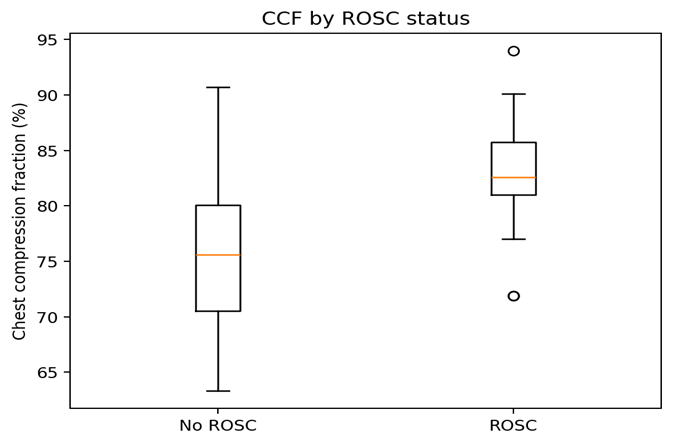
Figure 1. Chest compression fraction according to ROSC status
Box plot showing the distribution of chest compression fraction in patients with and without ROSC. ROSC, return of spontaneous circulation.
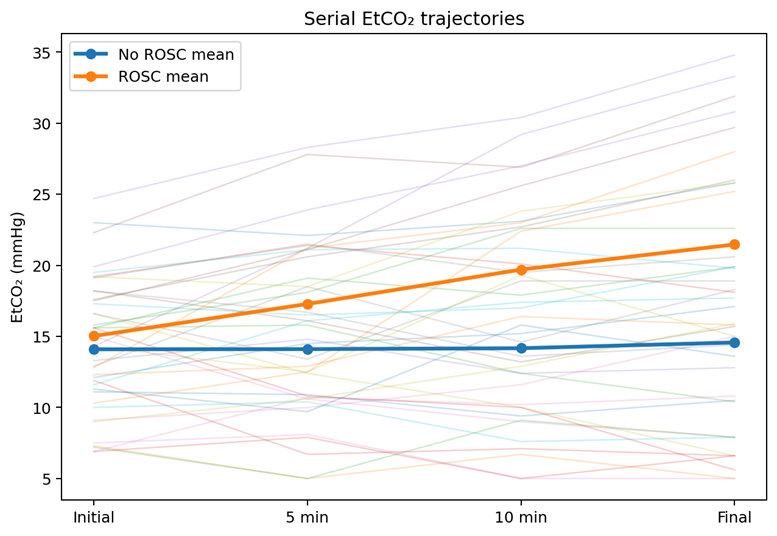
Figure 2. Serial EtCO₂ trajectories during CPR according to ROSC status
Serial EtCO₂ measurements during resuscitation, displayed by ROSC status with group-level trajectory overlay. EtCO₂, end-tidal carbon dioxide; ROSC, return of spontaneous circulation.
DISCUSSION:
This prospective study of 40 adult cardiac arrest patients showed that ROSC occurred in 16 (40.0%). Three findings were most relevant. First, patients who achieved ROSC had a significantly higher chest compression fraction (CCF) compared to those who did not achieve ROSC (82.9±5.9% vs 76.3±7.2%, respectively; p=0.003). Second, among the 11 patients who received defibrillation, peri-shock pauses were shorter in the ROSC group, although this difference was not statistically significant. Third, the dynamic nature of EtCO₂ was more closely associated with ROSC than the initial EtCO₂ value: 10-minute and final EtCO₂, absolute and percentage EtCO₂ increases, and an increasing EtCO₂ trajectory were all associated with ROSC. In exploratory multivariable analysis, absolute EtCO₂ increase remained independently associated with ROSC.
Chest compression fraction
This association of increased CCF with ROSC is consistent with the physiological significance of minimizing interruptions during CPR. For each 5-percentage-point increase in CCF, the odds of ROSC increased, and ROSC occurred more often when CCF was ≥80%. In a large cohort of non-shockable OHCAs, Vaillancourt et al. also reported that lower CCF categories were associated with lower odds of ROSC than CCF values greater than 80% [10]. This is consistent with the idea that a higher proportion of active compression time could help to enhance forward blood flow during resuscitation.
CCF should not be seen as a standalone measure of CPR quality, however. Talikowska et al. found that very high CCF did not always correlate with favourable outcomes and that CCF >80% was linked to lower odds of ROSC in patients with prolonged intervals between arrest and CPR [11]. This may be related to CCF's dependence on the duration of the arrest and the resuscitation phase: patients with refractory arrest may spend extended periods of continuous CPR, while early ROSC will reduce the overall compression exposure time. Furthermore, CCF does not specify compression depth, compression rate, recoil, or whether there are interruptions at critical moments. This may be part of the reason why the relationship between CCF and ROSC in our study was weakened after adjusting for the change in EtCO₂ and initial rhythm.
Peri-shock pause
Peri-shock pause was shorter in defibrillated patients who achieved ROSC (12.5±4.5 seconds vs 16.3±1.5 seconds, p=0.068). This finding is clinically plausible since long pauses around defibrillation could compromise coronary perfusion during a critical period of resuscitation.
Brouwer et al. reported that each additional 5 seconds in the longest peri-shock pause was associated with lower odds of survival in patients with VF or pVT [12]. They also demonstrated that the location and length of the pauses were relevant even if the overall CCF was relatively high, suggesting that aggregate compression time does not fully capture interruption quality. On the other hand, pre-shock pause was not found to be consistently associated with VF termination or return of organized rhythm across all shocks in the study by Olsen et al. [13]. These data indicate that peri-shock interruption could affect overall resuscitation success without necessarily affecting the immediate electrical response to each shock.
The present study should thus be viewed with caution, as only 11 patients were defibrillated, with 3 of these patients not achieving ROSC. This small subgroup is the reason for the wide confidence interval for the exploratory ≤15-second threshold, but does not constitute strong evidence against an association.
Dynamic EtCO₂ and ROSC
The most distinctive finding was the difference in EtCO₂ over time. Initial EtCO₂ was similar between ROSC and non-ROSC patients (15.0±5.0 vs 14.1±4.5 mmHg; p=0.551), but differences were observed during continued resuscitation. At 10 minutes, EtCO₂ was higher in the ROSC group (19.7±7.3 vs 14.2±5.9 mmHg; p=0.017), and the same was true for final EtCO₂ (21.5±9.2 vs 14.6±6.9 mmHg; p=0.017). Patients who achieved ROSC also had a greater absolute change in EtCO₂ (6.4±7.2 vs 0.5±5.0 mmHg; p=0.008), and a higher percentage had an increasing EtCO₂ trend (68.8% vs 29.2%).
These results are in line with the study by Baldi et al., which found that a higher initial EtCO₂ and an increase in EtCO₂ during CPR were both associated with better outcomes, with the 10-minute increase having a stronger association with favorable survival than the initial value alone [14]. This is consistent with the idea that serial changes might be more informative than a single measurement, as they reflect the changing physiological response to CPR.
Similarly, Singer et al. reported moderate discriminatory value of EtCO₂ for ROSC, but a 20-mmHg threshold was highly sensitive and poorly specific [15]. This is relevant as it argues against the use of a single absolute cut-off as a definitive prognostic tool. Engel et al. also showed that EtCO₂ trend, first-to-last change and final values all had moderate discrimination for ROSC [16]. Likewise, Grmec and Klemen found consistently higher EtCO₂ values in successfully resuscitated patients and demonstrated that persistently very low EtCO₂ levels were associated with poor resuscitation outcomes [17].
The present study builds on these findings by showing that the absolute increase in EtCO₂ was still associated with ROSC, even after adjusting for CCF and initial shockable rhythm. The adjusted odds ratio for each 5-mmHg increase in EtCO₂ change was 2.38 (95% CI 1.13–5.03; p=0.023). This indicates that dynamic capnography may offer additional physiological data beyond CPR-process variables. However, the interpretation of EtCO₂ must be considered in the context of the overall resuscitation process, as it is affected by factors such as ventilation, airway factors, pulmonary blood flow, metabolism, vasopressor use, and arrest etiology.
Integration of CPR process and physiological response
This is a significant aspect of this study, as all three parameters were evaluated simultaneously: CCF, peri-shock pause, and dynamic EtCO₂. These are variables that are different but related to resuscitation. CCF is a measure of the continuity of compressions, peri-shock pause captures interruption around defibrillation, and EtCO₂ is an indirect measure of the circulation generated during CPR.
This cohort pattern indicates that both process quality and physiological response should be considered together. Higher CCF was associated with ROSC, while shorter peri-shock pauses showed a favourable but imprecise association. In contrast, progressive separation between ROSC and non-ROSC patients over time was observed with EtCO₂, and absolute EtCO₂ change remained significant in multivariable analysis. This helps to support the use of capnography as a real-time physiological adjunct and not as an isolated prognostic threshold.
Initial rhythm and CPR duration also influenced outcome. A shockable initial rhythm was more common among patients achieving ROSC (50.0% vs 12.5%; p=0.014), while CPR duration was shorter in the ROSC group (20.9±5.8 vs 25.8±6.5 minutes; p=0.017). These associations are clinically expected and indicate that CCF and EtCO₂ should not be interpreted independently of rhythm and duration of resuscitation.
Strengths and limitations
This study has several strengths, including its prospective design and the simultaneous evaluation of CPR-process measures and serial EtCO₂ during active resuscitation. The tertiary-care emergency-department setting also contributes data from an Indian population that remains under-represented in the literature.
The major drawback is the small, single-center sample. The number of patients was small (40) and the number of ROSC events was also limited (16), which makes the effect estimates imprecise and multivariable modelling necessarily limited. The peri-shock analysis is especially underpowered, as only 11 patients were defibrillated. Other potential sources of residual confounding include arrest etiology, prehospital care, timing of medication administration, ventilation, airway factors, and other CPR-quality variables. Furthermore, ROSC is an immediate resuscitation endpoint and does not always equate to survival to discharge or good neurological outcome. Lastly, various physiological and technical factors influence EtCO₂, and any changes cannot be explained entirely by the effectiveness of chest compressions.
CONCLUSION:
In this cohort, higher CCF and a more favourable dynamic EtCO₂ response were associated with ROSC, while shorter peri-shock pauses showed a clinically favourable but statistically imprecise relationship. Dynamic EtCO₂ change remained associated with ROSC after limited multivariable adjustment, suggesting that serial capnographic trends may offer additional physiological information alongside CPR-quality metrics. These associations need to be confirmed by larger multicenter studies including survival and neurological outcomes.
REFERENCES:
1. Ramaka S, Nazir NT, Murthy VS, Vanden Hoek T, Prabhakar BS, Chodavarapu R, et al. Epidemiology of out-of-Hospital Cardiac Arrests, knowledge of cardiovascular disease and risk factors in a regional setting in India: The Warangal Area out-of-hospital Cardiac Arrest Registry (WACAR). Indian Heart J. 2020;72(6):517-523. doi: 10.1016/j.ihj.2020.10.002.
2. Wigginton JG, Agarwal S, Bartos JA, Coute RA, Drennan IR, Haamid A, et al. Part 9: Adult Advanced Life Support: 2025 American Heart Association Guidelines for Cardiopulmonary Resuscitation and Emergency Cardiovascular Care. Circulation. 2025;152(16 Suppl 2):S538-S577. doi: 10.1161/CIR.0000000000001376.
3. Abella BS, Alvarado JP, Myklebust H, Edelson DP, Barry A, O'Hearn N, et al. Quality of cardiopulmonary resuscitation during in-hospital cardiac arrest. JAMA. 2005;293(3):305-310. doi: 10.1001/jama.293.3.305.
4. Christenson J, Andrusiek D, Everson-Stewart S, Kudenchuk P, Hostler D, Powell J, et al. Chest compression fraction determines survival in patients with out-of-hospital ventricular fibrillation. Circulation. 2009;120(13):1241-1247. doi: 10.1161/CIRCULATIONAHA.109.852202.
5. Edelson DP, Abella BS, Kramer-Johansen J, Wik L, Myklebust H, Barry AM, et al. Effects of compression depth and pre-shock pauses predict defibrillation failure during cardiac arrest. Resuscitation. 2006;71(2):137-145. doi: 10.1016/j.resuscitation.2006.04.008.
6. Cheskes S, Schmicker RH, Christenson J, Salcido DD, Rea T, Powell J, et al. Perishock pause: an independent predictor of survival from out-of-hospital shockable cardiac arrest. Circulation. 2011;124(1):58-66. doi: 10.1161/CIRCULATIONAHA.110.010736.
7. Cheskes S, Schmicker RH, Verbeek PR, Salcido DD, Brown SP, Brooks S, et al. The impact of peri-shock pause on survival from out-of-hospital shockable cardiac arrest during the Resuscitation Outcomes Consortium PRIMED trial. Resuscitation. 2014;85(3):336-342. doi: 10.1016/j.resuscitation.2013.10.014.
8. Levine RL, Wayne MA, Miller CC. End-tidal carbon dioxide and outcome of out-of-hospital cardiac arrest. N Engl J Med. 1997;337(5):301-306. doi: 10.1056/NEJM199707313370503.
9. Hartmann SM, Farris RWD, Di Gennaro JL, Roberts JS. Systematic review and meta-analysis of end-tidal carbon dioxide values associated with return of spontaneous circulation during cardiopulmonary resuscitation. J Intensive Care Med. 2015;30(7):426-435. doi: 10.1177/0885066614530839.
10. Vaillancourt C, Petersen A, Meier EN, Christenson J, Menegazzi JJ, Aufderheide TP, et al. The impact of increased chest compression fraction on survival for out-of-hospital cardiac arrest patients with a non-shockable initial rhythm. Resuscitation. 2020;154:93-100. doi: 10.1016/j.resuscitation.2020.06.016.
11. Talikowska M, Tohira H, Inoue M, Bailey P, Brink D, Finn J. Lower chest compression fraction associated with ROSC in OHCA patients with longer downtimes. Resuscitation. 2017;116:60-65. doi: 10.1016/j.resuscitation.2017.05.005.
12. Brouwer TF, Walker RG, Chapman FW, Koster RW. Association between chest compression interruptions and clinical outcomes of ventricular fibrillation out-of-hospital cardiac arrest. Circulation. 2015;132(11):1030-1037. doi: 10.1161/CIRCULATIONAHA.115.014016.
13. Olsen JA, Brunborg C, Steinberg M, Persse D, Sterz F, Lozano M Jr, et al. Pre-shock chest compression pause effects on termination of ventricular fibrillation/tachycardia and return of organized rhythm within mechanical and manual cardiopulmonary resuscitation. Resuscitation. 2015;93:158-163. doi: 10.1016/j.resuscitation.2015.04.023.
14. Baldi E, Caputo ML, Klersy C, Benvenuti C, Contri E, Palo A, et al. End-tidal carbon dioxide (ETCO2) at intubation and its increase after 10 minutes resuscitation predicts survival with good neurological outcome in out-of-hospital cardiac arrest patients. Resuscitation. 2022;181:197-207. doi: 10.1016/j.resuscitation.2022.09.015.
15. Singer AJ, Nguyen RT, Ravishankar ST, Schoenfeld ER, Thode HC Jr, Henry MC, et al. Cerebral oximetry versus end tidal CO2 in predicting ROSC after cardiac arrest. Am J Emerg Med. 2018;36(3):403-407. doi: 10.1016/j.ajem.2017.08.046.
16. Engel TW 2nd, Thomas C, Medado P, Bastani A, Reed B, Millis S, et al. End tidal CO2 and cerebral oximetry for the prediction of return of spontaneous circulation during cardiopulmonary resuscitation. Resuscitation. 2019;139:174-181. doi: 10.1016/j.resuscitation.2019.04.006.
17. Grmec S, Klemen P. Does the end-tidal carbon dioxide (EtCO2) concentration have prognostic value during out-of-hospital cardiac arrest? Eur J Emerg Med. 2001;8(4):263-269. doi: 10.1097/00063110-200112000-00003.