Differences In Dermatoglyphic Parameters Between Male And Female Schizophrenia Patients In The West Bengal Community.
- Dr. Debjani Banerjee , Associate Professor, MBBS, MD (Physiology), Department of Physiology, Barasat Government Medical College.
- Dr. Tanushree Roy , Assistant Professor, MBBS, MD (Anatomy), Department of Anatomy, College of Medicine & Sagore Dutta Hospital.
- Dr. Subhasis Chakraborty , Associate Professor, MBBS, MD (Anatomy), Department of Anatomy, College of Medicine & Sagore Dutta Hospital.
Article Information:
Abstract:
Introduction: Schizophrenia is a complex psychiatric disorder with a strong neurodevelopmental component. Dermatoglyphic patterns are established during fetal development and remain relatively stable throughout life, making them potential markers of early developmental disturbances. The present study assessed selected dermatoglyphic parameters among male and female patients with schizophrenia and compared them with sex-matched controls. Aims: To compare dermatoglyphic parameters, including Total Finger Ridge Count (TFRC), Absolute Finger Ridge Count (AFRC), and a-b ridge count, between male and female patients with schizophrenia and sex-matched controls. Materials and methods: A hospital-based cross-sectional comparative study was conducted at R. G. Kar Medical College, Kolkata, West Bengal. A total of 108 participants were included, comprising 58 schizophrenia patients (30 males and 28 females) and 50 sex-matched controls (25 males and 25 females). Schizophrenia was diagnosed according to DSM-IV-TR criteria. Finger and palm prints were obtained using the conventional ink method. Dermatoglyphic parameters were measured according to standard methods. Statistical analysis included the t-test, chi-square test, one-way ANOVA and discriminant analysis. Result: The mean TFRC was significantly higher among male schizophrenia patients (148.93 ± 21.10) than female schizophrenia patients (128.78 ± 23.90; t=3.37). The mean AFRC was higher in male schizophrenia patients (183.10 ± 66.84) than females (158.26 ± 76.04), but the difference was not significant (t=1.31). Among males, AFRC was higher in schizophrenia patients than controls (183.10 vs. 165.76; t=0.98), while among females it was lower (158.26 vs. 169.68; t=0.53), with neither comparison being significant. The a-b ridge count was also not significantly different between schizophrenia patients and controls in males (74.92 vs. 77.68; t=1.24) or females (69.99 vs. 73.08; t=1.58). Conclusion: TFRC demonstrated significant sex-related variation among schizophrenia patients, whereas AFRC and a-b ridge count showed no significant differences.
Keywords:
Article :
INTRODUCTION:
Schizophrenia is a severe and complex psychiatric disorder characterized by disturbances in perception, thought, behaviour, affect and social functioning. It is considered a multifactorial disorder resulting from the interaction of genetic susceptibility with environmental and neurodevelopmental factors. Although the clinical manifestations of schizophrenia generally become evident during adolescence or early adulthood, increasing evidence suggests that abnormalities in brain development may occur much earlier, even during the prenatal period. Identification of stable biological markers that can provide indirect evidence of early developmental disturbances is therefore of considerable interest in schizophrenia research.
Dermatoglyphics refers to the study of epidermal ridge patterns present on the fingers, palms, toes and soles. These patterns develop during fetal life and are largely established by the end of the second trimester. Once formed, they remain relatively stable throughout an individual's lifetime. Since the development of epidermal ridges occurs during a period that overlaps with important stages of neuronal development, disturbances occurring during fetal growth and neurodevelopment may potentially be reflected in dermatoglyphic characteristics. Therefore, dermatoglyphics has been proposed as a non-invasive morphological marker of prenatal developmental instability and may have potential relevance in disorders with a neurodevelopmental component, including schizophrenia. [1,2]
Several dermatoglyphic parameters have been studied in schizophrenia, including fingertip pattern frequencies such as arches, loops and whorls, total finger ridge count (TFRC), absolute finger ridge count (AFRC), total a-b palmar ridge count (TABRC), palmar flexion crease patterns, axial triradius position and the atd angle. Quantitative ridge-count measurements provide objective parameters for comparing dermatoglyphic characteristics between different groups. The atd angle and palmar triradii may also provide information regarding variations in palmar development. [2,3]
The association between dermatoglyphic characteristics and schizophrenia has been investigated for several decades. Previous research has demonstrated differences in fingerprint and palmar characteristics between individuals with schizophrenia and healthy controls. Variations have been reported in ridge counts, frequencies of arches and other fingerprint patterns, palmar ridge counts and selected palmar configurations. These observations have led to the hypothesis that dermatoglyphic characteristics may reflect disturbances occurring during early fetal development that could also contribute to the neurodevelopmental vulnerability associated with schizophrenia. [1,3]
Quantitative dermatoglyphic parameters have received particular attention because they allow more standardized comparisons between study populations. Studies have reported differences in total finger ridge count, absolute finger ridge count and total a-b ridge count among individuals with schizophrenia. A meta-analytic review of available evidence also demonstrated small but significant differences in selected ridge-count parameters between schizophrenia patients and controls, supporting the possibility that dermatoglyphic characteristics may represent markers of early developmental disturbance. [4,5]
Indian studies have also reported variations in dermatoglyphic characteristics among patients with schizophrenia. Differences have been observed in finger ridge counts, fingerprint pattern distribution and palmar features when compared with healthy individuals. These findings suggest that dermatoglyphic characteristics may have potential value in schizophrenia research; however, the results have not been completely consistent across different populations. Differences in genetic background, ethnicity, environmental influences, sample characteristics and methodology may contribute to this variability. [5,6]
Sex is an important biological factor that may influence dermatoglyphic characteristics. Fingerprint patterns, ridge counts and certain palmar measurements may differ between males and females in the general population. However, whether comparable sex-related differences are present specifically among patients with schizophrenia remains uncertain. Previous investigations have produced inconsistent findings, with some studies reporting differences in selected dermatoglyphic characteristics between male and female patients, while others have failed to demonstrate statistically significant differences. [6,7]
The available literature also indicates considerable geographical variation in dermatoglyphic parameters. A study conducted in West Bengal demonstrated differences in selected quantitative dermatoglyphic markers among patients with schizophrenia and healthy controls, indicating the potential relevance of these parameters in the regional population. However, limited information is available regarding direct comparison of dermatoglyphic characteristics between male and female schizophrenia patients in the West Bengal community. [7,8]
The present study aims to compare dermatoglyphic parameters between male and female patients with schizophrenia in the West Bengal community and determine whether significant sex-related differences exist in their fingerprint and palmar characteristics.
MATERIALS AND METHODS:
Study design: Hospital-based cross-sectional comparative study.
Place of study: The study will be conducted at R. G. Kar Medical College and Hospital, Kolkata, West Bengal, involving the Department of Anatomy and Department of Psychiatry, with additional participants recruited from other selected medical colleges in West Bengal, subject to institutional permission and availability of eligible participants.
Period of study: 18 months
Study Population: The study population will comprise diagnosed patients with schizophrenia fulfilling the DSM-IV-TR diagnostic criteria, along with an age- and sex-matched control group without a history of schizophrenia or other major psychiatric disorders.
Sample size: A total of 108 individuals will be included in the study, comprising 58 diagnosed schizophrenia patients and 50 age- and sex-matched healthy controls.
Inclusion Criteria:
• Diagnosed patients with schizophrenia fulfilling the DSM-IV-TR diagnostic criteria.
• Age- and sex-matched healthy controls.
• Participants willing to provide informed consent for the study.
Exclusion Criteria:
• Schizophrenia patients with any other psychiatric comorbidity.
• Patients with a family history of other psychiatric illnesses.
• Participants with any pathology or skin condition of the hands affecting dermatoglyphic features.
• Participants with hand injuries resulting in a missing or deformed digit.
• Participants in whom proper manipulation of the fingers for obtaining good-quality dermatoglyphic prints is not possible.
Study Variable:
• Individual Finger Ridge Count (FRC) – Number of epidermal ridges present on each finger.
• Total Finger Ridge Count (TFRC) – Sum of the ridge counts of all ten fingers, counting the larger ridge count in whorl patterns.
• Absolute Finger Ridge Count (AFRC) – Sum of the ridge counts of all ten fingers, counting both ridge counts in whorl patterns.
• a-b Ridge Count – Number of epidermal ridges crossing the line between the palmar triradii a and b.
• Sex – Male and female, considered the primary grouping variable.
• Diagnosis – Schizophrenia patients and matched healthy controls.
Statistical Analysis: For statistical analysis, Dermatoglyphic characteristics were assessed from finger and palm prints obtained using the conventional ink method. The dermatoglyphic measurements were performed according to the standard method described by Holt. Appropriate statistical analyses, including the chi-square test, independent t-test, one-way ANOVA and discriminant analysis, were used for comparison of the study groups.
Collection of Dermatoglyphic Prints
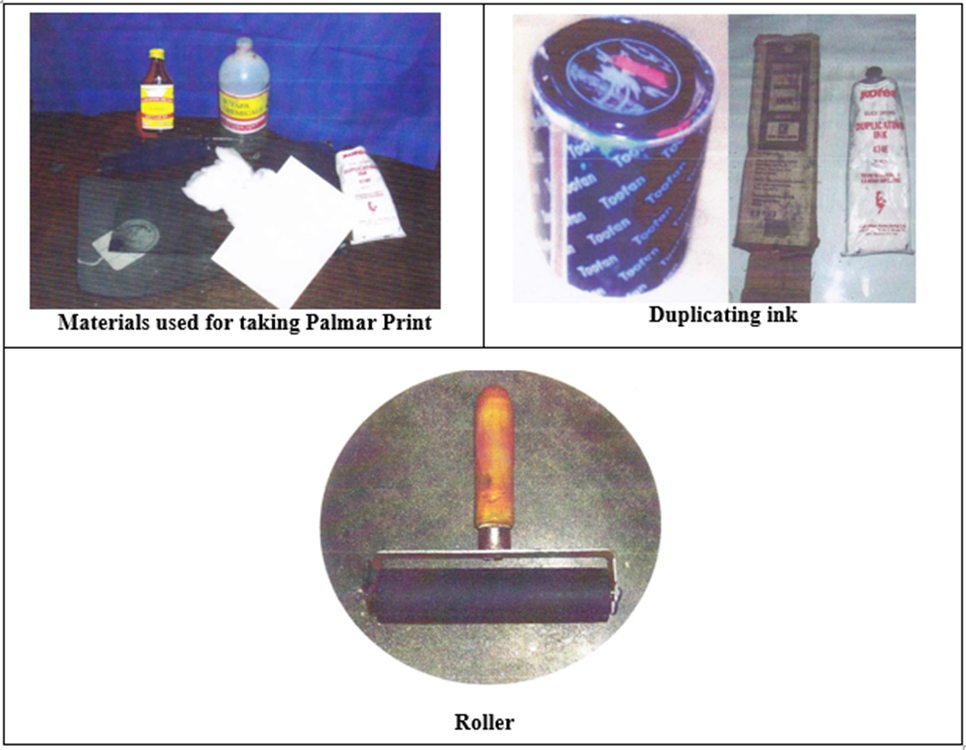
Participants were asked to wash their hands thoroughly with soap and water and dry them before printing. A thin, uniform layer of printer's ink was prepared on an inking slab using a roller. Fingerprints were obtained using the rolled-finger technique, as it provides more complete recording of the dermatoglyphic pattern than the plain impression method. Each finger was rolled from the ulnar to the radial side over the inked slab and subsequently onto the glazed paper. Prints were obtained from all ten digits. For palm prints, the entire palm, including the hollow and lateral margins, was uniformly inked using the roller. The palm was then carefully placed and rolled over the recording paper with appropriate pressure to obtain a complete palmar impression. All prints were examined for clarity and adequacy before analysis.
Measurement of Dermatoglyphic Parameters
Ridge counting: Ridge count was determined by drawing a straight line from the core of the dermatoglyphic pattern to the corresponding triradius. The number of epidermal ridges touching or crossing the line was counted, while the core and triradius themselves were excluded.
Total Finger Ridge Count (TFRC): Ridge counts were determined for all ten fingers. In loops, the ridge count between the core and the single triradius was recorded. In whorls, the higher of the two ridge counts was considered. The sum of the ridge counts of all ten fingers constituted the TFRC.
Absolute Finger Ridge Count (AFRC): For loops, the single ridge count was recorded, whereas for whorl patterns, the ridge counts from both the radial and ulnar triradii were included. The sum of the ridge counts from all ten fingers constituted the AFRC.
a-b Ridge Count: The palmar triradii located beneath the index and middle fingers were identified as a and b, respectively. When more than one triradius was present, the triradius nearest to the radial border was selected. A straight line was drawn between the a and b triradii, and the number of epidermal ridges crossing or touching this line was counted to obtain the a-b ridge count.
Image gallery:
RESULTS:
Table 1: Distribution of Mean Total Finger Ridge Count for All Fingers in Schizophrenia Patients with Respect to Sex
|
Population |
No. of Individuals |
Mean TFRC |
SD |
SE |
t-value |
Remark |
|
Schizophrenia Male |
30 |
148.93 |
21.1 |
3.87 |
3.37 |
Significant |
|
Schizophrenia Female |
28 |
128.78 |
23.9 |
4.6 |
Table 2: Mean Absolute Finger Ridge Count in Schizophrenia Patients for All Fingers with Respect to Sex
|
Population |
No. of Individuals |
Mean AFRC |
SD |
SE |
t-value |
Remark |
|
Schizophrenia Male |
30 |
183.1 |
66.8 |
12.2 |
1.31 |
Not significant |
|
Schizophrenia Female |
28 |
158.26 |
76 |
14.6 |
Table 3: Comparison of Mean Absolute Finger Ridge Count (AFRC) between Schizophrenia Patients and Controls by Sex
|
Population |
Sex |
No. of Individuals |
Mean AFRC |
SD |
SE |
t-value |
Remark |
|
Schizophrenia |
Male |
30 |
183.1 |
66.84 |
12.2 |
0.98 |
Not significant |
|
Control |
25 |
165.76 |
63.26 |
12.65 |
|||
|
Schizophrenia |
Female |
28 |
158.26 |
76.04 |
14.63 |
0.53 |
Not significant |
|
Control |
25 |
169.68 |
76.41 |
15.28 |
Table 4: Comparison of Mean a-b Ridge Count between Schizophrenia Patients and Controls by Sex
|
Population |
Sex |
No. of Individuals |
Mean a-b Ridge Count |
SD |
SE |
t-value |
Remark |
|
Schizophrenia |
Male |
30 |
74.92 |
8.66 |
1.58 |
1.24 |
Not significant |
|
Control |
25 |
77.68 |
7.8 |
1.56 |
|||
|
Schizophrenia |
Female |
28 |
69.99 |
8.46 |
1.66 |
1.58 |
Not significant |
|
Control |
25 |
73.08 |
6.66 |
1.33 |
Table 1 shows the comparison of the mean Total Finger Ridge Count (TFRC) between male and female patients with schizophrenia. The mean TFRC was higher among male schizophrenia patients (148.93 ± 21.10) compared with female schizophrenia patients (128.78 ± 23.90). The difference between the two groups was statistically significant, with a t-value of 3.37.
Table 2 presents the mean Absolute Finger Ridge Count (AFRC) among male and female schizophrenia patients. The mean AFRC was 183.10 ± 66.84 in males and 158.26 ± 76.04 in females. Although the mean AFRC was higher among male schizophrenia patients, the difference was not statistically significant (t = 1.31).
Table 3 compares the mean AFRC between schizophrenia patients and controls separately for males and females. Among males, the mean AFRC was higher in schizophrenia patients (183.10 ± 66.84) than in controls (165.76 ± 63.26), but the difference was not statistically significant (t = 0.98). Among females, the mean AFRC was lower in schizophrenia patients (158.26 ± 76.04) than in controls (169.68 ± 76.41), and this difference was also not statistically significant (t = 0.53).
Table 4 demonstrates the comparison of mean a-b ridge count between schizophrenia patients and controls according to sex. Among males, schizophrenia patients had a mean a-b ridge count of 74.92 ± 8.66, compared with 77.68 ± 7.80 among controls. The difference was not statistically significant (t = 1.24). Similarly, among females, the mean a-b ridge count was 69.99 ± 8.46 in schizophrenia patients and 73.08 ± 6.66 in controls, with no statistically significant difference (t = 1.58).
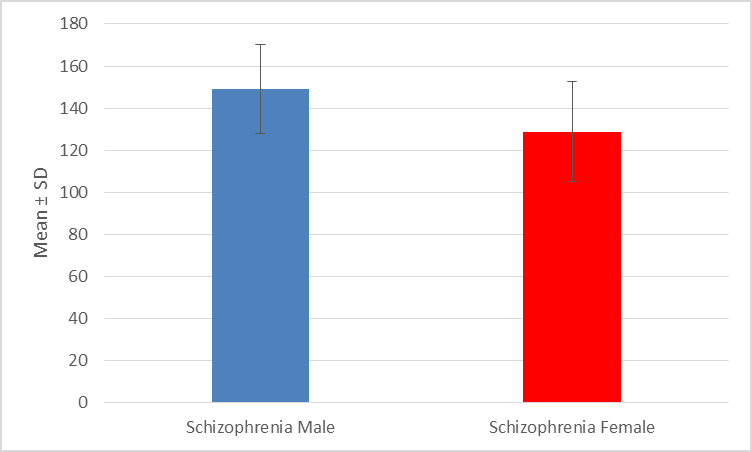
Figure 1: Distribution of Mean Total Finger Ridge Count for All Fingers in Schizophrenia Patients with Respect to Sex
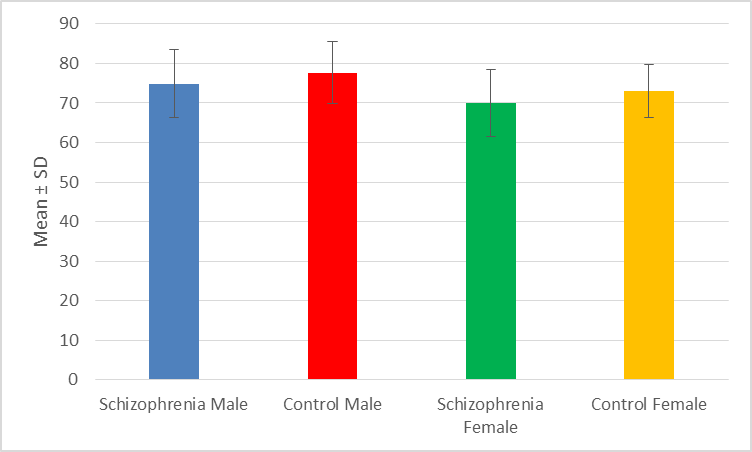
Figure 2: Comparison of Mean a-b Ridge Count between Schizophrenia Patients and Controls by Sex
DISCUSSION:
In our present study we found significant increase mean total finger ridge count (TFRC) in male schizophrenic than female patients. This result is supported by the study report of Rothhammer et al (1971) [9]. Results of our study are further supported by a recent study of Ozyurt et al (2010) [10] as they found significant bisexual difference in schizophrenics (p<0.003).Bagga (1986) [11] also reported that sexual differences with regard to TFRC appear to be clear cut for males having higher values than the females.On the other hand in contrast to our study report Mellor (1968) found that male patients as compared to female patients had a TFRC significantly lower than control population. Zavala and Nunzez (1971) [12] found somewhat lower TFRC.Regarding the AFRC we found sexual differences but they are not statistically significant and slight increase in schizophrenics than in controls but results are not statistically significant as well. This result is confirmed by Balgir RS (1982) [13] as they found significant differences in AFRC between two sexes.Similar results are also reported from a recent study by Wang JF et al (2008) [14].
a-b ridge count:
In our study we found significant (t=2.26) bi sexual differences with regard to a-b ridge count. Male schizophrenics have higher mean a-b ridge count than female schizophrenics. However, schizophrenics show a comparatively lower a-b ridge count than control but the difference is not statistically significant. The results are in complete agreement with Sengupta and DasBhuyan (1995)[15] .In our present case-control study we had considered 58 schizophrenia patients (as diagnosed by DSM-IV-TR criteria). Out of them 30 were males 25 were females. We had also considered sex matched control groups. Both the digital and palmar prints were taken to make observations of different parameters. Schizophrenic patients have been compared with the control group in relation to sex. Moreover, we observed whether there was any variation of dermatoglyphics in relation to sex among Schizophrenic patients.In our present study the most conspicuous features found is as follows-In our observation the mean total finger ridge count show statistically significant increase in male schizophrenics than female patients. But when patients are compared with control in relation to sex, the study failed to demonstrate any statistically significant differences.Regarding the Absolute finger ridge count, we found sexual differences but they are also not statistically significant. It was also noted that the male schizophrenics show significantly higher mean a-b ridge count than female schizophrenics. From the present study it is evident that there are some statistically significant changes in schizophrenia patients which may be useful in population genetics. For diagnosis of schizophrenia with the help of palmar dermatoglyphics we need further studies in future.
CONCLUSION:
The present study evaluated dermatoglyphic parameters among male and female patients with schizophrenia and compared selected parameters with sex-matched controls. Male schizophrenia patients demonstrated a significantly higher mean Total Finger Ridge Count (TFRC) than female schizophrenia patients, suggesting a possible sex-related variation in this parameter. In contrast, the difference in Absolute Finger Ridge Count (AFRC) between male and female schizophrenia patients was not statistically significant. Comparison with controls showed no significant differences in AFRC among either males or females. Similarly, the mean a-b ridge count was lower in schizophrenia patients than controls in both sexes, but the differences were not statistically significant. Overall, TFRC demonstrated significant sexual variation, whereas AFRC and a-b ridge count did not show significant differences in the studied population.
REFERENCES:
1. Beckman L, Norring A. Finger and palm prints in schizophrenia. Acta Genetica et Statistica Medica. 1963 Jan 1:170-7.
2. Sengupta S, Bhuyan SD. Palmar dermatoglyphics in schizophrenia. Indian journal of psychiatry. 1995 Apr;37(2):86-90.
3. Shakibaei F, Asadollahi GA, Tabibi A. Dermatoglyphics in patients with schizophrenia. Journal of research in medical sciences: the official journal of Isfahan University of Medical Sciences. 2011 Aug;16(8):1055.
4. Golembo-Smith S, Walder DJ, Daly MP, Mittal VA, Kline E, Reeves G, Schiffman J. The presentation of dermatoglyphic abnormalities in schizophrenia: a meta-analytic review. Schizophrenia research. 2012 Dec 1;142(1-3):1-1.
5. Divakaran A, Narayanaswamy JC, Kalmadi SV, Narayan V, Rao NP, Venkatasubramanian G. Parent-of-origin effect in schizophrenia and non-affective psychoses: Evidence from dermatoglyphics. Indian Journal of Psychological Medicine. 2013 Jul;35(3):260-7.
6. Chary TV, Varma SL, Singh S, Zain AM, Dharap AS. Dermatoglyphic patterns in subtypes of schizophrenia. European psychiatry. 1996 Jan;11(1):12-5.
7. Pal AK, Ray S, Bhattacharya J. Use of dermatoglyphic parameters as possible markers in bipolar affective disorder. International Journal of Health Sciences and Research. 2021;11(7):509-15.
8. Norovsambuu O, Tsend-Ayush A, Lkhagvasuren N, Jav S. Main characteristics of dermatoglypics associated with schizophrenia and its clinical subtypes. Plos one. 2021 Jun 10;16(6):e0252831.
9. Rothhammer F, Pereira G, Camousseight A, Benado M. Dermatoglyphics in schizophrenic patients. Human heredity. 1971 Aug 27;21(2):198-202.
10. ÖZYURT B, Songur A, Sarsilmaz M, AKYOL Ö, Namli M, Demirel R. Dermatoglyphics as markers of prenatal disturbances in schizophrenia: a case-control study. Turkish Journal of Medical Sciences. 2010;40(6):917-24.
11. Bagga A. Dermatoglyphics in Schizophrenia. Science Reporter. 1986;23(1):26-8.
12. Zavala, C., Nunez C. J Genet Hum. 1970 Dec, 18 (4): 407-20
13. Balgir RS, Murthy RS. Dermatolglyphic studies in schizophrenia: a review. Indian Journal of Psychiatry. 1982 Jul;24(3):248-57.
14. Wang JF, Lin CL, Yen CW, Chang YH, Chen TY, Su KP, Nagurka ML. Determining the association between dermatoglyphics and schizophrenia by using fingerprint asymmetry measures. International Journal of Pattern Recognition and Artificial Intelligence. 2008 May;22(03):601-16.
15. Sengupta S, Bhuyan SD. Palmar dermatoglyphics in schizophrenia. Indian journal of psychiatry. 1995 Apr;37(2):86-90.