A Study of Biochemical effect of ethanol overconsumption on serum Uric Acid levels occuring in male Alcoholic patients attending Medicine OPD of GMC Nagpur: An Analytical Study.
- Dr. Kedar Deshpande , Associate Professor, Department of Biochemistry, Government Medical College (GMC), Nagpur, Maharashtra, India.
- Dr. Rahul Gadpal , Associate Professor, Department of Biochemistry, Government Medical College (GMC), Chh. Sambhajinagar, Maharashtra, India.
Article Information:
Abstract:
Background: Alcohol consumption is a major public health concern in India. The overall prevalence of alcohol overconsumption in India is approximately 12.5%, of which 8.6% is attributed to hazardous and harmful use and 2.3% to alcohol dependence. The prevalence of alcohol use in different regions of India ranges from 10% to 60%, with a predominance among men. Chronic alcohol intake has been associated with several metabolic disturbances, including hyperuricemia. However, limited studies from the Vidarbha region of Maharashtra have evaluated the relationship between alcohol consumption and elevated serum uric acid levels. Methods: This analytical case-control study was conducted in the Department of Medicine, Government Medical College and Hospital (GMCH), Nagpur. A total of 76 male participants aged 20–50 years were enrolled after fulfilling the inclusion and exclusion criteria. The study group comprised 38 male alcoholics (cases) and 38 healthy male volunteers (controls). Ethical clearance was obtained from the Institutional Ethics Committee, GMCH, Nagpur. Approximately 2 mL of venous blood was collected from each participant under strict aseptic precautions into K3EDTA SST tubes and processed at the Central Clinical Laboratory. Serum uric acid levels were estimated using the Uricase-POD method on a Beckman Coulter autoanalyzer. Data were analyzed using descriptive and inferential statistical methods, and a p-value <0.05 was considered statistically significant. Results: There was no statistically significant difference in age distribution between cases and controls (p=0.45), indicating comparability of the study groups. Elevated serum uric acid levels were significantly more prevalent among alcoholics than among controls (p<0.05). Higher serum uric acid concentrations, particularly within the range of 7–8 mg/dL, were observed more frequently among alcohol consumers, suggesting a positive association between alcohol intake and hyperuricemia. Conclusion: The findings of this study demonstrate a significant association between alcohol consumption and elevated serum uric acid levels. Increased frequency and quantity of alcohol intake may contribute to the development of hyperuricemia and subsequently increase the risk of gout, particularly among men.
Keywords:
Article :
INTRODUCTION:
Alcohol overconsumption is a major public health concern in India, with an overall prevalence of 12.5%, of which 8.6% is attributed to hazardous and harmful alcohol use and 2.3% to alcohol dependence.[1] The prevalence of alcohol consumption across India ranges from 10% to 60%, with a marked predominance among males.[2] Several factors contribute to excessive alcohol consumption in the country, including diverse socioeconomic practices, inadequate awareness of alcohol-related health hazards, misinformation in the media, changing drinking patterns associated with rapid urbanization, inconsistent implementation of alcohol-control measures, and poor public health education regarding the consequences of excessive alcohol use.[3]
Excessive alcohol intake is associated with numerous adverse health outcomes affecting multiple organ systems. These include alcohol-related psychiatric disorders, alcoholic liver disease, various malignancies, irreversible testicular atrophy, acute alcoholic myopathy, avascular necrosis, Wernicke's encephalopathy, cerebellar degeneration, anxiety, suicidal tendencies, and personality disorders.[3] These complications significantly contribute to morbidity and reduce the overall quality of life among chronic alcohol users.
Alcoholic beverages contain 3% to 50% ethanol, which is rapidly absorbed through the gastrointestinal tract and distributed to various organs after first-pass metabolism. Ethanol is metabolized primarily through catalase, the microsomal ethanol-oxidizing system, and alcohol dehydrogenase, producing acetaldehyde, a highly toxic intermediate that is subsequently converted into acetate by aldehyde dehydrogenase. Blood ethanol concentration largely determines the physiological effects of alcohol, although individual metabolic variations influence its clinical impact.[4]
Gout and hyperuricemia are metabolic disorders resulting from disturbances in purine metabolism and represent an increasing global health burden. Over the past two decades, the worldwide prevalence of gout has risen by 63.44%, with a substantial increase in disease-related disability. By 2020, gout affected 1%–6.8% of the global population, and more than 120 million cases are projected by 2035.[2,5]
Alcohol consumption is a well-established risk factor for hyperuricemia and gout, with the risk increasing in proportion to drinking frequency and being significantly higher among men than women.[5] Although several studies have proposed mechanisms linking excessive alcohol consumption with hyperuricemia, limited research has been conducted in the Vidarbha region of Maharashtra. Therefore, the present study was undertaken to investigate this association in the local population.[6]
Aims and Objectives
The aim of this study was to determine and compare the serum uric acid (UA) levels between individuals with ethanol overconsumption (cases) and healthy controls, evaluate the association between ethanol overconsumption and hyperuricemia, and explore the probable mechanisms underlying this association.
MATERIALS AND METHODS:
Study Design
This was a hospital-based analytical study conducted from May 2025 to November 2025 in the Department of Medicine at Government Medical College and Hospital (GMCH), Nagpur.
Inclusion and Exclusion Criteria
The study included male participants aged 25–50 years, comprising individuals with ethanol overconsumption (cases) and healthy male volunteers (controls), after obtaining approval from the Institutional Ethics Committee, GMCH, Nagpur, and informed consent from all participants. Individuals with conditions known to influence serum uric acid levels, such as established hereditary disorders of purine metabolism, or those who did not fulfill the study eligibility criteria, were excluded from the study.
Data Collection Procedure
A total of 76 participants were enrolled, including 38 male alcoholics and 38 healthy male volunteers as controls. Data were collected using a predesigned proforma that recorded demographic details, clinical history, symptoms, signs, vital parameters, and findings from routine and relevant special investigations. Approximately 2 mL of venous blood was collected from the antecubital vein of the left forearm under strict aseptic precautions using a disposable syringe and needle into a serum separator tube (SST). The samples were immediately transported to the Central Clinical Laboratory (CCL), GMCH, Nagpur, for prompt processing. Serum uric acid levels were quantitatively estimated using the Uricase–Peroxidase (POD) method on a Beckman Coulter autoanalyzer.
Statistical Analysis
The collected data were entered and analyzed using STATA software (version 16.0). Descriptive statistics were expressed as mean ± standard deviation (SD) for continuous variables, and appropriate statistical tests were applied to compare serum uric acid levels between cases and controls. A two-tailed p-value of less than 0.05 was considered statistically significant for determining the association between ethanol overconsumption and hyperuricemia.
RESULTS:
Table 1: Age wise Distribution of Male Subjects
|
Age (yrs.) |
Controls (n: 50) |
Cases (n: 50) |
p - value |
||||||
|
25-34 |
35-45 |
46-50 |
Total |
25-34 |
35-45 |
46-50 |
Total |
||
|
Males |
9 |
30 |
11 |
50 |
11 |
24 |
15 |
50 |
0.45 |
|
Total |
9 |
24 |
11 |
50 |
11 |
24 |
15 |
50 |
|
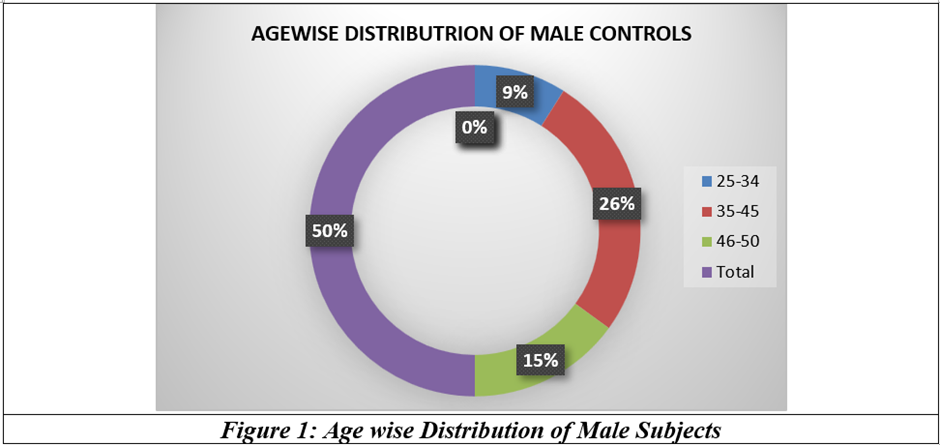
Table 2: Age wise Distribution of Male Alcoholics According to Serum Uric Acid Levels
|
Age (yrs.) Serum Uric Acid (mg/dl) |
Cases (n: 50) |
Controls (n: 50) |
P – Value |
||||||
|
25 – 34 |
35 - 45 |
46 - 50 |
Total |
25 - 34 |
35 - 45 |
46 - 50 |
Total |
||
|
2 - 7 |
08 |
09 |
10 |
27 |
15 |
20 |
05 |
40 |
0.01 |
|
7 - 8 |
01 |
08 |
08 |
17 |
03 |
03 |
00 |
06 |
|
|
8 - 9 |
00 |
04 |
00 |
04 |
00 |
01 |
01 |
03 |
|
|
9 - 10 |
00 |
01 |
01 |
02 |
00 |
01 |
01 |
02 |
|
|
|
09 |
22 |
19 |
50 |
18 |
25 |
07 |
50 |
|
DISCUSSION:
In the present case-control study, the age distribution of cases and controls was comparable, with the majority of subjects in both groups falling in the 35–45 years age bracket, and no statistically significant difference in age distribution between the two groups (p = 0.45). This is consistent with the design followed by Ofori and Odia,[7] who recruited age- and sex-matched controls to eliminate age as a confounding variable while assessing the relationship between serum uric acid and hypertension-related target organ damage, and with Zulkarnain et al.[8] who restricted their case-control comparison to a defined adult age band to minimise the confounding effect of age on serum uric acid levels. Comparable baseline age distribution in the present study strengthens the validity of the observed association between serum uric acid and case status, as it makes it less likely that the difference in uric acid levels between groups was simply a reflection of an underlying age difference.
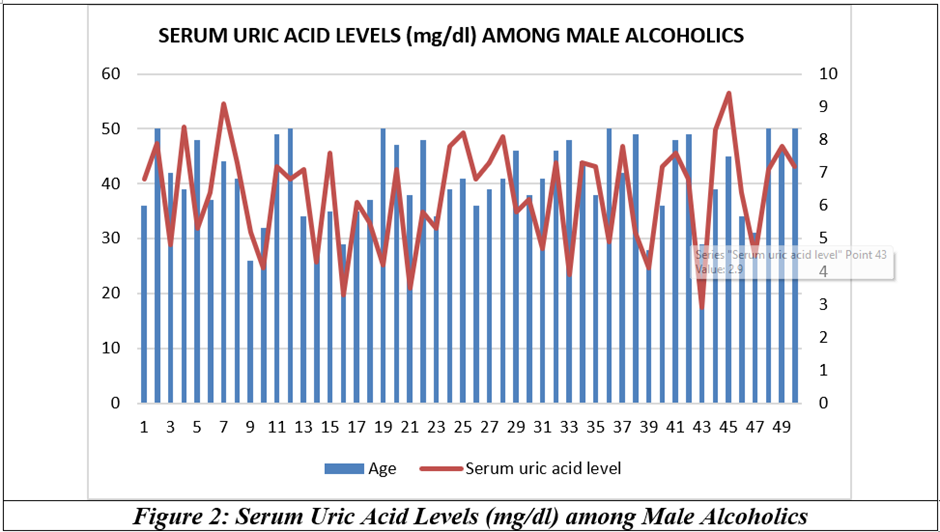
Serum uric acid levels were significantly higher among cases as compared to controls in the present study, with 46% of cases having levels above 7 mg/dL as against only 20% of controls (p = 0.01). This finding is in agreement with several earlier case-control and cross-sectional studies. Selby et al.[9] in a large nested case-control study from the Kaiser Permanente cohort, found that baseline serum uric acid was an independent predictor of incident essential hypertension even after adjustment for other established risk factors. Similarly, Raina et al[10] in a case-control study from the sub-Himalayan region of North India, reported a significantly higher prevalence of hyperuricemia among hypertensive cases as compared to normotensive controls, with an odds ratio of nearly 5, findings that mirror the pattern of elevated serum uric acid seen among cases in the present study. Ofori and Odia[7] similarly documented significantly higher mean serum uric acid among hypertensive patients than in age- and sex-matched controls, and Zulkarnain et al.[8] reported significantly higher serum uric acid levels in the hypertensive case group compared to controls in a Malaysian hospital-based population. Taken together, these studies support a consistent case-control gradient in serum uric acid similar to that observed in the present study.
On chi-square analysis, the overall distribution of serum uric acid categories differed significantly between cases and controls (χ² = 8.21, df = 3, p = 0.042), with higher uric acid categories being more frequent among cases. This is corroborated by the dose-response meta-analysis of Liu et al.[11] who pooled data from 17 prospective cohort studies comprising over 32,000 participants and demonstrated a significant positive dose-response relationship between serum uric acid level and the risk of incident hypertension, with each 1 mg/dL rise in uric acid associated with a 10% increase in relative risk. Ali et al.[12] in a cross-sectional study of Bangladeshi adults, likewise found a graded increase in the prevalence of hypertension across rising quartiles of serum uric acid. These findings collectively support the categorical shift toward higher uric acid levels observed among cases in the present study, and are consistent with a possible dose-dependent relationship between serum uric acid and the case condition rather than a simple threshold effect.
On age-stratified analysis, a significant difference in mean serum uric acid between cases and controls was observed only in the 35–45 years age group (6.32 ± 1.42 vs 4.98 ± 1.20 mg/dL; p = 0.001), while the differences in the 25–34 years (p = 0.68) and 46–50 years (p = 0.12) age groups did not reach statistical significance. A similar age-dependent pattern has been described in other populations. Dharmaraj et al.[13] in a cross-sectional analysis of hypertensive patients aged 30–50 years from Tamil Nadu, South India, observed that the association between uric acid derangement and hypertension was most consistently demonstrable in the middle adult age band, while Suyambulingam et al.[14] studying hypertensive adults aged 35–65 years, found that uric acid elevation and its metabolic correlates were most pronounced in the earlier decades of the studied range before plateauing at older ages. A possible explanation, as proposed by Feig et al.[15] is that uric acid-mediated mechanisms - including activation of the renin-angiotensin system, reduction in nitric oxide bioavailability, and induction of endothelial dysfunction - are more prominent in the earlier, uric acid-dependent phase of hypertension pathogenesis, whereas in older age groups other sodium-dependent and structural vascular factors increasingly dominate blood pressure regulation, which may dilute the isolated contribution of serum uric acid and explain the loss of statistical significance in the older age stratum in the present study.
CONCLUSION:
Alcohol consumption is significantly associated with an increased risk of gout and hyperuricemia, with the risk increasing according to the frequency and quantity of intake, particularly among men. Limiting excessive alcohol consumption through targeted lifestyle modifications and individualized interventions is essential for the prevention and effective management of these conditions in high-risk populations.
REFERENCES:
1. Joseph J, Varghese A, Vijay VR, et al. The prevalence of alcohol use disorders using alcohol use disorders identification test (AUDIT) in the Indian setting: - a systematic review and meta-analysis. J Ethn Subst Abuse 2024;23(1):2-20.
2. Jagadeesan S, Patel P. Epidemiology, pattern and prevalence of alcohol consumption in India: need for public health action. Int J Community Med 2021;8(4):2070-6.
3. Eashwar VMA, Umadevi R, Gopalakrishnan S. Alcohol consumption in India- An epidemiological review. J Family Med Prim Care 2020;9(1):49-55.
4. Rajendram R, Hunter R, Preedy V. Alcohol: absorption, metabolism, and physiological effects. Encyclopedia of Human Nutrition 2013;1(4):40-9.
5. Ma W, Ye G, Liu Y, et al. Impact of alcohol consumption on hyperuricemia and gout: a systematic review and meta-analysis. Front Nutr 2025;12:1588980.
6. Burtis CA, Ashwood ER, Young DS, et al. Specimen collection and other preanalytical variables. Chap- 2. Teiz’s Fundamental of clinical chemistry. WB Saunders & Co. Ltd. 2003;1:30-54.
7. Ofori SN, Odia OJ. Serum uric acid and target organ damage in essential hypertension. Vasc Health Risk Manag 2014;10:253-61.
8. Zulkarnain M, Wan Zain WMS, Najib MY, et al. Association between serum uric acid levels with essential hypertension and its metabolic variables in Hospital Universiti Sains Malaysia. Med J Malaysia 2024;79(4):457-63.
9. Selby JV, Friedman GD, Quesenberry CP. Precursors of essential hypertension: pulmonary function, heart rate, uric acid, serum cholesterol, and other serum chemistries. Am J Epidemiol 1990;131(6):1017-27.
10. Raina S, Agarwal VK, Kapoor D, et al. Hypertension as determinant of hyperuricemia: a case control study from the sub-Himalayan region in North India. J Assoc Physicians India 2018;66(1):18-21.
11. Liu L, Zhang X, Qie R, et al. Dose-response association between serum uric acid levels and incident hypertension: a systematic review and meta-analysis of 17 prospective cohort studies of 32 thousand participants. Acta Cardiol 2021;76(7):748-53.
12. Ali N, Mahmood S, Islam F, et al. Relationship between serum uric acid and hypertension: a cross-sectional study in Bangladeshi adults. Sci Rep 2019;9(1):9061.
13. Dharmaraj RB, Thangavel K, Indirajith V, et al. Serum albumin and uric acid levels in hypertensive patients: a cross-sectional analysis from central Tamil Nadu, South India. Cureus 2025;17(1):e76766.
14. Suyambulingam A, Arun K, Venkatesan A, et al. From purines to plaques: serum uric acid as a cardiometabolic marker and its correlation with dyslipidemia in essential hypertension. Cureus 2025;17(9):e92700.
15. Feig DI, Kang DH, Nakagawa T, et al. Uric acid and hypertension. Curr Hypertens Rep 2006;8(2):111-5.