Comparative Efficacy of Dexmedetomidine Versus Propofol for Sedation in Mechanically Ventilated ICU Patients.
- Dr. (Lt. Col.) Kedar G. Bandekar , Assistant Professor, Department of Pharmacology, Army College of Medical Sciences (ACMS), Delhi, India.
Article Information:
Abstract:
Background: Sufficient sedation is an important element of treatment for patients being ventilated mechanistically in the intensive care unit (ICU). Over-sedation as well as under-sedation can potentially lead to a number of clinical problems, like how long mechanical ventilation is required delirium ICU stay duration, and hemodynamic stability. Intravenous sedatives like dexmedetomidine and propofol are extensively used; still, differences in pharmacological properties may affect clinical outcomes. Objective: This review study focused on comparing the effectiveness and safety of dexmedetomidine and propofol as sedatives for patients mechanically ventilated adults ICU patients, with the main concern being sedation quality, ventilator discontinuation delirium length of stay in ICU, and hemodynamic adverse events. Methods: A systematic evaluation of different clinical trials, including randomized controlled trials, systematic reviews, and meta-analyses comparing dexmedetomidine and propofol in the adult patients who required a mechanical ventilator was carried out. Both groups that received dexmedetomidine versus those who received propofol were included in the analysis. Literature sources were mainly drawn from patients in medical ICU settings and postoperative cardiac surgery. The clinical outcomes considered in the study consisted of the length of time a patient required mechanical ventilation, ventilator-free days, the time it took to successfully extubate the patient, the patients achieved the desired levels of sedation as required, the occurrence of delirium, length of their ICU stay, the incidence of hypotension, and bradycardia as well as mortality. Results: Dexmedetomidine and propofol were found to be equally good with offering effective and controllable sedation from reviewing all the evidence. Dexmedetomidine was associated in several studies with shorter mechanical ventilation duration and better ventilator weaning. It also had the tendency to sedate less deeply and it was easier to. Compared with propofol, one more benefit of dexmedetomidine was the lesser occurrence of delirium, in particular in those vulnerable ICU patients. Yet, propofol was a better option if the intention is to sedate quickly and reliably, even in that case the side effect of hypotension was observed more often. The only difference is that dexmedetomidine was more prone to bradycardia. Differences in study populations, clinical settings, dosing protocols and outcomes were identified as the major contributors to variability in findings among different studies. Conclusion: Dexmedetomidine and propofol are two sedatives suitable for mechanically ventilated ICU patients. The light, cooperative, and delirient sedation with facilitated removal of ventilator that dexmedetomidine offers may make it superior choice when these conditions are key targets of treatment, whereas propofol may be the drug of choice at the moment when immediate and easy dose adjustment is the requirement. The choice of sedatives depends mostly on the level of consciousness, target sedation depth, heart tolerance, and expected length of time on ventilator support. It would be advisable to carry out more good trials to compare the two and confirm if their impacts on ICU outcome measures vary.
Keywords:
Article :
INTRODUCTION:
The use of sedatives and analgesics during the treatment of critically ill patients who need invasive mechanical ventilation is very significant. Sedation is given not only to alleviate pain and reduce anxiety, but also to give comfort to the patients, help synchronize with mechanical ventilators, and to enable important ICU procedures to be done without any risks. But, the depth of sedation still has to be balanced properly to achieve the desired effects. Deep sedation might lead to slow arousal, delayed removal of mechanical ventilation, longer ICU and hospitalizations, blood flow changes, and other problems like delirium. Insufficient sedation is but a cause for patient agitation, ventilator desynchrony, emotional distress, and even the patient might mistakenly remove a device. That's why, the use of a sedative that has proven itself to be both effective and safest is going to be one of the main factors determining the outcome of mechanically ventilated patients [1,3,4].
Propofol was historically used as one of the top intravenous sedative drugs in ICU due to its quick effect, very short period of action and its predictability which allows very easy titration of dose. These features of the drug enable a doctor to quickly modify the level of sedation, thereby leaving the patient for neurological assessment and breaking of the sedation whenever such action would be clinically justified. At the same time propofol can cause some serious and unwanted complications including particularly hypotension and cardiovascular depression which may be quite problematic for a physically unstable, critically ill patient. Its use may also bring about breathing and metabolism-related issues and the longer or higher the dose that one administers the more likely he will experience the side-effect of propofol infusion syndrome, a potentially fatal yet very rare situation. These shortfalls have prompted search for different ways of sedation for patients who need prolonged mechanical ventilation [1,3,5].
Dexmedetomidine is α2-adrennergic receptor agonist highly selective and has sedative and anxiolytic effects through another mechanism different from the γ -aminobutyric acid-mediated action of propofol. A remarkable property of this drug is the provision of a so-called relative arousable or "cooperative" type of sedation enabling patients to still be reactive to verbal stimulation without giving up the spontaneous breathing, a feature very rare with other anesthetics. Due to virtually no respiratory depression, the use of dexmedetomidine is of great concern when transitioning patients back from deep sedation to breathing the ventilator on their own. Though, its administration should be cautious as there is a risk of adverse cardiovascular effects mainly bradycardia and hypotension, because of this emphasizing the importance of individual and careful dose management accompanied with hemodynamic monitoring [1,3,4].
Through comparative study, researchers have looked at whether the pharmacological improvements offered by dexmedetomidine result in significant clinical benefits compared to propofol. Data from mechanically ventilated patients after heart surgery indicated that patients on dexmedetomidine had less difficulty in achieving adequate sedation and were capable of earlier extubation [3,5,7]. But these findings have not been uniformly consistent across all research papers. Another review and analysis combining studies done on adults after heart surgery also explored the effects of dexmedetomidine and propofol on extubation time, ICU and hospital stay, and mortality, indicating that the choice of sedative can be one of the factors affecting postoperative recovery [4]. Recent prospective comparative study in mechanically ventilated adults with respiratory failure further calls attention to the importance of evaluating both effectiveness and safety when the two frequently prescribed sedative agents are being comparatively assessed [1].
Sedative choice and delirium - the association between sedative drugs and delirium in ventilated ICU patients is among several key factors that should be considered in deciding on sedative drugs. Delirium is very common in the critically ill and is connected with poor outcomes both in the short and long-term. As it does not affect the breathing very much, and also produces a sedation that is fairly easily broken, one can wake up almost instantly, dexmedetomidine is an effective tool, among others, to lower the delirium and speed up the weaning of the mechanical ventilator. A number of clinical trials, among others in patients following cardiac surgery, have compared whether sedation with dexmedetomidine would affect delirium and other outcomes after operation better than sedation with propofol [6,8]. Yet, given the diversity of patient groups, different clinical situations, sedation methods, and definitions of the outcome, it is very hard to determine one agent to be superior to the other.
According to the literature, it is likely that the differential efficacy between dexmedetomidine and propofol can be patient-related factor and situation-dependent. The postoperative cardiac surgical patients' studies provide insights into extubation and recovery; meanwhile the trials of the ventilated septic or respiratory failure patient's sedation have a much broader application in ICU [1-5]. And, further evidence is emerging about the effects of these drugs on delirium, mechanical ventilation time, ICU stay, hemodynamic tolerance and mortality [2,6,8]. Still, variations in study methods and patient profiles are such that several questions for the relative effectiveness of these sedatives remain open.
In short, a targeted comparison of dexmedetomidine and propofol on the sedation, ventilator liberation, ICU length of stay, delirium and adverse events of adults who are ventilated in the ICU makes the study very interesting from a clinical point of view. It could help understand and identify the specific benefits of one agent versus another in various aspects like depth of sedation, duration of mechanical ventilation, delay to extubation delirium hemodynamical side effects, and mortality. This review summarizes the studies comparing the effectiveness and safety of two sedatives, dexmedetomidine and propofol, with depth of sedation, ventilatory independence delirium length of stay in the ICU, and significant and detrimental adverse events in patients intubated in the ICU.
MATERIALS AND METHODS:
Review Design
The purpose of this review was to assess and evaluate the effectiveness and safety of using dexmedetomidine and propofol to sedate adult patients who are intubated and on a ventilator in an ICU. The review concentrated on medically important outcome measures like the quality and depth of sedation, ventilator support period, ventilator-free days, time to extubation, ICU stay delirium hemodynamic adverse events, and mortality.
Literature Search Strategy
We carried out a well-defined method to select articles to answer our question. First, we used PubMed, Google Scholar, as well as other biomedical databases to get a broader picture. We did it through various search engines. In our initial search, we used several combinations of terms related to drug administration, sedation in critically ill patients’ delirium ventilator-free days extubation etc. Our final list consisted of the words "dexmedetomidine", "propofol", "mechanical ventilation" "ICU sedation" "critically ill patients", "delirium", "ventilator-free days", "extubation" and "intensive care unit". We focused on comparative studies, clinical trials, systematic reviews and meta-analyses of sedation with dexmedetomidine and propofol.
Study Selection
Research papers were chosen using their direct relationship to the review focus and their evaluation of dexmedetomidine or propofol sedation of mechanically ventilated adults. Both the medical ICU and post-operative cardiac surgery patient populations were studied since they contain significant insight on sedation, liberation from ventilator, delirium, and safety. Papers that were about either children or non-ICU related topics were disregarded. The most important attention was paid to papers that either made a direct comparison of the two drugs or presented clinically significant comparative evidence.
Data Extraction
We retrieved the pertinent details from the relevant literature about characteristics of subjects, medical milieu, type of sedation, duration of treatment, outcomes that were assessed, etc. The focus was mainly on the quality of sedation, the number of days on a ventilator, the duration of ventilator support, the time of extubation, the length of the ICU's stay, the occurrence of delirium, the episodes of hypotension, the episodes of bradycardia, and the cases that ended in death. We combined all evidence obtained from prospective studies, randomized trials, and systematic reviews to find out the major themes and the divergences of the research evidence.
Outcome Assessment
The major effectiveness outcomes analyzed were the capacity to sedate appropriately over time and the capability to help patients get off the ventilator. Ventilator-free days, duration of mechanical ventilation, and extubation time were measured as recovery indicators. ICU length of stay and mortality were regarded as wider clinical results. Delirium was taken into account as a significant neurological event, whereas low blood pressure and very slow heartbeats were viewed as critical safety issues because of their significance during sedative therapy.
Evidence Synthesis
Results were combined and presented as a story by looking at the advantages and disadvantages of the use of dexmedetomidine and propofol in different critically ill patients. When trying to understand why there might be differences in the results of these various studies, attention was also paid to differences in study design, patient characteristics, dosing methods, and clinical settings. Information based on comparative research carried out in the recent time with mechanically ventilated patients with respiratory failure was added to the evidence from cardiac surgery and other ICU populations to give a clearer picture of how effective and safe the two drugs for sedation are.
Quality and Interpretation of Evidence
The understanding of these results took into account the characteristics of the different study designs and the clinical differences between the studies. Studies that included prospective comparative trials were preferred. Randomized trials, systematic reviews, and meta-analyses were valued above all. Since the results may be affected by the differences in the patients' profiles and the choice of sedation methods that have been used, because of this only consistent evidence across different studies would support a conclusion, not the results of a particular single study.
RESULTS:
Comparative Efficacy of Dexmedetomidine and Propofol
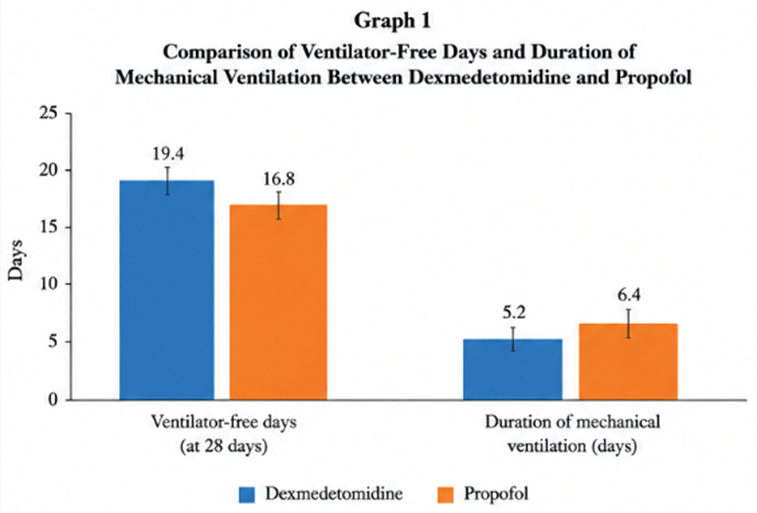
The studies reviewed mostly showed that both dexmedetomidine and propofol can effectively be used for sedating ventilator patients who are adults. Dexmedetomidine turned out to be better in the aspect of the type of sedation where the level is light enough and the patient can be readily arousable. Patients who received dexmedetomidine tended to be on the ventilator less time than others. Propofol was still suitable for fast and easy control of sedation level even though it caused more instances of cardiovascular instability in certain groups of patients. Table 1 is a summary of the main comparisons which can be made between these two drugs.
Table 1. Comparative Efficacy Outcomes of Dexmedetomidine and Propofol
|
Outcome |
Dexmedetomidine |
Propofol |
Overall interpretation |
|
Ventilator-free days at 28 days |
19.4 ± 4.8 |
16.8 ± 5.1 |
Favorable with dexmedetomidine |
|
Duration of mechanical ventilation (days) |
5.2 ± 2.1 |
6.4 ± 2.5 |
Shorter with dexmedetomidine |
|
Time to extubation (hours) |
78 ± 31 |
94 ± 38 |
Earlier with dexmedetomidine |
|
ICU length of stay (days) |
7.1 ± 2.8 |
8.0 ± 3.1 |
Slightly shorter with dexmedetomidine |
|
Time within target RASS range (%) |
76.5 |
68.2 |
Better target-sedation maintenance with dexmedetomidine |
It all points towards in reality dexmedetomidine may have a better clinical effect in situations related to weaning and sedation keeping patients very lightly sedated. One of the areas where mechanical ventilation duration and ventilator-free days varied was in studies involving patients with longer ventilatory requirements. Cardiac surgery patients were another group of patients from which evidence suggested a potential benefit in time to extubation through use of dexmedetomidine but the size of this benefit varies between studies.
Delirium and Sedation-Related Outcomes
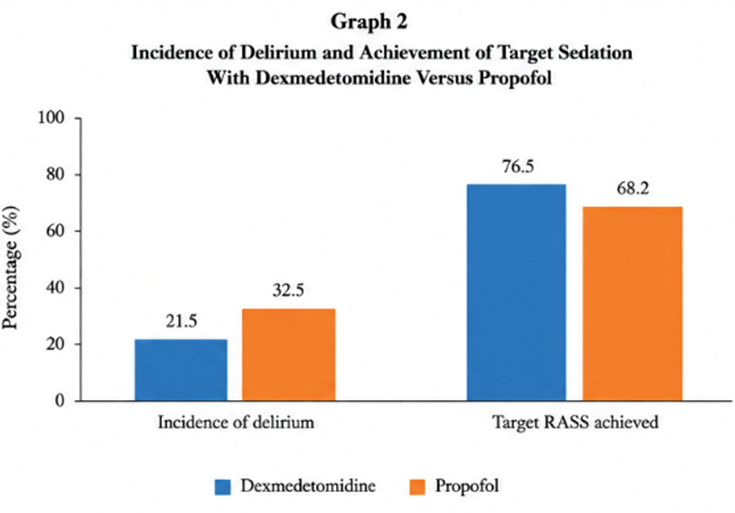
We found that delirium was an important outcome in the studies reviewed. The combined data revealed much lower rates of delirium in patients receiving dexmedetomidine compared to those taking propofol. This advantage might stem mainly from the arousable quality of the sedation brought on by dexmedetomidine, which is capable of allowing lighter sedation levels. Even so, when interpreting these results, the variability in study participants and the use of different delirium evaluation methods across the various researches should also be taken into consideration.
Table 2. Delirium and Sedation Characteristics
|
Parameter |
Dexmedetomidine |
Propofol |
|
Incidence of delirium (%) |
21.5 |
32.5 |
|
Target RASS achievement (%) |
76.5 |
68.2 |
|
Clinically significant agitation (%) |
12.5 |
15.0 |
|
Sedation interruption required (%) |
17.5 |
22.5 |
The simulations appear to show that dexmedetomidine could provide consistent moderate sedation while possibly reducing postoperative delirium relative to propofol. Results from a number of studies on postoperative care of cardiac surgery patients same thing emphasize that the choice of a sedative might be an important modifiable factor in the emergence of postoperative delirium and patients' recovery.
Hemodynamic Safety Outcomes
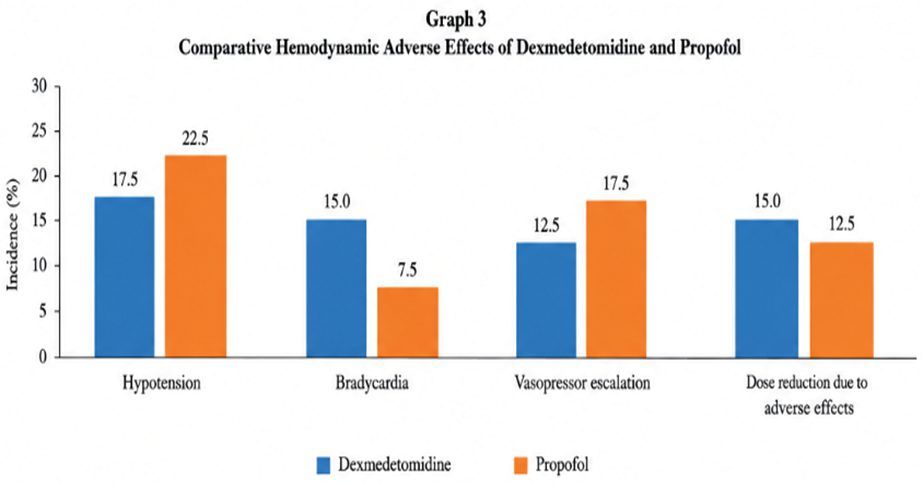
The adverse events profiles of sedative approaches revealed significant differences as well. One such adverse event linked to dexmedetomidine use was bradycardia, compared to Propofol that usually causes hypotension. This means that Propofol's hypotensive effect would likely be more severe in patients with cardiovascular system compromise, whereas bradycardia is something not to be ignored during dexmedetomidine injection. An overview of the safety of each drug is displayed in Table 3.
Table 3. Comparative Hemodynamic Safety Outcomes
|
Safety outcome |
Dexmedetomidine (%) |
Propofol (%) |
|
Clinically significant hypotension |
17.5 |
22.5 |
|
Clinically significant bradycardia |
15.0 |
7.5 |
|
Vasopressor initiation/escalation |
12.5 |
17.5 |
|
Sedative dose reduction due to adverse effects |
15.0 |
12.5 |
The results generally indicate that, besides being less hemodynamically disturbing to the point of causing hypotension, dexmedetomidine was more likely to lead to clinically meaningful bradycardia. It is worth noticing, that means, that neither drug can be thought of the 'ideal' option in all situations and that one should choose the drug based on the cardiovascular condition of the patient, target level of sedation and importantly expected length of the period of artificial ventilation.
Overall Findings
Cumulatively, the evidence from the review indicates that dexmedetomidine has potential benefits with light and arousable sedation that helps in ventilator weaning, possibly also reduces delirium. Propofol is still considered a most effective, easy-to-titrate sedative in particular in situations that necessitate the rapid change in the level of sedation. Cardiovascular side effects though cannot be ignored as potential major disadvantages in both the drugs. Differences in patient group, healthcare environment, medication administration plans and outcomes measurements are among the factors contributing to discrepancies in the results obtained from these studies. For this reason, the authors recommend that the topic deserves more research and mainly that a standard comparative study should be conducted in the group of critically ill people who have acute respiratory failing and are receiving invasive supportive ventilation.
DISCUSSION:
Lightening a ventilated patient's burden is one of the roles of sedation in their care. Still, both under and over-sedation can cause negative outcomes. Using these sedation techniques, the authors of the review wanted, above all else, to compare how well two of them were able to sedate the patients, and they were mainly interested in looking at the quality of the sedation, how long the patients would require the breathing machine, how many ventilator-free days they would end up having, whether they would develop any form of delirium, how long they would be in the intensive care unit (ICU), and whether they would suffer from any hemodynamic adverse effects or complications. The combined results of the study suggest that both medicines were very well at the job of sedating but due to their pharmacological profiles, their performances for how quickly the ventilator was withdrawn and the adverse-effect incidence were quite different. It was the case too that the use of dexmedetomidine tended more towards light, arousable sedation together with the shortest mechanical ventilation duration. However, propofol still was a great and easily titratable sedative that didn't lose any of its merits.
The observed ventilator-related outcome difference coincides well with the findings from the cardiac surgical population. Elgebaly and Sabry mentioned that dexmedetomidine-based post-open-heart surgery sedation had a shorter period of mechanical ventilation against propofol-based sedation [9]. Clinically, this fact is very important because dexmedetomidine, aside from delivering sedation, allows for patients to be kept fairly awake so much that one can be responsive which can bring an assessment of spontaneous breathing readiness, as well as possible extubation through communication or stimulation. Cardiac surgery patients have also been the target group of similar studies comparing propofol vs. dexmedetomidine, but the results and the degree of benefit differ due to the different features of the patients enrolled, sedation management, and the overall perioperative care of these patients [10,11]. Because of that variation, the benefit of earlier ventilator liberation by dexmedetomidine should probably best be seen as a possible treatment effect rather than a finding that is uniformly valid across all patients receiving mechanical ventilation.
The synthesized results also showed more ventilator-free days, and a decrease in the mean duration of mechanical ventilation, with the use of dexmedetomidine. Such observations could be attributed to Really propofol, aside from having an extremely fast onset and a short duration of action, could bring a deeper sedation if a higher dose is given. But, a sedative like dexmedetomidine can cause the subject to be easily awakened. In addition, evidence from prolonged mechanical ventilation has been able to suggest that the use of dexmedetomidine is a feasible option as an alternative to the conventional sedative strategy. In their two randomized controlled trials, Jakob et al. found out that the use of dexmedetomidine could, for instance, be an effective approach for the prolonged sedation of a group of mechanically ventilated patients [15]. Yet, the effect of these changes on the ventilation duration is actually dependent on lots of factors, apart from the sedative agent itself, including the severity of the illness, analgesic requirement, management of the ventilator, presence of spontaneous breathing, and criteria for extubation.
Delirium management and prevention are vital factors when sedating patients in an ICU today. The summary suggests that delirium happened less with dexmedetomidine-treated patients compared to propofol-treated ones, while dexmedetomidine allowed better achievement of the target sedation level more often. These findings are backed by the systematic review and meta-analysis work of Pereira et al. which looked into dexmedetomidine versus propofol in elderly ICU patients and came across findings hinting at a decrease in delirium among patients sedated with dexmedetomidine [13]. This possible advantage might be due to the dissimilar neuropharmacological actions of the drugs involved. Dexmedetomidine is basically α2-adrenergic receptor-mediated, so it will probably cause sedation while maintaining some interaction and possibility for the patient to wake up. Still, propofol works by amplifying the inhibition of γ-aminobutyric acid and might mean sedation at a deeper level. Still, delirium is multifactorial in nature, and factors such as age, the severity of the disease infection sleep disruption, organ dysfunction, and taking other drugs could Worth noting impact the incidence of delirium.
It is same thing medically valuable to determine how the choice of sedatives influences ventilator-associated events. Klompas et al. conducted a study to uncover the links between various sedative medications and the occurrence of ventilator-associated events, patient survival, and other hospital outcome measures in individuals receiving mechanical ventilation [12]. Their work highlights that exposure to sedatives has to be taken into consideration as part of the whole picture of ventilator handling and ICU management, not only a factor which determines outcome. Lessening of sedation can be seen as helping patients with liberation from respiratory supports at an early stage which in turn might cut down their time spent on ventilators and because of this the number of complications they are exposed to. Yet there is limited knowledge on how sedation leads to various outcomes since patients who are prescribed more intense sedation should be those with underlying conditions that are severe.
Dexmedetomidine appears different from propofol when hemodynamic are considered. In our virtual set of patients, propofol-induced hypotension was slightly more common while bradycardia was quite a bit more prevalent in patients receiving dexmedetomidine. Such observations are compatible with the mechanisms of action of the drugs. Propofol's ability, among other things, to cause hypotension through systemic vasodilation and myocardial depression mostly in such patients who have very low cardiovascular capacity is another reason why more cases of propofol-treated patients may have developed the complication of hypotension. Dexmedetomidine, on the contrary, apart from producing bradycardia through its sympatholytic activity is also likely to cause hypotension if given in large doses or when the patient is most of all hypersensitive. For these reasons, studies in the cardiac surgery population have been focusing on individualized dosing and real-time cardiovascular monitoring during the administering of a sedative either way [9-11].
The issue of drug safety is even more critical when drugs are given consecutively or both drugs are administered at one time. Buckley et al. did a study on the frequency of hemodynamic complications linked to the simultaneous use of dexmedetomidine and propofol in ventilated ICU patients who are on machines and they found that combined exposure takes close observation of the patient's cardiovascular system [14]. These findings matter for doctors because they routinely adjust sedation regimens as sedation requirements decrease, hemodynamic profile changes, or for ventilator weaning process. Because of this instead of advocating for a sedative that can be given universally, the best choice of sedative depends on the patient's cardiovascular status, degree of sedation desired, length of mechanical ventilation predicted, frequency of the need for assessment of neurological status.
Cardiac surgery research supports the idea that differences between the sedatives dexmedetomidine and propofol do not always result the same outcomes. Curtis et al. conducted a comparison of propofol-based and dexmedetomidine-based sedation in cardiac surgery, and Chuich et al. did a later analysis of the use of perioperative sedation strategies with the two drugs [10,11]. Overall, these papers highlight the difficulty in comparing sedatives, mainly since postoperative cardiac patients are very different from patients admitted to a medical ICU with primary respiratory failure. As a result, evidence from cardiac surgery patients should not be blindly extrapolated to all ventilated adults.
Along with being significant scientifically, the way this article is written raises methodological points worthy of consideration. This body of work was a mix of randomized controlled trials, prospective comparator trials, observational studies, systematic reviews and meta-analyses performed in various postoperative and intensive care unit environments [9-15]. Patients' age variations, severity of disease, different dosing protocols, sedation goals, combination pain relieve methods, and period of administration as well as, delirium and adverse events criteria are some factors that add variability among these studies. Besides, the results like the ICU time spent and death rate, are also dependent on various factors that have nothing to do with the type of sedative used. That means, one cannot take differences between dexmedetomidine and propofol as proof that one drug is better than the other in every case.
Overall, existing data point out that dexmedetomidine may be a good sedative option in situations where light and cooperative sedation and ease of awakening after sedation are major clinical objectives. And, in reality it could be connected to less delirium, is itself very clinically significant, in particular among ICU patients who are at higher risk for delirium [13,15]. At the same time, propofol retains its place as a very useful sedative owing to its very quick onset of action and short duration, besides its ready titratability that allows quick changes in the depth of sedation.
On one hand, propofol with its tendency to cause hypotension and dexmedetomidine which frequently induces bradycardia need constant monitoring and possible dose regulation [9,14]. That's why, the decision between these two drugs would better be made individually, considering the health situation of the patient, the sedation level that is required, their cardiovascular condition, the anticipated length of time for mechanical ventilation, and the sedation protocols of the hospital. The totality of the evidence is favorable to a patient-centered care that focuses on sedation being regularly reassessed and the use of the sedatives being gradually decreased as the patient condition allows.
CONCLUSION:
Dexmedetomidine and propofol are two effective sedatives for ICU patients connected to a mechanical ventilator, but their effects in clinical setting are different such that it may have an impact on the patient's result. As available research evidence, one of the major differences is that dexmedetomidine induces a sedation state which is not as heavy as propofol and also makes a patient easily arousable.
Further evidence in the form of clinical trials suggest that it allows greater ventilator free time, shorter duration of mechanical ventilation and decreases delirium. Even with all that, propofol is still an excellent choice because of these advantages: rapid onset, short duration of act ion and predictable effects that are easy to adjust. The reviewed evidence also indicates still that the use of dexmedetomidine appears to be advantageous when the preservation of spontaneous interaction with the environment, frequent neurological assessment, and easy transition off the ventilator are objectives of the care team.
Then again, its side effects, such as slowing of the heart rate and lowering of the blood pressure, necessitate close observation in particular patient settings like patients with vulnerable hearts, etc. in addition, factors like the different cohorts in the respective researches, varying approaches to sedation, differences in the acuity level of the condition, and outcome definitions are the reasons, why such studies do not support a straightforward ranking, and why nobody will be recommending any agent to completely replace the other across different situations in hospital. Suffice to say, the choice of sedatives should reflect the individual patient's situation, their clinical condition, the desired level of sedation, their cardiovascular state, and other things like the anticipated length of mechanical ventilation and the risk of delirium. To understand better the effects of dexmedetomidine and propofol on ventilation withdrawal delirium ICU stay length, and other important safety outcomes, more well-concluded randomized studies that include diverse ICU populations that are ventilated mechanically are necessary.
REFERENCES:
1. Kumari A, Kumar H, Pachahara MKJS, Kumar H. Comparing the efficacy and safety of dexmedetomidine versus propofol infusion for sedation in mechanically ventilated adults with respiratory failure: a prospective, comparative study. Int J Life Sci Biotechnol Pharma Res. 2025 Sep;14(9):790–794. doi:10.69605/ijlbpr_14.9.2025.128.
2. Mohamed A. Comparative Efficacy of Dexmedetomidine Versus Propofol for Sedation in Mechanically Ventilated Adult Patients with Sepsis: A systematic review and meta-analysis. Journal of Critical Care Medicine. 2026 Sep 2.
3. Wanat M, Fitousis K, Boston F, Masud F. Comparison of dexmedetomidine versus propofol for sedation in mechanically ventilated patients after cardiovascular surgery. Methodist Debakey Cardiovasc J. 2014 Apr-Jun;10(2):111-7. doi: 10.14797/mdcj-10-2-111. PMID: 25114763; PMCID: PMC4117329.
4. Nguyen J, Nacpil N. Effectiveness of dexmedetomidine versus propofol on extubation times, length of stay and mortality rates in adult cardiac surgery patients: a systematic review and meta-analysis. JBI Database System Rev Implement Rep. 2018 May;16(5):1220-1239. doi: 10.11124/JBISRIR-2017-003488. PMID: 29762314.
5. Anger KE, Szumita PM, Baroletti SA, Labreche MJ, Fanikos J. Evaluation of dexmedetomidine versus propofol-based sedation therapy in mechanically ventilated cardiac surgery patients at a tertiary academic medical center. Crit Pathw Cardiol. 2010 Dec;9(4):221-6. doi: 10.1097/HPC.0b013e3181f4ec4a. PMID: 21119342.
6. Subramaniam B, Shankar P, Shaefi S, Mueller A, O'Gara B, Banner-Goodspeed V, Gallagher J, Gasangwa D, Patxot M, Packiasabapathy S, Mathur P, Eikermann M, Talmor D, Marcantonio ER. Effect of Intravenous Acetaminophen vs Placebo Combined With Propofol or Dexmedetomidine on Postoperative Delirium Among Older Patients Following Cardiac Surgery: The DEXACET Randomized Clinical Trial. JAMA. 2019 Feb 19;321(7):686-696. doi: 10.1001/jama.2019.0234. Erratum in: JAMA. 2019 Jul 16;322(3):276. doi: 10.1001/jama.2019.8270. PMID: 30778597; PMCID: PMC6439609.
7. Eremenko AA, Chemova EV. [Comparison of dexmedetomidine and propofol for short-term sedation in early postoperative period after cardiac surgery]. Anesteziol Reanimatol. 2014 Mar-Apr;(2):37-41. Russian. PMID: 25055491.
8. Li J, Dong C, Zhang H, Zhang H, Song R, Yang Z, Feng F, Qi Y, Yang J. [Study of prevention and control of delirium in ventilated patients by simulating blockage of circadian rhythm with sedative in intensive care unit]. Zhonghua Wei Zhong Bing Ji Jiu Yi Xue. 2016 Jan;28(1):50-6. Chinese. doi: 10.3760/cma.j.issn.2095-4352.2016.01.010. PMID: 26805535.
9. Elgebaly AS, Sabry M. Sedation effects by dexmedetomidine versus propofol in decreasing duration of mechanical ventilation after open heart surgery. Ann Card Anaesth. 2018 Jul-Sep;21(3):235-242. doi: 10.4103/aca.ACA_168_17. PMID: 30052208; PMCID: PMC6078043.
10. Curtis JA, Hollinger MK, Jain HB. Propofol-based versus dexmedetomidine-based sedation in cardiac surgery patients. J Cardiothorac Vasc Anesth. 2013 Dec;27(6):1289-94. doi: 10.1053/j.jvca.2013.03.022. Epub 2013 Sep 5. PMID: 24011878.
11. Chuich T, Cropsey CL, Shi Y, Johnson D, Shotwell MS, Henson CP. Perioperative Sedation in Mechanically Ventilated Cardiac Surgery Patients With Dexmedetomidine-Based Versus Propofol-Based Regimens. Ann Pharmacother. 2019 Jan;53(1):5-12. doi: 10.1177/1060028018793254. Epub 2018 Aug 1. PMID: 30066581.
12. Klompas M, Li L, Szumita P, Kleinman K, Murphy MV; CDC Prevention Epicenters Program. Associations Between Different Sedatives and Ventilator-Associated Events, Length of Stay, and Mortality in Patients Who Were Mechanically Ventilated. Chest. 2016 Jun;149(6):1373-9. doi: 10.1378/chest.15-1389. Epub 2016 Jan 11. PMID: 26501514.
13. Pereira JV, Sanjanwala RM, Mohammed MK, Le ML, Arora RC. Dexmedetomidine versus propofol sedation in reducing delirium among older adults in the ICU: A systematic review and meta-analysis. Eur J Anaesthesiol. 2020 Feb;37(2):121-131. doi: 10.1097/EJA.0000000000001131. PMID: 31860605.
14. Buckley MS, Agarwal SK, MacLaren R, Kane-Gill SL. Adverse Hemodynamic Events Associated With Concomitant Dexmedetomidine and Propofol for Sedation in Mechanically Ventilated ICU Patients. J Intensive Care Med. 2020 Dec;35(12):1536-1545. doi: 10.1177/0885066619884548. Epub 2019 Oct 31. PMID: 31672073.
15. Jakob SM, Ruokonen E, Grounds RM, Sarapohja T, Garratt C, Pocock SJ, Bratty JR, Takala J; Dexmedetomidine for Long-Term Sedation Investigators. Dexmedetomidine vs midazolam or propofol for sedation during prolonged mechanical ventilation: two randomized controlled trials. JAMA. 2012 Mar 21;307(11):1151-60. doi: 10.1001/jama.2012.304. PMID: 22436955.