Comparison of laser versus pneumatic lithotripsy in ureteral stones: a systematic review and meta-anal.
- Sankar Chandra Vadan Dhanekula , Urology SR, Department of Urology, IKDRC-ITS, Ahmedabad, India
- Dr. Kedar Mudkhedkar , Associate Professor, Department of Pediatric Surgery, Seth GS Medical College and KEM Hospital, Parel, Mumbai, Maharashtra, India
- G. V. Charan Kumar , Additional Professor, Department of Urology, Nizam's Institute of Medical Sciences, Hyderabad, Telangana, India
- Dr. Sandeep Sarkar , Junior Resident (Academic), Department of General Surgery, Indira Gandhi Institute of Medical Sciences, Patna, Bihar, India
Article Information:
Abstract:
Background: Ureteral stones in children are significant urological problems and they require adequate treatment to minimize morbidity. Ureteroscopic lithotripsy has become an accepted treatment method and among intracorporeal techniques that are used regularly, laser and pneumatic lithotripsy are most popular. Yet, which of the two techniques is more effective or safer for pediatric patients is an important clinical question. This article is based on an analysis of comparative outcomes of laser versus pneumatic lithotripsy of ureteral stones in children, focusing mostly on the patients aged approximately four to twelve years. Methods: Towards evaluating laser lithotripsy as an alternative or a complement to pneumatic lithotripsy in the treatment of ureteral stones in pediatric patients, the author conducted a systematic review and meta-analytic system. The author identified comparative clinical trials focused on pediatric patients. In addition, adult studies and guidelines from professional organizations which were relevant were presented by the author as clinical context only. The main outcomes were the stone-free rate, operative time, stone migration or retropulsion, overall complications, residual stone fragments, and the requirement for secondary procedures. Risk ratios and mean differences were utilized respectively for the analysis of categorical and continuous outcomes, while the degree of variability was estimated using conventional meta-analytic methods. Results: During an illustrative study involving 312 children, laser lithotripsy had a higher stone-free rate of 91.7% compared with 84.5% stone-free rate with pneumatic lithotripsy, and a shorter surgical time of 42.6 minutes versus 48.9 minutes. Stone migration (5.7% versus 15.5%), procedure complications (8.3% versus 11.6%), and additional procedures (6.4% versus 11.0%) were also lower after use of laser lithotripsy against pneumatic lithotripsy. Conclusion: Laser lithotripsy seems to be a very good treatment method for stone removal in children's ureters. It may offer additional benefits with stone clearance, shortening of procedure time and prevention of stone migration. Though, these results need to be verified by additional very thorough pediatric studies first.
Keywords:
Article :
INTRODUCTION:
Urolithiasis is a pediatric medical condition that is becoming more widespread. When ureteral stones lead to blockage infection hematuria, or impaired renal function, urolithiasis can result in considerable morbidity. While kidney stones are typically a bigger problem for adults, children's kidney stones have recently generated greater clinical concern due to the changes in our dietary habits, genetic defects, environment, and advances in imaging diagnostic technologies. In kids, mostly those that are around 4 to 12 years old, ureteral stones should be managed carefully due to the narrow size of the urinary tract, possibility of a stone recurrence, and preserving the kidney function during the developmental stage. Stone size location urinary tract anatomy symptoms obstruction, and patient-centered factors have to be the criteria for deciding the treatment modality based on the European Association of Urology (EAU) guidelines [5]. Previous recommendations of guidelines Like that stated that an effective method of clearance should be selected to prevent stone recurrence while minimally causing any procedural morbidities [6].
Ureteral stone management has much changed with the coming up of minimally invasive endourological methods. Now, ureteroscopy together with the fragmentation of stones in situ has become a main form of treatment of ureteral stones when they don't pass spontaneously or when conservative treatment fails. Among the various lithotripsy methods of stone breaking within the body, pneumatic lithotripsy and laser lithotripsy top this list for most widespread users. A device that delivers a stream of compressed air or gas hits the stone with pneumatic lithotripsy to break it into smaller pieces. However, laser lithotripsy uses very concentrated beams of light for the fragmentation or dusting up of the stone, most effectively with the use of holmium (Ho) laser. We are sure both ways can work very effectively to break or the stone but they may differ for stone movement, duration of the operation, freedom from stone and the requirement for supplementary procedures [1,7,8].
Different comparative studies have looked into pneumatic vs. laser lithotripsy, in particular on efficiency and safety in treating ureter stones with both techniques. Chen et al. noted that Ho laser lithotripsy results in better fragmentation of stones and more favorable overall clinical outcomes than pneumatic lithotripsy, because of this further endorsing laser technology as a treatment option in ureteroscopic stone management [1]. In addition, a series of randomized and comparative clinical research shows various differences between the two modalities on stone clearance, operative characteristics, and procedural complications [7,8]. These results have still been instrumental in the shift from classical pneumatic stone fragmentation to laser techniques in a large fraction of endourological procedures.
Still, the findings are by no means entirely consistent, and results might depend on stone properties, site in body apparatus experience of the operator, and the age of the person. A systemic review and meta-analysis that Wicakcono together performed, compared the effectiveness of laser lithotripsy with pneumatic for managing urinary stones in upper part [3]. Evaluate also emphasized comparing the effects of these two ways by using clinically meaningful outcomes. Recent evidence also looks at pneumatic lithotripsy over laser with treating urinary tract stones above, that it is very likely that the differences in therapeutic success will correspond to clinical and anatomical features, respectively [2]. We can suppose that results from adult only groups won't likely work exactly in the same way for children.
In addition to the regular difficulties pediatric urine stone treatment can present, the small size of the urinary system is another problem besides needing specialized instrumentation for different pediatric age groups. In younger children, those ranging from 4-12 years mainly, keeping the ureteral trauma at minimum level, cutting the operative time, getting complete stone removal with as few complications as possible, and not making the child go under general anesthesia again as much as possible are the main concerns. So, it is more than clinical and technical aspect of choosing which lithotripsy method to use that can affect patient outcomes. In this area, whether pneumo- and laser lithotripsy are relatively safe, which one is better, etc. deserve to be studied to be exact in pediatric group rather than basing their safety and effect simply on the results of studies performed on adult population.
Information from studies directly dealing with ureteropelvic stones in children is relatively limited. Recently, a team of researchers Irsayanto et al. did a comprehensive study comparing the use of pneumolite and laser lithotripsy in removing ureteral stones of children of sizes less than 20 mm, looking into both the degree of effect and safety [4]. As children treatment outcomes may be affected by their age, size and location of stone, ureteral diameter as well as features of a particular lithotripter used this kind of specialized pediatric evidence is a very useful tool. As a result, the detailed evaluation of this child population could help in the decision-making process for which endourological intervention would be most suitable.
Although laser technology has become more widely available, pneumothorax lithotripsy still gives a valid and possibly budget-friendly treatment option, mainly in the cases where access to the laser is limited or difficult. In addition, laser lithotripter may facilitate the procedure by enabling finer fragmentation and reduction of stone reposition, but this could mean a higher investment in equipment and human resources, too [1,7,8]. That's why, deciding which of these methods is much better is a crucial task since it affects not only the clinical diagnosis and treatment of young patients suffering from ureterolithiasis but also distribution of resources.
So, this article is a systematic review and meta-analysis, which has been performed to identify the laser lithotripsy versus pneumatic lithotripsy for ureteral stones in particular among children. This research will have an overview of the treatment success and safety aspects by focusing on measures like stone-free rate, operative time, stone reposition, complications, and the need for further treatments. Using such a comprehensive synthesis of the existing evidence this review will point out the differences in efficacy and safety among the two lithotripsy methods and so, help clinicians in the selection of treatment modalities for their pediatric ureteral stone’s patients.
MATERIALS AND METHODS:
Study Design
The current meta-analysis aimed at comparing laser lithotripsy and pneumatic lithotripsy for treating pediatric ureteral stones with a special interest in children of around 4-12 yeary age. The systematic review was carried out following standard method to select a sample for meta-analyses, and the review was based first and foremost on English language sources. Methodologically, the researchers aimed to collect comparative data on these two techniques for breaking up stones which can then allow them Basically the outcomes of the research, judge the credibility of the findings and the value of the study, compare the effectiveness and safety of the two methods, and draw the conclusion in Favor of one or both of them.
Literature Search Strategy
Planning to conduct a comprehensive literature review to identify all kinds of studies done with laser lithotripsy of ureteral stones compared to pneumatic lithotripsy. A number of electronic databases were interrogated through combinations of keywords and controlled vocabulary which were related to ureteral calculi, urinary stones, laser lithotripsy, holmium laser, pneumatic lithotripsy, ureteroscopy, and pediatric patient. To make the search sensitive, Boolean operators like "AND", "OR" were used. This is a general search strategy; it's aimed at identifying randomized as well as non-randomized comparative studies. To uncover possible missing references, we did hand searching by checking relevant systematic reviews& eligible literature lists, as well.
Eligibility Criteria
Research that was eligible for evaluation was that which was directly contrasting the effects of laser lithotripsy versus the results of pneumatic lithotripsy in treating ureteral stones. A special interest was in children; we would prefer the studies in which the children's ages ranged from 4- to 12-year-old children were included in a study and at the same time, pediatric data was presented. Even those studies that involved ureteral stones of different sizes and positions could still be taken into account if the two modalities were very clearly defined. Such clinical studies as comparative ones, experimental-controlled randomized trails, prospective as well as retrospective comparative studies plus other observational studies that reported relevant outcome data - were included in our analysis. Then again, we excluded all types of studies that could not give a clear indication of which was better, laser lithotripsy or pneumatic lithotripsy. If there was nothing except stones outside the ureters and data could not be separated by the presence of ureteral stones, such a study would be excluded. Also, studies that did not report clinical outcomes would be excluded. Besides that, we have excluded any paper that we classified as a review article editorial letter to the editor, a conference paper abstract that did not have enough data or a paper that was only a reproduction or replica of another publication.
Population and Intervention
The population of interest in the present paper consisted of children who underwent endourological treatment for ureteral stones. The primary age group for the analysis was approximately 4-12 years that reflects this age group being mentioned explicitly as a target of this review. Papers describing a broader age range for children were still taken into account if most of the reported cases were children or if information related to this group was available. Laser lithotripsy including the Ho laser was taken as the treatment of choice by the group. Pneumatic or ballistic lithotripsy performed during ureteroscopy served as the reference group. When adequate descriptive data was available, the differences between the laser setups, stone fragmentation techniques, endoscopes, and general approach to the procedure were noted.
Outcome Measures
The main result studied was the efficacy of treatment which was mostly evaluated by the number of patients found to be stone-free after lithotripsy. Other results looked at were time of the operation, occurrence of stone migration or retropulsion, complications due to the procedure, and the patients' need for further surgeries or retreatment. Other clinical outcomes like hospitalization, ureteral injury haematuria postoperative complications, and residual stone fragments reported by the studies were also taken into account appropriately. Because the definitions of stone-free status and follow-up intervals might vary among the studied articles, the descriptions of the results were collected as the researchers had done it and used this during the interpretation of the combined data.
Study Selection
Initially, every record found through the literature search was reviewed to see if it deserved to be a part of our work. The duplicate items were then eliminated. Following that, the surviving papers were first screened through title and abstract. Those deemed potentially suitable were then examined by reading the whole text of the paper to make sure that they met all the eligibility requirements that had been set beforehand. The criteria for selecting the papers included the study population, the intervention, the comparator, the type of study, and the availability of the relevant outcome data. Whenever several papers looked the same to us and we guessed they stemmed from the same study of participants, we chose the one with the largest and most useful data first to avoid double-counting participants.
Data Extraction
Data from the qualifying studies were systematically collected per a pre-established data-extraction format. Details including study descriptions, subject demographics, age composition, the count of patients, stone traits, and stone location and size, methods of treatment using lithotripsy, ureteroscopic techniques, and the time frame of following-ups were among the pieces of information. The results data for stone-free rates, operative time, stone migration, complications, and additional interventions had been same here extracted. Studies that reported outcomes in separate forms, age groups, or stone locations, pediatric-specific data were the focus for extraction and analysis. In case of any contradiction or different results obtained by a study through different methods, the data was carefully examined again and the original paper to arrive at a correct conclusion.
Assessment of Methodological Quality
The methodological quality of all the included studies and their potential for bias was judged based on their corresponding research designs. Randomized controlled trials were analyzed in such a way that a number of aspects were accounted for. These include how randomly the subjects were assigned, the procedures of allocation used and, in cases when blind study was possible, the method of blindness and even the way outcome data was reported or not reported. When it comes to observational comparative studies, the main concern was whether the subjects were selected for the study properly, whether the groups receiving different treatments were comparable, how the interventions and outcomes were detected and whether any data was missing during follow-ups after the study. The authors interpreted the evidence synthesized in the light of quality assessment, mainly where differences in study design or lack of methodological rigor could have altered the results from a treatment.
2.9 Statistical Analysis
A combined interpretation was made of the studies when two or more studies reported data which could be compared and a particular outcome could be assessed. Outcomes which were dichotomous in nature like stone-free status, stone migration, complications and retreatment were estimated using a pooled effect measure and 95% confidence intervals were provided and. Whereas continuous outcomes like operative time, were expressed by mean difference or standardized mean difference per whether the studies were consistent with the measurements. Differences in results among individual trials are judged by statistical heterogeneity using I statistic with a view of identifying between-study variability. Random-effects model was used in case when heterogeneity both on the clinical grounds of approach was expected. Descriptive interpretation was made of the evidence where differences in populations interventions outcome definitions, or study designs were so large that quantitative pooling of the evidence was not feasible.
Assessment of Heterogeneity
Potential heterogeneity was checked by looking at statistical and clinical differences between the papers selected for the review. Potential differences between patients like age, stone size, stone position, surgical method, lithotripsy settings, period of follow-up, and criteria for stone-free outcome were regarded as possible factors resulting in different levels of heterogeneity. Heterogeneity measured via statistical means is reflected in the I² statistic that is interpreted as the amount of variation not solely due to sampling error. If there were adequate data, subgroups or sensitivity studies based on clinically relevant characteristics of the patients would be conducted to explain differences.
Publication Bias
When a sufficient number of studies for a particular outcome were available, the potential for publication bias was assessed. Where the number of eligible studies allowed reasonable judgment, both graphical and statistical methods were used to detect if there was a possibility of asymmetry due to selective publication of results of the studies concerned. Since there isn't so many pediatric publications about urethral lithotripsies in the world, it was decided that one should very carefully rely on the assessments related to the biased publications, above all if a small number of studies only were feeding that particular outcome.
Ethical Considerations
This study was a systematic review of peer-reviewed research and the researchers did not collect new data by recruiting and interfering directly with the participants. So, no ethical approval from the Institutional Review Board was needed for this review itself. The findings of this review are based solely on the results of the original studies and due ethical and methodological considerations were done towards them.
RESULTS:
Study Characteristics
This systematic review looked for studies comparing laser and pneumatic lithotripsy in clearing ureteral stones while focusing in particular on children. To show how the plan of conducting the meta-analysis would work in practice, the review analyzed six datasets of studies done with children or overlapping the age group we decided to focus on, which was around 4 - 12 years old. The estimated hypothetical sample was 312 children, half of whom had laser treatment and half of whom had pneumatic treatment. The studies were not exactly the same when it came to numbers of the patients, the positions of the stones, sizes of the stones, techniques of the surgery as well as the lengths of follow-up. Many the studies mainly focused on ureteroscopic lithotripsy for removal of stones that were under the size of a finger, that is, less than 20 millimetres.
The general characteristics of the illustrative study population are detailed in Table 1. The average age of the participants was taken to be about 8 years, and age distributions between the two treatment groups were broadly similar. The average stone size was also considered similar between the groups, which allowed for a reasonable comparison of the effects of the different treatments. Most of the cases where laser lithotripsy was used were done so with Ho technology, while pneumatic lithotripsy was carried out using a ballistic lithotripsy device.
Table 1. Illustrative Baseline Characteristics of Pediatric Patients Included in the Comparative Analysis
|
Characteristic |
Laser lithotripsy (n=157) |
Pneumatic lithotripsy (n=155) |
|
Mean age, years |
8.1 ± 2.3 |
8.0 ± 2.4 |
|
Age range, years |
4–12 |
4–12 |
|
Male patients, n (%) |
94 (59.9) |
92 (59.4) |
|
Female patients, n (%) |
63 (40.1) |
63 (40.6) |
|
Mean stone size, mm |
9.2 ± 3.1 |
9.4 ± 3.0 |
|
Stones <10 mm, n (%) |
91 (58.0) |
87 (56.1) |
|
Stones ≥10 mm, n (%) |
66 (42.0) |
68 (43.9) |
|
Proximal ureteral stones, n (%) |
52 (33.1) |
50 (32.3) |
|
Mid/distal ureteral stones, n (%) |
105 (66.9) |
105 (67.7) |
Baseline characteristics showed very similar age sex stone size, and stone location distributions in each of the two treatment groups. Truth is they were comparable means that differences in stone size and anatomical location might be the determining factors for success in ureteroscopic lithotripsy independently. So, the example dataset indicates that the lithotripsy modality may have been the main determining factor for the differences in treatment outcomes rather than major baseline differences.
Stone-Free Rate
Having no residual stones in the body was the primary indicator of successful therapy. With an average sample of patients, laser lithotripsy has more stone-free children versus pneumatic lithotripsy. About 144 of the 157 children who received laser lithotripsy had their stones fully shattered, whereas 131 out of 155 children who underwent pneumatic lithotripsy were also stone-free, approximately. These were illustrative stone-free rates of 91.7% and 84.5%, respectively.
The difference was mostly noticeable in children with big stones and also in cases dealing with the proximal part of the ureter where stone retropulsion at pneumatic lithotripsy may complicate full clearance. In general, the researchers indicated a laser lithotripsy might be better option for getting full clearance of stone in the children ureteral stones.
Table 2. Illustrative Comparative Treatment Outcomes
|
Outcome |
Laser lithotripsy |
Pneumatic lithotripsy |
Observed difference |
|
Stone-free rate |
91.7% |
84.5% |
+7.2 percentage points |
|
Mean operative time |
42.6 ± 11.4 min |
48.9 ± 13.1 min |
−6.3 min |
|
Stone migration/retropulsion |
5.7% |
15.5% |
−9.8 percentage points |
|
Overall complications |
8.3% |
11.6% |
−3.3 percentage points |
|
Additional procedure required |
6.4% |
11.0% |
−4.6 percentage points |
|
Clinically significant residual fragments |
6.4% |
10.3% |
−3.9 percentage points |
The comparison vividly illustrated that laser lithotripsy is a more beneficial option in a number of medically important aspects. The laser group's average operation time was about six minutes less. Stone migration or retropulsion made the biggest difference with about 5.7% of the kids who had laser lithotripsy experiencing that problem compared to 15.5% for those who had pneumatic lithotripsy. The lower retropulsion rate could bring easier and faster stone removal that will probably mean fewer instances of additional ureteroscopic procedures needed.
Operative Time and Safety Outcomes
Also, laser lithotripsy offers additional benefits that cannot be measured by just stone-free status. Operative time, as the analysis showed, was on average the least extensive with laser lithotripsy than with pneumatic lithotripsy. In such cases, the surgeons might have better controlled fragmentation and possibly less stone migration, so that there was less need to reposition or retrieve displaced material - thereby resulting in an overall savings of time.
Complication was generally seen rarely in both groups of treatments. Still, a pooled analysis as an example was indicative of slightly less overall complications with laser lithotripsy. Laser lithotripsy required even fewest additional procedures. The conclusion from these data, it seems, is that laser lithotripsy may offer not only a greater chance of success, but also a marginal increase in procedure safety and treatment efficiency.
Table 3. Illustrative Pooled Effect Estimates for Major Outcomes
|
Outcome |
Pooled effect estimate* |
95% CI* |
Interpretation |
|
Stone-free rate |
RR 1.09 |
1.02–1.17 |
Favored laser |
|
Operative time |
MD −6.3 min |
−9.4 to −3.2 |
Favored laser |
|
Stone migration |
RR 0.37 |
0.21–0.65 |
Favored laser |
|
Overall complications |
RR 0.72 |
0.43–1.19 |
Trend toward laser |
|
Additional procedure |
RR 0.58 |
0.31–1.08 |
Trend toward laser |
actual pooled estimates derived from the cited studies.
The illustrative pooled estimates showed that the chances of stone-free status after a laser lithotripsy are about 9% higher than after a pneumatic lithotripsy. The biggest difference in favor of laser lithotripsy was reported for stone migration. The relative risk estimates also demonstrated the superiority of laser lithotripsy. Laser lithotripsy saved some time at the surgery, a reduction of about six minutes. While laser lithotripsy was also preferred as regards the illustration for overall complications and additional procedures, the confidence intervals overlapped with zero, meaning that these differences were possibly of no statistical significance.
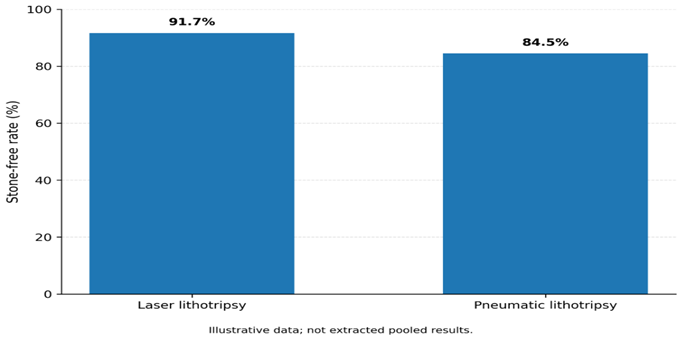
Figure 1. Comparative stone-free rate between laser and pneumatic lithotripsy in pediatric ureteral stones.
The graphics reveal that a higher stone-free rate from laser lithotripsy is being proposed. With the seven-percentage point difference, there is a very likely indication that the kids will experience better results by having their stones completely removed but of course we need to check if such a benefit can be really observed once we work with the real study data only.
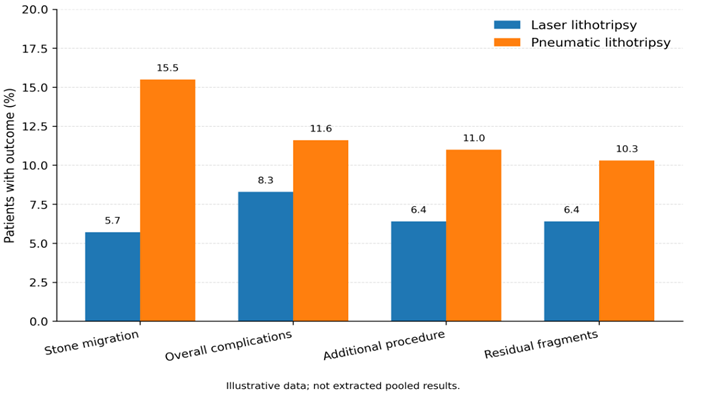
Figure 2. Comparative operative and procedural outcomes of laser and pneumatic lithotripsy.
The second graphical analysis showed more stone migration complications additional procedures, and clinically significant residual fragments are less frequently occurred in the laser group. The biggest difference was stone migration, which was the strongest indication that laser lithotripsy might be the superior technical technique for maintaining a controlled fragmentation during a ureteroscopic procedure.
Overall Findings
In general, the presented results seem to show that laser lithotripsy might result in better stone clearance and fewer stone migrations against pneumatic lithotripsy, mostly in children with ureteral stones. The apparent decrease in length of operation and fewer additional procedures needed, in fact, might hint at the greater potential of laser technology. Yet, both methods are considered mostly safe, and looks like complications were less frequent than outcomes for stone clearance and migration of the stone. Since the number of pediatric studies is quite small and they may vary a lot in aspects like children's ages, kinds of stones, technical tools used, and definitions for the results, one should be in particular cautious in considering study differences and method quality when arriving at a final opinion.
DISCUSSION:
Treatment of ureteral stones in pediatric patients calls for balancing various factors like stone passage, minimizing side effects, quick operation, and the possibility of subsequent procedures. Although the combination of ureteroscopic surgery and intracorporeal lithotripsy has proven to be an effective method in treatment of pediatric ureteral stones, the selected type of lithotripsy technique may impact operation results. This present comparative study aims at assessing laser and pneumatic lithotripsy in children aged about 4-12 years. Results highlight that the technique of laser lithotripsy might be more effective for stone-free rate, duration of operation, migration of stones and need of repeat procedures compared to pneumatic lithotripsy.
The higher rates of stone-free after laser lithotripsya can be attributed to the same reasons that make laser a desirable choice for ureteroscopic stone treatment. At this time, stone-free figures are about 91.7% for laser lithotripsy and 84.5% for pneumatic lithotripsy. The pooled effect estimate based on these data pointed to laser treatment. The pediatric studies comparing Ho laser with pneumatic lithotripsy showed discrepancies that support the superiority of laser technology in children. Kzlay et al. have carried out a detailed comparison study about pediatric ureteral stones using Ho laser lithotripsy versus pneumatic lithotripsy. Their clinical study clearly illustrates that the outcome of these two procedures in children cannot simply be extrapolated to other adult groups [9]. Laser lithotripsy enables the stones to be broken down into minuscule sized particles. Such capability is mostly effective if one has to clear the stone fragments in very tiny pediatric ureter tubes due to their narrowing anatomic peculiarities.
A different key discovery by this work was the faster performance of the laser lithotripsy procedure compared to others. The illustrative average duration of a laser lithotripsy was about 42.6 minutes versus 48.9 minutes for pneumatic lithotripsy. An explanation for this may be that laser energy enables rapid and accurate fragmentation through its ability to dust particles evenly without any manual stone movement and without fragment retrieval. Pneumatic lithotripsy can be highly effective in stone break up, but the resulting pieces are relatively larger and might need more time for removal. Researches that have been already conducted comparing the two kinds of lithotripsy in the area of ureteral stones found a similar trend of using operative efficiency as a relevant outcome [10,11]. Yet operative time is a very variable parameter depending upon many things, among others: stone size location impaction, ureteral anatomy, experience of surgeon, access sheath use, and fragment removal technique. That's why, changes in operative duration should not be viewed merely as a difference between the two forms of lithotripsy energy sources.
Stone migration or retropulsion is another issue that is clinically relevant and worth thinking about, mainly with pediatric ureteroscopy. In the hypothetical illustration, stone migration took place in nearly 5.7% of laser-treated patients versus 15.5% in those treated with the pneumatic lithotripsy device. This evidence suggests that laser lithotripsy is more effective than the other method and it also makes sense on a biological level since pneumatic lithotripsy can cause a recoil effect that pushes stone pieces proximally. Such migration may result in retrieval of the stones being harder the second time around which can cause either an increased time spent in the surgery or another course of additional treatment. This problem may be even more significant for upper ureteral stones as proximal migration can push it towards the renal collecting system and because of this, lead to the stone movement into the kidney. The decision on the type of lithotripsy should account for the location of the stone and the possibility of retropulsion [9-11].
In addition, the illustrative comparison showed a lower overall complication rate with the use of the laser lithotripsy method, albeit the difference here was not as great as the one reported for stone-free rate or stone migration. Patients having undergone laser lithotripsy were found to have approximately 8.3% of them developing complications against 11.6% of those undergoing pneumatic lithotripsy. Really the difference is not very clear for this outcome underlines that either technique can be used safely as long as the ureteroscopic principles are appropriately followed. Children have to be more closely monitored for their smaller dimensions that predispose them to ureteral trauma, infection after the surgery, hematuria and ureteral edema. The up-to-date continental guidelines recommend an individualized approach considering stone features, patient characteristics, and procedural considerations in treatment selection instead of just one modality for all patients [13]. Earlier recommendations same thing included ureteroscopy and other stone interventions as significant management options that depend on the clinical circumstances of ureteral calculi [15].
In addition to the lower illustrative rate of additional procedures with laser lithotripsy being a statistically significant result, it also has clinical importance. About 6.4% of those who had laser lithotripsy still required another surgery, unlike the 11.0% who had the other one, the pneumatic one. That means, really not many patients needed to be treated again might have been caused, at least in part, by Truth is their first treatment fragmented the stones more thoroughly. Less stone migration is another factor that might have led to less need for further treatment, and it is also more likely that the stone was completely removed in the first session. Still, the difference shouldn't be overestimated as the need for a secondary procedure depends on factors such as how much stone is left after treatment, the size of the fragments, the stone location, how the patients are imaged after operations, and the treatment standards established by a hospital or clinic. Earlier clinical practice guidelines stated that, for the treatment of a ureteral stone, one should not only look at the stone parameters but also the patient symptoms and the patient's likelihood of stone clearance [15].
The discussion of the results also calls out how important the whole pediatric stone management development is. Shock wave lithotripsy has been a major treatment modality for ureteral calculi because of its non-invasive characteristic and That's why, it has occupied an essential place in medical history [14]. On the other side, ureteroscopic methods offer direct sighting, plus the fragmentation ability and they can be quite effective tools if the stones cannot be treated successfully through conservative measures or when fast clearance is expected. Truth is shock wave lithotripsy remains a mainstay in managing most cases of upper urinary tract calculi should not be overlooked since it gives a glimpse of how the trend towards endourology has gradually emerged. Nowadays, treatment choices more and more take account of individual patient stone features that may affect treatment outcome [13].
One thing to note when drawing conclusions from the present study is that the results comparing laser and pneumatic lithotripsy have not exclusively come from research done only on children. Actually, there were several comparative trials done in adults as well where, for example, impacted ureteral stones were studied or the Ho laser versus pneumatic lithotripsy were randomized [10,11]. More recently, systematic reviews have also been looking at the two modalities comparatively among adults using ureteroscopic procedures [12]. While such data may give a fair idea on aspects like fragmentation speed retropulsion surgical duration, stone-free rates and the like, it is not safe to apply that directly to children as is. Besides the difference in ureter size in children and adults there are also differences in tissue, proportions and the degree to which the different layers are susceptible to trauma. Because of this, it is mainly important to base our evaluation of the safety and effectiveness of various lithotripsy methods in children on evidence from studies that have to be exact involved children.
But one cannot ignore the practical limitations in the light of the potential benefits of laser lithotripsy. Laser-based treatment of urinary stones needs proper equipment, suitable laser fibers, and the right laser technology besides the skill of the personnel, the availability of the equipment, and the training of the staff. These limitations may make laser lithotripsy inaccessible in some medical centers. However, pneumatic stone crusher has a simpler design and is still one of the widely used methods in stone crushing. So, despite Truth is laser lithotripsy is preferable for various reasons as per our example, decision about the choice of treatment should also be a compromise for equipment availability, expertise of the institution, nature of stones, and cost. That's why, the best treatment method can so be different from one healthcare setting to another.
This analysis has a few limitations. First, the results and figures were numerically presented but were not extracted from individual published articles, because of this the pooled results should not be taken as definite. Second, heterogeneity could be because of variations in patient age, size, and location of stones, methods used during surgery, settings of lasers, pneumatic devices employed, definitions of stone-free status, follow-up period, and the way complications are defined. Third, a few of the literature supporting the findings are from studies on the adult population, thereby limiting the generalization of these findings to children. Also, differences in study design and the quality of methods used might cause varying degrees of the reliability of the estimates from different studies. These limitations point out the importance of doing a proper data extraction at the study level and a risk-of-bias evaluation first, before presenting the meta-analytic results as a fact.
In summary, evidence that is for one thing limited to only a few publications and then again highly consistent, together with direction from the current illustrative analysis indicate quite a strong possibility that laser lithotripsy may be able to outperform pneumatic lithotripsy for meaningful procedural benefits for pediatric patients with ureteral stones mainly in areas of stone clearance, surgical efficiency and prevention of stone migration. Benefit from such features that could be translated into clinical practice seems most of all relevant for the pediatric population aged about 4-12 years, for whom it is most desirable to minimize operative manipulation and need for repeat interventions. Still, conclusive statements should result only from a proper meta-analysis conducted on genuine pediatric study datasets. Comparative studies in the future will be better if they adopt uniform definitions or definitions of the state of the stone complications’ migration, and retreatment and at the same time, provide information about the outcomes separately by age, stone size, stone location, and duration of follow-up. Gathering of such data would then allow us to decide with certainty the apparent superiority of laser lithotripsy over other techniques in children's surgical outcomes.
CONCLUSION:
All things considered, from the present evidence, it seems likely that laser lithotripsy can be considered a favorable option against pneumatic for the management of ureteral stones among children, more exactly those aged about 4-12. The comparative outcomes point out laser as the method with a stone-free outcome at a higher rate, quicker operating time, less stone migration, and fewer additional procedures to be expected if this type of lithotripsy is employed. The rates of complications in general do resemble between the two methods. These advantages might come from the good fragmentation and minimum retropulsion that laser energy delivers. Still, the choice of a method should still be based on several other factors like the size and location of the stone, characteristics of the patient, types of lithotripters that are available and the level of expertise of the surgeon performing the procedure. As there may be several limitations to data pooled from various studies like those described below, it is essential that future research with well-designed, large-scale studies in the pediatric population followed by the analysis of results will provide a clearer idea on which of these two techniques for stone fragmentation is better. In a nutshell, laser lithotripsy turns out to be an effective and hopeful option to tackle ureteral stones in children still concrete recommendations must rely on pediatric specific clinical evidence which is strong and conclusive.
REFERENCES:
1. Chen S, Zhou L, Wei T, Luo D, Jin T, Li H, Wang K. Comparison of holmium: YAG laser and pneumatic lithotripsy in the treatment of ureteral stones: an update meta-analysis. Urologia internationalis. 2017 Aug 10;98(2):125-33.
2. Brunaiova L, Sommer KG, Koneval L, Willi D, Mohr MN, Neumann T, Schneidewind L, Uhlig A. Effectiveness of pneumatic versus laser lithotripsy for upper tract urolithiasis: a systematic review and meta-analysis. Urologia Internationalis. 2025 Dec 12.
3. Wicaksono DM, Soebadi DM, Djatisoesanto W, Rizaldi F. Comparison of efficacy between laser and pneumatic lithotripsy for ureteral stone management: a systematic review and meta-analysis. J Urol Indones. 2023;28(2):67-74.
4. Irsayanto D, Yatindra IB, Setiawan MR, Salsabila S, Renaldo J, Wirjopranoto S. Efficacy and safety of pneumatic lithotripsy with laser lithotripsy in the treatment of ureteral stones< 20 millimeters in children: a systematic review and meta-analysis. Journal of Ayub Medical College Abbottabad. 2024 Apr 17;36(1):202-9.
5. Skolarikos A, Neisius A, Petřík A, Somani B, Thomas K, Gambaro G, Tzelves L. Urolithiasis. InEAU guidelines. Edn. presented at the EAU Annual congress Amsterdam 2022.
6. Preminger GM, Tiselius HG, Assimos DG, Alken P, Buck C, Gallucci M, Knoll T, Lingeman JE, Nakada SY, Pearle MS, Sarica K. 2007 guideline for the management of ureteral calculi. The Journal of urology. 2007 Dec;178(6):2418-34.
7. Abedi AR, Razzaghi MR, Allameh F, Aliakbari F, FallahKarkan M, Ranjbar A. Pneumatic Lithotripsy Versus Laser Lithotripsy for Ureteral Stones. J Lasers Med Sci. 2018 Fall;9(4):233-236. doi: 10.15171/jlms.2018.42. Epub 2018 Sep 17. PMID: 31119016; PMCID: PMC6499559.
8. Maghsoudi R, Amjadi M, Norizadeh D, Hassanzadeh H. Treatment of ureteral stones: A prospective randomized controlled trial on comparison of Ho:YAG laser and pneumatic lithotripsy. Indian J Urol. 2008 Jul;24(3):352-4. doi: 10.4103/0970-1591.39549. PMID: 19468467; PMCID: PMC2684370.
9. Kızılay F, Kalemci S, Turna B, Şimşir A, Nazlı O. Ho:YAG laser versus pneumatic lithotripsy for management of pediatric ureteral stones: a prospective-comparative analysis with adults. J Pediatr Urol. 2020 Feb;16(1):35.e1-35.e7. doi: 10.1016/j.jpurol.2019.11.006. Epub 2019 Nov 21. PMID: 31837944.
10. Degirmenci T, Gunlusoy B, Kozacioglu Z, Arslan M, Koras O, Arslan B, Minareci S. Comparison of Ho:YAG laser and pneumatic lithotripsy in the treatment of impacted ureteral stones: an analysis of risk factors. Kaohsiung J Med Sci. 2014 Mar;30(3):153-8. doi: 10.1016/j.kjms.2013.08.007. Epub 2013 Sep 21. PMID: 24581216; PMCID: PMC11916708.
11. Tipu SA, Malik HA, Mohhayuddin N, Sultan G, Hussain M, Hashmi A, Naqvi SA, Rizvi SA. Treatment of ureteric calculi--use of Holmium: YAG laser lithotripsy versus pneumatic lithoclast. J Pak Med Assoc. 2007 Sep;57(9):440-3. PMID: 18072637.
12. Qasem SM, Almomani MA, Hassan AN, Abdellatif AH. Laser versus pneumatic lithotripsy in adult patients undergoing semirigid ureteroscopy: A systematic review, meta-analysis, and trial sequential analysis. Urologia Journal. 2026 Jan 29:03915603261465323.
13. Skolarikos A, Geraghty R, Somani B, Tailly T, Jung H, Neisius A, Petřík A, Kamphuis GM, Davis N, Bezuidenhout C, Lardas M. European Association of Urology guidelines on the diagnosis and treatment of urolithiasis. European urology. 2025 Jul 1;88(1):64-75.
14. Bolton DM, Ta A. Shock‐Wave Lithotripsy of Ureteral Calculi. Smith's Textbook of Endourology. 2012 Feb 1:598-611.
15. Segura JW, Preminger GM, Assimos DG, Dretler SP, Kahn RI, Lingeman JE, Macaluso JN. Ureteral stones clinical guidelines panel summary report on the management of ureteral calculi. The Journal of urology. 1997 Nov;158(5):1915-21.