Role of Serum Intestinal Fatty Acid Binding Protein ( I-FABP) in the Diagnosis of Acute Intestinal Ischemia.
- Shrivathsa Merta K , Assistant Professor, Department of Surgical Gastroenterology, Mysore Medical College and Research Institute, Mysuru
- Dharmendra B.L , Associate Professor, Department of Surgical Gastroenterology, Mysore Medical College and Research Institute, Mysuru
- Srinidhi Manjunath , Assistant Professor, Department of Surgical Oncology, Mysore Medical College and Research Institute, Mysuru
Article Information:
Abstract:
Background: Acute mesenteric ischemia, is a serious abdominal emergency brought on by an abrupt cut-off of the small intestine's blood supply. Both vascular and non-vascular disorders can cause acute intestinal ischemia. Present study is aimed to evaluate the clinical utility of serum I-FABP measurement in the diagnosis of acute intestinal ischemia, which in turn could help in early diagnosis and management of the disease. Materials and Methods: This prospective-case control study included 57 patients scheduled for surgery for intestinal obstruction or suspected of intestinal ischemia between Oct 2017 to March 2019. Serum I-FABP was measured by an enzyme-linked immunosorbent assay and compared with patients with intestinal ischemia and without intestinal ischemia. Receiver operating characteristic curve (ROC) was plotted to examine the diagnostic value of I-FABP in patients with acute Intestinal Ischemia. Results: Of the 57 patients, 28 were diagnosed with intestinal ischemia, 29 patients without intestinal ischemia. The mean preoperative serum I-FABP level was higher in the ischemic group (5.08 ±4.04 ng/mL) compared to the non-ischemic group (3.31 ± 2.52 ng/mL). Although it was nearing significance, it was not statistically significant at 5% alpha error rate (p = 0.054). The Area under the ROC curve was 65.0%. The cut off level among Preoperative samples was 5.75 ng/ml. The sensitivity was 43.4 % was and specificity was 83.4 % at the cut-off level. The mean duration of presentation to hospital after onset of symptoms was 7 days in the ischemic group. Conclusion: Serum I-FABP demonstrated limited clinical utility for diagnosing acute intestinal ischemia in patients presenting late after symptom onset. Late presentation and timing of biomarker assessment likely influenced the serum I-FABP levels.
Keywords:
Article :
INTRODUCTION:
Acute intestinal ischemia (also known as acute mesenteric ischemia) is a severe abdominal emergency resulting from a sudden interruption of the blood supply to the small intestine.1, 2Acute intestinal ischemia can result from both vascular and non-vascular diseases.1Mortality ranges from 60% to 80%, depending on age, etiology, and time to diagnosis.2 Abdominal pain is the most common symptom in patients with intestinal ischemia.1 However, early clinical signs that distinguish intestinal ischemia from other causes of acute abdominal pain are not reliable.3Similarly, imaging may show non-specific findings in the early stages, contributing to a delay in definitive diagnosis.4
Several circulating biomarkers have been investigated for acute intestinal ischemia, including intestinal fatty-acid binding protein (I-FABP), glutathione S-transferase (GST), D-lactate, diamine oxidase (DAO), creatine kinase, C-reactive protein, and citrulline.5Among these, elevated I-FABP, a sensitive indicator of intestinal mucosal damage, has emerged as a promising plasma biomarker in diagnosing intestinal ischemia. I-FABP, a small (15 kDa) cytosolic protein expressed by mature enterocytes in the small intestine, is rapidly released into the circulation upon mucosal damage.6
Several studies have demonstrated elevated serum I-FABP levels in various conditions causing intestinal mucosal damage, such as sepsis, mesenteric ischemia, strangulated obstruction, and necrotizing enterocolitis.7Although several studies suggest I-FABP may differentiate intestinal ischemia from other causes of acute abdomen, but findings remain inconsistent.5, 8The study thus aims to evaluate the clinical utility of serum I-FABP measurement in the diagnosis of acute intestinal ischemia.
MATERIALS AND METHODS:
The prospective-case control study was conducted from Oct 2017 to March 2019 at the Asian Institute of Gastroenterology, Hyderabad, Telangana. This study was approved by the Institutional Ethics Committee and informed consent was obtained from all the participants before their enrollment. All adult inpatients scheduled for surgery for intestinal obstruction with suspected intestinal ischemia were included. Patients with history of ulcerative colitis, celiac disease or abdominal trauma within 7 days were excluded.
· Assuming 80% power and 0.05 type I error,
· Mean I-FABP (µ1) in ischemic group = 1.0 ng/ml (based on previous studies)17
· Pooled SD (σ) = 0.6 ng/mL (conservative estimate 60% of the mean level in ischemic group)
· Effect size = 0.4 (conservative, yet clinically meaningful minimum detectable effect size)
the estimated sample size for this study was 72 participants, with 36 in each group. Based on laparotomy findings, patients were categorized into two groups based on intraoperative findings. However the study could gather only 57 patients, ischemic group (n=28) and non-ischemic group (n=29). Ischemic group included patients with small bowel being gangrenous ,with no peristalsis, dark fluid in abdomen, with no mesenteric pulsations.
Measurement of the serum I-FABP levels
Blood samples (5 ml) were drawn from all patients within 15 minutes of hospital admission before surgical intervention. The samples were allowed to clot for 2 hours at room temperature or overnight at 4°C before centrifugation for 15 min at 1000xg at 2-8°C. The supernatant was stored at -80°C until the time of assay. The serum I-FABP levels were measured using standard enzyme-linked immunosorbent (ELISA) Kit (Elabscience®, Houston, TX, USA) with a detection range of 0.16–10 ng/ml and sensitivity of 0.1 ng/ml, according to the manufacturer's instructions.9Postoperative blood samples were collected before hospital discharge or at 10 days after surgery using the same processing protocol. The time interval from symptom onset to hospital admission was recorded based on patient history.
Data collection:
Demographic and clinical data were recorded, including age, sex, time from symptom onset to presentation, duration of surgery, Intensive care unit (ICU) length of stay, total hospital length of stay, total leukocyte count at admission, need for stoma creation, incidence of complications, if any. Radiological data was obtained through computed tomography (CT) findings. Radiologists evaluated the scans for characteristic features, including bowel wall thickening, reduced or absence of wall enhancement, dilated bowel loops, thrombus within the superior mesenteric artery or vein, and ascites, to confirm the diagnosis of mesenteric ischemia (Figure 1).
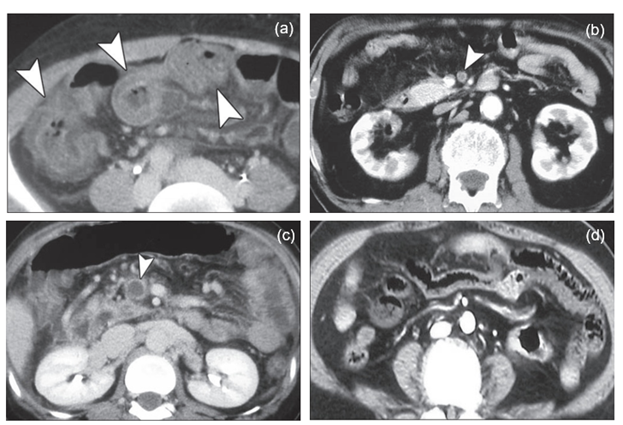
Figure 1. Contrast-enhanced computed tomography (CT) images showing radiological features of mesenteric ischemia:
(a) thickened bowel loops (b) occlusion of superior mesenteric artery (c) occlusion of superior mesenteric vein (d) decreased bowel loop enhancements.
Statistical analysis:
All statistical analysis was performed using SPSS v21 and MedCalc software. Categorical variables were expressed as frequencies and percentages. Continuous variables were expressed as mean and standard deviation (SD) . To compare the ischemic and non-ischemic cases in pre-operative groups, student’s t-test was applied. Student’s paired t-tests were applied to compare pre and post op among ischemic and non-ischemic cases. Receiver Operating Characteristic (ROC) analysis was applied. ROC curves were used to determine the cut-off points of serum I-FABP to distinguish patients with intestinal ischemia from patients with acute abdomen due to other causes. p<0.05 was considered statistically significant.
RESULTS:
Mean age and gender distribution was comparable between ischemia and non-ischemia groups with a male predominance. Both preoperative and postoperative I-FABP levels were lower in the non-ischemia group than in non-ischemia group but not statistically significant at 5% alpha error rate (p = 0.054). The Power of the study was only 50%. Interval from symptom onset to presentation and duration of surgery were similar between the groups. Leukocyte count was significantly higher in ischemia group compared with the non-ischemia group (p = 0.001) ICU stays (p = 0.001) and overall hospital stay (p = 0.030) were also significantly longer in ischemic group. More patients in the ischemia group required stoma creation compared with the non-ischemia group (p = 0.003). Sepsis was observed only in ischemia group (Table 1). Out of 28 ischemic cases , CT was able to predict ischemia in 24 cases
Table 1. Patient demographics and clinical characteristics according to diagnosis
|
|
Non-Ischemia, n=29 |
Ischemia, n=28 |
p-value |
|
Age (years) |
44 ± 13.2 |
43 ± 16.4 |
0.120 |
|
Gender |
|
||
|
Male |
21.0 (70%) |
19.0 (65.4%) |
0.700 |
|
Female |
8.0 (30%) |
9.0 (34.6%) |
|
|
Serum I-FABP (ng/ml) |
|
|
|
|
Pre-operative |
3.31± 2.52 |
5.08 ± 4.04 |
0.054 |
|
Post-operative |
3.85 ± 3.32 |
4.45 ± 4.02 |
0.544 |
|
Interval from symptom onset to presentation (days) |
6 ± 3.3
|
7 ± 5.5 |
0.250 |
|
Duration of surgery |
2.1 ± 0.84 |
2.2 ± 0.64
|
0.560 |
|
ICU stay (days) |
1 ± 0.65
|
4 ± 2.67 |
0.001* |
|
Hospital stay (days) |
9 ± 3.89 |
13 ± 7.6
|
0.03* |
|
Incidence of sepsis |
0 (0.0%) |
9 (31.0%) |
|
|
Leukocyte count (/μl) |
8756 ± 4662 |
17218 ± 9745 |
0.001* |
|
Stoma |
7 (25.0%) |
19 (65.0%) |
0.003* |
|
Mortality |
0 (0.0%) |
2 (6.9%) |
|
The Receiver operating curve (ROC) analysis discriminates between ischemic and non-ischemic patients among preoperative samples. The ROC curve is presented in Fig.19. The results of the ROC analysis are presented in Table.2. The Area under the curve (AUC) was 65.0%. The cut off level among Preoperative samples was 5.75 ng/ml. The sensitivity was 43.4 % was and specificity was 83.4 % at the cut-off level (Figure 2).
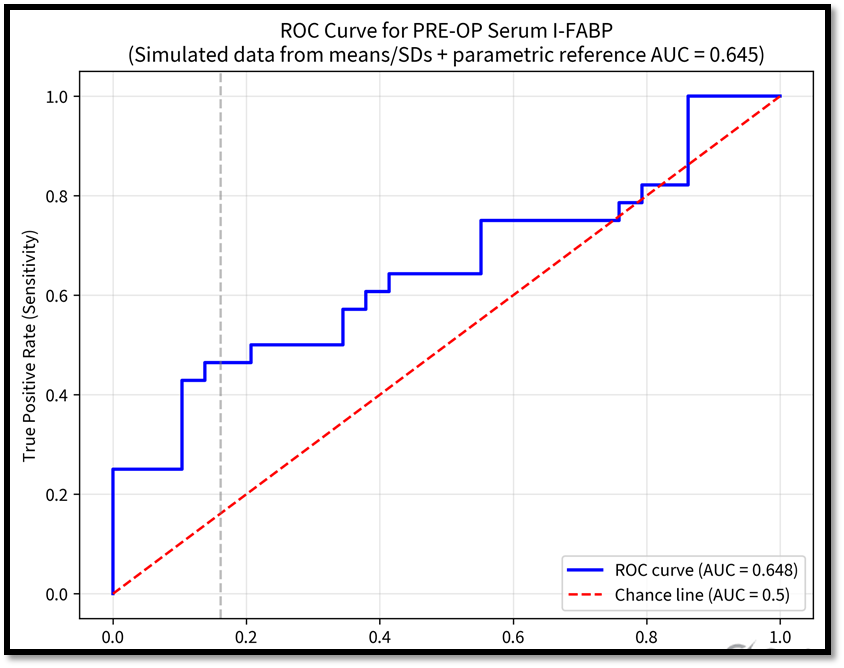
Figure 2. ROC Curve showing the diagnostic utility of I-FABP for intestinal ischemia.
DISCUSSION:
We conducted this prospective observational study to evaluate the diagnostic value of I-FABP in patients with suspected mesenteric ischemia. The results of this study suggest that while serum I-FABP levels are elevated in patients with intestinal ischemia, its standalone diagnostic performance in the present cohort was limited, likely reflecting the modest sample size, the biological variability of I-FABP release across different mechanisms and stages of ischemia, and the inherent challenges of capturing a single perioperative biomarker measurement in a surgically heterogeneous population. The mean preoperative serum I-FABP level was higher in the ischemic group (5.08 ±4.04 ng/mL) compared to the non-ischemic group (3.31 ± 2.52 ng/mL). Although it was nearing significance but was not significant at 5% alpha error rate and post hoc power of the study was only 50%suggesting that I-FABP is not reliable in differentiating intestinal ischemia from other causes of acute abdomen in patients presenting to the hospital after symptom onset. Future studies should prospectively enrol a larger cohort, incorporate serial I-FABP measurements at defined time points, and integrate I-FABP with complementary biomarkers such as D-lactate and citrulline to construct a multivariate diagnostic model with improved sensitivity and specificity for clinical deployment.
In the present study, the lack of differences in serum I-FABP between the two groups is due to the late presentation. Preoperative samples were collected at a mean of 7 days after ischemic attack, by which time the reserves of I-FABP were depleted, resulting in less than expected values to confirm ischemia. Early measurement of this marker might detect elevated levels reflecting reversible ischemia. In an animal study, authors found epithelium regeneration following ischemia was partial by day 3 and complete by day 7.10 In another animal study, I-FABP level rose to 300 ng/ml in 1 hour after the transient 30-minute occlusion of the superior mesenteric artery and returned to normal within 4 hours.11The exact point in time when the mesenteric ischemia occurs is often obscure. Furthermore, surgical manipulation might also have increased post-operative I-FABP levels.12
I-FABP is abundant at villus tips and is rapidly released into the circulation in severe ischemia in the early phases.13However, when ischemia progresses without mucosal recovery, blood supply is irretrievably lost to a demarcated segment of bowel and no more FABP can be expected to be present in body fluids, resulting in false-negative I-FABP test results.12, 13 On the other hand, transient elevation of I-FABP may reflect mesenteric hypoperfusion and does not necessarily predict transmural bowel necrosis, since regeneration of the bowel is possible when perfusion is restored.12These factors underscore that measuring I-FABP within hours of symptom onset is critical for detecting elevated levels indicating acute intestinal ischemia.
As a result of rapid ischemic tissue damage, a nonspecific inflammatory response occurs, accompanied by leukocytosis and increase in C-reactive protein and procalcitonin.14 In one study it has been reported that leukocytosis (>10,000/µL) is associated with strangulation in 26 of 37 cases.15 The total ICU stay, hospital stay, incidence of sepsis/septic shock were also higher in ischemic group. Two deaths were seen in the ischemic group only and both had intraoperative contamination.
The most common CT features seen in our cohort were bowel wall thickening, decreased enhancement, ascites, and vascular thrombus. These findings are consistent with the study by Kanasaki et al, who observed similar CT features such as bowel wall thickening, decreased bowel wall enhancement, paper-thin bowel wall, and thrombus in splanchnic arteries or veins.14In our study CT sensitivity of 85.71% falls within the reported range for multidetector CT in acute mesenteric ischemia (64%–96%), with specificity reported between 92%-100% in the literature.14 Grotelüschen et al study also reported that CT scan showed non-specific signs such as intestinal wall thickening or ascites. However, findings that are specific to indicate ischemia, such as portal gas or intramural gas, were reported less frequent.14, 16The predominance of non-specific CT findings indicates ongoing diagnostic challenge and need for reliable biomarkers such as I-FABP for early detection.
Our findings demonstrate that I-FABP levels should be measured within hours of symptom onset during mucosal injury. Delayed sampling reflects decreased levels due to depletion, limiting its diagnostic utility. Our study has few limitations to be acknowledged. First, most patients presented late to the hospital, which might have affected I-FABP levels and limited its diagnostic accuracy for acute intestinal ischemia. Second, a single-centric study with a low sample size affects the power of the study and generalizability of study findings. Third, we performed single-point measurement rather than serial measurement of the biomarker starting early in the course of the disease, which may not reveal the kinetics and metabolism of the marker.
CONCLUSION:
Serum I-FABP demonstrated limited clinical utility for diagnosing acute intestinal ischemia in patients presenting late after symptom onset. Late presentation and timing of biomarker assessment likely influenced the serum I-FABP levels. Early measurement of I-FABP within hours of symptom onset might better detect elevated levels reflecting acute intestinal ischemia.
REFERENCES:
1. Monita, M.M.; Gonzalez, L. Acute Mesenteric Ischemia; StatPearls Publishing: Treasure Island, FL, USA, 2023; [Updated 26 June 2023].
2. Montagnana M, Danese E, Lippi G. Biochemical markers of acute intestinal ischemia: possibilities and limitations. Annals of translational medicine. 2018;6(17):341.
3. Oldenburg WA, Lau LL, Rodenberg TJ, Edmonds HJ, Burger CD. Acute mesenteric ischemia: a clinical review. Archives of internal medicine. 2004;164(10):1054-62.
4. van den Heijkant TC, Aerts BA, Teijink JA, Buurman WA, Luyer MD. Challenges in diagnosing mesenteric ischemia. World journal of gastroenterology: WJG. 2013;19(9):1338.
5. Sun DL, Cen YY, Li SM, Li WM, Lu QP, Xu PY. Accuracy of the serum intestinal fatty-acid-binding protein for diagnosis of acute intestinal ischemia: a meta-analysis. Scientific reports. 2016;6(1):34371.
6. Windsant IC, Hellenthal FA, Derikx JP, Prins MH, Buurman WA, Jacobs MJ, Schurink GW. Circulating intestinal fatty acid-binding protein as an early marker of intestinal necrosis after aortic surgery: a prospective observational cohort study. Annals of surgery. 2012;255(4):796-803.
7. Wiercinska-Drapalo A, Jaroszewicz J, Siwak E, Pogorzelska J, Prokopowicz D. Intestinal fatty acid binding protein (I-FABP) as a possible biomarker of ileitis in patients with ulcerative colitis. Regulatory peptides. 2008;147(1-3):25-8.
8. Adriaanse MP, Tack GJ, Passos VL, Damoiseaux JG, Schreurs MW, Van Wijck K, et al., Serum I‐FABP as marker for enterocyte damage in coeliac disease and its relation to villous atrophy and circulating autoantibodies. Alimentary pharmacology & therapeutics. 2013;37(4):482-90.
9. Funaoka H, Dohi Y, Ohgushi H, Akahane M, Imamura T. Development of a high-specificity enzyme-linked immunosorbent assay (ELISA) system for the quantification and validation of intact rat osteocalcin. Immunological Investigations. 2010;39(1):54-73.
10. Robinson JW, Mirkovitch V, Winistörfer B, Saegesser F. Response of the intestinal mucosa to ischaemia. Gut. 1981;22(6):512.
11. Sakamoto K, Kanda T, Bamba T, Funaoka H, Kosugi SI, Yajima K, Ishikawa T. Serum intestinal fatty acid binding protein in patients with small bowel obstruction. Surg Sci. 2013;4(6):302-7.
12. Ludewig S, Jarbouh R, Ardelt M, Mothes H, Rauchfuß F, Fahrner R, Zanow J, Settmacher U. Bowel Ischemia in ICU Patients: Diagnostic Value of I‐FABP Depends on the Interval to the Triggering Event. Gastroenterology Research and Practice. 2017;2017(1):2795176.
13. Lieberman JM, Sacchettini J, Marks C, Marks WH. Human intestinal fatty acid binding protein: report of an assay with studies in normal volunteers and intestinal ischemia. Surgery. 1997;121(3):335-42.
14. Kanasaki S, Furukawa A, Fumoto K, Hamanaka Y, Ota S, Hirose T, Inoue A, Shirakawa T, Nguyen LD, Tulyeubai S. Acute mesenteric ischemia: multidetector CT findings and endovascular management. Radiographics. 2018;38(3):945-61.
15. Mu JF, Wang Q, Wang SD, Wang C, Song JX, Jiang J, Cao XY. Clinical factors associated with intestinal strangulating obstruction and recurrence in adhesive small bowel obstruction: a retrospective study of 288 cases. Medicine. 2018;97(34):e12011.
16. 16. 16. Grotelüschen R, Bergmann W, Welte MN, Reeh M, Izbicki JR, Bachmann K. What predicts the outcome in patients with intestinal ischemia? A single center experience. Journal of visceral surgery. 2019;156(5):405-11.
17. Thuijls G, van Wijck K, Grootjans J, Derikx JP, van Bijnen AA, Heineman E, Dejong CH, Buurman WA, Poeze M. Early diagnosis of intestinal ischemia using urinary and plasma fatty acid binding proteins. Annals of surgery. 2011;253(2):303-8.