Effectiveness of case-based learning versus traditional didactic lectures on biochemistry knowledge retention and student satisfaction among first-year medical students in India: a randomized crossover trial.
- Dr. Arshiya Masood Osmani , MBBS, M.D Associate Professor Biochemistry VRK Women’s Medical College,AzizNagar, R.R. District, Telangana 500075, India.
- Dr. Durdana Sayeed , MBBS, M.D Professor Biochemistry VRK Womens Medical College, Aziz Nagar, R.R. District, Telangana 500075, India.
Article Information:
Abstract:
Purpose: This study compared case-based learning (CBL) and traditional didactic lectures (DL) for their effects on knowledge retention, clinical application of biochemistry, and student satisfaction among first-year MBBS students at an Indian medical college. Methods: A randomized crossover trial was conducted over two consecutive 4-week phases, separated by a 2-week washout, at Dr. VRK Women's Medical College, Telangana, from February to July 2025. One hundred first-year MBBS students were individually randomized, using a computer-generated sequence concealed until assignment, into two groups of 50. Group A received CBL first (Phase I) then DL (Phase II); Group B received the reverse sequence. Each phase covered a distinct topic — Liver Function Tests and Renal Function Tests. Knowledge was assessed with 25-item MCQ tests before each phase, immediately after, and again at two months. Satisfaction was measured with a structured 5-point Likert survey. Paired t-tests, independent-samples t-tests, and Cohen's d were used, with 95% confidence intervals reported alongside P values; analyses used SPSS version 24. Results: Pooled across both sessions, students taught through CBL scored higher on post-tests (mean 19.91±2.76) than those taught through DL (15.39±3.43; mean difference 4.52, 95% CI 3.61–5.43; t=9.82, P<0.001, Cohen's d=1.64). Within-group effect sizes for CBL ranged from d=3.39 to 3.77, versus d=2.14–2.57 for DL. At two-month follow-up, CBL students retained significantly more knowledge (retaining ~90% of post-test scores versus ~74% for DL). Students also reported greater satisfaction, engagement, and perceived clinical relevance with CBL. Conclusion: CBL produced significantly greater knowledge gains, longer-term retention, and higher satisfaction than traditional lectures for biochemistry teaching in this randomized crossover trial. These findings support wider adoption of case-based approaches in preclinical medical education in India.
Keywords:
Article :
INTRODUCTION:
Biochemistry underpins nearly every major domain of medicine by explaining how the body works at the molecular level. This molecular understanding is essential for interpreting symptoms, lab results, and treatment responses. Without a working grasp of metabolic pathways and organ-specific biochemical markers, students struggle to connect classroom content to clinical findings once they reach the wards [1]. For decades the default delivery method in Indian MBBS programmes has been the didactic lecture, a format well suited to covering large volumes of content but one that the evidence base consistently associates with rapid forgetting and weak transfer to real patient problems [2].
Growing pressure to produce graduates who can reason clinically from day one has pushed educators toward active alternatives, of which case-based learning (CBL) is among the most studied. Rather than presenting biochemistry in the abstract, CBL confronts students with a clinical scenario and asks them to work out what is happening using the science they have already been taught [3]. The resulting retrieval, peer discussion, and guided reasoning have repeatedly been linked to deeper understanding and better long-term recall [4]. A large systematic review found CBL effective across health-profession settings, though the evidence still leans heavily on Western and East Asian institutions [3].
India's shift toward competency-based medical education under the National Medical Commission has created both a mandate and an opportunity for more active teaching. Even so, rigorously designed comparisons of CBL against DL for biochemistry specifically, in the Indian undergraduate setting, remain uncommon. Several recent single-centre Indian studies have begun to fill this gap [11–13], but a randomized crossover design with a two-month retention endpoint — the approach used here — has not, to our knowledge, been reported for this subject.
Objectives
The study had three aims: first, to compare how much knowledge students gained and retained from CBL versus DL; second, to assess whether CBL better equipped students to apply biochemical concepts in clinical scenarios; and third, to document student satisfaction with each method. We hypothesized that students exposed to CBL would score significantly higher on immediate post-tests and would retain more knowledge at the two-month follow-up than those taught by DL.
MATERIALS AND METHODS:
Ethics statement
Ethical clearance was granted by the Institutional Ethics Committee of Dr. VRK Women's Medical College (Approval No. 015/Dr.VRKWMC/IEC/2025). Before the study began, all students received a full explanation of the purpose and procedures, and written informed consent was obtained. Participation was voluntary; students who declined or withdrew faced no academic penalty. Individual scores were anonymized throughout data collection and analysis.
Trial registration:The trial was not prospectively registered
Study design
This was a randomized crossover trial, reported in accordance with the CONSORT 2010 extension for randomized crossover trials [15]. Each student received both the CBL and DL interventions in separate phases, so every participant acted as their own control; individual allocation to starting sequence (CBL-first or DL-first) was randomized. This arrangement reduces confounding from baseline differences in ability or motivation between groups.
Setting
The study took place at Dr. VRK Women's Medical College, Aziz Nagar, Ranga Reddy District, Telangana, India. Teaching and assessments were conducted within the Department of Biochemistry during the February–July 2025 semester.
Participants
The entire cohort of 100 first-year MBBS students enrolled in the 2025 academic batch was invited to participate; any student providing written consent was eligible. Students who missed an intervention session or an assessment without an approved reason were excluded from analysis for that phase only. A CONSORT-style flow diagram of enrollment, randomization, and follow-up is shown in Fig. 1. Final analyzable numbers after attrition were: Group A — Phase I -47, Phase II - 44; Group B — Phase I- 45, Phase II -46.
All participants were female, reflecting the single-sex nature of the institution.
Interventions
Two core biochemistry topics formed the study content: Liver Function Tests (LFT) for Session 1 and Renal Function Tests (RFT) for Session 2. Both topics used identical learning objectives and the same total contact time of 12 hours per phase (three hours per week over four weeks).
Phase I (four weeks): Group A received CBL for LFT while Group B received DL on the same topic. For CBL, students worked in small groups of 8–10 through structured clinical case scenarios, guided by a trained faculty facilitator who prompted students to apply basic biochemistry to explain each case's clinical findings. Group B attended conventional whole-class lectures on the same content, delivered by the same faculty.
Washout period (two weeks): No biochemistry teaching was scheduled, to limit carry-over of Phase I learning into Phase II scores.
Phase II (four weeks): Groups crossed over for the RFT topic — Group A now received DL while Group B worked through CBL case scenarios.
Follow-up (two months after Phase II): Students sat a retention test with no prior revision or additional teaching.
Outcomes
The primary outcome was the difference in immediate post-test MCQ scores between CBL and DL conditions. Secondary outcomes were long-term knowledge retention (follow-up MCQ scores at two months) and student satisfaction and perception as measured by the post-Phase II survey.
Data sources, measurement, and questionnaire validity
Each pre-test, post-test, and follow-up test consisted of 25 MCQs: 20 items testing factual knowledge and 5 testing clinical application. All items were reviewed by two senior faculty members for content validity and alignment with learning objectives before use. The student satisfaction questionnaire used a 5-point Likert scale across five domains: engagement, clinical relevance, opportunity for collaborative work, encouragement of self-directed study, and overall preference between methods, plus three open-ended questions. Content validity of the questionnaire was likewise established through expert faculty review rather than a validated existing instrument. A formal reliability statistic (e.g., Cronbach's alpha) for internal consistency of the Likert instrument was not computed in this study; this is acknowledged as a limitation, and we recommend that future iterations of this instrument undergo formal psychometric validation before re-use.
Bias
The main sources of potential bias were differences in faculty delivery style between CBL and DL sessions, and possible learning carry-over between phases despite the washout period. Both faculty members responsible for CBL facilitation attended a structured orientation on case facilitation before the study, and the same two faculty delivered both instruction types to avoid confounding by teacher effects. Because students and teaching faculty could not be blinded to allocation, a degree of performance bias favouring CBL cannot be excluded despite standardization efforts. The two-week washout was chosen based on the expected decay of short-term factual memory. The study was limited to one institution and one demographic group, which constrains external validity but does not by itself introduce within-study bias.
Sample size
An a priori power calculation assumed a clinically meaningful difference of 4 score points (25-point scale) between CBL and DL post-test means, a common standard deviation of 5, 80% power, and a two-sided alpha of 0.05, giving a minimum requirement of 40 students per group per phase; this was exceeded by enrolling 50 per group. A post hoc calculation using the observed between-group effect size (Cohen's d=1.64) confirmed the study achieved greater than 99% statistical power for the primary endpoint.
Randomization and allocation concealment
Students were individually assigned to Group A or B using a computer-generated random number sequence prepared by a designated faculty member who had no role in teaching or assessment and who held the allocation sequence until assignment was made, providing concealment from the students and the teaching faculty at the point of enrollment. No stratification was used, as the population was homogeneous (all female, same institution and year), reducing the need for restriction or matching.
Blinding
Because students participated in live teaching sessions, neither participants nor the faculty delivering instruction could be blinded to group allocation or method. To reduce detection/assessment bias, the faculty member responsible for scoring MCQ answer sheets was kept separate from those involved in teaching and was unaware of which student belonged to which group or phase.
Unit of analysis
Within each session (Table 1), the unit of analysis was the individual student, and pre–post comparisons used paired tests appropriate to the repeated-measures design. For the pooled, combined-session comparison of CBL versus DL post-test scores (Table 2), phase-level observations were treated as the unit of analysis (93 CBL observations, 89 DL observations) and compared using an independent-samples t-test. Because every student contributed one CBL observation and one DL observation to this pooled comparison, the two sets of observations are not fully independent of one another; treating them as independent, as done here, is a simplifying analytic choice that can modestly overstate the precision of the pooled estimate. A complementary within-student paired analysis (each student's own CBL score minus their own DL score, averaged across the two crossover sequences) would provide a more conservative test of the same hypothesis and is recommended for future analyses of this dataset.
Statistical methods
Within-group pre-to-post improvements were analyzed using paired t-tests. Between-group comparisons of post-test and follow-up scores used independent-samples t-tests. Effect sizes were calculated as Cohen's d. Point estimates for all primary and secondary between-group and within-group comparisons are reported with 95% confidence intervals alongside two-sided P values. Likert-scale data were summarized descriptively. Open-ended survey responses were analyzed through thematic coding by two independent reviewers, with disagreements resolved by discussion. A significance threshold of P<0.05 was applied throughout. All analyses were conducted in SPSS version 24.0 (IBM Corp., Armonk, NY, USA).
RESULTS:
Participants
Of 100 randomized students, usable data were obtained from 182 phase-level observations (Group A: 47 in Phase I, 44 in Phase II; Group B: 45 in Phase I, 46 in Phase II; Fig. 1). Losses were due entirely to student absence on the day of assessment; no participant formally withdrew. All participants were female, aged 18–19 years. Baseline pre-test scores were similar between groups in Session 1 (Group A 7.00±3.11 vs. Group B 6.89±2.95; mean difference 0.11, 95% CI −1.15 to 1.37; P>0.05), indicating comparable starting knowledge.
Main results
Table 1 shows pre-test and post-test scores by group and method. Both CBL and DL produced statistically significant pre-to-post improvements (P<0.001 in all four comparisons), but the improvement was consistently larger with CBL. In Session 1 (LFT), CBL improved scores by 13.09 points (95% CI 12.15–14.03; d=3.77) versus 9.20 points for DL (95% CI 8.27–10.13; d=2.57). In Session 2 (RFT), CBL again produced a larger gain of 11.59 points (95% CI 10.46–12.72; d=3.39) against 7.71 for DL (95% CI 6.86–8.56; d=2.14).
Table 1. Session- and group-wise statistical summary of pre- and post-test scores
|
Session |
Group |
Method |
N |
Pre-test Mean±SD |
Post-test Mean±SD |
Mean Diff±SD |
95% CI of mean diff |
Paired t |
P-value |
Cohen's d |
|
Session 1 (LFT) |
A |
CBL |
47 |
7.00±3.11 |
20.09±2.47 |
13.09±3.46 |
12.15–14.03 |
28.02 |
<0.001 |
3.77 |
|
Session 1 (LFT) |
B |
DL |
45 |
6.89±2.95 |
16.09±3.27 |
9.20±3.58 |
8.27–10.13 |
20.02 |
<0.001 |
2.57 |
|
Session 2 (RFT) |
A |
DL |
44 |
6.98±3.13 |
14.69±3.48 |
7.71±3.64 |
6.86–8.56 |
18.37 |
<0.001 |
2.14 |
|
Session 2 (RFT) |
B |
CBL |
46 |
8.15±2.77 |
19.74±3.05 |
11.59±3.42 |
10.46–12.72 |
20.60 |
<0.001 |
3.39 |
CBL, case-based learning; DL, didactic lectures; LFT, liver function tests; RFT, renal function tests; SD, standard deviation; CI, confidence interval.
When all sessions were pooled for a direct between-method comparison (Table 2), CBL post-test scores averaged 19.91±2.76 against 15.39±3.43 for DL (mean difference 4.52, 95% CI 3.61–5.43; t=9.82, P<0.001, Cohen's d=1.64) — a large and educationally meaningful difference (see Unit of analysis, above, regarding the pooled comparison's assumptions).
Table 2. Between-group comparison of post-test scores (combined sessions)
|
Comparison |
N (CBL) |
N (DL) |
CBL Post-test Mean±SD |
DL Post-test Mean±SD |
Mean Diff |
95% CI of mean diff |
t |
P-value |
Cohen's d |
|
Between methods (combined sessions A+B) |
93 |
89 |
19.91±2.76 |
15.39±3.43 |
4.52 |
3.61–5.43 |
9.82 |
<0.001 |
1.64 |
CBL, case-based learning; DL, didactic lectures; SD, standard deviation; CI, confidence interval.
Table 3 presents the two-month follow-up retention data. Students who had learned through CBL retained significantly higher scores than those taught by DL. The drop from post-test to follow-up was smaller in the CBL groups (Group A LFT: 20.09 to 18.42, 95% CI of decline 0.82–2.52, d=0.65; Group B RFT: 19.74 to 17.93, 95% CI 0.82–2.80, d=0.58) than in the DL groups (Group B LFT: 16.09 to 12.31, 95% CI 2.71–4.85, d=1.13; Group A RFT: 14.69 to 10.88, 95% CI 2.69–4.93, d=1.07). In practical terms, CBL students retained approximately 90% of their post-test knowledge at two months, versus approximately 74% for DL students.
Table 3. Two-month follow-up retention scores by group and teaching method
|
Session |
Group |
Method |
Pre-test Mean±SD |
Post-test Mean±SD |
Follow-up Mean±SD |
Paired t (Post vs F/U) |
95% CI of decline |
P-value |
Cohen's d (Retention) |
|
Session 1 (LFT) |
A |
CBL |
7.00±3.11 |
20.09±2.47 |
18.42±2.81 |
3.94 |
0.82–2.52 |
<0.001 |
0.65 |
|
Session 1 (LFT) |
B |
DL |
6.89±2.95 |
16.09±3.27 |
12.31±3.44 |
7.12 |
2.71–4.85 |
<0.001 |
1.13 |
|
Session 2 (RFT) |
A |
DL |
6.98±3.13 |
14.69±3.48 |
10.88±3.62 |
6.85 |
2.69–4.93 |
<0.001 |
1.07 |
|
Session 2 (RFT) |
B |
CBL |
8.15±2.77 |
19.74±3.05 |
17.93±3.21 |
3.67 |
0.82–2.80 |
<0.001 |
0.58 |
CBL, case-based learning; DL, didactic lectures; F/U, follow-up; LFT, liver function tests; RFT, renal function tests; SD, standard deviation; CI, confidence interval. Cohen's d (Retention) reflects the within-group effect of score decline from post-test to follow-up; smaller values indicate better retention.
Satisfaction survey results are presented in Fig. 3. Students rated CBL more favorably than DL across all five Likert domains, with the strongest preferences for clinical relevance (mean Likert score 4.6/5 for CBL vs. 3.1/5 for DL) and overall learning preference (4.7/5 vs. 2.9/5). Thematic analysis of open-ended comments produced four recurring themes: that CBL made biochemistry feel relevant to real patients; that working through cases helped students organize their knowledge in a way lectures did not; that the group format was motivating; and that students felt better prepared for clinical discussion after CBL. Fig. 2 shows the visual summary of follow-up retention scores.
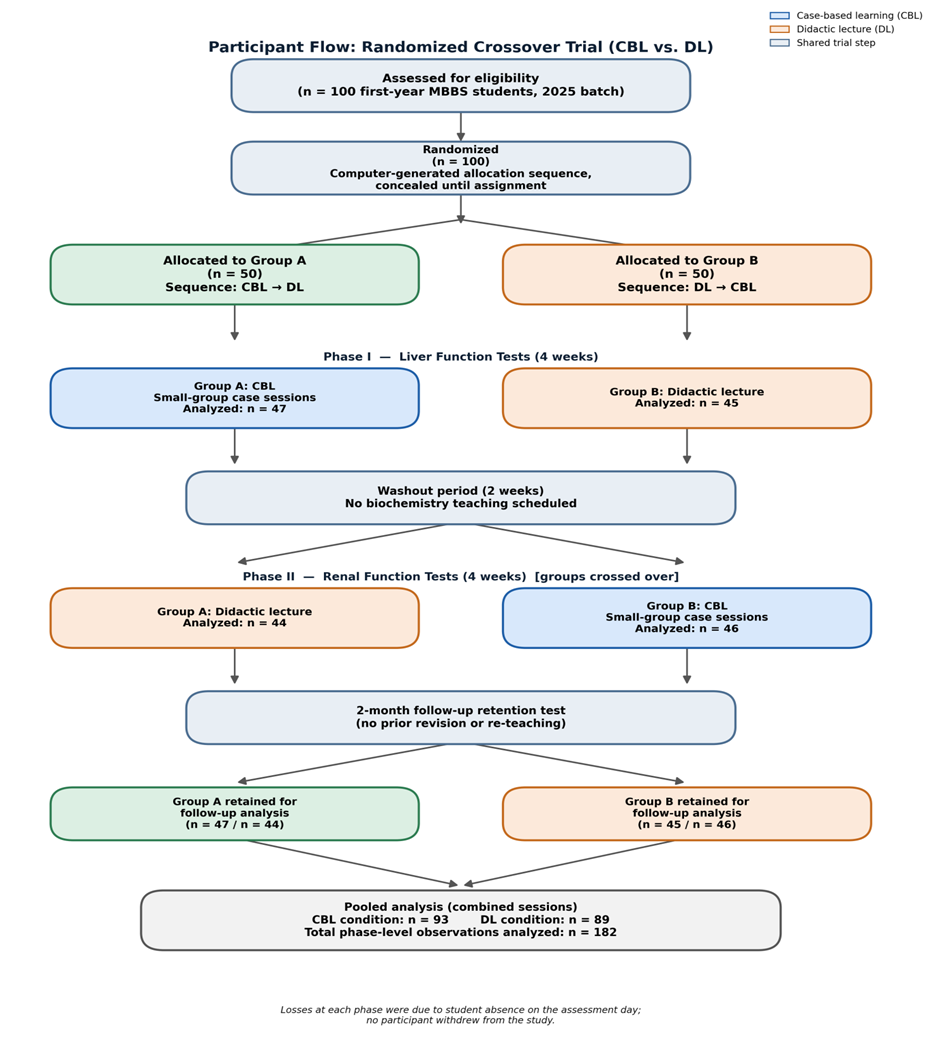
Fig. 1. CONSORT-style participant flow through enrollment, randomization, both crossover phases, and two-month follow-up. [Insert figure]
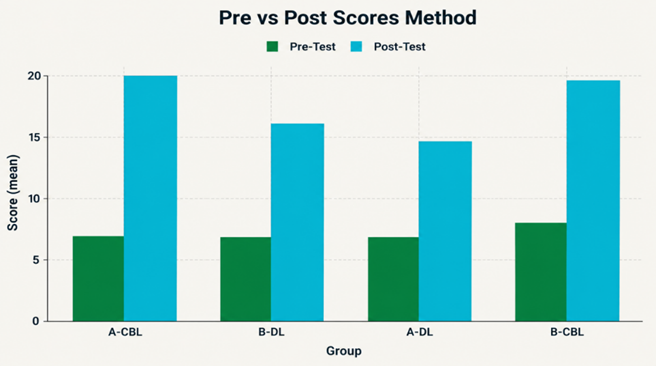
Fig. 2. Bar chart showing mean follow-up test scores (±SD) at two months for CBL and DL conditions across both groups. [Insert figure]
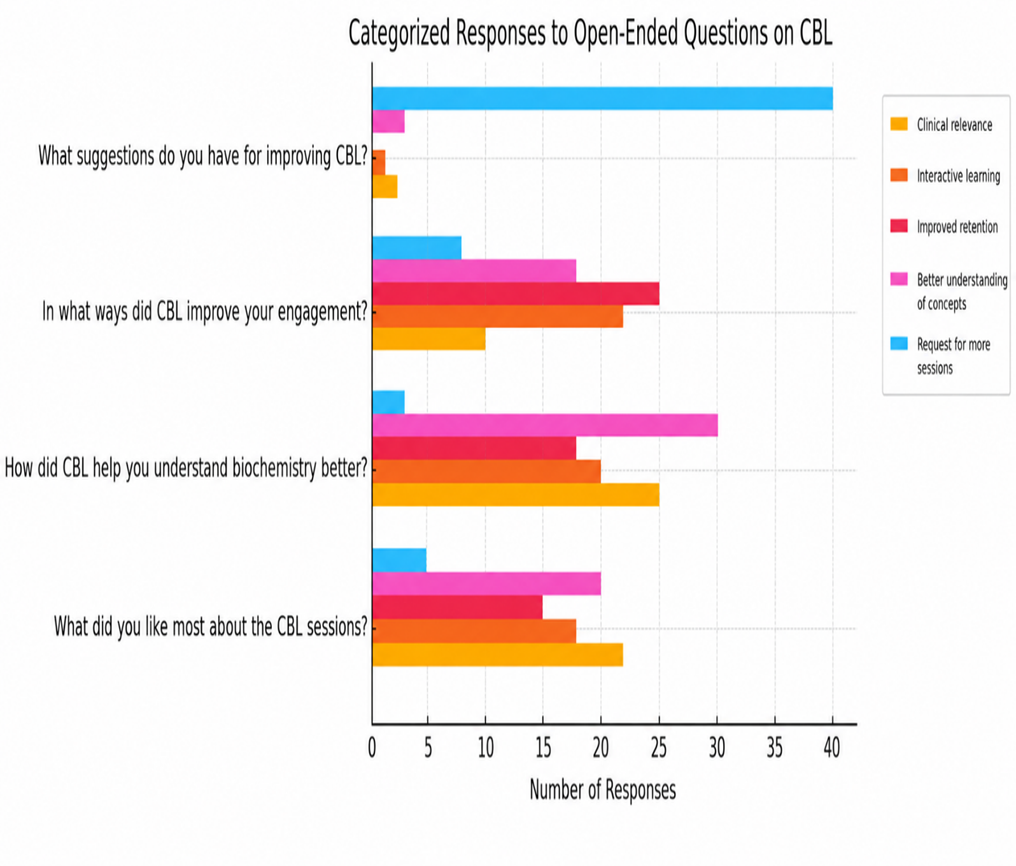
Fig. 3. Student perception of CBL versus DL: (A) mean Likert-scale ratings across five domains; (B) thematic categories from open-ended responses. [Insert figure]
DISCUSSION:
Key results
Three findings stand out. Students who learned through CBL scored markedly higher on immediate post-tests than those taught by DL, with a between-group effect size of Cohen's d=1.64 — large enough to matter in practice, not just statistically. They also retained more of that knowledge two months later. And they reported higher satisfaction with CBL on every dimension measured.
Interpretation
Why would CBL outperform lectures by this much? Our reading is that CBL simply asks more of the learner. Working through a case on, say, a patient with elevated bilirubin and ALT forces a student to trace the relevant metabolic pathway, connect it to a clinical picture, and defend that reasoning to peers — retrieval, elaboration, and social accountability in one package. That combination tends to produce a more durable memory trace than passively received lecture content [5], and it fits the retention pattern we saw: roughly a 10% loss at two months in the CBL groups against 26% in the DL groups. The crossover design does useful work here too. Because every student went through both conditions, the comparison is not confounded by pre-existing differences in ability or motivation between the two starting groups, which is often the weak point in single-arm comparisons of teaching methods.
Comparison with previous studies
Our results sit comfortably alongside a growing body of recent Indian work. Two 2025 crossover studies in first-year biochemistry — one at a Madhya Pradesh medical college [12] and one examining early clinical-case exposure at a college in Lucknow [13] — both reported large, statistically robust gains for case-based or clinically integrated teaching over standard lectures, echoing the magnitude of effect we observed rather than the more modest gains typical of older Western literature. A 2024 study of first-year MBBS students in Maharashtra similarly found CBL outperforming traditional teaching on post-test scores, albeit with smaller effect sizes than ours [11]. Outside India, Kubbara et al. [14] found that even an online, pandemic-adapted CBL format improved test performance and was well received by preclinical students, suggesting the core mechanism is not tied to any particular delivery format. Nair et al. reported that CBL improved both understanding and retention of biochemistry concepts among first-year students, though over a shorter assessment window than ours [6]. Work by Vasan et al. in anatomy found CBL particularly effective for topics with direct clinical relevance, a pattern consistent with the LFT and RFT findings here [7]. The effect sizes in our study are larger than most of these prior reports, which may partly reflect a ceiling effect: with baseline scores as low as roughly 7 out of 25 in both arms, there was simply more room to improve, and an actively engaging method has more to work with relative to a less stimulating one [8]. The satisfaction findings track a broader literature linking CBL to improved motivation and self-efficacy in medical education [9].
Limitations
Several limitations should temper how far these findings are pushed. First, the single-institution, single-gender setting makes it hard to know whether the results would transfer to co-educational colleges or to institutions with a different teaching culture elsewhere in India. Second, because faculty knew which method they were delivering, differential enthusiasm could have inflated CBL outcomes; standardized facilitator training reduces but cannot eliminate this possibility, and the lack of blinding means some performance bias cannot be excluded. Third, the pooled between-method comparison (Table 2) treats each student's two crossover observations as independent, which is a simplifying assumption that likely modestly understates the true uncertainty around the pooled estimate. Fourth, the satisfaction questionnaire's content validity rested on expert faculty review rather than a formally validated instrument with a reported reliability coefficient, which we did not compute; this should be addressed before the instrument is reused. Fifth, the two-month follow-up, while longer than in many comparable studies, cannot speak to whether the retention advantage persists over a full academic year or into clinical years. Finally, the qualitative findings rely on self-report and may be shaped by social desirability, particularly since students were aware of who had designed the CBL materials. We were also unable to confirm prospective trial registration for this randomized design; going forward, registering the protocol before enrollment would bring the study fully in line with CONSORT expectations for randomized trials.
Generalizability
Indian medical education is in a period of rapid change following NMC reforms, and there is a genuine need for local evidence to guide curriculum decisions. This study offers that evidence in one specific context. LFT and RFT are taught in every MBBS programme in the country and map directly onto clinical medicine, so the findings likely extend beyond this single institution. Educators in similarly resource-limited settings should find the intervention feasible: CBL here required no special equipment, only trained facilitators and well-designed cases.
Suggestions
Multi-centre studies enrolling students from government and private colleges, and from both single-sex and co-educational institutions, would test whether these findings generalize across the diversity of Indian medical education. It would also be worth following students into their clinical years to see whether early CBL exposure carries through to clerkship performance or competency-based assessments. Future work should examine what level of facilitator training produces the best outcomes, and whether prospective trial registration and a validated satisfaction instrument change the observed effect sizes. From a practical standpoint, departments could pilot CBL for one topic area at a time before committing to large-scale curriculum reform, refining case materials iteratively based on student feedback.
CONCLUSION:
This randomized crossover trial provides clear evidence that case-based learning outperforms traditional didactic lectures for first-year medical students learning biochemistry in India. The differences were large, consistent across two topics and both study groups, and durable at two-month follow-up. Students were also more satisfied with CBL and felt it better prepared them for clinical thinking. Given the ongoing shift of Indian medical education toward competency-based outcomes, these findings offer practical grounds for adopting CBL as a primary teaching format for biochemistry, with appropriate investment in faculty training, case development, and — for future iterations of this line of research — prospective trial registration and validated outcome instruments.
REFERENCES:
1. Patel VL, Yoskowitz NA, Arocha JF, Shortliffe EH. Cognitive and learning sciences in biomedical and health instructional design: a review with lessons for biomedical informatics education. J Biomed Inform. 2016;62:328-339. https://doi.org/10.1016/j.jbi.2016.02.006
2. Dent JA, Harden RM, Hunt D, editors. A practical guide for medical teachers. 5th ed. Edinburgh: Elsevier; 2017. 452 p.
3. Burgess AW, Mellis C. Feedback and assessment for clinical placements: achieving the right balance. Adv Med Educ Pract. 2015;6:373-381. https://doi.org/10.2147/AMEP.S77890
4. McLean SF. Case-based learning and its application in medical and health-care fields: a review of worldwide literature. J Med Educ Curric Dev. 2016;3:JMECD.S20377. https://doi.org/10.4137/JMECD.S20377
5. Koh GC, Khoo HE, Wong ML, Koh D. The effects of problem-based learning during medical school on physician competency: a systematic review. CMAJ. 2008;178:34-41. https://doi.org/10.1503/cmaj.070565
6. Nair SP, Shah T, Seth S, Pandit N, Shah G. Case based learning: a method for better understanding of biochemistry in medical students. J Clin Diagn Res. 2013;7:1576-1578. https://doi.org/10.7860/JCDR/2013/5795.3212
7. Vasan NS, DeFouw DO, Compton S. A survey of student perceptions of team-based learning in anatomy curriculum: favorable views unrelated to grades. Anat Sci Educ. 2009;2:150-155. https://doi.org/10.1002/ase.91
8. Srinivasan M, Wilkes M, Stevenson F, Nguyen T, Slavin S. Comparing problem-based learning with case-based learning: effects of a major curricular shift at two institutions. Acad Med. 2007;82:74-82. https://doi.org/10.1097/01.ACM.0000249963.93776.aa
9. Hussain S, Ahmed S, Bhatt MA, Bhatt LA. Active learning in biochemistry education: a crossover trial comparing CBL and traditional lectures. Biochem Mol Biol Educ. 2022;50:459-467. https://doi.org/10.1002/bmb.21645
10. Gurpinar E, Alimoglu MK, Mamakli S, Aktekin M. Can learning style predict student satisfaction with different instruction methods and academic achievement in medical education? Adv Physiol Educ. 2010;34:192-196. https://doi.org/10.1152/advan.00075.2010
11. Borgaonkar K, Patil R. Comparison of case-based learning and traditional teaching to evaluate learning and academic outcome of first-year MBBS students in biochemistry curriculum. Asian J Pharm Clin Res. 2024;17:62-65. https://doi.org/10.22159/ajpcr.2024.v17i6.50959
12. Raghuwanshi K, Nagwanshi J, Jain BK, Manore S, Petkar S, Gandhe M. Case-based learning in clinical biochemistry: performance and perception of MBBS phase-I students in Chhindwara Institute of Medical Sciences, Chhindwara, Madhya Pradesh, India. Cureus. 2025;17:e97044. https://doi.org/10.7759/cureus.97044
13. Sushma BJ, Mishra G, Sukul RR, Parashar S. Impact of integrated clinical case exposure on phase I MBBS students in their learning process in biochemistry. BMC Med Educ. 2025;25:1557. https://doi.org/10.1186/s12909-025-08050-5
14. Kubbara EA, Ahmed NM, Alamri T, Bakarman MA, Malibary H, Eid R, Alzahrani AO. Online case-based learning for medical students as a teaching method for biochemistry at King Abdulaziz University amid COVID-19 pandemic (a study conducted in 2021). Biochem Mol Biol Educ. 2024;52:136-144. https://doi.org/10.1002/bmb.21795
15. Dwan K, Li T, Altman DG, Elbourne D. CONSORT 2010 statement: extension to randomised crossover trials.