Effect of Amniotomy Versus Awaiting Spontaneous Membrane Rupture on Labour Duration in Primigravida Women
- Samreen Hassan , Department Of Gynecology And Obstetrics, Lady Reading Hospital (LRH), Peshawar, Pakistan
- Shamal Dawood , Department Of Gynecology And Obstetrics, Lady Reading Hospital (LRH), Peshawar, Pakistan
- Sumera , Department Of Gynecology And Obstetrics, Lady Reading Hospital (LRH), Peshawar, Pakistan
- Hafiza Nida Mumtaz , Department Of Gynecology And Obstetrics, Lady Reading Hospital (LRH), Peshawar, Pakistan
- Ikram Ullah , Department Of Gynecology And Obstetrics, Lady Reading Hospital (LRH), Peshawar, Pakistan
Article Information:
Abstract:
Background: Amniotomy may shorten labour, although its benefit depends on patient selection and accompanying care. Objective: To compare reported labour duration after amniotomy with management awaiting spontaneous membrane rupture. Methods: A randomized controlled trial was conducted at Lady Reading Hospital, Peshawar, from 1 February to 1 August 2021. Eighty primigravida women were allocated equally to amniotomy or the comparison group. Mean labour duration was compared using an independent-samples t-test. Results: Mean labour duration was 5.725 ± 0.59 hours after amniotomy and 7.150 ± 0.48 hours in the comparison group (p < 0.001), an absolute difference of 1.425 hours (85.5 minutes). Mean age, gestational age, and weight were descriptively similar between groups. Conclusion: Amniotomy was associated with shorter reported labour duration in this trial. Incomplete delivery and neonatal outcome reporting prevents conclusions about comparative safety or overall clinical benefit.
Keywords:
Article :
INTRODUCTION:
Amniotomy is the deliberate rupture of the fetal membranes during labour to facilitate progression or enable selected monitoring procedures. Its value depends on the clinical indication, cervical dilatation, fetal presentation, and accompanying management. Contemporary guidance distinguishes appropriate augmentation from unnecessary intervention in normally progressing labour, emphasizing assessment before treatment.1
Labour care should support maternal comfort, informed choice, and fetal wellbeing while allowing normal variation in cervical progress. The World Health Organization recommends care that responds to the individual woman rather than applying rigid expectations to every labour.2 Earlier guidance on augmentation likewise places importance on confirming delay and ensuring that interventions are undertaken where maternal and fetal surveillance are available.3
The evidence for routine amniotomy remains inconsistent. A Cochrane review of spontaneous labour did not establish a clear reduction in first-stage duration and did not support introducing amniotomy routinely into standard care.4 In contrast, evidence on early amniotomy combined with oxytocin suggests shorter labour and a modest reduction in caesarean delivery in prevention trials; the combined intervention cannot establish the independent effect of membrane rupture.5
Timing and population also influence interpretation. A systematic review of women undergoing induction after cervical ripening found that early amniotomy shortened the induction-to-delivery interval without a clear increase in caesarean birth.6 These findings concern induced labour and should not be transferred uncritically to women whose labour begins spontaneously. A multicentre trial in nulliparous women reported less dystocia after early amniotomy, illustrating how outcome definitions and management protocols can shape the apparent benefit.7
For women with uncomplicated spontaneous labour, professional guidance supports limiting interventions that lack a specific indication.8 When delay is suspected, assessment should consider contraction patterns, cervical change, fetal position, and the woman's preferences before escalation. NICE guidance incorporates amniotomy into selected pathways for confirmed delay, with subsequent reassessment rather than an assumption that rupture alone will resolve slow progress.9
Reliable documentation is essential when evaluating these pathways. The WHO Labour Care Guide provides a structured approach to recording progress, supportive care, observations, and decisions, helping distinguish physiological variation from complications requiring intervention.10 Decisions about augmentation must also remain separate from decisions about when to initiate labour at or beyond term, which address a different clinical question.11
In a busy tertiary referral hospital, shorter labour may have practical implications, but duration alone is an incomplete measure of effective care. Maternal morbidity, neonatal outcomes, operative delivery, and patient experience must also inform interpretation. This randomized trial compared labour duration after amniotomy with management awaiting spontaneous membrane rupture among primigravida women at Lady Reading Hospital, Peshawar. The objective was to quantify the difference in reported labour duration within the study population and provide locally relevant evidence for individualized intrapartum management. Safety requires fuller reporting of outcomes.
METHODS:
This study was conducted in the Department of Obstetrics and Gynaecology, Lady Reading Hospital, Peshawar, from 1 February to 1 August 2021. Eighty primigravida women were recruited consecutively and allocated to amniotomy (Group A) or management awaiting spontaneous rupture of membranes (Group B), with 40 participants per group. The reported sample-size assumptions were a 95% confidence level, 80% power, and expected mean labour durations of 6.66 ± 1.40 and 7.66 ± 1.75 hours. The manuscript does not provide sufficient detail to reproduce the complete calculation. Women aged 18–40 years with an ultrasound-confirmed singleton pregnancy and a gestational age of at least 36 weeks, estimated from the last menstrual period, were eligible when in labour. Pregnancy-induced hypertension, diabetes mellitus, and antepartum haemorrhage were exclusion criteria. The eligibility threshold included 36 weeks, so the study population cannot be described as exclusively term without confirmation of the actual gestational ages. Informed consent was obtained, and age, gestational age, and maternal weight were recorded. Block randomization was reported; block size, sequence generation, allocation concealment, and blinding were not described.
In Group A, amniotomy was performed aseptically using Kocher's forceps with prophylactic antibiotic coverage, as documented in the source manuscript. Maternal and fetal monitoring accompanied the procedure, including observation for cord prolapse, abnormal liquor, and placental abruption. Group B was managed with intact membranes until spontaneous rupture or an intervention necessitated by fetal distress. The antibiotic regimen, cervical dilatation at allocation, oxytocin exposure, and criteria for crossover were not specified. The precise starting and ending points used to measure labour duration were also not reported. Data were analysed using SPSS version 22. Continuous variables were summarized as mean ± standard deviation and categorical variables as frequencies and percentages. An independent-samples t-test compared labour duration between groups, with p ≤ 0.05 considered statistically significant. Stratified comparisons were reported for age, gestational age, and weight. These subgroup analyses were exploratory; interaction tests and adjustment for multiple comparisons were not reported.
RESULTS:
All reported analyses included 80 participants, with 40 in each group. Mean age was 27.175 ± 2.39 years in Group A and 26.275 ± 2.57 years in Group B. Mean gestational age was 38.500 ± 1.08 and 38.400 ± 1.15 weeks, respectively, and mean maternal weight was 67.025 ± 3.58 and 67.900 ± 3.01 kg. Most participants were aged 18–30 years: 36/40 (90.0%) in Group A and 37/40 (92.5%) in Group B. Mean labour duration was 5.725 ± 0.59 hours after amniotomy and 7.150 ± 0.48 hours with management awaiting spontaneous rupture. The absolute difference was 1.425 hours, equivalent to 85.5 minutes, with the amniotomy group showing the shorter duration. The reported p-value of 0.000 is expressed as p < 0.001, since a p-value should not be reported as zero.
The direction of the difference was consistent across the reported age, gestational-age, and weight strata. Subgroup means are shown in Table 2. The reported gestational-age strata begin at 37 weeks despite eligibility from 36 weeks; whether any 36-week participants were enrolled requires confirmation. The older age groups contained only four and three participants, respectively, limiting subgroup interpretation. The supplied Results did not provide complete outcome counts for mode of delivery, maternal complications, neonatal morbidity, or Apgar scores; these outcomes therefore cannot be used to establish comparative safety.
Table 1. Age distribution by study group
|
Age Group (years) |
Group A (n=40) |
Group B (n=40) |
Total |
|
18–30 |
36 (90%) |
37 (92.5%) |
73 (91.25%) |
|
>30 |
4 (10%) |
3 (7.5%) |
7 (8.75%) |
Table 2. Reported labour duration by study group and subgroup (hours)
|
Category |
Group A (Mean ± SD) |
Group B (Mean ± SD) |
|
Overall Labor Duration (hours) |
5.725 ± 0.59 |
7.150 ± 0.48 |
|
Age Group 18–30 |
5.750 ± 0.60 |
7.162 ± 0.50 |
|
Age Group >30 |
5.500 ± 0.57 |
7.000 ± 0.00 |
|
Gestational Age 37–39 |
5.794 ± 0.59 |
7.151 ± 0.50 |
|
Gestational Age >39 |
5.333 ± 0.51 |
7.142 ± 0.37 |
|
Weight ≤70 |
5.771 ± 0.59 |
7.162 ± 0.50 |
|
Weight >70 |
5.400 ± 0.54 |
7.000 ± 0.00 |
Table 3. Reported baseline characteristics by study group
|
Demographic Variables |
Group A (Mean ± SD) |
Group B (Mean ± SD) |
|
Age (years) |
27.175 ± 2.39 |
26.275 ± 2.57 |
|
Gestational Age (weeks) |
38.500 ± 1.08 |
38.400 ± 1.15 |
|
Weight (Kg) |
67.025 ± 3.58 |
67.900 ± 3.01 |
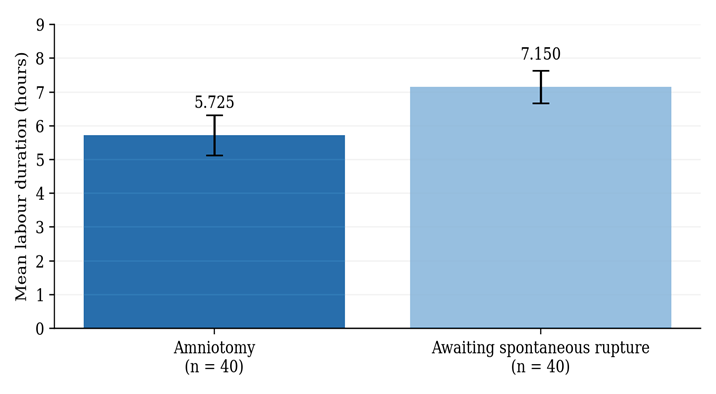
Figure 1. Mean labour duration by group. Error bars show the reported standard deviations.
DISCUSSION:
Amniotomy was associated with an 85.5-minute reduction in mean reported labour duration in this trial of 80 primigravida women. The difference was statistically significant, but its clinical importance depends on the stage of labour, accompanying treatment, and outcomes beyond delivery time. Contemporary labour guidance supports amniotomy for appropriate induction or augmentation rather than using shorter duration as sufficient evidence of overall benefit.1 Because the manuscript does not define the exact interval measured, the result should be interpreted as a difference in the reported duration outcome.
The evidence for amniotomy varies by clinical setting. A Cochrane review of amniotomy alone in spontaneous labour found no clear reduction in first-stage duration, contrasting with the present result.4 Conversely, evidence on early amniotomy combined with early oxytocin suggests that a combined strategy can shorten labour.5 The distinction matters: an effect observed during induced labour or with oxytocin cannot be attributed automatically to membrane rupture alone. The present trial did not adequately report oxytocin exposure, crossover, or other cointerventions.
Randomized studies in induced labour provide relevant, although indirect, comparisons. Macones and colleagues reported shorter induction-to-delivery time after early amniotomy in nulliparous women.12 Mercer and colleagues also found shorter labour, but identified infection and cord-compression concerns that varied with the oxytocin protocol.13 These findings support evaluating timing and treatment together. Halouani and colleagues subsequently reported shorter time to active labour and vaginal delivery with early amniotomy during oxytocin induction, without a significant difference in the overall caesarean rate.14 Agreement in duration therefore does not establish a consistent effect on mode of birth.
Trials following mechanical cervical ripening reinforce the importance of the starting point used for measurement. Hasan and colleagues found a shorter intervention-to-delivery interval with early amniotomy and immediate oxytocin after Foley catheter ripening, without a significant reduction in caesarean delivery.15 Berry and colleagues found no significant overall difference in Foley-insertion-to-active-labour time, although intervals measured after balloon removal were shorter with early amniotomy.16 The present manuscript needs an explicit time origin before its 85.5-minute difference can be compared reliably with these estimates.
Recent pooled evidence also requires a balanced interpretation. A 2025 meta-analysis reported shorter time to delivery and no significant difference in caesarean rates, but a higher risk of chorioamnionitis with early amniotomy.17 The earlier synthesis by Kim and colleagues found faster delivery without a significant increase in measured infectious morbidity; differences in included trials and precision may contribute to the differing safety findings.18 A further review examined outcomes with and without cervical ripening, emphasizing that cervical preparation is part of the intervention context.19 These reviews should not be treated as independent replications because their included trials overlap.
The earlier Canadian trial similarly reported shorter time to full dilatation and less dystocia with early amniotomy.7 The meta-analysis of amniotomy after cervical ripening also supports shorter delivery intervals in induction pathways.6 Nevertheless, the present study's narrow eligibility and small sample limit transferability. Eligibility extended to 36 weeks, and effects in late-preterm pregnancies cannot be assumed equivalent to those in term cohorts. Baseline similarity in age, gestational age, and weight does not resolve unreported differences in cervical status or treatment.
Patient-centred care remains essential. WHO intrapartum guidance places maternal experience alongside clinical outcomes, while its augmentation recommendations require assessment of labour progress and access to monitoring.2 Appropriate surveillance is especially relevant after an irreversible intervention such as membrane rupture.3 Professional guidance on limiting unnecessary intervention supports informed choices in uncomplicated labour.8 NICE pathways link amniotomy to evaluation of delay and subsequent reassessment rather than an automatic timetable for every woman.9
The WHO Labour Care Guide offers a framework for recording cervical progress, contractions, fetal observations, supportive care, and treatment decisions consistently.10 Recommendations on induction at or beyond term concern the timing of birth, which is a different question from the isolated effect of amniotomy.11 Older evidence on amniotomy with intravenous oxytocin highlights the need to evaluate effectiveness and safety across the entire induction regimen.20 Continuous labour support may itself influence duration and birth experience, making its documentation relevant when comparing intervention groups.21
The principal limitations are incomplete reporting of allocation concealment, participant flow, outcome timing, cointerventions, and maternal and neonatal endpoints. Transparent trial reporting requires these details before the risk of bias can be assessed adequately.22 Small subgroup comparisons remain exploratory because no interaction tests were supplied. The absence of complete delivery, infection, neonatal, and satisfaction outcomes prevents a conclusion that shorter labour produced better overall care. Future trials should prespecify both effectiveness and safety outcomes, use intention-to-treat analysis, and measure maternal experience alongside duration.
CONCLUSION:
In this trial of 80 primigravida women, mean reported labour duration was 1.425 hours shorter after amniotomy than with management awaiting spontaneous membrane rupture (p < 0.001). The finding supports a potential reduction in labour duration in selected patients at this center. Incomplete reporting of delivery, maternal, and neonatal outcomes prevents conclusions about comparative safety or overall clinical benefit. Larger, transparently reported trials are needed to establish which women benefit and under what conditions.
REFERENCES:
1. American College of Obstetricians and Gynecologists. First and second stage labor management: ACOG Clinical Practice Guideline No. 8. Obstet Gynecol. 2024;143(1):144–162. https://pubmed.ncbi.nlm.nih.gov/38096556/.
2. World Health Organization. WHO recommendations: intrapartum care for a positive childbirth experience. Geneva: WHO; 2018. https://www.who.int/publications/i/item/9789241550215.
3. World Health Organization. WHO recommendations for augmentation of labour. Geneva: WHO; 2014. https://www.who.int/publications/i/item/9789241507363.
4. Smyth RMD, Markham C, Dowswell T. Amniotomy for shortening spontaneous labour. Cochrane Database Syst Rev. 2013;(6):CD006167. doi: 10.1002/14651858.CD006167.pub4.
5. Wei S, Wo BL, Qi HP, Xu H, Luo ZC, Roy C, Fraser WD. Early amniotomy and early oxytocin for prevention of, or therapy for, delay in first stage spontaneous labour compared with routine care. Cochrane Database Syst Rev. 2013;(8):CD006794. doi: 10.1002/14651858.CD006794.pub4.
6. De Vivo V, Carbone L, Saccone G, Magoga G, De Vivo G, Locci M, Zullo F, Berghella V. Early amniotomy after cervical ripening for induction of labor: a systematic review and meta-analysis of randomized controlled trials. Am J Obstet Gynecol. 2020;222(4):320–329. doi: 10.1016/j.ajog.2019.07.049.
7. Fraser WD, Marcoux S, Moutquin JM, Christen A. Effect of early amniotomy on the risk of dystocia in nulliparous women. N Engl J Med. 1993;328(16):1145–1149. doi:10.1056/NEJM199304223281602.
8. American College of Obstetricians and Gynecologists. ACOG Committee Opinion No. 766: approaches to limit intervention during labor and birth. Obstet Gynecol. 2019;133(2):e164–e173. https://www.acog.org/clinical/clinical-guidance/committee-opinion/articles/2019/02/approaches-to-limit-intervention-during-labor-and-birth.
9. National Institute for Health and Care Excellence. Intrapartum care. NICE guideline NG235. London: NICE; 2023, updated 2025. https://www.nice.org.uk/guidance/ng235.
10. World Health Organization. WHO labour care guide: user’s manual. Geneva: WHO; 2020. https://www.who.int/publications/i/item/9789240017566.
11. World Health Organization. WHO recommendations on induction of labour, at or beyond term. Geneva: WHO; 2022. https://www.who.int/publications/i/item/9789240052796.
12. Macones GA, Cahill A, Stamilio DM, Odibo AO. The efficacy of early amniotomy in nulliparous labor induction: a randomized controlled trial. Am J Obstet Gynecol. 2012;207(5): 403.e1-5. doi: 10.1016/j.ajog.2012.08.032.
13. Mercer BM, McNanley T, O'Brien JM, Randal L, Sibai BM. Early versus late amniotomy for labor induction: a randomized trial. Am J Obstet Gynecol. 1995;173(4):1321-1325. doi:10.1016/0002-9378(95)91379-3.
14. Halouani A, Masmoudi Y, Hamdaoui R, Hammami A, Triki A, Ben Amor A. Early versus late amniotomy during induction of labor using oxytocin: A randomized controlled trial. PLoS One. 2023;18(5):e0286037. doi: 10.1371/journal.pone.0286037.
15. Hasan NA, Hong JGS, Teo IH, Zaidi SN, Hamdan M, Tan PC. Early versus delayed amniotomy with immediate oxytocin after Foley catheter cervical ripening in nulliparous labor induction: A randomized trial. Int J Gynaecol Obstet. 2022;159(3):951-960. doi:10.1002/ijgo.14313.
16. Berry M, Lamiman K, Slan MN, et al. Early vs delayed amniotomy following transcervical Foley balloon in the induction of labor: a randomized clinical trial. Am J Obstet Gynecol. 2024;230(5): 567.e1-567.e11. doi: 10.1016/j.ajog.2024.01.028.
17. Abu-Zaid A, Gari A, Baradwan S, et al. Early versus Late Amniotomy for Induction of Labor: A Systematic Review and Meta-Analysis of Randomized Controlled Trials. Gynecol Obstet Invest. 2025;90(6):647-656. doi:10.1159/000544831.
18. Kim SW, Nasioudis D, Levine LD. Role of early amniotomy with induced labor: a systematic review of literature and meta-analysis. Am J Obstet Gynecol MFM. 2019;1(4):100052. doi: 10.1016/j.ajogmf.2019.100052.
19. Zeidi BM, Zare O, Kiapour A. Effect of Early Amniotomy on Delivery Outcome with/without Cervical Ripening: A Systematic Review and Meta-Analysis. Iran J Nurs Midwifery Res. 2024;29(2):152-158. doi: 10.4103/ijnmr.ijnmr_283_22.
20. Howarth GR, Botha DJ. Amniotomy plus intravenous oxytocin for induction of labour. Cochrane Database Syst Rev. 2001;(3):CD003250. doi:10.1002/14651858.cd003250.
21. Bohren MA, Hofmeyr GJ, Sakala C, Fukuzawa RK, Cuthbert A. Continuous support for women during childbirth. Cochrane Database Syst Rev. 2017;7:CD003766. doi: 10.1002/14651858.cd003766.pub6.
22. Schulz KF, Altman DG, Moher D; CONSORT Group. CONSORT 2010 statement: updated guidelines for reporting parallel group randomised trials. BMJ. 2010;340:c332. doi:10.1136/bmj.c332.