Barriers in collecting semen samples through masturbation among male subjects in an African assisted conception unit: a preliminary study
- Hemraz Palawan , Assistant Professor, Andrologist and Scientific Director, CESARE Hospital, Burundi, East Africa
- Chandirasekaran Kishore Kumar , Assistant Professor, Department of Physiology, Takshashila Medical College, Takshashila University, India, Tamil Nadu
- Kaliaperumal Ramachandran , Associate Professor, Department of Biochemistry, Takshashila Medical College, Takshashila University, India, Tamil Nadu
- Vengadapathy Kuzhandai Velu , Associate Professor, Department of Biochemistry, Takshashila Medical College, Takshashila University, India, Tamil Nadu
- Sumathi Saravanakumar , Professor and Head, Department of Biochemistry, Takshashila Medical College, Takshashila University, India, Tamil Nadu
- Krishnan Baskaran , Professor, Department of Biochemistry, Takshashila Medical College, Takshashila University, India, Tamil Nadu
Article Information:
Abstract:
Background: In many African societies, a strong cultural taboo against masturbation is quite common, which can pose a psychological disadvantage for male subjects to produce a semen sample via masturbation for fertility diagnostic testing or therapeutic interventions. Aim: To investigate the reasons why male subjects at the assisted conception unit were unable to masturbate and provide semen samples. Materials and methods: A qualitative study was designed and implemented that lasted for a month in February 2025, engaging 19 university-educated individuals categorized as healthcare professionals and non-healthcare professionals at CESARE Hospital, Burundi, East Africa. Inductive-deductive thematic analysis was performed to identify major themes and subthemes. Result: Two main themes emerged: the first theme focused on views about masturbation, while the second theme addressed how masturbation issues were managed among male subjects attending assisted conception units. Religious beliefs, cultural norms, and fear of negative repercussions influenced the social taboos against masturbation. Conclusion: Providing accurate information about masturbation as a normal and healthy sexual activity is essential to dispel prevalent myths regarding its health implications. Furthermore, it is crucial to train healthcare providers to counsel infertility subjects, particularly male partners, at the outset of treatment, emphasizing that masturbation is a normal sexual activity and an integral part of the fertility treatment process. Clinical implications: These findings affirm the need for comprehensive sexual education and sensitization about masturbation among male subjects seeking fertility or reproductive care.
Keywords:
Article :
INTRODUCTION:
Semen collection through masturbation is a standard method for obtaining samples for diagnostic or therapeutic purposes in assisted human reproduction. Masturbation, broadly and clinically defined, involves achieving orgasm through manual penile stimulation1. Across Africa, there are strong cultural taboos against masturbation. Attitudes towards masturbation vary widely across cultures2. In some cultures, this non-reproductive behavior remains a highly stigmatized topic in the public, families, and even health professionals2,3. The silence, negative beliefs, and myths about the consequences of masturbation can lead to guilt, anxiety, and feelings of shame, potentially impacting sexual health development among individuals4. Subjects struggling with stigmatized issues, such as infertility, often experience anxiety, depression, and low self-esteem and the lack of open discussion and support can exacerbate feelings of helplessness5. Topics related to sexuality, such as masturbation, are highly delicate in culturally conservative communities, and Burundi is similarly affected. For instance, the data collected while providing assisted reproductive care in Burundi, East Africa from 2021 to 2025 revealed that numerous male subjects encountered difficulties in producing semen samples through masturbation. Therefore, the aim of the present study was to investigate the reasons why male subjects at the assisted conception unit were unable to masturbate and provide semen samples.
MATERIALS AND METHODS:
Study subject
A qualitative study design was implemented, engaging 19 university-educated individuals categorized into healthcare professionals and non-healthcare professionals in the month of February 2025. Healthcare Professionals: 13 respondents (6 physicians, 2 midwives, 2 nurses, 2 lab technicians and 1 dentist). Non-Healthcare Professionals: 6 respondents (5 office administrators and 1 engineer) (Fig 1). All participants willingly gave informed consent to be interviewed as participation was voluntary. The participants were purposively selected for this study based on predefined criteria. Prior to their voluntary participation, all participants were thoroughly informed about the objectives and rationality of the study and how it would help reproductive professionals before taking the survey. As masturbation remains a culturally sensitive and socially taboo topic, with sexual matters often being under-discussed, the authors recruited all the participants from the hospital in which the fertility unit operates. This approach was adopted to ensure a trusted environment conducive to open communicati006Fn. Individuals were recruited from CESARE Hospital, Burundi. Their identities were kept highly confidential and ethical clearance for the survey was obtained from the Institutional Review Board (IRB). All respondents are university-educated, which is an important factor in understanding their perspectives. (Fig 1)
Demographic characteristics
It should be noted that taboos, stigma, and fear hinder honest reporting of sexuality in Africa, complicating survey accuracy and data collection on sexual behaviors and health. Hence, all the participants selected were adults of ages between 25 and 45 years old, of African origin, university-educated and all identified as heterosexual. The element of trust between the author and the participants played a significant role in having accurate data and response to the survey. To preserve anonymity, participants were only asked to identify themselves by age and profession.
Questionnaire
The questionnaire with six simple questions related to masturbation: (a) awareness of the term masturbation, (b) if the participant has ever masturbated, (c) the frequency of masturbation, (d) in the opinion of the participant, is masturbation a normal and healthy sexual behavior, (e) if the participant believes that masturbation is a social taboo in Burundi, and (f) what does the participant identify the cause of the taboo around masturbation
RESULTS:
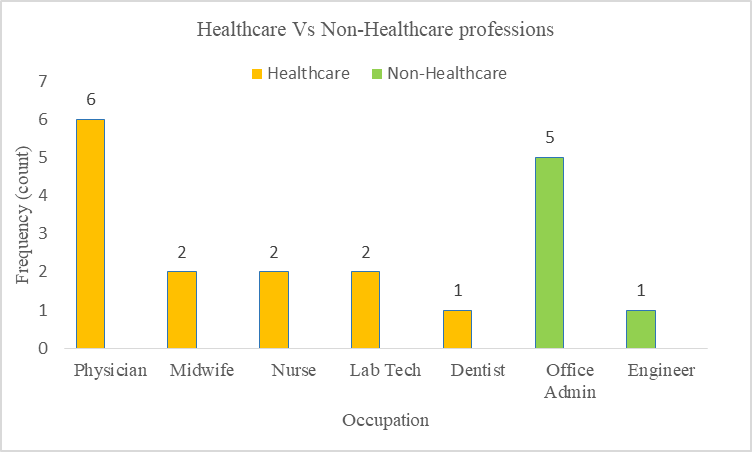
Figure 1: Showing study subjects comprised of healthcare and non-healthcare professionals
Awareness of masturbation
All 13 healthcare professionals demonstrated awareness of the term masturbation, attributable to their medical training and education. Non-healthcare professionals: Among the six non-healthcare professionals, four exhibited awareness of the term, while two did not. This indicated a slightly reduced level of awareness among non-healthcare professionals, despite their university education (Fig 2).
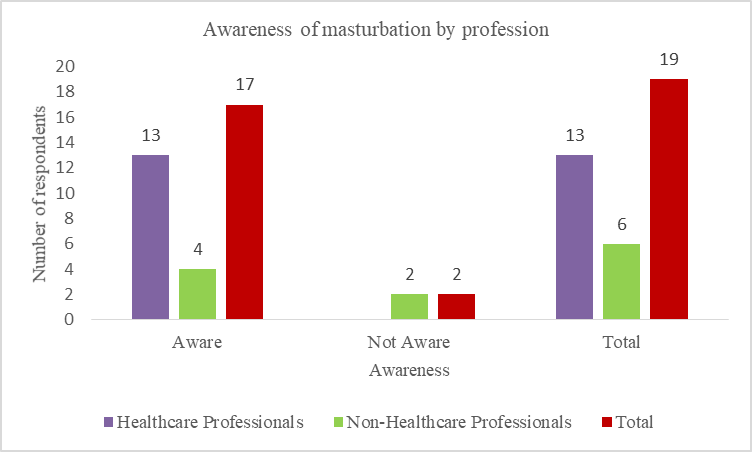
Figure 2: Showing awareness of masturbation by healthcare and non-healthcare professionals
Practice of masturbation
Although the disparity was not substantial, healthcare professionals exhibited a slightly higher prevalence of masturbation compared to their non-healthcare professional counterparts. However, both groups generally reported infrequent engagement in the practice (Fig. 3).
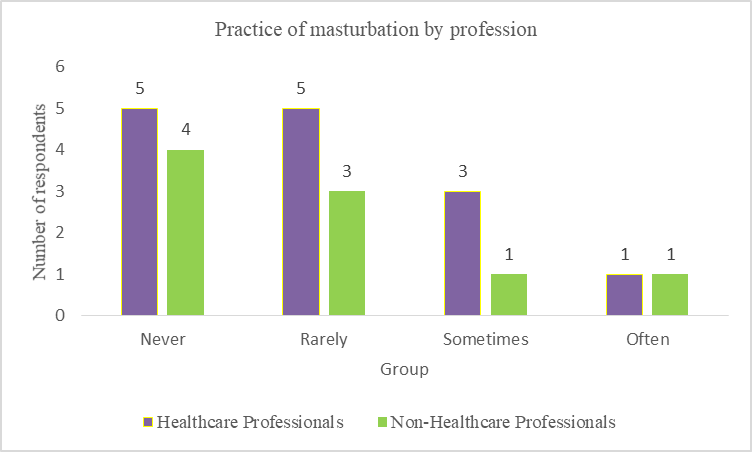
Figure 3: Showing practice of masturbation by healthcare and non-healthcare professionals
Perceptions of masturbation
Healthcare professionals exhibited a marginally greater tendency to perceive masturbation as a normal and healthy behavior in comparison to their non-healthcare counterparts. Nevertheless, both cohorts demonstrate divergent viewpoints, with a notable fraction expressing uncertainty or unfavorable attitudes towards it (Fig 4).
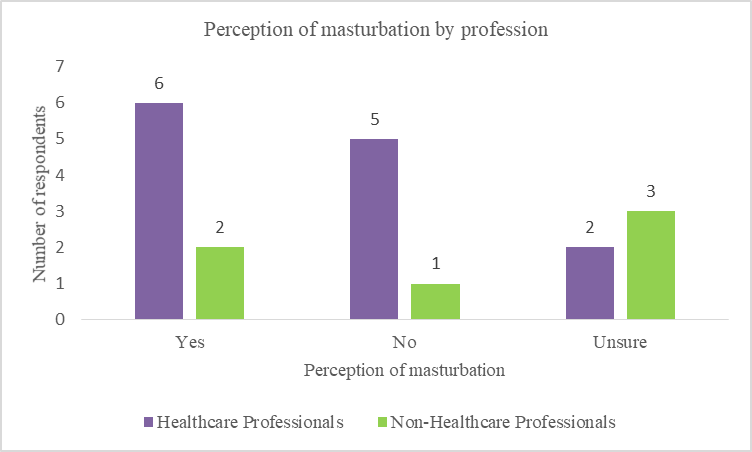
Figure 4: Showing perception of masturbation by healthcare and non-healthcare professionals
Social taboos
While both cohorts acknowledged the presence of societal taboos surrounding masturbation, healthcare professionals articulated a more diverse array of underlying factors, potentially stemming from their engagement with medical and educational environments. Conversely, non-healthcare professionals predominantly attributed the taboo to religious convictions and prevailing cultural standards (Fig 5).
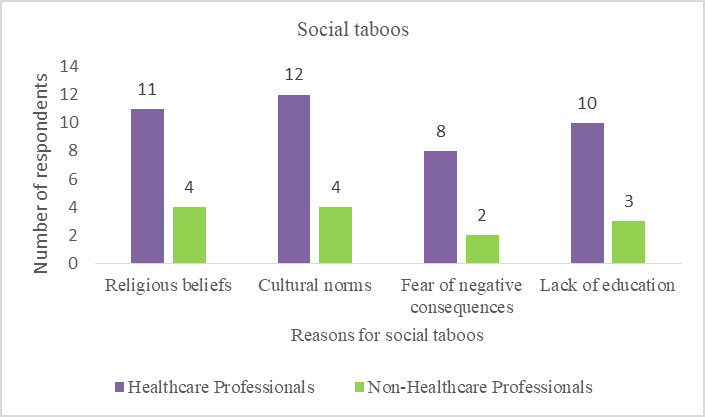
Figure 5: Showing influence of social taboos among healthcare and non-healthcare professionals
DISCUSSION:
The attitude of males towards masturbating can impede infertility evaluation and semen collection for therapeutic procedures. Pottinger et al. noted that a higher percentage of men who are uncomfortable with masturbating reported sexual problems and have delays in attaining parenthood6. Devout males face difficulties in procuring a semen sample through masturbation, and they frequently cite that it was against their religious convictions. Such beliefs are deeply rooted in a religious background. It is evident that the ultra-orthodox Jews are forbidden to masturbate and extra-vaginal ejaculation is condemned7. From the present survey, it was found only two participants were not aware of masturbation, and although the other eighteen participants were aware of what masturbation was, it was obvious that masturbation was not a regular or completely absent practice among the participants.
A recent study strongly suggests that the topic of sex and sexuality should be redefined in Africa. It should enhance personal sexual experiences through masturbation as well as recognize and respect the spectrum of sexual experiences that exist8. Likewise, in another survey that was conducted among university-educated females in Egypt, many do masturbate. However, they expressed guilt about it as religiously unethical9. The corroboration is hence very strong between religion and why the act of masturbation is unethical. The shift that happened during the 18th century when masturbation was extended from the moral to medical sphere, marked it as a physical illness and insanity where males were admitted to a mental asylum for treatment of masturbation10. This might have eventually spilled into society, hence making it a cultural and social taboo. From the survey, it was inferred that the healthcare professionals viewed masturbation as a normal practice, in contrast to a study in Tanzania where a study on masturbation revealed that a significant number of health professionals and medical students viewed masturbation as an unhealthy practice that might lead to other pathological conditions3. This affirmed the need for sexual health training at the university level for these professionals.
Regarding the perception of masturbation, the healthcare professionals skewed towards accepting masturbation as normal. Moreover, both healthcare professionals and non-healthcare professionals acknowledged societal taboos surrounding masturbation with underlying causes such as lack of education, religion and prevailing cultural standards. These findings were in accordance with a study conducted by a Pastor in Nigeria as recently as 2018. The study viewed masturbation as an immoral practice among young adults and said that the church and parents should be responsible for identifying such behaviors and providing a healthy environment that would prevent youths from such practices11. Hence, as long as there is a strong religious faith that prevails among individuals’ sexualities and condones which practice is healthy and unhealthy, it is believed that many male patients seeking assisted reproductive treatment will have issues with providing a semen sample through masturbation. In an investigation in South Africa, adolescent males expressed that they were excluded from reproductive and sexual education, but they were geared towards the female population, based on the premise that males don’t experience pregnancy12. This shows a systemic deficiency in sexual education, which is empirical in assisting teenagers and forthcoming adults to explore sexuality and dispel myths associated with masturbation.
It is postulated that, in conjunction with cultural influences and religious beliefs that impede semen collection via masturbation, it is established that a significant number of males experience varying degrees of anxiety and stress when tasked to provide a semen sample at the fertility units. This observation was corroborated by a study published in 2025, revealing that men reported anxiety and stress prior to sperm collection preceding assisted reproductive therapeutic procedures13. The perspectives of non-healthcare professionals mirror prevalent societal attitudes, which may impede changes in perception due to deeply entrenched cultural and religious beliefs. This could exacerbate difficulties for male patients in providing semen samples.
All fertility professionals with extensive years of experience are likely to encounter unexpected ejaculation failure on the day of the oocyte retrieval process that needs immediate intervention and then reallocation of resources and staff, that eventually impacts the whole treatment process. This scenario has been well documented in a series of five case studies published in 201114. The high degree of social sensitivity regarding sexuality raises challenges for both questionnaire design and data analysis. It has been documented that asking direct questions about sexuality may cause discomfort, leading to higher rates of refusal or non-committal responses among some individuals (non-response bias) or respondents might provide answers they believe are socially acceptable instead of being completely truthful—a bias known as social desirability. This can reduce the accuracy and trustworthiness of survey data, making it less useful for shaping public policy15. Therefore, this preliminary study deliberately limited its sample to 19 participants who were both educated and demonstrated a clear understanding of the survey’s conceptual underpinnings, with the expectation that such characteristics would yield truthful and reliable responses.
CONCLUSION:
Male ideas about masturbation may influence early diagnosis and treatment of infertility and may be of particular burden in developing countries. The unexpected inability to produce a semen sample on the day of a diagnostic or therapeutic procedure appears to be a prevalent issue among African males, primarily attributed to myths and taboos surrounding masturbation. Varied opinions among healthcare professionals regarding the normality and health implications of masturbation could impact their counseling approach, potentially reinforcing negative perceptions and creating challenges for male subjects required to provide semen samples for diagnostic or therapeutic purposes. Improvements in health provider-patient communication to improve men's comfort level with semen production should be considered in pre-treatment fertility counseling. Preventative measures involve identifying at-risk subjects and cryopreserving semen as a precautionary backup, contingent upon the availability of such services. For fertility professionals dealing with a heterogeneous population, understanding the religious, social, and cultural background of people is of paramount importance in management.
REFERENCES:
1. Huang S, Niu C, Santtila P. Masturbation Frequency and Sexual Function in Individuals with and without Sexual Partners. Sexes. 2022; 3(2), 229-243.
2. Mushy SE, Rosser BRS, Ross MW, Lukumay GG, Mgopa LR, et al. The Management of masturbation as a sexual health issue in Dar es Salaam, Tanzania: A qualitative study of health professionals' and medical students' perspectives. J Sex Med. 2021; 18(10):1690-1697.
3. Kabbash IA, Abo Ali EA, Kabbash MI, Abo El-Naga AA. Perception and practices of masturbation by male medical students, Tanta University, Egypt. Egypt J Community Med. 2017; 35(1), 97–107.
4. Kaestle CE, Allen KR. The role of masturbation in healthy sexual development: Perceptions of young adults. Arch Sex Behav. 2011; 40(5); 983-94.
5. Mohd Tohit NF, Haque, M. Forbidden Conversations: A Comprehensive Exploration of Taboos in Sexual and Reproductive Health. Cureus. 2014; 16(8): e66723.
6. Pottinger AM, Carroll K, Mason G. Male attitude towards masturbating: an impediment to infertility evaluation and sperm parameters. Andrologia. 2015; 48(4): 774-778.
7. Ronit Haimov-Kochman, Daniel Rosenak, Raoul Orvieto, Arye Hurwitz. Infertility counseling for Orthodox Jewish couples. Fertil Steril. 2010; 93 (6):1816-19.
8. Fiaveh DY. Scoping review of discourses on masturbation in Africa: an afrofeminist analysis. J Gend Stud. 2024; 33 (8): 1021-38.
9. Younis I, Abdel-Rahman SH, El-Esawi FM, Al-Awady MA. Solo sex: Masturbation in a sample of Egyptian women. Human Androl. 2018; 8: 11-18.
10. Zachar P, Kendler KS. Masturbatory insanity: the history of an idea, revisited. Psychol Med. 2023; 53(9), 3777–3782.
11. Akanbi OO. Ethical Implications of Masturbation and Sexual Revolution Crisis among Nigerian Youths. Impact J Transform. 2018; 1(2), 97–118.
12. Mulaudzi FM, Seretlo RJ, Usie MR, Sepeng NV. We are on our own: The neglected voices of the boy-child in adolescent sexual and reproductive health in Vhembe District, Limpopo, South Africa. Afr J Reprod Health. 2025; 29(3): 28–37.
13. Jiang Y, Mo F, Wang S, Huang Y, Cheng, X, et al. Research on the perception of pre-semen collection stress and its influencing factors in men on the day of oocyte retrieval in IVF-ET. J Assist Reprod Genet. 2025; 42(6): 1875–1883.
14. Okohue JE, Ikimalo JI, Onuh SO. Ejaculation failure on the day of oocyte retrieval for IVF: A report of five cases. Middle East Fertil Soc J. 2011; 16 (2): 159-162.
15. Lekalake R, Govender R. MN5: Asking the hard questions: Challenges in surveys on sexual and reproductive health and rights in Africa. Afrobarometer. 2025.