Efficacy Of Ganglion Impar Block Versus Conservative Therapy In Chronic Coccydynia: A Randomized Controlled Trial.
- Dr. Ajinkya Laxman Pingale , Senior Resident, Department of Orthopaedics, Dr. V.M. Government Medical College & Hospital, Solapur. ORCID Id- 0009-0009-1920-3979
- Dr. Supriyam , Senior Resident, Department of Orthopaedic, All India Institute of Medical Sciences, Deoghar,
- Dr. MD Farhan Sami , MS, Department of Orthopaedics, Fellow in Joint Replacement, Medanta Hospital, Lucknow.
Article Information:
Abstract:
Background: Chronic coccydynia is a debilitating condition often unresponsive to conventional conservative treatment. Ganglion impar block (GIB) has emerged as a minimally invasive intervention targeting the sympathetic pathway involved in coccygeal pain transmission. This study aimed to compare the effectiveness of GIB with standard conservative management in patients with chronic coccydynia. Methods: A randomised controlled experiment conducted over two years at Era’s Lucknow Medical College & Hospital involved 64 adult patients (≥ 18 years) with persistent coccygeal pain (duration > 3 months) resistant to conservative treatment. Participants were randomised (computer-generated) into two groups of 32 each. One group underwent a ganglion impar block under fluoroscopic guidance using a trans-sacrococcygeal approach with injection of 3 ml 0.5% bupivacaine and 40 mg triamcinolone. whereas the other group received ongoing conservative treatment. The evaluated outcomes included pain intensity (Visual Analogue Scale, VAS) and functional disability (Oswestry Disability Index, ODI), measured at baseline, and at 4, 12, and 24 weeks following the intervention. Results: Baseline demographic and clinical characteristics were comparable between the two groups (p > 0.05). The GIB group demonstrated significantly greater reduction in VAS scores at 4 weeks (2.16 ± 1.78 vs 3.72 ± 2.61; p = 0.006), and at 24 weeks (1.75 ± 1.83 vs 3.03 ± 2.22; p = 0.014) compared with the conservative group. Similarly, ODI scores showed significantly greater improvement in the GIB group at 4, 12 and 24 weeks (ODI at 24 weeks: 8.13 ± 6.90 vs 14.35 ± 10.46; p = 0.006). Conclusions: The ganglion impar block yields markedly better and more prolonged alleviation of pain and disability than conservative treatment in chronic coccydynia it also results in functional improvement compared with conservative therapy over 24 weeks in patients with chronic coccydynia. These findings endorse its application as an efficacious strategy for patients unresponsive to conservative treatment.
Keywords:
Article :
INTRODUCTION:
Coccydynia, also known as coccygodynia, refers to discomfort in the coccygeal region. Simpson initially coined the name in 1859, although records of coccygeal discomfort extend to the 16th century.1-3 Although chronic coccygeal pain has been recognised for centuries, its management remains challenging and even contentious due to the multifaceted aetiology of the condition. A multitude of physiological and psychological elements contribute to its aetiology.4 Examples include pilonidal cysts, perianal abscesses, haemorrhoids, pelvic organ diseases, and abnormalities of the lumbosacral spine, sacroiliac joints, piriformis muscle, and sacrum.5,6
Chronic coccydynia is a disorder characterised by insufficient comprehension of its pathogenesis and the efficacy of various treatments. Patients may encounter a significant decline in quality of life and challenges in executing daily activities.7 Multiple therapy modalities exist for symptom alleviation, encompassing conservative, pharmaceutical, and surgical interventions. Patients are recommended to utilise a U-shaped cushion or a modified wedge-shaped cushion for seating.8,9
In the event of an injury, inflammation, or irritation in the coccygeal region, nociceptors, which are specialised pain receptors, become active. These nociceptors provide signals to the adjacent somatic nerves. The somatic nerves convey nociceptive impulses to the central nervous system, where they are processed, resulting in the sense of pain. The ganglion impar, also known as the Walther ganglion, is located in the retroperitoneal area posterior to the rectum, adjacent to the sacrococcygeal joint or directly anterior to the coccyx, and may participate in the transmission of nociceptive signals.10 The coccygeal plexus is essential for sensory input from the coccyx and consists of the 4th and 5th sacral nerves along with the coccygeal nerve. Neuropathic pain results from the injury or irritation of nerves. Pain in the coccygeal region may also originate from pelvic organs, as pain signals traverse the superior hypogastric plexus, which comprises sympathetic fibres.11
The initial account of ganglion impar block was provided by Plancrate et al. for the management of perineal discomfort.12 He employed a curved needle to access the retroperitoneal area posterior to the sacrococcygeal junction.13 The recurrence of pain following a single-shot ganglion impar block in coccydynia is not unusual. It can be addressed with either a repeat block or radiofrequency ablation therapy. The latter can be readily utilised to provide prolonged pain alleviation.14 Chemical neurolysis of the ganglion impar with phenol or alcohol is typically employed for the treatment of refractory malignant pain.15 Patients frequently express challenges in obtaining a definitive diagnosis for their coccyx discomfort and observe that their healthcare providers appear dismissive of this illness.16.
MATERIALS AND METHODS:
Study Setting and Design: This study was structured as a randomised controlled trial conducted over two years in the Department of Orthopaedics at Era’s Lucknow Medical College & Hospital, Lucknow. Patients diagnosed with coccydynia who met eligibility criteria were enrolled and randomised into treatment groups to compare conservative therapy with ganglion impar block treatments.
Study Cohort and Sample Size: The trial population consisted of adult patients (≥ 18 years) with chronic coccygeal discomfort for over 3 months, who had not benefited from conservative treatment. The ultimate determined sample size was 62 patients (31 in each group). This computation was predicated on the following parameters: a 95% two-sided confidence interval, 80% statistical power. The sample size was calculated based on the primary outcome variable, Visual Analogue Scale (VAS). A minimum clinically important difference of 2 points in VAS between groups was considered clinically meaningful. Assuming a standard deviation of 2.5, with 80% power and a two-sided alpha of 0.05, the required minimum sample size was 31 patients per group (total 62). To compensate for potential loss to follow-up, two additional patients were recruited, resulting in 64 participants (32 per group). During follow-up, two patients from the conservative group were lost, leaving 62 participants available for final analysis.
Inclusion and Exclusion Criteria: Eligible participants for the study were adults (age ≥ 18 years) of any gender experiencing chronic coccygeal pain lasting over three months and who had not responded to conservative treatments, including NSAIDs, modified cushions, or TENS therapy. All subjects were mandated to exhibit no aberrant laboratory results or imaging findings that could independently explain their pain. The exclusion criteria included those having local skin infections in the coccygeal area, previous coccygectomy or sacrococcygeal joint fusion, bleeding disorders, or uncontrolled diabetes mellitus despite medical intervention. Pregnant individuals and those who were unwilling or unable to give informed consent were excluded from participation.
Participant Flow: A total of 80 patients were assessed for eligibility. Sixteen were excluded (11 not meeting inclusion criteria and 5 declined consent). Sixty-four patients were randomized, with 32 allocated to the ganglion impar block group and 32 to the conservative treatment group. During follow-up, two participants from the conservative group were lost—one at 12 weeks and one at 24 weeks. No participants were lost from the ganglion impar block group. Sixty-two participants completed the study and were included in the final analysis.
Randomisation and Allocation Concealment: Participants fulfilling the inclusion criteria were randomised into two equal groups using a computer-generated random number table in a 1:1 allocation ratio. Allocation concealment was ensured using sequentially numbered, opaque, sealed envelopes prepared by an independent investigator not involved in patient recruitment or outcome assessment.
Blinding: Due to the nature of the intervention, participant blinding was not feasible. However, all outcome assessments (VAS and ODI scoring) were performed by an independent observer who was blinded to the group allocation.
Intervention Protocol: The ganglion impar block was performed under fluoroscopic guidance in the prone position using a trans-sacrococcygeal approach. After aseptic preparation and local skin infiltration, a 22-gauge spinal needle was advanced through the sacrococcygeal joint. Correct needle placement was confirmed using 1–2 ml of non-ionic contrast medium under fluoroscopy.
Once appropriate spread was confirmed, a solution containing 3 ml of 0.5% bupivacaine mixed with 40 mg triamcinolone acetonide was injected slowly. Patients were observed for 2 hours post-procedure for any complications. No major adverse events were recorded.
The conservative treatment group received NSAIDs, use of modified wedge-shaped cushions, transcutaneous electrical nerve stimulation (TENS), and physiotherapy exercises.
Outcomes Measures: The primary outcome measure was pain intensity assessed using the Visual Analogue Scale (VAS). The secondary outcome was functional disability measured using the Oswestry Disability Index (ODI). Assessments were performed at baseline and at 4, 12, and 24 weeks after intervention.
Study Methods: Participants were randomly assigned (by computer generation) to either a conservative therapy group (n=32) or a ganglion impar block group (n=32). The ganglion impar block was performed using fluoroscopic guidance with contrast verification, whereas conservative treatment encompassed NSAIDs, TENS, cushions, and physical activities. Pain (VAS) and disability (ODI) were evaluated at baseline, as well as at 4, 12, and 24 weeks following the intervention.
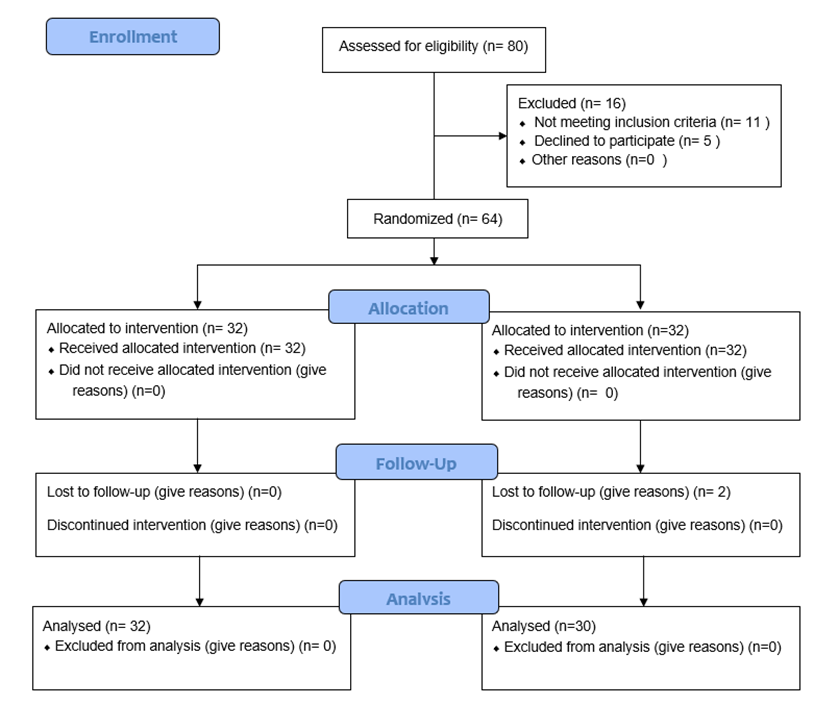
Figure 1: Consort Flow Chart
Statistical Analysis: Data were analysed using SPSS version 26. Continuous variables were expressed as mean ± standard deviation and categorical variables as frequencies and percentages. Baseline characteristics were compared using independent-sample t-tests for continuous variables and Chi-square tests for categorical variables. Longitudinal changes in VAS and ODI scores were analysed using two-way repeated measures ANOVA to assess the interaction between time and treatment group. Analysis was performed on an intention-to-treat basis. Missing follow-up data were handled using last-observation-carried-forward method. A p-value <0.05 was considered statistically significant.
Ethical Approval: Ethical clearance was obtained from the Institutional Ethics Committee of Era’s Lucknow Medical College & Hospital, Lucknow (Approval No: ELMC&H/R-cell/2023/82 dated 21-01-2023). Written informed consent was obtained from all participants prior to enrolment.
RESULTS:
In our study population, the baseline demographic characteristics were well matched between the two groups, indicating successful randomization without major selection bias. The age distribution across four categories (19–28, 29–38, 39–48, and 49–58 years) did not differ significantly between the ganglion impar block group (Group A) and the conservative treatment group (Group B) (χ² = 4.897, p = 0.1795). Likewise, the mean age was 9.09±10.81 years in Group A and 34.22±10.24 years in Group B; showed no statistically significant difference (t = 1.850, p = 0.0691). This suggests both arms were comparable in terms of age (table 1).
Table 1: Age Distribution of enrolled patients in among the Groups
|
Age Group (in years) |
Group A (Ganglion Impar Block) [N=32] |
Group B (Conservative Treatment) [N=32] |
p value |
||
|
N |
% |
N |
% |
||
|
19-28 |
5 |
15.63% |
10 |
31.25% |
0.1795 |
|
29-38 |
12 |
37.50% |
9 |
28.13% |
|
|
39-48 |
7 |
21.88% |
10 |
31.25% |
|
|
49-58 |
8 |
25.00% |
3 |
9.38% |
|
|
Mean±SD |
39.09±10.81 |
34.22±10.24 |
0.0691 |
||
Gender distributions between the two groups also did not differ meaningfully: Group A comprised 43.75% males and 56.25% females, while Group B had 50% males and 50% females (χ² = 0.2510, p = 0.6164). This further supports baseline equivalence. Body mass index (BMI) was similarly distributed: the mean BMI in Group A was 24.2±3.5, and in Group B 24.6±3.7; the between-group comparison yielded t = 0.4443, p = 0.6584, which is non-significant. Thus, BMI is unlikely to confound outcomes.
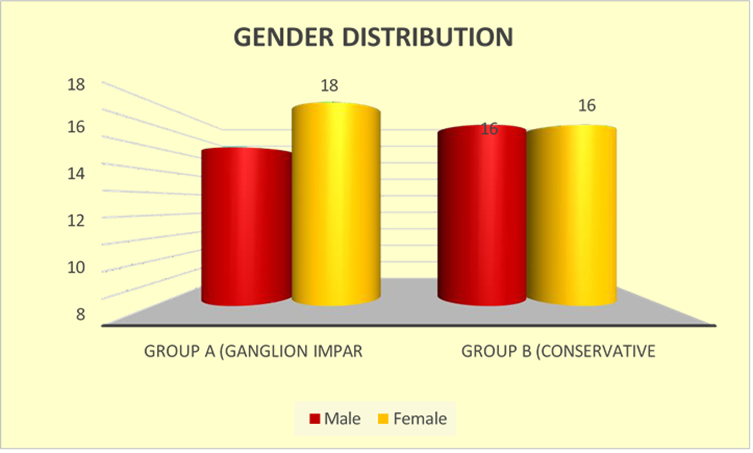
Figure 2: Graphical Representation of Gender of the enrolled patients among the groups
Regarding the chief complaints, both groups reported pain as the predominant symptom (75% in Group A, 78.1% in Group B), with the remainder reporting discomfort. There was no significant difference in the complaint distribution (χ² = 0.08707, p = 0.7679). This indicates that baseline symptom profiles were similar (table 2).
Table 2: Chief Complaints of the enrolled patients among the Groups
|
|
Group A (Ganglion Impar Block) [N=32] |
Group B (Conservative Treatment) [N=32] |
p-value |
|||
|
N |
% |
N |
% |
|||
|
Complaint |
Pain |
24 |
75% |
25 |
78.1% |
0.7679 |
|
Discomfort |
8 |
25% |
7 |
21.9% |
||
Symptom duration also showed no significant differences. In Group A, 56.25% had duration 3–8 months, 12.50% in 9–14 months, 21.88% in 15–20 months, and 9.38% in 21–26 months; in Group B, 62.5%, 15.63%, 6.25%, and 15.63% respectively. The chi-square test (χ² = 3.494, p = 0.3215) and mean duration comparison (Group A: 10.31 ± 5.88 months; Group B: 9.93 ± 6.45 months; t = 0.2463, p = 0.8063) confirmed no significant disparity. Thus, symptom chronicity was evenly distributed (table 3).
Table 3: Duration of Symptoms in enrolled patients among the Groups.
|
DURATION (Months) |
Group A (Ganglion Impar Block) [N=32] |
Group B (Conservative Treatment) [N=32] |
p-value |
||
|
N |
% |
N |
% |
||
|
3-8 |
18 |
56.25% |
20 |
62.50% |
0.3215 |
|
9-14 |
4 |
12.50% |
5 |
15.63% |
|
|
15-20 |
7 |
21.88% |
2 |
6.25% |
|
|
21-26 |
3 |
9.38% |
5 |
15.63% |
|
|
MEAN±SD |
10.31±5.88 |
9.93±6.45 |
0.8063 |
||
The key clinical outcomes, baseline pain intensity (VAS) was slightly higher in Group A (6.44 ± 1.68) than in Group B (5.94 ± 1.46), but this difference was not significant (t = 1.271, p = 0.2085). However, by 4 weeks, the ganglion impar block group had much lower mean VAS (2.16 ± 1.78) compared with the conservative group (3.72 ± 2.61), and the difference was statistically significant (t = 2.793, p = 0.0069). At 12 weeks, the difference approached but did not strictly reach conventional significance (2.19 ± 1.60 vs 3.10 ± 2.12; t = 1.938, p = 0.0572). By 24 weeks, the Block group again showed significantly lower pain scores (1.75 ± 1.83 vs 3.03 ± 2.22; t = 2.517, p = 0.0144). Moreover, the improvement in VAS from baseline, the Block group consistently outperformed the conservative group across all time points: at 4 weeks (4.28 ± 2.07 vs 2.22 ± 2.12; t = 3.933, p = 0.0002), at 12 weeks (4.25 ± 1.90 vs 2.84 ± 1.88; t = 2.984, p = 0.0041), and at 24 weeks (4.69 ± 2.22 vs 2.97 ± 1.99; t = 3.264, p = 0.0018). This demonstrates that the intervention group realized more substantial pain relief over time (table 4).
Table 4: Improvement VAS score of the enrolled patients among the groups
|
VAS SCORE |
Group A (Ganglion Impar Block) [N=32] |
Group B (Conservative Treatment) [N=32] |
p-value |
||
|
Mean |
SD |
Mean |
SD |
||
|
At 4 weeks |
4.28 |
2.07 |
2.22 |
2.12 |
0.0002* |
|
At 12 weeks |
4.25 |
1.90 |
2.84 |
1.88 |
0.0041* |
|
At 24 weeks |
4.69 |
2.22 |
2.97 |
1.99 |
0.0018* |
Similar trends were seen with functional disability (ODI). Initially, there was no significant difference at baseline (28.19±7.94 vs 25.81±7.72; t = 1.216, p = 0.2287). But at 4 weeks, the Block group exhibited significantly lower ODI (11.59±8.74) compared to conservative therapy (17.19±10.96; t = 2.260, p = 0.0273). This advantage persisted at 12 weeks (10.47±7.09 vs 15.81±10.80; t = 2.338, p = 0.0226) and 24 weeks (8.13±6.90 vs 14.35±10.46; t = 2.808, p = 0.0066). The improvements from baseline also favored the block group markedly: at 4, 12, and 24 weeks, Group A improvements were 16.59±9.54, 17.72±8.84, and 20.06±9.55, significantly surpassing the corresponding values of 8.63 ± 9.99, 10.19±9.38, and 11.83 ± 9.30 in Group B (p = 0.0018, 0.0016, and 0.0008, respectively) as shown in figure 3.
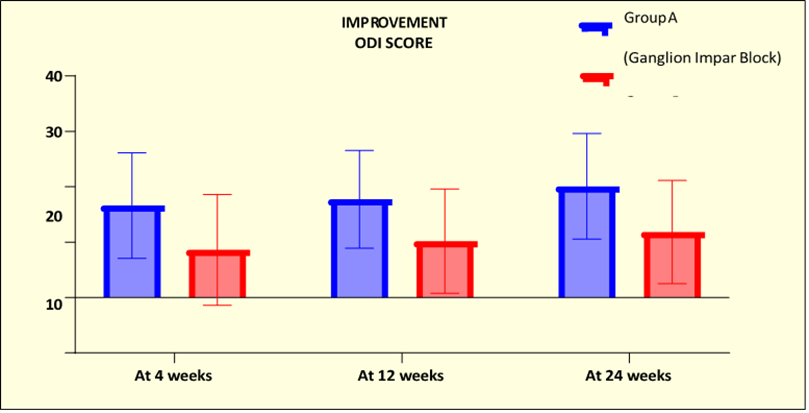
Figure 3: Graphical Representation of Improvement ODI Score of the enrolled patients among the Groups
DISCUSSION:
A randomised controlled experiment with 64 patients was performed at the Department of Orthopaedics, Era’s Lucknow Medical College & Hospital, Lucknow, to assess and compare Visual Analogue Scale (VAS) and Oswestry Disability Index (ODI) scores in patients with coccydynia undergoing Ganglion Impar Block. The age distribution between Group A (Ganglion Impar Block) and Group B (Conservative Treatment) exhibits discrepancies across many age categories. The average age in Group A (39.09 ± 10.81) exceeds that of Group B (34.22 ± 10.24), although this disparity is not statistically significant (p=0.0691). The research conducted by Gonnade et al16 in 2017 included patients with an average age comparable to that of the current study, situated within the 30-50 year range. This corresponds with the average age recorded in Group A (39.09 years). The efficacy of the Ganglion Impar Block in their research corroborates its application over a wide age spectrum, aligning with the current study. Nasiri et al., 2024 evaluated the impact of Ganglion Impar Block on the outcomes of coccydynia treatment, with a mean patient age between 30 and 50 years, consistent with the mean ages in Group A.17 Their research validated the effectiveness of the Ganglion Impar Block in this demographic, corroborating the current study's conclusions that age does not substantially influence the treatment results of the Ganglion Impar Block.
The gender distribution chart indicates that in Group A (Ganglion Impar Block), 43.75% (14 of 32) of the patients are male, while 56.25% (18 of 32) are female. In Group B (Conservative Treatment), 50.00% (16 of 32) of the patients are male, and 50.00% (16 of 32) are female. In comparison to the study conducted by Gonnade et al. in 2017, which examined patients with chronic coccydynia treated with a Ganglion Impar Block, the gender distribution was reasonably equitable, akin to the current study.16 Nasiri et al. (2024) evaluated the impact of the Ganglion Impar Block on the outcomes of coccydynia treatment and noted a gender distribution similar to that of the current study. This study did not reveal any notable gender-based disparities in treatment outcomes, consistent with current findings indicating gender does not substantially influence the efficacy of the Ganglion Impar Block.17
The present study's results indicate no significant difference in BMI between the Ganglion Impar Block group and the Conservative Treatment group, consistent with the findings of Gonnade et al. (2017), Malik et al. (2023), and Nasiri et al. (2024).16-18 This reinforces the overarching conclusion that BMI is not a significant factor in the effectiveness of Ganglion Impar Block for chronic coccydynia. The key complaints table reveals that in Group A (Ganglion Impar Block), 75% (24 of 32) of patients identified pain as their principal complaint, whereas 25% (8 of 32) cited discomfort. In Group B (Conservative Treatment), 78.1% (25 of 32) felt pain, while 21.9% (7 of 32) expressed discomfort. The chi-square test for chief complaint distribution produces a p-value of 0.7679, indicating no significant difference between the two groups. Gonnade et al. (2017) did a research on patients with persistent coccydynia treated with Ganglion Impar Block, where pain was the primary complaint, aligning with the current findings.16 Nasiri et al. (2024) evaluated the efficacy of Ganglion Impar Block on treatment results for coccydynia and determined that pain was the predominant concern among their patients. Their research highlighted the efficacy of the Ganglion Impar Block in alleviating pain, aligning with the current study's emphasis on pain as the primary concern in both treatment cohorts.17
The average duration of symptoms is 10.31 months with a standard deviation (SD) of 5.88 in Group A, and 9.93 months with an SD of 6.45 in Group B. The chi-square and t-test results indicate no significant differences in symptom duration between the two groups, with p-values of 0.3215 and 0.8063, respectively. Gonnade et al. (2017) conducted a study on the efficacy of Ganglion Impar Block in individuals suffering from chronic coccydynia. The symptom duration in their study population varied from several months to several years, with a considerable number of individuals experiencing chronic pain.16 Nasiri et al. (2024) evaluated the effects of Ganglion Impar Block on individuals with differing periods of chronic coccydynia. Their research indicated that the intervention was advantageous for patients with both brief and prolonged symptom durations.17
The notable disparities in VAS scores between Group A (Ganglion Impar Block) and Group B (Conservative Treatment) at 4, 12, and 24 weeks demonstrate that the Ganglion Impar Block provides enhanced analgesia for patients suffering from persistent coccydynia. Gonnade et al. (2017) assessed the efficacy of the Ganglion Impar Block in individuals with persistent coccydynia and documented significant pain alleviation in VAS scores following treatment. Their findings correspond with the present investigation, indicating substantial pain alleviation quickly following the block and enduring enhancement over time.16 Nasiri et al. (2024) did a study evaluating the efficacy of the Ganglion Impar Block for chronic coccydynia and found significant long-term pain alleviation, as evidenced by lower VAS scores over several months.17
The evaluation of Visual Analogue Scale (VAS) score enhancements at various time points (4, 12, and 24 weeks) reveals that Group A (Ganglion Impar Block) exhibited markedly superior advancements in pain alleviation relative to Group B (Conservative Treatment). Gonnade et al. (2017) assessed the effectiveness of Ganglion Impar Block in patients and saw substantial long-term pain alleviation, evidenced by dramatically decreased VAS scores over several months. Chronic coccydynia resulted in substantial pain alleviation, with the majority of patients exhibiting a decrease in VAS scores akin to the results observed in the present study.16 Nasiri et al. (2024) evaluated the long-term effects of Ganglion Impar Block on patients with chronic coccydynia, noting substantial decreases in pain scores and enhancements in quality of life. Their findings indicated that the block was beneficial both in the short term and during prolonged follow-up periods, akin to the results of the current investigation.17
The notable disparities in ODI scores between Group A (Ganglion Impar Block) and Group B (Conservative Treatment) at 4, 12, and 24 weeks demonstrate that the Ganglion Impar Block provides enhanced disability alleviation for patients with persistent coccydynia. Gonnade et al. (2017) assessed the efficacy of the Ganglion Impar Block in individuals with chronic coccydynia and documented significant enhancement in ODI scores following treatment. Their findings correspond with the present investigation, indicating substantial decreases in impairment quickly following the block and enduring enhancement over time. [16]
The notable disparities in ODI score enhancements between Group A (Ganglion Impar Block) and Group B (Conservative Treatment) suggest that the Ganglion Impar Block yields more favourable results in alleviating impairment related to coccydynia. Gonnade et al. (2017) assessed the Ganglion Impar Block for chronic coccydynia and determined that the operation markedly enhanced disability scores with time. Their research indicated significant enhancement in ODI scores, consistent with the findings of the present study.16 The results of Nasiri et al. (2024) support the present investigation, emphasising the efficacy of the Ganglion Impar Block in facilitating superior disability improvement relative to conservative treatments.17
Limitations: This study has certain limitations. It was conducted at a single center with a relatively small sample size, which may limit the generalizability of the findings. Participant blinding was not feasible due to the nature of the intervention, which may introduce performance bias, although outcome assessors were blinded. Follow-up duration was limited to 24 weeks; therefore, long-term efficacy beyond this period could not be assessed. Larger multicentre randomized controlled trials with longer follow-up and double-blind designs are recommended to further validate these results.
CONCLUSION:
In conclusion, baseline demographics were evenly distributed throughout the groups: there was no significant difference in age distribution (mean ages 39.09 vs 34.22 years), gender ratios, BMI, symptom duration, or primary complaints. The resemblance in age and other attributes to previously published cohorts reinforces the applicability of our findings over a broad age spectrum. Notably, patients undergoing the ganglion impar block exhibited markedly superior enhancements in pain (VAS) and disability (ODI) at 4, 12, and 24 weeks relative to those getting conservative treatment. These significant increases lasted throughout the trial period, signifying a lasting effect. The ganglion impar block is more efficacious than traditional conservative treatment in alleviating chronic coccydynia, offering prolonged pain relief and functional improvement regardless of age, gender, BMI, or length of symptoms.
REFERENCES:
1. Simpson JY. Coccygodynia and diseases and deformities of the coccyx. Med Times Gaz. 1859 Jul 2;40(01):1-7.
2. Grosso, N. P., & van Dam, B. E. (1995). Total coccygectomy for the relief of coccygodynia: a retrospective review. Clinical Spine Surgery, 8(4), 328-330.
3. HOWORTH B. The painful coccyx. Clinical Orthopaedics and Related Research®. 1959 Jan 1;14:145-61.
4. Lirette LS, Chaiban G, Tolba R, Eissa H. Coccydynia: an overview of the anatomy, etiology, and treatment of coccyx pain. Ochsner Journal. 2014 Mar 20;14(1):84-7.
5. Bayne OM, BATEMAN JE, CAMERON HU. The influence of etiology on the results of coccygectomy. Clinical Orthopaedics and Related Research (1976-2007). 1984 Nov 1;190:266-72.
6. Mouhsine E, Garofalo R, Chevalley F, Moretti B, Theumann N, Borens O, Maffulli N, Schizas C, Wettstein M. Posttraumatic coccygeal instability. The Spine Journal. 2006 Sep 1;6(5):544-9.
7. Nathan ST, Fisher BE, Roberts CS. Coccydynia: a review of pathoanatomy, aetiology, treatment and outcome. The Journal of Bone & Joint Surgery British Volume. 2010 Dec 1;92(12):1622-7.
8. Kleimeyer JP, Wood KB, Lønne G, Herzog T, Ju K, Beyer L, Park C. Surgery for Refractory Coccygodynia: Operative: Versus: Nonoperative Treatment. Spine. 2017 Aug 15;42(16):1214-9.
9. Maigne JY, Chatellier G. Comparison of three manual coccydynia treatments: a pilot study. Spine. 2001 Oct 15;26(20):E479-83
10. Gunduz OH, Sencan S, Kenis-Coskun O. Pain relief due to transsacrococcygeal ganglion impar block in chronic coccygodynia: a pilot study. Pain Medicine. 2015 Jul 1;16(7):1278-81
11. Rahimibarghani S, Morgan R, Diaz JJ. Neuromodulation Techniques in Chronic Refractory Coccydynia: A Narrative Review. Pain and therapy. 2024 Feb;13(1):53- 67.
12. Plancarte-Sánchez R, Guajardo-Rosas J, Guillen-Nuñez R. Superior hypogastric plexus block and ganglion impar (Walther). Techniques in Regional Anesthesia and Pain Management. 2005 Apr 1;9(2):86-90.
13. Wemm Jr K, Saberski L. Modified approach to block the ganglion impar (ganglion of Watther). Regional Anesthesia and Pain Medicine. 1995 Nov 1;20(6):544-5.
14. Adas C, Ozdemir U, Toman H, Luleci N, Luleci E, Adas H. Transsacrococcygeal approach to ganglion impar: radiofrequency application for the treatment of chronic intractable coccydynia. Journal of Pain Research. 2016 Dec 7:1173-7.
15. Nalini KB, Shivanna S, Vishnu MS, Mohan CV. Transcoccygeal neurolytic ganglion impar block for perineal pain: A case series. Journal of Anaesthesiology Clinical Pharmacology. 2018 Oct 1;34(4):544-7.
16. Gonnade N, Mehta N, Khera PS, Kumar D, Rajagopal R, Sharma PK. Ganglion impar block in patients with chronic coccydynia. Indian Journal of Radiology and Imaging. 2017 Jul;27(03):324-8.
17. Nasiri A, Vajari FF, Sane S, Afsargharehbagh R. Assessment of Ganglion Impar Block Effect on Treatment Results of Coccydynia: A Cross-sectional Study. Anesthesiology and Pain Medicine. 2024 Apr;14(2).
18. Malik SH, Ahmad K, Ali L. Ganglion Impar Block For Chronic Coccydynia. Journal of Ayub Medical College Abbottabad-Pakistan. 2023 Jan 1;35(1).