Quality of Life and Sleep Quality Among Patients Receiving Maintenance Haemodialysis: A Cross-Sectional Study.
- Dr. Ajay Singh , Associate Professor, Department of Nephrology, Geetanjali Medical College and Hospital, Udaipur, Rajasthan, India.
- Dr. Vrinda Pareek , Professor, Department of Psychiatry, Geetanjali Institute of Medical Sciences, Jaipur, Rajasthan, India.
- Dr. Anil Kumar Kumawat , Associate Professor, Department of Psychiatry, Geetanjali Institute of Medical Sciences, Jaipur, Rajasthan, India.
Article Information:
Abstract:
Background: Patients receiving maintenance haemodialysis may experience impaired quality of life and disturbed sleep, which can affect their overall well-being. Assessing these outcomes may help identify areas requiring greater attention in routine dialysis care. Aim: To assess quality of life and sleep quality among patients receiving maintenance haemodialysis and to examine the association between global sleep quality and the domains of quality of life. Materials and Methods: This cross-sectional study included 50 patients receiving maintenance haemodialysis. Quality of life was assessed using the WHOQOL-BREF questionnaire, which evaluates physical, psychological, social and environmental domains. Sleep quality was assessed using the Pittsburgh Sleep Quality Index (PSQI). The association between global PSQI scores and WHOQOL-BREF domain scores was evaluated using Spearman’s rank correlation. Results: The mean age of participants was 51.54±12.93 years, and 31 (62%) were male. The mean global PSQI score was 6.68±4.25. Poor sleep quality, defined as a global PSQI score greater than 5, was observed in 25 (50%) participants. The mean WHOQOL-BREF scores were 52.26±13.83 for the physical domain, 52.30±14.46 for the psychological domain, 65.00±20.82 for the social domain and 60.08±13.54 for the environmental domain. Global PSQI score showed a significant negative correlation with physical quality of life (Spearman’s ρ=−0.537, p<0.001), social quality of life (ρ=−0.308, p=0.030) and environmental quality of life (ρ=−0.331, p=0.020). The correlation with the psychological domain was not statistically significant (ρ=−0.213, p=0.142). Conclusion: Poor sleep quality was common among patients receiving maintenance haemodialysis and was significantly associated with lower physical, social and environmental quality-of-life scores. The strongest association was observed with the physical domain. Routine assessment of sleep quality and quality of life may help support more comprehensive care for patients receiving maintenance haemodialysis.
Keywords:
Article :
INTRODUCTION:
Chronic kidney disease (CKD) is a progressive condition associated with substantial morbidity and mortality. With progression to end-stage kidney disease (ESKD), renal replacement therapy becomes essential for survival, with haemodialysis being one of the most widely used modalities. Although maintenance haemodialysis improves survival and helps control the metabolic consequences of advanced kidney failure, it places a considerable physical, social and psychological burden on patients. The requirement for regular dialysis sessions, dietary and fluid restrictions, medication use, vascular access care and dependence on healthcare services can interfere with daily activities and adversely affect overall quality of life (QoL) [1-3].
QoL is an important patient-centred outcome in patients undergoing maintenance haemodialysis, as conventional clinical and biochemical parameters may not fully reflect the impact of chronic kidney disease and its treatment on everyday life. Patients may experience fatigue, reduced physical functioning, pain, limitations in social activities and occupational difficulties. Studies using the World Health Organization Quality of Life-BREF (WHOQOL-BREF) questionnaire have demonstrated impairment in different domains of QoL among patients receiving haemodialysis [1-3]. The WHOQOL-BREF provides a multidimensional assessment of physical health, psychological health, social relationships and environmental well-being and is therefore useful for evaluating the overall impact of long-term haemodialysis.
Sleep disturbance is another important problem among patients receiving maintenance haemodialysis. Multiple factors, including uraemia, pruritus, pain, muscle cramps, altered sleep-wake patterns and the burden of chronic illness, may contribute to poor sleep. Disturbed sleep may result in daytime fatigue, impaired functioning and reduced well-being and may consequently have an important influence on QoL. The Pittsburgh Sleep Quality Index (PSQI) is a widely used instrument for assessing subjective sleep quality and evaluates several components including sleep duration, sleep latency, sleep efficiency, sleep disturbances, use of sleep medication and daytime dysfunction.
Increasing evidence suggests a close relationship between sleep quality and QoL in patients undergoing haemodialysis. Yoshida et al. reported an association between sleep quality and QoL among haemodialysis patients, highlighting the clinical importance of sleep disturbances in this population [4]. Studies from India have also examined the relationship between sleep quality and QoL among patients with CKD and ESKD [5,6].
Assessment of QoL and sleep quality together may therefore provide a more comprehensive understanding of the burden experienced by patients receiving maintenance haemodialysis. Identifying impaired QoL and poor sleep may help clinicians recognise potentially modifiable problems and facilitate more holistic patient care. The present study was therefore undertaken to assess quality of life and sleep quality among patients receiving maintenance haemodialysis, using the WHOQOL-BREF and PSQI, respectively.
MATERIALS AND METHODS:
Study Design and Study Population
This was a cross-sectional observational study conducted among patients receiving maintenance haemodialysis at a tertiary care hospital in Rajasthan over a period of 1 year. A total of 50 patients undergoing maintenance haemodialysis were enrolled in the study. Participants fulfilling the predefined eligibility criteria and willing to participate in the study were included.
Patients receiving regular maintenance haemodialysis were eligible for participation. Patients who were unable to understand or complete the study questionnaires and those who did not provide informed consent were excluded. Relevant demographic and clinical details of the participants were recorded using a structured data collection proforma.
The study was conducted after obtaining approval from the Institutional Ethics Committee. Written informed consent was obtained from all participants before enrolment. Confidentiality of the collected information was maintained throughout the study.
Assessment of Quality of Life and Sleep Quality
Quality of life was assessed using the World Health Organization Quality of Life-BREF (WHOQOL-BREF) questionnaire. The WHOQOL-BREF is a standardised instrument that evaluates quality of life across four domains: physical health, psychological health, social relationships and environment. The questionnaire was administered to each participant according to standard instructions, and the respective domain scores were calculated for analysis. Higher scores indicate better perceived quality of life. [7]
Sleep quality was assessed using the Pittsburgh Sleep Quality Index (PSQI). The PSQI evaluates subjective sleep quality and includes components related to sleep duration, sleep latency, habitual sleep efficiency, sleep disturbances, use of sleep medication and daytime dysfunction. The component scores were combined to obtain the global PSQI score, with higher scores indicating poorer sleep quality.
Demographic and clinical characteristics, including age, sex, duration of haemodialysis and other relevant variables, were recorded and assessed for their association with quality of life and sleep quality.
Statistical Analysis
The collected data were entered into a computerised database and analysed using SPSS version 25. Continuous variables were expressed as mean ± standard deviation or median with interquartile range, as appropriate, while categorical variables were presented as frequencies and percentages.
Appropriate statistical tests were used for comparison of continuous and categorical variables. The relationship between WHOQOL-BREF scores and PSQI scores was assessed using spearman correlation coefficient. A p-value <0.05 was considered statistically significant.
RESULTS:
A total of 50 patients receiving maintenance haemodialysis were included in the study. The mean age of the study participants was 51.54±12.93 years (range, 19–71 years). There were 31 (62.0%) males and 19 (38.0%) females. Most participants were married (44, 88.0%) and resided in urban areas (33, 66.0%). Sixteen (32.0%) participants were graduates, while 10 (20.0%) had secondary education and 10 (20.0%) had postgraduate education. The majority of participants (39, 78.0%) received dialysis through a scheme, while 11 (22.0%) paid in cash [Table 1].
Table 1. Demographic and clinical characteristics
|
|
Characteristic |
n (%) or mean ± SD |
|
|
Mean Age in years |
51.54 ± 12.93 |
|
Gender |
Male |
31 (62%) |
|
Female |
19 (38%) |
|
|
Marital status |
Married |
44 (88%) |
|
Widowed |
3 (6%) |
|
|
Single |
3 (6%) |
|
|
Residence |
Urban |
33 (66%) |
|
Rural |
12 (24%) |
|
|
Semi-urban |
5 (10%) |
|
|
Educational status |
Illiterate |
6 (12%) |
|
Primary |
8 (16%) |
|
|
Secondary |
10 |
|
|
graduate |
16 (32%) |
|
|
postgraduate |
10 (20%) |
|
|
Socio economic status |
Upper |
8 (16%) |
|
Upper middle |
14 (28%) |
|
|
Lower Middle |
11 (22%) |
|
|
Upper lower |
12 (24%) |
|
|
Lower |
5 (10%) |
Dialysis and clinical characteristics
Thirty-one (62.0%) patients underwent haemodialysis twice weekly, while 16 (32.0%) underwent dialysis three times weekly. Arteriovenous fistula was the predominant dialysis access, present in 45 (90.0%) participants, whereas five (10.0%) had a Tunnelled Dialysis catheter. The mean dialysis adequacy, Kt/V was 1.26±0.06. The mean haemoglobin, calcium, phosphorus, albumin and creatinine levels were 8.80±1.76 g/dL, 8.78±0.70 mg/dL, 5.16±1.53 mg/dL, 3.53±0.47 g/dL and 8.11±2.42 mg/dL, respectively [Table 2].
Hypertension was the predominant recorded aetiology of ESKD, accounting for 39 (78.0%) participants, while diabetic nephropathy, either alone or in combination with hypertension, accounted for the remaining 11 (22.0%).
Table 2: Dialysis and clinical characteristics of study participants
|
|
Characteristic |
n (%) or mean ± SD |
|
Dialysis frequency |
1 time/week |
3 (6.0) |
|
2 times/week |
31 (62.0) |
|
|
3 times/week |
16 (32.0) |
|
|
Dialysis access |
Arteriovenous fistula |
45 (90.0) |
|
Tunnelled Dialysis catheter |
5 (10.0) |
|
|
Investigations |
Hemoglobin (g/dL) |
8.80±1.76 |
|
Calcium (mg/dL) |
8.78±0.70 |
|
|
Phosphorus (mg/dL) |
5.16±1.53 |
|
|
Albumin (g/dL) |
3.53±0.47 |
|
|
Creatinine (mg/dL) |
8.11±2.42 |
|
|
Etiology |
hypertension-related |
39 (78%) |
|
diabetes and hypertension |
7 (14%) |
|
|
diabetes-related |
4 (8%) |
Sleep quality
The mean global PSQI score was 6.68±4.25, with scores ranging from 1 to 16. Based on the conventional PSQI cutoff, 25 (50.0%) participants had a global PSQI score >5 and were categorised as having poor sleep quality, while the remaining 25 (50.0%) had a score ≤5. The mean sleep efficiency was 85.23±16.98%. Among the assessed PSQI components, sleep disturbance had the highest mean component score (1.16±0.58), followed by daytime dysfunction (0.74±0.80), sleep efficiency (0.72±1.13) and use of sleep medication (0.30±0.81) [Table 3].
Table 3. Sleep quality assessed using PSQI (N=50)
|
Parameter |
Mean±SD / n (%) |
|
Sleep efficiency (%) |
85.23±16.98 |
|
Sleep disturbances |
|
|
Not during past month |
4 (8%) |
|
Less than once a week |
35 (70%) |
|
Once or twice a week |
10 (20%) |
|
Three or more times a week |
3 (6%) |
|
Sleep medication use |
|
|
Not during past month |
43 (86%) |
|
Less than once a week |
2 (4%) |
|
Once or twice a week |
2 (4%) |
|
Three or more times a week |
3 (6%) |
|
Global PSQI score |
6.68±4.25 |
|
Sleep quality category |
|
|
PSQI ≤5 |
25 (50.0) |
|
PSQI >5 (poor sleep quality) |
25 (50.0) |
Quality of life
The mean scores for the WHOQOL-BREF domains were 52.26±13.83 for physical QoL, 52.30±14.46 for psychological QoL, 65.00±20.82 for social QoL and 60.08±13.54 for environmental QoL. Thus, among the assessed domains, the highest mean QoL score was observed in the social domain, whereas the physical and psychological domains had comparatively lower mean scores [Table 4].
Table 4. WHOQOL-BREF domain scores among study participants
|
WHOQOL-BREF domain |
Mean±SD |
|
Physical QoL |
52.26±13.83 |
|
Psychological QoL |
52.30±14.46 |
|
Social QoL |
65.00±20.82 |
|
Environmental QoL |
60.08±13.54 |
Relationship between sleep quality and quality of life
A significant negative correlation was observed between global PSQI score and physical QoL (Spearman's rho=-0.537, p<0.001), indicating that poorer sleep quality was associated with lower physical QoL. Global PSQI score also showed significant negative correlations with social QoL (rho=-0.308, p=0.030) and environmental QoL (rho=-0.331, p=0.020). The correlation between PSQI score and psychological QoL was negative but did not reach statistical significance (rho=-0.213, p=0.142) [Table 5].
Table 5. Correlation between global PSQI score and WHOQOL-BREF domains
|
WHOQOL-BREF domain |
Spearman's rho |
p-value |
|
Physical QoL |
-0.537 |
<0.001 |
|
Psychological QoL |
-0.213 |
0.142 |
|
Social QoL |
-0.308 |
0.030 |
|
Environmental QoL |
-0.331 |
0.020 |
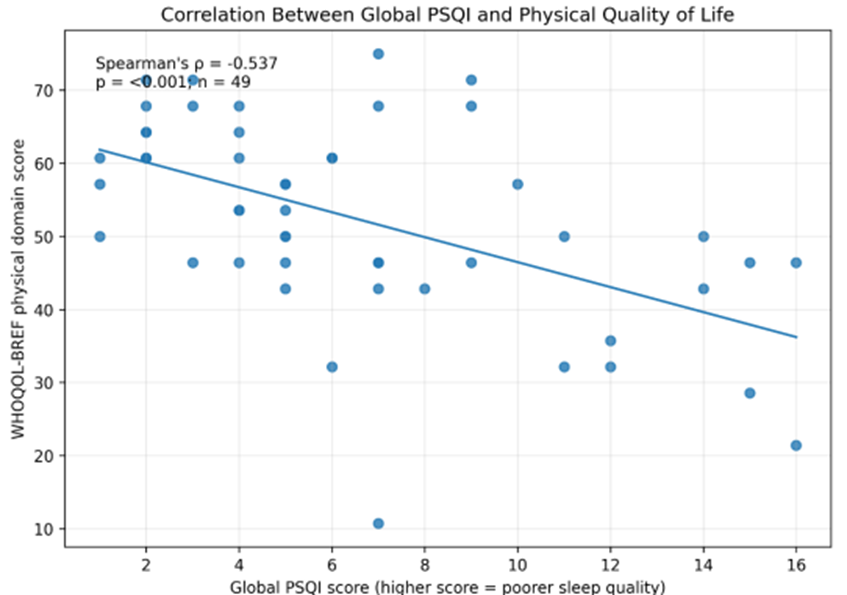
Figure 1: Correlation between global PSQI score and WHOQOL-BREF physical domain
When participants were categorised according to sleep quality, those with poor sleep quality had a significantly lower mean physical QoL score than participants with PSQI ≤5 (46.43±16.01 vs. 57.86±8.38; p=0.005). Environmental QoL was also significantly lower among participants with poor sleep quality (56.38±14.41 vs. 63.63±11.86; p=0.037). Differences in psychological and social QoL between the two sleep-quality groups were not statistically significant.
DISCUSSION:
Maintenance haemodialysis is a life-sustaining treatment for patients with end-stage kidney disease; however, the prolonged treatment schedule and associated physical and social restrictions can substantially affect patients' quality of life (QoL). The present study assessed QoL and sleep quality among 50 patients receiving maintenance haemodialysis using the WHOQOL-BREF and Pittsburgh Sleep Quality Index (PSQI), respectively. The principal findings were that QoL was relatively lower in the physical and psychological domains, poor sleep quality was common, and poorer sleep quality was significantly associated with lower QoL in several domains.
In the present study, the mean WHOQOL-BREF scores were 52.26±13.83 for the physical domain, 52.30±14.46 for the psychological domain, 65.00±20.82 for the social domain and 60.08±13.54 for the environmental domain. The relatively lower scores in the physical and psychological domains suggest that the burden of chronic kidney disease and regular dialysis may be particularly evident in these aspects of patients' lives. Similar findings have been reported by Sathvik et al., who observed significant impairment in physical, psychological and social domains among patients undergoing haemodialysis compared with healthy individuals [1]. Joshi et al., in a multicentre study using WHOQOL-BREF, also reported relatively low QoL scores across all four domains, with physical QoL being particularly affected [2].
The relatively better social and environmental domain scores observed in our study may reflect the support available to patients from their families, dialysis units and healthcare services. However, QoL among haemodialysis patients is influenced by several demographic and clinical factors. Previous studies have demonstrated associations of QoL with age, employment, income, haemodialysis duration and clinical status [2,8]. Ravindran et al. similarly emphasised the multidimensional impairment of QoL among patients undergoing maintenance haemodialysis [3]. These findings reinforce the importance of assessing QoL as a multidimensional outcome rather than relying only on clinical or biochemical parameters.
Poor sleep quality was also an important finding in the present study. The mean global PSQI score was 6.68±4.25, and 50% of participants had a PSQI score >5, indicating poor sleep quality. Sleep disturbance is frequently reported among patients undergoing haemodialysis and may arise from multiple interacting factors, including uraemic symptoms, pruritus, pain, muscle cramps, altered circadian rhythm, comorbidities and the demands of the dialysis schedule. Previous studies have reported a high prevalence of poor sleep quality among haemodialysis patients. Elder et al. found that 71% of their haemodialysis patients were poor sleepers based on a PSQI score >5 [8]. Similarly, studies from other dialysis populations have reported poor sleep in a substantial proportion of patients [9,10].
An important finding of the present study was the significant inverse relationship between global PSQI score and QoL. Higher PSQI scores indicate poorer sleep quality, and in our study, higher scores were significantly associated with lower physical QoL (rho=-0.537, p<0.001), social QoL (rho=-0.308, p=0.030) and environmental QoL (rho=-0.331, p=0.020). The strongest association was observed with the physical domain. This finding is clinically plausible because poor sleep may contribute to daytime fatigue, reduced energy, impaired physical functioning and decreased ability to participate in daily activities.
Our findings are consistent with previous research demonstrating an inverse relationship between sleep quality and QoL among haemodialysis patients. Iliescu et al. reported that the global PSQI score was inversely associated with both physical and mental components of health-related QoL and remained an independent predictor after adjustment for several clinical and demographic variables [10]. A larger study by Yazdi et al. similarly found a significant negative correlation between PSQI and several dimensions of QoL, suggesting that deterioration in sleep quality may contribute to poorer perceived health and well-being among patients receiving haemodialysis [11].
The significant association between poor sleep and lower physical QoL observed in our study is particularly noteworthy. Patients undergoing maintenance haemodialysis are already exposed to reduced physical capacity due to chronic kidney disease, anaemia, comorbidities and treatment-related fatigue. Poor sleep may further aggravate daytime tiredness and functional limitations, creating a cycle in which physical symptoms interfere with sleep and inadequate sleep subsequently worsens daytime functioning. The stronger correlation between PSQI and the physical QoL domain in our study may therefore reflect the close interaction between sleep and physical functioning in this population.
The relationship between sleep quality and social QoL was also statistically significant in the present study. Sleep disturbances may limit daytime activities, social interaction and participation in family or community activities. Conversely, restrictions imposed by regular dialysis schedules may reduce opportunities for social engagement and indirectly affect sleep patterns. Previous studies have similarly reported associations between sleep quality and social aspects of QoL in haemodialysis patients [11,12].
Environmental QoL also demonstrated a significant inverse correlation with PSQI in our study. Environmental QoL encompasses factors such as financial resources, access to healthcare, home environment, transportation and opportunities for recreation. For patients dependent on regular dialysis, these factors may influence both treatment-related burden and daily routines. Poor sleep may be a marker of a broader burden of illness and social circumstances rather than an isolated sleep problem.
The correlation between PSQI and psychological QoL was negative in our study but did not reach statistical significance. This may partly be related to the relatively small sample size of 50 participants and consequently limited statistical power. In contrast, previous studies with larger sample sizes have reported significant associations between sleep quality and psychological or mental health domains [10-12]. The absence of statistical significance in the present study should therefore not be interpreted as evidence that sleep quality has no relationship with psychological well-being; rather, the finding warrants confirmation in larger studies.
Recent evidence continues to support the importance of sleep quality as a patient-centred outcome in haemodialysis. Yoshida et al. reported that poorer sleep quality was associated with impaired QoL across several domains in a multicentre cohort of haemodialysis patients [4]. Their findings suggest that sleep quality may represent an important and potentially modifiable component of overall patient well-being.
The findings of the present study have practical implications. Routine dialysis care generally focuses on dialysis adequacy, biochemical parameters, anaemia management and vascular access. However, the present findings suggest that simple patient-reported instruments such as the PSQI and WHOQOL-BREF can provide additional information regarding problems that may otherwise remain unrecognised. Identification of poor sleep quality may allow clinicians to explore potentially contributing factors and provide appropriate counselling or targeted interventions. Similarly, regular assessment of QoL may help identify patients requiring additional physical, social or supportive care.
The present study has certain limitations. The sample size was relatively small, and the cross-sectional design does not permit determination of a causal relationship between sleep quality and QoL. The study was conducted in a single clinical setting, which may limit generalisability to other haemodialysis populations. In addition, both QoL and sleep quality were assessed using self-reported instruments and may therefore be influenced by individual perception. Despite these limitations, the study provides useful information regarding the coexistence of impaired QoL and poor sleep quality among patients receiving maintenance haemodialysis and demonstrates a significant association between these two patient-centred outcomes.
Overall, the present study demonstrates that patients receiving maintenance haemodialysis experience substantial impairment in selected domains of QoL and that poor sleep quality is common. The significant inverse relationship between PSQI scores and physical, social and environmental QoL highlights the importance of incorporating sleep assessment into the holistic management of haemodialysis patients.
CONCLUSION:
The present study demonstrated that patients receiving maintenance haemodialysis experienced relatively lower quality-of-life scores in the physical and psychological domains, while social quality of life was comparatively better. Poor sleep quality was observed in 50% of the participants. Significantly poorer sleep quality was associated with lower physical, social and environmental quality-of-life scores, with the strongest correlation observed in the physical domain. These findings highlight the importance of routinely assessing sleep quality and quality of life as part of comprehensive haemodialysis care. Larger prospective studies are warranted to further explore these associations and evaluate interventions aimed at improving sleep and overall quality of life among patients receiving maintenance haemodialysis.
REFERENCES:
1. Sathvik BS, Parthasarathi G, Narahari MG, Gurudev KC. An assessment of the quality of life in hemodialysis patients using the WHOQOL-BREF questionnaire. Indian J Nephrol. 2008;18(4):141-9.
2. Joshi U, Subedi R, Poudel P, Ghimire PR, Panta S, Sigdel MR. Assessment of quality of life in patients undergoing hemodialysis using WHOQOL-BREF questionnaire: a multicenter study. Int J Nephrol Renovasc Dis. 2017;10:195-203. doi:10.2147/IJNRD.S136522.
3. Ravindran A, Sunny A, Kunnath RP, Divakaran B. Assessment of Quality of Life among End-Stage Renal Disease Patients Undergoing Maintenance Hemodialysis. Indian J Palliat Care. 2020;26(1):47-53.
4. Yoshida N, Tanaka T, Suzuki Y, Takahashi S, Hitaka M, Ishii S, et al. Sleep Quality and Its Association with Quality of Life and Mortality in Hemodialysis Patients. J Clin Med. 2025;14:8729.
5. Malhotra A, Singh B, Sharma N. Relationship Between Sleep Quality and Quality of Life Among Patients With Chronic Kidney Disease at a Tertiary Care Hospital in Greater Noida, India. J Emerging Trends Novel Res. 2026;4(10):378-391.
6. Tawale S, Khan N, Shinde R, Thote M, Joshi A. An Observational Analysis of Sleep and Quality of Life in Patients with End-Stage Renal Disease. Indian J Pharm Pract. 2026;19(2):304-10. doi:10.5530/ijopp.20260551.
7. Skevington SM, Lotfy M, O’Connell KA; WHOQOL Group. The World Health Organization’s WHOQOL-BREF quality of life assessment: psychometric properties and results of the international field trial. Qual Life Res. 2004;13(2):299–310. doi:10.1023/B:QURE.0000018486.91360.00.
8. Iliescu EA, Coo H, McMurray MH, Meers CL, Quinn MM, Singer MA, et al. Quality of sleep and health-related quality of life in haemodialysis patients. Nephrol Dial Transplant. 2003;18(1):126-132.
9. Chen WC, Lim PS, Wu WC, Chiu HC, Chen CH, Kuo HY, et al. Sleep behavior disorders in hemodialysis patients. Int J Med Sci. 2006;3(1):41-47.
10. Elder SJ, Pisoni RL, Akizawa T, Fissell R, Andreucci VE, Fukuhara S, et al. Sleep quality predicts quality of life and mortality in haemodialysis patients: results from the Dialysis Outcomes and Practice Patterns Study (DOPPS). Nephrol Dial Transplant. 2008;23(3):998-1004.
11. Sabet R, Naghizadeh MM, Azari S. Quality of sleep and its relationship to quality of life in hemodialysis patients. J Caring Sci. 2012;1(4):203-207.
12. Masoumi M, Naimi H, Mohammadi I, Afshar H, Sharifi H, Moosavi SA. Effect of sleep quality on quality of life in hemodialysis patients. Nephrourol Mon. 2013;5(4):826-831.
13. Parvan K, Lakdizaji S, Roshangar F, Mostofi M. Quality of sleep and its relationship to quality of life in hemodialysis patients. J Caring Sci. 2013 Nov 30;2(4):295-304. doi: 10.5681/jcs.2013.035. PMID: 25276738; PMCID: PMC4134147.